

Navigating the Path to CyberPeace: Insights and Strategies
Featured #factCheck Blogs

Executive Summary
Social media users are claiming that Indian Army Chief General Dhiraj Seth dances with soldiers’ wives and attended a dance competition organised by the Border Security Force Wives Welfare Association (BWWA). CyberPeace Research found no credible sources to substantiate the viral claim. Our research revealed that the viral image is related to his visit to Nepal. According to reports, he travelled to Nepal on his first foreign visit after taking charge of the Indian Army, where he was welcomed by senior Nepal Army officials. During the visit, he was also scheduled to receive the honorary rank of General of the Nepal Army. However, his photograph is being linked to a dance video from an event organised by the Central Armed Police Forces (CAPF), accompanied by objectionable claims about him. Our research found no credible evidence confirming that General Dhiraj Seth attended the event or was associated with the activities shown in the video. Therefore, linking his photograph from the Nepal visit to the dance video is misleading.
Claim:
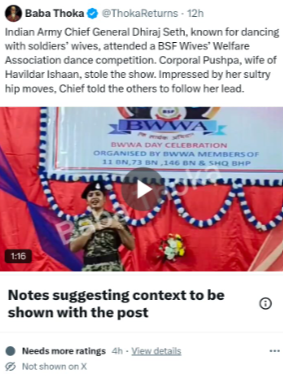
It is being claimed on social media that Indian Army Chief General Dhiraj Seth attended a dance competition organised by the BSF Wives Welfare Association (BWWA), where he was impressed by a woman’s dance performance and asked other participants to follow her lead.
https://x.com/ThokaReturns/status/2110854323760693485
Fact Check
To verify the viral claim, we conducted a reverse image search using keyframes from the video. During this process, we found the video on Instagram. The text “BSF Wives Welfare Association” was visible on the backdrop behind the stage. However, there was no mention of Army Chief General Dhiraj Seth anywhere in the video.
https://www.instagram.com/reels/Ddl7oTEgnf7/
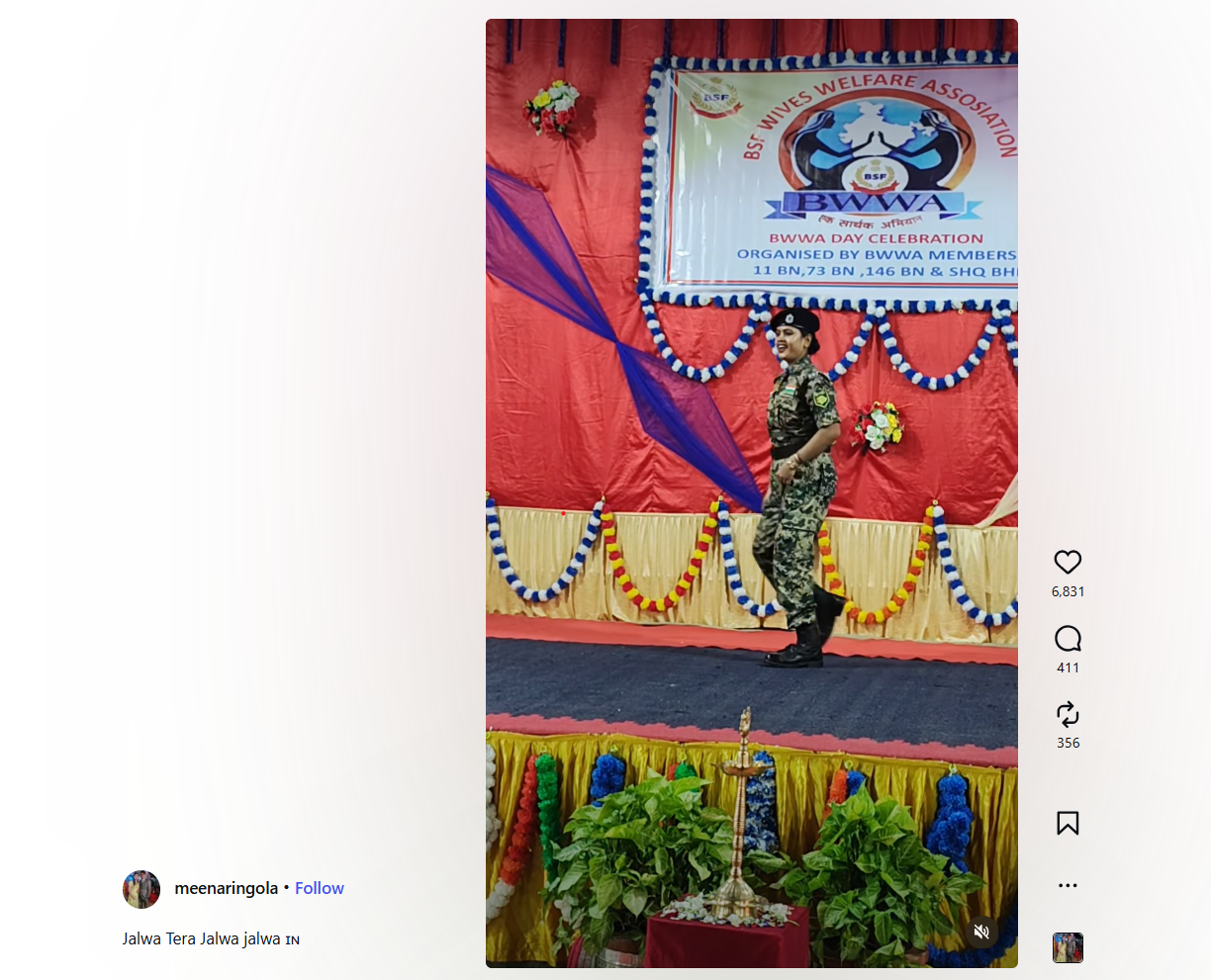
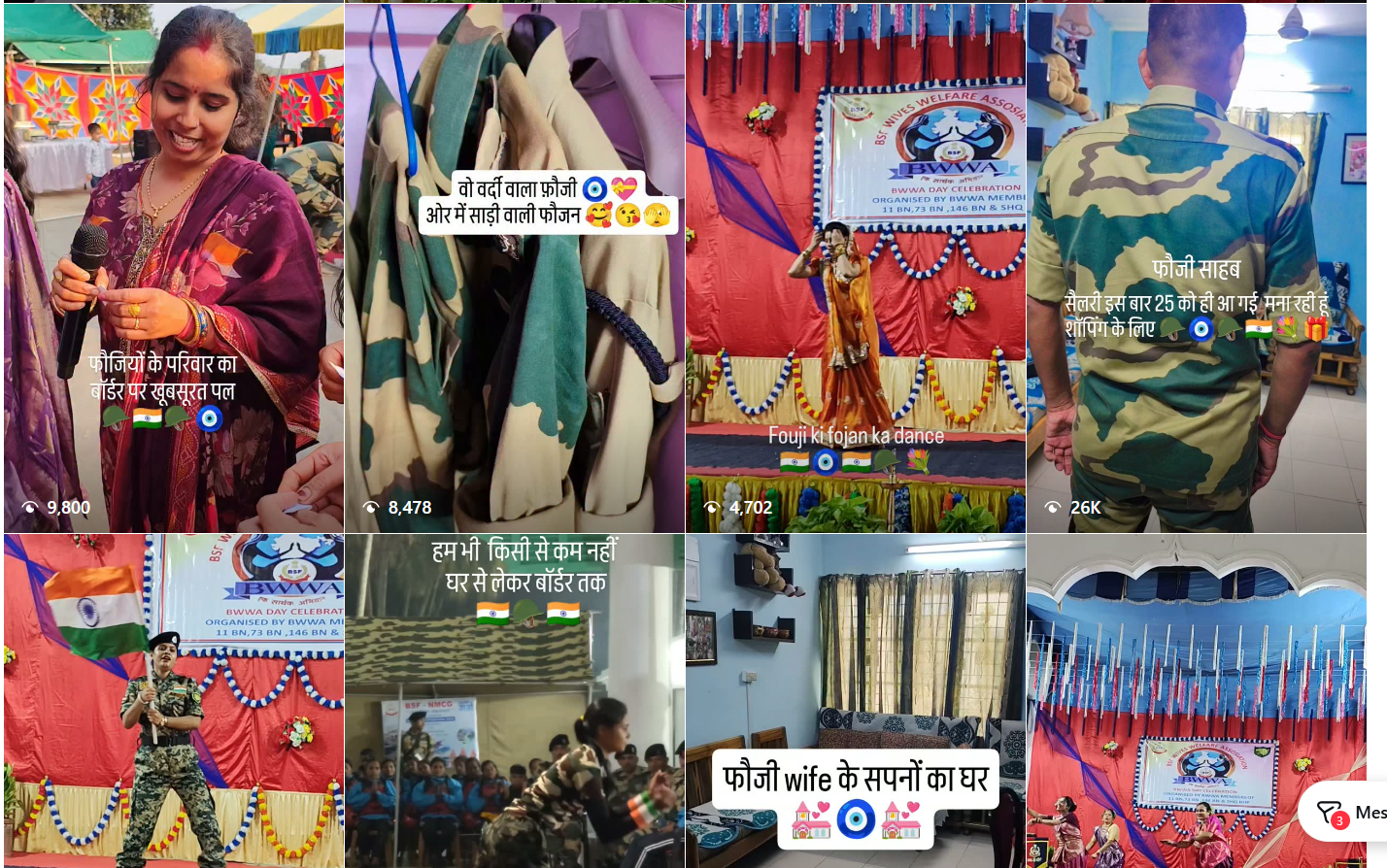
After reviewing these videos, our research found no evidence to substantiate the claim that General Dhiraj Seth attended an event organised by the BSF Wives Welfare Association or danced at the event. His photograph is being linked to the dance video, but no credible evidence supporting this claim was found.
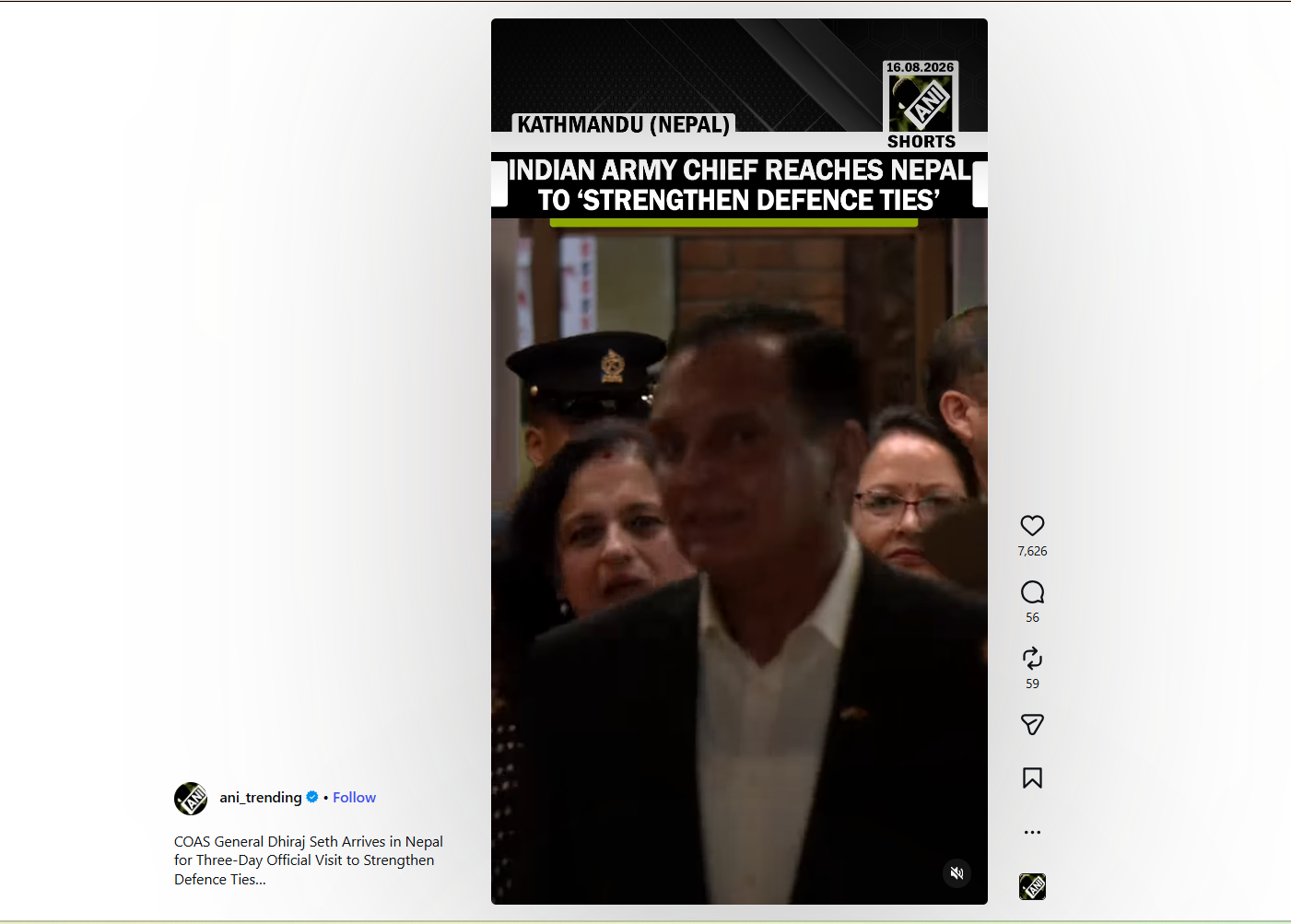
During our research, we found the original video of Army Chief General Dhiraj Seth shared by ANI. According to the report, General Dhiraj Seth arrived in Nepal on a three-day official visit aimed at strengthening defence ties between the two countries.
https://www.instagram.com/reels/DcGxzLPExR5/
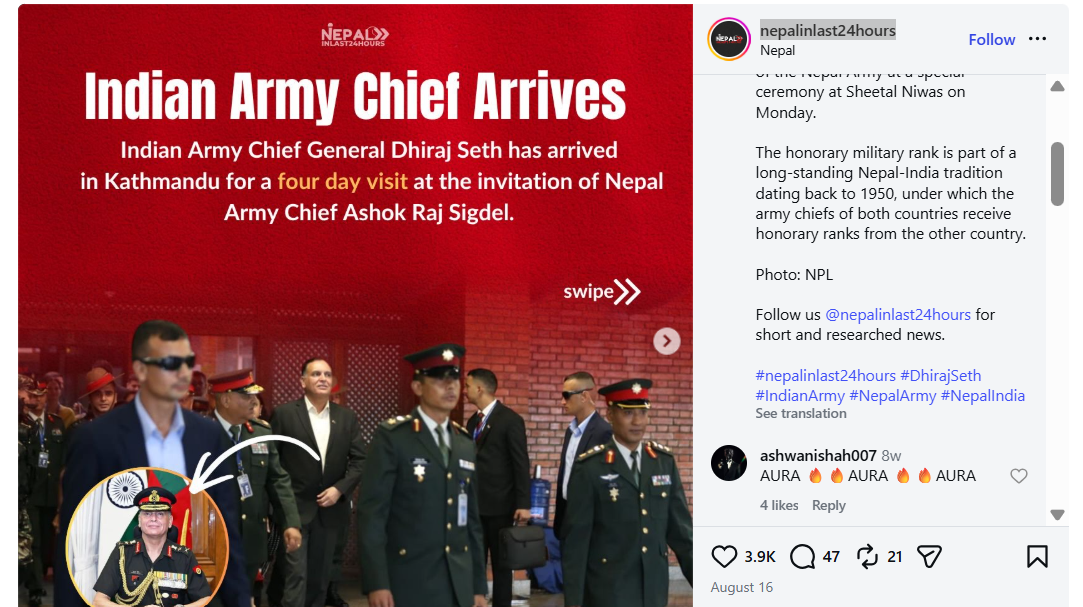
In the final stage of our research, we found a report on an Instagram account named ‘nepalinlast24hours’. According to the report, Indian Army Chief General Dhiraj Seth arrived in Kathmandu on his first foreign visit after taking command of the Indian Army on June 30, 2026. He was welcomed by senior Nepal Army officials at Tribhuvan International Airport.
The report stated that during his four-day visit, General Seth was scheduled to meet Nepal’s Prime Minister Balendra Shah and Nepal Army Chief Ashok Raj Sigdel. Additionally, he was scheduled to be conferred with the honorary rank of General of the Nepal Army at a special ceremony at Sheetal Niwas on Monday.This tradition between India and Nepal dates back to 1950. Under the arrangement, the army chiefs of both countries are conferred with honorary military ranks in each other’s armies.
https://www.instagram.com/p/DcGbgm0jUBH/?dlrf=MXFndzM5dGp4ZTh5OA%3D%3D
Conclusion
Our research found that the viral photograph of Indian Army Chief General Dhiraj Seth is related to his visit to Nepal. According to reports, he travelled to Nepal on his first foreign visit after taking command of the Indian Army, where he was welcomed by senior Nepal Army officials. During the visit, he was also scheduled to be conferred with the honorary rank of General of the Nepal Army.However, his photograph is being linked on social media to a dance video from an event organised by the Central Armed Police Forces (CAPF), accompanied by objectionable claims about him. Our research found no credible evidence confirming General Dhiraj Seth’s presence at the event or his association with the activities shown in the video. Therefore, linking his photograph from his Nepal visit to the dance video is misleading.
Executive Summary
A video is being shared on social media with the claim that a Bharatiya Janata Party (BJP) leader is doing sit-ups in front of the public. Some users are sharing the video as a recent incident, claiming that a BJP MLA performed sit-ups in front of the public. CyberPeace Research found the claim to be misleading. Our research revealed that the viral video is not recent but dates back to February 2022, when Bhupesh Chaubey, the BJP MLA from the Robertsganj Assembly constituency in Sonbhadra, apologised to disgruntled party workers during a party workers' convention.
Claim:
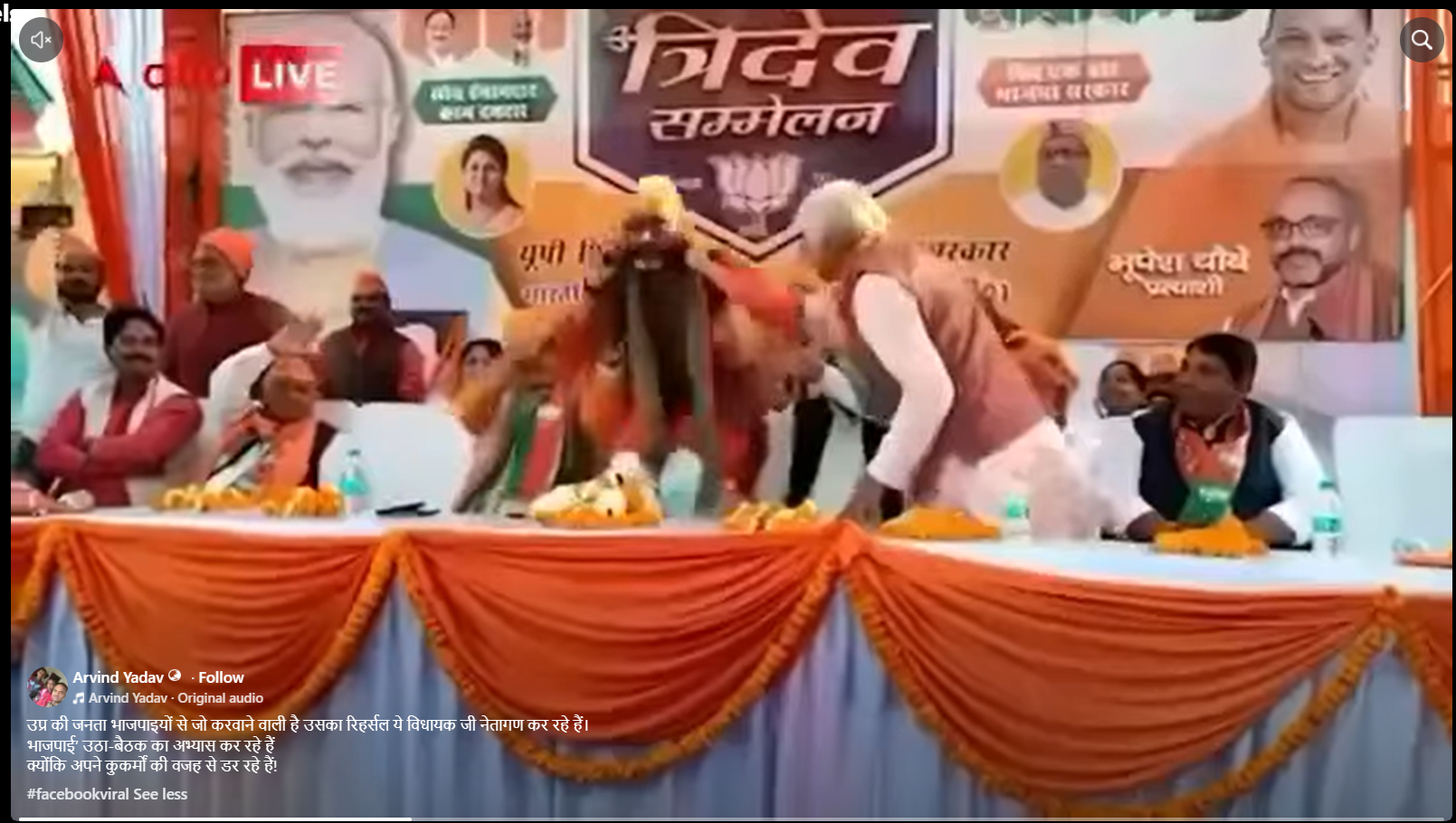
A user on Facebook shared the viral image on October 11, 2026, with the caption: “This is the bond submitted by coward Abhijeet Dipke in court for his release, and he says he will take to the streets again.” The link to the post, its archive link, and a screenshot are provided below.
https://www.facebook.com/reel/1806020163922780
Fact Check
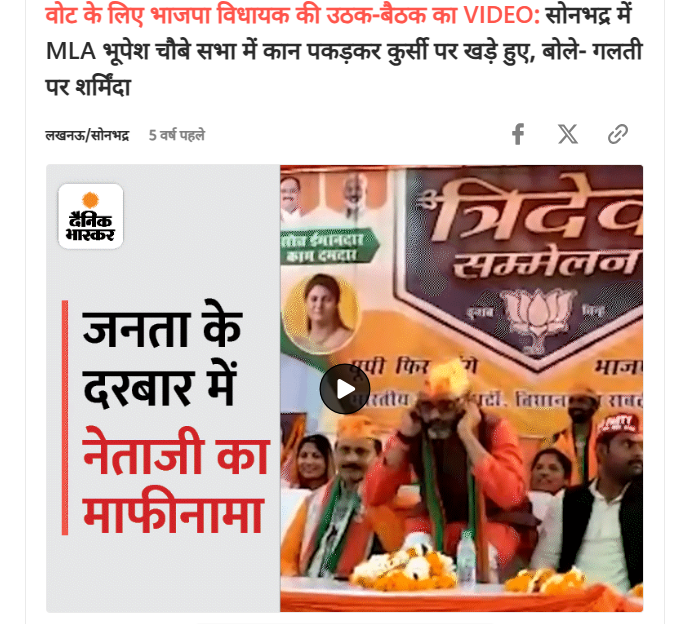
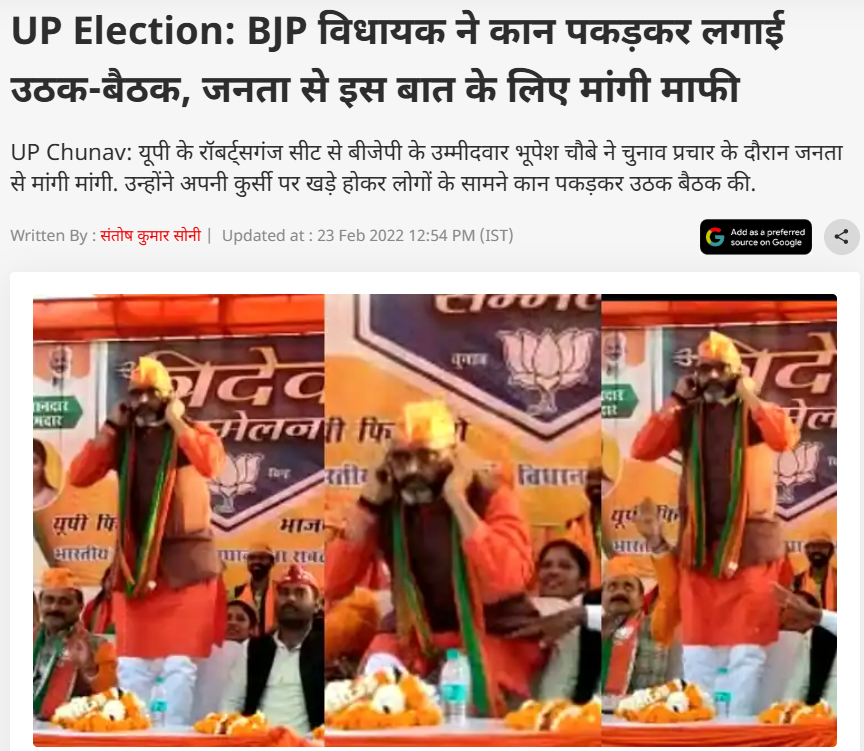
We conducted a reverse image search using keyframes from the viral video. During the search, we found a report published on the Dainik Bhaskar website on February 23, 2022, which featured the same video. According to the report, polling in Sonbhadra was scheduled for March 7 as part of the seventh phase of the Assembly elections. During the election campaign, Bhupesh Chaubey, the BJP MLA and candidate from the Robertsganj Assembly constituency, was seen adopting an unusual approach. He stood on a chair, held his ears and performed sit-ups on the chair, apologising to the public for the mistakes he had made over the previous five years.The link to the report and a screenshot are provided below.
In the next stage of our research, we found a report published on ABP News’ Hindi website on February 25, 2022, which featured the viral video in a general context. We found the same video in this report as well. The link to the report and a screenshot are provided below.
Conclusion
Our research found that the viral video is not recent but dates back to February 2022, when Bhupesh Chaubey, the BJP MLA from the Robertsganj Assembly constituency in Sonbhadra, apologised to disgruntled party workers during a party workers' convention.
Executive Summary
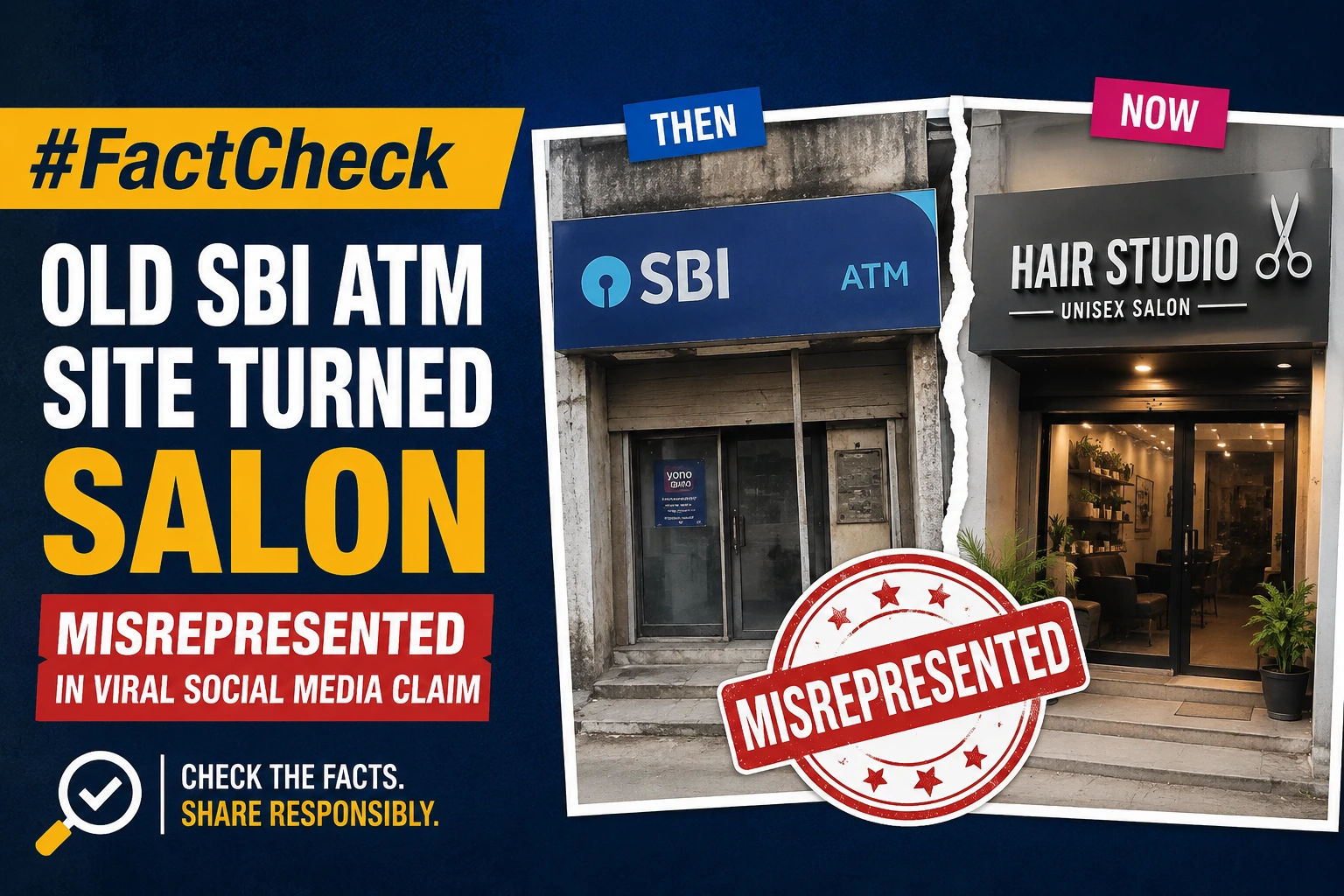
A video is going viral on social media claiming that a salon has been opened inside a State Bank of India (SBI) ATM in Bihar. The video is also being used by some users to take political jibes at the central and state governments led by the Bharatiya Janata Party (BJP). However, the CyberPeace Research Wing’s research has found that this claim is misleading. The location shown in the viral video was earlier an SBI ATM, which had been shut down around six months ago. After the bank discontinued its operations at the site, the ATM machine and other equipment were removed. However, the external structure of the ATM cabin and the SBI signage were not removed at that time. After the premises were vacated, the property owner rented out the space to a salon operator. Since the SBI board and branding were still visible on the structure, the video created confusion and went viral with misleading claims.
Following the circulation of the video, the bank later removed its signage from the location and also cleared all remaining SBI branding from the structure. Our research also found that the bank had removed the ATM machine and equipment months earlier, but the cabin structure and SBI board were left behind. After that, the space was rented out for commercial use as a salon. In this context, it would be incorrect to claim that a salon was opened inside an active SBI ATM.
Claim
A Facebook user ‘Soumitra Roy’ shared a video on 11 May 2026 claiming:
“Someone has opened a barber shop inside an SBI ATM in Bihar. The BJP’s double-engine government has developed Bihar so much that loan EMIs can now be deducted directly inside ATMs. This is Modi’s masterstroke.”
- https://www.facebook.com/reel/980962511535926
- https://perma.cc/WTY2-WEQQ

Fact Check
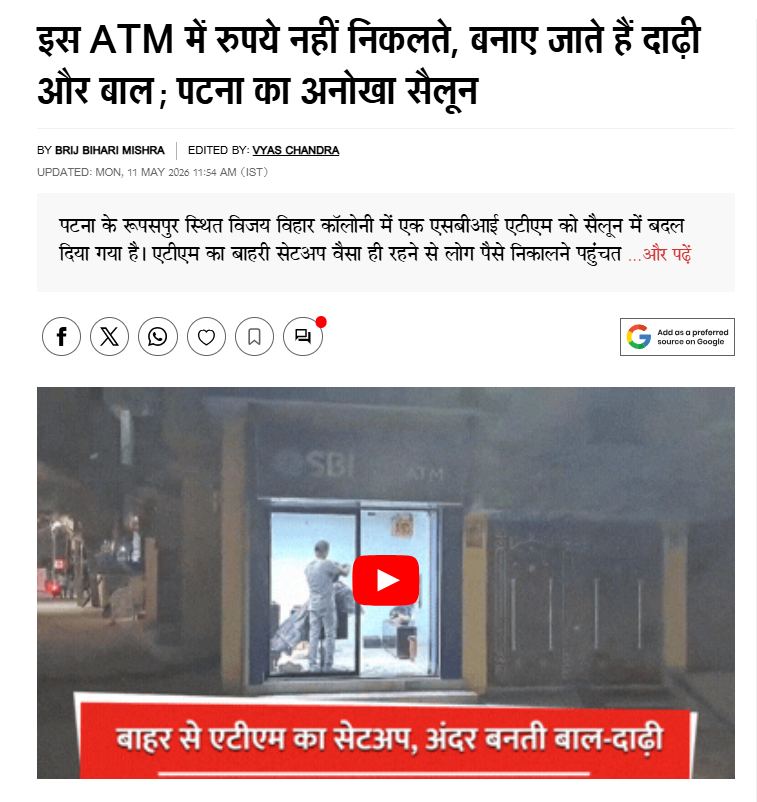
To verify the viral claim, a keyword search based on the video was conducted. Several media reports were found, which clarified the full context of the incident. A report uploaded on the YouTube channel ‘Live Cities’ on 12 May 2026 stated that a salon was running at a former ATM location in Danapur, Bihar. The bank had already vacated the premises about six months earlier, but its signage had not been removed. The report also includes an interview with the property owner, who confirmed that the bank had removed its ATM machine and equipment six months ago and later the space was rented out to a salon operator.

The viral video was also found on the Jagran website in a news report dated 11 May 2026. The report states that an SBI ATM previously existed at the location. The bank had removed the ATM machine due to operational reasons but left behind the external structure and signage. Later, the space was rented out to a salon operator, who began running his business from the same setup.
Conclusion
Our research found that the viral post is misleading. It is incorrect to claim that a salon was opened inside an SBI ATM. The truth is that the bank had shut down the ATM at this location around six months ago and removed all machines and equipment. After that, the premises were rented out to a salon operator, which led to confusion due to the presence of old SBI signage.
Executive Summary
A viral graphic post on social media claims that India’s GDP (Gross Domestic Product) was “fake for 10 years.” The post also states that the real economic growth was around 4%, while official figures reported it at 6%. It further cites a former Chief Economic Adviser (Ex-CEA) and presents the claim as a “revelation.”
Research by CyberPeace Research Wing found this claim to be misleading. No official government document, nor India’s Ministry of Statistics and Programme Implementation (MoSPI), the Reserve Bank of India (RBI), or any recognised international institution has stated that India’s GDP was “fake.”
Claim
On the social media platform Instagram, a user shared a post claiming that the Chief Economic Adviser said India’s GDP (Gross Domestic Product) was “fake for 10 years.” The link to the post and its archive link are given below, along with a screenshot.
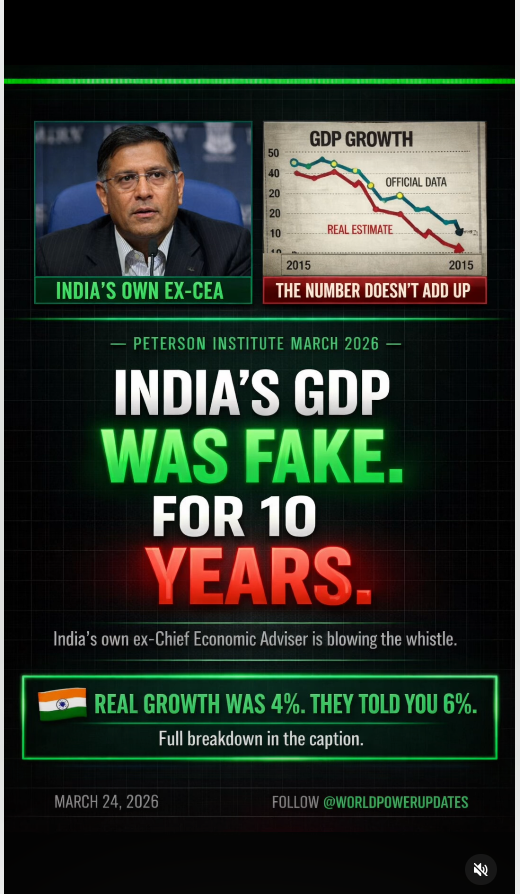
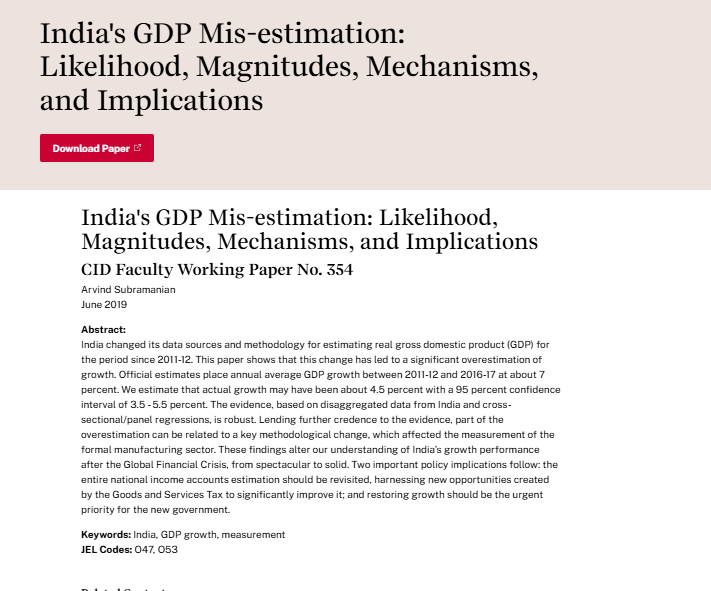
The viral post refers to a 2019 research paper linked to former Chief Economic Adviser (Ex-CEA) Arvind Subramanian. In this study, he raised questions about India’s GDP growth estimation and suggested that during 2011–12 to 2016–17, the actual growth could have been around 4.5%, while the official estimate was close to 7%.
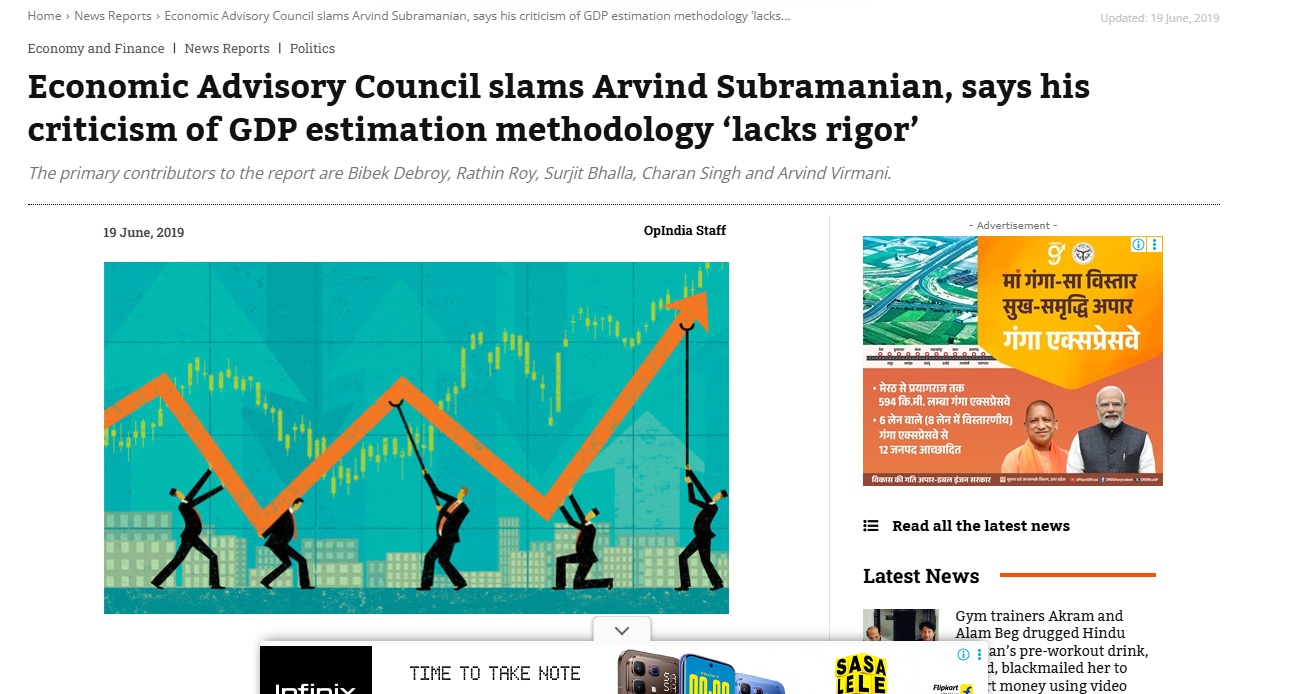
However, the study does not conclude anywhere that India’s GDP was “fake” or entirely incorrect. It only presents an alternative estimation based on different assumptions and methods, which has also been challenged by other economists and government agencies.
- https://www.hks.harvard.edu/centers/cid/publications/faculty-working-papers/india-gdp-overestimate?utm_source
- https://www.hks.harvard.edu/centers/cid/publications/faculty-working-papers/india-gdp-overestimate?utm_source
Conclusion:
The claim circulating on social media is misleading. The former Chief Economic Adviser provided an academic view on GDP estimation, but there is no evidence or official confirmation that India’s GDP was “fake for 10 years.” The data released by the Government of India was not validated by the figures circulated on social media.
Executive Summary
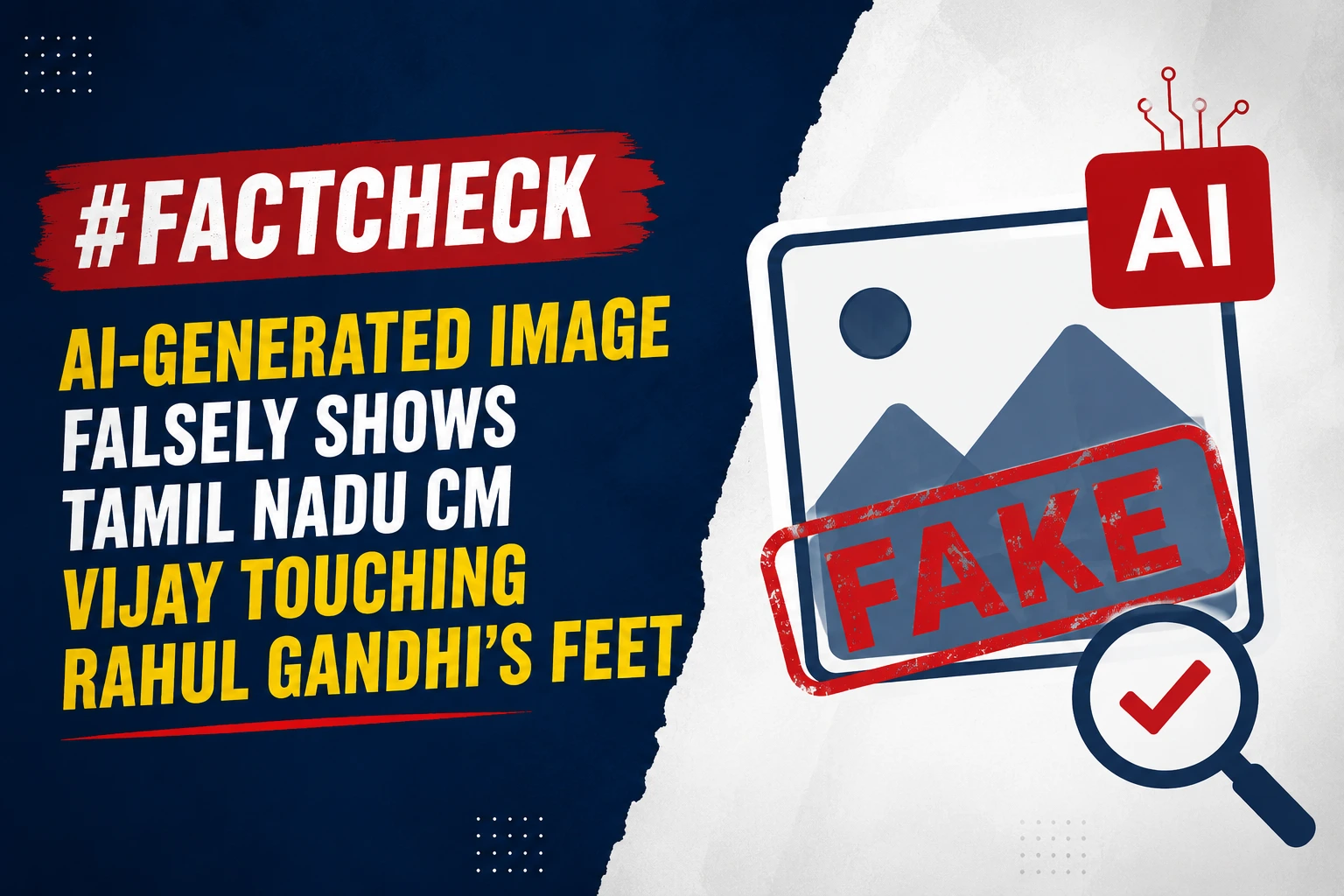
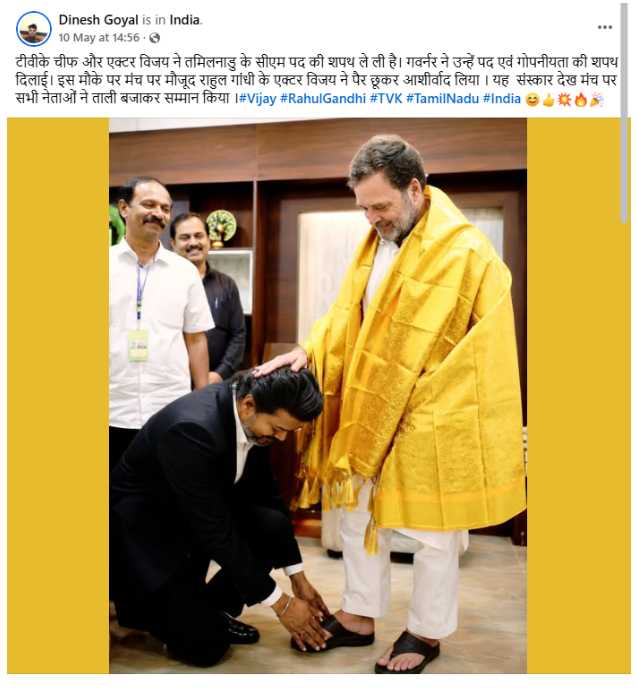
A viral image circulating on social media claims that Tamil Nadu Chief Minister C. Joseph Vijay touched the feet of Congress leader Rahul Gandhi during his swearing-in ceremony, while Congress and several other parties extended support to his government. The image is being widely shared with captions suggesting it captures a real political moment. However, CyberPeace Research Wing research has found the claim to be false. The image is AI-generated and does not depict any real event.
Claim
A Facebook user shared the viral image on May 10, 2026, claiming that TVK chief and actor Vijay had taken oath as the Chief Minister of Tamil Nadu. The post further claimed that during the ceremony, Vijay touched Rahul Gandhi’s feet to seek blessings, and the gesture was applauded by leaders present on stage. The post, along with archived links and screenshots, is being circulated as authentic evidence of the alleged incident.
- https://www.facebook.com/100057774695228/posts/1389222123013598/?rdid=FEzRYpVvSIieeUbj#
- https://archive.ph/kv4e1
Fact Check
A keyword-based search on Google did not return any credible news reports supporting the claim or confirming such an event. A closer visual examination of the image raised strong suspicions of AI manipulation, prompting verification through AI detection tools. When the image was analyzed using the SIGHTENGINE detection tool, the results indicated that the image is 99% likely to be AI-generated.

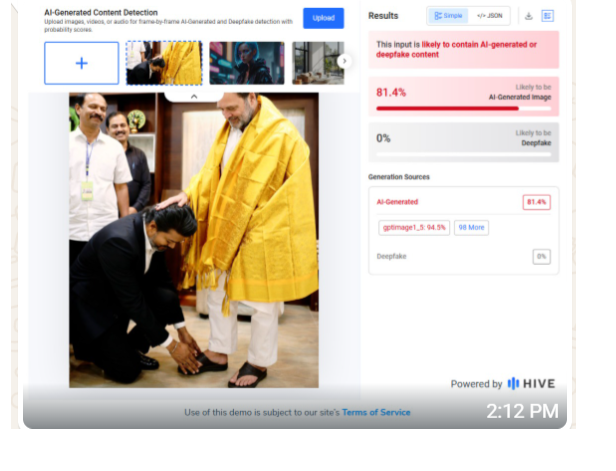
Further verification using another AI detection platform, HIVE MODERATION, also flagged the image as synthetic, showing an 81% probability of being AI-generated.
Conclusion
The research clearly shows that the viral image is not real. It has been generated using artificial intelligence and is being falsely shared as a real political event.
.webp)
Executive Summary
A video showing a monkey allegedly saving the life of a sleeping child is rapidly going viral on social media. In the clip, a monkey can be seen picking up a child sleeping on a mat under a tree and moving the child away moments before a heavy tree branch falls at the same spot. Social media users are sharing the video as a “miracle of nature” and praising the emotional sensitivity and instincts of animals. However, research conducted by CyberPeace Research Wing found that the viral video is not real and was created using artificial intelligence tools.
Claim
The caption accompanying the viral post states:“In a shocking incident, a monkey was seen stepping in to save an innocent child sleeping under a tree from imminent danger. People nearby were stunned by the scene. It is being claimed that the monkey sensed the danger around the child and tried to protect him. The unusual incident has now gone viral on social media, with many saying that emotions and compassion are not limited to humans, animals can also understand feelings.”
The video has been widely shared across social media platforms
- https://www.instagram.com/reels/DYMvhRPTcCA/
- https://archive.ph/https://www.instagram.com/reels/DYMvhRPTcCA/

Fact Check
To verify the authenticity of the video, we extracted keyframes from the clip and conducted a reverse image search. During the research, we found the same video uploaded on May 8, 2026, on an Instagram page named Instagram user “mojilo_vandro.” The caption of the original upload did not provide any factual context and presented the video in a dramatic, miracle-like manner.

We further examined the Instagram account and found that it regularly posts several AI-generated videos featuring monkeys performing heroic or emotional acts. Importantly, the account owner has also identified themselves as an “AI video creator” in the bio section.
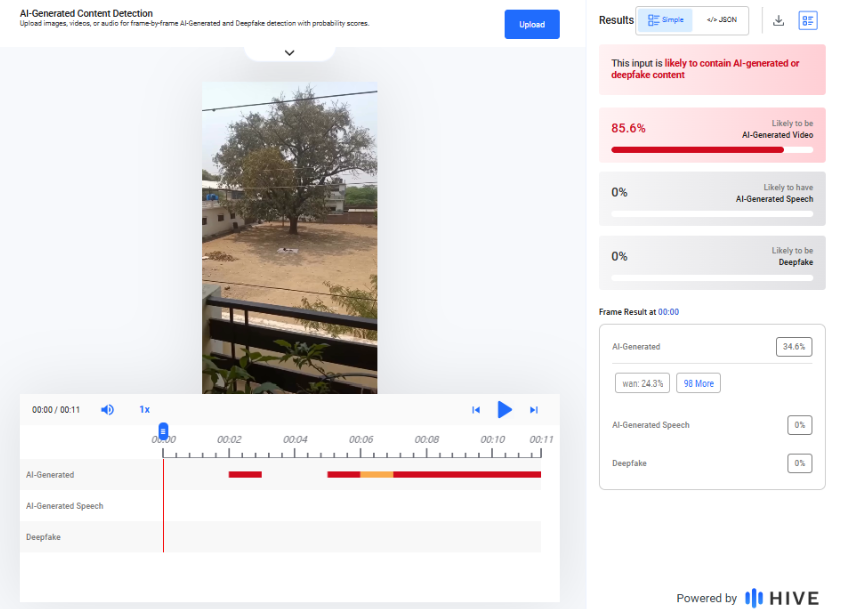
To further analyze the clip, we tested it using the AI detection tool Hive Moderation. The tool’s analysis classified the viral video as 85.6% likely to be AI-generated. We also checked the clip using another AI detection platform, Deepfake-o-meter. Its AVSRDD (2025) detection model flagged the video as potentially AI-generated with a 100% confidence score.

Conclusion
The evidence gathered during our research clearly shows that the viral video claiming to show a monkey saving a sleeping child from a falling tree branch is not authentic. The clip was created using AI-generated visual techniques and does not depict a real incident.
Executive Summary
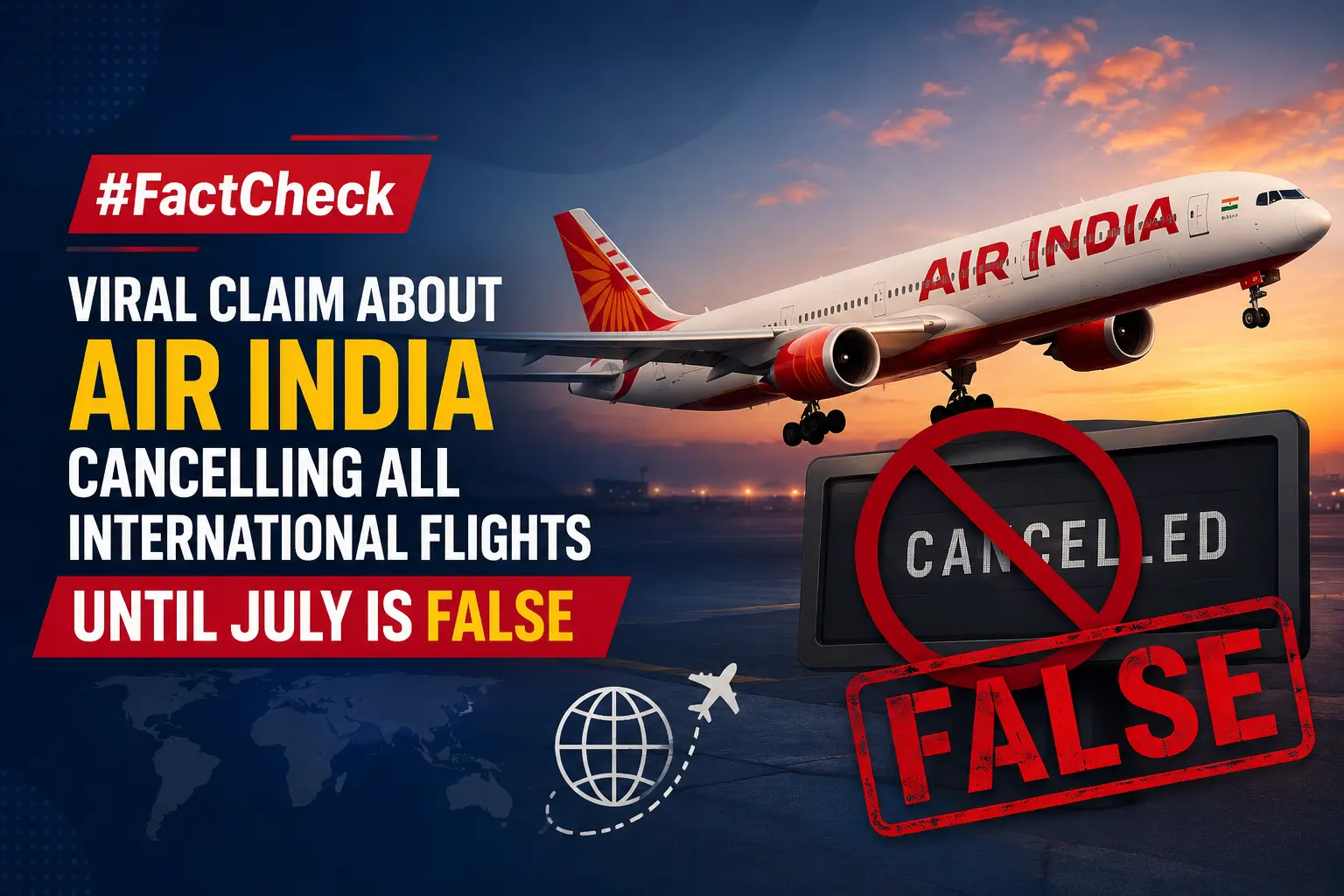
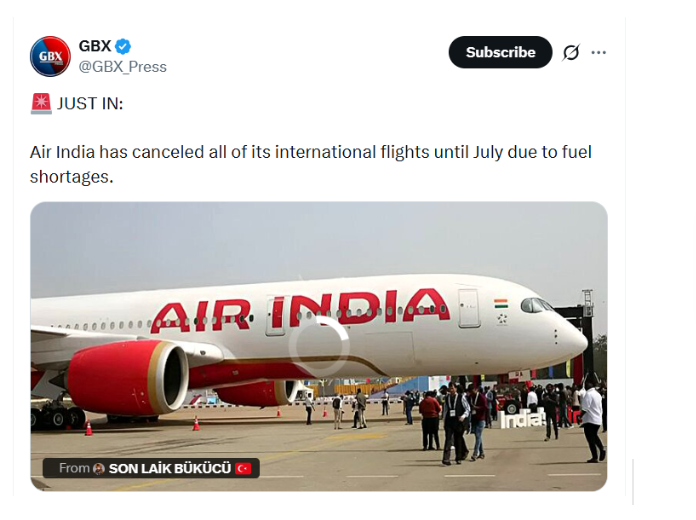
A video circulating on social media falsely claims that Air India has cancelled all of its international flights until July due to a fuel shortage. However, research conducted by CyberPeace Research Wing found the claim to be misleading and false. Our research revealed that Air India has made no announcement regarding the cancellation of all international flights. In reality, the airline has only made temporary reductions and adjustments on select international routes due to increasing operational pressure and the impact on profitability.
Claim
An X (formerly Twitter) user shared the viral video on May 3, 2026, claiming: “Due to a fuel shortage, Air India has cancelled all its international flights until July.”he post quickly gained attention and was widely shared on social media platforms.
Fact Check
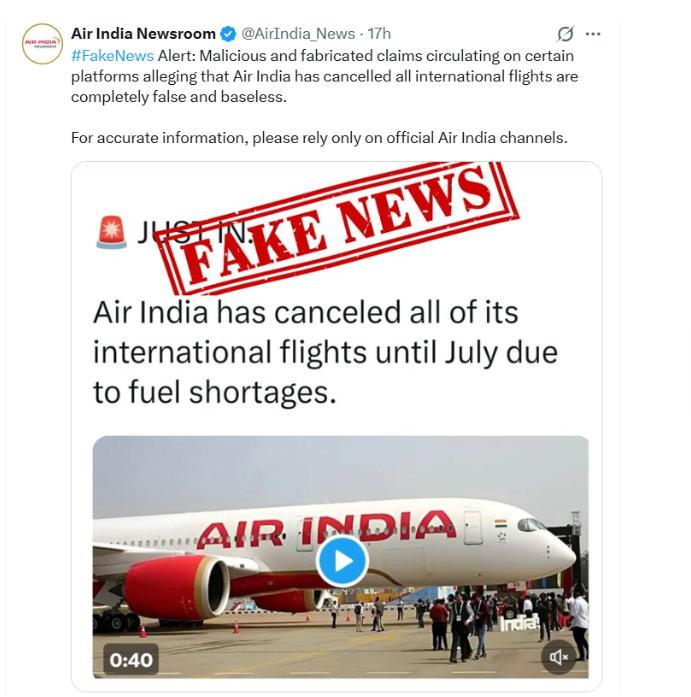
To verify the claim, we examined the official social media accounts of Air India. During the research, we found a post on X in which the airline itself described the viral claim as fake and misleading.
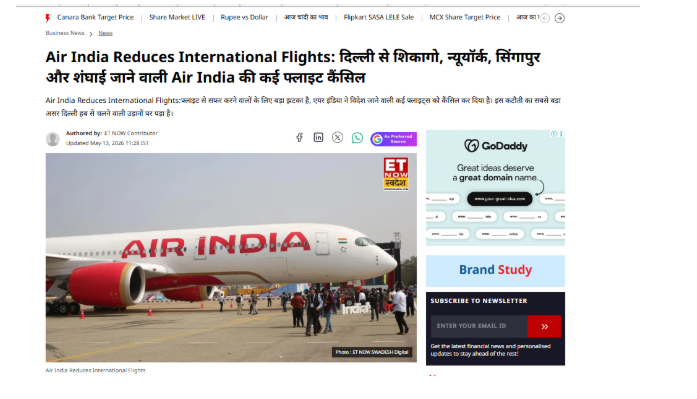
Taking the research further, we searched using relevant keywords and found a report published by ETNOW Swadesh on May 13, 2026. According to the report, Air India has not cancelled all international flights. Instead, due to mounting operational costs and pressure on profitability, the airline has temporarily reduced or modified services on a few select international routes.
Conclusion
Our research found that Air India has not announced the cancellation of all international flights until July. The viral claim circulating on social media is false and misleading. The airline has only implemented temporary adjustments and reductions on certain international routes, not a complete suspension of global operations.

Executive Summary
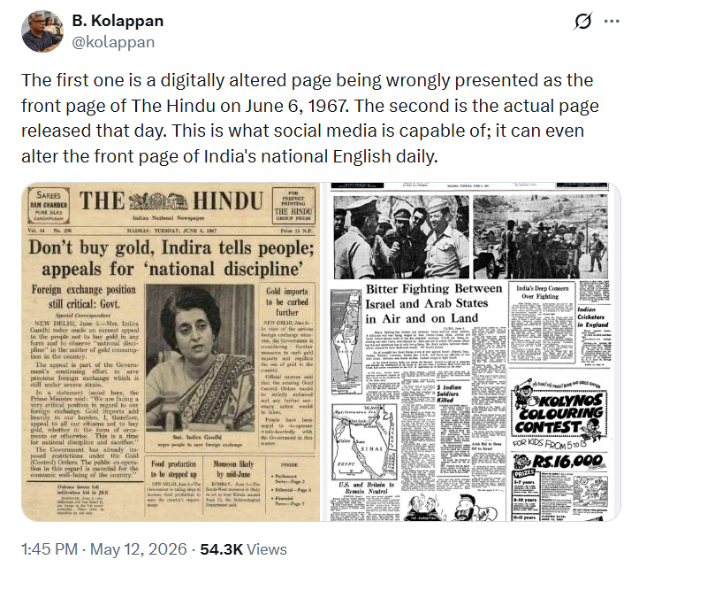
A purported front page of The Hindu dated June 6, 1967, is being widely circulated on social media with the claim that then Prime Minister Indira Gandhi had urged Indians not to buy gold in any form and to follow “national discipline” by restricting gold consumption. The viral claim suggests that the appeal was part of the government’s efforts to conserve foreign exchange reserves, which were allegedly under severe pressure at the time. However, research conducted by CyberPeace Research Wing found the claim to be false. Our research revealed that the front page being circulated online is not authentic and has been digitally edited.
Claim
An X (formerly Twitter) user shared the viral newspaper clipping on May 12, 2026, and wrote:“In 1967, during a severe foreign exchange crisis, Indira Gandhi appealed to Indians not to buy gold.From ‘skip one meal’ to ‘don’t buy gold,’ Congress-era governance normalized shortages, restrictions, and sacrifice, while ordinary citizens paid the price for failed economic policies.”

Research
To verify the claim, we examined the official social media accounts of The Hindu. During the research, we found a post published on the publication’s official X account on May 12, 2026, clarifying that the viral image claiming to be the June 6, 1967 front page of The Hindu was digitally altered and not part of its official archives. The newspaper also urged readers to verify information carefully before sharing it online.

We also found an X post by B Kolappan, a journalist with The Hindu, who shared the original front page of the newspaper dated June 6, 1967, further exposing the viral image as fake.
For context, Prime Minister Narendra Modi, while addressing a public gathering on May 10, 2026, spoke about the possible economic impact of the ongoing conflict in the Middle East and advised people to avoid buying gold for a year, even during weddings or family functions. The viral claim appears to have resurfaced in this backdrop.

Conclusion
Our research found that the alleged 1967 front page of The Hindu circulating on social media is digitally edited and fake. There is no evidence that the viral newspaper page is authentic or part of The Hindu’s archival records.

Executive Summary
A video featuring former Indian cricketer Sachin Tendulkar is being widely circulated on social media with the date “12-5-2026” displayed on the screen. In the viral clip, Tendulkar appears to promote an investment scheme, allegedly saying that people investing in the scheme today could earn Rs 80 lakh by the end of the day. Throughout the video, he is seen speaking about investment opportunities and financial returns. However, research conducted by CyberPeace Research Wing found that the video is AI-generated and misleading. The original footage was actually from an event marking the centenary celebrations of Sri Sathya Sai Baba.
Claim
A Facebook user shared the viral video on May 12, 2026, claiming that Sachin Tendulkar was endorsing a high-return investment scheme. The post quickly gained traction on social media platforms.
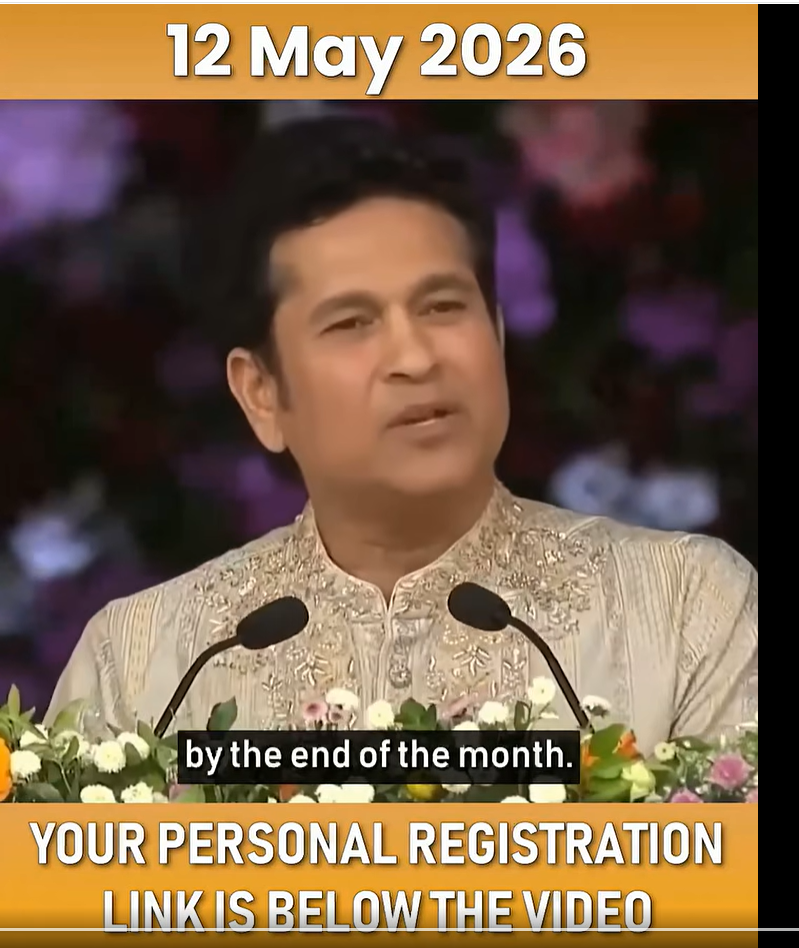
Fact Check
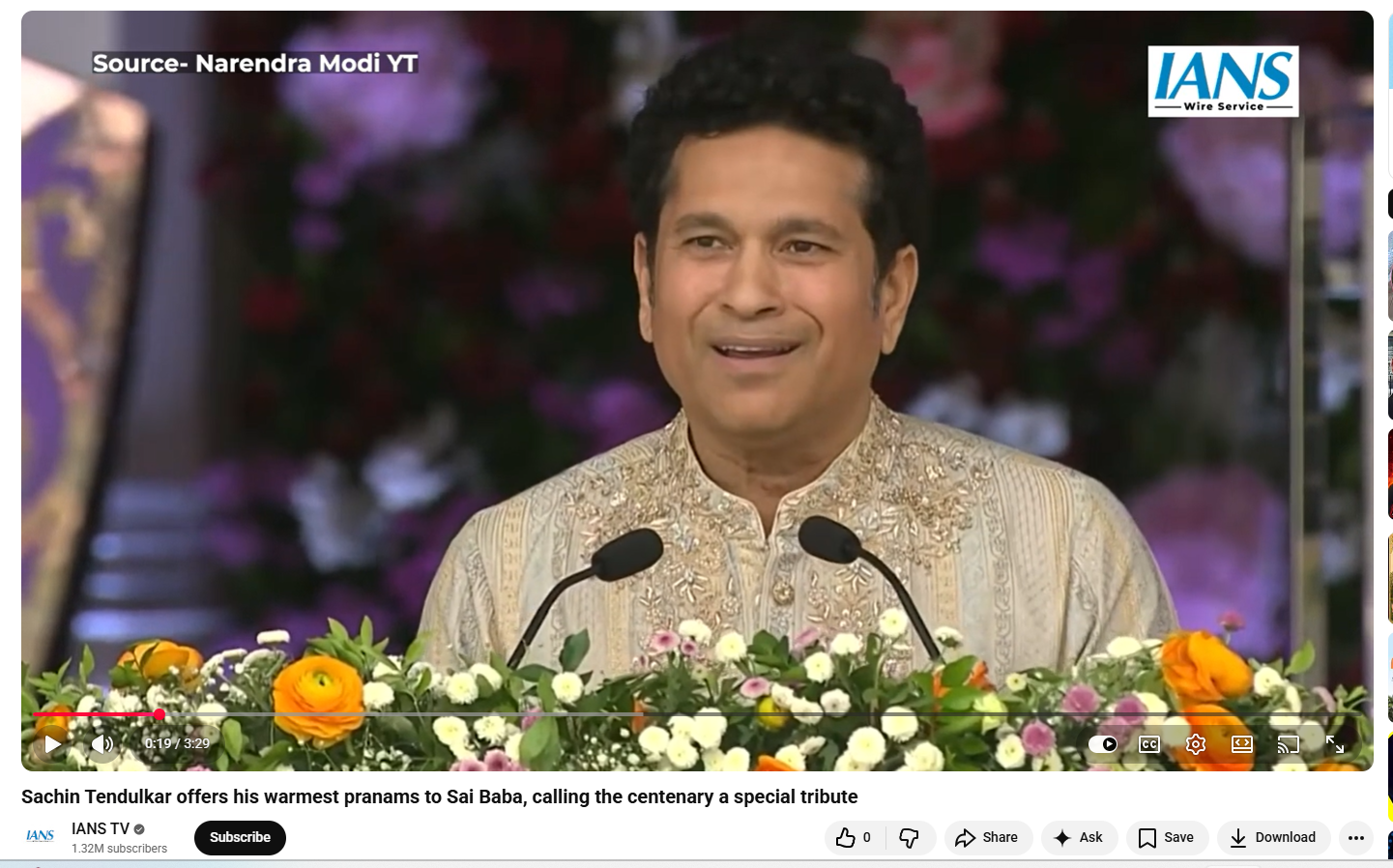
To verify the claim, we searched the internet using relevant keywords but found no credible media reports suggesting that Tendulkar had endorsed any such investment scheme. As part of our research, we extracted key frames from the viral clip and conducted a reverse image search. During the search, we found the original video uploaded on November 19, 2025, on the YouTube channel of IANS. According to the video description, Tendulkar was attending an event organized to mark the centenary year celebrations of Sri Sathya Sai Baba.
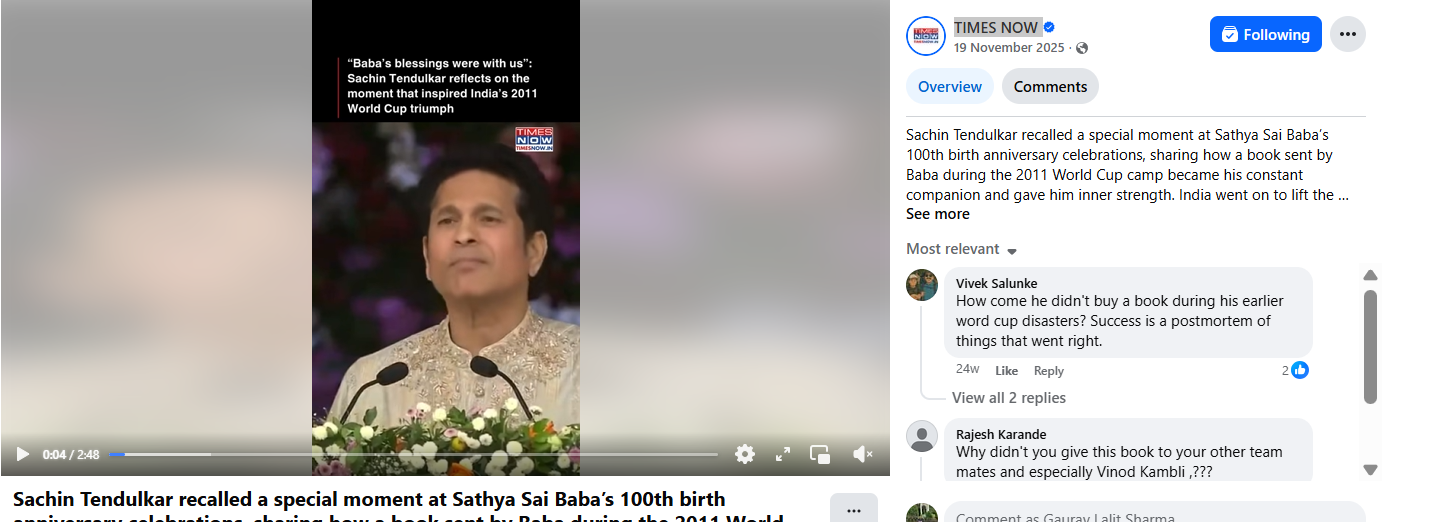
We further found a similar version of the same video uploaded on November 19, 2025, on the official Facebook page of Times Now, confirming that the footage was unrelated to any investment or financial scheme.
Conclusion
Our research found that the viral video has been manipulated using AI-generated audio or editing techniques to falsely portray Sachin Tendulkar promoting an investment scheme. The original video was from a public event related to Sri Sathya Sai Baba’s centenary celebrations and had no connection to any financial investment platform.
.webp)
Executive Summary
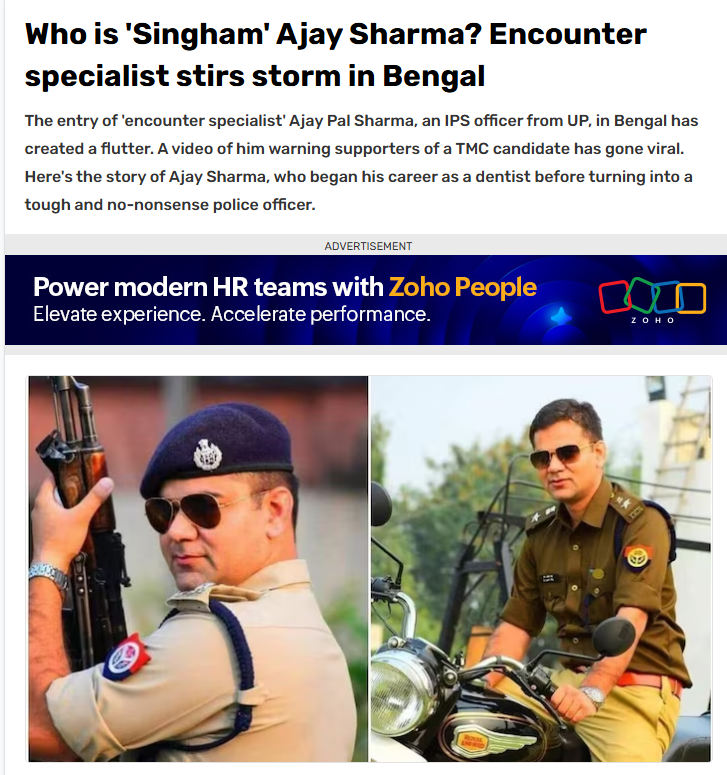
Ahead of the final phase of the West Bengal Assembly elections, a claim regarding Uttar Pradesh cadre IPS officer Ajay Pal Sharma began circulating widely on social media. Users claimed that Sharma was being sent to West Bengal on deputation for a period of five years. However, research conducted by CyberPeace Research Wing found the claim to be false. Sources close to the IPS officer confirmed that no such deputation order has been issued so far and that Ajay Pal Sharma is currently posted as Additional Commissioner in Prayagraj, Uttar Pradesh. Ajay Pal Sharma had earlier been deployed as a police observer during the West Bengal elections. During that period, a video of him warning Trinamool Congress candidate Jahangir Khan from the Falta constituency had gone viral on social media.
Claim
Several users on Facebook and X claimed that Ajay Pal Sharma had been transferred to West Bengal for five years under an administrative arrangement involving experienced officers from different states. One Facebook user wrote:“This decision has been taken under an administrative arrangement through which experienced officers are deployed in different states.”
- https://www.facebook.com/photo.php?fbid=818902764628152&set=a.296761956842238&type=3
- https://perma.cc/FD8Q-CF7L?type=standard

Fact Check
Our research found that the deputation claim is false. Ajay Pal Sharma is currently serving as Additional Commissioner in Prayagraj, a position he has held since 2025. Further scrutiny revealed that the claim appears to have originated from a parody account on X. On May 4, around 6 PM, the account @abdullah_0mar posted the claim regarding Sharma’s alleged five-year deputation to Bengal. However, in the comments section, the user later clarified that the post was intended as satire.

We also reviewed several news reports regarding Ajay Pal Sharma’s role during the West Bengal elections. Reports confirmed that the Election Commission had deployed him as a police observer in South 24 Parganas district during the polls. However, none of the reports mentioned any five-year transfer or deputation to West Bengal.
Conclusion
The viral claim is false. No official order has been issued regarding IPS officer Ajay Pal Sharma’s deputation to West Bengal for five years. Sources close to the officer confirmed that he continues to serve as Additional Commissioner in Prayagraj, Uttar Pradesh. Sharma had only been deputed as a police observer during the West Bengal Assembly elections, during which a video of him warning TMC candidate Jahangir Khan went viral online.

Executive Summary
Following the results of the recent West Bengal elections, a video of former Chief Election Commissioner Rajiv Kumar has gone viral on social media. In the clip, Kumar is seen questioning television news channels over their election-result coverage and alleged early “trends” before the actual counting process begins. In the viral video, Rajiv Kumar can be heard saying, “When counting begins, channels start showing trends from 8:05 AM itself, which is nonsense. The first round of counting starts only at 8:30 AM. We have evidence that leads were being shown before that. Is it possible that these early trends are shown just to justify exit polls?”The video is being widely shared with the claim that Kumar made these remarks after the recently concluded West Bengal Assembly elections Research conducted by CyberPeace Research Wing found that a 2024 video of former Chief Election Commissioner Rajiv Kumar is being misleadingly shared as a recent statement made after the West Bengal election results.
Claim
An Instagram user shared the viral clip suggesting that the former Election Commissioner made these comments in the context of the latest West Bengal poll results.
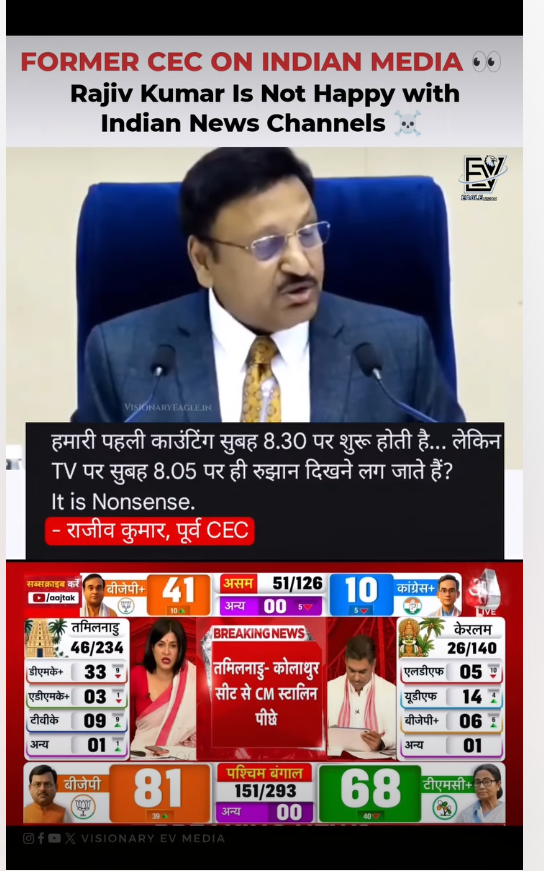
Fact Check
Using relevant keyword searches, we traced the original source of the clip to an official post shared by the Election Commission of Indiaon Facebook on October 15, 2024. The video was part of a press conference announcing the Assembly election schedule for Maharashtra and Jharkhand.
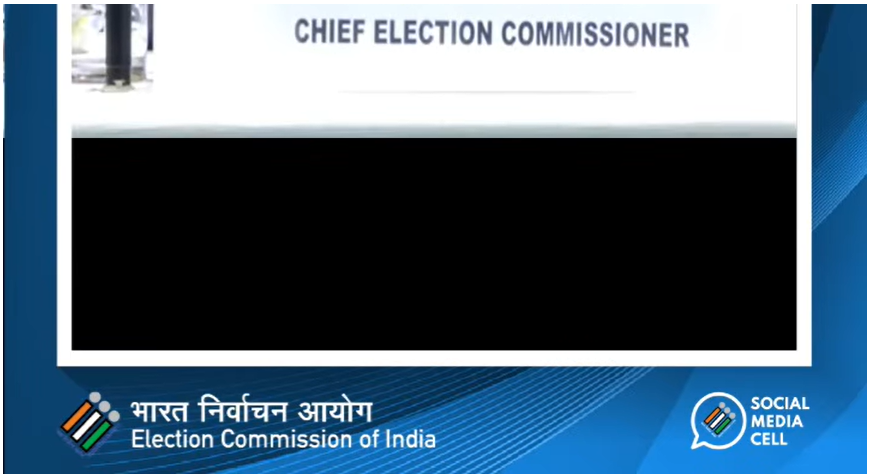
We also found the complete live-streamed press conference on the official YouTube channel of the Election Commission.
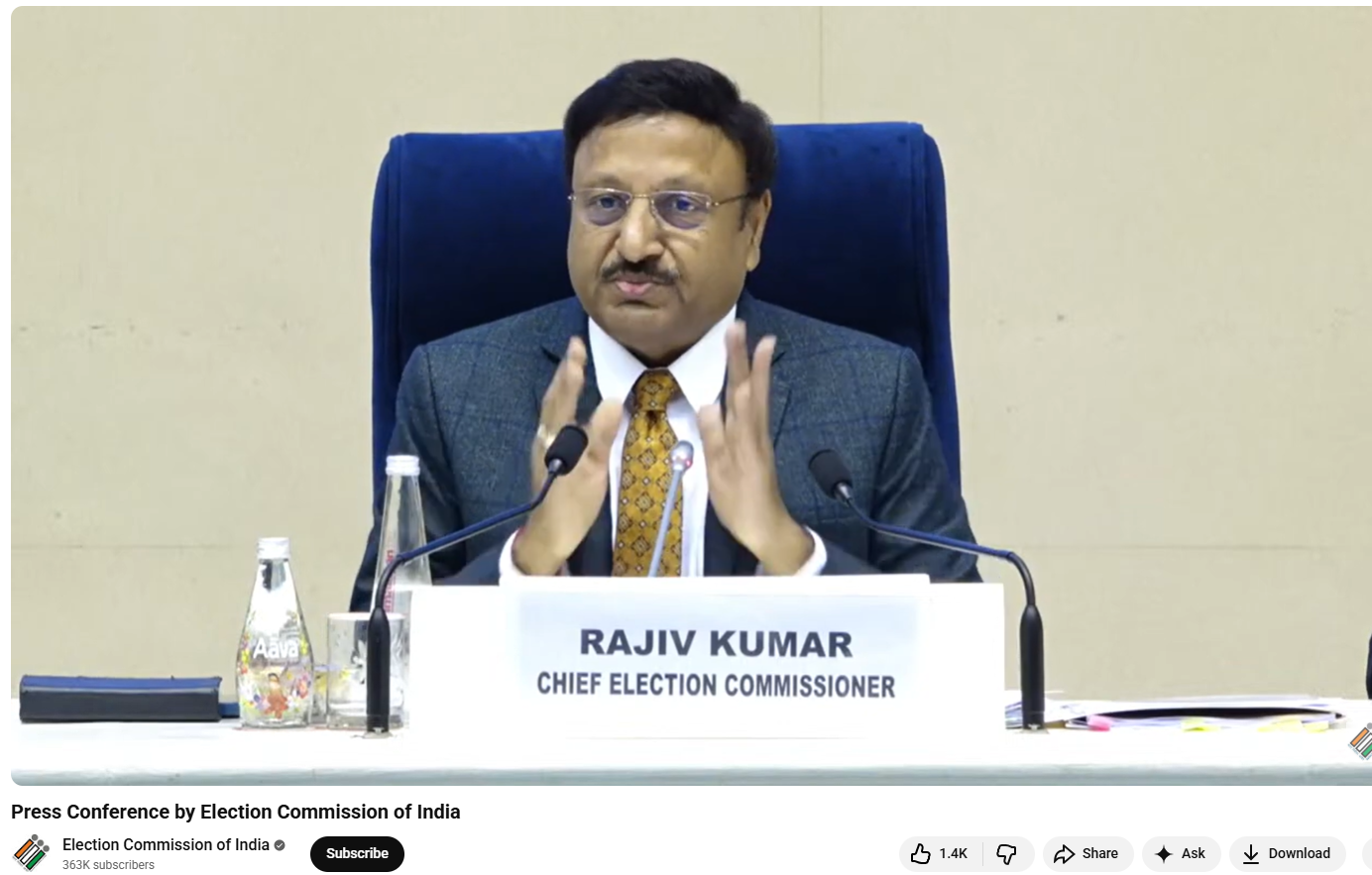
During the press conference, around the 26:45-minute mark, an ANI journalist referred to discrepancies between exit polls and actual Lok Sabha election results and asked whether such situations fuel doubts over EVMs among the public. Responding to the question at around 30:27 minutes, Rajiv Kumar spoke about the need for self-regulation in electronic media and concerns over premature “trends” shown during counting day. He said that exit polls often create public expectations despite lacking a clear scientific basis and questioned why TV channels begin displaying leads even before the first official counting round starts.
Conclusion
The viral claim is misleading. The video of former Chief Election Commissioner Rajiv Kumar is not related to the recent West Bengal election results. The clip is from an October 15, 2024 press conference held to announce the Maharashtra and Jharkhand Assembly election schedule and is now being falsely shared in a misleading context after the West Bengal polls.

Executive Summary
Amid rising tensions involving Iran, Israel and the United States following reports in early April 2026 that Iran had shot down an American fighter aircraft, a picture is going viral on social media claiming to show Iranian soldiers standing beside the wreckage of a destroyed helicopter while holding the Iranian flag. Research by CyberPeace Research Wing found that the viral claim is false. The image has been created using artificial intelligence and does not depict any real incident. The picture was generated using Google AI tools and is being misleadingly circulated online with different claims.
Claim
A Facebook page named “official salman 09” shared the image on May 1, 2026, along with a lengthy caption describing the scene as a symbol of Iran’s battlefield success. The post portrayed the image as evidence of a helicopter being brought down during ongoing tensions in the Middle East and suggested that the photo reflected strength, morale and victory in war.
- https://www.facebook.com/permalink.phpstory_fbid=pfbid02TAac6JwZha2UU4T8QiCGq4ENmsnNSwvigaz3vKxr9UWLbhghNsnMMpZdQ3dUuQ1rl&id=100092392280139
- https://archive.ph/

Fact Check
To verify the authenticity of the image, we first conducted a reverse image search using Google Lens. The image did not appear in any credible news reports or authentic media coverage. Instead, it was found circulating mainly on social media platforms, raising suspicion about its authenticity. We then analyzed the image using Google’s SynthID detector. The analysis confirmed the presence of a SynthID watermark with a “very high confidence” score, indicating that the image had been generated using Google AI tools. SynthID is Google’s watermarking technology used to identify AI-generated content created through its models.

Further verification using another AI-detection platform, Hive Moderation, also indicated a high probability that the image had been generated using AI. The tool identified Gemini as the likely source and assessed the image as overwhelmingly AI-generated.

Conclusion
Our research confirms that the viral image is AI-generated and unrelated to any real-world event. The picture showing soldiers holding the Iranian flag near helicopter wreckage was created using Google AI tools and is being falsely shared on social media to spread misleading claims.
Executive Summary
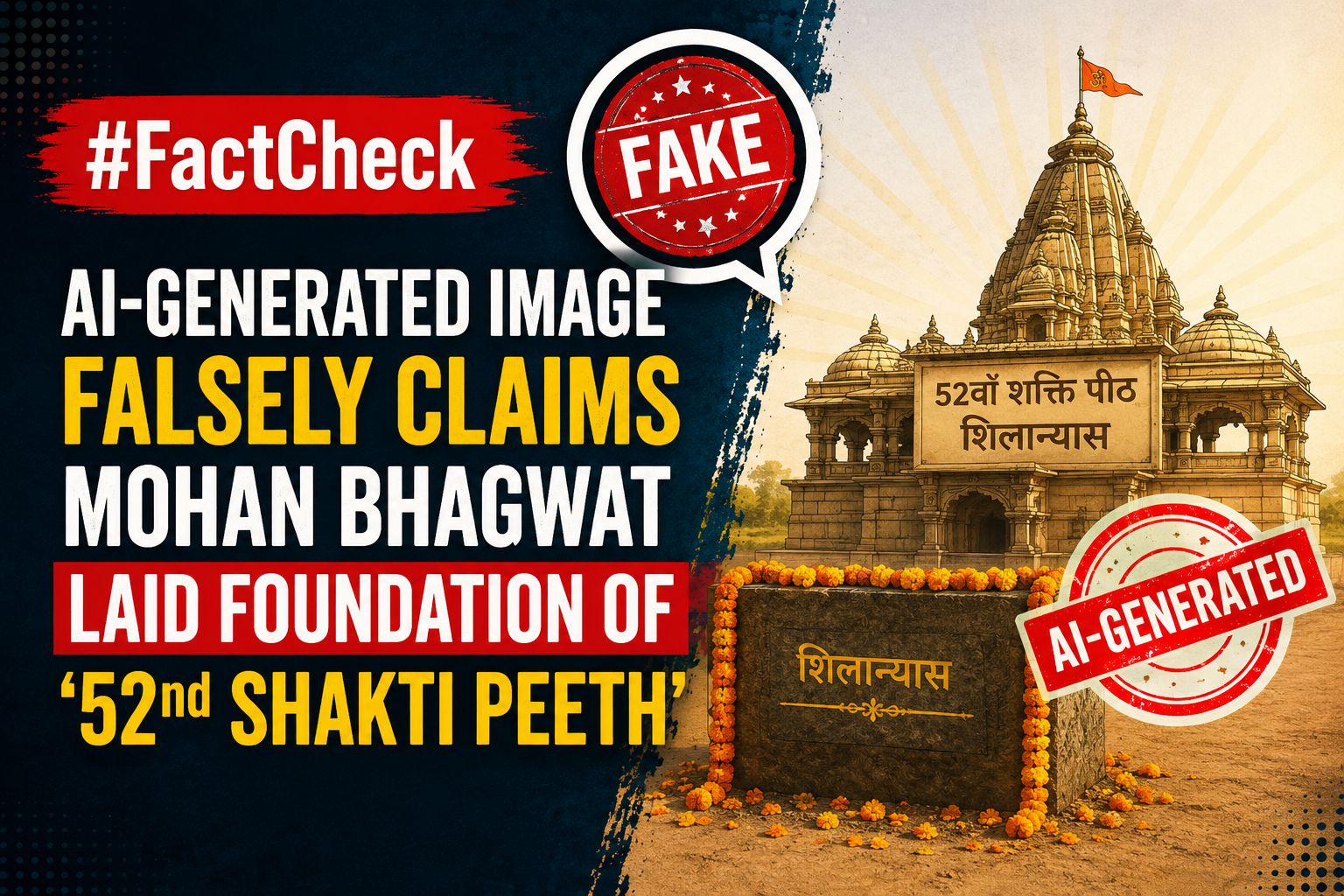
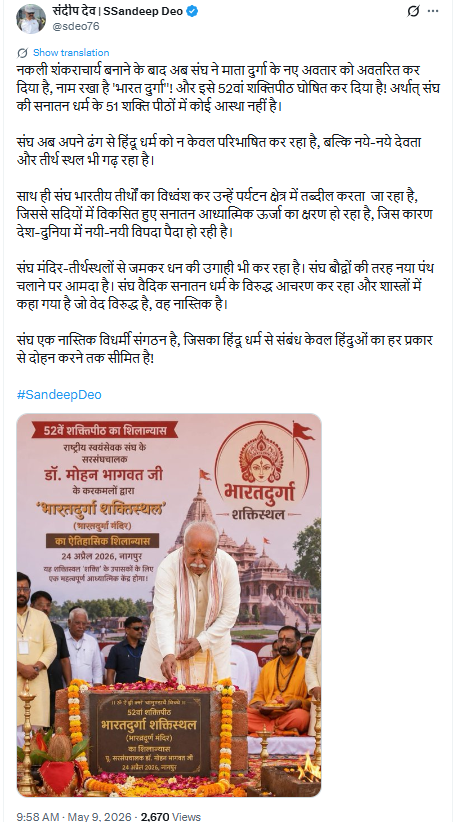
A picture of Mohan Bhagwat is going viral on social media, showing him allegedly laying the foundation stone of a so-called “52nd Shakti Peeth” named Bharatdurga. Users are claiming that the RSS chief insulted Sanatan Dharma by creating a new Shakti Peeth in Nagpur. Research by CyberPeace Research Wing found that the claim is false. The viral image is AI-generated, and Mohan Bhagwat did not inaugurate any “52nd Shakti Peeth.” In reality, he laid the foundation stone of the Bharatdurga Temple.
Claim
An X user named Sandeep Dev shared the viral image and alleged that after creating “fake Shankaracharyas,” the RSS had now introduced a new form of Goddess Durga called “Bharat Durga” and declared it the 52nd Shakti Peeth. The post further claimed that the RSS was redefining Hinduism and creating new religious sites.
Fact Check
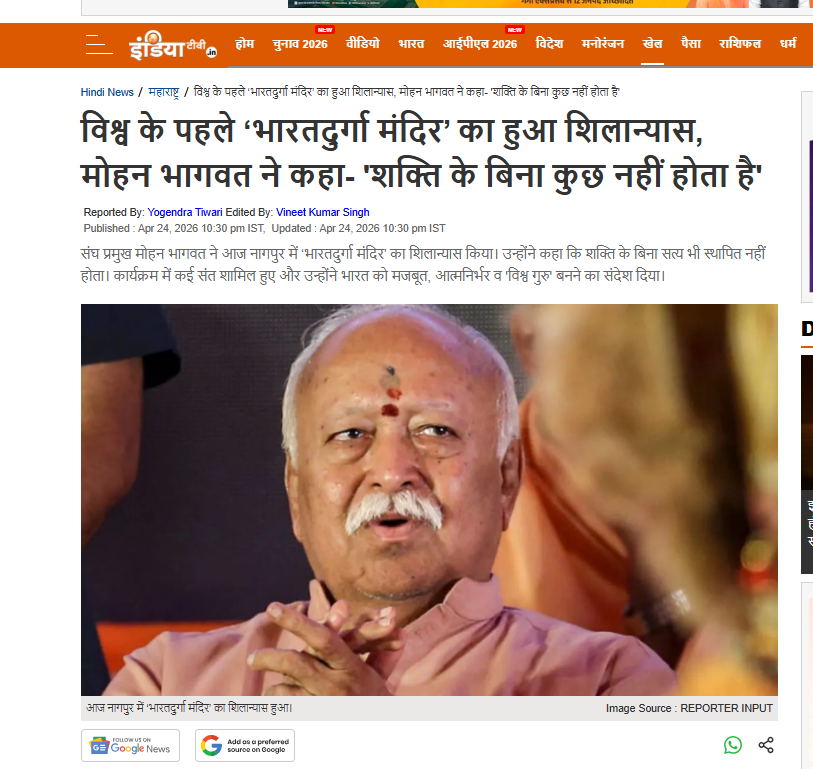
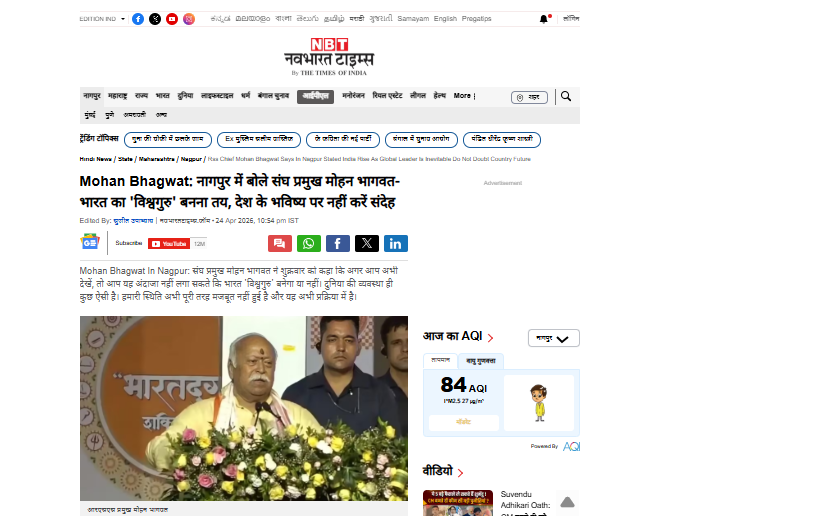
To verify the claim, we searched relevant keywords and found reports published on April 24, 2026, by India TV and Navbharat Times. According to these reports, Mohan Bhagwat laid the foundation stone of the world’s first Bharatdurga Temple in Nagpur during a ceremony organized at the Jamtha campus of Dr. Abaji Thatte Seva and Research Institute. Several prominent saints and religious leaders attended the event. Importantly, none of the reports described the temple as the “52nd Shakti Peeth.”
Further research led us to the full video of the foundation ceremony uploaded on the YouTube channel of Devendra Fadnavis. The stage backdrop and video thumbnail clearly mention “Bharatdurga Temple Foundation Ceremony.” However, the viral image frame was not visible anywhere in the authentic footage.

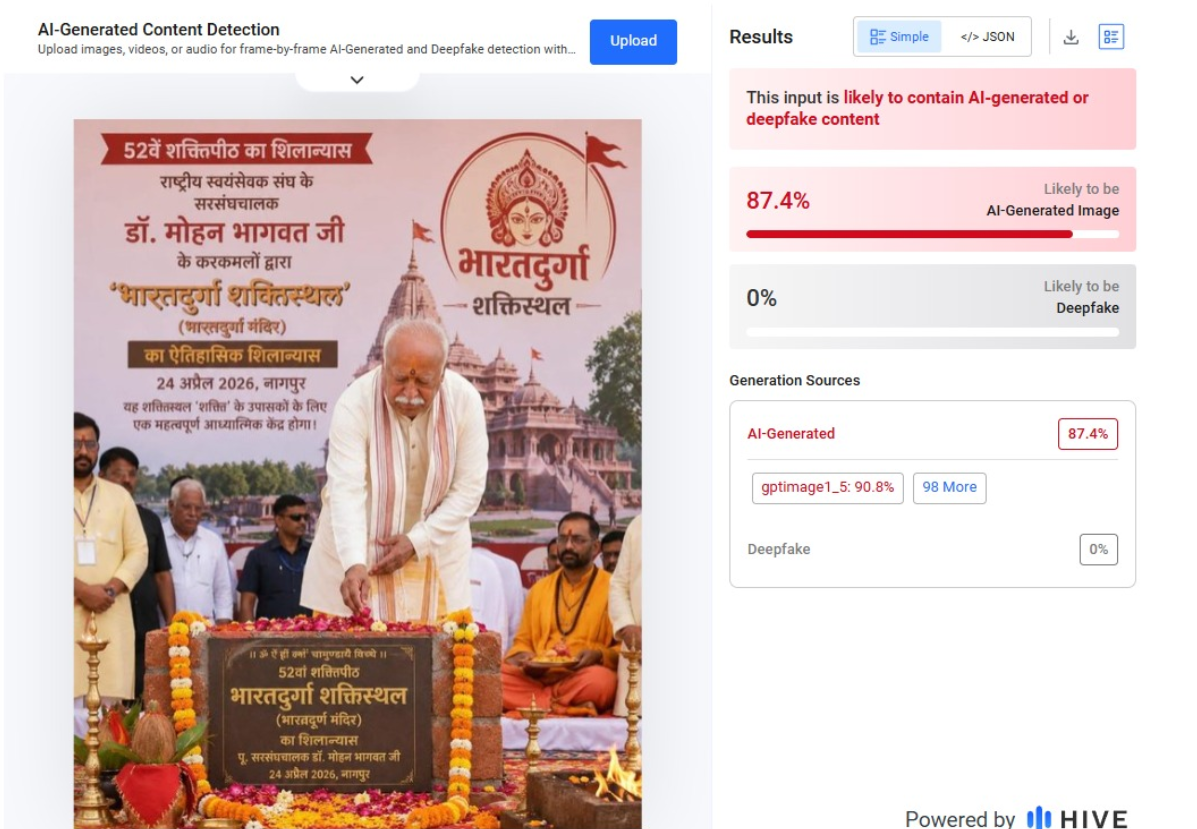
We also analyzed the viral image using AI detection tools, which indicated that the image was AI-generated.
Conclusion
Our research confirms that the claim about Mohan Bhagwat laying the foundation of a “52nd Shakti Peeth” is false. The viral image is AI-generated. In reality, he participated in the foundation ceremony of the Bharatdurga Temple in Nagpur.
Executive Summary
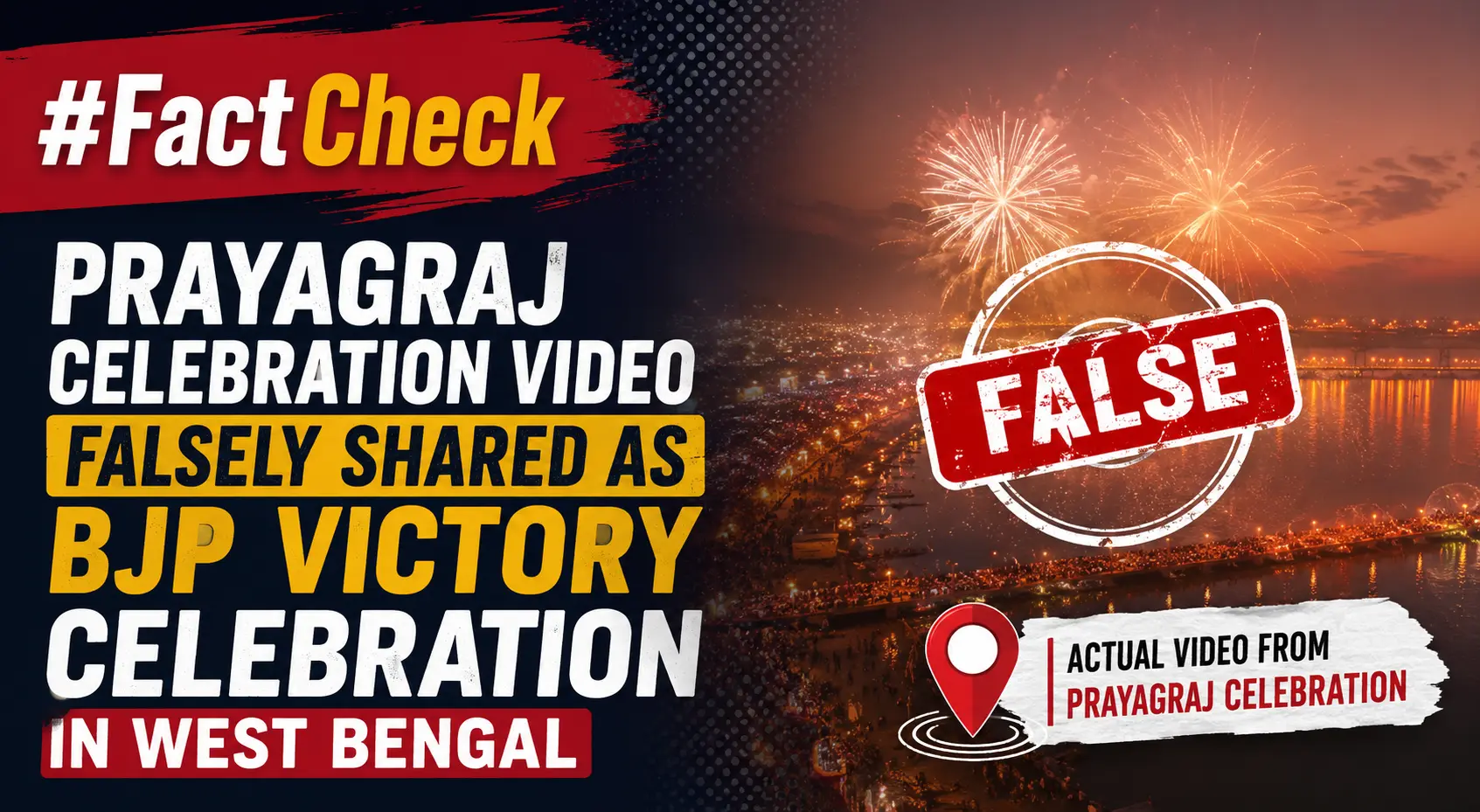
Assembly election results for West Bengal, Assam, Kerala, Tamil Nadu and the Union Territory of Puducherry have been declared, with the Bharatiya Janata Party (BJP) set to form the government in West Bengal after defeating the Trinamool Congress (TMC). Amid celebrations and reports of violence in the state, several misleading videos and images are also circulating on social media. One such viral clip shows people waving the Indian tricolour and saffron flags during a street celebration. Social media users are claiming that the video captures people celebrating a political change and BJP’s victory in West Bengal. Research by CyberPeace Research Wing found that the claim is false. The viral video is not from West Bengal but from Prayagraj and actually shows celebrations after India’s victory in the ICC Men's T20 World Cup 2026.
Claim
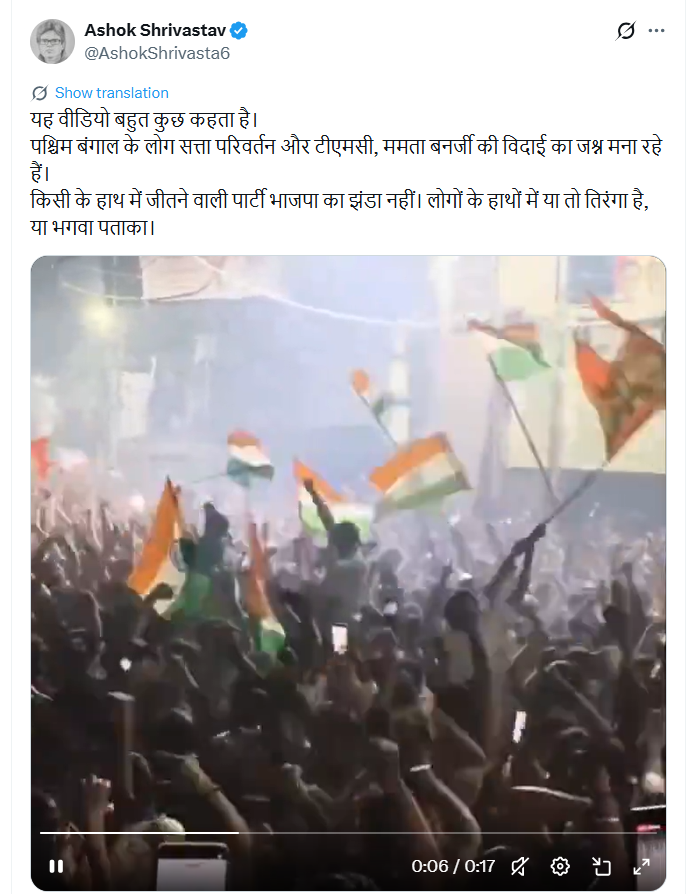
An X user named “Ashok Shrivastav” shared the video on May 6, 2026, claiming that people in West Bengal were celebrating the departure of Mamata Banerjee and the TMC government. The user further claimed that people were waving only the national flag and saffron flags, not BJP flags.
Fact Check
To verify the claim, we extracted several keyframes from the viral video and conducted a reverse image search using Google Lens. The clip was found on multiple social media handles falsely linked to West Bengal.
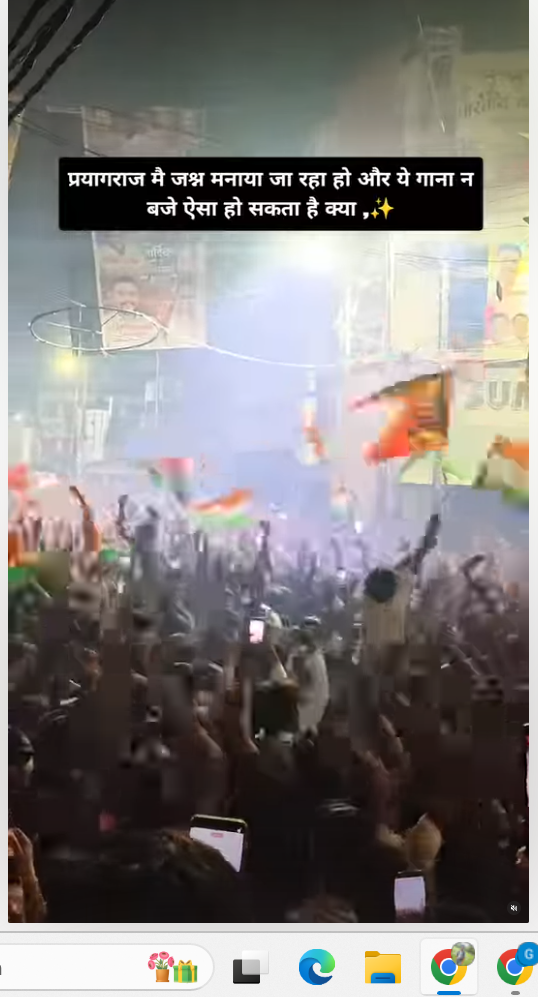
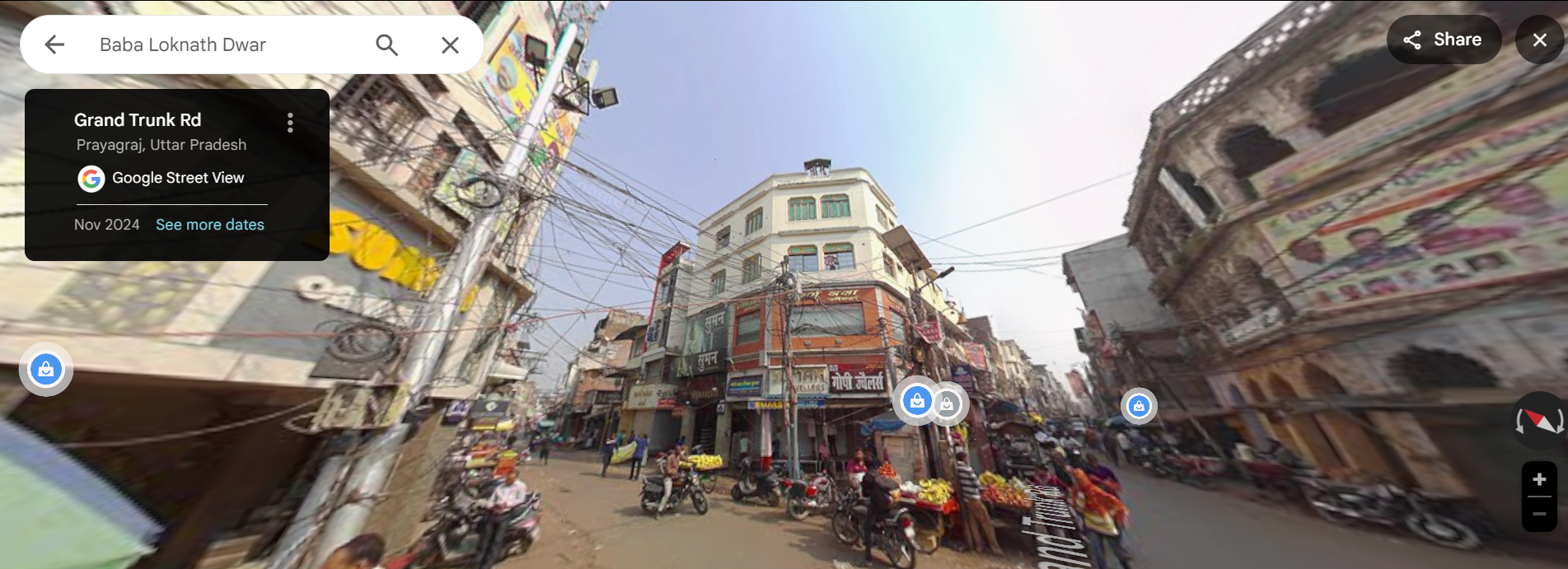
However, the oldest version of the video was uploaded on March 8, 2026, by an Instagram page named “Streets of Sangam.” The caption identified the location as Prayagraj and included hashtags related to the World Cup and Loknath. During the comparison of the viral and original videos, we noticed a shop sign reading “Suman Ornaments.” Using Google Street View, we traced the location to Baba Loknath area in Prayagraj, where the same shop could be identified near Loknath Gate.
Conclusion
Our research confirms that the viral claim is fake. The video being shared as BJP victory celebrations in West Bengal is actually from Prayagraj, Uttar Pradesh, and dates back to March 2026, when locals celebrated Team India’s T20 World Cup victory. The old clip is now being misleadingly circulated with a false political narrative.
