
Debunking the Free Recharge Scam: Protecting Yourself from Misuse of TRAI's Name
Executive Summary:
Cyber incidents are evolving along with time, they are designed to attract and lure people through social networking sites and/or messaging services. In the recent past a spate of messages alleging that TRAI is offering ‘3 months free recharge with free voice calls and internet for 4g/5g with 200 GB free data’. These messages display the TRAI logo with attractive offers to trick the users into revealing their personal details. This blog discusses the functioning of this free mobile recharge scheme, its methods and guidelines on how to avoid such fake schemes. This blog explains the importance of vigilance and verification when receiving any links, emphasizing the need to report suspicious activities and educate others to prevent identity theft and protect personal information.
Claim:
The message circulated an enticing offer: free mobile recharge for 3 months which provides unlimited free voice calls with 200GB 4G/5G data with TRAI logo. The key characteristics of the false claims are
- Official Branding: The logo of TRAI has been viewed as a deceptive facade of credibility.
- Unrealistic Offers: It is accompanied by a free recharge , which is intended for an extended period indefinite period, like most fraudsters’ bait.
- Urgency and Exclusivity: The offer is for a limited time to make urgency forcing the receiver to take the offer without confirmation.
The Deceptive Scheme:
Organized systematically, the fraudulent campaign usually proceeds in several steps, all of which aim at extracting the victim’s personal data. Here’s a breakdown of the scheme:
1. Initial Contact: Such messages or calls reach the users’ inboxes or phone numbers through social media applications such as WhatsApp or through text messages. These messages further implies that the user was chosen for the special offer from TRAI, which elicits the interest of the user.
2. Information Request: To claim the purported offer, users are directed to a website or asked to reply with personal details, including:
- Phone number
- State of residence
- SIM provider details
This is useful for the scammers as they harvest information which can be used to conduct identity theft or sold to others on the shady part of the internet known as the ‘Dark Web’.
3. Fake Confirmation: After providing all the information, a congratulatory message appears on the screen showing that their phone number is eligible for the offer. The user is compelled to forward the message to many phone numbers through whatsapp to get the offer.
4. Pressure Tactics: The message often implies a sense of time constraint or fear which psychologically produces pressure to provide all the user information. For example, users are given messages such as that if they do not ‘act now’, they will lose their mobile service.
Analyzing the Fraudulent Campaign
The TRAI fraudulent recharge scheme case depicts that social engineering is used in cyber crimes. Here are some key aspects that characterize this campaign:
- Sophisticated Social Engineering
Scammers take advantage of the holders’ confidence in official bodies such as TRAI. By using official TRAI logos, official language they try to deceive even cautious people.
- Viral Spread
The user is compelled to share the given message to friends and groups; this is an excellent strategy to spread the scam. It not only spreads the fraudulent message but also tries to extract the details of other people.
- Technical Analysis

- Domain Name: SGOFF[.]CYOU
- Registry Domain ID: D472308342-CNIC
- Registrar WHOIS Server: whois.hkdns.hk
- Registrar URL: http://www.hkdns.hk
- Updated Date: 2024-07-24T18:50:48.0Z
- Creation Date: 2024-07-19T18:48:44.0Z
- Registry Expiry Date: 2025-07-19T23:59:59.0Z
- Registrar: West263 International Limited
- Registrar IANA ID: 1915
- Registrant State/Province: Anhui
- Registrant Country: CN
- Name Server: NORMAN.NS.CLOUDFLARE.COM
- Name Server: PAM.NS.CLOUDFLARE.COM
- DNSSEC: unsigned
Cloudflare Inc. is used to cover the scam. The real website always uses the older domain while this url has been registered recently which indicates that this link is a scam.

The graph indicates that some of the communicated files and websites are malicious.
CyberPeace Advisory and Best Practice:
In light of the growing threat posed by such scams, the Research Wing of CyberPeace recommend the following best practices to help users protect themselves:
1. Verify Communications: It is always advisable to visit the official site of the organization or call the official contact numbers of the company to speak to their customer care and clarify about the offers.
2. Do not share personal information: No genuine organization will call the people for personal information. Step carefully and do not provide personal information that will lead to identity theft when dealing with such offers.
3. Report Fraudulent Activity: If one receives any calls or messages that seem to be suspicious, then the user can report cyber crimes to the National Cyber Crime Reporting Portal on www. cybercrime. gov. in or call on 1930. Such scams are reportable and assist the authorities in tracking and fighting the vice.
4. Educate Others : Always raise awareness among friends by sharing these kinds of scams. Educating people helps to avoid them falling prey to such fraudulent schemes.
5. Use Reliable Resources : Always refer to official sources or websites for any kind of offers or promotions.
Conclusion:
The free recharge scheme for 3 months with the logo of TRAI is a fraudulent scam. There is no official information from TRAI or in their official website about this free recharge scheme. Though the scheme looks attractive, it is deceptive. Through this, the scammers are trying to collect personal details of the individual. Before clicking any links, it is necessary to check the authenticity of the information, report these kinds of incidents to spread awareness among people. Always be safe and be vigilant.

Related Blogs
Introduction
The Digital Personal Data Protection (DPDP) Act 2023 of India is a significant transition for privacy legislation in this age of digital data. A key element of this new law is a requirement for organisations to have appropriate, user-friendly consent mechanisms in place for their customers so that collection, use or removal of an individual's personal data occurs in a clear and compliant manner. As a means of putting this requirement into practice, the Ministry of Electronics and Information Technology (MeitY) issued a comprehensive Business Requirements Document (BRD) in June 2025 to guide organizations, as well as Consent Managers, on how to create a Consent Management System (CMS). This document establishes the technical and functional framework by which organizations and individuals (Data Principals) will exercise control over the way their data is gathered, used and removed.
Understanding the BRD and Its Purpose
BRD represents an optional guide created as part of the "Code for Consent" programme run by MeitY in India. The purpose of the BRD is to provide guidance to startups, digital platforms and other enterprises on how to create a technology system that supports management of user consent per the requirements of the DPDP Act. Although the contents of the BRD do not carry any legal weight, it lays out a clear path for organisations to create their own consent mechanisms using best practices that align with the principles of transparency, accountability and purpose limitation in the DPDP Act.
The goal is threefold:
- Enable complete consent lifecycle management from collection to withdrawal.
- Empower individuals to manage their consents actively and transparently.
- Support data fiduciaries and processors with an interoperable system that ensures compliance.
Key Components of the Consent Management System
The BRD proposes the development of a modular Consent Management System (CMS) that provides users with secure APIs and user-friendly interfaces. This system will allow for a variety of features and modules, including:
- Consent Lifecycle Management – consent should be specific, informed and tied to an explicit purpose. The CMS will manage the collection, validation, renewal, updates and withdrawal of consent. Each transaction of consent will create a tamper-proof “consent artifact,” which will include the timestamp of creation as well as an ID identifying the purpose for which it was given.
- User Dashboard – A user will be able to view and modify the status of their active, expired or withdrawn consent and revoke access at any time via the multilingual user-friendly interface. This would make the system accessible to people from different regions and cultures.
- Notification Engine – The CMS will automatically notify users, fiduciaries and processors of any action taken with respect to consent, in order to ensure real-time updates and accountability.
- Grievance Redress Mechanism – The CMS will include a complaints mechanism that allows users to submit complaints related to the misuse of consent or the denial of their rights. This will enable tracking of the complaint resolution status, and will allow for escalation if necessary.
- Audit and Logging – As part of the CMS's internal controls for compliance and regulatory purposes, the CMS must maintain an immutable record of every instance of consent for auditing and regulatory review. The records must be encrypted, time-stamped, and linked permanently to a user and purpose ID.
- Cookie Consent Management – A separate module will enable users to manage cookie consent for websites separately from any other consents.
Roles and Responsibilities
The BRD identifies the various stakeholders involved and their associated responsibilities.
- Data Principals (Users): The user has full authority to give, withhold, amend, or revoke their consent for the use of their personal data, at any time.
- Data Fiduciaries (Companies): Companies (the fiduciaries) must collect the data principals' consents for each particular reason and must only begin processing a data subject's personal data after validating that consent through the CMS. Companies must also provide the data principals with any information or notifications needed, as well as how to resolve their complaints.
- Data Processors: Data Processors must strictly adhere to the consent stated in the CMS, and Data Processors may only process personal data on behalf of the Data Fiduciary.
- Consent Managers: The Consent Managers are independent entities that are registered with the Data Protection Board. They are responsible for administering the CMS, allowing users to manage their consent across different platforms.
This layered structure ensures transparency and shared responsibility for the consent ecosystem.
Technical Specifications and Security
The following principles of the DPDP Act must be followed to remain compliant with the DPDP Act.
- End-to-End Encryption: All exchanges of data with users must be encrypted using a minimum of TSL 1.3 and also encrypting within that standard.
- API-First Approach: API’s will be utilized to validate, withdraw and update consent in a secured manner using external sources.
- Interoperability/Accessibility: The CMS needs to allow for users to utilize several different languages (e.g. Hindi, Tamil, etc.) and be appropriate for use with various types of mobile devices and different abilities.
- Data Retention Policy: The CMS should also include automatic deletion of consent data (when the consent has expired or has been withdrawn) in order to maintain compliance with data retention limits.
Legal Relevance and Timelines
While the BRD itself is not enforceable, it is directly aligned with the upcoming enforcement of the DPDP Act, 2023. The Act was passed in August 2023 but is expected to come into effect in stages, once officially notified by the central government. Draft implementation rules, including those defining the role of Consent Managers, were released for public consultation in early 2025.
For businesses, the BRD serves as an early compliance tool—offering both a conceptual roadmap and technical framework to prepare before the law is enforced. Legal experts have described it as a critical resource for aligning data governance systems with emerging regulatory expectations.
Implications for Businesses
Organizations that collect and process user data will be required to overhaul their consent workflows:
- No blanket consents: Every data processing activity must have explicit, separate consent.
- Granular audit logs: Companies must maintain tamper-proof logs for every consent action.
- Integration readiness: Enterprises need to integrate their platforms with third-party or in-house CMS platforms via the specified APIs.
- Grievance redress and user support: Systems must be in place to handle complaints and withdrawal requests in a timely, verifiable manner.
Failing to comply once the DPDP Act is in force may expose companies to penalties, reputational damage, and potential regulatory action.
Conclusion
The BRD on Consent Management of India is a forward-looking initiative laying a technological framework that is an essential component of the DPDP Act concerning user consent; Although not yet a legal document, it provides an extent of going into all the necessary discipline for companies to prepare. As data protection grows in importance, developing consent mechanisms based on security, transparency, and the needs of the user is no longer just a regulatory requirement, but rather a requirement for the development of trust. This is the time for businesses to establish or implement CMS solutions that support this objective to be better equipped for the future of data governance in India.
References
- https://d38ibwa0xdgwxx.cloudfront.net/whatsnew-docs/8d5409f5-d26c-4697-b10e-5f6fb2d583ef.pdf
- https://ssrana.in/articles/ministry-releases-business-requirement-document-for-consent-management-under-the-dpdp-act-2023/
- https://dpo-india.com/Blogs/consent-dpdpa/
- https://corporate.cyrilamarchandblogs.com/2025/06/the-ghost-in-the-machine-the-recent-business-requirement-document-on-consent/
- https://www.mondaq.com/india/privacy-protection/1660964/analysis-of-the-business-requirement-document-for-consent-management-system

How clothing patterns, movement and real-world conditions can affect computer vision
Introduction
A person walks in front of an AI camera. The person is clearly visible to us, yet the system may not always identify the person with the same confidence. This sounds strange until we understand one basic fact: a camera records an image, while an AI model interprets that image through patterns learned during training.
This idea became popular through demonstrations such as “The T-Shirt Invisibility Cloak,” where specially designed clothing was shown as a way to interfere with person-detection systems. The wearer does not become physically invisible. The camera still captures the person. Instead, the visual pattern can make a particular AI model less confident or cause an incorrect prediction.
So, how can a piece of clothing affect machine vision? And what does this tell us about the strengths and limitations of AI surveillance?
How Does an AI Camera See?
A normal CCTV camera mainly captures and records video. An AI camera adds software that analyses the video for a specific task, such as detecting a person, vehicle, face or event.
A simple way to understand the process is:
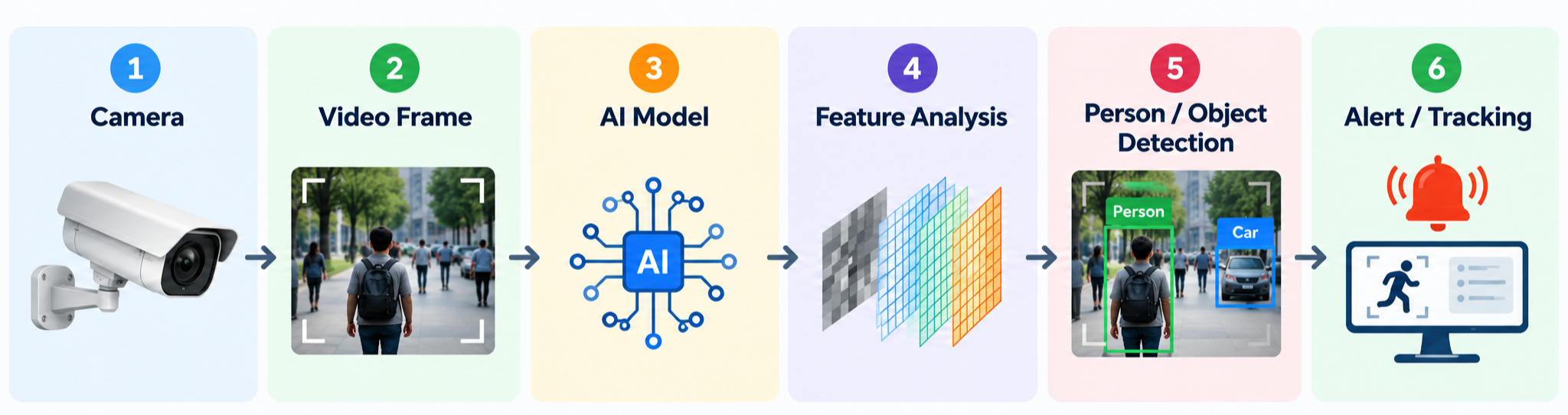
The model does not understand a person exactly as a human does. It processes numerical representations learned from training data. For a person detector, the question is closer to “Do these visual patterns match the class ‘person’?” than “I know this is a human.”
Think About It
A human sees a person wearing a complex shirt and easily separates the shirt design from the person. An AI model must decide what the visual patterns in the image mean for its particular task.
When Clothing Becomes Difficult
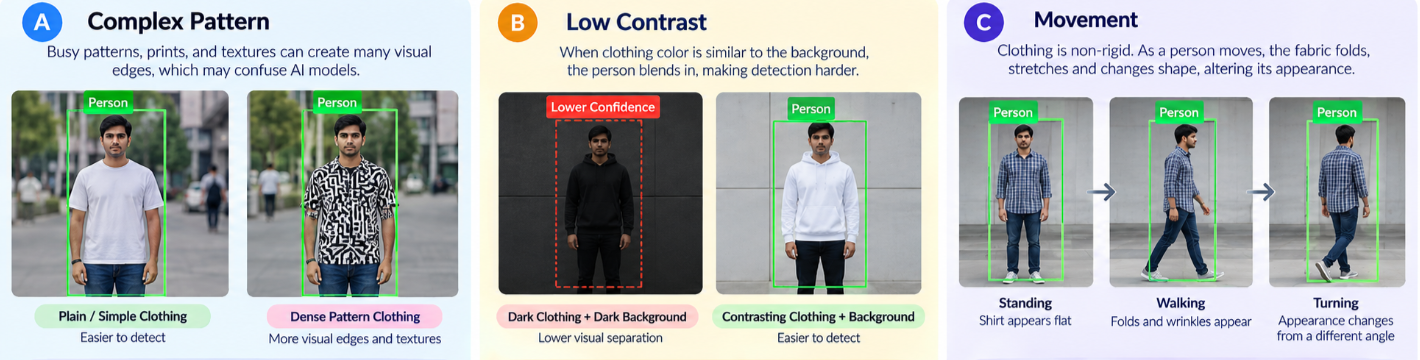
Clothing can become challenging when it changes the visual information available to a model.
Complex patterns can add many edges, repeated shapes and textures to an image. These do not automatically confuse an AI camera, but they can influence the features a detector uses.
Low contrast can create another problem. If clothing is close in colour or brightness to the background, the boundary between the person and the environment may be harder to separate, especially in poor lighting or low-resolution footage.
Movement creates another challenge. A loose jacket, flowing fabric or layered clothing changes shape as the person walks or turns. Researchers designing adversarial T-shirts have had to account for these non-rigid changes because a printed pattern does not stay flat on a moving body.
The T-Shirt Invisibility Cloak
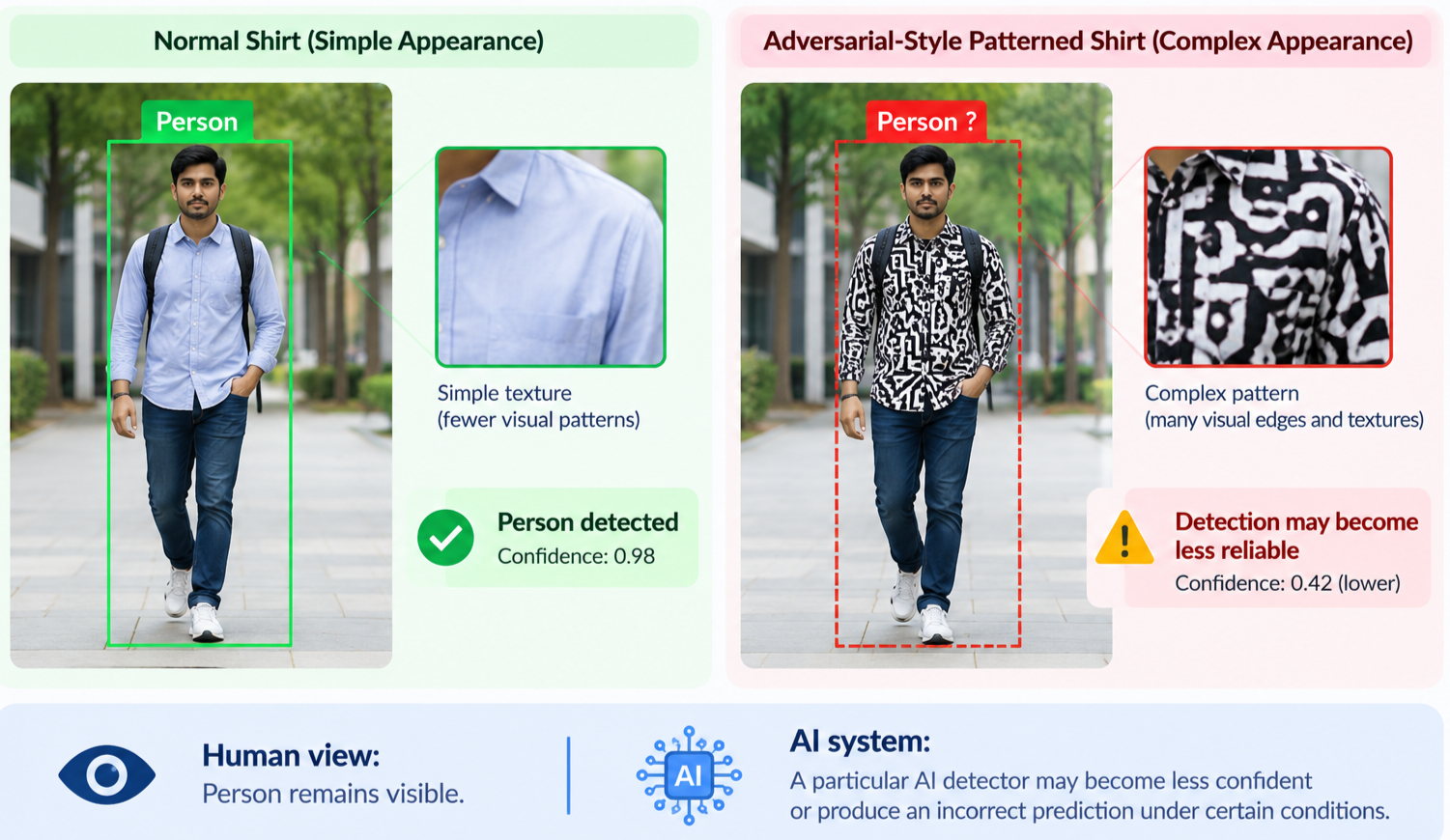
The video “The T-Shirt Invisibility Cloak” is a simple introduction to a larger research area called physical adversarial examples.
In adversarial machine learning, researchers study inputs deliberately designed to make a model produce an incorrect prediction. With clothing, the visual pattern is physically printed on a garment and then captured by a camera.
A 2019 study by Xu and colleagues demonstrated an adversarial T-shirt designed to interfere with person detectors in the physical world. Under their test conditions, the reported physical attack success rate against YOLOv2 was 57%. The work also modelled cloth deformation caused by movement.
A 2022 CVPR study on adversarial texture extended the idea to different viewing angles and tested physical clothing such as T-shirts, skirts and dresses.
But there is an important limitation: an adversarial garment is not a universal invisibility cloak. Different cameras and AI systems use different models, training data and processing pipelines. A pattern that affects one detector may have little effect on another.
Why Does the AI Get It Wrong?
Clothing may be only one part of the problem. A model can receive features different from what it learned during training. Camera angle, distance, movement, lighting, motion blur, compression and occlusion can also change the image.
Imagine the same person in four situations:
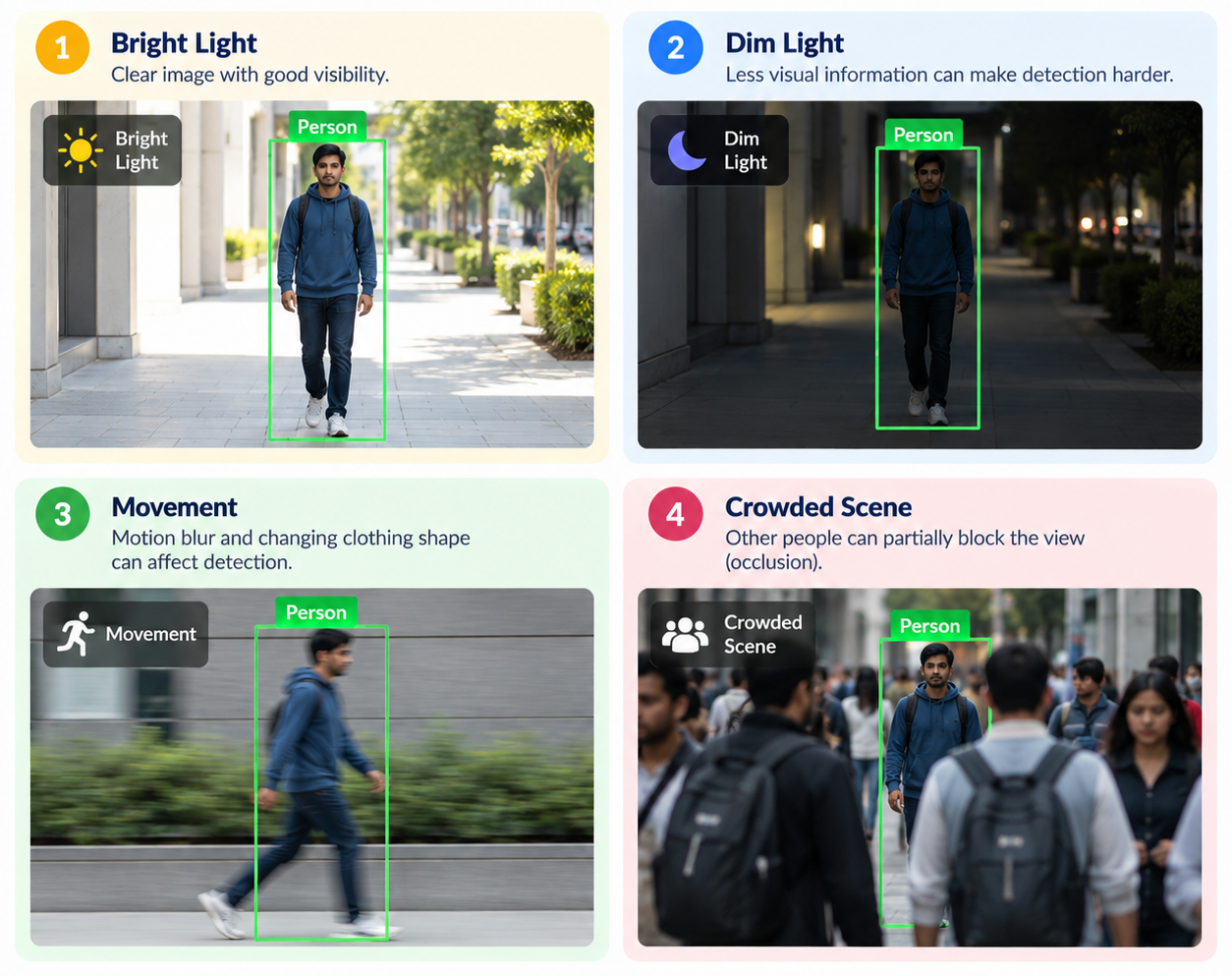
There may not be one fixed answer. AI performance depends on the combination of conditions.
AI Camera vs Human Vision
Humans use context. We understand that clothes wrinkle, people turn, shadows change and objects may temporarily block part of a body. An AI detector is more task-specific and can become less reliable when input conditions differ from the data used to train or evaluate it.
This does not make AI useless. It makes realistic testing important.
Building More Reliable AI Surveillance
The lesson is not that AI cameras should be abandoned. They should be tested under difficult, realistic conditions.
Testing can include different clothing patterns, colours, body positions, distances, camera angles, lighting conditions and crowded scenes. Security teams should also distinguish between person detection, facial recognition, tracking and behaviour analysis because these are different tasks. [6]
Most importantly, an automated alert should be treated as a prediction, not unquestionable truth. Important decisions should include appropriate human review.
A New Research Direction
Research is also moving beyond ordinary visible-light cameras. A 2026 CVPR paper explored adversarial clothing designed to affect both visible and infrared surveillance systems. At the same time, researchers continue to study ways of making models more robust against physical adversarial attacks.
This creates a continuing security cycle:

That cycle is a normal part of security research.

At a Glance: Human Vision vs AI Detection
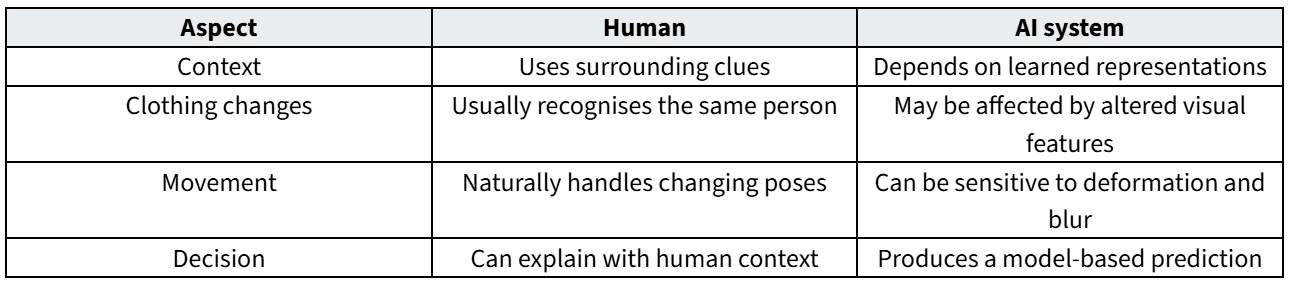
Conclusion
The idea of an “invisible T-shirt” is fascinating because it challenges a common assumption about AI: if a machine can see an image, we expect it to understand that image correctly.
A person can remain completely visible while a particular AI detector becomes less confident or makes a wrong prediction. Clothing patterns, texture, folds, movement, lighting, camera angle and other factors can interact with a model in unexpected ways. Research has demonstrated physical adversarial clothing against person detectors, while newer work is exploring more complex surveillance conditions.
The real lesson is not that a shirt can make someone invisible. AI vision is a prediction system with strengths and weaknesses. Understanding those weaknesses helps researchers build better defences, helps security teams evaluate systems realistically, and reminds us that automated surveillance should be deployed with technical care, human oversight and respect for privacy.
References
- The T-Shirt Invisibility Cloak
- YouTube video referenced for the article’s introductory example: https://www.youtube.com/watch?v=NyofHyRm5CQ
- Xu, K., Zhang, G., Liu, S., Fan, Q., Sun, M., Chen, H., Chen, P.-Y., Wang, Y., & Lin, X. (2020). Adversarial T-shirt! Evading Person Detectors in a Physical World. Computer Vision – ECCV 2020, 665–681. https://doi.org/10.1007/978-3-030-58558-7_39
- Study demonstrating a physical adversarial T-shirt against person detection and modelling non-rigid cloth deformation during movement. https://arxiv.org/abs/1910.11099
- Thys, S., Van Ranst, W., & Goedemé, T. (2019). Fooling Automated Surveillance Cameras: Adversarial Patches to Attack Person Detection. CVPR Workshops.
- Earlier work showing physical adversarial patches can reduce the accuracy of person detectors. https://openaccess.thecvf.com/content_CVPRW_2019/html/CV-COPS/Thys_Fooling_Automated_Surveillance_Cameras_Adversarial_Patches_to_Attack_Person_Detection_CVPRW_2019_paper.html
- Hu, Z., Huang, S., Zhu, X., Sun, F., Zhang, B., & Hu, X. (2022). Adversarial Texture for Fooling Person Detectors in the Physical World. Proceedings of the IEEE/CVF Conference on Computer Vision and Pattern Recognition (CVPR), 13307–13316.
- Study extending physical adversarial clothing to multiple viewing angles and garments including T-shirts, skirts and dresses. https://openaccess.thecvf.com/content/CVPR2022/html/Hu_Adversarial_Texture_for_Fooling_Person_Detectors_in_the_Physical_World_CVPR_2022_paper.html
- Long, J., Jiang, T., Liu, H., Ma, C., Zhou, W., Yang, Y., & Yao, W. (2026). Thermally Activated Dual-Modal Adversarial Clothing against AI Surveillance Systems. CVPR 2026.
- Recent work exploring adversarial clothing against visible and infrared surveillance systems. https://openaccess.thecvf.com/content/CVPR2026/html/Long_Thermally_Activated_Dual-Modal_Adversarial_Clothing_against_AI_Surveillance_Systems_CVPR_2026_paper.html
- Li, S., Zhang, S., Chen, G., Wang, D., Feng, P., Wang, J., Liu, A., Yi, X., & Liu, X. (2023). Towards Benchmarking and Assessing Visual Naturalness of Physical World Adversarial Attacks. Proceedings of the IEEE/CVF Conference on Computer Vision and Pattern Recognition (CVPR), 12324–12333.
- Useful context on physical adversarial attacks and the challenge of making them visually natural. https://openaccess.thecvf.com/content/CVPR2023/papers/Li_Towards_Benchmarking_and_Assessing_Visual_Naturalness_of_Physical_World_Adversarial_CVPR_2023_paper.pdf [6]
Executive Summary
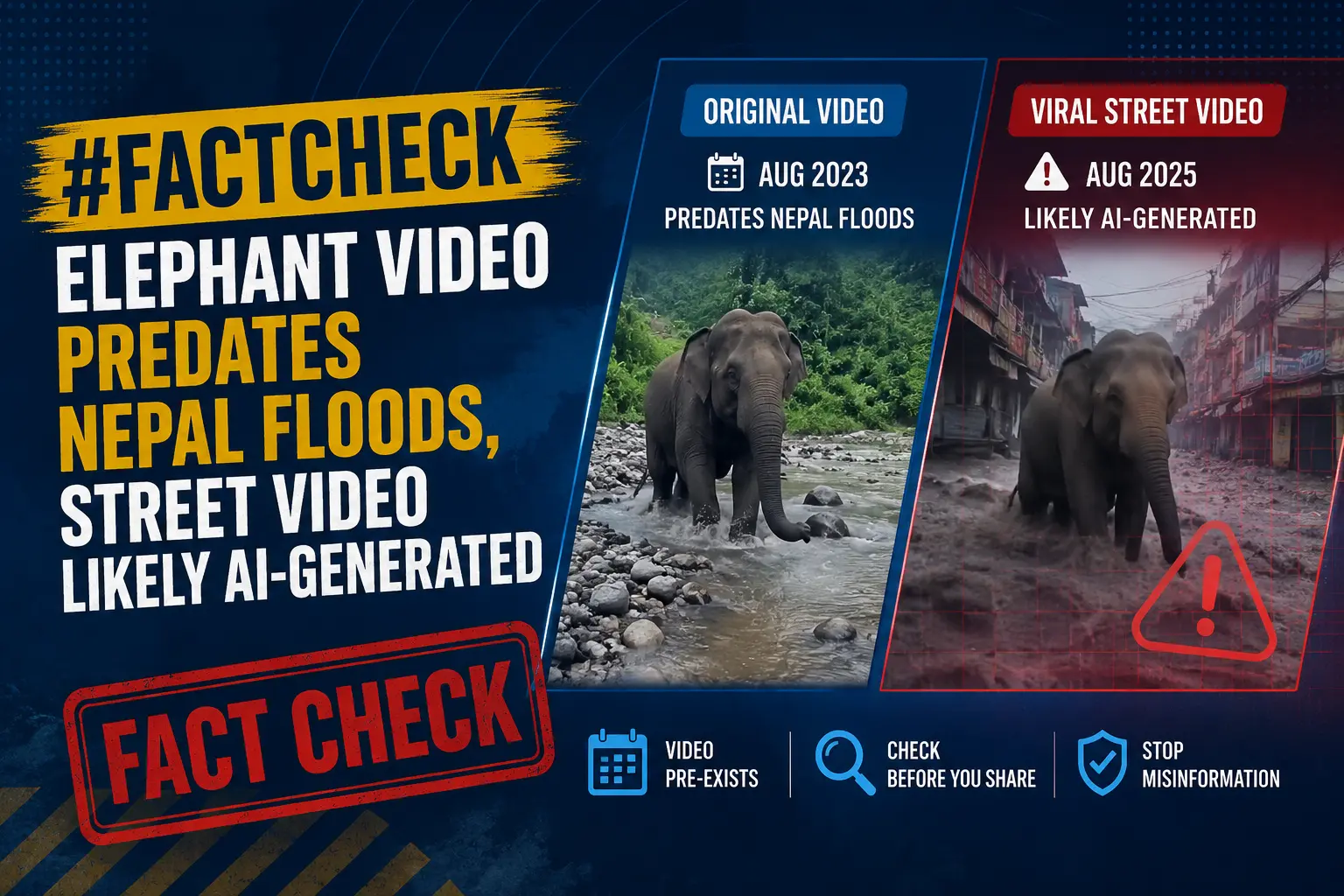
Amid the floods in Nepal, several videos are being shared on social media, claiming to show the current situation in the country. A research done by the Research Wing of the CyberPeace found that the video showing elephants is from an incident that occurred before the floods in Nepal, while the video showing the street is likely AI-generated.
Claim 1
Videos claiming to show a street being swept away by flash floods in Nepal and a herd of elephants being carried away by the floods and reaching Uttar Pradesh are going viral on social media.
https://www.instagram.com/p/DcimGaiiCa7/

Claim 2
A newly surfaced video purportedly shows the devastation caused by floods in Nepal, with cars and homes being destroyed. It is being claimed that 350 people have died and 750 are missing so far
https://x.com/UTDbrims/status/2092829398462341484?s=48

Fact Check 1
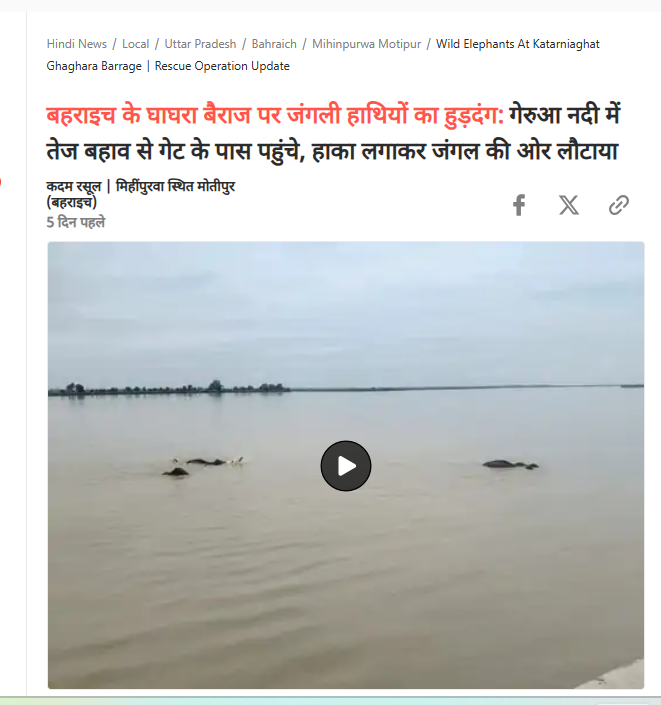
The first video claims to show a herd of wild elephants that was swept away by the floods in Nepal and reached Uttar Pradesh. We conducted a reverse image search of the first video using Google Lens and found a report by Hindi news publication Dainik Bhaskar, which shared a video featuring visuals similar to those in the viral clip. According to the report, a herd of wild elephants coming from the Gerua River reached the gates of the Chaudhary Charan Singh Ghaghra Barrage in Bahraich district, Uttar Pradesh, due to the strong current of the river. The report also quoted the Forest Range Officer as saying that the area is adjacent to an elephant corridor, which is why elephants frequently move through the region.
Fact Check 2
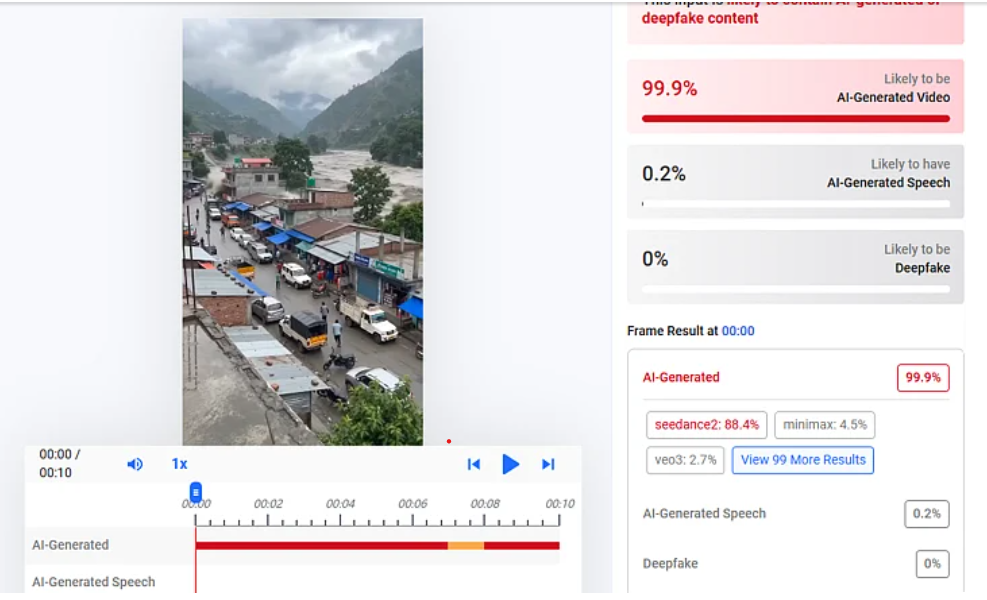
The second video shows a street being completely swept away by floodwaters. We conducted a reverse image search of the video using Google Lens but could not find any credible source that had shared the footage. Following this, we ran the video through the AI detection tool Hive Moderation, which flagged it as 99 percent likely to be AI-generated.
Conclusion
Our research found that the viral videos being shared as scenes of devastation caused by the recent floods in Nepal are misleading. The video showing a herd of elephants is from a separate incident in Bahraich, Uttar Pradesh, and predates the Nepal floods. Meanwhile, the video showing a street being swept away could not be traced to any credible source and was flagged as 99 percent likely to be AI-generated by Hive Moderation.
