
#FactCheck:Old Video of Swatantra Bhardwaj Shared as Footage Recorded After His Jail Release
Executive Summary
A video of Swatantra Bhardwaj is being shared on social media. Another man can also be seen with Bhardwaj in the video. Swatantra Bhardwaj came into the spotlight following an alleged assault involving the father of a protester during a protest by the Cockroach Janta Party at Jantar Mantar. Social media posts claim that the video was recorded immediately after his release from jail and shows him openly threatening people. CyberPeace Research Wing’s Research found the viral claim to be false. Our Research revealed that the video being shared on social media is old. Swatantra Bhardwaj was released from jail on September 17, while our Research found that the video has been available online since June. Therefore, the claim that the video was recorded immediately after Bhardwaj’s release from jail is misleading.
Claim:
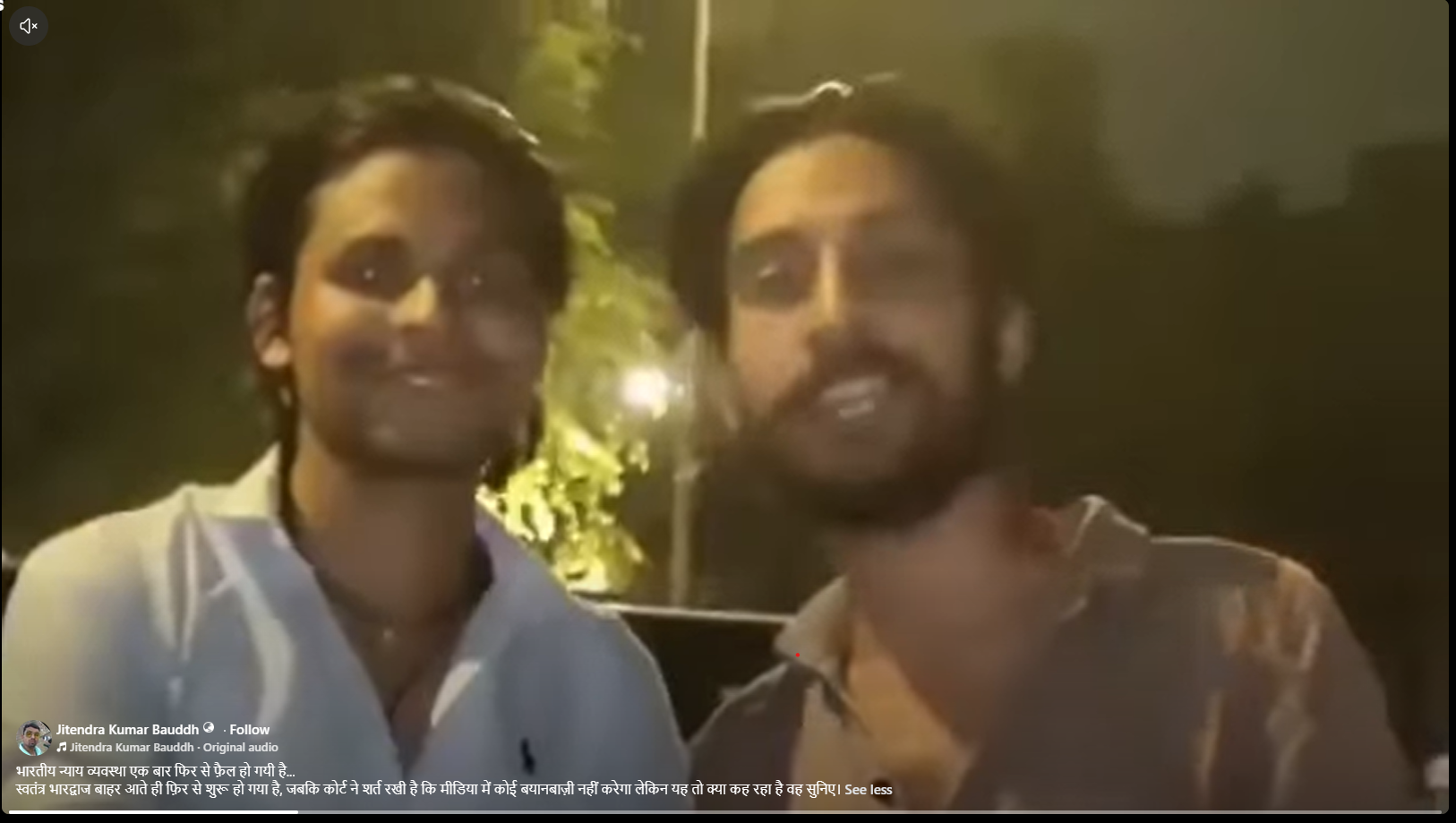
A Facebook user shared the viral video on September 17, 2026, with the caption: “The Indian judicial system has failed once again... Swatantra Bhardwaj has started again immediately after coming out, even though the court has imposed a condition that he will not make any statements to the media. But listen to what he is saying.” The post link, archive link, and screenshot are provided below.
https://www.facebook.com/reel/1349048917301713
Fact Check
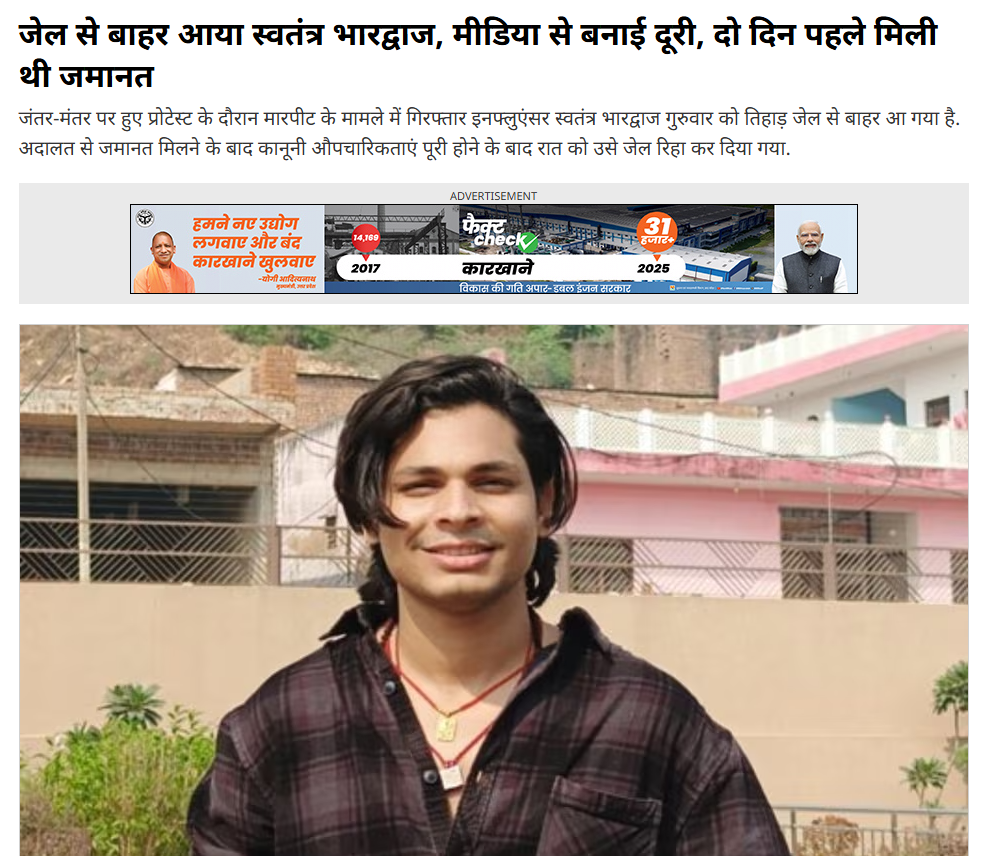
To verify the date of Swatantra Bhardwaj’s release from jail, we searched Google using relevant keywords. During the search, we found a report published by Aaj Tak on September 18, 2026. According to the report, social media influencer Swatantra Bhardwaj, who came into the spotlight following an alleged assault during a protest at Jantar Mantar, was released from Delhi’s Tihar Jail on September 17, 2026, after being granted bail by the court and completing the necessary legal formalities. Soon after walking out of the main gate of the jail, he ran towards a taxi and left without speaking to the media personnel present there. The post link and screenshot are provided below.
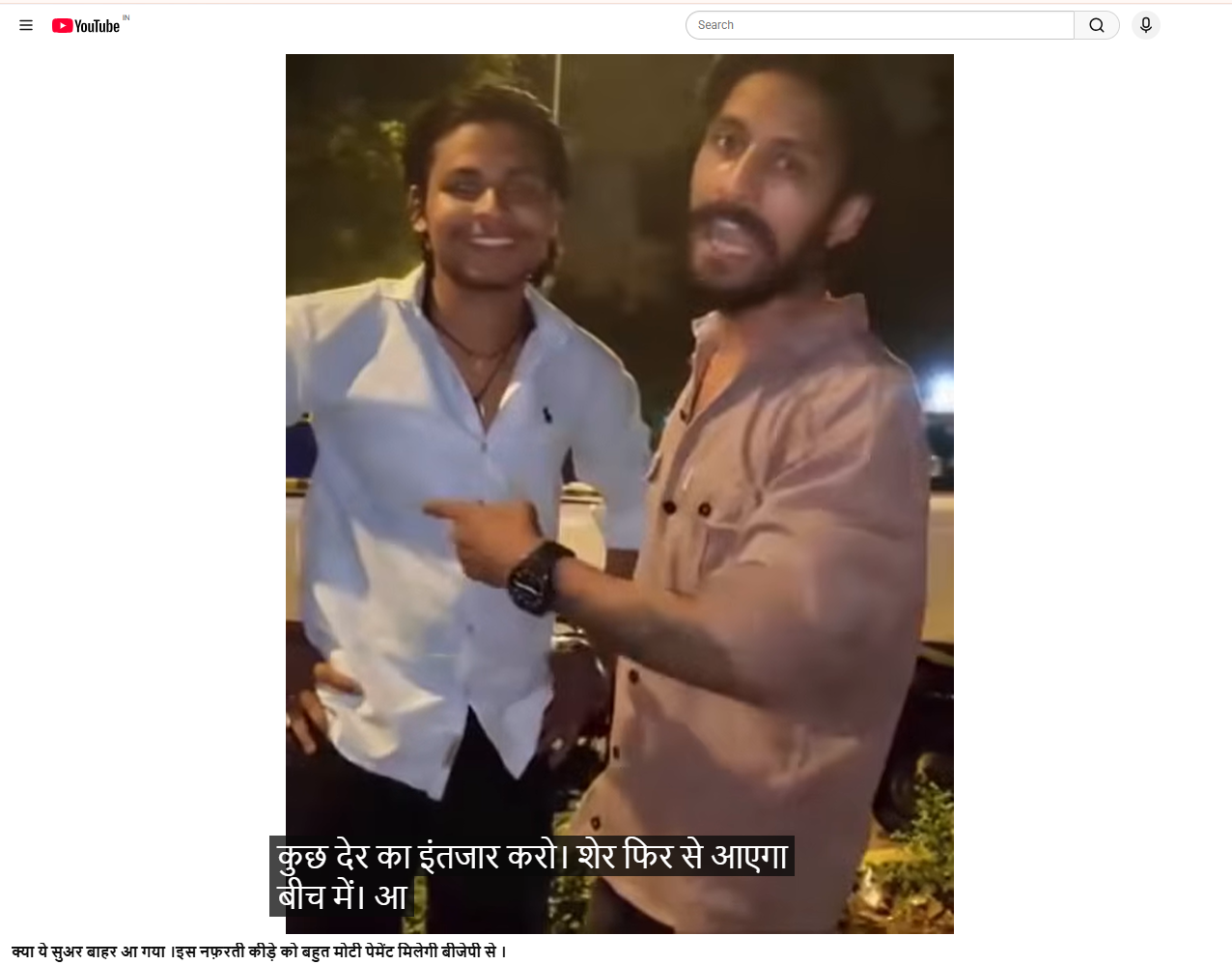
To verify the authenticity of the viral claim, we conducted a reverse image search of the keyframes from the video. During the search, we found the same video on a YouTube channel, where it was published on September 7, 2026. Meanwhile, the report mentioned above clearly states that Swatantra Bhardwaj was released from Delhi’s Tihar Jail on September 17, 2026. The report link and screenshot are provided below.
https://www.youtube.com/watch?v=-3V0pwJbpwg
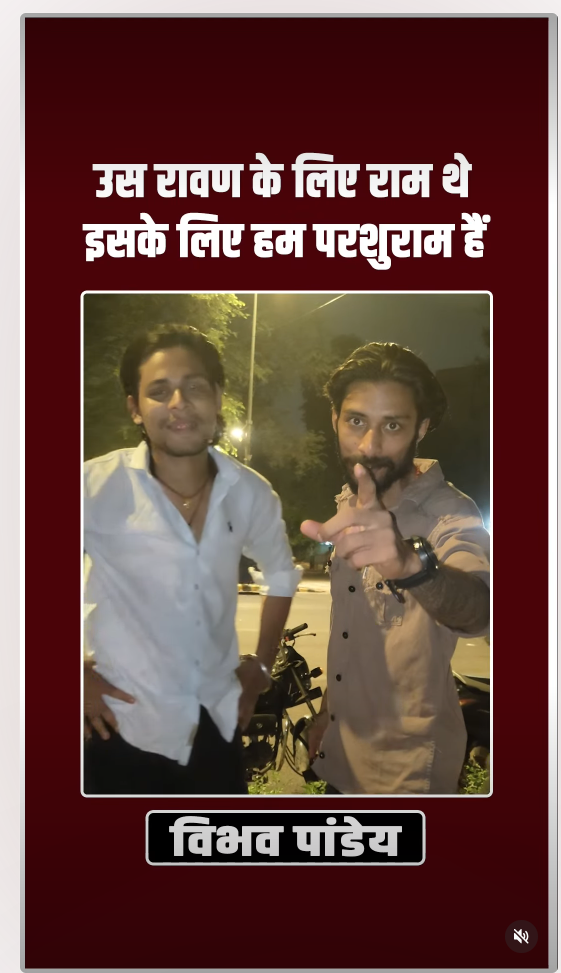
At the end of our Research, we found another version of the same video, which was uploaded by a person identified as Vaibhav Kumar on June 26, 2026. The post link and screenshot are provided below.
https://www.instagram.com/reels/DaBs7Q-T8xc/
Conclusion
Our Research found that the video being shared on social media is old. Swatantra Bhardwaj was released from jail on September 17, while our Research found that the video had already been available online since June. Therefore, the claim that the video was recorded immediately after Bhardwaj’s release from jail is misleading.

Related Blogs

Executive Summary
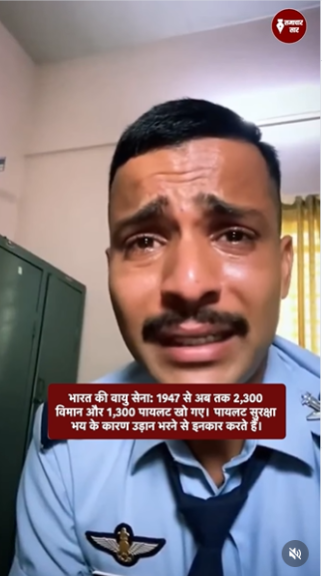
A video circulating widely on social media claims to show a pilot of the Indian Air Force (IAF) crying and expressing fear about flying fighter jets, allegedly citing poor maintenance and frequent crashes. The clip is being linked to the crash of an IAF Sukhoi-30 fighter jet in Assam on March 5, in which two pilots lost their lives. In the viral video, a man dressed like a pilot is seen speaking emotionally, saying that flying fighter jets has become frightening due to lack of maintenance and repeated accidents. Several users are sharing the clip claiming that the man in the video is an IAF pilot revealing the reality behind aircraft crashes. However, research by the CyberPeace found the claim to be false. The video does not depict a real pilot or an actual incident. Instead, it appears to be an AI-generated clip created and circulated with the intent to spread misinformation.
Claim:
An Instagram user, ‘samacharsaar0’, shared the viral video on March 10, 2026, with the English caption: “2300 aircraft crashes, 1300 pilots dead: A major challenge before the IAF.”
- Source: :https://www.instagram.com/reel/DVqa4lNiYJQ
- Archived link::https://perma.cc/EUZ8-DHE3
Fact Check:
The claim was also debunked by PIB Fact Check. While verifying the viral video, PIB clarified that the clip is artificially generated and not related to any real IAF personnel.
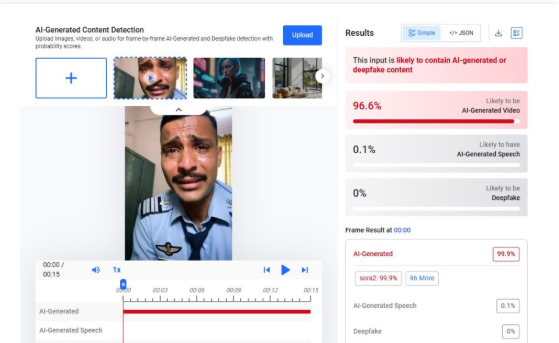
To further verify the authenticity of the video, we analyzed it using AI detection tools. The tool Hive Moderation indicated a 99.9% probability that the video was generated using artificial intelligence.
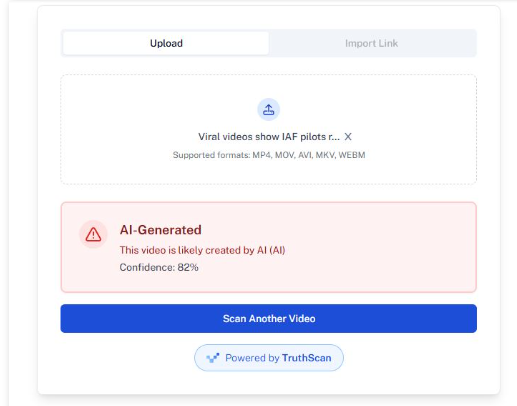
We also examined the clip using another AI detection platform, Undetectable. The analysis suggested an 82% likelihood that the video was created with AI tools. The tool also indicated the possibility that the footage may have been generated using the Sora AI video generation tool.
Conclusion
Our research concludes that the viral video of a crying “pilot” is not authentic. The clip has been created using artificial intelligence and is being misleadingly shared as a real Indian Air Force pilot speaking about aircraft crashes. The government has also denied the claim associated with the video.
.webp)
Introduction
Smartphones have revolutionised human connectivity. In 2023, it was estimated that almost 96% of the global digital population is accessing the internet via their mobile phones and India alone has 1.05 billion users. Information consumption has grown exponentially due to the enhanced accessibility that these mobiles provide. These devices allow accessibility to information no matter where one is, and have completely transformed how we engage with the world around us, be it to skim through work emails while commuting, video streaming during breaks, reading an ebook at our convenience or even catching up on news at any time or place. Mobile phones grant us instant access to the web and are always within reach.
But this instant connection has its downsides too, and one of the most worrying of these is the rampant rise of misinformation. These tiny screens and our constant, on-the-go dependence on them can be directly linked to the spread of “fake news,” as people consume more and more content in rapid bursts, without taking the time to really process the same or think deeply about its authenticity. There is an underlying cultural shift in how we approach information and learning currently: the onslaught of vast amounts of “bite-sized information” discourages people from researching what they’re being told or shown. The focus has shifted from learning deeply to consuming more and sharing faster. And this change in audience behaviour is making us vulnerable to misinformation, disinformation and unchecked foreign influence.
The Growth of Mobile Internet Access
More than 5 billion people are connected to the internet and web traffic is increasing rapidly. The developed countries in North America and Europe are experiencing mobile internet penetration at a universal rate. Contrastingly, the developing countries of Africa, Asia, and Latin America are experiencing rapid growth in this penetration. The introduction of affordable smartphones and low-cost mobile data plans has expanded access to internet connectivity. 4G and 5G infrastructure development have further bridged any connectivity gaps. This widespread access to the mobile internet has democratised information, allowing millions of users to participate in the digital economy. Access to educational resources while at the same time engaging in global conversations is one such example of the democratisation of information. This reduces the digital divide between diverse groups and empowers communities with unprecedented access to knowledge and opportunities.
The Nature of Misinformation in the Mobile Era
Misinformation spread has become more prominent in recent times and one of the contributing factors is the rise of mobile internet. This instantaneous connection has made social media platforms like Facebook, WhatsApp, and X (formerly Twitter) available on a single compact and portable device. These social media platforms enable users to share content instantly and to a wide user base, many times without verifying its accuracy. The virality of social media sharing, where posts can reach thousands of users in seconds, accelerates the spread of false information. This ease of sharing, combined with algorithms that prioritise engagement, creates a fertile ground for misinformation to flourish, misleading vast numbers of people before corrections or factual information can be disseminated.
Some of the factors that are amplifying misinformation sharing through mobile internet are algorithmic amplification which prioritises engagement, the ease of sharing content due to instant access and user-generated content, the limited media literacy of users and the echo chambers which reinforce existing biases and spread false information.
Gaps and Challenges due to the increased accessibility of Mobile Internet
Despite growing concerns about misinformation spread due to mobile internet, policy responses remain inadequate, particularly in developing countries. These gaps include: the lack of algorithm regulation, as social media platforms prioritise engaging content, often fueling misinformation. Inadequate international cooperation further complicates enforcement, as addressing the cross-border nature of misinformation has been a struggle for national regulations.
Additionally, balancing content moderation with free speech remains challenging, with efforts to curb misinformation sometimes leading to concerns over censorship.
Finally, a deficit in media literacy leaves many vulnerable to false information. Governments and international organisations must prioritise public education to equip users with the required skills to evaluate online content, especially in low-literacy regions.
CyberPeace Recommendations
Addressing misinformation via mobile internet requires a collaborative, multi-stakeholder approach.
- Governments should mandate algorithm transparency, ensuring social media platforms disclose how content is prioritised and give users more control.
- Collaborative fact-checking initiatives between governments, platforms, and civil society could help flag or correct false information before it spreads, especially during crises like elections or public health emergencies.
- International organisations should lead efforts to create standardised global regulations to hold platforms accountable across borders.
- Additionally, large-scale digital literacy campaigns are crucial, teaching the public how to assess online content and avoid misinformation traps.
Conclusion
Mobile internet access has transformed information consumption and bridged the digital divide. At the same time, it has also accelerated the spread of misinformation. The global reach and instant nature of mobile platforms, combined with algorithmic amplification, have created significant challenges in controlling the flow of false information. Addressing this issue requires a collective effort from governments, tech companies, and civil society to implement transparent algorithms, promote fact-checking, and establish international regulatory standards. Digital literacy should be enhanced to empower users to assess online content and counter any risks that it poses.
References
- https://www.statista.com/statistics/1289755/internet-access-by-device-worldwide/
- https://www.forbes.com/sites/kalevleetaru/2019/05/01/are-smartphones-making-fake-news-and-disinformation-worse/
- https://www.pewresearch.org/short-reads/2019/03/07/7-key-findings-about-mobile-phone-and-social-media-use-in-emerging-economies/ft_19-02-28_globalmobilekeytakeaways_misinformation/
- https://www.psu.edu/news/research/story/slow-scroll-users-less-vigilant-about-misinformation-mobile-phones
Executive Summary
A video of an Additional Secretary in the Ministry of External Affairs (MEA), handling the Americas & Canada Division, is being widely circulated on social media. The clip is being shared with the claim that he said:“Even if the Quad ends, India will partner only with Israel, and since Israel controls the US, India also controls the US.”The viral post attempts to link this alleged statement to India’s foreign policy. Many users are sharing it as authentic. However, CyberPeace Research Wing research found the claim to be false. The video has been digitally altered, and no such statement was made by the official in the original briefing.
Claim
On social media platform X (formerly Twitter), the viral video is being shared with the claim that the MEA Additional Secretary said Israel controls the United States, and therefore India also controls the US.
- https://www.facebook.com/61562281661615/videos/1518036689691723/
- https://archive.ph/xGJHa#selection-967.0-978.0

Fact Check
To verify the claim, we extracted key frames from the viral video and conducted a reverse image search. During the research, we found the original video, which was streamed live on May 26, 2026, on the verified YouTube channel of the Ministry of External Affairs (MEA), titled: “Special Briefing by MEA on Quad Foreign Ministers’ Meeting”
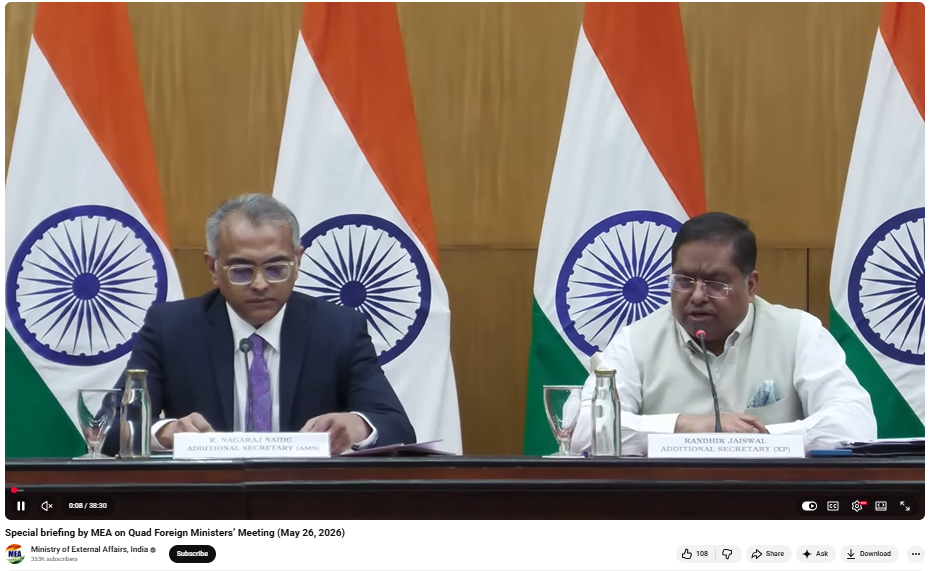
During the briefing, Naidu highlighted India’s commitment to a free and open Indo-Pacific region, mentioning new initiatives in maritime surveillance, critical minerals, and 6G development. He also noted the continued momentum of the Quad, stating that frequent ministerial meetings reflect strong and ongoing cooperation among member countries despite challenges in holding formal leaders’ summits.
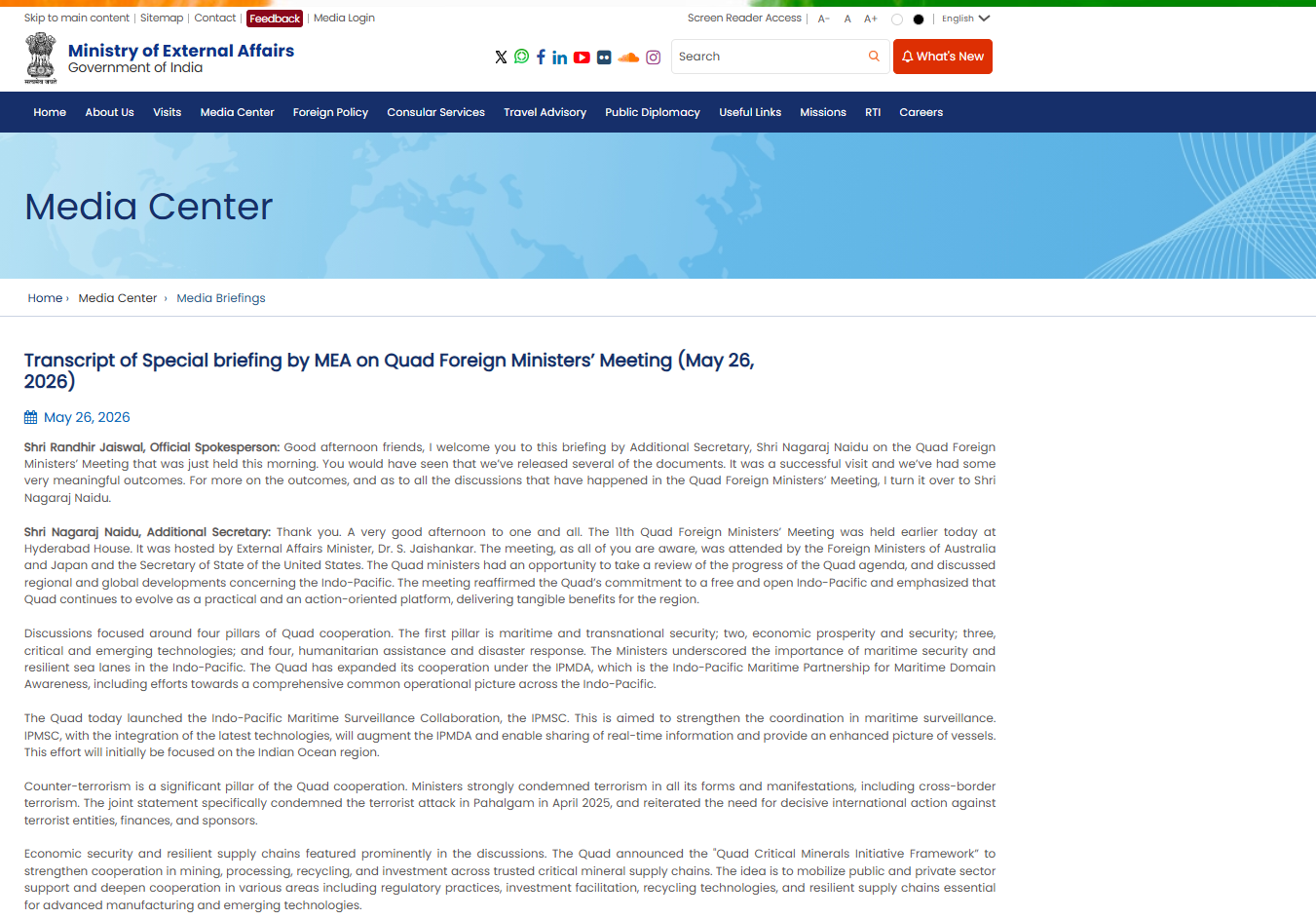
The official transcript of the briefing is also available on the MEA website:
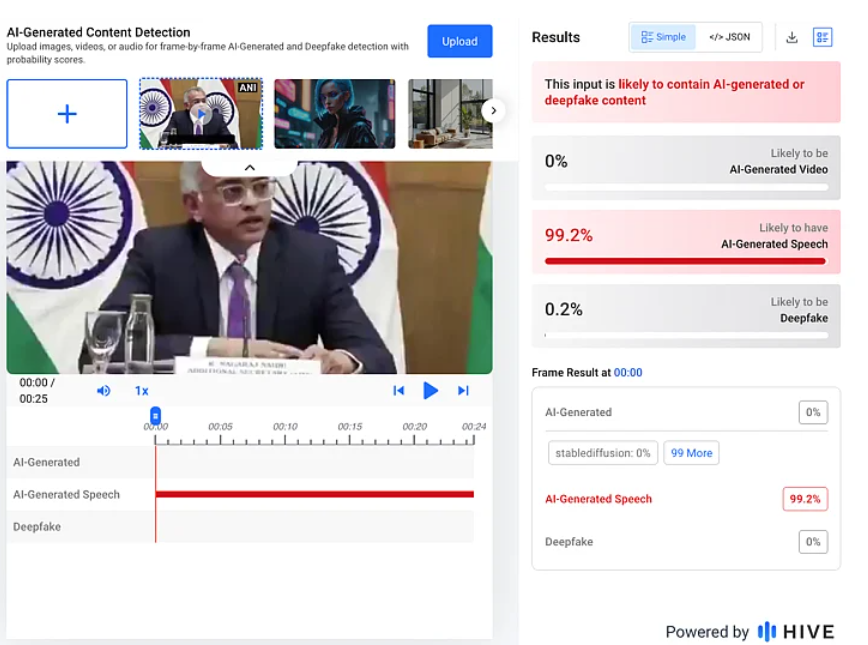
Since the viral statement was never made during the event, we further analysed the video using Deepfake Voice Detector and Hive Moderation’s AI-generated content detection tool. Hive moderation analysis indicated a 99.2% probability that the audio in the viral video is AI-generated.
Conclusion
CyberPeace Research Wing research found that the viral video is digitally altered. The Additional Secretary did not make any such statement during the official briefing. The audio in the clip has been manipulated and is being circulated with a misleading narrative.
