
#FactCheck-AI-generated video falsely links ethanol blended fuel (E85) to bees swarming on motorcycle tank
Executive Summary
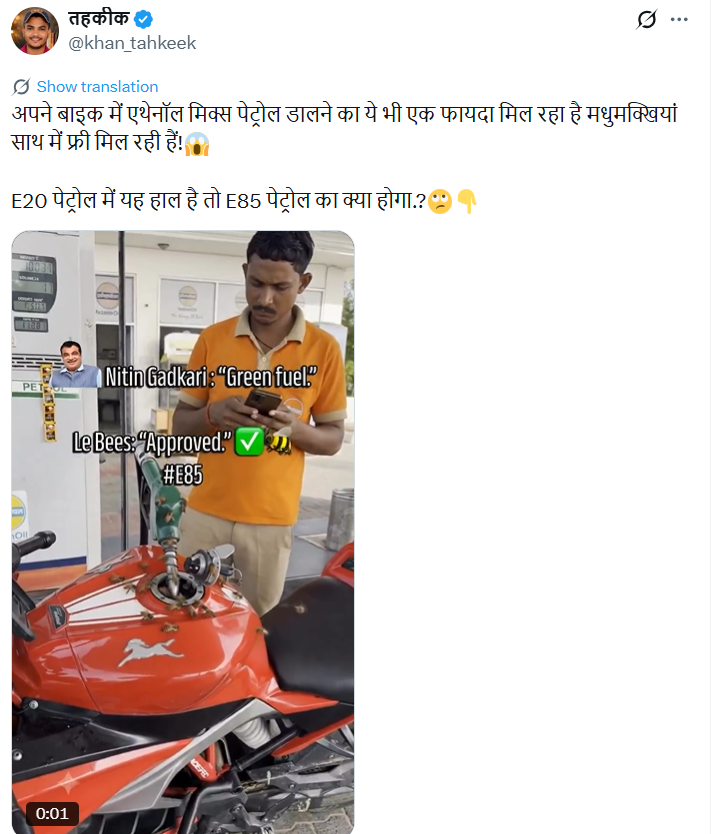
Following the official launch of E85 petrol in India on June 5, 2026, several videos have surfaced on social media claiming unusual side effects of ethanol-blended fuel. One such viral clip alleges that a swarm of bees gathers on a motorcycle fuel tank due to the use of ethanol mixed petrol. CyberPeace Research Wing research found the claim to be false and misleading. The viral video has been identified as AI-generated and does not depict any real-world incident related to ethanol-blended fuel.
Claim:
An X user shared an 11-second video on June 13, 2026, claiming that bees are being attracted to vehicles using ethanol-blended petrol. The post sarcastically suggested that E20 fuel is causing such unusual effects and questioned the impact of E85 petrol. https://x.com/khan_tahkeek/status/2065751435451437185?s=20, https://archive.ph/bMsL7
Fact Check:
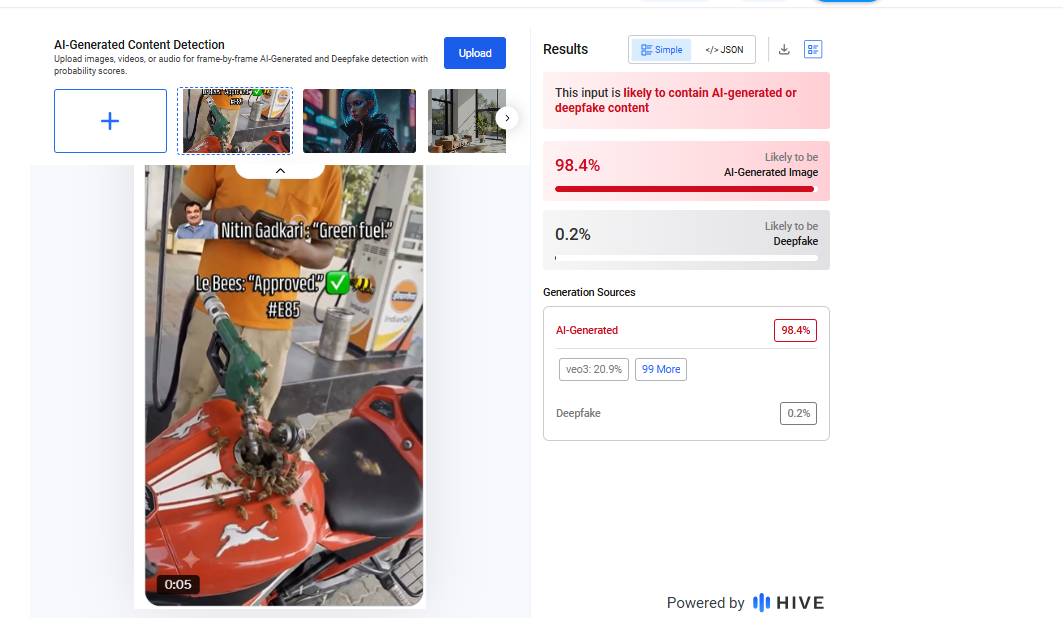
A Google search using relevant keywords did not return any credible media reports supporting the claim, raising initial doubts about its authenticity. Closer inspection of the viral video revealed multiple visual inconsistencies suggesting digital manipulation. The video was further analysed using AI detection tools. Hive Moderation flagged the content as having a 98% probability of being AI-generated, indicating strong likelihood of synthetic creation.
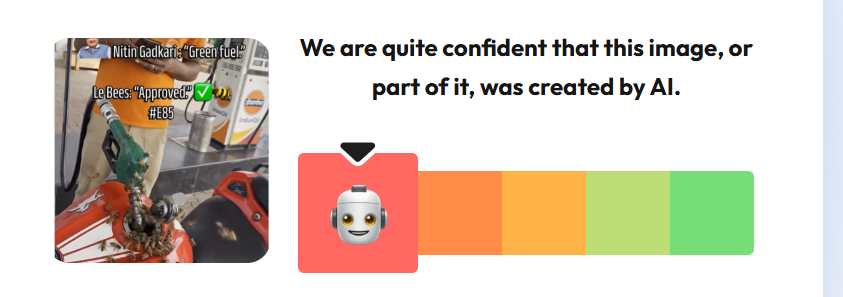
In addition, analysis using the AI detection tool “WasItAI” also confirmed that the video is AI-generated.
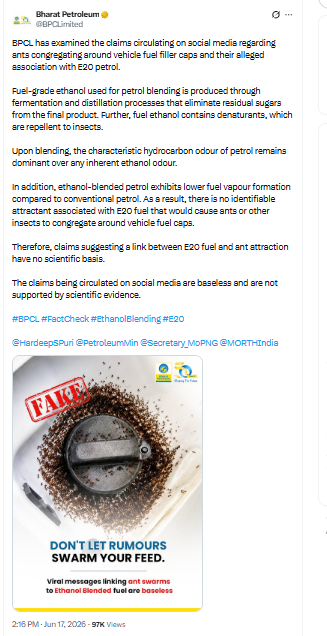
Further verification found an official post by Bharat Petroleum Corporation Limited (BPCL) dated June 17, 2026, debunking similar misinformation circulating around ethanol-blended petrol https://x.com/BPCLimited/status/2067167037710020929?s=20
Conclusion:
The research confirms that the viral video showing bees swarming on a motorcycle fuel tank is AI-generated. The claim linking it to ethanol-blended petrol (E85/E20) is false and misleading, with no real-world basis.

Related Blogs

Biological data includes biometric information such as fingerprints, facial recognition, DNA sequences, and behavioral traits. Genetic data can be extracted from an individual’s remains long after their death and can continue to identify both that individual and an expanding pool of their living relatives. This persistent identification can significantly reduce privacy over time, revealing genetic characteristics and familial relationships across successive generations.
Key Developments in Privacy Protection for Biological Data:
Legal texts have been created relating to personal data protection and privacy broadly, and can sometimes prove to be poor adaptations specifically for ‘biometric data’ and its safety. Some examples are mentioned below:
- EU and UK- GDPR
GDPR focuses primarily on biometrics in Biological Data while deciphering the technology's immense potential. The EU describes “personal data” under the General Data Protection Regulation (GDPR) including any identifiable information about a particular person. For example, this can include names, identification numbers, location data, and other structured and unstructured data. In addition, the GDPR has more specific requirements around processing sensitive or “special categories of personal data.” These “special categories” include things like genetic and biometric data. For biometric security to work well, citizens' rights must be protected appropriately, and the data collected by private and public concerns must be managed carefully and sensibly.
- USA
California Consumer Privacy Act (CCPA) grants Californian consumers the right to protect their personal information and biometric data including the right to disclosure or access, the right to be forgotten, and data portability. The sale of personal information and the option of opt-out is also given to consumers. Additionally, it contains the right to take legal action, with penalties imposed for violations.
The California Privacy Rights Act was passed on November 3, 2020, and took effect on January 1, 2023, with a lookback period starting January 1, 2022. It introduces sensitive personal information which includes biometric data and other sensitive details.
Virginia's Consumer Data Protection Act, effective from January 1, 2023, designates genetic and biometric data as sensitive data that must be protected.
Illinois' Biometric Information Privacy Act is recognised as the most robust biometric privacy law in the United States. The significance of the Rosenbach v. Six Flags case lies in the Illinois Supreme Court's ruling that a plaintiff does not need to demonstrate additional harm to impose penalties on a BIPA violator. A mere loss of statutory biometric privacy rights is sufficient to warrant penalties.
- India
As per Rule 2(1)(b) of the SPDI Rules, Sensitive Personal Data or Information, including biometric data is included under its meaning. The term ‘biometric data’ has not been defined in the Digital Personal Data Protection Act, 2023. The need for data privacy under the DPDP Act emerges only if such data is subsequently digitised under extraction and manipulation, including notice and consent requirements and penalties.
The Biotech-PRIDE (Promotion of Research and Innovation through Data Exchange) Guidelines of 2021 are aimed at fostering an exchange of information which would thereby enhance research and innovation among various research groups nationwide. These guidelines do not deal with the generation of biological data but are a mechanism to share and exchange information and knowledge generated according to existing laws, rules, regulations and norms of the country. They will ensure data-sharing benefits, maximise use, avoid duplication, maximise integration, ownership of information, better decision-making and equity of access
How is Biological Data vulnerable?
- Biological data is often immutable, meaning it cannot be altered once compromised. Unlike other authentications that can be changed, compromised biometric data poses a permanent risk, making its protection paramount.
- The use of facial recognition technology by law enforcement agencies and the creation of databases by the same also highlights the urgent need for stringent privacy protections.
- Advances in technology, particularly AI and ML, make it easier to collect, analyse, and utilise biometric data by manipulating biometric data. This in turn is leading to new forms of identity theft and fraud that make it necessary to enhance security measures and ethical considerations to prevent abuse.
- Cross-border data transfers raise serious privacy concerns, especially as countries have varying levels and standards of data protection.
- Wearable health-related biometric devices lack the required privacy protections which ends up making the data they collect vulnerable to misuse and breaches.
Future Outlook
With the growing use of biological data, there is likely to be increased pressure on regulatory bodies to strengthen privacy protections. This necessitates a need for enhanced security measures to protect users' identities and further prevent any form of unauthorised access. Future developments should be aimed at including strict consent requirements, and enhanced data security measures, especially for wearable devices. A new legal framework specifically designed to address the challenges posed by biometric data would be welcome. Biological data protection is an emerging need in the digital environment that we live in today.
References
- https://www.cnbc.com/2024/08/17/new-privacy-battle-is-underway-as-tech-gadgets-capture-our-brain-waves.html
- https://www.snrlaw.in/sense-and-sensitivity-sensitive-information-under-indias-new-data-regime/
- https://www.thalesgroup.com/en/markets/digital-identity-and-security/government/biometrics/biometric-data
- https://www.business-standard.com/article/economy-policy/govt-releases-guideline-to-provide-framework-for-sharing-of-biological-data-121073001467_1.html
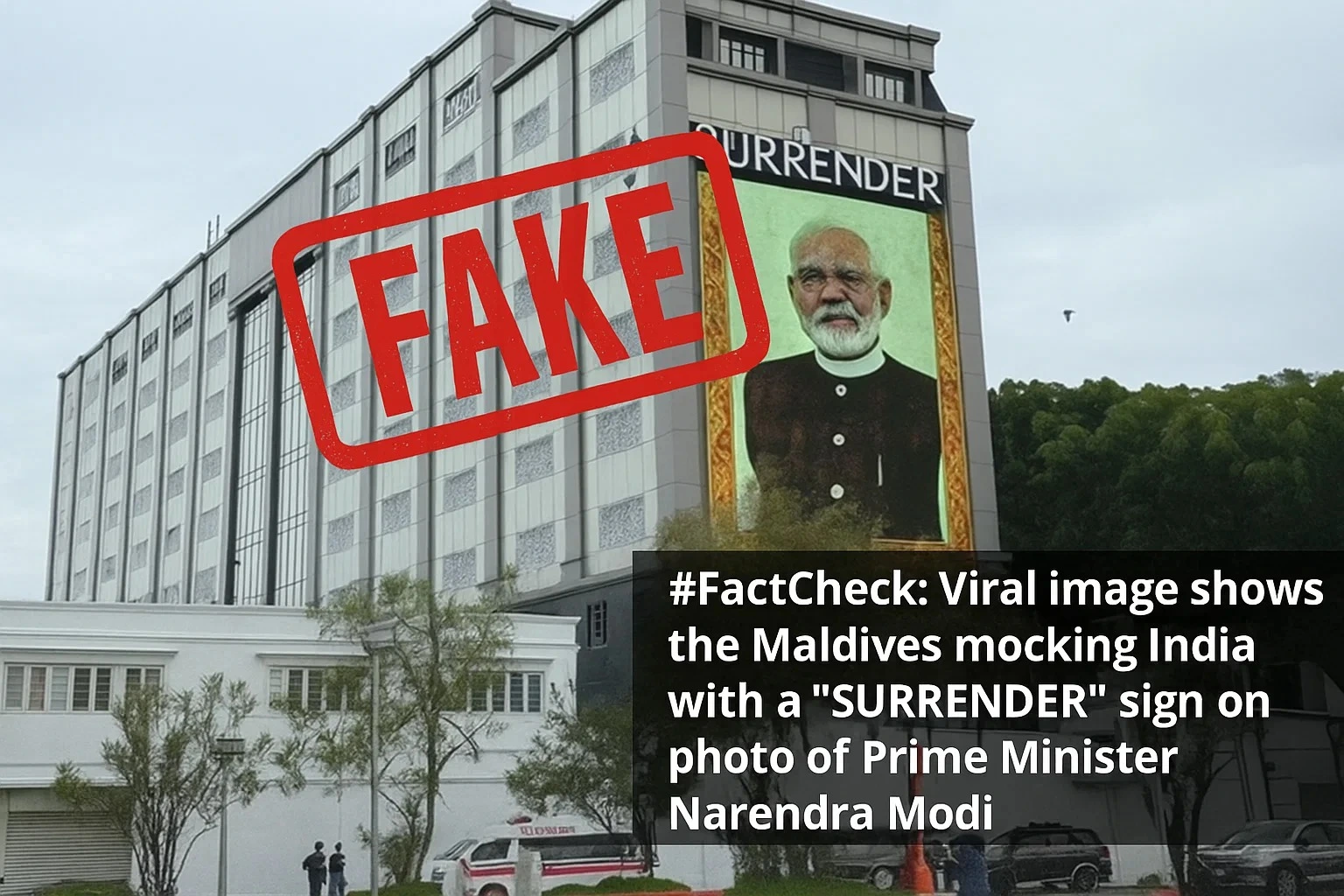
Executive Summary:
A manipulated viral photo of a Maldivian building with an alleged oversized portrait of Indian Prime Minister Narendra Modi and the words "SURRENDER" went viral on social media. People responded with fear, indignation, and anxiety. Our research, however, showed that the image was manipulated and not authentic.
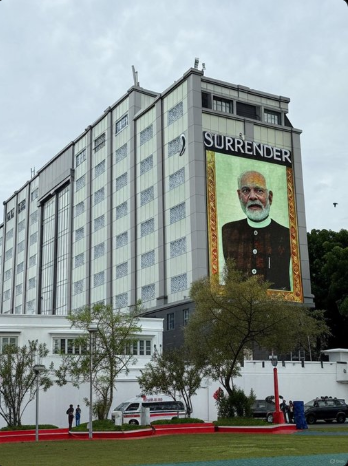
Claim:
A viral image claims that the Maldives displayed a huge portrait of PM Narendra Modi on a building front, along with the phrase “SURRENDER,” implying an act of national humiliation or submission.
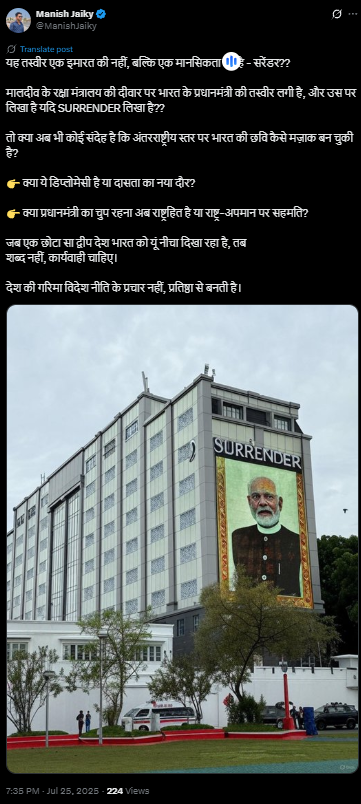
Fact Check:
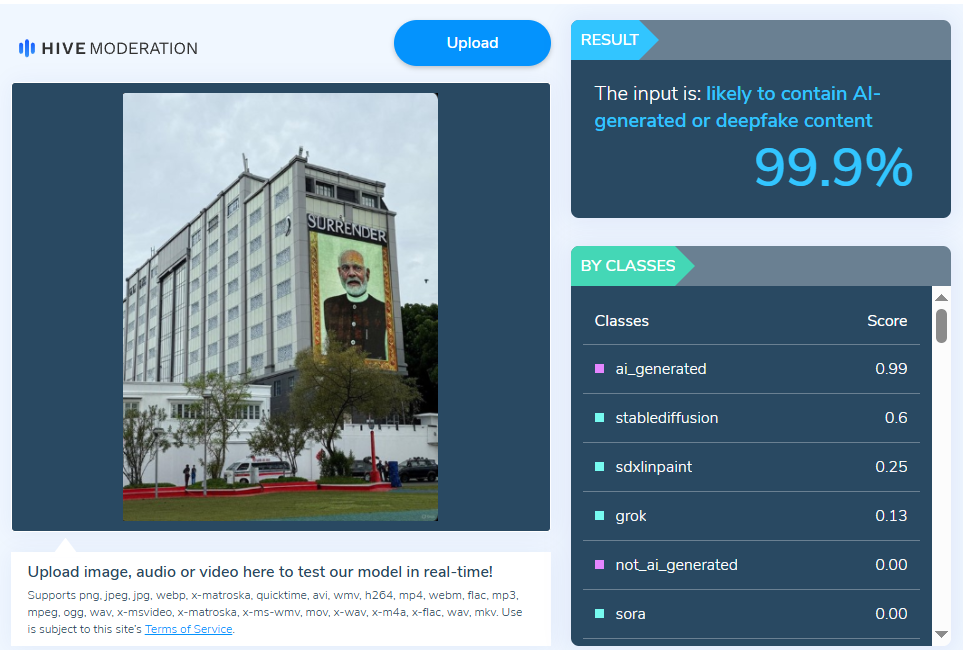
After a thorough examination of the viral post, we got to know that it had been altered. While the image displayed the same building, it was wrong to say it included Prime Minister Modi’s portrait along with the word “SURRENDER” shown in the viral version. We also checked the image with the Hive AI Detector, which marked it as 99.9% fake. This further confirmed that the viral image had been digitally altered.
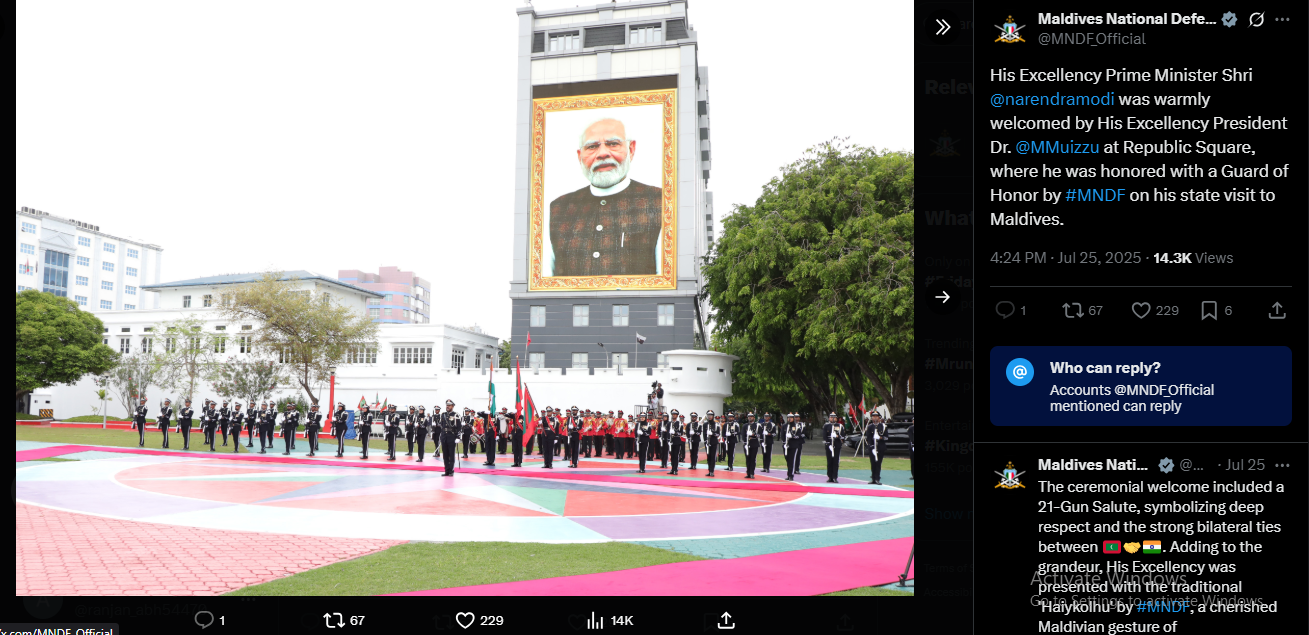
During our research, we also found several images from Prime Minister Modi’s visit, including one of the same building displaying his portrait, shared by the official X handle of the Maldives National Defence Force (MNDF). The post mentioned “His Excellency Prime Minister Shri @narendramodi was warmly welcomed by His Excellency President Dr.@MMuizzu at Republic Square, where he was honored with a Guard of Honor by #MNDF on his state visit to Maldives.” This image, captured from a different angle, also does not feature the word “surrender.

Conclusion:
The claim that the Maldives showed a picture of PM Modi with a surrender message is incorrect and misleading. The image is altered and is being spread to mislead people and stir up controversy. Users should check the authenticity of photos before sharing.
- Claim: Viral image shows the Maldives mocking India with a surrender sign
- Claimed On: Social Media
- Fact Check: False and Misleading

Introduction
The ‘Barbie’ fever is going high in India, and it’s hype to launch online scams in India. The cybercriminals attacking the ‘Barbie’ fans in India, as the popular malware and antivirus protection MacAfee has recently reported that India is in the top 3rd number among countries facing major malware attacks. After the release of ‘barbie’ in theatres, the Scams started spreading across India through the free download of the ‘Barbie’ movie from the link and other viruses. The scammers trick the victims by selling free ‘Barbie’ tickets and, after the movie’s hit, search for the free download links on websites which leads to the Scams.
What is the ‘Barbie’ malware?
After the release of the ‘Barbie’ movie, trying to keep up with the trend, Barbie fans started to search the links for free movie downloads from anonymous sources. And after downloading the movie, there was malware in the downloaded zip files. The online scam includes not genuine dubbed downloads of the movie that install malware, barbie-related viruses, and fake videos that point to free tickets, and also clicking on unverified links for the movie access resulted in Scam. It is important not to get stuck in these trends just because to keep up with them, as it could land you in trouble.
Case: As per the report of McAfee, several cases of malware trick victims into downloading the ‘ Barbie’ movie in different languages. By clicking the link, it prompts the user to download a Zip file, which is packed with malware
Countries-wise malware distribution
Cyber Scams witnessed a significant surge in just a few weeks, with hundreds of incidents of new malware cases. And The USA is on the top No. Among all the countries, In the USA there was 37 % of ‘Barbie’ malware attacks held per the, while Australia, the UK, and India suffered 6 % of malware attacks. And other countries like Japan, Ireland, and France faced 3% of Malware attacks.
What are the precautions?
Cyber scams are evolving everywhere, users must remain vigilant and take necessary precautions to protect their personal information. The user shall avoid clicking on suspicious links, also those which are related to unauthorised movie downloads or fake ticket offers. The people shall use legitimate and official platforms to access movie-related content. Keeping anti-malware and antivirus will add an extra layer of protection.
Here are some following precautions against Malware:
- Use security software.
- Use strong passwords and authentication.
- Enforce safe browsing and email.
- Data backup.
- Implement Anti-lateral Movement.
Conclusion
Cyberspace is evolving, and with that, Scams are also evolving. With the new trend of ‘Barbie’ Scams going on the rise everywhere, India is on top 3rd No. In India, McAfee reported several malicious attacks that attempted to trick the victims into downloading the free version of ‘Barbie’ movie in dubbed languages. This resulted in a Scam. People usually try to keep up with trends that land them in trouble. The users shall beware of these kinds of cyber-attacks. These scams result in huge losses. Technology should be used with proper precautions as per the incidents happening around.
