
#FactCheck-AI-Generated Image Falsely Shows Donald Trump Raising Fist During Washington Incident
Executive Summary
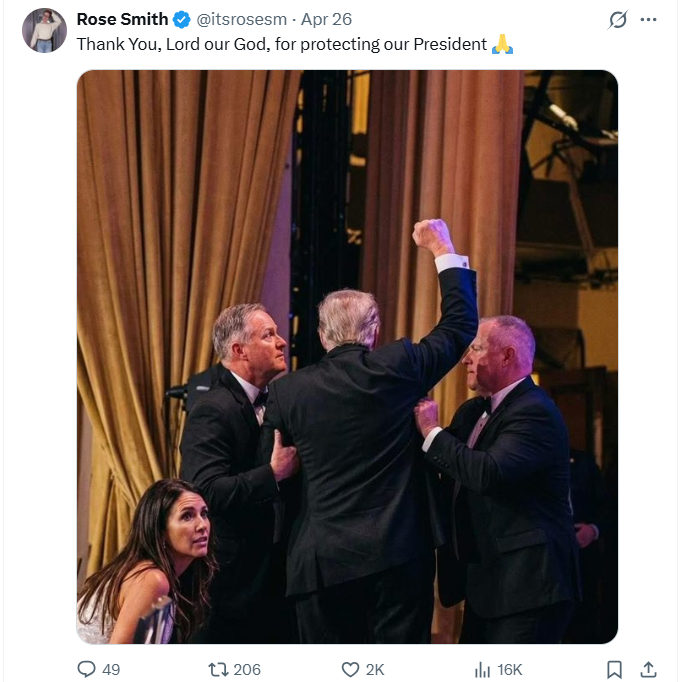
A photo of Donald Trump is going viral on social media, showing him raising his fist. Users claim the image was taken during a press event in Washington, when security personnel were escorting him out amid reports of gunfire. Research by CyberPeace Research Wing found that the viral image is AI-generated and is being shared with misleading claims.
Claim
On April 26, 2026, an X user shared the image with the caption: “Thank You, Lord our God, for protecting our President.” The post suggests that Trump made the gesture during a chaotic evacuation at a Washington event.
Fact Check
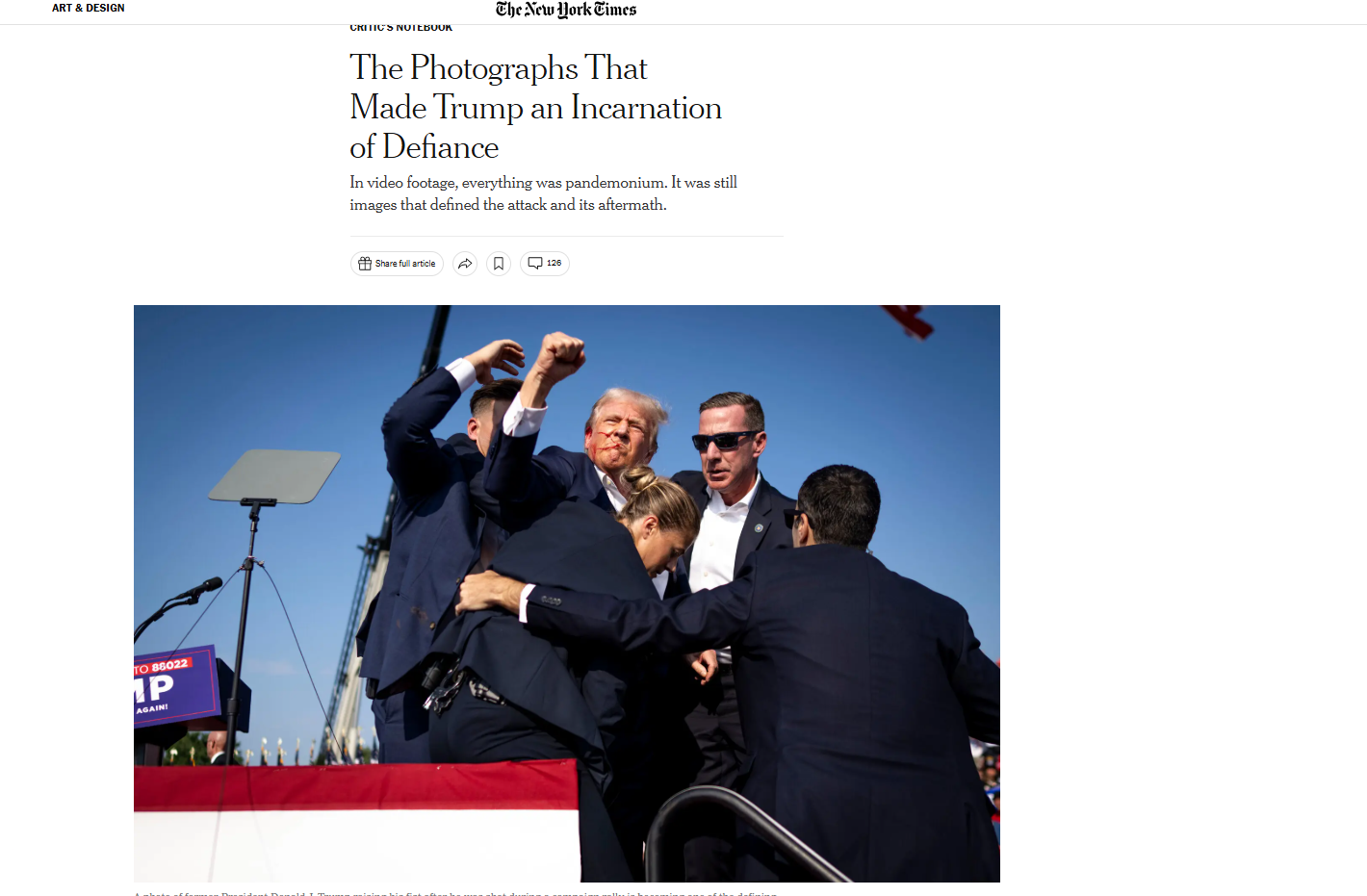
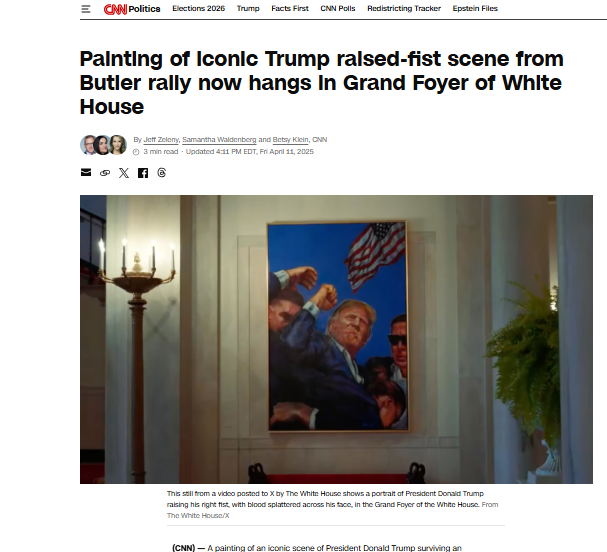
Reports confirm that Trump and senior officials were hurried away from the White House Correspondents’ Association dinner on April 25 after gunshots were reportedly heard from a floor above the ballroom. However, no authentic visuals show Trump raising his fist during the evacuation.
- https://www.nytimes.com/2024/07/14/arts/design/trump-photo-raised-fist.html
- https://edition.cnn.com/2025/04/11/politics/trump-obama-portrait-white-house
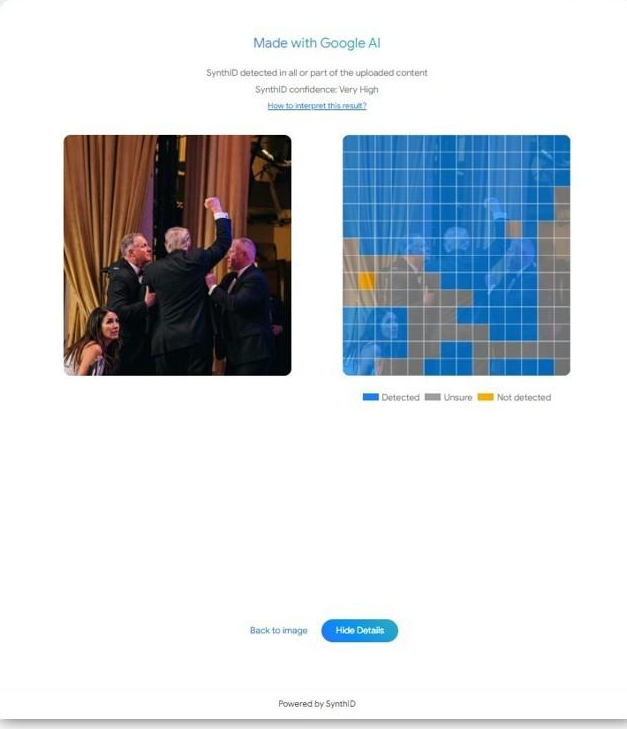
Further analysis of the viral image indicates signs of digital manipulation. Google’s SynthID detection tool flagged the file as containing SynthID—an invisible watermark embedded in content generated using Google’s AI tools.
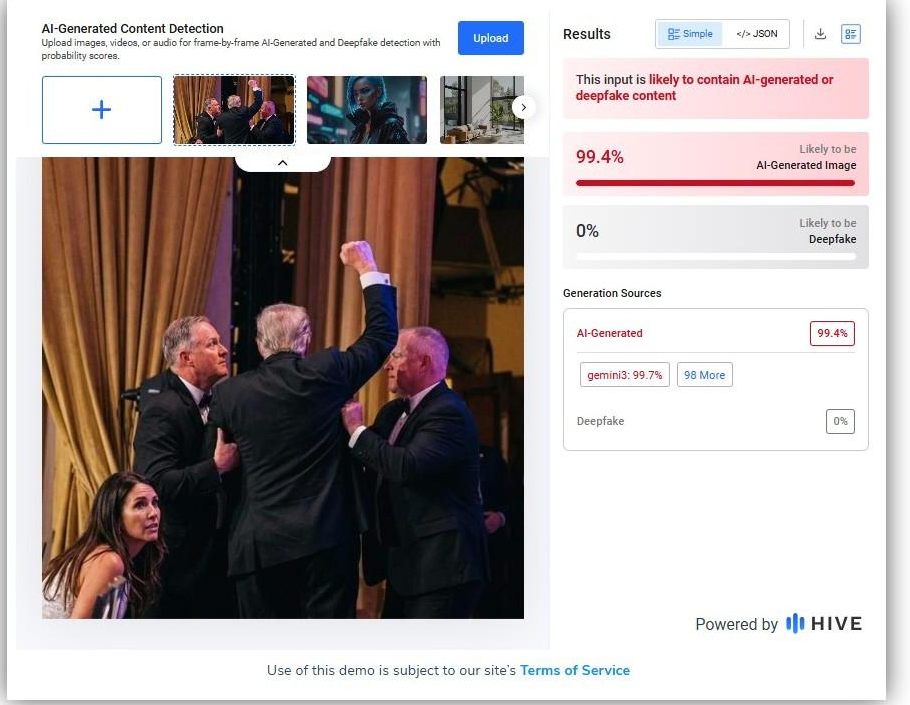
Additionally, AI detection platform Hive Moderation assessed that the image is likely AI-generated or a deepfake.
Conclusion
The research confirms that the viral image of Donald Trump raising his fist during a Washington incident is not real. It was created using AI and is being circulated with a misleading narrative.

Related Blogs
Executive Summary
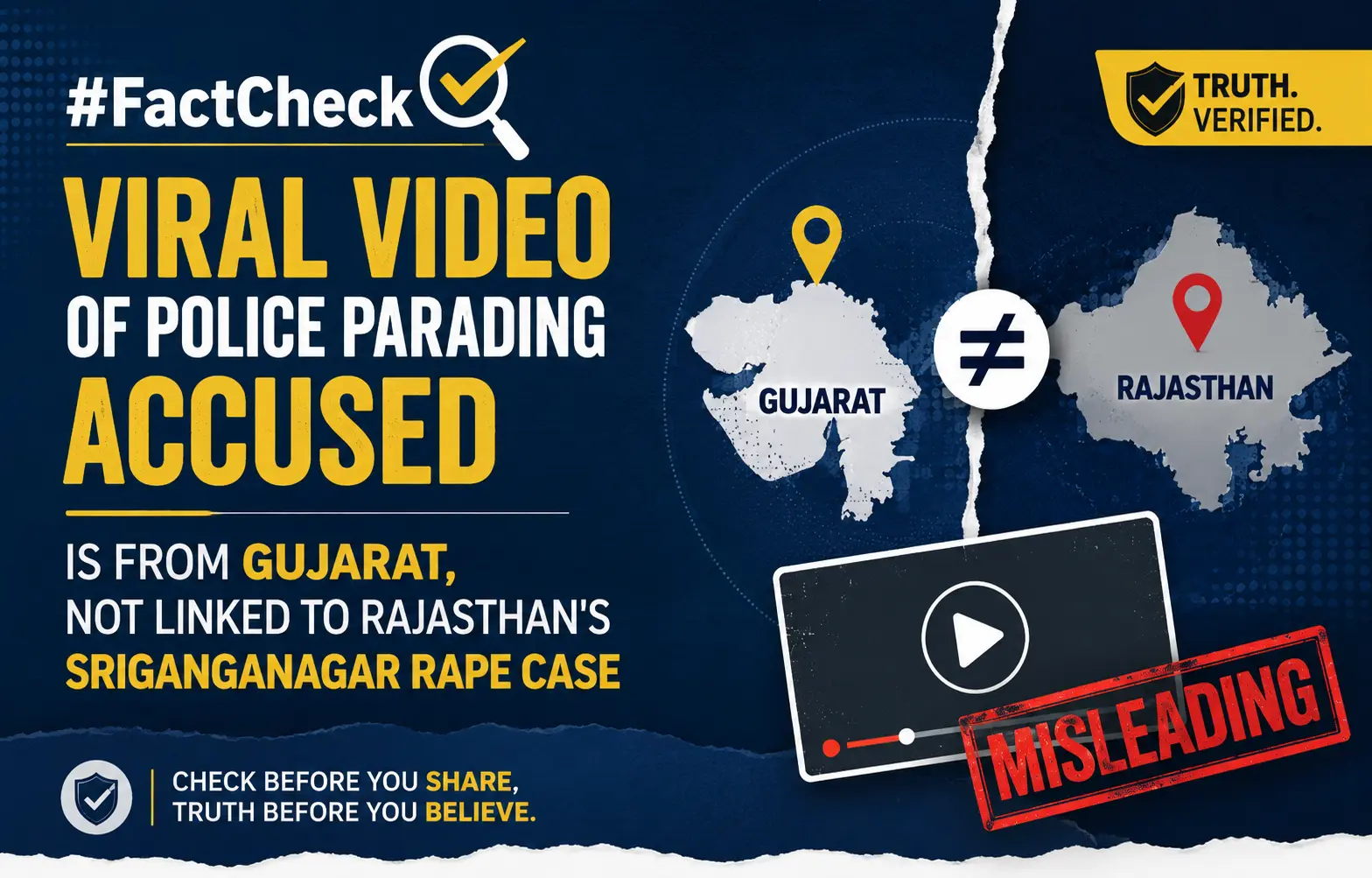
Amid nationwide outrage over the gang-rape of a 13-year-old minor in Sriganganagar, Rajasthan, a video is circulating on social media. The clip shows police officers tying the hands of several accused individuals and parading them publicly on the streets. Users sharing the video claim that these are the culprits from the Sriganganagar case being beaten by the police.
A fact-check by the CyberPeace Research Wing found this claim to be misleading. The viral video has no connection to the Rajasthan incident; it actually depicts a separate event from Patan, Gujarat, dating back to March 2026.
The Claim
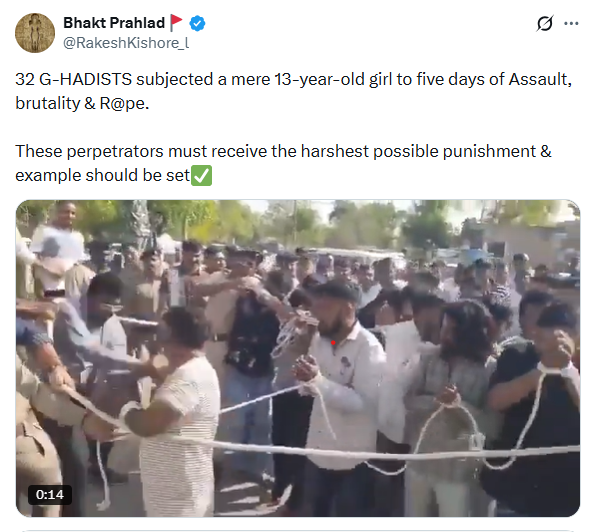
On July 7, 2026, a user on X (formerly Twitter) shared the video with the caption: "32 jihadis assaulted, brutalized, and raped a 13-year-old girl for five days. These criminals must get the harshest punishment to set an example."
https://x.com/RakeshKishore_l/status/2074400280352084129
Fact Check
To verify the viral claim, keyframes from the video were extracted and analysed using Google Lens for reverse image search. During the research, we found a report published by NDTV on March 19, 2026, which carried visuals matching the viral video. The report link and screenshot are provided below:
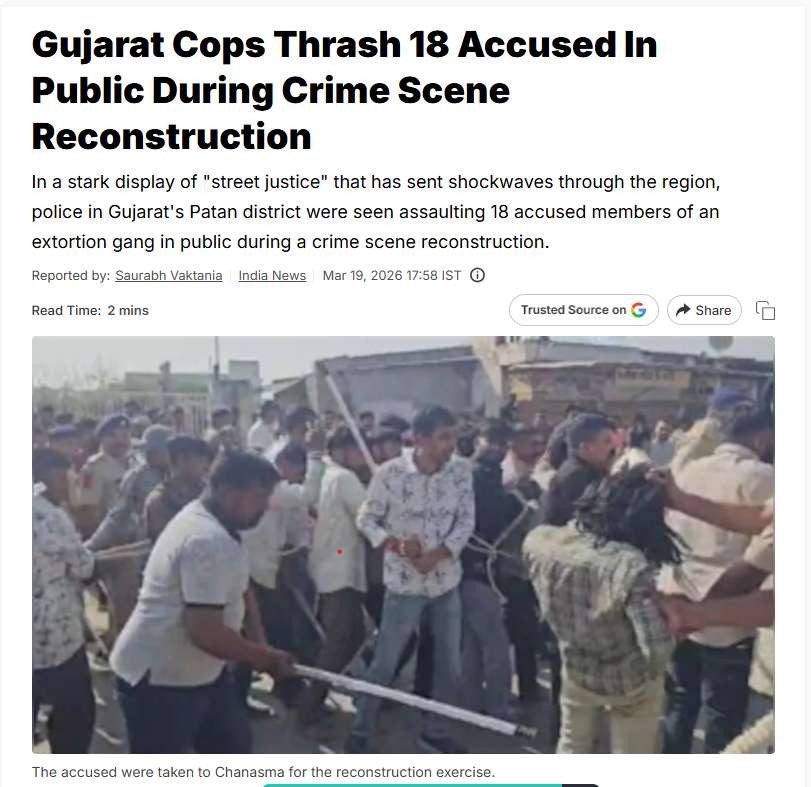
According to the NDTV report, a video showing police personnel publicly assaulting 18 alleged accused persons in Gujarat’s Patan district had surfaced. The incident was reported to have taken place during a crime scene reconstruction exercise.
The report stated that the accused, allegedly linked to an extortion gang, were taken to Chanasma for the reconstruction process. During the exercise, police personnel were seen assaulting them. Witnesses claimed that the accused were paraded through areas where they had allegedly created fear among locals.
The accused were reportedly linked to the alleged Jhiliya gang. The incident occurred days after a violent clash in which members of the same group allegedly attacked a police team, forcing officers to retreat from the spot.
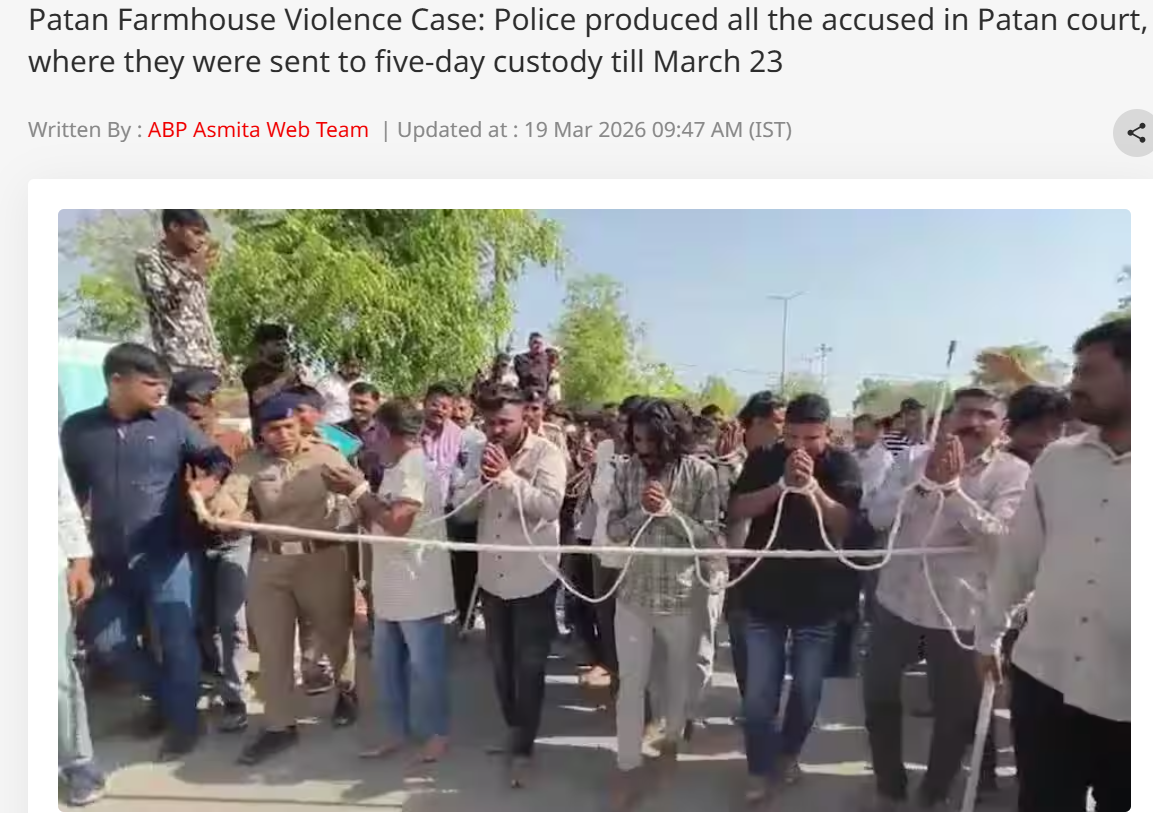
During further research, we found a report published by ABP Asmita on March 19, 2026. According to the report, the incident was linked to an old dispute over temple donations.
The report stated that the accused were produced before a court, which sent them to five days of police custody until March 23, 2026. The report link and screenshot are provided below:
Conclusion
The research found that the viral video is not related to the alleged gang rape case in Sri Ganganagar, Rajasthan. The video is being shared with a false context. The footage actually belongs to a separate incident from Gujarat’s Patan district reported in March 2026.
Executive Summary
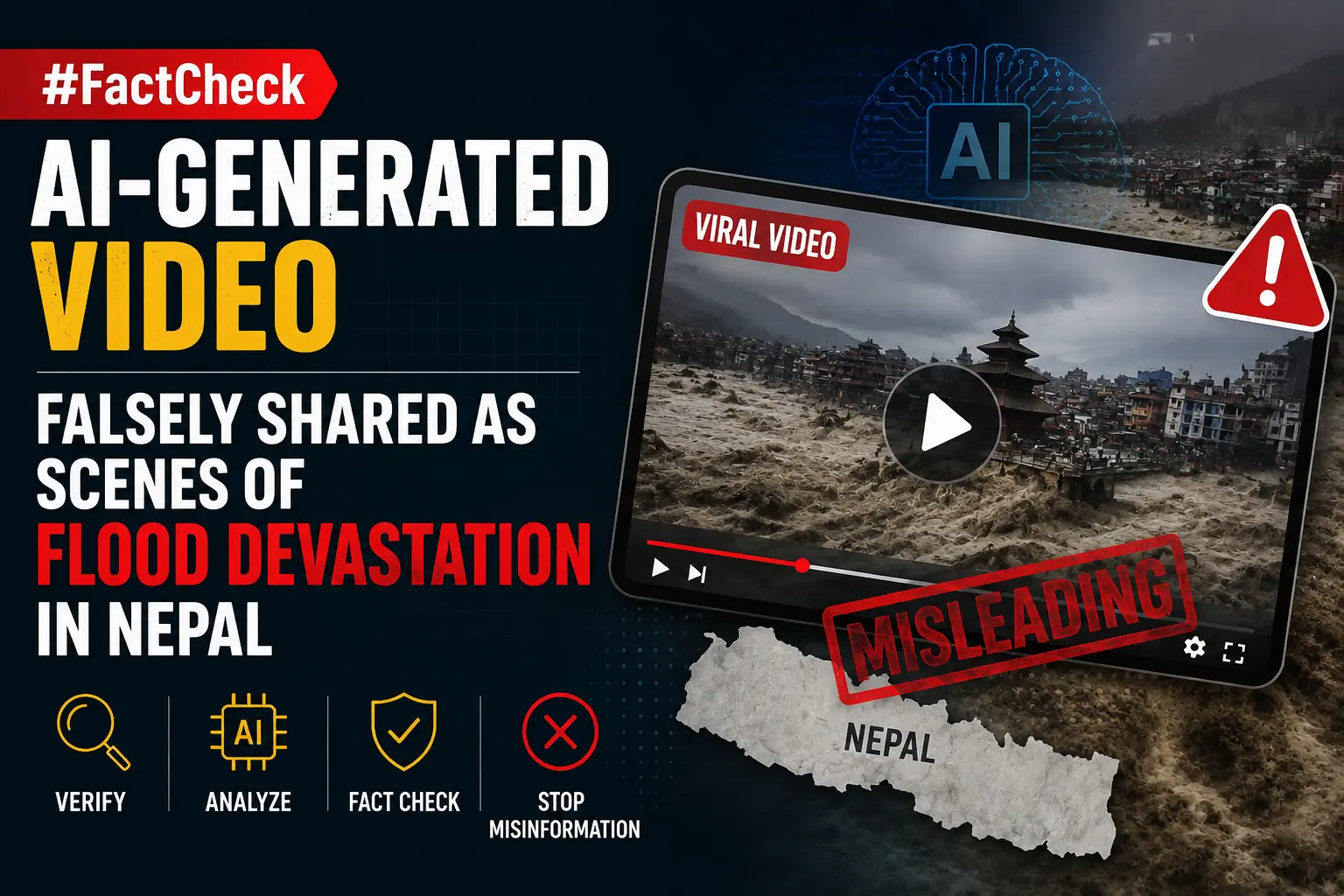
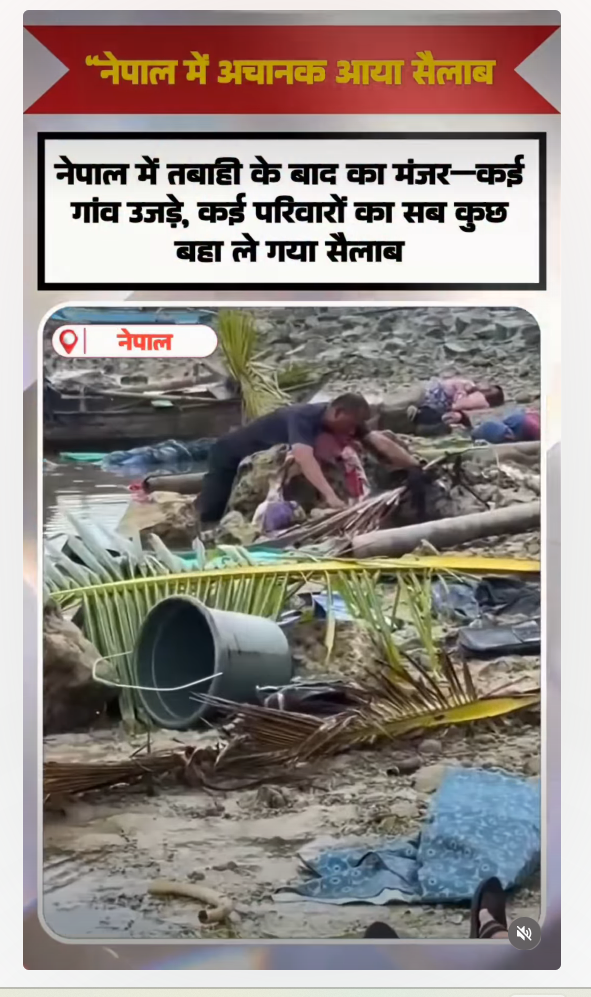
Nepal witnessed severe devastation after floods struck the country on August 26, 2026. Amid this, a video showing a bridge being swept away by floodwaters is being widely shared on social media. Some users are sharing the video claiming that it shows scenes of destruction caused by the floods in Nepal.A research done by the Research Wing of the CyberPeace found that the video being shared with the claim of flood devastation in Nepal is AI-generated. However, it is true that the floods in Nepal have claimed hundreds of lives.
Claim
A user on X shared the video with the caption: “Scenes of devastation in Nepal after the disaster.”
https://www.instagram.com/reels/Dch-EmYNUwz/
https://perma.cc/5VY5-ZFCN?type=standard
Fact Check
We closely examined the video showing the bridge being swept away. A person can be seen standing on top of a truck, which appears unnatural in such a situation. Moreover, even as the bridge collapses, the people on it do not appear to fall directly into the water. These observations led us to suspect that the video was likely AI-generated.
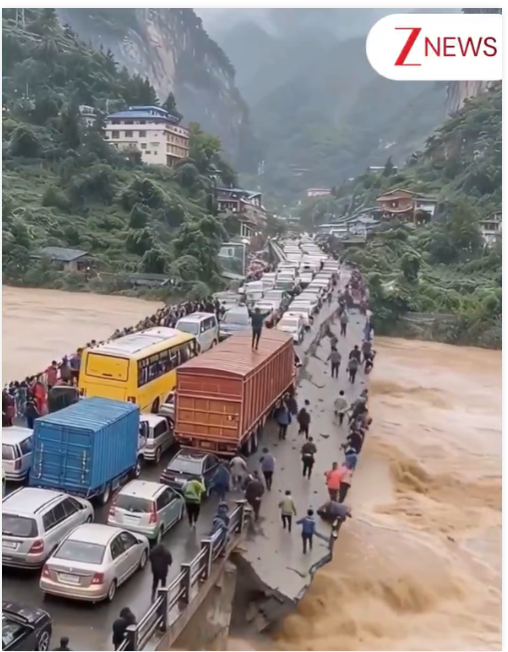
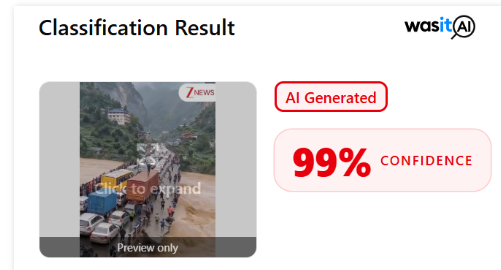
We scanned the viral video using the AI detection tool ‘WasItAI’, which identified it as 99 percent AI-generated.
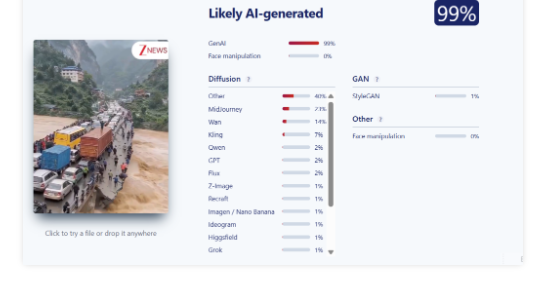
Meanwhile, another AI detection tool, Sightengine, also identified the video as 99 percent AI-generated.
Conclusion:
A video being shared with the claim that it shows devastation caused by floods in Nepal is actually from the shooting of an Indonesian TV serial, while another viral video is AI-generated.

Executive Summary
Amid the ongoing conflict between the US-Israel and Iran, a video of Indian Prime Minister Narendra Modi is being widely circulated on social media. In the clip, he is allegedly heard supporting Israel and calling Iran a “terrorist state.” The video also appears to show him speaking about the idea of “Akhand Bharat.” Many users are sharing this video as genuine. However, a detailed research by the CyberPeacefound that the claim is false. The viral video is a deepfake created using AI technology.
Claim:
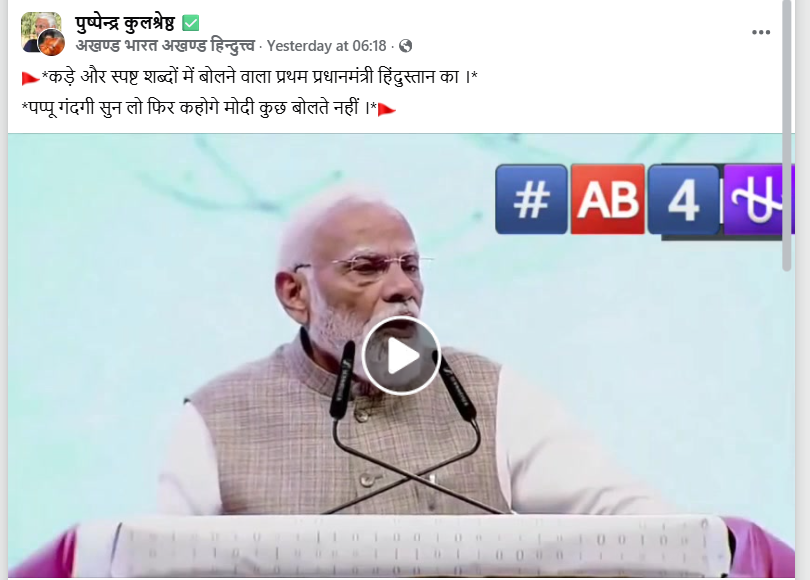
A Facebook page named “Pushpendra Kulshreshtha” shared the video on March 23, 2026, with a caption suggesting that PM Modi made strong remarks in support of Israel and against Iran.
Fact Check:
To verify the claim, we first conducted a keyword search to find any credible reports or official statements where PM Modi made such remarks. However, no reliable news reports or authentic videos supporting the claim were found. We then extracted keyframes from the viral video and performed a reverse image search using Google Lens. This led us to the original video posted on the X (formerly Twitter) handle of ANI on March 12, 2026.
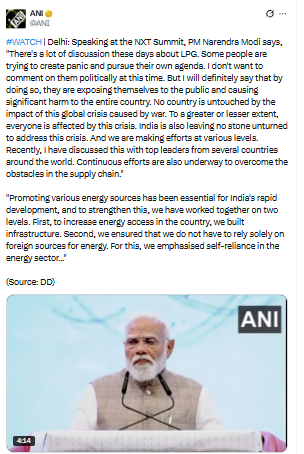
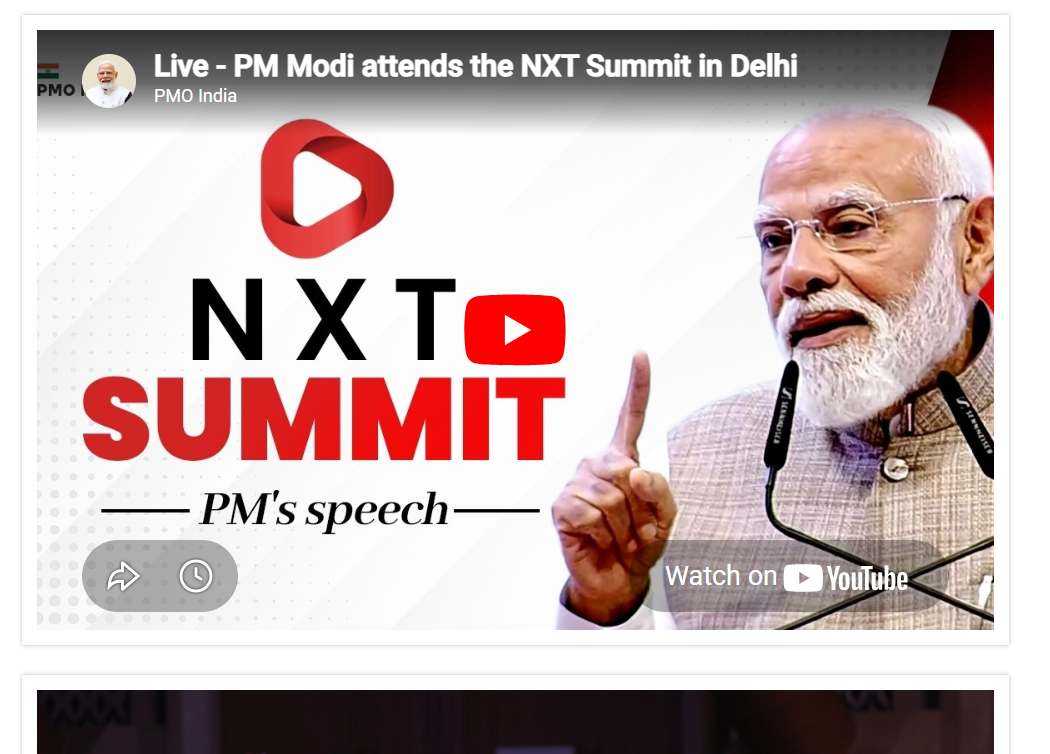
The visuals, including PM Modi’s attire and the stage setup, matched the viral clip—indicating that the fake video was created using this original footage. However, in the authentic video, PM Modi did not make any statements about Iran, Israel, or “Akhand Bharat” as seen in the viral version. In the original footage, PM Modi is seen addressing the NXT Summit in Delhi, where he spoke about the global energy crisis arising from ongoing conflicts and highlighted the expansion of LPG and PNG facilities in India. Additionally, a customised keyword search led us to a press release issued by the Prime Minister's Office regarding his address at the summit. The statement heard in the viral clip was not found there either.
Conclusion:
The viral video of PM Modi is a deepfake. He did not make any statement calling Iran a “terrorist state” or expressing support for Israel in the manner shown. The original video is from a summit held in Delhi and has been manipulated using AI to spread misleading claims.
