
#FactCheck- Viral Zipline Accident Video from Karnaprayag is AI-Generated, Claim is False
Executive Summary
A video is being shared on social media claiming that a female tourist from Delhi fell into a deep gorge during ziplining in Karnaprayag. In the viral video, a woman dressed in bright pink and yellow clothes is seen ziplining amidst high mountains, when suddenly the zipline wire breaks and she falls from a significant height into a deep gorge. Social media users are sharing this video, presenting it as a real incident. Research by the CyberPeace Research Wing revealed that the claim of a Delhi woman tourist's death during a zipline accident in Karnaprayag is baseless. The viral video is AI-generated.
Claim
According to the claim, this accident took place in Karnaprayag, Uttarakhand, where a female tourist from Delhi became a victim of this horrific mishap. Several social media users are claiming that the woman died in this accident.
https://www.facebook.com/reel/26108544868822432

Fact Check
To investigate the video viral as a zipline accident in Karnaprayag, we conducted a reverse search of its keyframes. During this, we found the video uploaded as a Short on a Pakistani YouTube channel, @Zoyaqueen-w2t, on June 2, 2026. Hashtags like '#funnyshorts' were used in the caption of this video. Scanning this account revealed that several other fictional videos related to similar zipline accidents have also been uploaded here. Apart from this, the video was also shared with funny hashtags in some social media posts from May 2026.
https://www.youtube.com/shorts/Gzha_J7Fqv0
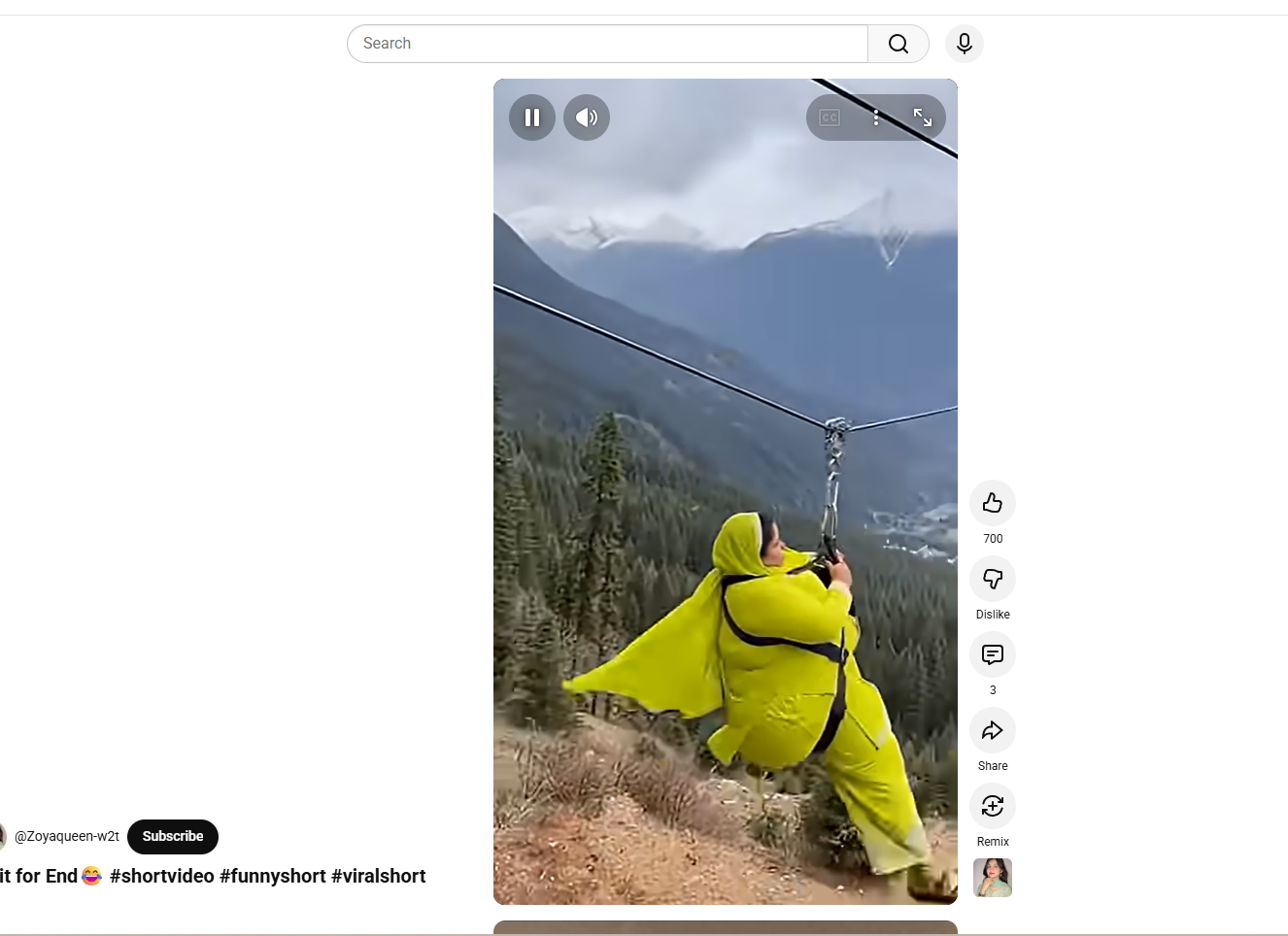
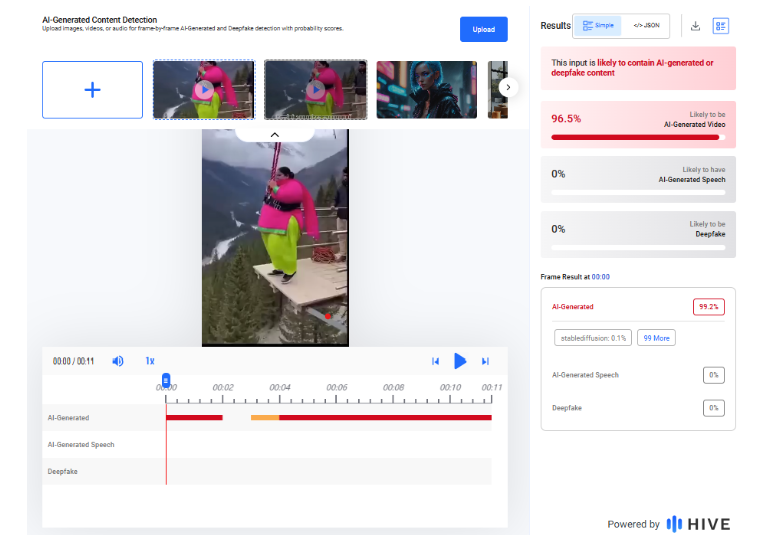
Following this, searching with relevant keywords yielded no credible media reports regarding any such zipline accident in Karnaprayag, Uttarakhand, in recent times. Subsequently, we scanned the viral video of the alleged zipline accident using the AI detection tool 'Hive Moderation'. During the analysis, the tool classified the video as highly likely to be AI-generated, with a score of 99.2%.
Conclusion
From the evidence gathered in our research , it is clear that the claim regarding the death of a female tourist from Delhi during a zipline accident in Karnaprayag is baseless. The viral video is not of a real incident, but is AI-generated.

Related Blogs

Executive Summary
A social media post about the shooting incident during a dinner event for journalists covering the White House is going viral with the claim that the attacker was a Muslim man who was shot dead by security personnel. The accompanying video shows panic inside a hall and alert security officials responding to the situation. wHowever, research by the CyberPeace Research Wing found that the claim is false and misleading. The video is being shared with incorrect information about the identity and fate of the suspect.
Claim:
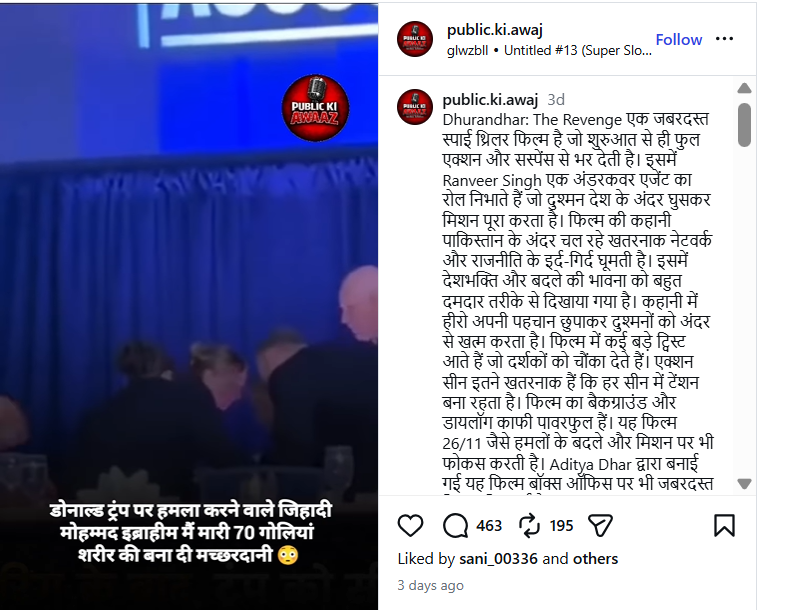
An Instagram user shared the video on April 26, 2026, claiming that the attacker who targeted Donald Trump was a “jihadi” named Mohammad Ibrahim and that he was killed after being shot multiple times.
Fact Check:
To verify the claim, relevant keyword searches were conducted online.
A report published by BBC on April 28, 2026, stated that the suspect accused of attempting to assassinate President Donald Trump during the Washington dinner event was identified as Cole Thomas Allen. The report said Allen lived with his parents in Los Angeles and was produced in court on April 28.
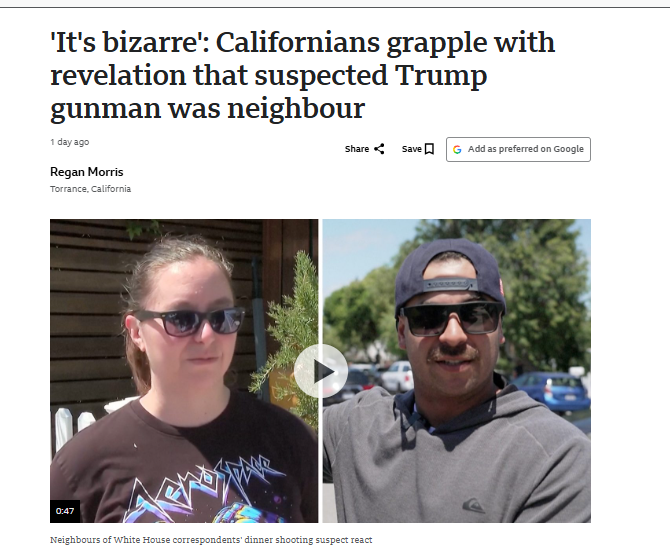
According to court documents cited in the report, Allen rushed past a security checkpoint carrying a semi-automatic handgun, a pump-action shotgun, and three knives. Authorities said one Secret Service agent was injured during the incident before Allen was subdued and taken into custody. A separate report published by NBC News on April 26, 2026, also identified the accused as Cole Thomas Allen and included visuals from the incident, showing the suspect after his arrest.

Conclusion:
The claim that the White House dinner party attacker was a Muslim man named Mohammad Ibrahim is false. The accused has been identified as Cole Thomas Allen, and he was arrested after the incident. Claims that he was killed are also incorrect.
%20(1).webp)
Digitisation in Agriculture
The traditional way of doing agriculture has undergone massive digitization in recent years, whereby several agricultural processes have been linked to the Internet. This globally prevalent transformation, driven by smart technology, encompasses the use of sensors, IoT devices, and data analytics to optimize and automate labour-intensive farming practices. Smart farmers in the country and abroad now leverage real-time data to monitor soil conditions, weather patterns, and crop health, enabling precise resource management and improved yields. The integration of smart technology in agriculture not only enhances productivity but also promotes sustainable practices by reducing waste and conserving resources. As a result, the agricultural sector is becoming more efficient, resilient, and capable of meeting the growing global demand for food.
Digitisation of Food Supply Chains
There has also been an increase in the digitisation of food supply chains across the globe since it enables both suppliers and consumers to keep track of the stage of food processing from farm to table and ensures the authenticity of the food product. The latest generation of agricultural robots is being tested to minimise human intervention. It is thought that AI-run processes can mitigate labour shortage, improve warehousing and storage and make transportation more efficient by running continuous evaluations and adjusting the conditions real-time while increasing yield. The company Muddy Machines is currently trialling an autonomous asparagus-harvesting robot called Sprout that not only addresses labour shortages but also selectively harvests green asparagus, which traditionally requires careful picking. However, Chris Chavasse, co-founder of Muddy Machines, highlights that hackers and malicious actors could potentially hack into the robot's servers and prevent it from operating by driving it into a ditch or a hedge, thereby impending core crop activities like seeding and harvesting. Hacking agricultural pieces of machinery also implies damaging a farmer’s produce and in turn profitability for the season.
Case Study: Muddy Machines and Cybersecurity Risks
A cyber attack on digitised agricultural processes has a cascading impact on online food supply chains. Risks are non-exhaustive and spill over to poor protection of cargo in transit, increased manufacturing of counterfeit products, manipulation of data, poor warehousing facilities and product-specific fraud, amongst others. Additional impacts on suppliers are also seen, whereby suppliers have supplied the food products but fail to receive their payments. These cyber-threats may include malware(primarily ransomware) that accounts for 38% of attacks, Internet of Things (IoT) attacks that comprise 29%, Distributed Denial of Service (DDoS) attacks, SQL Injections, phishing attacks etc.
Prominent Cyber Attacks and Their Impacts
Ransomware attacks are the most popular form of cyber threats to food supply chains and may include malicious contaminations, deliberate damage and destruction of tangible assets (like infrastructure) or intangible assets (like reputation and brand). In 2017, NotPetya malware disrupted the world’s largest logistics giant Maersk and destroyed all end-user devices in more than 60 countries. Interestingly, NotPetya was also linked to the malfunction of freezers connected to control systems. The attack led to these control systems being compromised, resulting in freezer failures and potential spoilage of food, highlighting the vulnerability of industrial control systems to cyber threats.
Further Case Studies
NotPetya also impacted Mondelez, the maker of Oreos but disrupting its email systems, file access and logistics for weeks. Mondelez’s insurance claim was also denied since NotPetya malware was described as a “war-like” action, falling outside the purview of the insurance coverage. In April 2021, over the Easter weekend, Bakker Logistiek, a logistics company based in the Netherlands that offers air-conditioned warehousing and food transportation for Dutch supermarkets, experienced a ransomware attack. This incident disrupted their supply chain for several days, resulting in empty shelves at Albert Heijn supermarkets, particularly for products such as packed and grated cheese. Despite the severity of the attack, the company successfully restored their operations within a week by utilizing backups. JBS, one of the world’s biggest meat processing companies, also had to pay $11 million in ransom via Bitcoin to resolve a cyber attack in the same year, whereby computer networks at JBS were hacked, temporarily shutting down their operations and endangering consumer data. The disruption threatened food supplies and risked higher food prices for consumers. Additional cascading impacts also include low food security and hindrances in processing payments at retail stores.
Credible Threat Agents and Their Targets
Any cyber-attack is usually carried out by credible threat agents that can be classified as either internal or external threat agents. Internal threat agents may include contractors, visitors to business sites, former/current employees, and individuals who work for suppliers. External threat agents may include activists, cyber-criminals, terror cells etc. These threat agents target large organisations owing to their larger ransom-paying capacity, but may also target small companies due to their vulnerability and low experience, especially when such companies are migrating from analogous methods to digitised processes.
The Federal Bureau of Investigation warns that the food and agricultural systems are most vulnerable to cyber-security threats during critical planting and harvesting seasons. It noted an increase in cyber-attacks against six agricultural co-operatives in 2021, with ancillary core functions such as food supply and distribution being impacted. Resultantly, cyber-attacks may lead to a mass shortage of food not only meant for human consumption but also for animals.
Policy Recommendations
To safeguard against digital food supply chains, Food defence emerges as one of the top countermeasures to prevent and mitigate the effects of intentional incidents and threats to the food chain. While earlier, food defence vulnerability assessments focused on product adulteration and food fraud, including vulnerability assessments of agriculture technology now be more relevant.
Food supply organisations must prioritise regular backups of data using air-gapped and password-protected offline copies, and ensure critical data copies are not modifiable or deletable from the main system. For this, blockchain-based food supply chain solutions may be deployed, which are not only resilient to hacking, but also allow suppliers and even consumers to track produce. Companies like Ripe.io, Walmart Global Tech, Nestle and Wholechain deploy blockchain for food supply management since it provides overall process transparency, improves trust issues in the transactions, enables traceable and tamper-resistant records and allows accessibility and visibility of data provenance. Extensive recovery plans with multiple copies of essential data and servers in secure, physically separated locations, such as hard drives, storage devices, cloud or distributed ledgers should be adopted in addition to deploying operations plans for critical functions in case of system outages. For core processes which are not labour-intensive, including manual operation methods may be used to reduce digital dependence. Network segmentation, updates or patches for operating systems, software, and firmware are additional steps which can be taken to secure smart agricultural technologies.
References
- Muddy Machines website, Accessed 26 July 2024. https://www.muddymachines.com/
- “Meat giant JBS pays $11m in ransom to resolve cyber-attack”, BBC, 10 June 2021. https://www.bbc.com/news/business-57423008
- Marshall, Claire & Prior, Malcolm, “Cyber security: Global food supply chain at risk from malicious hackers.”, BBC, 20 May 2022. https://www.bbc.com/news/science-environment-61336659
- “Ransomware Attacks on Agricultural Cooperatives Potentially Timed to Critical Seasons.”, Private Industry Notification, Federal Bureau of Investigation, 20 April https://www.ic3.gov/Media/News/2022/220420-2.pdf.
- Manning, Louise & Kowalska, Aleksandra. (2023). “The threat of ransomware in the food supply chain: a challenge for food defence”, Trends in Organized Crime. https://doi.org/10.1007/s12117-023-09516-y
- “NotPetya: the cyberattack that shook the world”, Economic Times, 5 March 2022. https://economictimes.indiatimes.com/tech/newsletters/ettech-unwrapped/notpetya-the-cyberattack-that-shook-the-world/articleshow/89997076.cms?from=mdr
- Abrams, Lawrence, “Dutch supermarkets run out of cheese after ransomware attack.”, Bleeping Computer, 12 April 2021. https://www.bleepingcomputer.com/news/security/dutch-supermarkets-run-out-of-cheese-after-ransomware-attack/
- Pandey, Shipra; Gunasekaran, Angappa; Kumar Singh, Rajesh & Kaushik, Anjali, “Cyber security risks in globalised supply chains: conceptual framework”, Journal of Global Operations and Strategic Sourcing, January 2020. https://www.researchgate.net/profile/Shipra-Pandey/publication/338668641_Cyber_security_risks_in_globalized_supply_chains_conceptual_framework/links/5e2678ae92851c89c9b5ac66/Cyber-security-risks-in-globalized-supply-chains-conceptual-framework.pdf
- Daley, Sam, “Blockchain for Food: 10 examples to know”, Builin, 22 March 2023 https://builtin.com/blockchain/food-safety-supply-chain
.webp)
Introduction
Deepfake have become a source of worry in an age of advanced technology, particularly when they include the manipulation of public personalities for deceitful reasons. A deepfake video of cricket star Sachin Tendulkar advertising a gaming app recently went popular on social media, causing the sports figure to deliver a warning against the widespread misuse of technology.
Scenario of Deepfake
Sachin Tendulkar appeared in the deepfake video supporting a game app called Skyward Aviator Quest. The app's startling quality has caused some viewers to assume that the cricket legend is truly supporting it. Tendulkar, on the other hand, has resorted to social media to emphasise that these videos are phony, highlighting the troubling trend of technology being abused for deceitful ends.
Tendulkar's Reaction
Sachin Tendulkar expressed his worry about the exploitation of technology and advised people to report such videos, advertising, and applications that spread disinformation. This event emphasises the importance of raising knowledge and vigilance about the legitimacy of material circulated on social media platforms.
The Warning Signs
The deepfake video raises questions not just for its lifelike representation of Tendulkar, but also for the material it advocates. Endorsing gaming software that purports to help individuals make money is a significant red flag, especially when such endorsements come from well-known figures. This underscores the possibility of deepfakes being utilised for financial benefit, as well as the significance of examining information that appears to be too good to be true.
How to Protect Yourself Against Deepfakes
As deepfake technology advances, it is critical to be aware of potential signals of manipulation. Here are some pointers to help you spot deepfake videos:
- Look for artificial facial movements and expressions, as well as lip sync difficulties.
- Body motions and Posture: Take note of any uncomfortable body motions or discrepancies in the individual's posture.
- Lip Sync and Audio Quality: Look for mismatches between the audio and lip motions.
- background and Content: Consider the video's background, especially if it has a popular figure supporting something in an unexpected way.
- Verify the legitimacy of the video by verifying the official channels or accounts of the prominent person.
Conclusion
The popularity of deepfake videos endangers the legitimacy of social media material. Sachin Tendulkar's response to the deepfake in which he appears serves as a warning to consumers to remain careful and report questionable material. As technology advances, it is critical that individuals and authorities collaborate to counteract the exploitation of AI-generated material and safeguard the integrity of online information.
Reference
- https://www.news18.com/tech/sachin-tendulkar-disturbed-by-his-new-deepfake-video-wants-swift-action-8740846.html
- https://www.livemint.com/news/india/sachin-tendulkar-becomes-latest-victim-of-deepfake-video-disturbing-to-see-11705308366864.html
