
#FactCheck: AI-Generated Video Falsely Portrayed as Calf Mistaking Cow Poster for Mother
Executive Summary
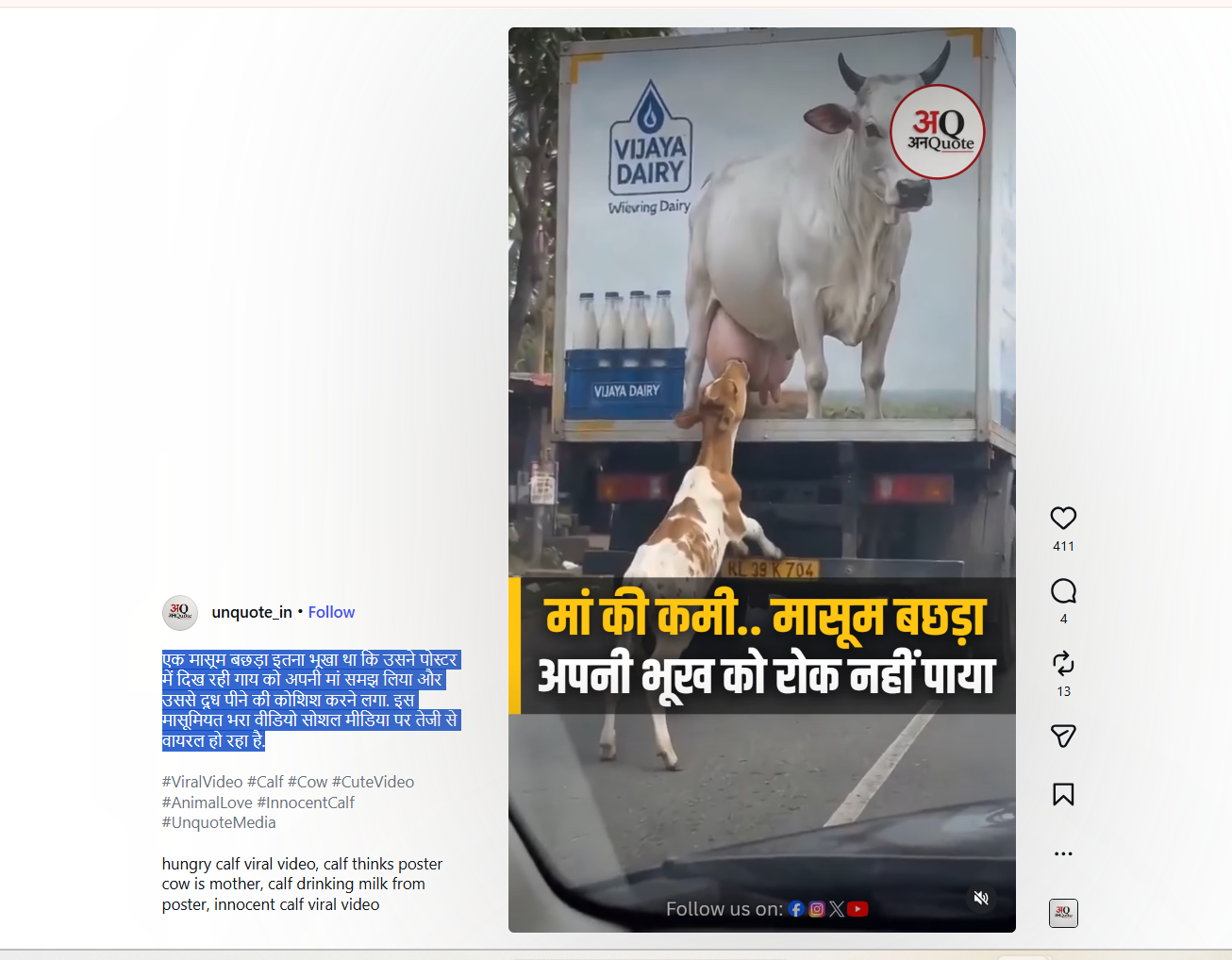
A video is being shared on social media showing a young calf running behind a milk truck on a road. A large image of a white cow is printed on the back of the truck. The calf appears to mistake the image for its real mother and tries to reach its udders. The video is being widely shared online with emotional captions. Research by the CyberPeace Research Wing found the viral claim to be false. Our research revealed that the viral video is AI-generated.
Claim:
An Instagram user shared the viral video with the caption: “A helpless calf was so hungry that it mistook the cow shown in the poster for its mother and tried to drink milk from her. This heartwarming video of innocence is rapidly going viral on social media.
https://www.instagram.com/reels/Dc5Gh-1DUl7/
Fact Check
To verify the viral claim, we conducted a Google search using relevant keywords but found no credible media reports supporting the claim. In the next step of our research, we extracted keyframes from the video and performed a reverse image search on Google. This led us to the same video on an account named ‘realishai’. Our research found that the account creates and shares AI-generated videos.”
https://www.instagram.com/realishai/
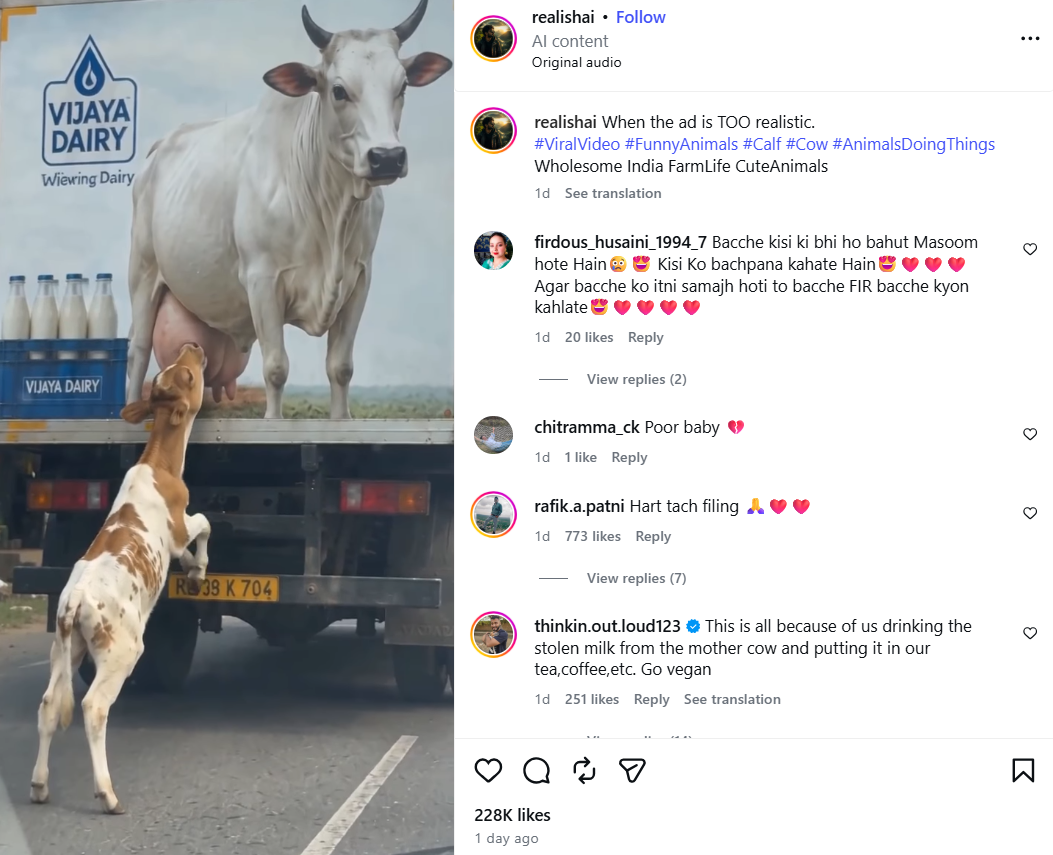
We also found several other AI-generated videos similar to the viral clip on the same account.

In the next step of our research, we scanned the viral video using the AI detection tool Sightengine. According to the results, the viral video is 99 per cent AI-generated.

In the next step of our research, we scanned the viral video using the AI detection tool Wasit AI. According to the results, the viral video is AI-generated.

Conclusion
Our research found the viral claim to be false. The research established that the viral video is AI-generated and does not depict a real incident.

Related Blogs

Executive Summary
A poster is being shared on social media claiming that people have an opportunity to win up to ₹699 on Prime Minister Narendra Modi’s birthday. The poster carries a “GET OFFER” button and asks users to click on it.
The CyberPeace Research Wing found the claim to be false. The research found that the Government of India has made no such announcement offering ₹699 to people on Prime Minister Narendra Modi’s birthday. The viral post is misleading and fake.
Claim
A Facebook user shared the viral poster with the caption:“Congratulations, you have won up to ₹699 from Prime Minister Modi.”
https://www.facebook.com/100083035017578/videos/1533904658280321/

FactCheck
To verify the claim, we conducted a Google search using relevant keywords. However, we did not find any credible media report confirming that the Government of India had announced such an offer.
We then checked the official website of the Prime Minister’s Office (PMO) for any announcement related to the alleged ₹699 prize offer. No official notification or report supporting the claim was found.
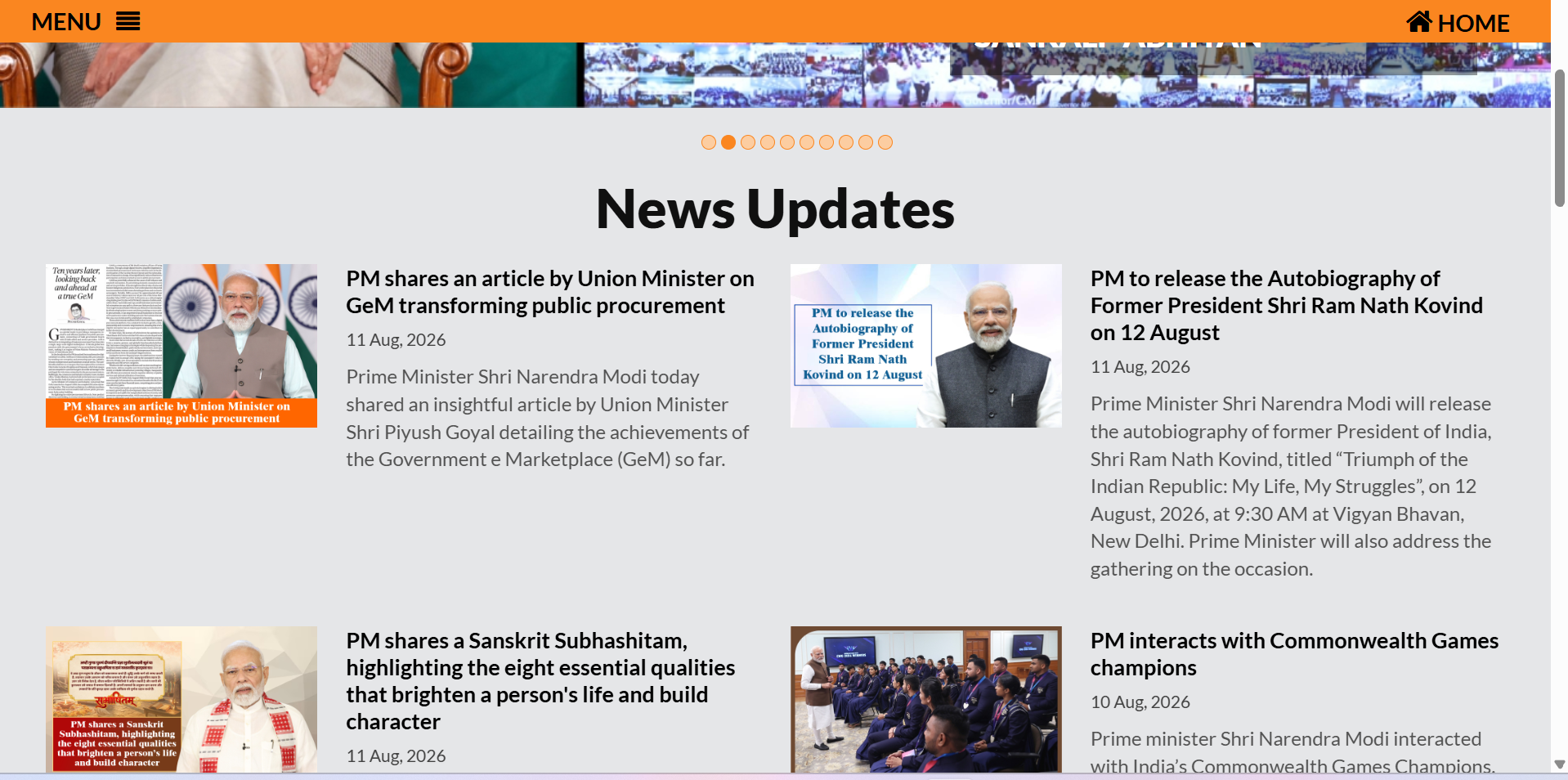
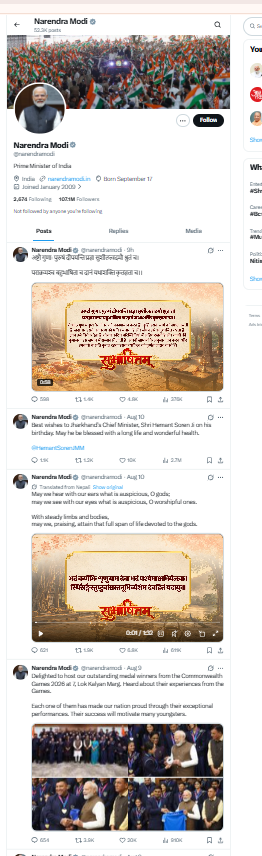
As part of the next stage of verification, we also checked the official X accounts of the PMO and Prime Minister Narendra Modi. We found no post or official announcement confirming the viral claim.
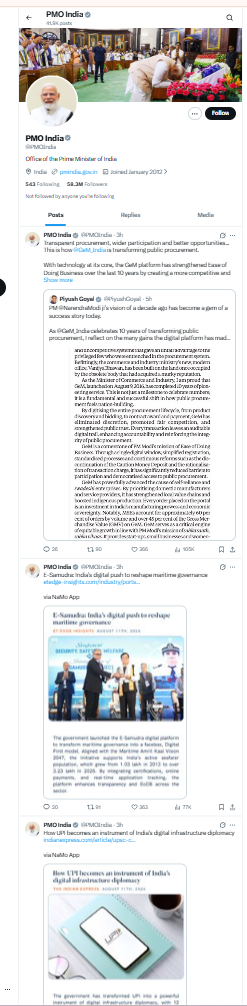
https://x.com/narendramodi
Conclusion
Our research found that the Government of India has not announced any ₹699 prize or offer on the occasion of Prime Minister Narendra Modi’s birthday. The viral poster is therefore fake and misleading. Users should avoid clicking on such suspicious “GET OFFER” links, as they may be designed to redirect users to fraudulent or deceptive websites.

Executive Summary
A video has recently gone viral on social media, with claims that it shows Iranian air defence systems intercepting attacks by US fighter jets. The video is being widely shared across various social media platforms, linking it to the ongoing military tensions between Iran and the United States. CyberPeace’s research found the viral claim to be misleading. The research revealed that the video is old and has no connection with the ongoing war between Iran and the US or any recent military action.
Claim:
A video shared on the social media platform X claims that Iranian air defence systems are responding to an attack by US aircraft.
https://x.com/tvir_X/status/2095185048567968013?s=20

Factcheck
As part of our research, we conducted a reverse image search of the keyframes from the viral video. During the search, we found the same video on The Sun’s YouTube channel, where it was published on November 16, 2024. According to the video’s description, the incident took place in Odesa, Ukraine, where Ukrainian air defence systems engaged in a heavy confrontation with Russian drones. The descr
https://www.youtube.com/watch?v=TxECQr27wng

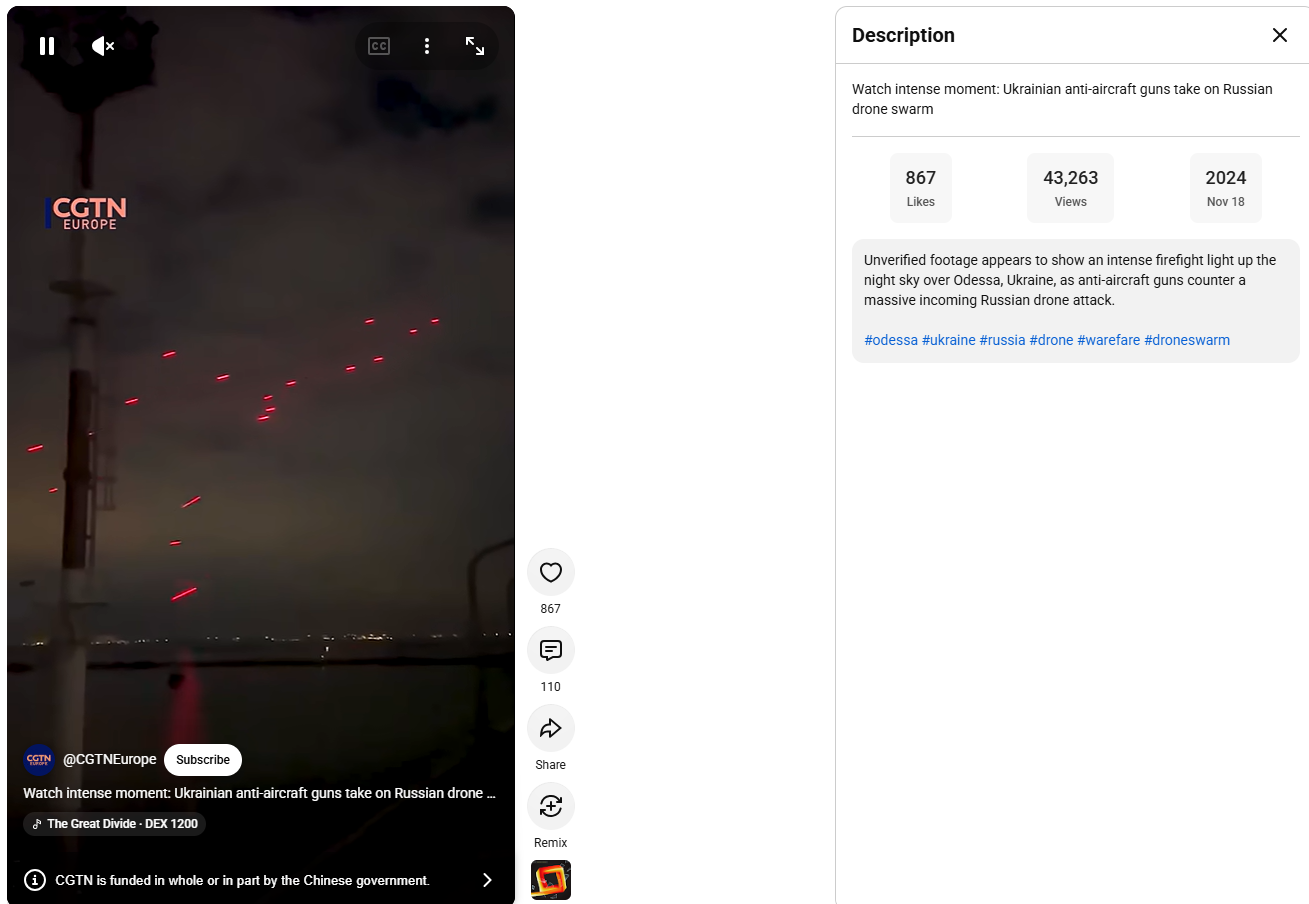
As part of our research, we found the video on the CGTN Europe YouTube channel, where it was published on November 18, 2024.The unverified footage appears to show heavy gunfire lighting up the night sky over Odesa, Ukraine. It is claimed that anti-aircraft guns were fired in response to a Russian drone attack.
https://www.youtube.com/shorts/Hq5P-UoPNHc
Conclusion:
The evidence gathered during our research makes it clear that the video circulating on social media is not related to the ongoing military tensions or any recent military action between Iran and the United States. A reverse image search revealed that the same video was published in November 2024. According to the video’s description, it shows Ukrainian air defence systems responding to a Russian drone attack in Odesa, Ukraine. Therefore, the claim that the viral video shows Iranian air defence systems intercepting attacks by US fighter jets is misleading.

Executive Summary
A video is being widely shared on social media claiming to show a Saudi Arabian F-15 fighter jet carrying out an airstrike on Sanaa International Airport in Yemen's capital. The footage shows several aircraft parked at what appears to be an airport before explosions erupt, followed by flames, thick smoke and people running in panic. The CyberPeace Research Wing found that the viral claim is false. Our research revealed that the circulating video is AI-generated and does not depict the actual airstrike. While it is true that Saudi Arabia carried out an airstrike at Sanaa International Airport, the viral footage is unrelated to that incident and is being shared with a misleading claim.
Claim
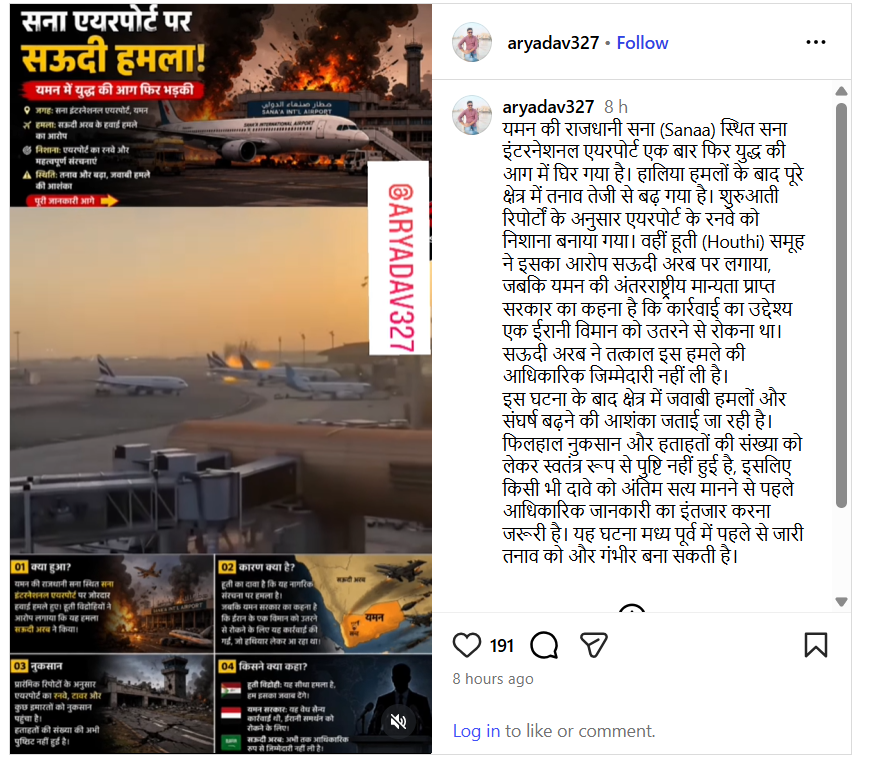
An Instagram post shared on July 15, 2026, claims that Saudi Arabia's F-15 fighter jets bombed Sanaa International Airport in Yemen. The post can be viewed here:
https://www.instagram.com/reel/DayBwufzn2N/?utm_source=ig_web_button_share_sheet
Fact Check
To verify the claim, we searched using relevant keywords but found no credible news reports or authentic footage matching the viral video. However, we found verified footage of the actual Saudi airstrike on The New York Post's YouTube channel. A comparison showed that the genuine footage is entirely different from the viral clip in terms of visuals, sequence and overall content.
https://www.instagram.com/reel/DawHCM_s_fn/?utm_source=ig_web_button_share_sheet

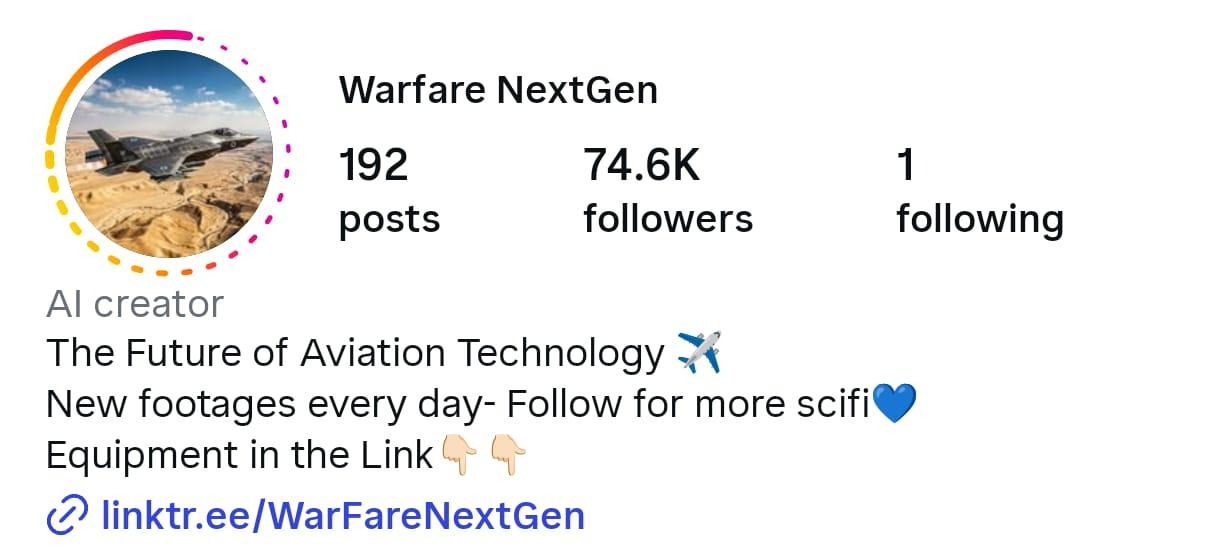
During our research, we also found the same viral video on an Instagram account named "warfarenextgen", which regularly publishes AI-generated war-related videos
We further examined the video using multiple AI detection tools: Hive Moderation assessed the video as 99.9% likely to be AI-generated.

DetectVideo AI found a 76% probability that the video was AI-generated.

Sightengine also concluded that the video was approximately 99% likely to be AI-generated.

Conclusion
Our research found that Saudi Arabia did carry out an airstrike on Sanaa International Airport to prevent an Iranian aircraft carrying a Houthi delegation from landing. However, the viral video does not show that attack. It is an AI-generated video that is being falsely circulated as footage of the real incident, making the viral claim misleading.
