
#FactCheck- Viral AI Video Falsely Claims to Show Newborn Babies Being Rescued During Assam Floods
Executive Summary
A video is being widely shared on social media with the claim that it shows the recent Assam floods, where nurses are rescuing newborn babies after water entered a hospital. The caption accompanying the viral video claims that the babies are not drowning; instead, healthcare workers and rescue teams are carrying them to safety amid floodwaters inside a hospital. It further states that the video shows humanity and courage during a time of crisis. CyberPeace Research Wing’s research found the claim to be false. The research revealed that the viral video showing healthcare workers rescuing newborn babies is not real but was created using Artificial Intelligence (AI).
Claim:
An Instagram user named kamlakritika shared the video and claimed that it showed the Assam floods. The post stated that the babies were not drowning but were being rescued by healthcare workers and rescue teams from a flooded hospital. In the viral video, several nurses can be seen running through waterlogged areas while trying to protect incubators — containers used to keep newborn babies — from being submerged or swept away. According to the caption, a devastating flood had turned the entire area into a disaster zone. It claimed that incubators containing premature newborn babies were floating in floodwaters, while nurses were running behind them amid strong water currents to save the infants. The caption further claimed that several incubators were overturning and sinking with babies inside, putting hundreds of fragile lives at risk.
https://www.instagram.com/reel/DbXvJwgz72X/?utm_source=ig_web_copy_link&igsh=NTc4MTIwNjQ2YQ==

Factcheck
To verify the claim, CyberPeace Research Wing conducted a Google search using relevant keywords. During the search, the video was found shared by several other Instagram accounts. During the research, we found a report published by News18 on August 1, 2026. Although the report was related to the Assam floods, it mentioned a different incident. According to the report, a viral video showed floodwaters surrounding houses, with water spread across the area. In the video, a rescue team member can be seen carefully carrying a newborn baby in his arms through the flooded area and handing the child over to another rescue worker near a boat so that the baby could be taken to safety.

However, during our research, we could not find any information from credible news organisations or official sources confirming the viral video showing newborn babies being rescued in incubators. As part of further research, we closely examined the viral video and noticed several indications suggesting that it could be AI-generated. The video was then analysed using the AI detection tool FauxLens, which indicated that the video was approximately 75% AI-generated.

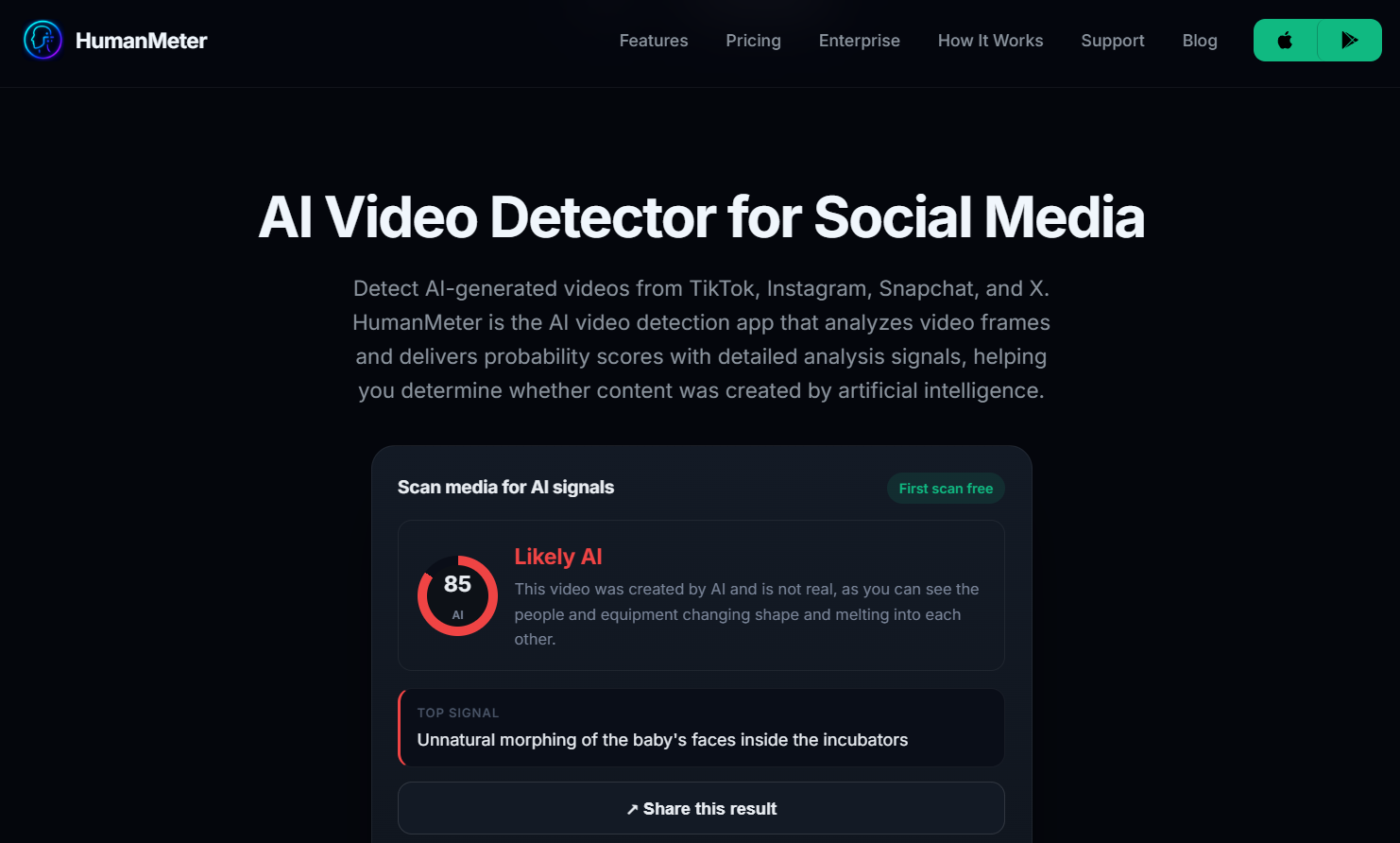
To further verify the authenticity of the video, we also analysed it using another AI detection tool, Human Meter. The tool showed an 85% probability of the video being generated with the help of AI.
Conclusion:
CyberPeace Research Wing’s research found that the viral video claiming to show nurses rescuing newborn babies during Assam floods is false. The video is not an actual incident but an AI-generated creation.

Related Blogs
.webp)
Introduction
Imagine spending two years , 730 days of early mornings, missed social events, and relentless mock tests preparing for a single examination. Now imagine that on the morning of that exam, your phone buzzes with a forwarded video claiming the question paper has already leaked. Your heart sinks. You do not know whether to trust it or ignore it. You have about forty minutes before you must enter the hall. This was the reality for a section of the 22 lakh students who sat for the NEET UG 2026 re-examination on June 21, 2026, when a fabricated video alleging a paper leak on Telegram began circulating across WhatsApp groups and X within hours of the exam commencing. The National Testing Agency (NTA) swiftly and categorically denied the claims, activated the Indian Cyber Crime Coordination Centre (I4C), and appealed to the public not to amplify unverified content. The examination concluded without incident. But the episode laid bare a challenge that no security perimeter or surveillance camera can fully address: the weaponisation of misinformation against India's high-stakes examination ecosystem.
The Anatomy of Examination Misinformation
Why Examinations Are a Prime Target
India's national examinations are uniquely fertile ground for misinformation. With over 22 lakh candidates registered for NEET UG 2026 alone, the audience is vast, anxious, and hungry for any update verified or otherwise. Research by MIT has found that false stories spread six times faster than accurate ones on social media, and are seventy percent more likely to be reshared. In India, where over 535 million people use WhatsApp and studies show that most users tend to trust messages forwarded by family and friends, the conditions for viral misinformation are near-ideal. According to a 2020 Microsoft survey, 52 percent of Indian respondents encountered misinformation at least once a day, the highest rate globally.
What makes examination-related misinformation especially dangerous is its timing. Fabricated content is almost always released on examination day itself, the precise moment when candidates are most emotionally vulnerable, official channels are stretched thin, and the window for effective rebuttal is narrowest. The NEET UG 2026 fake video, circulated on Telegram and amplified across closed WhatsApp groups, fits this pattern precisely. It was engineered not to inform, but to destabilise.
A History That Sharpens the Anxiety
This misinformation did not emerge in a vacuum. The shadow of the 2024 NEET UG controversy in which the Supreme Court of India confirmed that at least 155 students had directly benefited from a genuine paper leak, and which triggered nationwide protests, CBI investigations, and a parliamentary uproar — still looms large. Students and parents conditioned by that experience are primed to believe the worst, even when claims are entirely false. In 2026, that residual anxiety became the very vulnerability that bad actors sought to exploit. The government's response which included temporarily restricting access to Telegram in the lead-up to the re-examination underscored just how seriously the threat of examination misinformation is now being taken at the highest levels.
The NTA's Response: Why It Matters
- Speed and Transparency as Governance Tools: In crisis communication, the first credible voice usually wins. The NTA's near-immediate public denial posted on official social media handles and amplified by the Press Information Bureau's PIB Fact Check unit was a meaningful departure from the delayed, defensive responses that characterised earlier examination controversies. By directly labelling the video "FAKE" in capital letters, describing its creation as "a serious offence," and simultaneously appealing to students to rely only on official sources at neet.nta.nic.in, the NTA left little room for the false narrative to consolidate. NTA Director General Abhishek Singh went further, publicly stating that the agency was "100 per cent confident" in the integrity of the process and that no complaints of a genuine paper leak had been received. This matters beyond crisis management. Public trust in examination systems is not rebuilt through official statements alone , it is rebuilt through the consistent, transparent exercise of institutional authority. A swift, fact-based rebuttal, deployed before rumour hardens into public belief, is as much a governance act as it is a communications strategy.
- Cybercrime Coordination as a Structural Shift: Perhaps the most significant development in the NTA's response was its coordination with I4C and law enforcement agencies to trace the origin of the fabricated video. This signals a structural evolution: examination misinformation is no longer being treated as an administrative inconvenience but as cybercrime with legal consequences under the Information Technology Act, 2000. The announcement that legal action would follow also carries a deterrent message to potential future actors — that the machinery of cybercrime enforcement will be activated, and that fabricating content to mislead examination candidates is a prosecutable offence.
The Human and Institutional Cost
The costs of examination misinformation are neither abstract nor trivial. Mental health experts have warned that controversies surrounding national-level examinations can have serious long-term psychological consequences for aspirants. Dr. Mustafa Nadeem Kirmani of Amity University has noted that such crises increase the risk of students taking "extreme steps like suicide attempts, anger toward the system, and hopelessness," and can, in the long run, lead to clinical depression. In the wake of the 2026 paper leak controversy, multiple reports of student deaths by suicide were linked to the compounded pressures of exam cancellation and uncertainty a grim reminder of the real human stakes behind governance failures in this domain. For institutions, every viral misinformation episode generates an avoidable administrative crisis. Helplines are overwhelmed, examination centre staff face panicked queries, and senior officials are pulled into damage control rather than exam administration. The credibility of clarifications issued under pressure is itself questioned by a public already primed for suspicion. This administrative burden, multiplied across 5,440 examination centres in India and 14 abroad, represents a significant and entirely unnecessary cost.
Building a Resilient Ecosystem: What Needs to Change
- Proactive Communication and Platform Coordination: Institutional credibility is built before a crisis, not during one. Examination bodies must invest in sustained pre-examination communication that educates candidates and parents about the existence of misinformation campaigns and tells them exactly where to look for verified updates. This means highly visible, verified social media presences with large followings, real-time update protocols, and formal escalation channels with platforms like WhatsApp, Telegram, X, and YouTube to enable rapid takedown of false examination-related content. The IT Amendment Rules of 2023, which require significant social media intermediaries to act on government-flagged content, provide a legal basis for such coordination but the operational infrastructure to activate it at speed must be built in advance, not improvised on the day.
- Fact-Checking Partnerships and Digital Literacy: Independent organisations such as BOOM Live, Alt News, and Vishvas News have proven their capacity to rapidly debunk examination misinformation. Formalising their role through a structured public-private partnership where examination authorities share real-time verified information with empanelled fact-checkers could close the window during which false content circulates unchallenged. Equally critical is investment in digital media literacy among students and parents. A 2018 survey found that nearly 45 percent of Indian respondents were unaware of any fact-checking organisations. Addressing this gap through school curricula, coaching networks, and the Ministry of Education's DIKSHA platform is a preventive investment far less costly than repeated crisis management.
Conclusion
The NTA's handling of the NEET UG 2026 fake video was, by recent standards, exemplary. It was fast, transparent, authoritative, and backed by the activation of cybercrime enforcement. But a single well-managed episode does not constitute a resilient system. India runs some of the world's largest entrance examinations, and the stakes medical seats, livelihoods, and the aspirations of crores of young people are too high for crisis response alone to suffice. Combating examination misinformation requires permanent structural investment: dedicated rapid-response cells within examination bodies, formalised fact-checking pipelines, proactive platform coordination, and a sustained public education effort around digital verification. Protecting the integrity of India's examination ecosystem is not merely an administrative responsibility. It is a commitment to the millions of students who give everything they have to compete fairly and who deserve a system that protects them not only from cheating, but from the fear of it.
References
- https://timesofindia.indiatimes.com/articleshow/131900261.cms
- https://www.india.com/education/neet-ug-2026-re-exam-paper-leak-claim-goes-viral-nta-says-video-is-fake-and-false-fabricated-examination-conducted-successfully-8453620/
- https://www.republicworld.com/education/neet-ug-re-exam-nta-says-paper-leak-video-fake-test-conducted-successfully-2026-06-22-129346
- https://thefederal.com/category/education/neet-re-exam-paper-leak-admission-system-crisis-247410
- https://www.outlookindia.com/healthcare-spotlight/beyond-the-paper-leak-emotional-trauma-among-neet-aspirants-raises-concern
- https://en.wikipedia.org/wiki/2024_NEET_controversy
- https://kaval.chat/blog/misinformation-scam-statistics-india-2026/
- https://www.ijert.org/the-virality-gap-political-misinformation-and-the-information-crisis-in-india-s-digital-democracy-ijertv15is050041
- https://www.science.org/doi/10.1126/science.aap9559 https://www.microsoft.com/en-us/digital-skills/digital-civility
- https://www.meity.gov.in/content/information-technology-intermediary-guidelines-and-digital-media-ethics-code-amendment
- https://www.indiacode.nic.in/handle/123456789/1999
- https://pib.gov.in/PressReleasePage.aspx
- https://www.careerindia.com/news/addressing-the-mental-health-crisis-sparked-by-net-and-neet-paper-leaked-in-india-041963.html
- https://thediplomat.com/2025/03/indias-growing-misinformation-crisis-a-threat-to-democracy/

Executive Summary
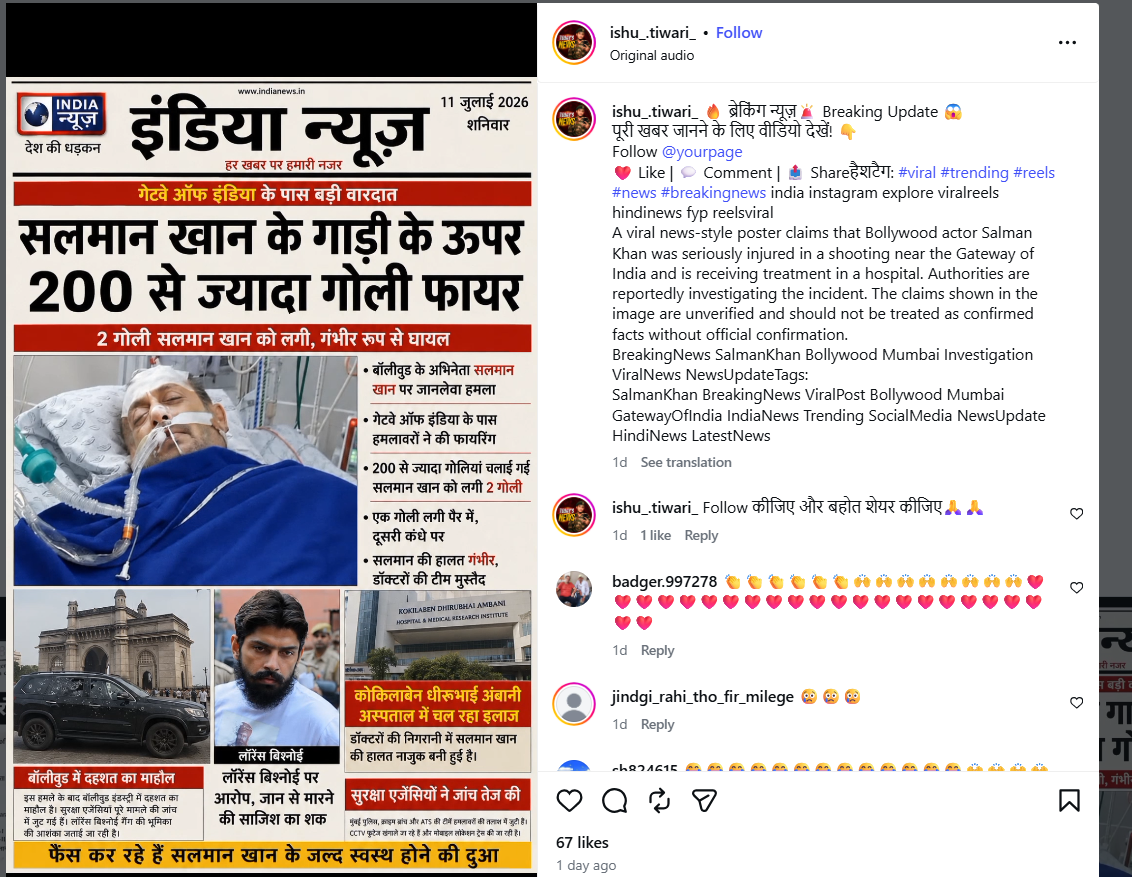
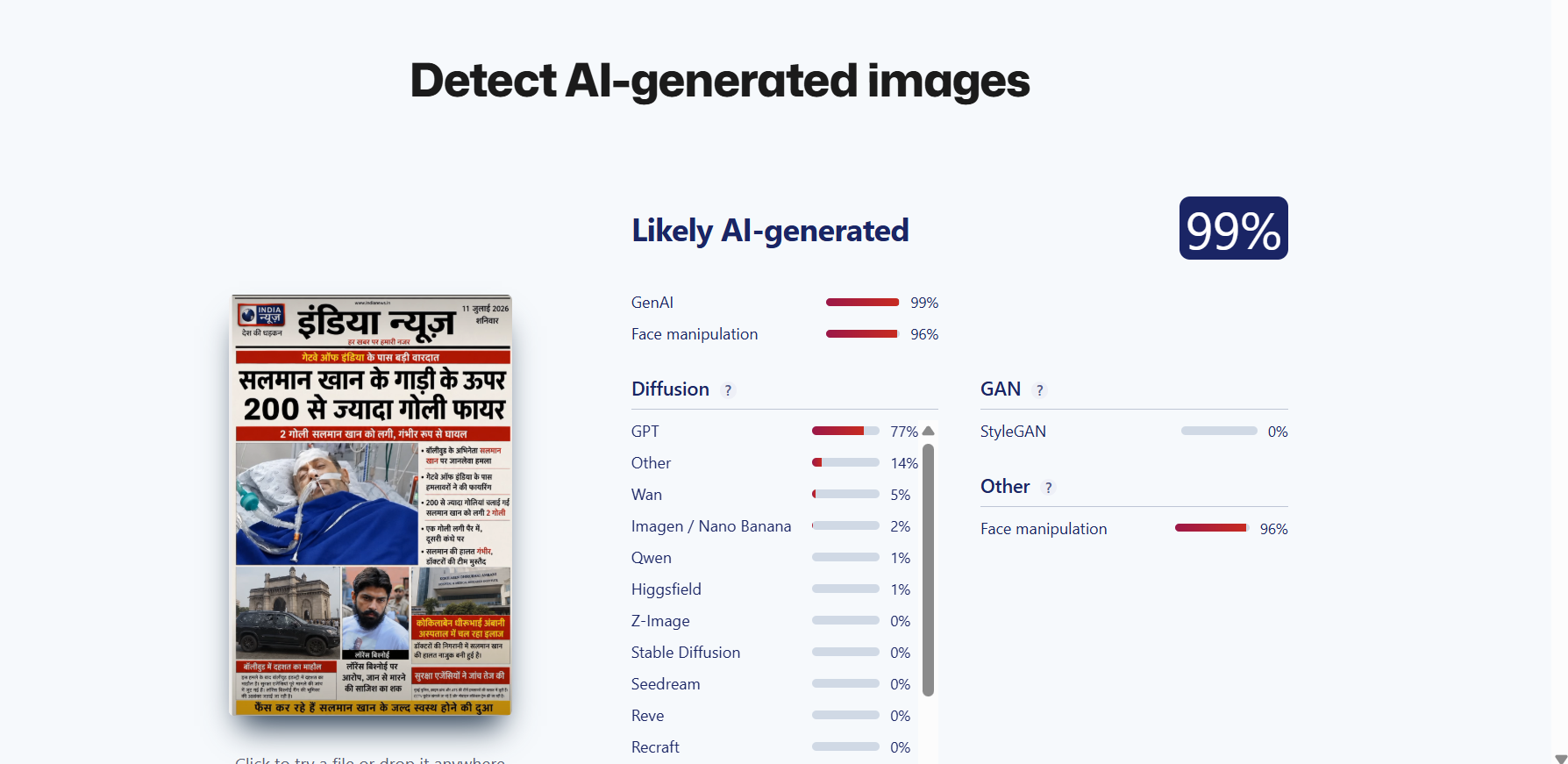
A newspaper clipping is being widely shared on social media with the claim that more than 200 bullets were fired at actor Salman Khan’s vehicle, two of which allegedly hit him and left him seriously injured. CyberPeace Research Wing’s research found the viral claim to be false. The research revealed that Salman Khan is safe and healthy, and there is no credible information confirming any such firing incident. The probe further found that the alleged newspaper clipping circulating on social media was created using Artificial Intelligence (AI).
Claim
An Instagram user shared the viral newspaper clipping on July 11, 2026, claiming that more than 200 bullets were fired at Salman Khan’s vehicle, two bullets hit him, and he was seriously injured.
https://www.instagram.com/reel/DaqNtAfSGyI/
https://ghostarchive.org/archive/81qpF
Fact Check
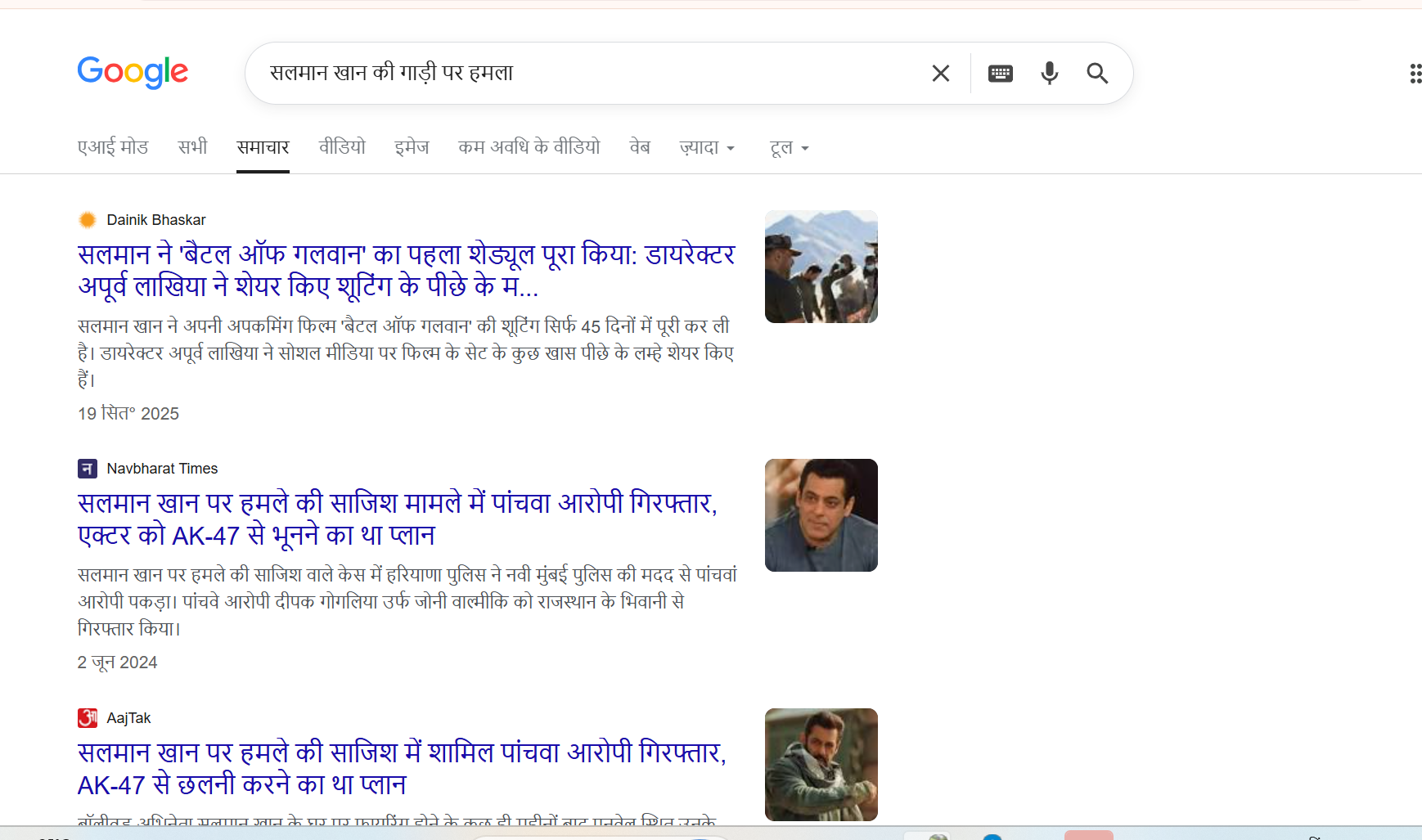
To verify the viral claim, we conducted a keyword-based search on Google. However, we did not find any credible media report confirming that Salman Khan was injured in any such firing incident.
During further research, we found a report published by Dainik Bhaskar on July 11, 2026. According to the report, actor Salman Khan sold another apartment located in Bandra, Mumbai. The report did not mention any incident involving an attack or injury.
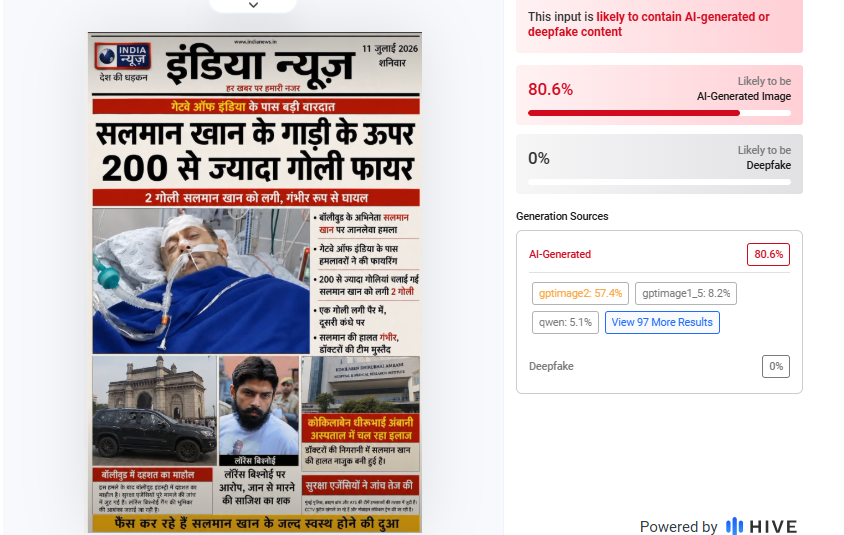
In the next step of the research, we analysed the viral newspaper clipping using the AI detection tool Hive Moderation. The tool’s analysis indicated an 80% probability that the newspaper clipping was AI-generated.
For further verification, the viral image was also checked using another AI detection tool, Sightengine. The tool’s result showed a 99% probability that the image was AI-generated.
Conclusion
Our research found that the viral claim is false. There is no evidence that actor Salman Khan was injured in a firing incident or that more than 200 bullets were fired at his vehicle. The alleged newspaper clipping being circulated on social media was found to be AI-generated and is being shared with a false narrative
Introduction
India is seeing a major change due to the introduction of Artificial Intelligence (AI) across all sectors of government, business, and the digital economy with regard to areas such as governance, healthcare, finance, and the infrastructure. The large scale and rapid pace of AI implementation are expected to lead to efficiency gains, innovations in products and services, and to drive economic growth; however, the growth of AI also creates many serious concerns regarding ethics, legality, and societal ramifications. Issues such as algorithmic bias in the use of algorithms by AI, a lack of transparency in decision-making algorithms, data protection risks resulting from AI employments, and unclear frameworks for determining accountability for AI-related action; bring issues of how we will govern AI in a responsible manner to the forefront of public policy discourse.
India wants to become an AI superpower and leader in technology on the world stage. As such, India has a dual responsibility to fuel innovation without discounting democratic ideals, human rights, and public trust. UNESCO's AI Readiness Assessment Methodology (RAM) is a global tool for AI governance, created to provide concrete policy guidance on how to make ethical AI a reality. The India AI RAM Report is set to be formally released by UNESCO during the India AI Impact Summit 2026, taking place in New Delhi, as a major milestone in India's developing AI governance journey.
What is UNESCO’s AI Readiness Assessment Methodology (RAM)?
UNESCO has created a simple yet effective tool, called the AI Readiness Assessment Methodology (RAM), that can assist governments in determining how well they are prepared to develop, deploy and manage Artificial Intelligence ethically, responsibly and trustworthily. RAM provides a framework for diagnosing and self-assessing the state of a country’s ability to govern AI on the basis of evidence-based decision making rather than serving as a regulatory framework or ranking system.
The most important goal of RAM is to assess a country’s overall state of readiness to govern AI based on four dimensions: institutionally, legally, socially and technologically. In doing so, RAM examines how institutions function, their maturity level and the extent to which various policies align with one another; thereby giving governments an overview of strengths, weaknesses and priorities for reform.
Unlike other frameworks, RAM does not prescribe any one-size-fits-all solutions; instead, it uses a context sensitive approach when implementing the concepts of AI governance due to differing national realities, developmental priorities and social/economic conditions. Using the ethical principles established by UNESCO, RAM converts these principles into practical actions that can guide countries in their transition from abstract commitments to concrete strategies for governing AI.
Key Dimensions Assessed Under RAM
UNESCO's AI Readiness Assessment Methodology (RAM) is a tool used to assess a country's readiness to implement ethical Artificial Intelligence through five interconnected dimensions. These include: the legal and regulatory dimension (which looks at the laws, rules, and safeguards that are currently in place related to AI), the social and cultural dimension (which looks at whether the public is aware of AI, whether it trusts AI, whether AI is an inclusive experience for all people who use AI and whether AI has affected society in various ways), and the economic dimension (which looks at innovation, participation from industry, and readiness of the market for AI).
Also included in the framework/functionality of the RAM are: scientific and educational dimension (which examines a country’s capacity to conduct serious scientific research, including research activities that prepare persons to be employable in AI jobs); and technological and infrastructure dimension (which examines the availability of data, digital infrastructure, and computing capabilities for AI projects in a country).
All five of these dimensions consider the entirety of the scope of an AI readiness evaluation to ensure that AI Governance is more than just a technical issue; rather, it is a condition of a country’s capacity to generate laws, create policy and maintain social equality in relation to all forms of Artificial Intelligence.
Methodology and Nationwide Consultative Process
RAM takes both qualitative and quantitative characteristics together to create an overall understanding of how ready any nation is for AI capabilities. It is designed with flexibility so nations can define their assessments with respect to their own institutional capabilities and development agenda.
Normally, RAM is implemented by an independent expert who is assisted by a national team consisting of various stakeholders. With respect to the RAM process used in India, it was conducted as a national consultation where representatives from across all sectors of society (government, private sector, academia, civil society, and young people) participated in the assessment's creation. This consultation process made sure there were many different viewpoints present, which increased the legitimacy of the assessment results and how relevant they are in each country. The consultation process also yields policy recommendations based on real life governing situations or challenges that are specific to different sectors.
Institutional Partnerships Behind India’s RAM
The India RAM Initiative was developed by the UNESCO South Asia Regional Office (as a partner of IndiaAI Mission and the Indian Ministry of Electronics and Information Technology) and implemented by Ikigai Law with the help of The Patrick J. McGovern Foundation. This demonstrated the need for and importance of partnership in developing governance frameworks for Artificial Intelligence (AI). The result of the RAM process is a collaborative effort that includes evidence-based international norm-setting capabilities from around the world; government policies under the guidance of national political leadership; independent legal-technical implementation; input from civil society; all with the goal of empowering (increasing) India's ability to establish and implement both a consistent (i.e., coherent) and comprehensive (i.e., inclusive) AI Governance Framework.
Significance of the India AI RAM Report and Its Launch
The India AI RAM Report provides a complete initial assessment of India’s AI ecosystem and includes key insights into AI readiness, governance strengths/weaknesses, and potential opportunities across multiple sectors. It identifies priority areas to promote a responsible and trustworthy AI ecosystem in India.
The report will be officially released during the India AI Impact Summit (February 16, 2026 at Bharat Mandapam, New Delhi) where Mr. Abhishek Venkateswaran (National Project Officer-Social and Human Sciences at UNESCO South Asia) offered additional insight into the consultative process and the overall importance of this launch on India's future AI policy path.
Policy Relevance and the Road Ahead
The RAM Framework gives the government a structure and roadmap for developing and implementing AI Governance. In doing this, RAM reinforces the alignment of IndiaAI Mission, which includes safety and trust in AI as one of the pillars. However, the results from this Assessment will not automatically translate to reforming institutions, issuing guidelines specific to sectors, or developing a mechanism for continued evaluation. Implementation will require strong and sustained commitment from political leaders, as well as the commitment of institutions involved in the reforms made possible by RAM's implementation.
Conclusion
UNESCO has developed an AI Readiness Assessment Methodology (AI-RAM) that can greatly advance the way India approaches governance with respect to artificial intelligence (AI). By focusing on "readiness" (doing what needs to be done), "responsibility" (being or having good moral principles) and "inclusivity" (including everyone), the AI-RAM will enable India to become an active participant in discussions around ethical use of AI at a global level. India is now positioned to take on a leadership role in the world by adopting this methodology, which provides a platform for establishing global standards for AI development. The real benefit of the AI-RAM will come from policy measures that will ensure future AI development in India is 'human-centered', 'trustworthy' and 'aligns with democratic values'.
References
- https://icaire.org/files/UNESCORam-en.pdf
- https://www.pib.gov.in/PressReleasePage.aspx?PRID=2134492®=3&lang=2
- https://www.facebook.com/unesconewdelhi/videos/unesco-is-set-to-launch-the-india-ai-readiness-assessment-methodology-ram-report/25955631820699516/
- https://www.unesco.org/ethics-ai/en/ram
- https://www.hindustantimes.com/india-news/unesco-meity-launch-exercise-to-assess-india-s-ai-readiness-101749188341803.html#
- https://www.manoramayearbook.in/current-affairs/india/2025/06/09/unesco-ai-readiness-assessment-methodology-ram.html
