
#FactCheck- Old Bangladesh Clip Misused as West Bengal Election Incident
Executive Summary
A video showing two men attempting to break into a house, only to be confronted by armed personnel who force them to kneel, is being widely shared on social media in the context of the upcoming West Bengal Assembly elections. The clip is being circulated with claims that it shows Central Reserve Police Force personnel intervening after workers of the Trinamool Congress allegedly tried to intimidate locals. However, an research by the CyberPeace Research Wing found that the claim is false. The viral video has no connection to India or the West Bengal elections and is being shared with a misleading narrative.
Claim
A Facebook user named Devashish Ajitkumar Bhattacharya shared the video on April 20, 2026, with the caption suggesting that TMC workers attempted to threaten people but were stopped by CRPF personnel deployed in West Bengal.
- Archive link: https://perma.cc/R42V-49FV

Fact Check
To verify the claim, we extracted keyframes from the viral video and conducted a reverse image search. This led us to the same video uploaded on August 17, 2024, on the official YouTube channel of Bangladeshi news outlet Dhaka Post. The details accompanying the video confirmed that the incident took place in Bangladesh.
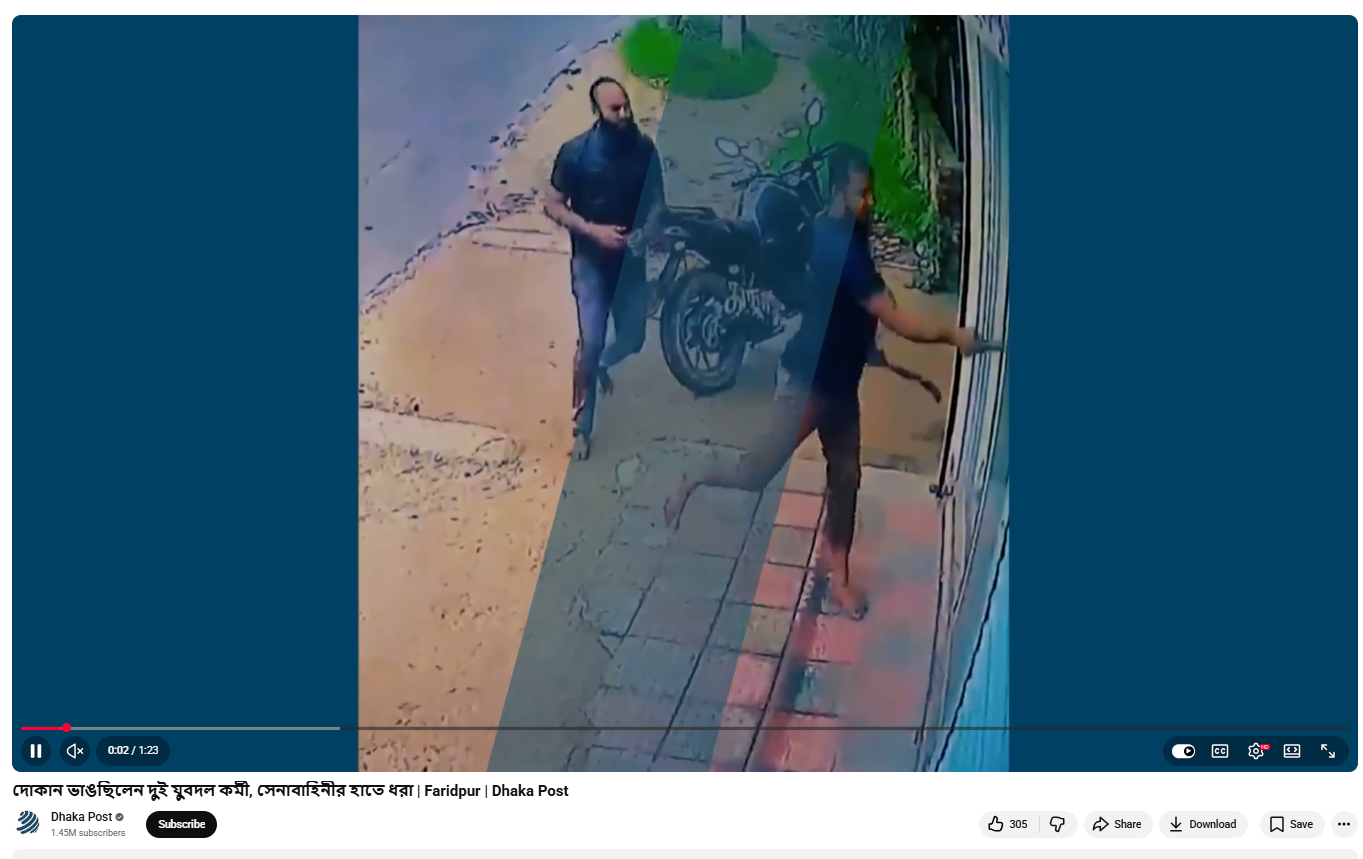
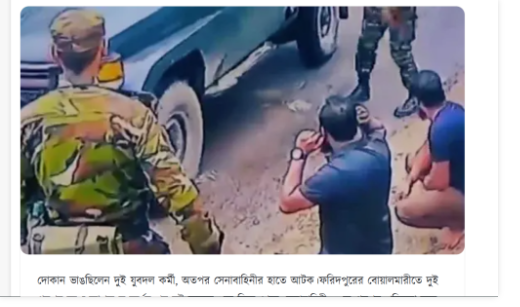
Further research led us to a report published on August 17, 2024, by 24 Hours Khobor, which stated that the incident occurred in Faridpur, Bangladesh. According to the report, a clash broke out between two groups, following which the army intervened and arrested two individuals identified as Tutul Hossain and Dukhu Mia. Both were later sent to jail by a court.
Conclusion
The viral claim linking the video to the West Bengal Assembly elections is false. The footage does not show any incident involving CRPF personnel or political workers in India. Instead, it is from an unrelated घटना in Bangladesh that took place in 2024. The video has been taken out of context and is being circulated with a misleading narrative to create confusion around the ongoing election environment.

Related Blogs
Introduction
Purchasing online currencies through one of the numerous sizable digital marketplaces designed specifically for this purpose is the simplest method. The quantity of cryptocurrency and money paid. These online marketplaces impose an exchange fee. After being obtained, digital cash is stored in a digital wallet and can be used in the metaverse or as real money to make purchases of goods and services in the real world. Blockchain ensures the security and decentralisation of each exchange.
Its worth and application are comparable to those of gold: when a large number of investors choose this valuable asset, its value increases and vice versa. This also applies to cryptocurrencies, which explains why they have become so popular in recent years. The metaphysical realm is an online space where users can communicate with one another via virtual personas, among other features. Furthermore, money and commerce always come up when people communicate.
Web3 is welcoming the metaverse, and in an environment where conventional currency isn't functional, its technologies are making it possible to use cryptocurrencies. Non-Fungible Tokens (NFTs) can be used to monitor intellectual rights to ownership in the metaverse, while cryptocurrencies are used to pay for content and incentivise consumers. This write-up addresses what the metaverse crypto is. It also delves into the advantages, disadvantages, and applications of crypto in this context.
Convergence of Metaverse and Cryptocurrency
As the main form of digital money in the Metaverse, digital currencies can be used to do business and exchange in the digital realm. The term "metaverse" describes a simulation of reality where users can communicate in real time with other users and an environment created by computers. The acquisition and exchange of virtual products, virtual possessions, and electronic creativity within the Metaverse can all be made possible via cryptocurrency.
Many digital currencies are based on blockchain software, which can offer an accessible and safe way to confirm payments and manage digital currencies in the Metaverse. By giving consumers vouchers or other electronic currencies in exchange for their accomplishments or contributions, cryptocurrency might encourage consumer engagement and involvement in the Metaverse.
In the Metaverse, cryptocurrency can also facilitate portable connectivity, enabling users to move commodities and their worth between various virtual settings and platforms.
The idea of fragmentation in the Metaverse, where participants have more ownership and control over their virtual worlds, is consistent with the decentralised characteristics of cryptocurrencies.
Advantages of Metaverse Cryptocurrency
There are countless opportunities for creativity and discovery in the metaverse. Because the blockchain is accessible to everyone, unchangeable, and password-protected, metaverse-centric cryptocurrencies offer greater safety and adaptability than cash. Crypto will be crucial to the evolution of the metaverse as it keeps growing and more individuals show interest in using it. Here are a few of the variables influencing the growth of this new virtual environment.
Safety
Your Bitcoin wallet is intimately linked to your personal information, progress, and metaverse possessions. Additionally, if your digital currency wallet is compromised, especially if your account credentials are weak, public, or connected to your real-world identity, cybercriminals may try to steal your money or personal data.
Adaptability
Digital assets can be accessed and exchanged worldwide due to cryptocurrencies’ ability to transcend national borders. By utilising a local cryptocurrency, many metaverse platforms streamline transactions and eliminate the need for frequent currency conversions between various digital or fiat currencies. Another advantage of using autonomous contract languages is for metaverse cryptos. When consumers make transactions within the network, applications do away with the need for administrative middlemen.
Objectivity
By exposing interactions in a publicly accessible distributed database, the use of blockchain improves accountability. It is more difficult for dishonest people to raise the cost of digital goods and land since Bitcoin transactions are public. Metaverse cryptocurrencies are frequently employed to control project modifications. The outcomes of these legislative elections are made public using digital contracts.
NFT, Virtual worlds, and Digital currencies
Using the NFT is an additional method of using Bitcoin for metaverse transactions. These are distinct electronic documents that have significant potential value.
A creator must convert an electronic work of art into a virtual object or virtual world if they want to display it digitally in the metaverse. Artists produce one-of-a-kind, serialised pieces that are given an NFT that may be acquired through Bitcoin payments.
Applications of Metaverse Cryptography
Fiat money or independent virtual currencies like Robux are used by Web 2 metaverse initiatives to pay for goods, real estate, and services. Fiat lacked the adaptability of cryptocurrencies with automated contract capabilities, even though it may be used to pay for goods and finance the creation of projects. Users can stake these within the network virtual currencies to administer distributed metaverses, and they have all the same functions as fiat currency.
Banking operations
Lending digital cash to purchase metaverse land is possible. Banks that have already made inroads into the metaverse include HSBC and JPMorgan, both of which possess virtual real estate. "We are making our foray into the metaverse, allowing us to create innovative brand experiences for both new and existing customers," said Suresh Balaji, chief marketing officer for HSBC in Asia-Pacific.
Purchasing
An increasingly important aspect of the metaverse is online commerce. Users can interact with real-world brands, tour simulated malls, and try on virtual apparel for their characters. Adidas, for instance, debuted an NFT line in 2021 that included customizable peripherals for the Sandbox. Buyers of NFTs crossed the line separating the virtual universe and the actual world to obtain the tangible goods associated with their NFTs.
Authority
Metaverse initiatives are frequently governed by cryptocurrency. Decentraland, a well-known Ethereum-based metaverse featuring virtual reality components, permits users to submit and vote on suggestions provided they own specific tokens.
Conclusion
The combination of the virtual world and cryptocurrencies creates novel opportunities for trade, innovation, and communication. The benefits of using the blockchain system are increased objectivity, safety, and flexibility. By facilitating exclusive ownership of digital assets, NFTs enhance metaverse immersion even more. In the metaverse, cryptocurrencies are used in banking, shopping, and government, forming a user-driven, autonomous digital world. The combination of cryptocurrencies and the metaverse will revolutionise how we interact with online activities, creating a dynamic environment that presents both opportunities and difficulties.
References
- https://www.telefonica.com/en/communication-room/blog/metaverse-and-cryptocurrencies-what-is-their-relationship/
- https://hedera.com/learning/metaverse/metaverse-crypto
- https://www.linkedin.com/pulse/unleashing-power-connection-between-cryptocurrency-ai-amit-chandra/

Introduction
The use of digital information and communication technologies for healthcare access has been on the rise in recent times. Mental health care is increasingly being provided through online platforms by remote practitioners, and even by AI-powered chatbots, which use natural language processing (NLP) and machine learning (ML) processes to simulate conversations between the platform and a user. Thus, AI chatbots can provide mental health support from the comfort of the home, at any time of the day, via a mobile phone. While this has great potential to enhance the mental health care ecosystem, such chatbots can present technical and ethical challenges as well.
Background
According to the WHO’s World Mental Health Report of 2022, every 1 in 8 people globally is estimated to be suffering from some form of mental health disorder. The need for mental health services worldwide is high but the supply of a care ecosystem is inadequate both in terms of availability and quality. In India, it is estimated that there are only 0.75 psychiatrists per 100,000 patients and only 30% of the mental health patients get help. Considering the slow thawing of social stigma regarding mental health, especially among younger demographics and support services being confined to urban Indian centres, the demand for a telehealth market is only projected to grow. This paves the way for, among other tools, AI-powered chatbots to fill the gap in providing quick, relatively inexpensive, and easy access to mental health counseling services.
Challenges
Users who seek mental health support are already vulnerable, and AI-induced oversight can exacerbate distress due to some of the following reasons:
- Inaccuracy: Apart from AI’s tendency to hallucinate data, chatbots may simply provide incorrect or harmful advice since they may be trained on data that is not representative of the specific physiological and psychological propensities of various demographics.
- Non-Contextual Learning: The efficacy of mental health counseling often relies on rapport-building between the service provider and client, relying on circumstantial and contextual factors. Machine learning models may struggle with understanding interpersonal or social cues, making their responses over-generalised.
- Reinforcement of Unhelpful Behaviors: In some cases, AI chatbots, if poorly designed, have the potential to reinforce unhealthy thought patterns. This is especially true for complex conditions such as OCD, treatment for which requires highly specific therapeutic interventions.
- False Reassurance: Relying solely on chatbots for counseling may create a partial sense of safety, thereby discouraging users from approaching professional mental health support services. This could reinforce unhelpful behaviours and exacerbate the condition.
- Sensitive Data Vulnerabilities: Health data is sensitive personal information. Chatbot service providers will need to clarify how health data is stored, processed, shared, and used. Without strong data protection and transparency standards, users are exposed to further risks to their well-being.
Way Forward
- Addressing Therapeutic Misconception: A lack of understanding of the purpose and capabilities of such chatbots, in terms of care expectations and treatments they can offer, can jeopardize user health. Platforms providing such services should be mandated to lay disclaimers about the limitations of the therapeutic relationship between the platform and its users in a manner that is easy to understand.
- Improved Algorithm Design: Training data for these models must undertake regular updates and audits to enhance their accuracy, incorporate contextual socio-cultural factors for profile analysis, and use feedback loops from customers and mental health professionals.
- Human Oversight: Models of therapy where AI chatbots are used to supplement treatment instead of replacing human intervention can be explored. Such platforms must also provide escalation mechanisms in cases where human-intervention is sought or required.
Conclusion
It is important to recognize that so far, there is no substitute for professional mental health services. Chatbots can help users gain awareness of their mental health condition and play an educational role in this regard, nudging them in the right direction, and provide assistance to both the practitioner and the client/patient. However, relying on this option to fill gaps in mental health services is not enough. Addressing this growing —and arguably already critical— global health crisis requires dedicated public funding to ensure comprehensive mental health support for all.
Sources
- https://www.who.int/news/item/17-06-2022-who-highlights-urgent-need-to-transform-mental-health-and-mental-health-care
- https://health.economictimes.indiatimes.com/news/industry/mental-healthcare-in-india-building-a-strong-ecosystem-for-a-sound-mind/105395767#:~:text=Indian%20mental%20health%20market%20is,access%20to%20better%20quality%20services.
- https://www.frontiersin.org/journals/digital-health/articles/10.3389/fdgth.2023.1278186/full

Executive Summary
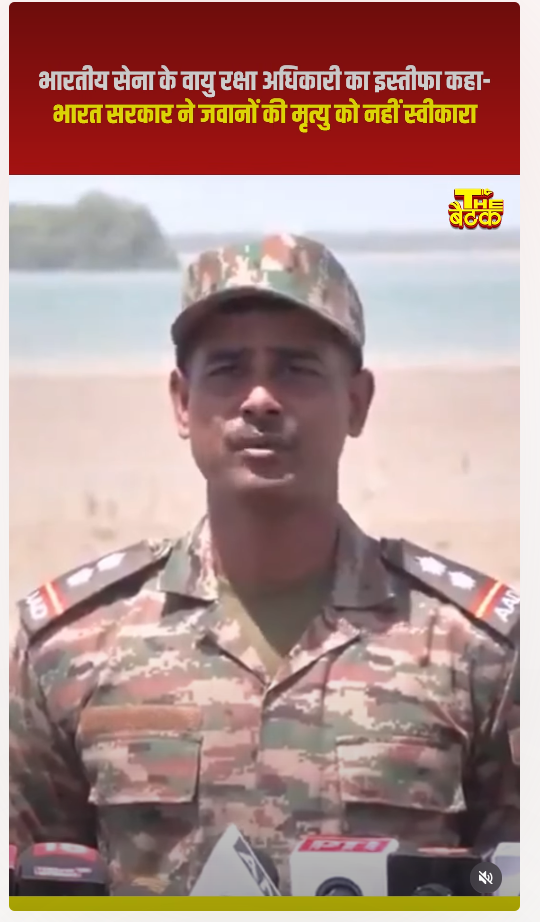
A video of a soldier is being widely circulated on social media with the claim that an Indian Army Air Defence officer named Anurag Thakur resigned, alleging that soldiers martyred during “Operation Sindoor” were ignored by the government. However, research by the CyberPeace Research Wing found the claim to be false. The viral video has been manipulated with AI-generated audio and is being shared with a misleading narrative.
Claim:
Instagram users shared the clip claiming: “Indian Army Air Defence officer Anurag Thakur has resigned. He said the Government of India did not even acknowledge the deaths of soldiers.”
Fact Check:
The research began with keyword searches related to the alleged resignation of an “Indian Army Air Defence JCO Anurag Thakur.” No credible or reputed media report was found supporting such a claim. A reverse image search of a frame from the viral video led to the original footage posted by news agency ANI on its official X account on March 22, 2026. The original video runs for 1 minute and 42 seconds A comparison of both videos showed that in the viral clip, the soldier appears to be speaking in English, whereas in ANI’s authentic video, the same soldier is speaking in Hindi while addressing the media.
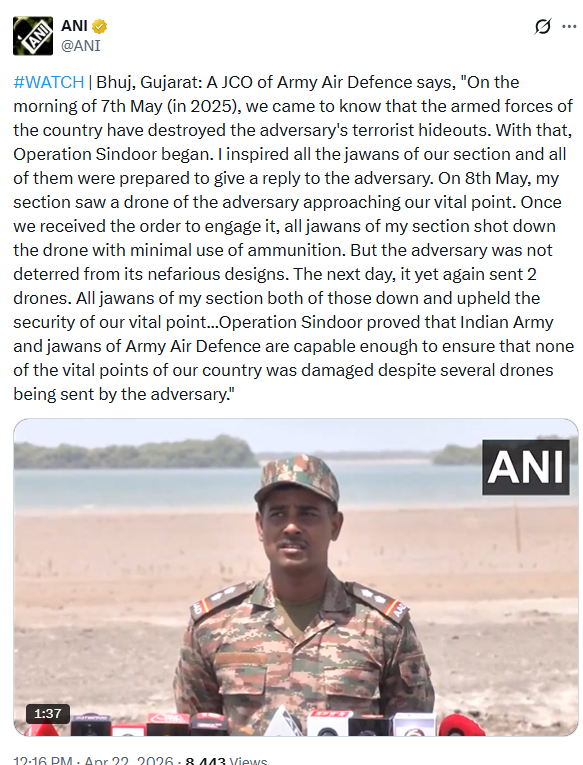
In the original video, shared by ANI from Bhuj, Gujarat, the JCO explained that on the morning of May 7, 2025, they learned that Indian armed forces had destroyed enemy terror launch pads, marking the beginning of “Operation Sindoor.” He said he motivated his unit and they were prepared to respond. He further stated that on May 8, an enemy drone heading toward a vital location was detected and shot down using minimal ammunition. Two more drones were sent the following day and were also neutralised. He added that “Operation Sindoor” demonstrated the capability of the Indian Army and Air Defence units.
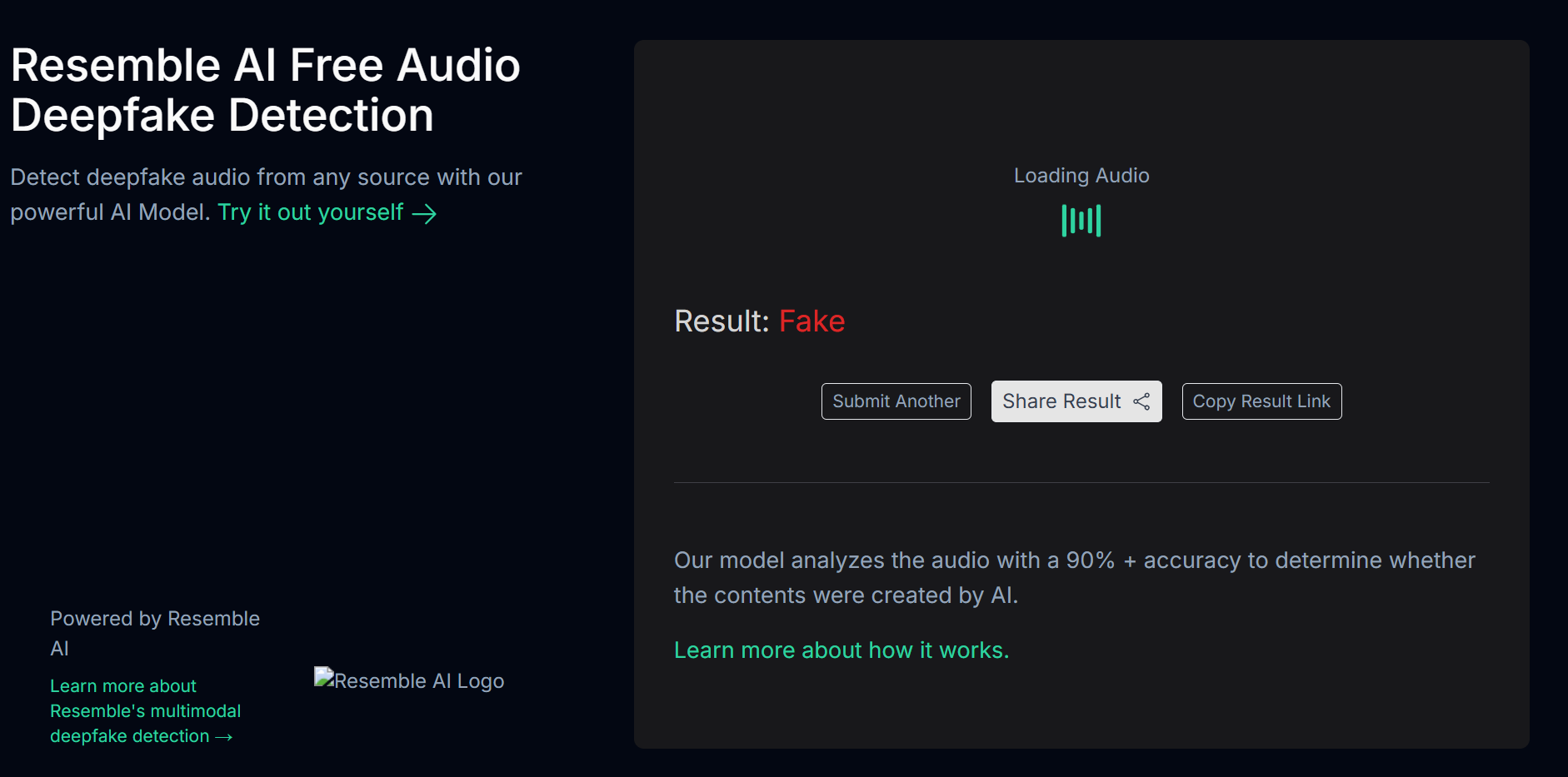
ANI had also summarised the same remarks in English in its post, which further confirmed that the viral version had been tampered with. For additional verification, the audio from the viral clip was examined using AI-based detection tools. Hiya Deepfake Voice Detector flagged it as likely fake, while Resemble AI also identified the audio as manipulated.
Conclusion:
The viral video claiming that an Indian Army Air Defence JCO resigned over ignored martyrs of “Operation Sindoor” is false. The original footage has been altered and artificial AI-generated audio was added to create a misleading narrative.
