#FactCheck -Deepfake Video of Tharoor Misleads Social Media Users
Executive Summary
A video of senior Congress leader Shashi Tharoor is widely circulating on social media, allegedly showing him praising Pakistan’s diplomatic stance over the ICC T20 World Cup issue. Many users are sharing the clip believing it to be genuine. However, research by the CyberPeace found the claim to be false. The viral video of Tharoor is a deepfake, and the Congress leader himself has described it as fabricated and fake.
Claim
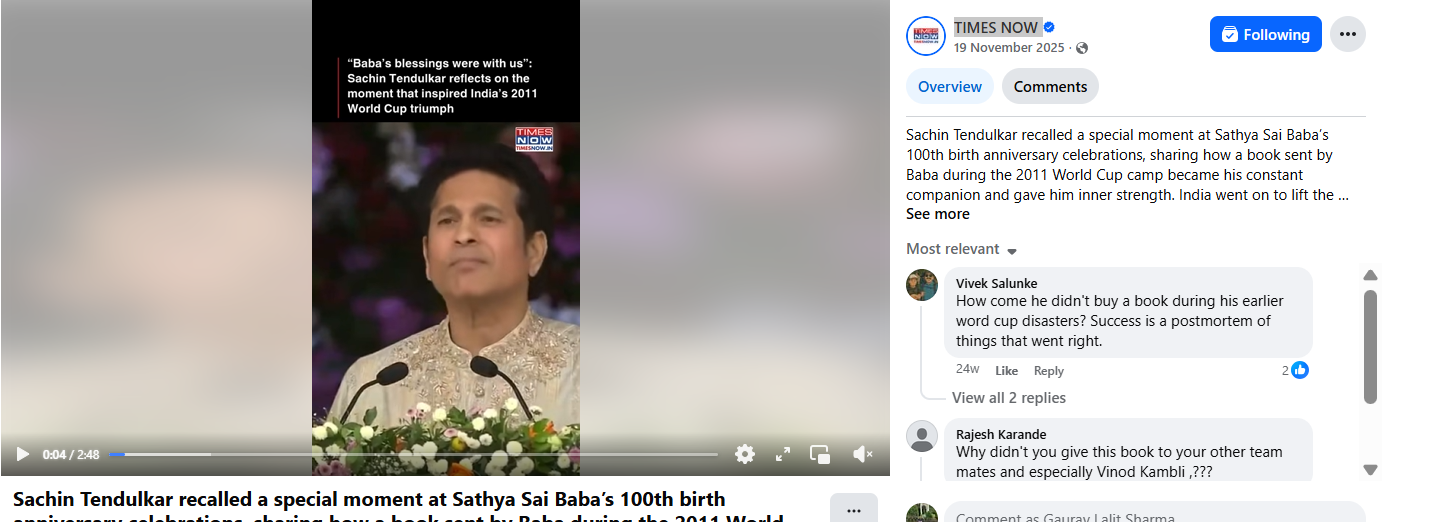
A Facebook page named “Vok Sports” shared the video on February 11, 2026, claiming that Tharoor praised Pakistan. In the viral clip, he is purportedly heard saying in English that Pakistan’s diplomatic handling of the matter was “brilliant” and that it had outmanoeuvred the Indian cricket board, adding that good diplomacy could make a weak nation appear powerful.
The video was widely shared by social media users as authentic. (Archive links and post details provided.)
Fact Check
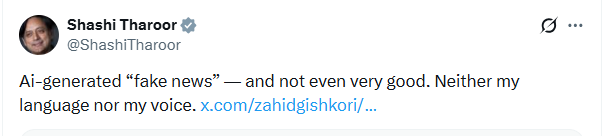
To verify the claim, we first scanned Tharoor’s official X (formerly Twitter) handle. We found a post dated February 12 in which he responded to a Pakistani journalist who had shared the video. Tharoor stated that the clip was AI-generated “fake news,” adding that neither the language nor the voice in the video was his.
A reverse image search using Google Lens led the Desk to a video uploaded on February 10, 2026, by India Today on its official YouTube channel. The visuals in this original video exactly matched those seen in the viral clip showing Tharoor speaking to the media. However, upon analysing the original footage, we found that Tharoor was speaking in Hindi about the controversy surrounding the T20 World Cup. He stated that politics should not be mixed with cricket or sports and did not praise Pakistan or the Pakistan Cricket Board at any point. This indicates that the audio in the viral clip had been manipulated and replaced. In the original video, Tharoor said that politicians should conduct politics separately, diplomats should handle diplomacy, and cricket players should focus on the game, expressing hope that cricket would move forward with the match.
- https://www.youtube.com/watch?v=GkA1mLlAT8Q&t=3s

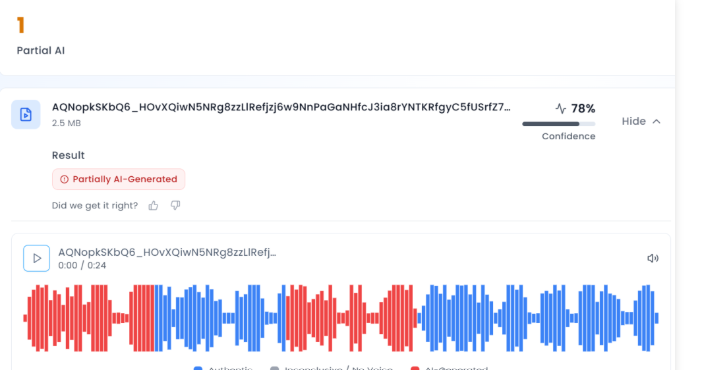
To further verify the authenticity of the video, several AI detection tools were used. Analysis through Aurigin.ai suggested a 78 percent probability that the audio in the viral clip was AI-generated.
Conclusion
The CyberPeace confirmed that the viral video is a deepfake. Tharoor did not praise Pakistan’s diplomatic stance during the T20 World Cup controversy, and the circulating clip has been digitally manipulated.
Related Blogs

Executive Summary
A misleading advertisement circulating in social media providing attractive offers like iPhone15, AirPods and Smartwatches from the Indian e-commerce platform ‘Myntra’. This “Myntra - Festival Gifts” scam aims to attract the unsuspecting users into a series of redirects and fake interactions to compromise their personal information and devices. It is important to stay vigilant to protect ourselves from misleading attractive offers. Through this report, the Research Wing of CyberPeace explains about a series of processes that happens when the link gets clicked. Through this knowledge, we aim to provide awareness and empower the users to guard themselves and not fall into deceptive offers that aim to scam them.
False Claim
The widely shared WhatsApp message claims that Myntra is offering a wide range of high-valued prizes including the latest iPhone 15, AirPods, various smartwatches among all as a Festival Gift promotion. The campaign invites the users to click on the link provided and take a short quiz to be eligible for the prize.

The Deceptive Scheme
- The link in the social media post is tailored to work only on mobile devices, users are taken through a chain of redirects.
- Users are greeted with the Myntra's "Big Fashion Festival" branding accompanied by Myntra’s logo once they reach the landing page, which gives an impression of authenticity.
- Next, a simple quiz asks basic questions about the user's shopping experience with Myntra, their age, and gender.
- On the bottom of the quiz, there is a comment section that shows the comments from users who are supposedly provided with the prizes to look real,
- After the completion of the quiz, users are presented with a Spin-to-Win mechanism, to win the prize.
- After winning, a congratulatory message is displayed which says that the user has won an iPhone 15.
- The final step requires the user to share the campaign over WhatsApp in order to claim the prize.
Analyzing the Fraudulent Campaign
- The use of Myntra's branding and the promise of exclusive, high-value prizes are designed to attract users' interest.
- The fake comments and social proof elements aim to create a false sense of legitimacy and widespread participation, making the offer seem more credible.
- The series of redirects, quizzes, and Spin-to-Win mechanics are tactics to keep users engaged and increase the likelihood of them falling for the scam.
- The final step of sharing the post on WhatsApp is a way for the scammers to further spread the campaign and compromise more victims. Through sharing the link over WhatsApp, users become unaware accomplices that are simply assisting the scammers to reach an even bigger audience and hence their popularity.
- The primary objectives of such scams are to gather users' personal information and potentially gain access to their devices. By luring users with the promise of exclusive gifts and creating a false sense of legitimacy, the scammers aim to exploit user trust and compromise their data, leading to potential identity theft, financial fraud, or the installation of potentially unwanted softwares.
- We have also cross-checked and as of now there is no well established and credible source or any official notification that has confirmed such an offer advertised by Myntra.
- Domain Analysis: If we closely look at the viral message, it is clearly visible that the scammers mentioned myntra.com in the url. However, the actual url takes the user to a different domain as the campaign is hosted on a third party domain instead of the official Website of Myntra, this raised suspicion. This is the common way to deceive users into falling for a Phishing scam. Whois information reveals that the domain has been registered not long ago i.e on 8th April 2024, just a few days back. Cybercriminals used Cloudflare technology to mask the actual IP address of the fraudulent website.

- Domain Name: MYTNRA.CYOU
- Registry Domain ID: D445770144-CNIC
- Registrar WHOIS Server: whois.hkdns.hk
- Registrar URL: http://www.hkdns.hk
- Updated Date: 2024-04-08T03:27:58.0Z
- Creation Date: 2024-04-08T02:58:14.0Z
- Registry Expiry Date: 2025-04-08T23:59:59.0Z
- Registrar: West263 International Limited
- Registrant State/Province: Delhi
- Registrant Country: IN
- Name Server: NORMAN.NS.CLOUDFLARE.COM
- Name Server: PAM.NS.CLOUDFLARE.COM
CyberPeace Advisory and Best Practices
- Do not open those messages received from social platforms in which you think that such messages are suspicious or unsolicited. In the beginning, your own discretion can become your best weapon.
- Falling prey to such scams could compromise your entire system, potentially granting unauthorized access to your microphone, camera, text messages, contacts, pictures, videos, banking applications, and more. Keep your cyber world safe against any attacks.
- Never, in any case, reveal such sensitive data as your login credentials and banking details to entities you haven't validated as reliable ones.
- Before sharing any content or clicking on links within messages, always verify the legitimacy of the source. Protect not only yourself but also those in your digital circle.
- For the sake of the truthfulness of offers and messages, find the official sources and companies directly. Verify the authenticity of alluring offers before taking any action.
Conclusion:
The “Myntra - Festival Gift” scam is a kind of manipulation in which the fraudsters exploit the trust of the users and take advantage of a popular e-commerce website. It is equally crucial to equip the users by imparting them knowledge on fraudulent behavior tactics like impersonating brands, creating fake social proof and application of different engagement strategies. We are required to remain alert and stand firm against cyber attacks. Be careful, make sure that information is verified and share awareness to help make a safe online environment for all users.

Overview:
It is worth stating that millions of Windows users around the world are facing the Blue Screen of Death (BSOD) problem that makes systems shutdown or restart. This has been attributed to a CrowdStrike update that was released recently and has impacted many organizations, financial institutions, and government agencies across the globe. Indian airlines have also reported disruptions on X (formerly Twitter), informing passengers about the issue.
Understanding Blue Screen of Death:
Blue Screen errors, also known as black screen errors or STOP code errors, can occur due to critical issues forcing Windows to shut down or restart. You may encounter messages like "Windows has been shut down to prevent damage to your computer." These errors can be caused by hardware or software problems.
Impact on Industries
Some of the large U. S. airlines such as American Airlines, Delta Airlines, and United Airlines had to issue ground stops because of communication problems. Also, several airports on Friday suffered a massive technical issue in check-in kiosks for IndiGo, Akasa Air, SpiceJet, and Air India Express.
The Widespread Issue
The issue seems widespread and is causing disruption across the board as Windows PCs are deployed at workplaces and other public entities like airlines, banks, and even media companies. It has been pointed out that Windows PCs use a special cybersecurity solution from a company called CrowdStrike that seems to be the culprit for this outage, affecting most Windows PC users out there.
Microsoft's Response
The issue was acknowledged by Microsoft and the mitigations are underway. The company in its verified X handle Microsoft 365 status has shared a series information on the latest outage and they are looking into the matter. The issue is under investigation.
In one of the posts from Microsoft Azure, it is mentioned that they have become aware of an issue affecting Virtual Machines (VMs) running Windows Client and Windows Server with the CrowdStrike Falcon agent installed. These VMs may encounter a bug check (BSOD) and become stuck in a restarting state. Their analysis indicates that this issue started approximately at 19:00 UTC on July 18th. They have provided recommendations as follows:
Restore from Backup: In case customers have available backups prior to 19:00 UTC on July 18th, they should recover VM data from the backups. If the customer is using Azure Backup, they can get exact steps on how to restore VM data in the Azure portal. here.
Offline OS Disk Repair: Alternatively, customers can attempt offline repair of the OS disk by attaching an unmanaged disk to the affected VM. Encrypted disks may require additional steps to unlock before repair. Once attached, delete the following file:
Windows/System/System32/Drivers/CrowdStrike/C00000291*.sys
After deletion, reattach the disk to the original VM.
Microsoft Azure is actively investigating additional mitigation options for affected customers. We will provide updates as we gather more information.
Resolving Blue Screen Errors in Windows
Windows 11 & Windows 10:
Blue Screen errors can stem from both hardware and software issues. If new hardware was added before the error, try removing it and restarting your PC. If restarting is difficult, start your PC in Safe Mode.
To Start in Safe Mode:
From Settings:
Open Settings > Update & Security > Recovery.
Under "Advanced startup," select Restart now.
After your PC restarts to the Choose an option screen, select Troubleshoot > Advanced options > Startup Settings > Restart.
After your PC restarts, you'll see a list of options. Select 4 or press F4 to start in Safe Mode. If you need to use the internet, select 5 or press F5 for Safe Mode with Networking.
From the Sign-in Screen:
Restart your PC. When you get to the sign-in screen, hold the Shift key down while you select Power > Restart.
After your PC restarts, follow the steps above.
From a Black or Blank Screen:
Press the power button to turn off your device, then turn it back on. Repeat this two more times.
After the third time, your device will start in the Windows Recovery Environment (WinRE).
From the Choose an option screen, follow the steps to enter Safe Mode.
Additional Help:
Windows Update: Ensure your system has the latest patches.
Blue Screen Troubleshooter: In Windows, open Get Help, type Troubleshoot BSOD error, and follow the guided walkthrough.
Online Troubleshooting: Visit Microsoft's support page and follow the recommendations under "Recommended Help."
If none of those steps help to resolve your Blue Screen error, please try the Blue Screen Troubleshooter in the Get Help app:
- In Windows, open Get Help.
- In the Get Help app, type Troubleshoot BSOD error.
- Follow the guided walkthrough in the Get Help app.
[Note: If you're not on a Windows device, you can run the Blue Screen Troubleshooter on your browser by going to Contact Microsoft Support and typing Troubleshoot BSOD error. Then follow the guided walkthrough under "Recommended Help."]
For detailed steps and further assistance, please refer to the Microsoft support portal or contact their support team.
CrowdStrike’s Response:
In the statement given by CrowdStrike, they have clearly mentioned it is not any cyberattack and their resources are working to fix the issue on Windows. Further, they have identified the deployment issue and fixed the same. Crowdstrike mentions about their problematic versions as follows:
- “Channel file "C-00000291*.sys" with timestamp of 0527 UTC or later is the reverted (good) version.
- Channel file "C-00000291*.sys" with timestamp of 0409 UTC is the problematic version.
Note: It is normal for multiple "C-00000291*.sys files to be present in the CrowdStrike directory - as long as one of the files in the folder has a timestamp of 0527 UTC or later, that will be the active content.”
The CrowdStrike will be providing latest updates on the same and advises their customers and organizations to contact their officials officially to get latest updates and accurate information. It is encouraged to refer to customer’s support portal for further help.
Stay safe and ensure regular backups to mitigate the impact of such issues.
References:
https://status.cloud.microsoft/
https://www.crowdstrike.com/blog/statement-on-falcon-content-update-for-windows-hosts/
.webp)
Introduction
Digitalisation presents both opportunities and challenges for micro, small, and medium enterprises (MSMEs) in emerging markets. Digital tools can increase business efficiency and reach but also increase exposure to misinformation, fraud, and cyber attacks. Such cyber threats can lead to financial losses, reputational damage, loss of customer trust, and other challenges hindering MSMEs' ability and desire to participate in the digital economy.
The current information dump is a major component of misinformation. Misinformation spreads or emerges from online sources, causing controversy and confusion in various fields including politics, science, medicine, and business. One obvious adverse effect of misinformation is that MSMEs might lose trust in the digital market. Misinformation can even result in the devaluation of a product, sow mistrust among customers, and negatively impact the companies’ revenue. The reach of and speed with which misinformation can spread and ruin companies’ brands, as well as the overall difficulty businesses face in seeking recourse, may discourage MSMEs from fully embracing the digital ecosystem.
MSMEs are essential for innovation, job development, and economic growth. They contribute considerably to the GDP and account for a sizable share of enterprises. They serve as engines of economic resilience in many nations, including India. Hence, a developing economy’s prosperity and sustainability depend on the MSMEs' growth and such digital threats might hinder this process of growth.
There are widespread incidents of misinformation on social media, and these affect brand and product promotion. MSMEs also rely on online platforms for business activities, and threats such as misinformation and other digital risks can result in reputational damage and financial losses. A company's reputation being tarnished due to inaccurate information or a product or service being incorrectly represented are just some examples and these incidents can cause MSMSs to lose clients and revenue.
In the digital era, MSMEs need to be vigilant against false information in order to preserve their brand name, clientele, and financial standing. In the interconnected world of today, these organisations must develop digital literacy and resistance against misinformation in order to succeed in the long run. Information resilience is crucial for protecting and preserving their reputation in the online market.
The Impact of Misinformation on MSMEs
Misinformation can have serious financial repercussions, such as lost sales, higher expenses, legal fees, harm to the company's reputation, diminished consumer trust, bad press, and a long-lasting unfavourable impact on image. A company's products may lose value as a result of rumours, which might affect both sales and client loyalty.
Inaccurate information can also result in operational mistakes, which can interrupt regular corporate operations and cost the enterprise a lot of money. When inaccurate information on a product's safety causes demand to decline and stockpiling problems to rise, supply chain disruptions may occur. Misinformation can also lead to operational and reputational issues, which can cause psychological stress and anxiety at work. The peace of the workplace and general productivity may suffer as a result. For MSMEs, false information has serious repercussions that impact their capacity to operate profitably, retain employees, and maintain a sustainable business. Companies need to make investments in cybersecurity defence, legal costs, and restoring consumer confidence and brand image in order to lessen the effects of false information and ensure smooth operations.
When we refer to the financial implications caused by misinformation spread in the market, be it about the product or the enterprise, the cost is two-fold in all scenarios: there is loss of revenue and then the organisation has to contend with the costs of countering the impact of the misinformation. Stock Price Volatility is one financial consequence for publicly-traded MSMEs, as misinformation can cause stock price fluctuations. Potential investors might be discouraged due to false negative information.
Further, the reputational damage consequences of misinformation on MSMEs is also a serious concern as a loss of their reputation can have long-term damages for a carefully-cultivated brand image.
There are also operational disruptions caused by misinformation: for instance, false product recalls can take place and supplier mistrust or false claims about supplier reliability can disrupt procurement leading to disruptions in the operations of MSMEs.
Misinformation can negatively impact employee morale and productivity due to its physiological effects. This leads to psychological stress and workplace tensions. Staff confidence is also affected due to the misinformation about the brand. Internal operational stability is a core component of any organisation’s success.
Misinformation: Key Risk Areas for MSMEs
- Product and Service Misinformation
For MSMEs, misinformation about products and services poses a serious danger since it undermines their credibility and the confidence clients place in the enterprise and its products or services. Because this misleading material might mix in with everyday activities and newsfeeds, viewers may find it challenging to identify fraudulent content. For example, falsehoods and rumours about a company or its goods may travel quickly through social media, impacting the confidence and attitude of customers. Algorithms that favour sensational material have the potential to magnify disinformation, resulting in the broad distribution of erroneous information that can harm a company's brand.
- False Customer Reviews and Testimonials
False testimonies and evaluations pose a serious risk to MSMEs. These might be abused to damage a company's brand or lead to unfair competition. False testimonials, for instance, might mislead prospective customers about the calibre or quality of a company’s offerings, while phony reviews can cause consumers to mistrust a company's goods or services. These actions frequently form a part of larger plans by rival companies or bad individuals to weaken a company's position in the market.
- Misleading Information about Business Practices
False statements or distortions regarding a company's operations constitute misleading information about business practices. This might involve dishonest marketing, fabrications regarding the efficacy or legitimacy of goods, and inaccurate claims on a company's compliance with laws or moral principles. Such incorrect information can result in a decline in consumer confidence, harm to one's reputation, and even legal issues if consumers or rival businesses act upon it. Even before the truth is confirmed, for example, allegations of wrongdoing or criminal activity pertaining can inflict a great deal of harm, even if they are disproven later.
- Fake News Related to Industry and Market Conditions
By skewing consumer views and company actions, fake news about market and industry circumstances can have a significant effect on MSMEs. For instance, false information about market trends, regulations, or economic situations might make consumers lose faith in particular industries or force corporations to make poor strategic decisions. The rapid dissemination of misinformation on online platforms intensifies its effects on enterprises that significantly depend on digital engagement for their operations.
Factors Contributing to the Vulnerability of MSMEs
- Limited Resources for Verification
MSMEs have a small resource pool. Information verification is typically not a top priority for most. MSMEs usually lack the resources needed to verify the information and given their limited resources, they usually tend to deploy the same towards other, more seemingly-critical functions. They are more susceptible to misleading information because they lack the capacity to do thorough fact-checking or validate the authenticity of digital content. Technology tools, human capital, and financial resources are all in low supply but they are essential requirements for effective verification processes.
- Inadequate Digital Literacy
Digital literacy is required for effective day-to-day operations. Fake reviews, rumours, or fake images commonly used by malicious actors can result in increased scrutiny or backlash against the targeted business. The lack of awareness combined with limited resources usually spells out a pale redressal plan on part of the affected MSME. Due to their low digital literacy in this domain, a large number of MSMEs are more susceptible to false information and other online threats. Inadequate knowledge and abilities to use digital platforms securely and effectively can result in making bad decisions and raising one's vulnerability to fraud, deception, and online scams.
- Lack of Crisis Management Plans
MSMEs frequently function without clear-cut procedures for handling crises. They lack the strategic preparation necessary to deal with the fallout from disinformation and cyberattacks. Proactive crisis management plans usually incorporate procedures for detecting, addressing, and lessening the impact of digital harms, which are frequently absent from MSMEs.
- High Dependence on Social Media and Online Platforms
The marketing strategy for most MSMEs is heavily reliant on social media and online platforms. While the digital-first nature of operations reduces the need for a large capital to set up in the form of stores or outlets, it also gives them a higher need to stay relevant to the trends of the online community and make their products attractive to the customer base. However, MSMEs are depending more and more on social media and other online channels for marketing, customer interaction, and company operations. These platforms are really beneficial, but they also put organisations at a higher risk of false information and online fraud. Heavy reliance on these platforms coupled with the absence of proper security measures and awareness can result in serious interruptions to operations and monetary losses.
CyberPeace Policy Recommendations to Enhance Information Resilience for MSMEs
CyberPeace advocates for establishing stronger legal frameworks to protect MSMEs from misinformation. Governments should establish regulations to build trust in online business activities and mitigate fraud and misinformation risks. Mandatory training programs should be implemented to cover online safety and misinformation awareness for MSME businesses. Enhanced reporting mechanisms should be developed to address digital harm incidents promptly. Governments should establish strict penalties for deliberate inaccurate misinformation spreaders, similar to those for copyright or intellectual property violations. Community-based approaches should be encouraged to help MSMEs navigate digital challenges effectively. Donor communities and development agencies should invest in digital literacy and cybersecurity training for MSMEs, focusing on misinformation mitigation and safe online practices. Platform accountability should be increased, with social media and online platforms playing a more active role in removing content from known scam networks and responding to fraudulent activity reports. There should be investment in comprehensive digital literacy solutions for MSMEs that incorporate cyber hygiene and discernment skills to combat misinformation.
Conclusion
Misinformation poses a serious risk to MSME’s digital resilience, operational effectiveness, and financial stability. MSMEs are susceptible to false information because of limited technical resources, lack of crisis management strategies, and insufficient digital literacy. They are also more vulnerable to false information and online fraud because of their heavy reliance on social media and other online platforms. To address these challenges it is significant to strengthen their cyber hygiene and information resilience. Robust policy and regulatory frameworks are encouraged, promoting and mandating online safety training programmes, and improved reporting procedures, are required to overall enhance the information landscape.
References:
- https://www.dai.com/uploads/digital-downsides.pdf
- https://www.indiacode.nic.in/bitstream/123456789/2013/3/A2006-27.pdf
- https://pib.gov.in/PressReleaseIframePage.aspx?PRID=1946375
- https://dai-global-digital.com/digital-downsides-the-economic-impact-of-misinformation-and-other-digital-harms-on-msmes-in-kenya-india-and-cambodia.html
- https://www.dai.com/uploads/digital-downsides.pdf