
#FactCheck -Old Image from Iraq Falsely Linked to Alleged Attack on Iran’s Water Treatment Plant
Executive Summary:
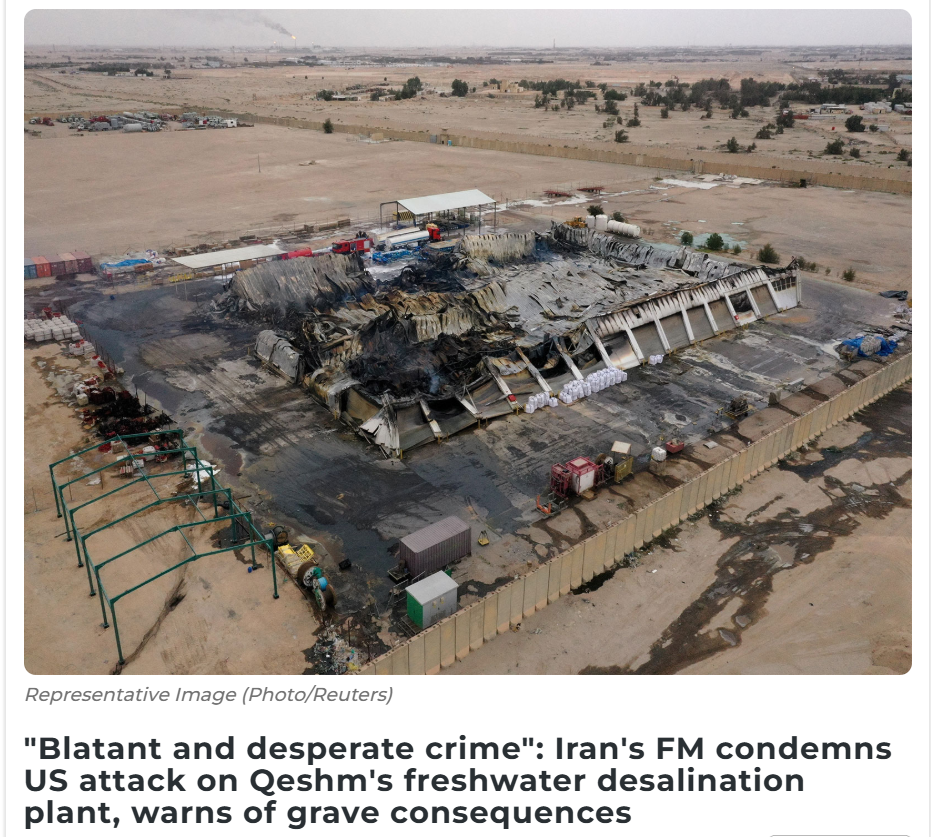
Amid the ongoing tensions and conflict involving the United States, Israel, and Iran, an image of a heavily damaged industrial facility is circulating widely on social media. Several users are sharing the picture claiming that it shows an Iranian water treatment or desalination plant destroyed in a US–Israel attack. Some media reports have also used the same image while reporting on the alleged attack on a freshwater desalination plant in Iran.
However, a research by the CyberPeace found that the claim is misleading. The viral image is not from Iran. It actually shows the aftermath of a drone attack on a warehouse belonging to a US company in Basra, Iraq.
Claim
X user “Shashank Shekhar Jha” shared the image on March 8, 2026, claiming that a freshwater desalination plant in Qeshm, Iran, had been destroyed.
Fact check
To verify the claim, we conducted a reverse image search using Google Lens. During the search, we found a report published on March 7, 2026, on the website of Asian News International (ANI). The report stated that Iran’s Foreign Minister Seyed Abbas Araghchi condemned a US attack on a freshwater desalination plant on Qeshm Island, calling it a “blatant and desperate crime.”
The report used the same viral image; however, the caption clearly mentioned that it was a representational image credited to Reuters.
https://www.aninews.in/news/world/middle-east/blatant-and-desperate-crime-irans-fm-condemns-us-attack-on-qeshms-freshwater-desalination-plant-warns-of-grave-consequences20260307212645/
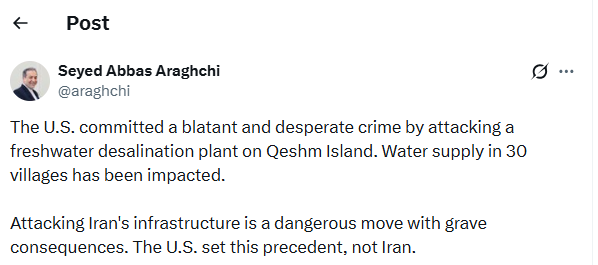
To further confirm the claim, we checked the official X account of Seyed Abbas Araghchi. In a post on March 7, he condemned the alleged attack on the desalination plant in Qeshm and stated that the strike had disrupted water supply to around 30 villages. However, the post did not include any image of the incident.
Conclusion
The viral image being shared as evidence of a US–Israel attack on Iran’s water treatment plant is misleading. The photo actually shows the aftermath of a drone strike on a warehouse belonging to a US company in Basra, Iraq, and has been wrongly linked to the situation in Iran.

Related Blogs

Executive Summary
A video circulating on social media claims that Jammu and Kashmir Deputy Chief Minister Surinder Choudhary described Prime Minister Narendra Modi as an agent of Pakistan’s Inter-Services Intelligence (ISI). In the viral clip, Choudhary is allegedly heard accusing the Prime Minister of pushing Kashmir towards Pakistan and claiming that even pro-India Kashmiris are disillusioned with Modi’s policies.
However, research by the CyberPeace research wing has found that the video is digitally manipulated. While the visuals are genuine and taken from a real media interaction, the audio has been fabricated and falsely overlaid to misattribute inflammatory remarks to the Deputy Chief Minister.
Claim
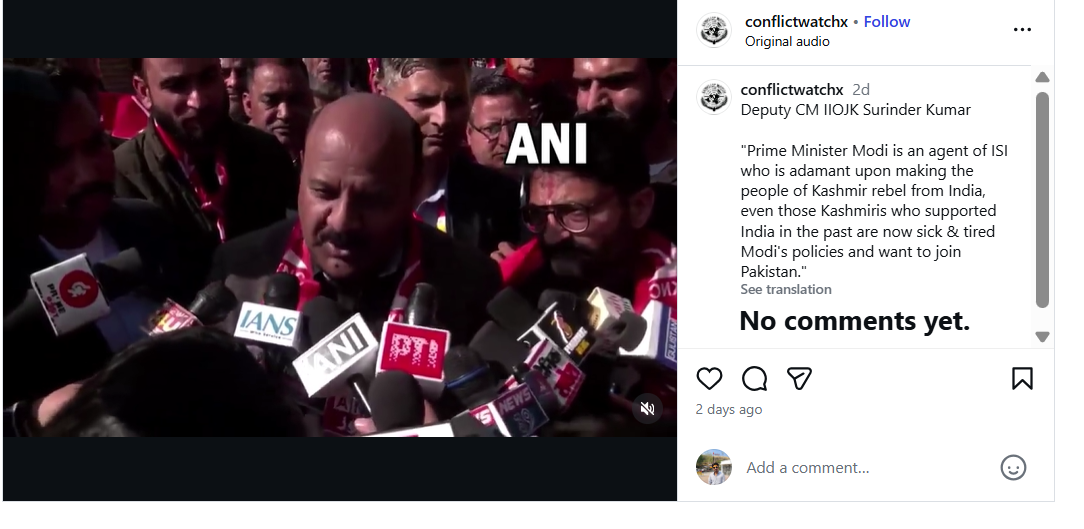
An Instagram account named Conflict Watch shared the video on January 20, claiming that J&K Deputy Chief Minister Surinder Choudhary had called Prime Minister Modi an ISI agent. The video purportedly quoted Choudhary as saying that Modi was elected with Pakistan’s support and that Kashmir would soon become part of Pakistan due to his policies.
Here is the link and archive link to the post, along with a screenshot.
Fact Check:
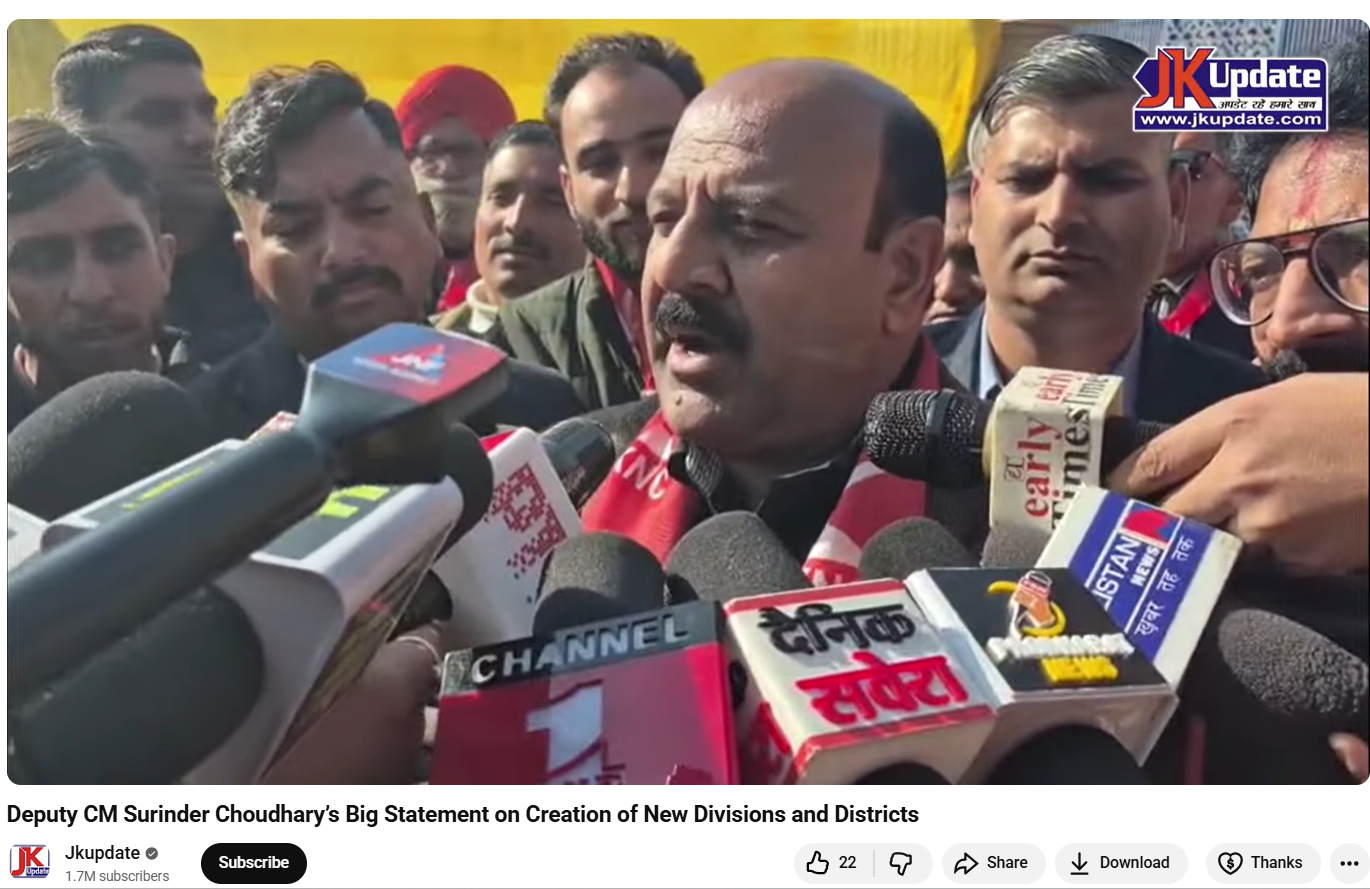
To verify the claim, the Desk conducted a Google Lens search, which led to a video uploaded on January 20, 2026, on the official YouTube channel of Jammu and Kashmir–based news outlet JKUpdate. The footage was an extended version of the viral clip and featured identical visuals. The original video showed Surinder Choudhary addressing the media on the sidelines of the inaugural two-day JKNC Convention of Block Presidents and Secretaries in the Jammu province. A review of the full media interaction revealed that Choudhary did not make any statements calling Prime Minister Modi an ISI agent or suggesting that Kashmir should join Pakistan.
Instead, in the original footage, Choudhary was seen criticising former Jammu and Kashmir Chief Minister and PDP leader Mehbooba Mufti for supporting the BJP during the bifurcation of Jammu and Kashmir and Ladakh into two Union Territories. He also spoke about the challenges faced by the region after the abrogation of Article 370 and demanded the restoration of full statehood for Jammu and Kashmir. During the interaction, Choudhary said that anyone attempting to divide Jammu and Kashmir at the state or regional level was effectively following Pakistan’s agenda and Jinnah’s two-nation theory. He added that such individuals could not be considered patriots.
Here is the link to the video, along with a screenshot.
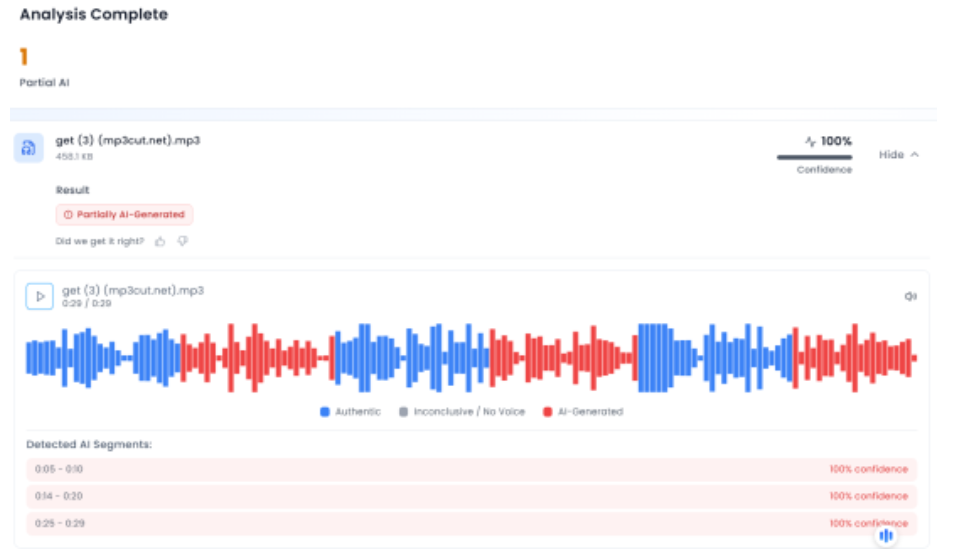
In the next phase of the research , the Desk extracted the audio from the viral clip and analysed it using the AI-based audio detection tool Aurigin. The analysis indicated that the voice in the viral video was partially AI-generated, further confirming that the clip had been tampered with.
Below is a screenshot of the result.
Conclusion
Multiple social media users shared a video claiming it showed Jammu and Kashmir Deputy Chief Minister Surinder Choudhary calling Prime Minister Narendra Modi an agent of the ISI. However, the CyberPeace found that the viral video was digitally manipulated. While the visuals were taken from a genuine media interaction with the leader, a fabricated audio track was overlaid to attribute the statements to him falsely.

11th November 2022 CyberPeace Foundation in association with Universal Acceptance has successfully conducted the workshop on Universal Acceptance and Multilingual Internet for the students and faculties of BIT University under CyberPeace Center of Excellence (CCoE).
CyberPeace Foundation has always been engaged towards the aim of spreading awareness regarding the various developments, avenues, opportunities and threats regarding cyberspace. The same has been the keen principle of the CyberPeace Centre of Excellence setup in collaboration with various esteemed educational institutes. We at CyberPeace Foundation would like to take the collaborations and our efforts to a new height of knowledge and awareness by proposing a workshop on UNIVERSAL ACCEPTANCE AND MULTILINGUAL INTERNET. This workshop was instrumental in providing the academia and research community a wholesome outlook towards the multilingual spectrum of internet including Internationalized domain names and email address Internationalization.
Date –11th November 2022
Time – 10:00 AM to 12:00 PM
Duration – 2 hours
Mode - Online
Audience – Academia and Research Community
Participants Joined- 15
Crowd Classification - Engineering students (1st and 4th year, all streams) and Faculties members
Organizer : Mr. Harish Chowdhary : UA Ambassador
Moderator: Ms. Pooja Tomar, Project coordinator cum trainer
Speakers - Mr. Abdalmonem Galila, Abdalmonem: Vice Chair , Universal Acceptance Steering Group (UASG)and
Mr. Mahesh D Kulkarni Director, Evaris Systems and Former Senior Director, CDAC, Government of India,First session was delivered by Mr. Abdalmonem Galila, Abdalmonem: Vice Chair , Universal Acceptance Steering Group (UASG) “Universal Acceptance( UA) and why UA matters?”
- What is universal acceptance?
- UA is cornerstone to a digitally inclusive internet by ensuring all domain names and email addresses in all languages, script and character length.
- Achieving UA ensures that every person has the ability to navigate the internet.
- Different UA issues were also discussed and explained.
- Tagated systems by the UA and implication were discussed in detail.
Second session was delivered by Mr. Mahesh D Kulkarni, ES Director Evaris on the topic of “IDNs in Indian languages perspective- challenges and solutions”.
- The multilingual diversity of India was focused on and its impact.
- Most students were not aware of what Unicode, IDNS is and their usage.
- Students were briefed by giving real time examples on IDN, Domain name implementation using local language.
- In depth knowledge of and practical exposure of Universal Acceptance and Multilingual Internet has been served to the students.
- Tools and Resources for Domain Name and Domain Languages were explained.
- Languages nuances of Multilingual diversity of India explained with real time facts and figures.
- Given the idea of IDN Email,Homograph attack,Homographic variant with proper real time examples.
- Explained about the security threats and IDNA protocols.
- Given the explanation on ABNF.
- Explained the stages of Universal Acceptance.
Executive Summary
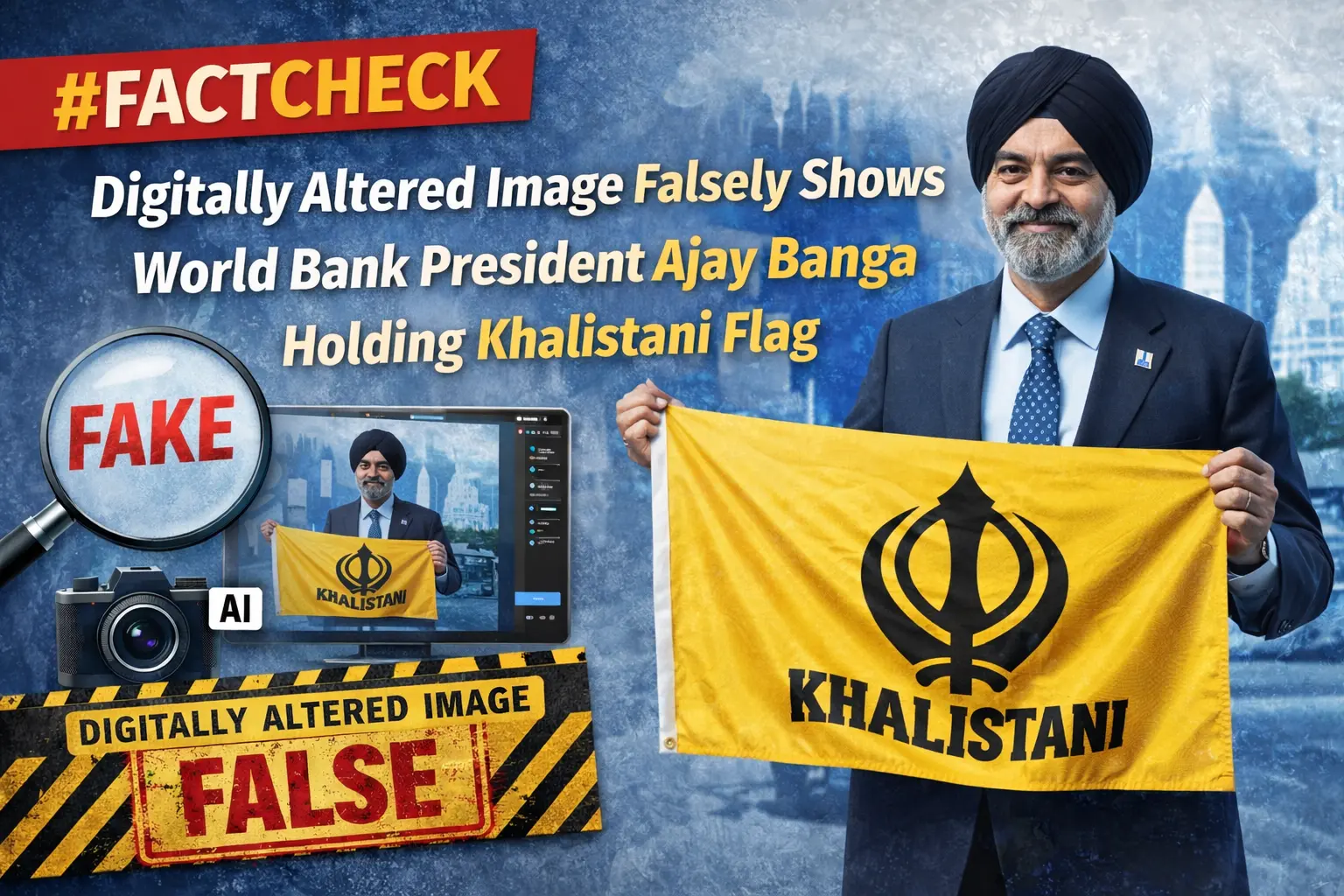
A digitally manipulated image of World Bank President Ajay Banga has been circulating on social media, falsely portraying him as holding a Khalistani flag. The image was shared by a Pakistan-based X (formerly Twitter) user, who also incorrectly identified Banga as the President of the International Monetary Fund (IMF), thereby fuelling misleading speculation that he supports the Khalistani movement against India.
The Claim
On February 5, an X user with the handle @syedAnas0101010 posted an image allegedly showing Ajay Banga holding a Khalistani flag. The user misidentified him as the IMF President and captioned the post, “IMF president sending signals to INDIA.” The post quickly gained traction, amplifying false narratives and political speculation. Here is the link and archive link to the post, along with a screenshot:
Fact Check:
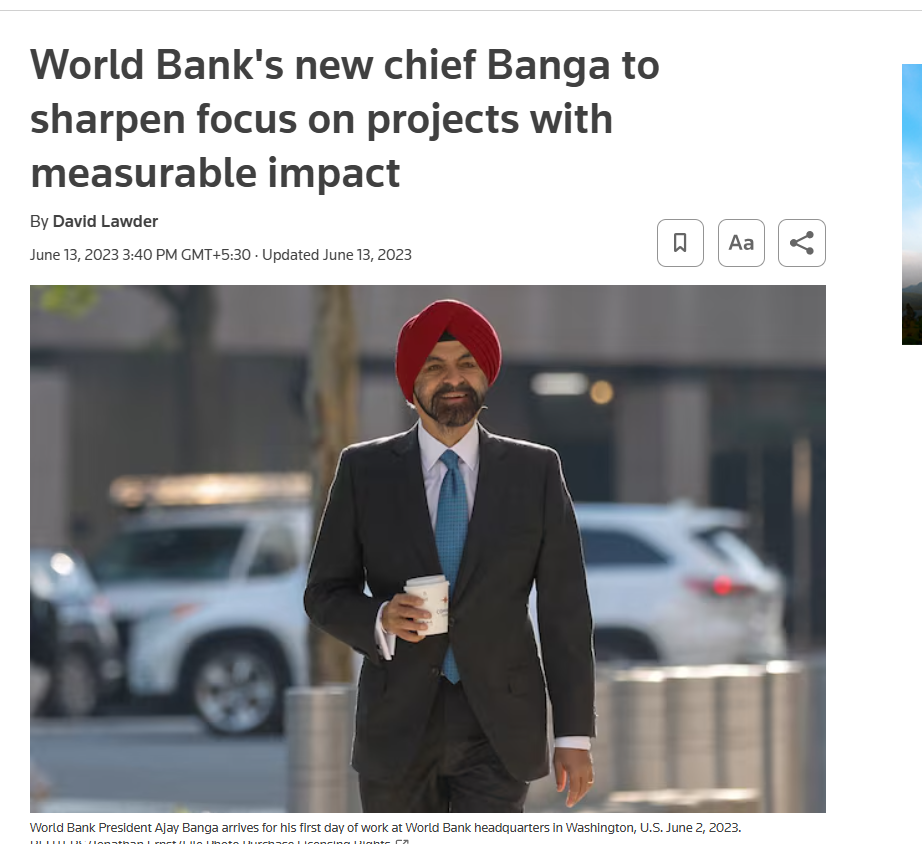
To verify the authenticity of the image, the CyberPeace Fact Check Desk conducted a detailed research . The image was first subjected to a reverse image search using Google Lens, which led to a Reuters news report published on June 13, 2023. The original photograph, captured by Reuters photojournalist Jonathan Ernst, showed Ajay Banga arriving at the World Bank headquarters in Washington, D.C., on June 2, 2023, marking his first day in office. In the authentic image, Banga is seen holding a coffee cup, not a flag.
Further analysis confirmed that the viral image had been digitally altered to replace the coffee cup with a Khalistani flag, thereby misrepresenting the context and intent of the original photograph. Here is the link to the report, along with a screenshot.
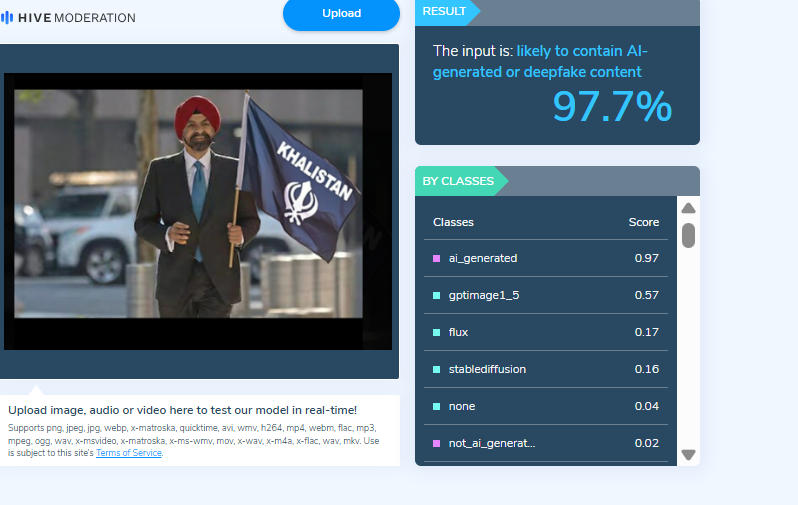
To strengthen the findings, the altered image was also analysed using the Hive Moderation AI detection tool. The tool’s assessment indicated a high likelihood that the image contained AI-generated or manipulated elements, reinforcing the conclusion that the image was not genuine. Below is a screenshot of the result.
Conclusion
The viral image claiming to show World Bank President Ajay Banga holding a Khalistani flag is fake. The photograph was digitally manipulated to spread misinformation and provoke political speculation. In reality, the original Reuters image from June 2023 shows Banga holding a coffee cup during his arrival at the World Bank headquarters. The claim that he supports the Khalistani movement is false and misleading.
