
#FactCheck -AI-Generated Video Falsely Shows Giorgia Meloni Storming Out After Ending Agreements With Israel
Executive Summary
A video purportedly showing Italian Prime Minister Giorgia Meloni angrily addressing a room full of delegates before throwing a bundle of papers and storming out has gone viral on social media. The clip is being shared alongside claims that Meloni terminated all agreements with Israel following growing tensions over the conflict in the Middle East. However, CyberPeace Research Wing research found that the viral video is not authentic. The clip was generated using Artificial Intelligence (AI).
Claim
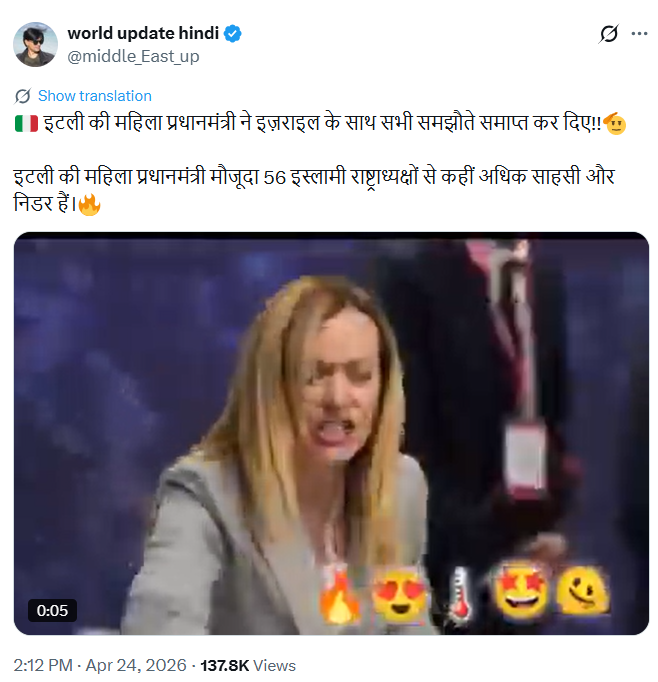
On April 24, 2026, an X user shared the viral video with the caption:“Italy's woman Prime Minister has terminated all agreements with Israel!! Italy's woman Prime Minister is far more courageous and fearless than the leaders of 56 Islamic nations.”
- https://x.com/middle_East_up/status/2047597154257297878?s=20
- https://perma.cc/4EM9-5GS4
Fact Check
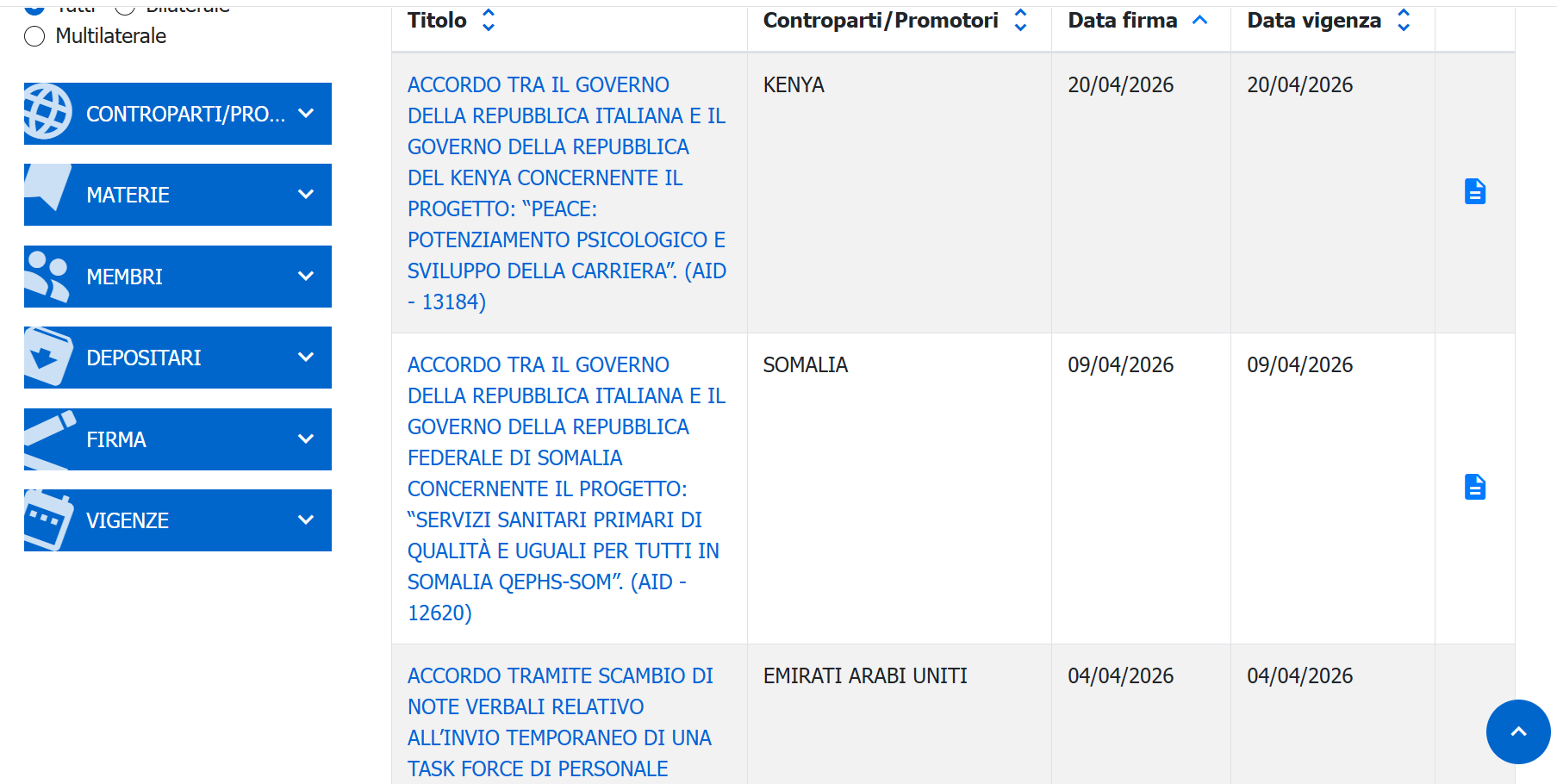
To verify the claim, we examined official records related to agreements between Italy and Israel. Data available from the Italian Ministry of Foreign Affairs and International Cooperation shows that multiple bilateral agreements between the two countries remain in force in 2026.
- https://atrio.esteri.it/Home/Search
Further research found reports related to discussions within the European Union regarding the suspension of certain cooperation arrangements with Israel. During a meeting of EU foreign ministers in Luxembourg, Spain and Ireland renewed calls to review the EU-Israel Association Agreement. However, Italian Foreign Minister Antonio Tajani reportedly stated that no decision would be taken that day. A closer examination of the viral clip revealed several visual inconsistencies commonly associated with AI-generated content, including unnatural facial movements, irregular body gestures, and unrealistic scene transitions.
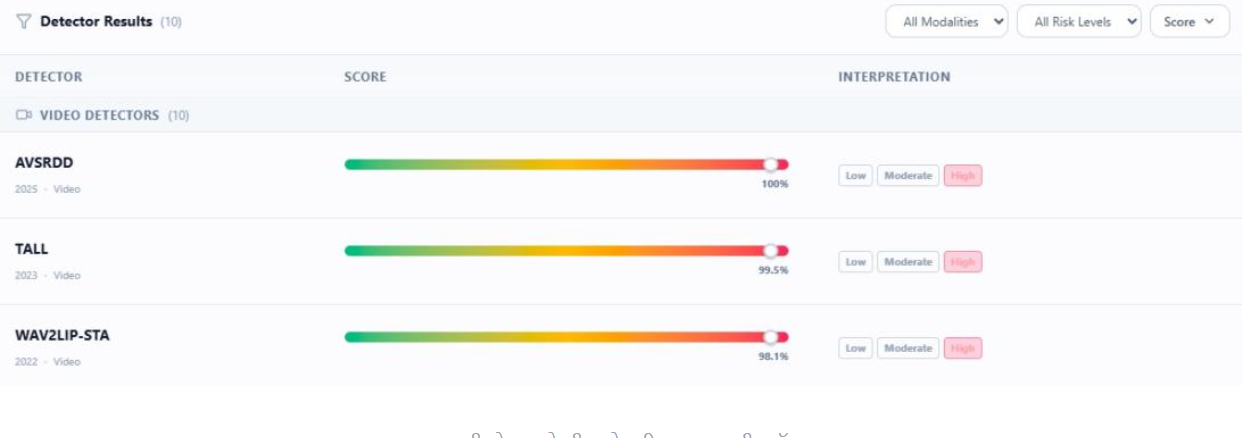
To further verify the footage, we analysed it using the DeepFake-o-Meter tool. Results from three separate detection models indicated that the video was likely generated using artificial intelligence.
Conclusion
CyberPeace Research Wing research found that the viral video allegedly showing Italian Prime Minister Giorgia Meloni angrily terminating agreements with Israel is AI-generated. There is no evidence that the incident shown in the clip actually occurred.

Related Blogs
.webp)
Introduction
As the 2024 Diwali festive season approaches, netizens eagerly embrace the spirit of celebration with online shopping, gifting, and searching for the best festive deals on online platforms. Historical web data from India shows that netizens' online activity spikes at this time as people shop online to upgrade their homes, buy unique presents for loved ones and look for services and products to make their celebrations more joyful.
However, with the increase in online transactions and digital interactions, cybercriminals take advantage of the festive rush by enticing users with fake schemes, fake coupons offering freebies, fake offers of discounted jewellery, counterfeit product sales, festival lotteries, fake lucky draws and charity appeals, malicious websites and more. Cybercrimes, especially phishing attempts, also spike in proportion to user activity and shopping trends at this time.
Hence, it becomes important for all netizens to stay alert, making sure their personal information and financial data is protected and ensure that they exercise due care and caution before clicking on any suspicious links or offers. Additionally, brands and platforms also must make strong cybersecurity a top priority to safeguard their customers and build trust.
Diwali Season and Phishing Attempts
Last year's report from CloudSEK's research team noted an uptick in cyber threats during the Diwali period, where cybercriminals leveraged the festive mood to launch phishing, betting and crypto scams. The report revealed that phishing attempts target the e-commerce industries and seek to damage the image of reputable brands. An astounding 828 distinct domains devoted to phishing activities were found in the Facebook Ads Library by CloudSEK's investigators. The report also highlighted the use of typosquatting techniques to create phony-but-plausible domains that trick users into believing they are legitimate websites, by exploiting common typing errors or misspellings of popular domain names. As fraudsters are increasingly misusing AI and deepfake technologies to their advantage, we expect even more of these dangers to surface this year over the festive season.
CyberPeace Advisory
It is important that netizens exercise caution, especially during the festive period and follow cyber safety practices to avoid cybercrimes and phishing attempts. Some of the cyber hygiene best practices suggested by CyberPeace are as follows:
- Netizens must verify the sender’s email, address, and domain with the official site for the brand/ entity the sender claims to be affiliated with.
- Netizens must avoid clicking links received through email, messages or shared on social media and consider visiting the official website directly.
- Beware of urgent, time-sensitive offers pressuring immediate action.
- Spot phishing signs like spelling errors and suspicious URLs to avoid typosquatting tactics used by cybercriminals.
- Netizens must enable two-factor authentication (2FA) for an additional layer of security.
- Have authenticated antivirus software and malware detection software installed on your devices.
- Be wary of unsolicited festive deals, gifts and offers.
- Stay informed on common tactics used by cybercriminals to launch phishing attacks and recognise the red flags of any phishing attempts.
- To report cybercrimes, file a complaint at cybercrime.gov.in or helpline number 1930. You can also seek assistance from the CyberPeace helpline at +91 9570000066.
References
- https://www.outlookmoney.com/plan/financial-plan/this-diwali-beware-of-these-financial-scams
- https://www.businesstoday.in/technology/news/story/diwali-and-pooja-domains-being-exploited-by-online-scams-see-tips-to-help-you-stay-safe-405323-2023-11-10
- https://www.abplive.com/states/bihar/bihar-crime-news-15-cyber-fraud-arrested-in-nawada-before-diwali-2024-ann-2805088
- https://economictimes.indiatimes.com/tech/technology/phishing-you-a-happy-diwali-ai-advancements-pave-way-for-cybercriminals/articleshow/113966675.cms?from=mdr
Executive Summary
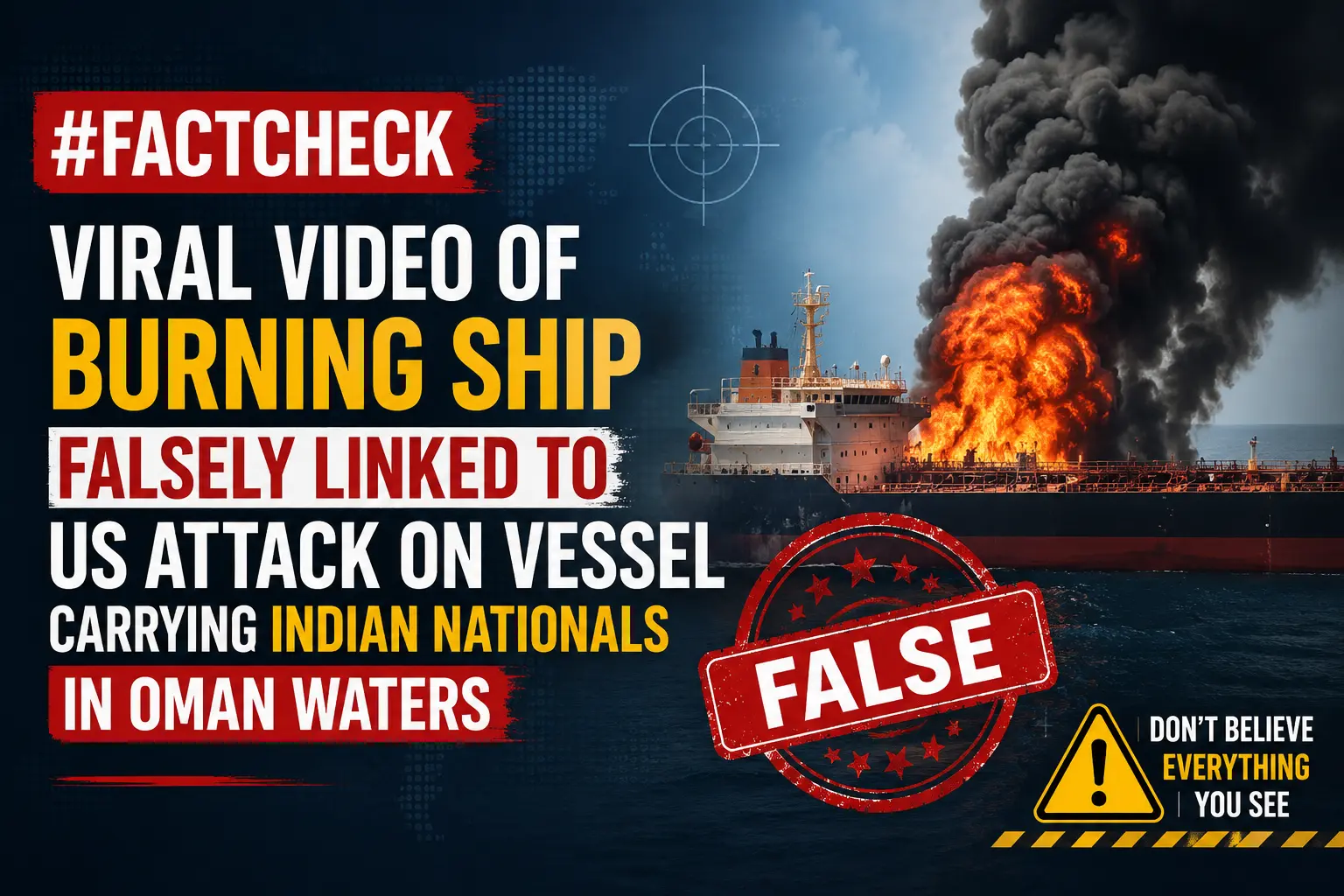
Amid rising tensions in West Asia and concerns over the safety of Indian seafarers, a video showing a vessel engulfed in flames and thick black smoke is being widely circulated on social media. The clip is being shared with the claim that it depicts a US attack on a ship carrying Indian nationals in Omani waters. CyberPeace Research Wing research found the claim to be misleading. The viral video predates the incident it is being linked to and is not related to any recent attack.
Claim:
A Facebook user shared the video alleging that the United States attacked a ship carrying Indian citizens in the maritime region near Oman. The post has been widely circulated as part of the ongoing West Asia tensions. Facebook link: https://www.facebook.com/reel/3031094270427837, https://www.facebook.com/reel/3031094270427837

Fact Check:
A reverse image search of keyframes from the viral video led to several media reports published on 2 March 2026, which carried the same visuals seen in the circulating clip. The reports indicated that the footage showed a vessel targeted amid escalating tensions in the Strait of Hormuz, following restrictions on maritime movement in the region. https://www.ndtv.com/world-news/iran-targets-6th-ship-in-hormuz-strait-video-shows-billowing-smoke-11159019
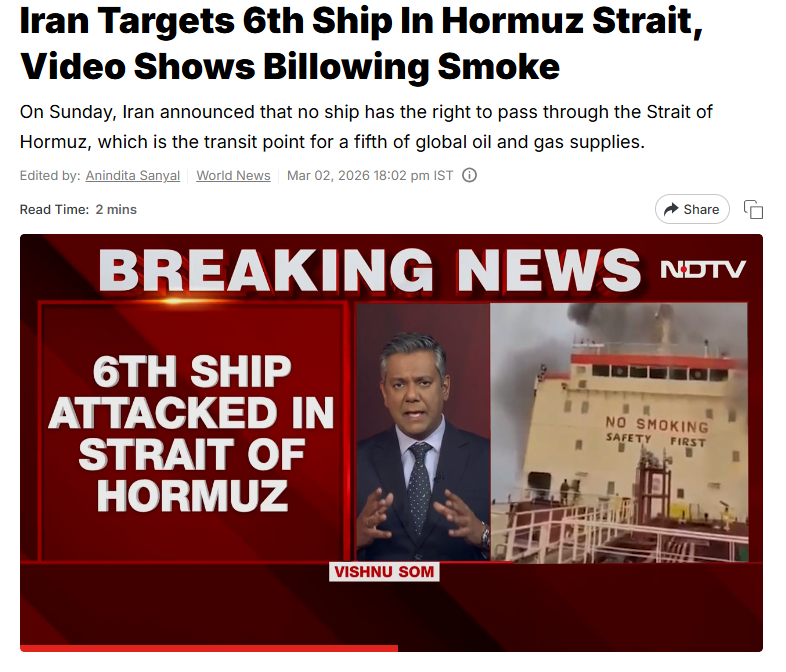
Further research also found the same visuals in a Moneycontrol report published on 2 March 2026. The report clearly established that the footage is from an earlier incident and not linked to any recent developments. https://www.moneycontrol.com/world/indian-crew-member-killed-after-drone-boat-strikes-oil-tanker-off-oman-coast-first-indian-casualty-in-us-iran-tensions-article-13848303.html

Conclusion:
The research confirms that the viral video is not related to any recent US attack on a vessel carrying Indian nationals. The footage has been online since at least March 2026 and shows an earlier incident involving the oil tanker Skylight during tensions in the Strait of Hormuz. Hence, the claim being circulated on social media is misleading.
Executive Summary
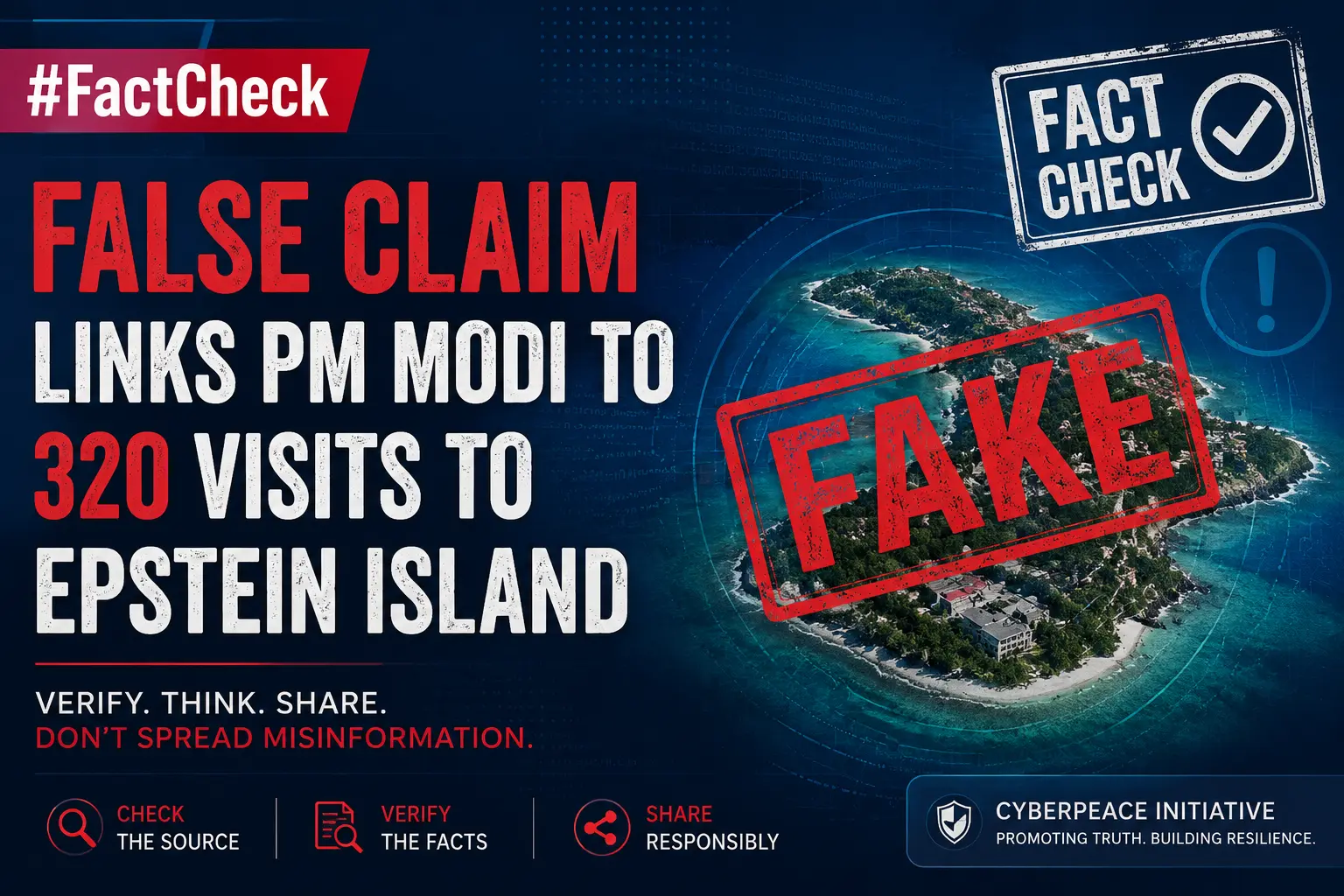
A viral social media post claims that the recently released Epstein files reveal that Prime Minister Narendra Modi visited Epstein Island more than 320 times. CyberPeace Research Wing research found that the claim is false. There is no evidence in the Epstein files suggesting that Prime Minister Modi visited Epstein Island over 320 times.
Claim:
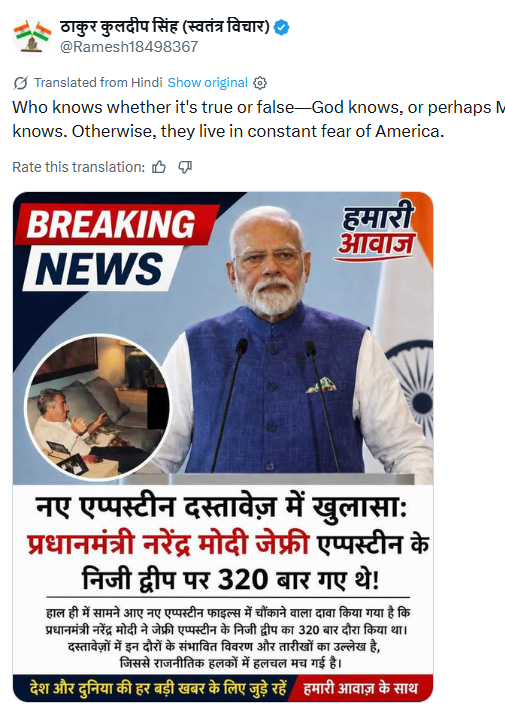
An X user shared a viral graphic claiming that Prime Minister Narendra Modi had visited Epstein Island more than 320 times. https://x.com/Ramesh18498367/status/206501995913534715 , https://ghostarchive.org/archive/2V12W
Fact Check:
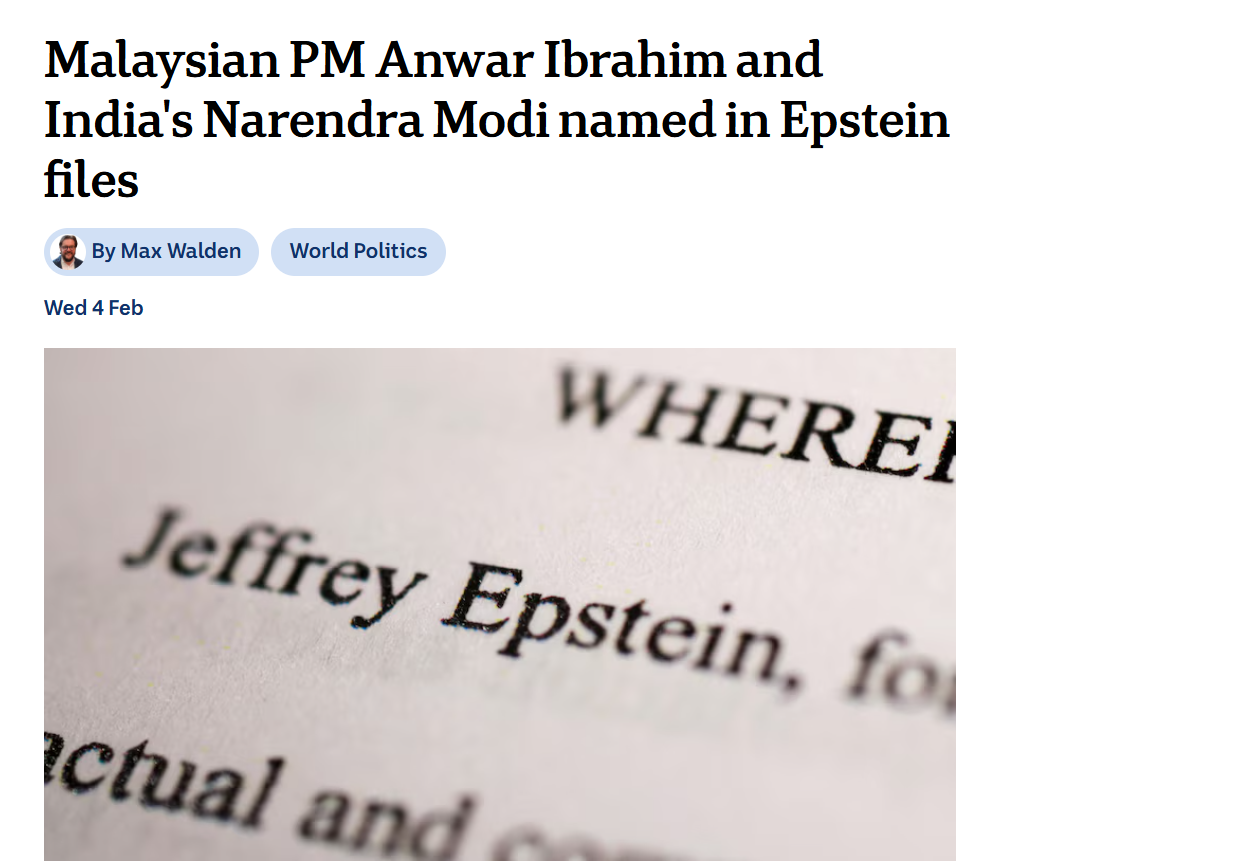
We first examined credible international media reports related to the Epstein files, particularly those mentioning Prime Minister Narendra Modi. During this process, we found a report published by the Australian Broadcasting Corporation (ABC) in February 2026. The report mentioned that the names of the Prime Ministers of India and Malaysia appeared in certain documents linked to the Epstein files. However, it clarified that references to Prime Minister Modi were limited to emails discussing his 2017 visit to Israel. The emails reportedly contained comments made by Jeffrey Epstein regarding the Prime Minister’s Israel visit. https://www.abc.net.au/news/2026-02-04/leaders-of-malaysia-india-named-in-epstein-files/106298458
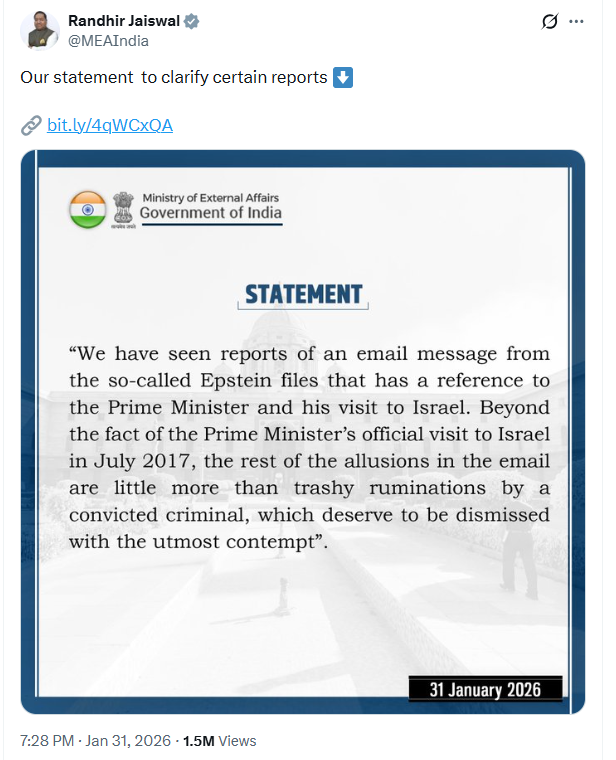
We also reviewed reports published by several other international media organizations. None of them contained any information supporting the viral claim that Prime Minister Modi visited Epstein Island more than 320 times. The Government of India also issued a clarification regarding references to Prime Minister Modi in the Epstein files. The clarification stated that, apart from references to his 2017 Israel visit, the files contain no other mention of the Prime Minister. The government further described subsequent claims and speculation on the matter as baseless.
https://x.com/MEAIndia/status/2017598414733840649?s=20
Conclusion:
The viral claim that the Epstein files reveal Prime Minister Narendra Modi visited Epstein Island more than 320 times is false. Available records, international media reports, and the Indian government's clarification do not support the claim.
