
#FactCheck- AI-Generated Train Video Falsely Shows Muslims Praying in Japan A video purportedly showing
Executive Summary
Muslims offering prayers inside a crowded train in Japan is being widely shared on social media, amid ongoing discussions around the country’s alleged rise in anti-immigration sentiment. The clip is being presented as a recent and real incident. However, an research reveals that the video is not authentic. Experts noted that the prayer postures shown in the clip do not align with standard Islamic practices, raising doubts about its credibility. Further analysis indicates that the video has been generated using artificial intelligence (AI).
Claim
A user shared the viral video on YouTube, showing a group of men—mostly dressed in long tunics and skullcaps—appearing to offer prayers inside a moving subway train. Passengers can be seen seated on both sides of the carriage. In the clip, two men are kneeling on the floor and bowing their heads onto a small mat placed in front of them, with their heads coming very close to the knees of seated passengers. Another man is seen bending forward at the waist while standing, and a fourth appears to be standing upright with his eyes closed.
- Link: https://www.youtube.com/shorts/cZHMCUgbDIA

,
Fact Check
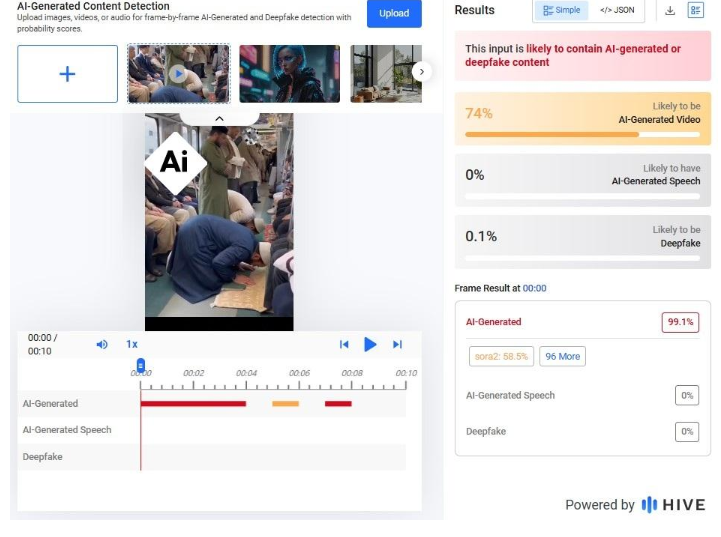
A closer examination of the video reveals several visual inconsistencies. One passenger appears to be fused with the seat rails, creating a distorted overlap. Others seem to be seated in areas where seats do not normally exist, such as directly in front of a door. Additionally, an advertisement visible in the background appears blurred and oddly shaped—another common indicator of AI-generated content. An analysis conducted using the Hive Moderation tool found that the video is “likely to contain AI-generated or deepfake content.”
Conclusion
The viral claim is misleading. The video does not depict a real incident in Japan. Instead, it is likely AI-generated content being circulated with a false narrative, misrepresenting both the context and religious practices shown in the clip.

Related Blogs
Executive Summary
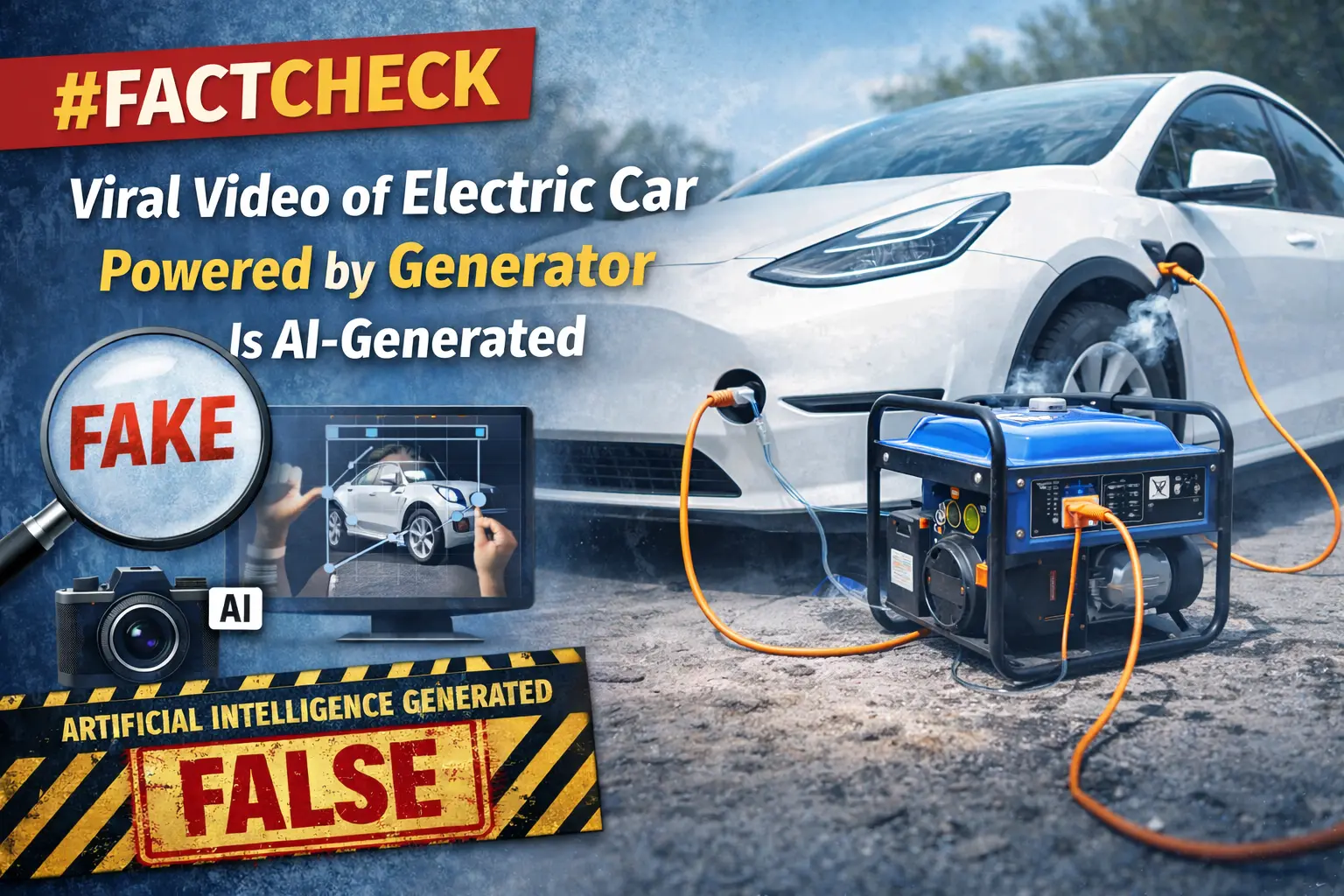
A video circulating on social media shows an electric car allegedly being powered by a portable generator attached to it. The clip is being shared with the claim that the generator is directly running the vehicle, suggesting a groundbreaking or unusual technological feat. However, research conducted by the CyberPeace found the viral claim to be false. Our research revealed that the video is not authentic but AI-generated.
Claim
On February 22, 2026, a user on X (formerly Twitter) shared the viral video with the caption: “After watching this video, Newton might turn in his grave.” The post implied that the video demonstrates a scientific impossibility.

Fact Check:
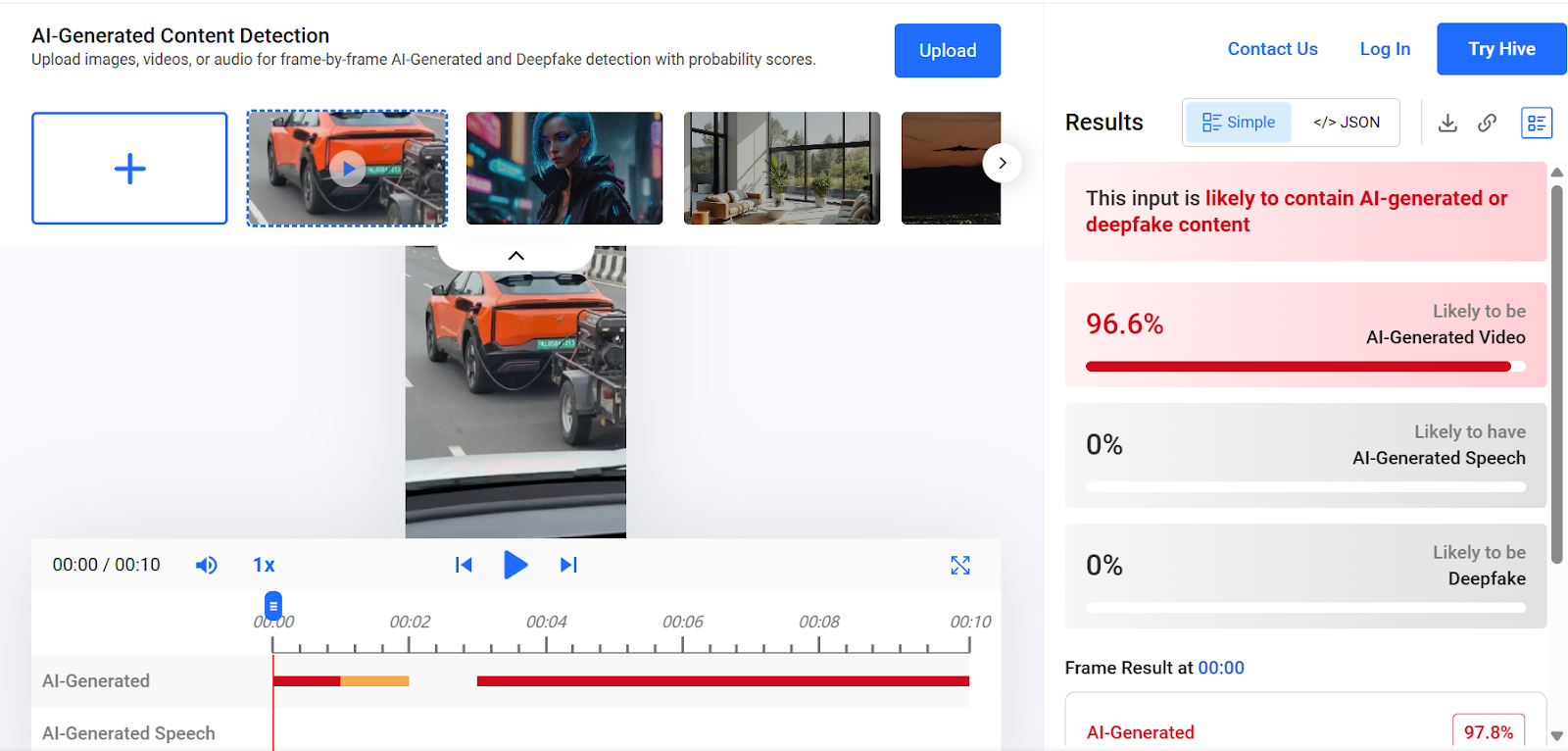
To verify the claim, we conducted a keyword search on Google. However, we found no credible reports from any reputable media organization supporting the assertion made in the viral post. A close examination of the video revealed several visual inconsistencies and unnatural elements, raising suspicion that the footage may have been generated using artificial intelligence. We then analyzed the video using the AI detection tool Hive Moderation. The results indicated a 96 percent probability that the video was AI-generated.
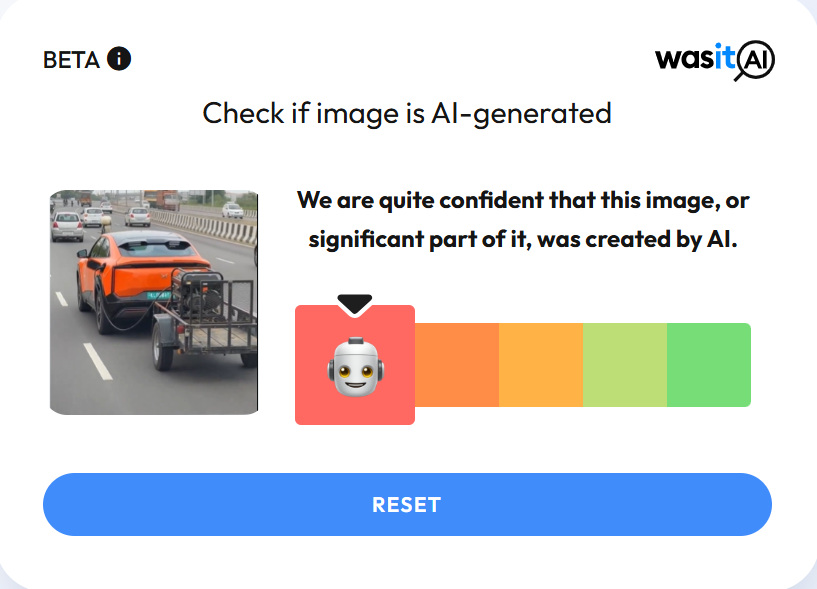
In the next step of our research , we scanned the video using another AI detection platform, WasItAI, which also concluded that the viral video was AI-generated.
Conclusion
Our research confirms that the viral video is not real. It has been artificially created using AI technology and is being circulated with a misleading claim.

Executive Summary:
A viral post on social media shared with misleading captions about a National Highway being built with large bridges over a mountainside in Jammu and Kashmir. However, the investigation of the claim shows that the bridge is from China. Thus the video is false and misleading.

Claim:
A video circulating of National Highway 14 construction being built on the mountain side in Jammu and Kashmir.

Fact Check:
Upon receiving the image, Reverse Image Search was carried out, an image of an under-construction road, falsely linked to Jammu and Kashmir has been proven inaccurate. After investigating we confirmed the road is from a different location that is G6911 Ankang-Laifeng Expressway in China, highlighting the need to verify information before sharing.


Conclusion:
The viral claim mentioning under-construction Highway from Jammu and Kashmir is false. The post is actually from China and not J&K. Misinformation like this can mislead the public. Before sharing viral posts, take a brief moment to verify the facts. This highlights the importance of verifying information and relying on credible sources to combat the spread of false claims.
- Claim: Under-Construction Road Falsely Linked to Jammu and Kashmir
- Claimed On: Instagram and X (Formerly Known As Twitter)
- Fact Check: False and Misleading

Introduction
The mysteries of the universe have been a subject of curiosity for humans over thousands of years. To solve these unfolding mysteries of the universe, astrophysicists are always busy, and with the growing technology this seems to be achievable. Recently, with the help of Artificial Intelligence (AI), scientists have discovered the depths of the cosmos. AI has revealed the secret equation that properly “weighs” galaxy clusters. This groundbreaking discovery not only sheds light on the formation and behavior of these clusters but also marks a turning point in the investigation and discoveries of new cosmos. Scientists and AI have collaborated to uncover an astounding 430,000 galaxies strewn throughout the cosmos. The large haul includes 30,000 ring galaxies, which are considered the most unusual of all galaxy forms. The discoveries are the first outcomes of the "GALAXY CRUISE" citizen science initiative. They were given by 10,000 volunteers who sifted through data from the Subaru Telescope. After training the AI on 20,000 human-classified galaxies, scientists released it loose on 700,000 galaxies from the Subaru data.
Brief Analysis
A group of astronomers from the National Astronomical Observatory of Japan (NAOJ) have successfully applied AI to ultra-wide field-of-view images captured by the Subaru Telescope. The researchers achieved a high accuracy rate in finding and classifying spiral galaxies, with the technique being used alongside citizen science for future discoveries.
Astronomers are increasingly using AI to analyse and clean raw astronomical images for scientific research. This involves feeding photos of galaxies into neural network algorithms, which can identify patterns in real data more quickly and less prone to error than manual classification. These networks have numerous interconnected nodes and can recognise patterns, with algorithms now 98% accurate in categorising galaxies.
Another application of AI is to explore the nature of the universe, particularly dark matter and dark energy, which make up over 95% energy of the universe. The quantity and changes in these elements have significant implications for everything from galaxy arrangement.
AI is capable of analysing massive amounts of data, as training data for dark matter and energy comes from complex computer simulations. The neural network is fed these findings to learn about the changing parameters of the universe, allowing cosmologists to target the network towards actual data.
These methods are becoming increasingly important as astronomical observatories generate enormous amounts of data. High-resolution photographs of the sky will be produced from over 60 petabytes of raw data by the Vera C. AI-assisted computers are being utilized for this.
Data annotation techniques for training neural networks include simple tagging and more advanced types like image classification, which classify an image to understand it as a whole. More advanced data annotation methods, such as semantic segmentation, involve grouping an image into clusters and giving each cluster a label.
This way, AI is being used for space exploration and is becoming a crucial tool. It also enables the processing and analysis of vast amounts of data. This advanced technology is fostering the understanding of the universe. However, clear policy guidelines and ethical use of technology should be prioritized while harnessing the true potential of contemporary technology.
Policy Recommendation
- Real-Time Data Sharing and Collaboration - Effective policies and frameworks should be established to promote real-time data sharing among astronomers, AI developers and research institutes. Open access to astronomical data should be encouraged to facilitate better innovation and bolster the application of AI in space exploration.
- Ethical AI Use - Proper guidelines and a well-structured ethical framework can facilitate judicious AI use in space exploration. The framework can play a critical role in addressing AI issues pertaining to data privacy, AI Algorithm bias and transparent decision-making processes involving AI-based tech.
- Investing in Research and Development (R&D) in the AI sector - Government and corporate giants should prioritise this opportunity to capitalise on the avenue of AI R&D in the field of space tech and exploration. Such as funding initiatives focusing on developing AI algorithms coded for processing astronomical data, optimising telescope operations and detecting celestial bodies.
- Citizen Science and Public Engagement - Promotion of citizen science initiatives can allow better leverage of AI tools to involve the public in astronomical research. Prominent examples include the SETI @ Home program (Search for Extraterrestrial Intelligence), encouraging better outreach to educate and engage citizens in AI-enabled discovery programs such as the identification of exoplanets, classification of galaxies and discovery of life beyond earth through detecting anomalies in radio waves.
- Education and Training - Training programs should be implemented to educate astronomers in AI techniques and the intricacies of data science. There is a need to foster collaboration between AI experts, data scientists and astronomers to harness the full potential of AI in space exploration.
- Bolster Computing Infrastructure - Authorities should ensure proper computing infrastructure should be implemented to facilitate better application of AI in astronomy. This further calls for greater investment in high-performance computing devices and structures to process large amounts of data and AI modelling to analyze astronomical data.
Conclusion
AI has seen an expansive growth in the field of space exploration. As seen, its multifaceted use cases include discovering new galaxies and classifying celestial objects by analyzing the changing parameters of outer space. Nevertheless, to fully harness its potential, robust policy and regulatory initiatives are required to bolster real-time data sharing not just within the scientific community but also between nations. Policy considerations such as investment in research, promoting citizen scientific initiatives and ensuring education and funding for astronomers. A critical aspect is improving key computing infrastructure, which is crucial for processing the vast amount of data generated by astronomical observatories.
References
- https://mindy-support.com/news-post/astronomers-are-using-ai-to-make-discoveries/
- https://www.space.com/citizen-scientists-artificial-intelligence-galaxy-discovery
- https://www.sciencedaily.com/releases/2024/03/240325114118.htm
- https://phys.org/news/2023-03-artificial-intelligence-secret-equation-galaxy.html
- https://www.space.com/astronomy-research-ai-future
