
#FactCheck- AI-Generated Flyover Video Falsely Shared as Patna Infrastructure
Executive Summary
A video showing a modern highway flyover illuminated at night is being widely shared on social media. The bridge features bright white light poles and illuminated barriers. The video is being falsely claimed to be from Patna, Bihar. A CyberPeace Research Wing research has found the claim to be false. Our verification shows that the viral video is not real but AI-generated and is being circulated with misleading claims.
Claim:
A user on YouTube shared the viral video, claiming it shows a flyover in Patna. The post, along with its archive link and screenshots, can be seen below:
https://www.youtube.com/shorts/j9jU-QVKcrw

Meanwhile, the BJP also shared the same video on its official Facebook page, writing: “Don’t be surprised, this is Patna, the capital of Bihar! Where there is BJP-NDA government, development moves at a fast pace.” The post link, archive link, and screenshots are available below:
https://www.facebook.com/bjp4bihar

Fact Check
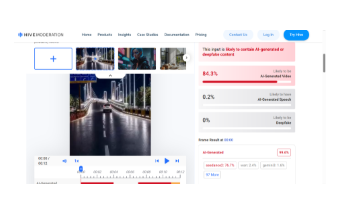
A careful review of the viral video raised suspicions that it may be AI-generated. The footage was analysed using the AI detection tool HIVE MODERATION, which indicated that the video is approximately 84% likely to be AI-generated.
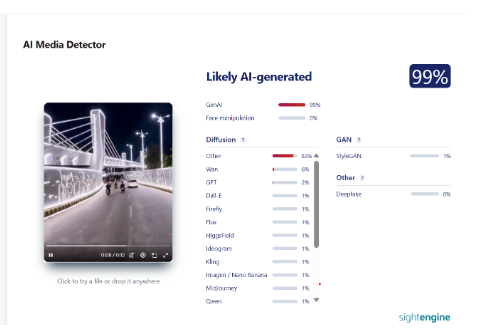
We also analysed the video using another AI detection tool, SIGHTENGINE, which produced an even stronger result, indicating a 99% likelihood of AI generation.
Conclusion:
The viral video being circulated as a flyover from Patna is not real. It is AI-generated and is being shared with misleading claims.

Related Blogs

Introduction
Lost your phone? How to track and block your lost or stolen phone? Fear not, Say hello to Sanchar Saathi, the newly launched portal by the government. The smartphone has become an essential part of our daily life, our lots of personal data are stored in our smartphones, and if a phone is lost or stolen, it can be a frustrating experience. With the government initiative launching Sanchar Saathi Portal, you can now track and block your lost or stolen smartphone. The Portal uses a central equipment identity register to help users block their lost phones. It helps you track your lost and stolen smartphone. So now, say hello to Sanchar Saathi, the newly launched portal by the government. Users should keep an FIR copy of their lost/stolen smartphone handy for using certain features of the portal. FIR copy is also required for tracking the phone on the website. This portal allows users to track lost/stolen smartphones, and they can block the device across all telecom networks.
Preventing Data Leakage and Mobile Phone Theft
When you lose your phone or your phone is stolen, you worry as your smartphone holds your various personal sensitive information such as your bank account information, UPI IDs, and social media accounts such as WhatsApp, which cause a serious concern of data leakage and misuse in such a situation. Sanchar saathi portal addresses this problem and serves as a platform for blocking data saved on a lost or stolen device. This feature protects the users against financial fraud, identity thrift, and data leakage by blocking access to your lost or stolen device and ensuring that unauthorised parties cannot access or abuse important information.
How the Sanchar Saathi Portal Works
To file a complaint regarding their lost or stolen smartphones the users are required to provide IMEI (International Mobile Equipment Identity) number. The official website of the portal is https://sancharsaathi.gov.in/ users can access the “Citizen Centric Services” option on the homepage. Then users may, by clicking on “Block Your Lost/Stolen Mobile”, can fill out the form. Users need to fill in details such as IMEI number, contact number, model number of the smartphone, mobile purchase invoice, and information such as the date, time, district, and state where the device was lost or stolen. Users must keep a copy of the FIR handy and fill in their personal information, such as their name, email address, and residence. After completing and selecting the ‘Complete tab’, the form will be submitted, and access to the lost/stolen smartphone will be blocked.
Enhancing Security with SIM Card Verification
Using this portal, users can access their associated sim card numbers and block any unauthorised use. In this way portal allows owners to take immediate action if their sim card is being used or misused by someone else. The Sanchar Saathi Portal allows you to check the status of active SIM cards registered under an individual’s name. And it is an extra security feature provided by the portal. This proactive strategy helps users to safeguard their personal information against possible abuse and identity theft.
Advantages of the Sanchar Saathi Portal
The Sanchar Saathi platform offers various benefits for reducing mobile phone theft and protecting personal data. The portal offers a simplified and user-friendly platform for making complaints. The online complaint tracking function keeps consumers informed of the status of their complaints, increasing transparency and accountability.
The portal allows users to block access to personal data on lost/stolen smartphones which reduces the chances or potential risk of data leakage.
The portal SIM card verification feature acts as an extra layer of security, enabling users to monitor any unauthorised use of their personal information. This proactive approach empowers users to take immediate action if they detect any suspicious activity, preventing further damage to their personal data.
Conclusion
Our smartphones store large amounts of sensitive information and Data, so it becomes crucial to protect our smartphones from any unauthorised access, especially in case when the smartphone is lost or stolen. The Sanchar Saathi portal is a commendable step by the government by offering a comprehensive solution to combat mobile phone theft and protect personal data, the portal contributes to a safer digital environment for smartphone users.
The portal provides the option of blocking access to your lost/stolen device and also checking the SIM card verification. These features of the portal empower users to take control of their data security. In this way, the portal contributes to preventing mobile phone theft and data leakage.

Introduction
A new dawn in the realm of cyber security and criminal justice is on the horizon. Maharashtra's Deputy Chief Minister, Devendra Fadnavis, has recently announced the advent of the country's most sophisticated cyber lab—a bastion against the dark arts of cybercrime. This announcement, made with the gravitas befitting a statesman, was not merely a bureaucratic note; it was a clarion call to a future where technology and law converge to create a safer society.
The cyber lab, poised to be the largest and most modern of its kind, is not just a facility—it is a symbol of the state's commitment to harnessing the power of technology in the ceaseless battle against crime. Fadnavis, who also holds the state's home portfolio, underscored the significance of this initiative during a function where he also emphasised the need for the Maharashtra police to brace themselves for the enforcement of three transformative criminal laws set to take effect from the first of July 2024.
In compliance with the New Laws
These laws—the Bharatiya Nyaya Sanhita, the Bharatiya Nagarik Suraksha Sanhita, and the Bharat Sakshya Act—They are not mere statutory texts; they are the architects of a new edifice of criminal justice, designed with the mortar of modern electronic and technical evidence to buttress the conviction rates and fortify the legal system.
At the inauguration of the Evidence Management Centre (EMC) and the Evidence Dispatch Van (EDV) in Navi Mumbai, Fadnavis spoke with an air of prescience about the radical shifts these new acts will engender. The EMC, a paragon of innovation with its no-human-intervention ethos, is set to revolutionise the procedure of handling evidence, thereby amplifying the likelihood of securing convictions in an era increasingly marred by cyber frauds and hacking escapades.
Recent Trend
The Deputy Chief Minister's vision extends beyond the present, into a realm where blockchain technology becomes an ally of law enforcement, rendering evidence tampering an obsolete concern. Under the new legislative framework, expert collection of evidence is mandated for crimes with sentences exceeding seven years, a move that underscores the gravity with which digital and electronic evidence is now regarded.
The Cyber Lab
The Navi Mumbai police Commissionerate stands as the vanguard of this new legal era, being the first in the country to align with the upcoming laws. As digital transactions burgeon, so too does the evil of cybercrime. Fadnavis assures us that the cyberlaw, a veritable nexus of modernity, will bring together banks, non-banking financial companies (NBFCs), and social media platforms on a unified platform to detect and thwart crimes with alacrity.
This announcement was made in the presence of Maharashtra's Director General of Police, Rashmi Shukla, and Navi Mumbai's police commissioner, Milind Bharambe, both of whom are key figures in the conception of this project. Their attendance shows the collective resolve of Maharashtra's law enforcement to elevate its capabilities in cybercrime prevention.
Conclusion
The establishment of this cyber lab is a vivid thread woven with the intent to protect the digital integrity of its citizens. It is a testament to the state's foresight and its unwavering commitment to staying abreast of the evolving landscape of crime and technology. As we stand on the cusp of this new era, we are reminded that the fight against crime is perennial, but with such pioneering initiatives, victory is not just a possibility—it is an inevitability.
References
- https://indianexpress.com/article/cities/mumbai/navi-mumbai-cyber-lab-criminal-laws-fadnavis-9206801/
- https://www.the420.in/why-maharashtras-new-cyber-lab-could-be-a-game-changer-for-national-security/
- https://apacnewsnetwork.com/2024/03/navi-mumbai-to-host-indias-most-advanced-crime-busting-lab-boosting-conviction-rates-maharashtra-deputy-cm-fadnavis-announces/
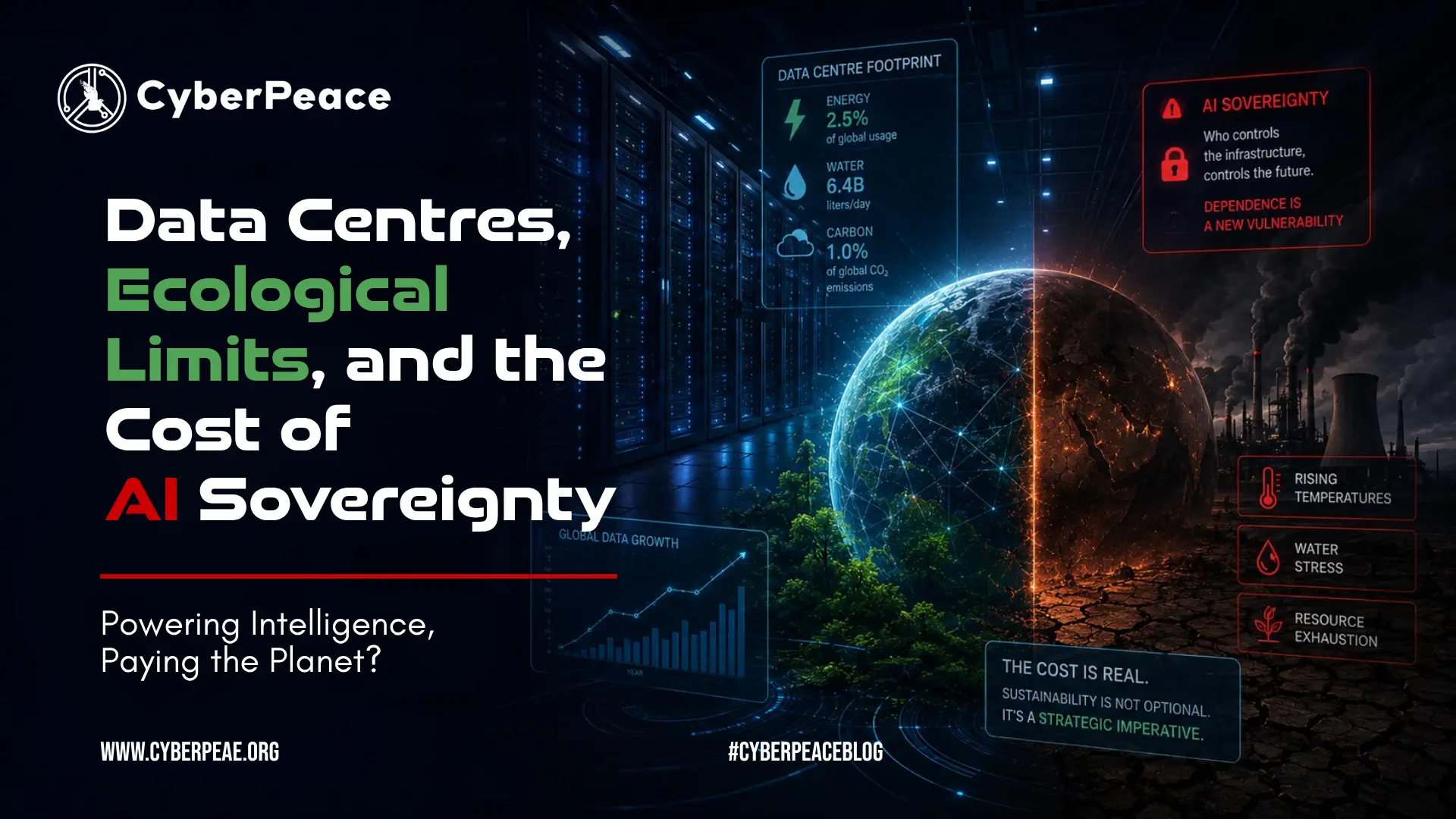
Governments in nations across the globe are consequently vying to draw in data centre investments as components of the wider AI sovereignty policies. However, recent events in Ireland make it clear that such an infrastructure is associated with significant environmental and social price tags. In geographically dense and resource-strained countries such as India, these trade-offs pose some pressing questions of whether today's AI ambitions are socially or environmentally sustainable. The data centre crisis in Ireland provides a handy reminder. It puts emphasis on the capacity of land use, water stress, energy demand, and disruption of communities to amplify quickly as digital infrastructure continues to increase at a faster rate than the regulatory and ecological capacity. These lessons should be paid close attention to as India continues to develop the IndiaAI Mission and establish itself as an AI hub in the future.
Why Data Centres Are Ecological Stress Multipliers
The data centres are sometimes referred to as clean digital infrastructure; however, in an actual sense, they are heavy industrial guardians of resources. Centres of large proportions demand an extensive amount of land, constant electricity, and a significant amount of water to cool down.
The most apparent effect is on energy consumption. Data centres are 24/7, round the clock, and need to be powered with a high-quality and stable electricity supply. By 2022, data centres had more than a quarter of the overall national electricity demand in Ireland, which created problems regarding grid stability and energy security (EirGrid, 2022). This compelled regulators to limit new connections in some of the areas. These trends also bring some similarities to certain regions of the United States, especially in Virginia, where particular data centres have led to peaks in the electricity demand in the region (U.S. Energy Information Administration, 2023).
Another primary source of pressure is the use of water. Heavy liquid coolers are very intensive systems in data centres, which tend to use the local freshwater sources. This may directly compete with residential and agricultural requirements in case of heatwaves or drought. In the western US, environmental advocates have issued notices that data centres contribute to a water deficit in other overextended basins (New York Times, 2023).
It also depends on local pollution and land use. Data centres are normally constructed on large plots close to urban or peri-urban centres, having good accessibility. This may push aside farmlands, increase property rates, and change local ecologies. The backup diesel generators, which are employed during power cuts, add to air and noise pollutants, and they thus impact the adjacent communities.
Ireland’s Experience and the Social Backlash
The low corporate taxes, cool climate, and PIC access to the EU market made Ireland a big data centre hub. The concentration of facilities around Dublin was, however, done unintentionally, leading to its rapid concentration. The population in their local communities also experienced mounting housing pressure, power competition, and underemployment because the number of long-term jobs created by a data centre is comparatively low.
The Irish government later realised that data centre expansion was causing strain on climate commitments and electricity infrastructure on a national level. The grid operators started denying new connections to data centres in sections of the country, which amounted to a kind of moratorium on further growth (TechPolicy.Press, 2024). What was initially a digital success story became a government issue, an ecology versus economic plan clash.
This experience particularly applies to smaller or densely populated countries. Countries such as Ireland and India have concentrated influences on fewer points, unlike the United States or China, which are able to spread data centres over wide areas.
India’s Emerging Data Centre Geography
India is advertising data centres as a way of advancing its digital and AI platforms. There are a number of states that have published data centre policies, such as Maharashtra, Tamil Nadu, Telangana, and Uttar Pradesh. The connectivity, financial infrastructure, and location to large user bases are making Mumbai, Chennai, Hyderabad, and Noida major hubs (MeitY, 2023).
Nevertheless, these areas are already stressed in terms of the environment. Mumbai also suffers from land shortage and flooding. There is a permanent water scarcity in Chennai. Hyderabad and Noida cannot cope with the intensity of population growth and energy demand in urban areas. Locating such large-scale data centres in these locations will pose a risk of augmenting the existing vulnerabilities instead of decentralising the benefits of development.
India, in contrast to the United States or China, does not have continental-scale low-density areas with spare water and power near demand centres. Each additional data centre in India is thus likely to have an impact on an increasing number of people per unit of infrastructure, by land acquisition, water diversion, grid pressure, or environmental externalities.
Community Impacts and Uneven Costs
The cost incurred by local communities to increase their data centre expansion is not proportionate to the benefits enjoyed. The after construction efforts to generate employment is minimal and the long term effects include strains on infrastructure. Tariffs can be increased with the growth of electric power demand. The extraction of water may have impacts on local supply. The prices of real estate may crowd out the lower-income population.
These impacts may be enhanced in India, where urban inequality is already high. The informal settlements along the industrial areas are such that they are vulnerable to pollution as well as diversion of resources. Data centres will otherwise be yet another project that creates unequal development without proper consultation with the community and other environmental protection measures.
What This Means for India’s AI Sovereignty Plans
The IndiaAI Mission of India focuses on developing local AI potential, data networks, and processing units to minimise the use of external systems ( IndiaAI Mission Document, 2024). This vision is based on data centres. Nevertheless, the concept of simple AI autonomy is made difficult by ecological limits.
An AI infrastructure that compromises water security, energy availability, or climate objectives could come under opposition and regulation backlash, as in the case of Ireland. This would delay deployment and add up to more expenses. Physical expansion is not sufficient to have true AI sovereignty. It should also take into consideration sustainability, decentralisation, and efficiency.
This brings about strategic concerns. India must invest more vigorously in energy-efficient computing, edge AI and model optimisation as opposed to scale. Is renewable energy integration viable to maintain the information centre demand? Is data centre siting to comply with long term water and land use planning, and not the short-term incentives of investment?
Towards a Sustainable Digital Infrastructure Strategy
India can still afford to learn not to repeat the errors experienced elsewhere. This will necessitate data centres being regarded as digital assets, not important infrastructures that have an environmental and social impact. Both more robust environmental impact assessments and public water and energy accounting and community involvement must become unavoidable.
From an AI policy perspective, sustainability should be seen as a pillar of sovereignty. An AI ecosystem that depends on fragile ecological foundations is not resilient. By learning from Ireland and adapting global lessons to local realities, India can pursue AI leadership without creating new environmental crises.
The future of AI will not be decided only by algorithms and talent. It will also be shaped by land, water, energy, and the communities that live alongside digital infrastructure. Ignoring those realities would make AI ambition fragile rather than sovereign.
References
- TechPolicy.Press. What Ireland’s Data Center Crisis Means for the EU’s AI Sovereignty Plans. 2024. https://techpolicy.press
- EirGrid. Electricity Demand Forecast Statement. 2022. https://www.eirgridgroup.com
- U.S. Energy Information Administration. Data Centers and Energy Demand. 2023. https://www.eia.gov
- New York Times. Data Centers Are Straining Water Supplies in the American West. 2023. https://www.nytimes.com
- Ministry of Electronics and Information Technology. India Data Centre Policy and Digital Infrastructure Initiatives. 2023. https://www.meity.gov.in
- IndiaAI Mission. Official Mission Document and Framework. 2024. https://indiaai.gov.in
