
#Fact Check: Viral video of fighter pilot repairing aircraft mid-air is AI-generated
Executive Summary
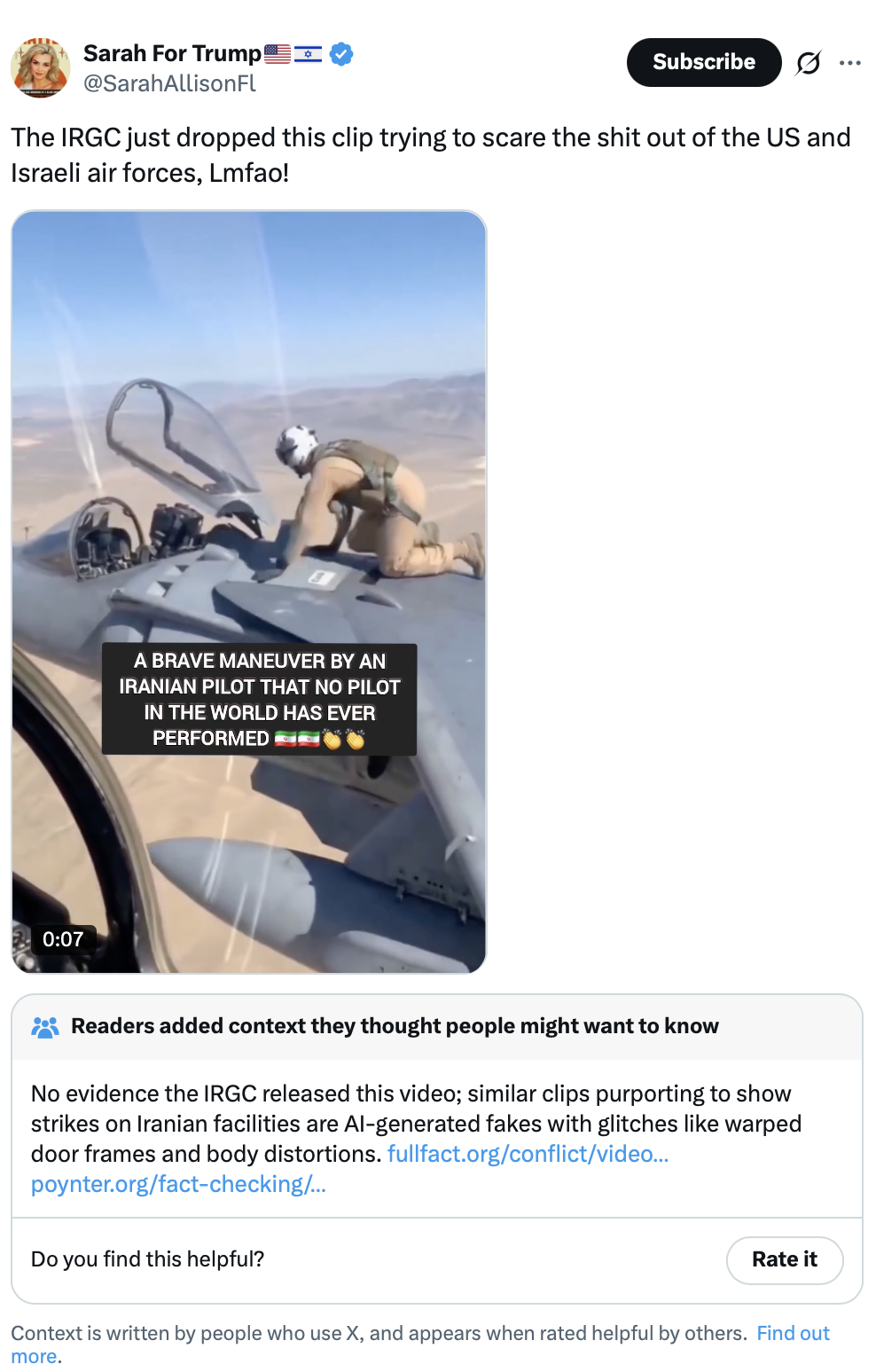
A video has gone viral on social media claiming to show a fighter pilot climbing out of his aircraft mid-flight to repair its engine before crawling back into the cockpit and resuming the mission. The footage shows the pilot closing a compartment on the aircraft's fuselage, making his way back to the cockpit, and the canopy shutting as the aircraft continues flying. According to a study by the CyberPeace Research Wing , the viral video is not authentic but AI-generated.
Claim
On August 1, an X user named "Sarah for Trump" shared the clip, claiming it showed an Iranian fighter pilot repairing his aircraft in mid-air. The post alleged that the video had been released by Iran's Revolutionary Guards to intimidate the United States and Israel. Text overlaid on the video read: "A brave maneuver by an Iranian pilot that no pilot in the world has ever performed." (At the time of publishing this story, the video had garnered 2.6 million views)
At the time this story was published, the video had received more than 2.6 million views.
https://x.com/SarahAllisonFl/status/2083589225912402201
https://archive.ph/fkW32
FactCheck
To verify the claim, we first analysed the viral video using the InVid verification tool and extracted several keyframes. A reverse image search of these frames through Google Lens led us to multiple social media posts carrying the same video with similar claims. The search also led us to an Instagram account named "viralism.ai", where the identical video had been uploaded on June 14. A comparison confirmed that the visuals matched the viral clip exactly, indicating that the Instagram upload was the original source from which the video was later circulated with a false narrative.
https://www.instagram.com/reel/DZkIrEijc89/
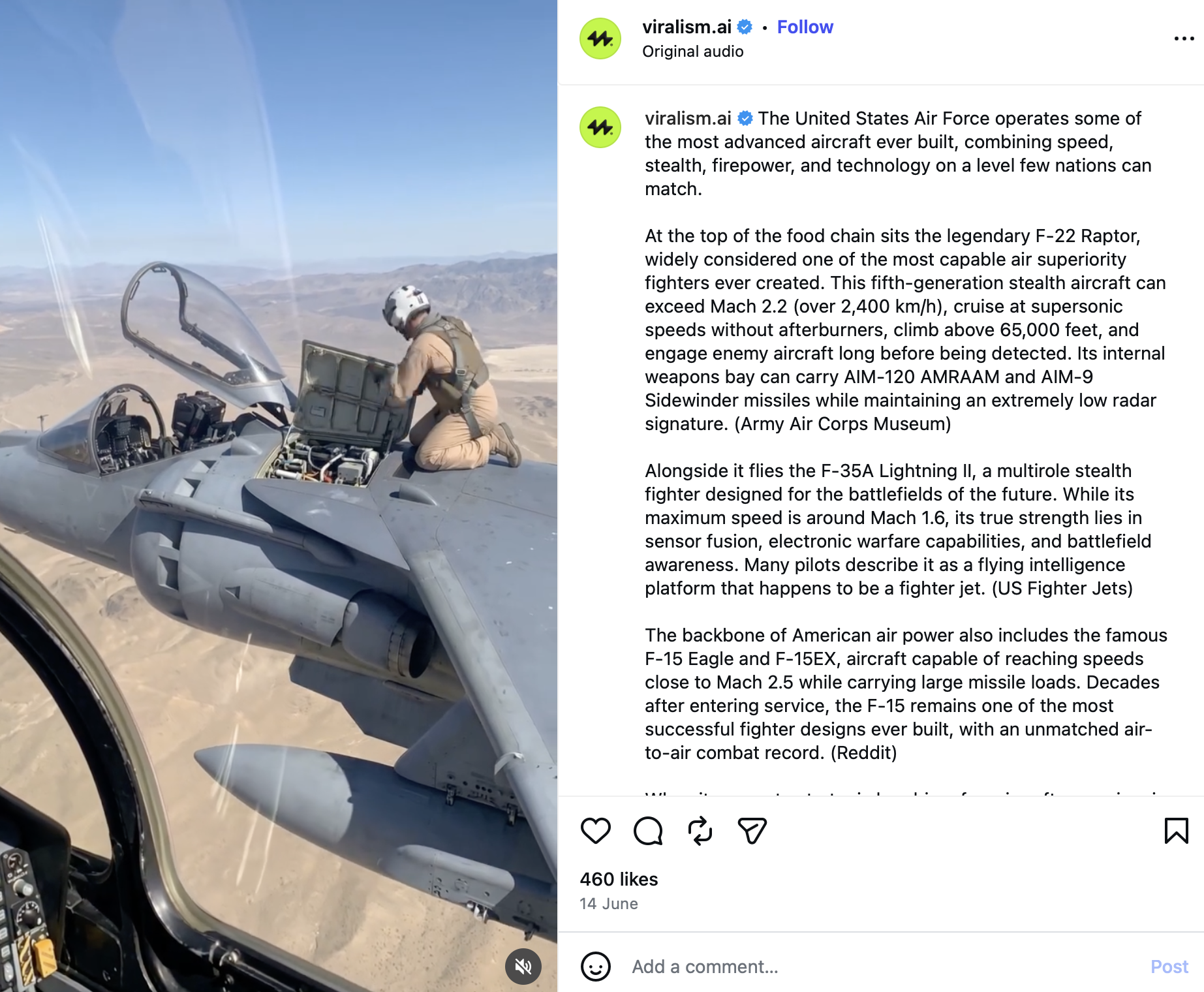
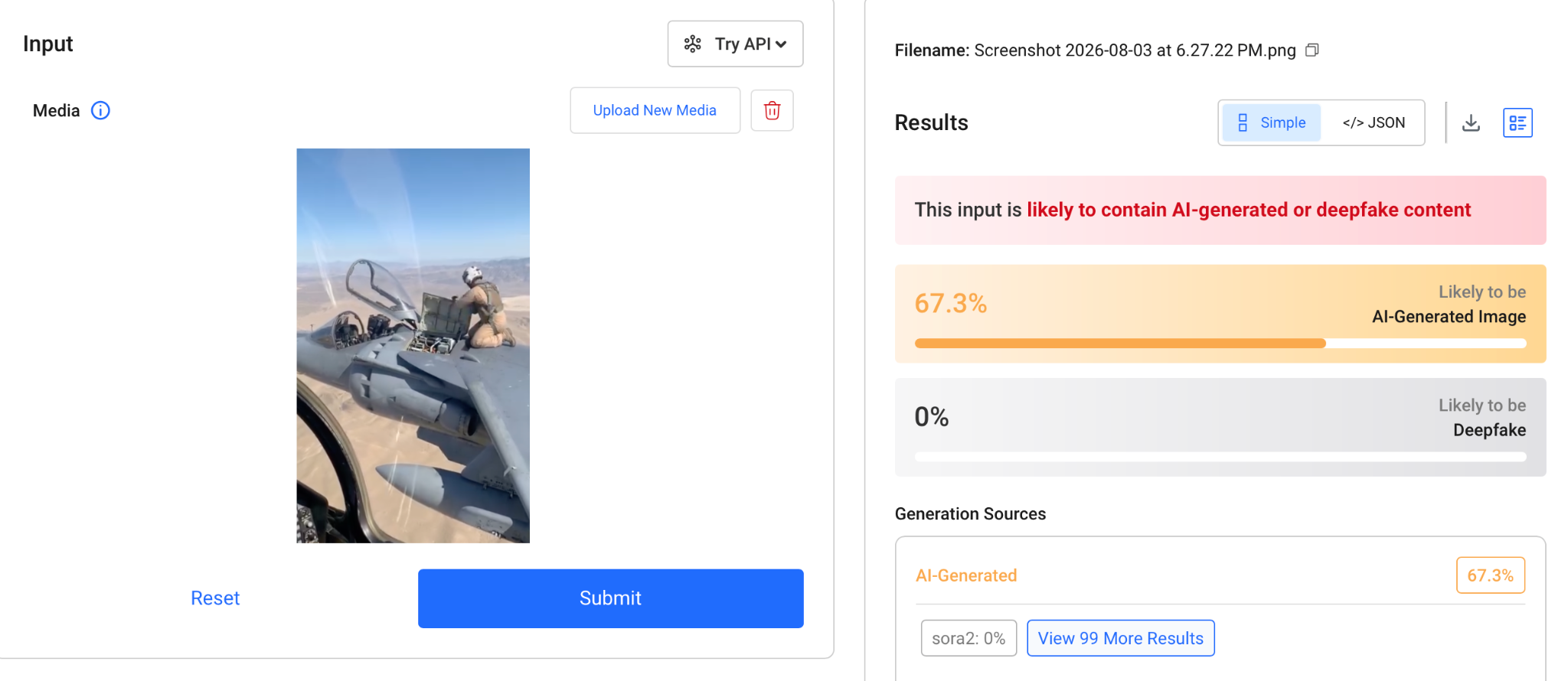
A review of the Instagram account further revealed that it primarily publishes AI-generated content. The account's description clearly states "AI Viral Videos and Trends," indicating that the video was created using artificial intelligence rather than depicting a real event. To further confirm our findings, we analysed the clip using the AI detection tool Hive Moderation. The results showed a high probability that the video was AI-generated, with several portions of the footage being flagged as synthetic
Conclusion
The research found that the viral video does not depict a real-life incident. The footage showing a fighter pilot allegedly repairing an aircraft engine during flight was generated using artificial intelligence and later circulated online as genuine. The accompanying claim that the video was released by Iran's Revolutionary Guards to threaten the United States and Israel is also false.

Related Blogs

Executive Summary:
Recently PAN-OS software of Palo Alto Networks was discovered with the critical vulnerability CVE-2024-3400. It is the software used to power all their networks in the next generation firewalls. This vulnerability is a common injection vulnerability which provides access to unauthenticated attackers to execute random code having root privileges on the attacked system. This has been exploited actively by threat actors, leaving many organizations at risk for severe cyberattacks. This report helps to understand the exploitation, detection, mitigations and recommendations for this vulnerability.

Understanding The CVE-2024-3400 Vulnerability:
CVE-2024-3400 impacts the particular version of PAN-OS and a certain configuration susceptible to this kind of a security issue. It is a command injection, which exists in the GlobalProtect module of the PAN-OS software. The vulnerability can be exploited by an unauthorized user to run any code on the firewall having root privileges. This targets Active Directory database (ntds.dit), important data (DPAPI), and Windows event logs (Microsoft-Windows-TerminalServices-LocalSessionManager%4Operational.evtx) and also login data, cookies, and local state data for Chrome and Microsoft Edge from specific targets leading attackers to capture the browser master key and steal sensitive information of the organization.
The CVE-2024-3400 has been provided with a critical severity rating of 10.0. The following two weaknesses make this CVE highly severe:
- CWE-77: Improper Neutralization of Special Elements used in a Command ('Command Injection')
- CWE-20: Improper Input Validation.
Impacted Products:
The affected version of PAN-OS by CVE-2024-3400 are-

Only the versions 10.2, 11.0, and 11.1, setup with GlobalProtect Gateway or GlobalProtect Portal are exploited by this vulnerability. Whereas the Cloud NGFW, Panorama appliances and Prisma Access are not affected.
Detecting Potential Exploitation:
Palo Alto Networks has confirmed that they are aware of the exploitation of this particular vulnerability by threat actors. In a recent publication they have given acknowledgement to Volexity for identifying the vulnerability. There is an increasing number of organizations that face severe and immediate risk by this exploitation. Third parties also have released the proof of concept for the vulnerability.
The suggestions were provided by Palo Alto Networks to detect this critical vulnerability. To detect this vulnerability, the following command shall be run on the command-line interface of PAN-OS device:
grep pattern "failed to unmarshal session(.\+.\/" mp-log gpsvc.log*
This command looks through device logs for specific entries related to vulnerability.
These log entries should contain a long, random-looking code called a GUID (Globally Unique Identifier) between the words "session(" and ")". If an attacker has tried to exploit the vulnerability, this section might contain a file path or malicious code instead of a GUID.
Presence of such entries in your logs, could be a sign of a potential attack to hack your device which may look like:
- failed to unmarshal session(../../some/path)
A normal, harmless log entry would look like this:
- failed to unmarshal session(01234567-89ab-cdef-1234-567890abcdef)
Further investigations and actions shall be needed to secure the system in case the GUID entries were not found and suspicious.
Mitigation and Recommendations:
Mitigation of the risks posed by the critical CVE-2024-3400 vulnerability, can be accomplished by the following recommended steps:
- Immediately update Software: This vulnerability is fixed in software releases namely PAN-OS 10.2.9-h1, PAN-OS 11.0.4-h1, PAN-OS 11.1.2-h3, and all higher versions. Updating software to these versions will protect your systems fully against potential exploitation.
- Leverage Hotfixes: Palo Alto Networks has released hotfixes for commonly deployed maintenance releases of PAN-OS 10.2, 11.0, and 11.1 for the users who cannot upgrade to the latest versions immediately. These hotfixes do provide a temporary solution while you prepare for the full upgrade.
- Enable Threat Prevention: Incase of available Threat Prevention subscription, enable Threat IDs 95187, 95189, and 95191 to block attacks targeting the CVE-2024-3400 vulnerability. These Threat IDs are available in Applications and Threats content version 8836-8695 and later.
- Apply Vulnerability Protection: Ensure that vulnerability protection has been applied in the GlobalProtect interface to prevent the exploitation on the device. It can be implemented using these instructions.
- Monitor Advisory Updates: Regularly checking for the updates to the official advisory of Palo Alto Networks. This helps to stay up to date of the new releases of the guidance and threat prevention IDs of CVE-2024-3400.
- Disable Device Telemetry – Optional: It is suggested to disable the device telemetry as an additional precautionary measure.
- Remediation: If there is an active exploitation observed, follow the steps mentioned in this Knowledge Base article by Palo Alto Networks.
Implementation of the above mitigation measures and recommendations would be in a position to greatly reduce the risk of exploitation you might face from a cyber attack targeting the CVE-2024-3400 vulnerability in Palo Alto Networks' PAN-OS software.
Conclusion:
The immediate response should be taken against the offensive use of the critical CVE-2024-3400 vulnerability found in the PAN-OS platform of Palo Alto Networks. Organizations should actively respond by implementing the suggested mitigation measures such as upgrading to the patched versions, enabling threat prevention and applying vulnerability protection to immediately protect from this vulnerability. Regular monitoring, implementing security defense mechanisms and security audits are the necessary measures that help to combat emerging threats and save critical resources.

In 2023, PIB reported that up to 22% of young women in India are affected by Polycystic Ovarian Syndrome (PCOS). However, access to reliable information regarding the condition and its treatment remains a challenge. A study by the PGIMER Chandigarh conducted in 2021 revealed that approximately 37% of affected women rely on the internet as their primary source of information for PCOS. However, it can be difficult to distinguish credible medical advice from misleading or inaccurate information online since the internet and social media are rife with misinformation. The uptake of misinformation can significantly delay the diagnosis and treatment of medical conditions, jeopardizing health outcomes for all.
The PCOS Misinformation Ecosystem Online
PCOS is one of the most common disorders diagnosed in the female endocrine system, characterized by the swelling of ovaries and the formation of small cysts on their outer edges. This may lead to irregular menstruation, weight gain, hirsutism, possible infertility, poor mental health, and other symptoms. However, there is limited research on its causes, leaving most medical practitioners in India ill-equipped to manage the issue effectively and pushing women to seek alternate remedies from various sources.
This creates space for the proliferation of rumours, unverified cures and superstitions, on social media, For example, content on YouTube, Facebook, and Instagram may promote “miracle cures” like detox teas or restrictive diets, or viral myths claiming PCOS can be “cured” through extreme weight loss or herbal remedies. Such misinformation not only creates false hope for women but also delays treatment, or may worsen symptoms.
How Tech Platforms Amplify Misinformation
- Engagement vs. Accuracy: Social media algorithms are designed to reward viral content, even if it’s misleading or incendiary since it generates advertisement revenue. Further, non-medical health influencers often dominate health conversations online and offer advice with promises of curing the condition.
- Lack of Verification: Although platforms like YouTube try to provide verified health-related videos through content shelves, and label unverified content, the sheer volume of content online means that a significant chunk of content escapes the net of content moderation.
- Cultural Context: In India, discussions around women’s health, especially reproductive health, are stigmatized, making social media the go-to source for private, albeit unreliable, information.
Way Forward
a. Regulating Health Content on Tech Platforms: Social media is a significant source of health information to millions who may otherwise lack access to affordable healthcare. Rather than rolling back content moderation practices as seen recently, platforms must dedicate more resources to identify and debunk misinformation, particularly health misinformation.
b. Public Awareness Campaigns: Governments and NGOs should run nationwide campaigns in digital literacy to educate on women’s health issues in vernacular languages and utilize online platforms for culturally sensitive messaging to reach rural and semi-urban populations. This is vital for countering the stigma and lack of awareness which enables misinformation to proliferate.
c. Empowering Healthcare Communication: Several studies suggest a widespread dissatisfaction among women in many parts of the world regarding the information and care they receive for PCOS. This is what drives them to social media for answers. Training PCOS specialists and healthcare workers to provide accurate details and counter misinformation during patient consultations can improve the communication gaps between healthcare professionals and patients.
d. Strengthening the Research for PCOS: The allocation of funding for research in PCOS is vital, especially in the face of its growing prevalence amongst Indian women. Academic and healthcare institutions must collaborate to produce culturally relevant, evidence-based interventions for PCOS. Information regarding this must be made available online since the internet is most often a primary source of information. An improvement in the research will inform improved communication, which will help reduce the trust deficit between women and healthcare professionals when it comes to women’s health concerns.
Conclusion
In India, the PCOS misinformation ecosystem is shaped by a mix of local and global factors such as health communication failures, cultural stigma, and tech platform design prioritizing engagement over accuracy. With millions of women turning to the internet for guidance regarding their conditions, they are increasingly vulnerable to unverified claims and pseudoscientific remedies which can lead to delayed diagnoses, ineffective treatments, and worsened health outcomes. The rising number of PCOS cases in the country warrants the bridging of health research and communications gaps so that women can be empowered with accurate, actionable information to make the best decisions regarding their health and well-being.
Sources
- https://pib.gov.in/PressReleasePage.aspx?PRID=1893279#:~:text=It%20is%20the%20most%20prevailing%20female%20endocrine,neuroendocrine%20system%2C%20sedentary%20lifestyle%2C%20diet%2C%20and%20obesity.
- https://www.thinkglobalhealth.org/article/india-unprepared-pcos-crisis?utm_source=chatgpt.com
- https://www.bbc.com/news/articles/ckgz2p0999yo
- https://pmc.ncbi.nlm.nih.gov/articles/PMC9092874/

Executive Summary
Misleading claims related to an incident in Delhi are being widely circulated on social media. Several posts allege that an Indian Army brigadier and his son were assaulted while returning from a “dance club party.” The posts further claim that the attack was triggered by remarks related to “Operation Sindoor.” However, research by the CyberPeace found that these claims are completely false and fabricated.
Claim
On social media platform X, some users (including @ManipurPost5) shared posts claiming that an Indian Army brigadier and his son were attacked after returning from a dance club. The posts also alleged that the altercation escalated after someone mocked “Operation Sindoor.”
Fact check
To verify the claim, we conducted keyword searches on Google and found a report published by Republic World on April 14, 2026, which included visuals similar to those being circulated.

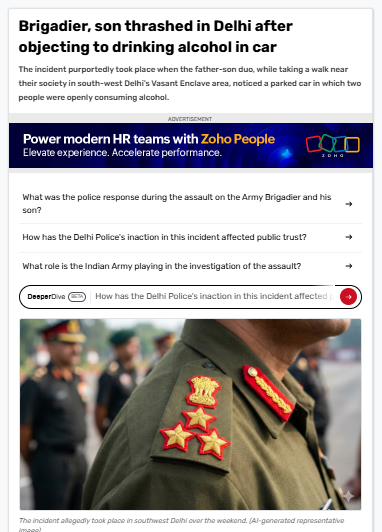
According to the report, the victims were identified as Brigadier Parminder Singh Arora, a serving Indian Army officer, and his son Tejas Arora. At the time of the incident, they were taking a walk near their residence after dinner. Reports state that they noticed a group of individuals consuming alcohol inside a parked car in a public place and objected to it. This led to an argument, which later escalated into a violent assault. Around 7–8 individuals allegedly attacked the brigadier and his son, with the son sustaining more serious injuries. Questions have also been raised about the role of police personnel present at the scene. Following the complaint, a case was registered, one police constable was suspended, and two accused individuals have been arrested so far. The vehicle involved has also been seized. Further verification led us to another report published by India Today on April 14, 2026, which corroborated the same details of the incident.
Conclusion
The viral claim is misleading and entirely false.The incident has no connection to any “dance club party” or to “Operation Sindoor.” In reality, the altercation began after the brigadier objected to public drinking near his residence.
