
#FactCheck-Video of UKD Veterans’ Press Conference Falsely Shared as Indian Army’s Opposition to Modi Government
Executive Summary
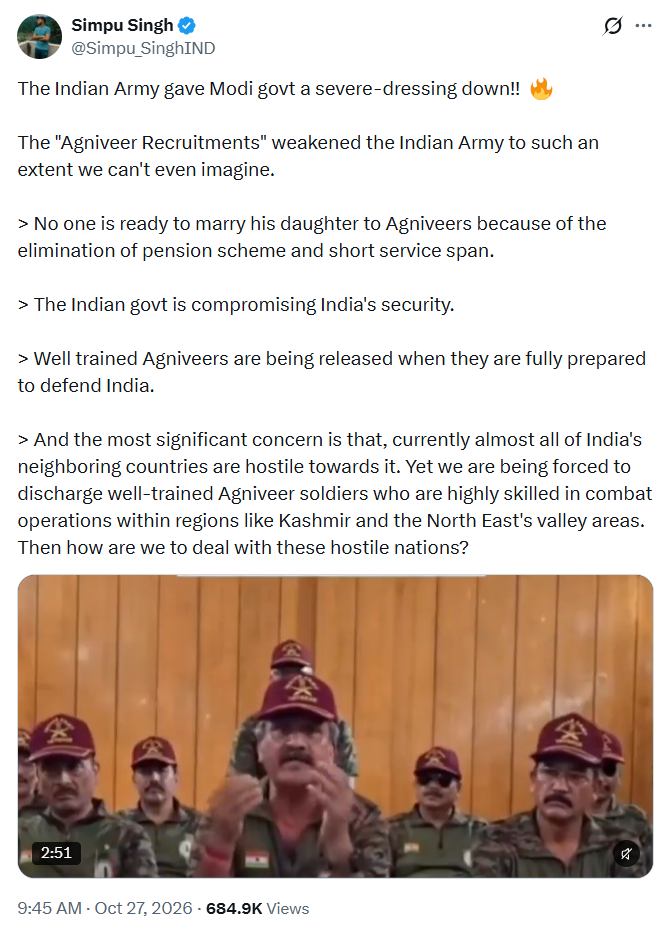
A video is being shared on social media with the claim that the Indian Army has launched a front against the Modi government over the Agniveer scheme. CyberPeace Research found that all the individuals seen in the video are former military personnel associated with Uttarakhand Kranti Dal, a political party in Uttarakhand. The person addressing the press conference is retired Colonel Sunil Kotnala, the party’s national vice-president.
Claim
The video is being shared on X with an English caption claiming that the Indian Army has reprimanded the Modi government over the Agniveer scheme and other issues.
https://x.com/Simpu_SinghIND/status/2114933972870570140?s=20
Fact Check
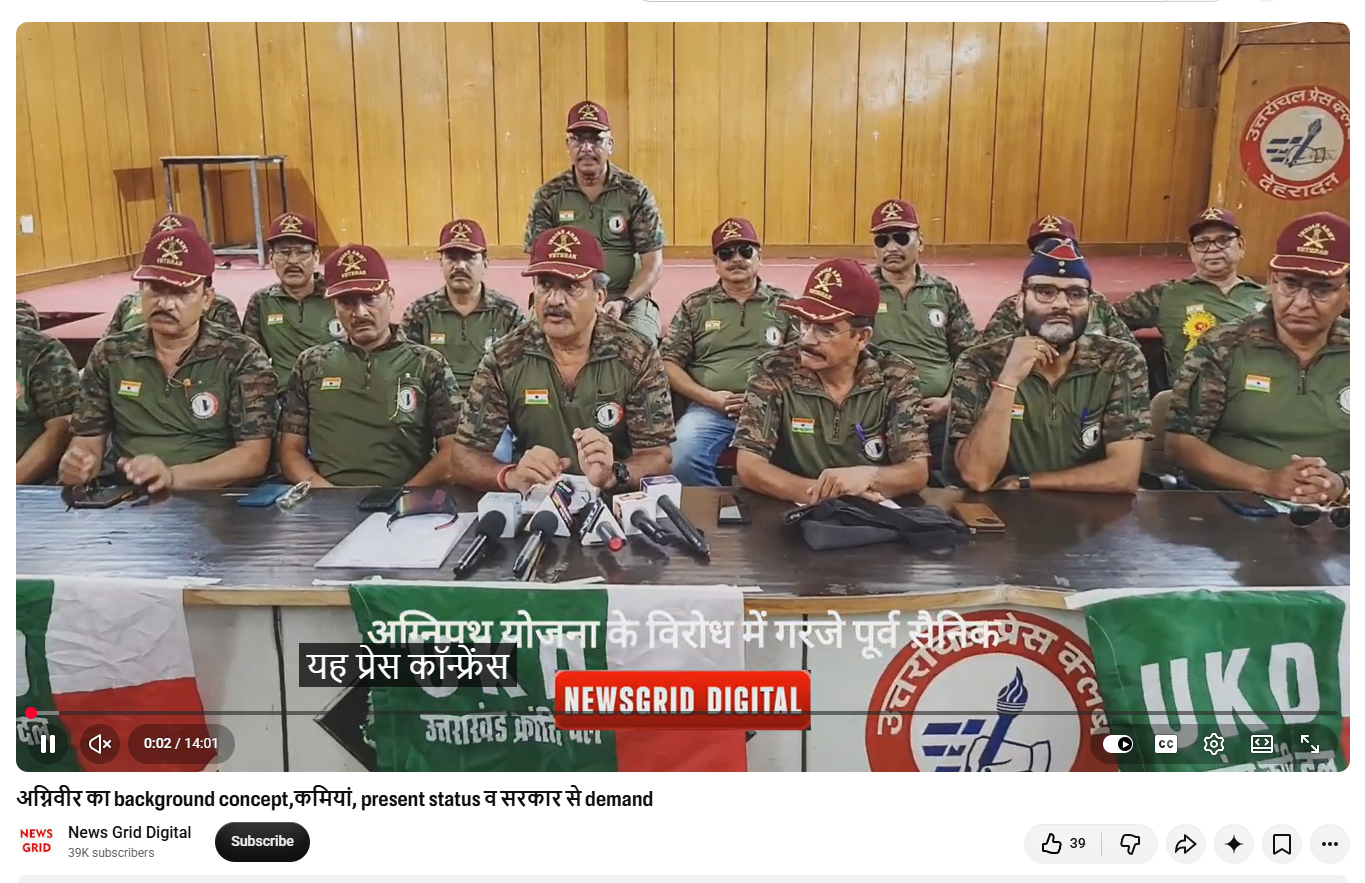
To verify the viral video claiming that the Indian Army has launched a front against the Modi government, we conducted a reverse image search using keyframes from the footage. This led us to a video uploaded on the YouTube account named News Grid Digital on August 22, 2026. It was a longer version of the viral video. According to the visuals and description of the video, the press conference was held by former military personnel associated with Uttarakhand Kranti Dal (UKD), a political party in Uttarakhand, at the Uttaranchal Press Club in Dehradun. The press conference addressed issues related to the Agniveer scheme.We also observed that the caps worn by all the individuals in the video bore the words “Indian Army Veteran,” indicating that they were retired military personnel.
https://www.youtube.com/watch?v=PU0TL590mso
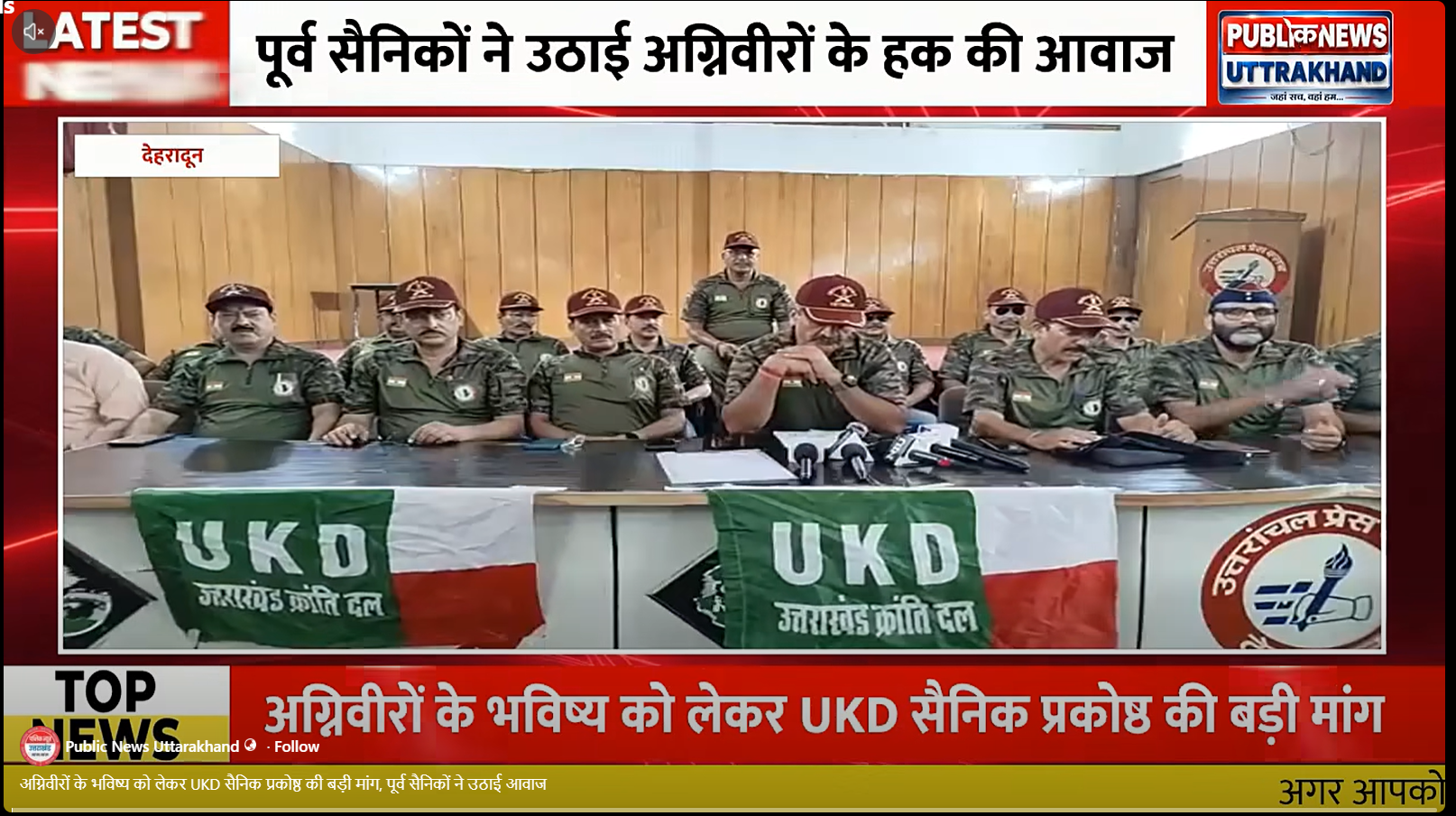
Meanwhile, we also found a video of the same press conference uploaded on August 22, 2026, on the Facebook account of a local media outlet in Uttarakhand. According to the information provided with the video, the press conference was organised by the soldiers’ wing of Uttarakhand Kranti Dal (UKD). The press conference was addressed by the party’s national vice-president, retired Colonel Sunil Kotnala, who raised several issues concerning the first batch of Agniveers scheduled to leave military service in December and their rehabilitation.
https://www.facebook.com/reel/929185246900919
Conclusion
The evidence gathered during our research establishes that the viral video, shared with the claim that the Indian Army has launched a front against the Modi government, shows a press conference organised by the soldiers’ wing of a regional political party in Uttarakhand. All the individuals seen in the video are former military personnel.

Related Blogs
Executive Summary
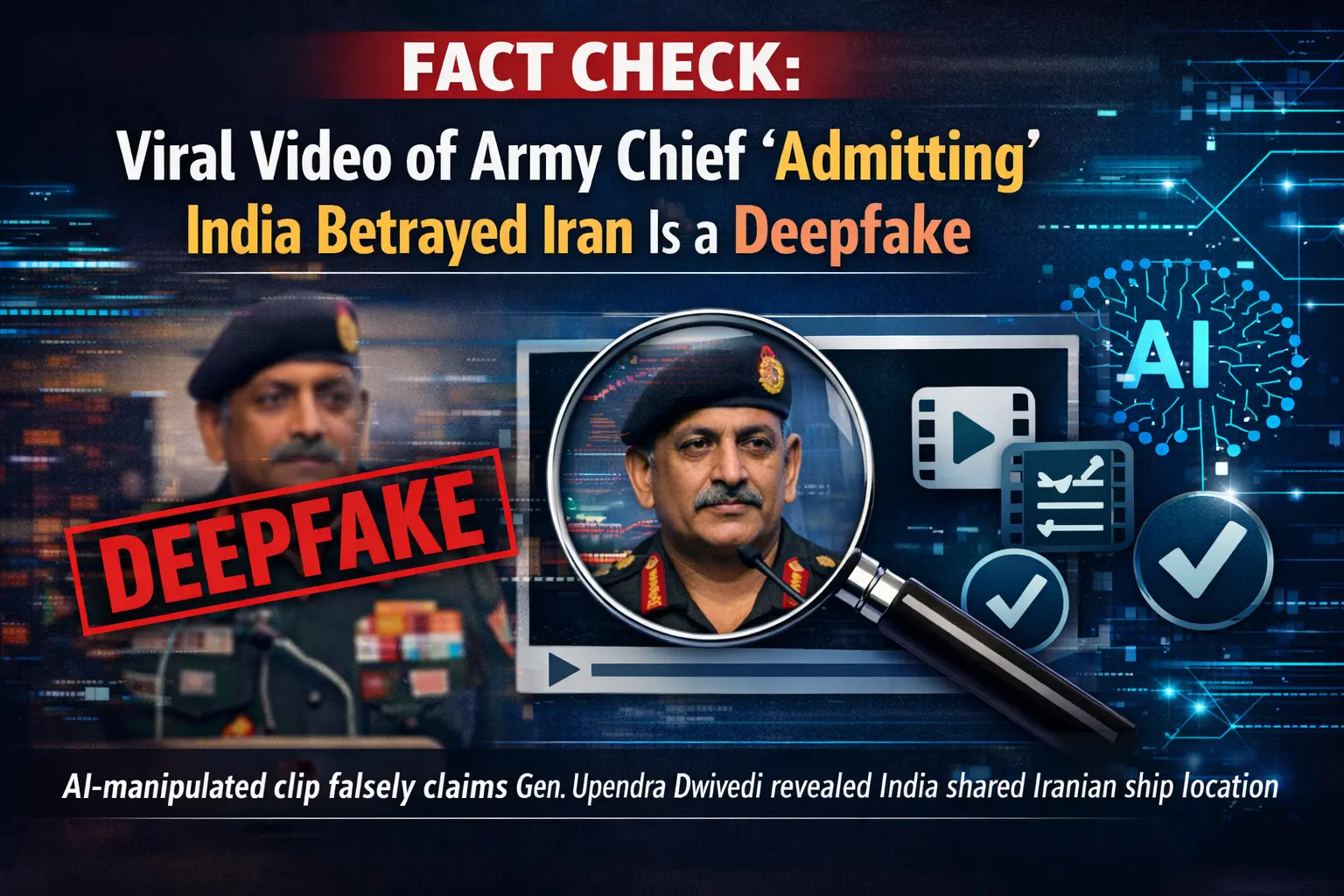
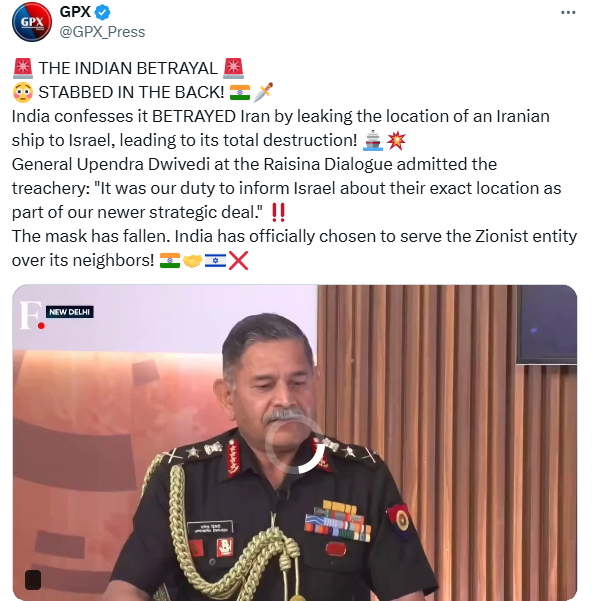
A 57-second video featuring India’s Chief of Army Staff Upendra Dwivedi is widely circulating on social media. The clip is being shared with the claim that the Army chief admitted India had “betrayed” Iran by providing the location of an Iranian naval ship to Israel, allegedly leading to its destruction The video is spreading amid heightened tensions in West Asia involving United States, Israel, and Iran. According to posts sharing the claim, the Iranian naval vessel IRIS Dena, which had participated in a naval event in Visakhapatnam and was returning to Iran with around 130 personnel onboard, was torpedoed by a US submarine near the southern coast of Sri Lanka on March 4 while sailing in the Indian Ocean.
In the viral clip, the speaker—presented as the Indian Army chief—appears to say that India informed Israel about the exact location of the Iranian ship after it left Indian waters, describing Israel as a strategic ally and suggesting that the attack occurred in international waters. The clip also claims that India had no direct involvement in the alleged joint US-Israel torpedo strike.
However, research conducted by the CyberPeace found the claim to be false. Our research shows that the video does not contain a genuine statement from Army Chief Upendra Dwivedi and is in fact a manipulated clip.
Claim
On X (formerly Twitter), a page named GPX (@GPX_Press) shared the video on March 9 with the caption: “India confesses it BETRAYED Iran by leaking the location of an Iranian ship to Israel, leading to its total destruction!”
Fact Check
During the verification process, researchers noticed a ticker in the viral video reading “Raisina Dialogue 2026 × Firstpost.” Using this clue, we conducted a keyword search on YouTube and located a video uploaded by Firstpost on March 7 titled “India’s Army Chief Speaks on Op Sindoor, Pakistan and Future of Warfare | Raisina Dialogue 2026.”
In the 21-minute interview, Army Chief Upendra Dwivedi is seen speaking with strategic affairs expert Harsh V. Pant. According to the video description, the discussion focuses on lessons from Operation Sindoor and the evolving nature of modern warfare.

The viral clip appears to be taken from this interview. However, throughout the conversation, Dwivedi does not mention any conflict involving the United States, Israel, and Iran, nor does he refer to the sinking of an Iranian naval ship in the Indian Ocean. This indicates that the circulating clip has been edited and misrepresented to create a misleading narrative.
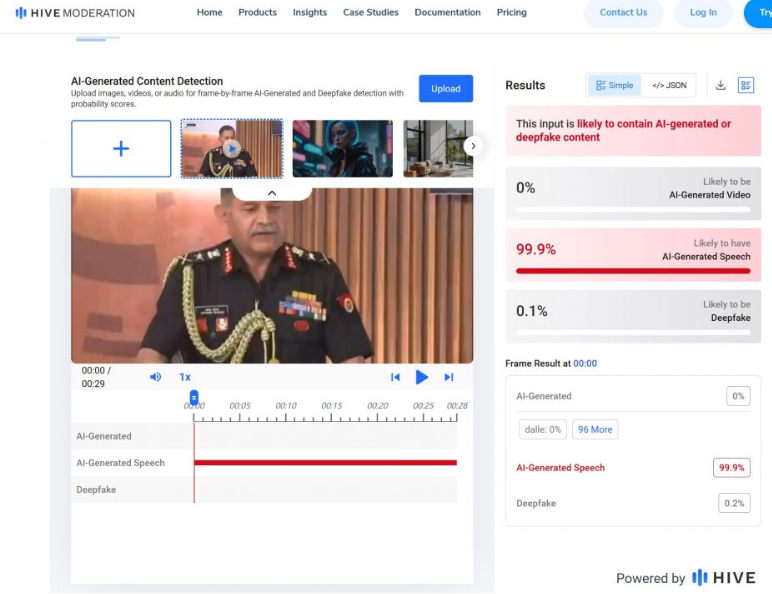
For additional verification, the viral video was analyzed using the AI detection tool Hive Moderation. The results suggested a 99.9% probability that the speech in the clip was generated using AI, indicating manipulation of the original footage.
Conclusion
The research makes it clear that the viral video does not reflect an authentic statement by India’s Army Chief Upendra Dwivedi. The clip has been altered and the audio appears to be AI-generated. In other words, the circulating video is a deepfake being shared with a misleading claim.

Introduction
In an age where the lines between truth and fiction blur with an alarming regularity, we stand at the precipice of a new and dangerous era. Amidst the wealth of information that characterizes the digital age, deep fakes and disinformation rise like ghosts, haunting our shared reality. These manifestations of a technological revolution that promised enlightenment instead threaten the foundations upon which our societies are built: trust, truth, and collective understanding.
These digital doppelgängers, enabled by advanced artificial intelligence, and their deceitful companion—disinformation—are not mere ghosts in the machine. They are active agents of chaos, capable of undermining the core of democratic values, human rights, and even the safety of individuals who dare to question the status quo.
The Perils of False Narratives in the Digital Age
As a society, we often throw around terms such as 'fake news' with a mixture of disdain and a weary acceptance of their omnipresence. However, we must not understate their gravity. Misinformation and disinformation represent the vanguard of the digital duplicitous tide, a phenomenon growing more complex and dire each day. Misinformation, often spread without malicious intent but with no less damage, can be likened to a digital 'slip of the tongue' — an error in dissemination or interpretation. Disinformation, its darker counterpart, is born of deliberate intent to deceive, a calculated move in the chess game of information warfare.
Their arsenal is varied and ever-evolving: from misleading memes and misattributed quotations to wholesale fabrications in the form of bogus news sites and carefully crafted narratives. Among these weapons of deceit, deepfakes stand out for their audacity and the striking challenge they pose to the concept of seeing to believe. Through the unwelcome alchemy of algorithms, these video and audio forgeries place public figures, celebrities, and even everyday individuals into scenarios they never experienced, uttering words they never said.
The Human Cost: Threats to Rights and Liberties
The impact of this disinformation campaign transcends inconvenience or mere confusion; it strikes at the heart of human rights and civil liberties. It particularly festers at the crossroads of major democratic exercises, such as elections, where the right to a truthful, unmanipulated narrative is not just a political nicety but a fundamental human right, enshrined in Article 25 of the International Convention on Civil and Political Rights (ICCPR).
In moments of political change, whether during elections or pivotal referenda, the deliberate seeding of false narratives is a direct assault on the electorate's ability to make informed decisions. This subversion of truth infects the electoral process, rendering hollow the promise of democratic choice.
This era of computational propaganda has especially chilling implications for those at the frontline of accountability—journalists and human rights defenders. They find themselves targets of character assassinations and smear campaigns that not only put their safety at risk but also threaten to silence the crucial voices of dissent.
It should not be overlooked that the term 'fake news' has, paradoxically, been weaponized by governments and political entities against their detractors. In a perverse twist, this label becomes a tool to shut down legitimate debate and shield human rights violations from scrutiny, allowing for censorship and the suppression of opposition under the guise of combatting disinformation.
Deepening the societal schisms, a significant portion of this digital deceit traffic in hate speech. Its contents are laden with xenophobia, racism, and calls to violence, all given a megaphone through the anonymity and reach the internet so readily provides, feeding a cycle of intolerance and violence vastly disproportionate to that seen in traditional media.
Legislative and Technological Countermeasures: The Ongoing Struggle
The fight against this pervasive threat, as illustrated by recent actions and statements by the Indian government, is multifaceted. Notably, Union Minister Rajeev Chandrasekhar's commitment to safeguarding the Indian populace from the dangers of AI-generated misinformation signals an important step in the legislative and policy framework necessary to combat deepfakes.
Likewise, Prime Minister Narendra Modi's personal experience with a deepfake video accentuates the urgency with which policymakers, technologists, and citizens alike must view this evolving threat. The disconcerting experience of actor Rashmika Mandanna serves as a sobering reminder of the individual harm these false narratives can inflict and reinforces the necessity of a robust response.
In their pursuit to negate these virtual apparitions, policymakers have explored various avenues ranging from legislative action to penalizing offenders and advancing digital watermarks. However, it is not merely in the realm of technology that solutions must be sought. Rather, the confrontation with deepfakes and disinformation is also a battle for the collective soul of societies across the globe.
As technological advancements continue to reshape the battleground, figures like Kris Gopalakrishnan and Manish Gangwar posit that only a mix of rigorous regulatory frameworks and savvy technological innovation can hold the front line against this rising tidal wave of digital distrust.
This narrative is not a dystopian vision of a distant future - it is the stark reality of our present. And as we navigate this new terrain, our best defenses are not just technological safeguards, but also the nurturing of an informed and critical citizenry. It is essential to foster media literacy, to temper the human inclination to accept narratives at face value and to embolden the values that encourage transparency and the robust exchange of ideas.
As we peer into the shadowy recesses of our increasingly digital existence, may we hold fast to our dedication to the truth, and in doing so, preserve the essence of our democratic societies. For at stake is not just a technological arms race, but the very quality of our democratic discourse and the universal human rights that give it credibility and strength.
Conclusion
In this age of digital deceit, it is crucial to remember that the battle against deep fakes and disinformation is not just a technological one. It is also a battle for our collective consciousness, a battle to preserve the sanctity of truth in an era of falsehoods. As we navigate the labyrinthine corridors of the digital world, let us arm ourselves with the weapons of awareness, critical thinking, and a steadfast commitment to truth. In the end, it is not just about winning the battle against deep fakes and disinformation, but about preserving the very essence of our democratic societies and the human rights that underpin them.
Introduction
There has been a recent surge of misinformation all over social media, claiming that every Indian ought to receive an allowance of ₹2,000 under some "Prime Minister's scheme." The message, which has been circulated far and wide on almost all platforms-WhatsApp, Facebook, Telegram, etc.-has urged users to click on an unfamiliar link to claim the allowance in their bank accounts.
It would seem like a very attractive offer, especially at a time when common citizens are coping with rising costs of living. But upon further examination, it turns out to be an outright online scam. NewsMobile fact-checked the claim and confirmed that no such scheme exists. Thus, the message circulating is a scam that aims to mislead common citizens.
Such an incident is not isolated. Over the years, fraudulent posts falsely offering benefits in the name of the government or well-known brands have been on the rise. These scams are not just about misinformation-they take advantage of trust, lure people into clicking, and sharing personal info that poses serious risks to financial and personal security.
Anatomy of the Viral PM Scheme Scam
The viral message received attention and was written in Hindi. It read:
“सभी नागरिकों को PM योजना के तहत दो हज़ार रुपए का भत्ता प्रदान किया गया है अपने bank खाते में प्राप्त करने के लिए click करें."
(English: “All citizens have been provided an allowance of ₹2000 under the PM scheme. Click to receive it in your bank account.”)
Beneath this was an odd link that, upon clicking through investigation, turned out to be not working and invalid. An examination of government sites, official handle accounts, and other such was done and no announcement for any such allowance was found.
This provides a neat explanation of a phishing attempt by which a scammer induces urgency and temptation in order to lure citizens into clicking a malicious link. While the link may no longer be active, it could very well have once redirected users to websites that harvest personal information such as Aadhaar numbers, bank details, or login credentials.
The Broader Problem: Fake Government Scheme Scams
Some scams have been exploiting the hoax gimmick of the ₹2,000 PM scheme into the wider trend. How do the con men work? They leverage the credibility of governmental initiatives to scam citizens. In the past, fake promises were made concerning free gas cylinders, cash allowances, subsidised rations, or even job opportunities.
During the COVID times, for instance, fake vaccination registration links and so-called relief scheme offers went viral, preying on the fears and vulnerabilities of ill-informed citizens. Likewise, false schemes associated with reputed companies such as Amazon, Flipkart, TATA Group, and Hermès have also gone viral, promising free gifts or allowances.
The one thing that makes scams associated with the government very dangerous is the exploitation of people's trust in authority. The common citizen is predisposed to believe the PM scheme or the Government Yojana because of the social credibility accorded to these announcements.
How These Scams Operate
These are scams where the creators intend deception and in the end, gain from defrauding a person. Fraudsters first create clickbait messages that are duly recorded to resemble official communications and often bear the government logos and bear a mix of Hindi-English text with the phrase "Pradhan Mantri Yojana" to make it sound legitimate. The messages then redirect users to bogus websites that really look very much like the government's portals, asking sick persons to enter personal information. Finally, as soon as they have obtained this data, the scammer uses it for identity theft, bank fraud, or sells it on the dark web. Social engineering does play a large role in these scams: here terms of urgency like limited time, last chance, and whatnot get created with the aim of pushing the targets to act on these without thinking. For maximum reach, victims are also asked to forward the message to their friends and family, causing the scammer to go viral across WhatsApp, Facebook, and Telegram.
Risks to Citizens
Risks are serious and manifold to falling prey to these scams. The immediate kind of risk is financial loss: divulging bank account details, an OTP, or credentials may constitute providing attackers the power to drain funds therefrom. Another prevalent kind of identity theft occurs through hijacked Aadhaar, PAN, or personal information that subsequently finds its way into fake loans or SIM activations. Apart from monetary losses, opening malicious links might also make devices infected with spyware or ransomware, thereby invading privacy and security. Victims tend to experience a form of psychological trauma due to feelings of betrayal or humiliation of being deceived, thus discouraging them from reporting, which in turn enables such scams to go undetected.
Best Practices for Prevention
It is prudent to exercise good cyber hygiene and be on the lookout for such scams. The citizens should verify each statement against government-authorised websites like https://www.mygov.in or through press statements of the ministries prior to believing it. One should not click on suspicious links offering money, gifts, or subsidies. Red flags like poor grammar, an unofficial domain name, or too-good-to-be-true offers can enable one to identify the scam in time. Two-factor authentication, antivirus software updates, and securing devices can drastically lower the threat from the technical angle. Equally important is the reporting of issues: always report any suspicious activities to cybercrime.gov.in or to the nearest cyber cell so that the authorities may trace some pattern and issue advisories accordingly. Finally, one can do some good by sharing verified fact checks within their circles to build added strength against misinformation and scams.
Policy and Community Role
While individual awareness is important, collective action must be taken against these fake government scheme scams. Platforms such as WhatsApp, Facebook, and X (Twitter) must tune up fraudsters' message detection mechanisms. In the meantime, Government Bodies must alert citizens periodically on new scams through their official handles/schemes and through community outreach.
Civil society and fact-checking agencies play an important role in dispelling frequently viral hoaxes. This work must be amplified to reach people's consciousness in regional languages for the very reason that in these terrain zones, forwarded messages are much more trusted.
Conclusion
The viral ₹2,000 PM scheme scam is a reminder that everything that is viral online cannot be trusted in toto. The scammers of the day are inventing newer scams to gain trust, spread misinformation, and extort innocent citizens.
The best defence will be awareness and alertness. Citizens must verify any claims through official channels before clicking on a link, sharing their data, or even acting upon it in any way. With proper cyber hygiene and avoiding suspicious messages, we can counterattack by reducing the percentage of impact that these scams may have and collaboratively build a secure digital environment.
As India pushes itself further into a digital ecosystem, both empowering and being resilient to cyber fraud is not a state of individual security, but a national agenda.
References
- https://www.newsmobile.in/nm-fact-checker/fact-check-viral-post-claiming-pm-scheme-offering-rs-2000-allowance-is-a-scam/
- https://timesofindia.indiatimes.com/business/financial-literacy/investing/beware-of-deepfake-scams-fraudsters-using-ai-videos-to-push-schemes-promising-unrealistic-returns-red-flags-to-watch-out-for/articleshow/124085155.cms
- https://www.business-standard.com/finance/personal-finance/invest-rs-21-000-to-earn-rs-20-lakh-monthly-viral-videos-of-fm-are-fake-125082000517_1.html
- https://www.pib.gov.in/PressReleasePage.aspx?PRID=2124728
