
#FactCheck: Video of Muslim Lawmakers Offering Namaz Inside Jordanian Parliament Falsely Shared as Israeli Parliament
Executive Summary
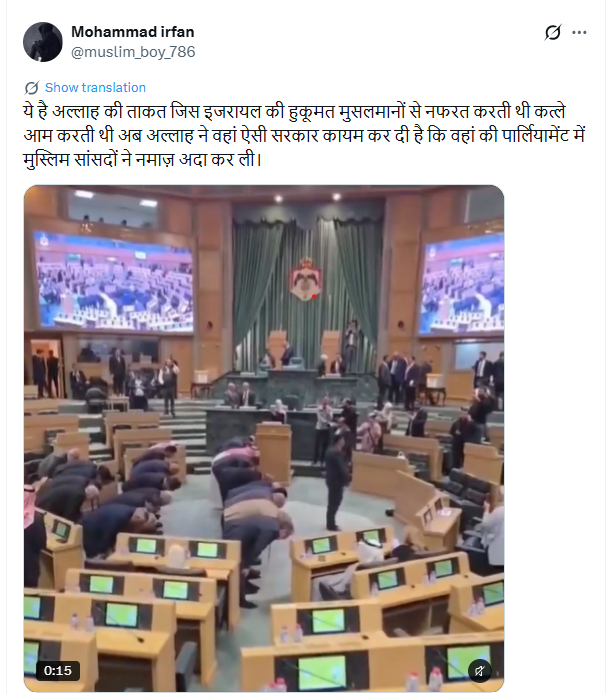
A video is going viral on social media with the claim that Muslim lawmakers offered namaz inside the Israeli Parliament. CyberPeace Research found that the video is not from Israel but from Jordan, where lawmakers offered namaz inside the parliamentary hall on November 3.
Claim:
The viral video is 22 seconds long and shows several people offering namaz inside a parliamentary hall. The video is being shared on X with a caption claiming that Muslim lawmakers offered namaz inside the Israeli Parliament. The caption reads: “This is the power of Allah. The Israeli government, which once hated Muslims and carried out massacres, has now been given such a government by Allah that Muslim lawmakers have offered namaz inside its Parliament.”
https://x.com/muslim_boy_786/status/2117935219126710778
Fact Check
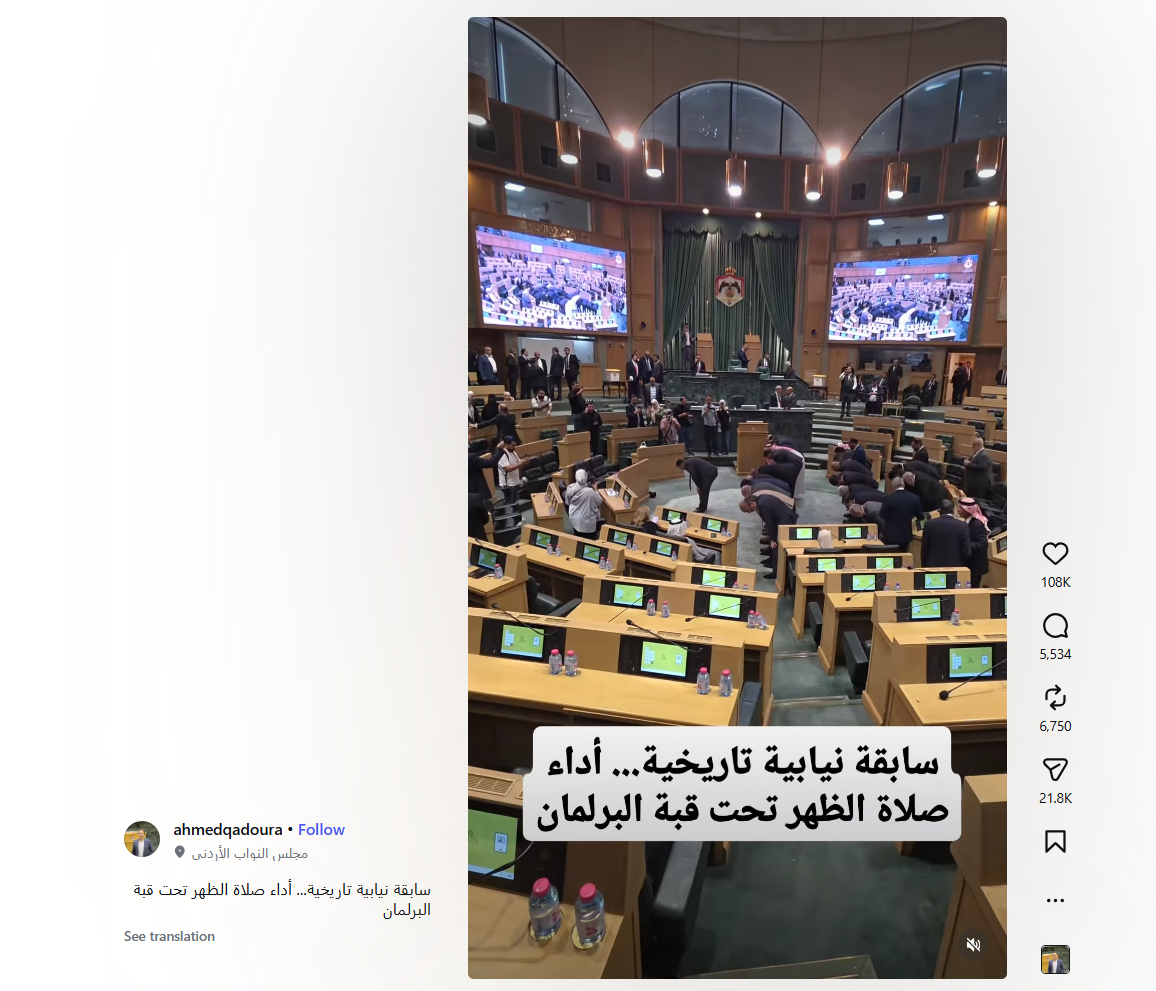
To verify the viral video claiming that Muslim lawmakers offered namaz inside the Israeli Parliament, we conducted a reverse image search using keyframes from the video. During the search, we found the same video posted on November 3, 2026, on the Instagram account of Ahmed Qadou ra, a journalist from Jordan.
https://www.instagram.com/reels/DfRtS33MWUT/
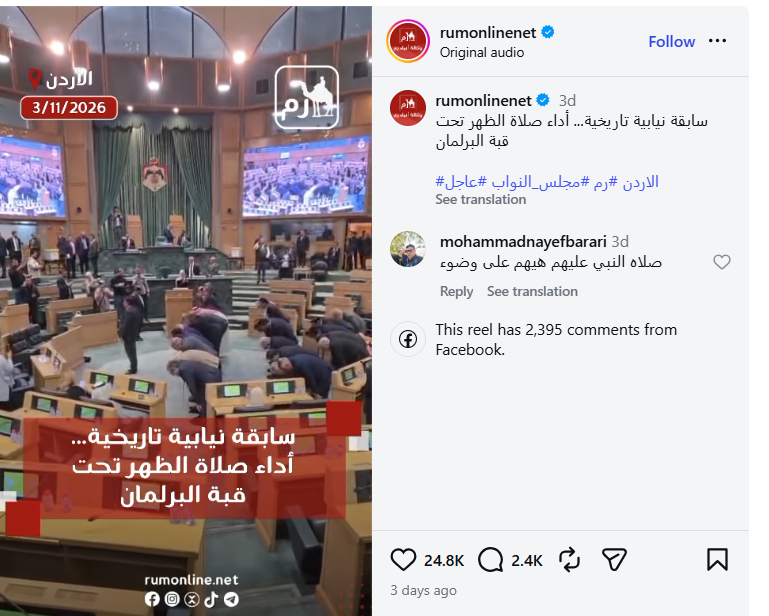
Additionally, we found the same video uploaded on November 3, 2026, on the Instagram account of another Jordanian media outlet. The accompanying caption also stated that the video showed lawmakers offering the Dhuhr (afternoon) prayer inside the Jordanian Parliament.
https://www.instagram.com/p/DfRlL_dopuc/
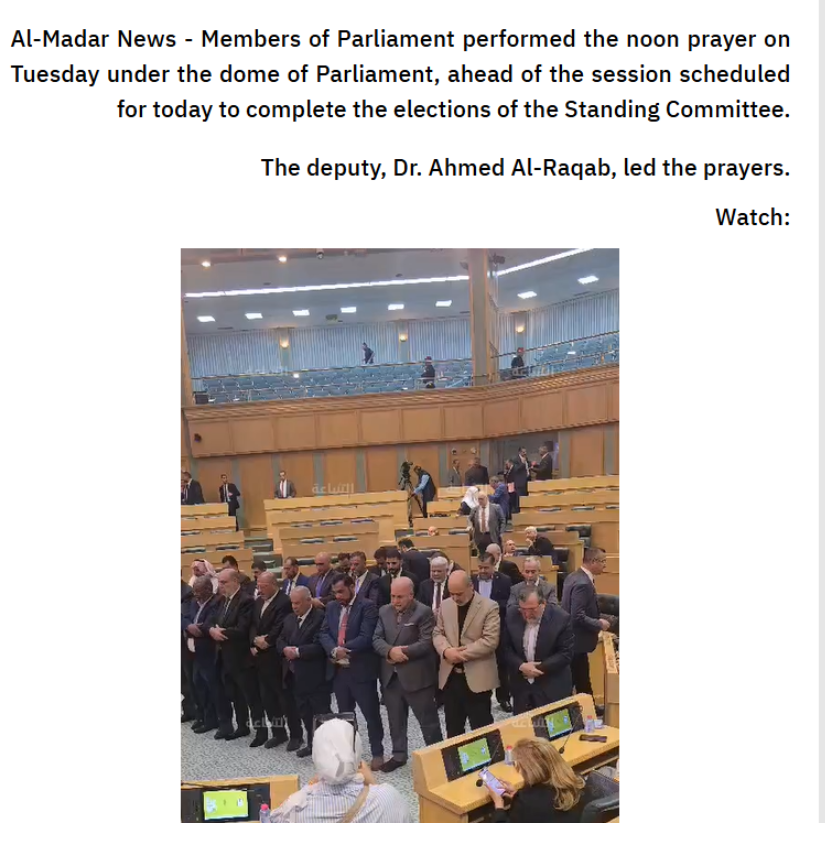
During our research, we also found a report published on another Jordanian media website featuring additional photographs of the incident. The report stated that on November 3, before the parliamentary session, lawmakers offered namaz inside the Jordanian Parliament under the leadership of Dr Ahmed Al-Raqab, a member of the Jordanian Parliament.
Conclusion
The evidence gathered during our research establishes that the viral video being shared with the claim that Muslim lawmakers offered namaz inside the Israeli Parliament is actually from Jordan and shows lawmakers offering prayers inside the Jordanian Parliament.

Related Blogs

Introduction
The unprecedented rise of social media, challenges with regional languages, and the heavy use of messaging apps like WhatsApp have all led to an increase in misinformation in India. False stories spread quickly and can cause significant harm, like political propaganda and health-related mis/misinformation. Programs that teach people how to use social media responsibly and attempt to check facts are essential, but they do not always connect with people deeply. Reading stories, attending lectures, and using tools that check facts are standard passive learning methods used in traditional media literacy programs.
Adding game-like features to non-game settings is called "gamification," it could be a new and interesting way to answer this question. Gamification involves engaging people by making them active players instead of just passive consumers of information. Research shows that interactive learning improves interest, thinking skills, and memory. People can learn to recognise fake news safely by turning fact-checking into a game before encountering it in real life. A study by Roozenbeek and van der Linden (2019) showed that playing misinformation games can significantly enhance people's capacity to recognise and avoid false information.
Several misinformation-related games have been successfully implemented worldwide:
- The Bad News Game – This browser-based game by Cambridge University lets players step into the shoes of a fake news creator, teaching them how misinformation is crafted and spread (Roozenbeek & van der Linden, 2019).
- Factitious – A quiz game where users swipe left or right to decide whether a news headline is real or fake (Guess et al., 2020).
- Go Viral! – A game designed to inoculate people against COVID-19 misinformation by simulating the tactics used by fake news peddlers (van der Linden et al., 2020).
For programs to effectively combat misinformation in India, they must consider factors such as the responsible use of smartphones, evolving language trends, and common misinformation patterns in the country. Here are some key aspects to keep in mind:
- Vernacular Languages
There should be games in Hindi, Tamil, Bengali, Telugu, and other major languages since that is how rumours spread in different areas and diverse cultural contexts. AI voice conversation and translation can help reduce literacy differences. Research shows that people are more likely to engage with and trust information in their native language (Pennycook & Rand, 2019).
- Games Based on WhatsApp
Interactive tests and chatbot-powered games can educate consumers directly within the app they use most frequently since WhatsApp is a significant hub for false information. A game with a WhatsApp-like interface where players may feel like they are in real life, having to decide whether to avoid, check the facts of, or forward messages that are going viral could be helpful in India.
- Detecting False Information
As part of a mobile-friendly game, players can pretend to be reporters or fact-checkers and have to prove stories that are going viral. They can do the same with real-life tools like reverse picture searches or reliable websites that check facts. Research shows that doing interactive tasks to find fake news makes people more aware of it over time (Lewandowsky et al., 2017).
- Reward-Based Participation
Participation could be increased by providing rewards for finishing misleading challenges, such as badges, diplomas, or even incentives on mobile data. This might be easier to do if there are relationships with phone companies. Reward-based learning has made people more interested and motivated in digital literacy classes (Deterding et al., 2011).
- Universities and Schools
Educational institutions can help people spot false information by adding game-like elements to their lessons. Hamari et al. (2014) say that students are more likely to join and remember what they learn when there are competitive and interactive parts to the learning. Misinformation games can be used in media studies classes at schools and universities by using models to teach students how to check sources, spot bias, and understand the psychological tricks that misinformation campaigns use.
What Artificial Intelligence Can Do for Gamification
Artificial intelligence can tailor learning experiences to each player in false games. AI-powered misinformation detection bots could lead participants through situations tailored to their learning level, ensuring they are consistently challenged. Recent natural language processing (NLP) developments enable AI to identify nuanced misinformation patterns and adjust gameplay accordingly (Zellers et al., 2019). This could be especially helpful in India, where fake news is spread differently depending on the language and area.
Possible Opportunities
Augmented reality (AR) scavenger hunts for misinformation, interactive misinformation events, and educational misinformation tournaments are all examples of games that help fight misinformation. India can help millions, especially young people, think critically and combat the spread of false information by making media literacy fun and interesting. Using Artificial Intelligence (AI) in gamified treatments for misinformation could be a fascinating area of study in the future. AI-powered bots could mimic real-time cases of misinformation and give quick feedback, which would help students learn more.
Problems and Moral Consequences
While gaming is an interesting way to fight false information, it also comes with some problems that you should think about:
- Ethical Concerns: Games that try to imitate how fake news spreads must ensure players do not learn how to spread false information by accident.
- Scalability: Although worldwide misinformation initiatives exist, developing and expanding localised versions for India's varied language and cultural contexts provide significant challenges.
- Assessing Impact: There is a necessity for rigorous research approaches to evaluate the efficacy of gamified treatments in altering misinformation-related behaviours, keeping cultural and socio-economic contexts in the picture.
Conclusion
A gamified approach can serve as an effective tool in India's fight against misinformation. By integrating game elements into digital literacy programs, it can encourage critical thinking and help people recognize misinformation more effectively. The goal is to scale these efforts, collaborate with educators, and leverage India's rapidly evolving technology to make fact-checking a regular practice rather than an occasional concern.
As technology and misinformation evolve, so must the strategies to counter them. A coordinated and multifaceted approach, one that involves active participation from netizens, strict platform guidelines, fact-checking initiatives, and support from expert organizations that proactively prebunk and debunk misinformation can be a strong way forward.
References
- Deterding, S., Dixon, D., Khaled, R., & Nacke, L. (2011). From game design elements to gamefulness: defining "gamification". Proceedings of the 15th International Academic MindTrek Conference.
- Guess, A., Nagler, J., & Tucker, J. (2020). Less than you think: Prevalence and predictors of fake news dissemination on Facebook. Science Advances.
- Hamari, J., Koivisto, J., & Sarsa, H. (2014). Does gamification work?—A literature review of empirical studies on gamification. Proceedings of the 47th Hawaii International Conference on System Sciences.
- Lewandowsky, S., Ecker, U. K., & Cook, J. (2017). Beyond misinformation: Understanding and coping with the “post-truth” era. Journal of Applied Research in Memory and Cognition.
- Pennycook, G., & Rand, D. G. (2019). Fighting misinformation on social media using “accuracy prompts”. Nature Human Behaviour.
- Roozenbeek, J., & van der Linden, S. (2019). The fake news game: actively inoculating against the risk of misinformation. Journal of Risk Research.
- van der Linden, S., Roozenbeek, J., Compton, J. (2020). Inoculating against fake news about COVID-19. Frontiers in Psychology.
- Zellers, R., Holtzman, A., Rashkin, H., Bisk, Y., Farhadi, A., Roesner, F., & Choi, Y. (2019). Defending against neural fake news. Advances in Neural Information Processing Systems.

Introduction
In the digital entertainment world, OTT platforms have become highly popular and have attracted larger audiences. They offer a wide variety of entertaining content. However, there are certain concerns about depicting illicit or objectionable content on such platforms. The Indian Ministry of Information and Broadcasting (I&B) has been working on tackling issues like the availability of obscene content on online streaming platforms and other platforms. I&B Ministry has taken important steps to prevent the spread of such illicit or objectionable content.
The I&B Ministry has taken action against obscene and vulgar content on OTT platforms. A total 18 OTT platforms and several associated websites, apps, and social media handles have been blocked nationwide. The government has been in consistent talks with these platforms and issued several advisories, but they have not been adhered to. The decision was made after consultation with other ministries, domain experts, and industry bodies. The content allegedly obscene was found to depict nudity, sexual intercourse, and inappropriate sexual acts within societal contexts. The government states that it is the responsibility of platforms to ensure that content is not present in a vulgar fashion. Creativities do not necessarily mean promoting or propagating vulgar and sexual content.
Key Highlights of I&B Ministry Action against Obscene Content
On 14th March 2024, The Indian Ministry of Information and Broadcasting (I&B) announced the blocking of 18 OTT platforms, 19 Websites, 10 apps, and 57 social media handles for displaying obscene and vulgar content. Union Minister for Information & Broadcasting Shri Anurag Singh Thakur has announced the removal of 18 OTT platforms that published obscene and vulgar content, underscoring the responsibility of platforms to prevent the spread of such content. The decision was made under the Information Technology Act 2000 and in consultation with other Indian ministries and domain experts in media, entertainment, women's rights, and child rights.
List of Blocked OTT Platforms
OTT platforms that have been blocked are Dreams Films, Voovi, Yessma, Uncut Adda, Tri Flicks, X Prime, Neon X VIP, Besharams, Hunters, Rabbit, Xtramood, Nuefliks, MoodX, Mojflix, Hot Shots VIP, Fugi, Chikooflix, Prime Play.
It was highlighted that these OTT platforms, despite not being widely popular, have a significant viewership. One app has over 1 crore downloads, while two others have more than 50 lakh downloads on Google Play Store. These platforms also market their content through social media, with a combined followership of over 32 lakh.
Nature of content
The ministry reported that a significant portion of the content on social media platforms was obscene, vulgar, and demeaning, depicting nudity and sexual acts in inappropriate contexts like teacher-student relationships and incestuous family relationships. The content included sexual innuendos and prolonged pornographic scenes without any thematic or societal relevance. It was further stated that the content was found to be prima facie in violation of Section 67 and 67A of the Information & Technology Act, 2000, Section 292 of the Indian Penal Code and Section 4 of the Indecent Representation of Women (Prohibition) Act, 1986.
Way Forward
The press release by the ministry stated that “The Government of India remains committed to fostering the growth and development of the OTT industry. Several measures have been undertaken in this regard, including the introduction of the Inaugural OTT Award for Web Series at the 54th International Film Festival of India, collaboration with OTT platforms in the media and entertainment sector, and the establishment of a light touch regulatory framework with an emphasis on self-regulation under the IT Rules, 2021.”
This shows that the Indian government is dedicated to promoting the growth of the OTT industry but within certain checks or oversight mechanisms to prevent illicit or objectionable content on such platforms.
OTT Content and Regulatory Checks
Online content streaming on OTT platforms lacks regulatory checks, unlike films, which are reviewed and certified by a government-appointed board. The government has instructed streaming services to independently review content for obscenity and violence before it is made available online. There have been repeated instances where criticism has been raised about the illicit or violative depicted content in some OTT shows. This highlights the issue of checks and balances. The government has urged self-regulation on platforms, but the repeated instances of illicit content raise societal concerns. The Ministry of I&B is keen towards promoting ethical & moral standards of content that is being hosted on online OTT platforms.
Conclusion
The Ministry of I&B has taken a step and announced the shutdown of 18 OTT platforms that were engaged in depicting illicit content. This shows that the I&B Ministry is committed to promoting ethical online content. While legislative measures are required to prevent the spread of such illicit or violative content, joint efforts by the government, industry players, and civil society are critical to ensuring a secure and responsible digital environment for all users.
References
- https://pib.gov.in/PressReleaseIframePage.aspx?PRID=2014477
- https://www.thehindu.com/news/national/centre-bans-ott-platforms-websites-and-apps-over-obscene-and-vulgar-content/article67949819.ece
- https://economictimes.indiatimes.com/news/india/ib-ministry-blocks-18-ott-platforms-for-vulgar-content/articleshow/108485880.cms?from=mdr
- https://indianexpress.com/article/entertainment/information-and-broadcasting-ministry-blocks-18-ott-platforms-for-obscene-and-vulgar-content-9213749/
- https://www.storyboard18.com/ott-news/mib-blocks-18-ott-platforms-for-showing-obscene-and-vulgar-content-26400.htm

Executive Summary
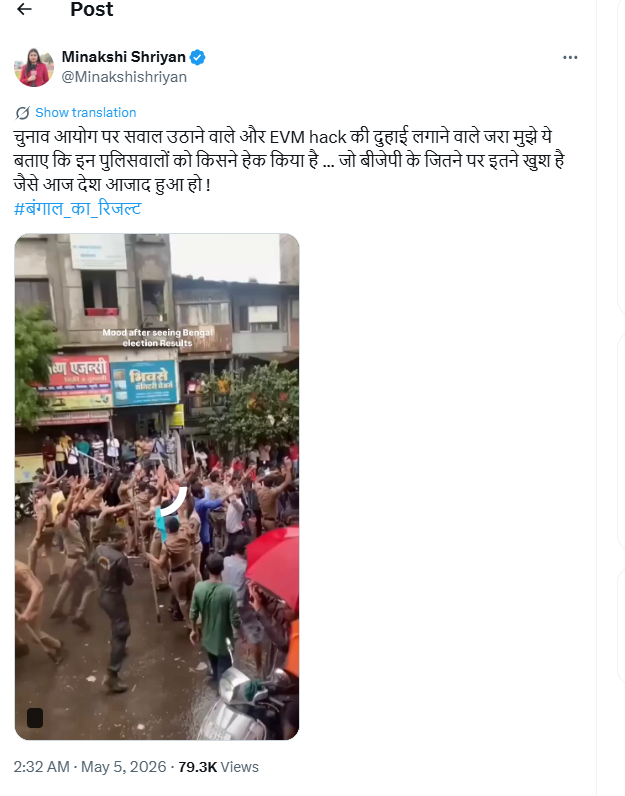
A video showing police personnel dancing on the streets along with civilians is going viral on social media. The clip is being shared with the claim that policemen in West Bengal were celebrating the defeat of Mamata Banerjee and the victory of the BJP.
Research by CyberPeace Research Wing found that the claim is misleading. The viral video is old and unrelated to the West Bengal elections.
Claim
An X user shared the video on April 26, 2026, alleging that police personnel were celebrating BJP’s victory. The post questioned those raising concerns over EVMs, suggesting that even police were openly rejoicing over the election outcome.
- https://x.com/Minakshishriyan/status/2051490074957930510
- https://archive.is/d81OT
Fact Check
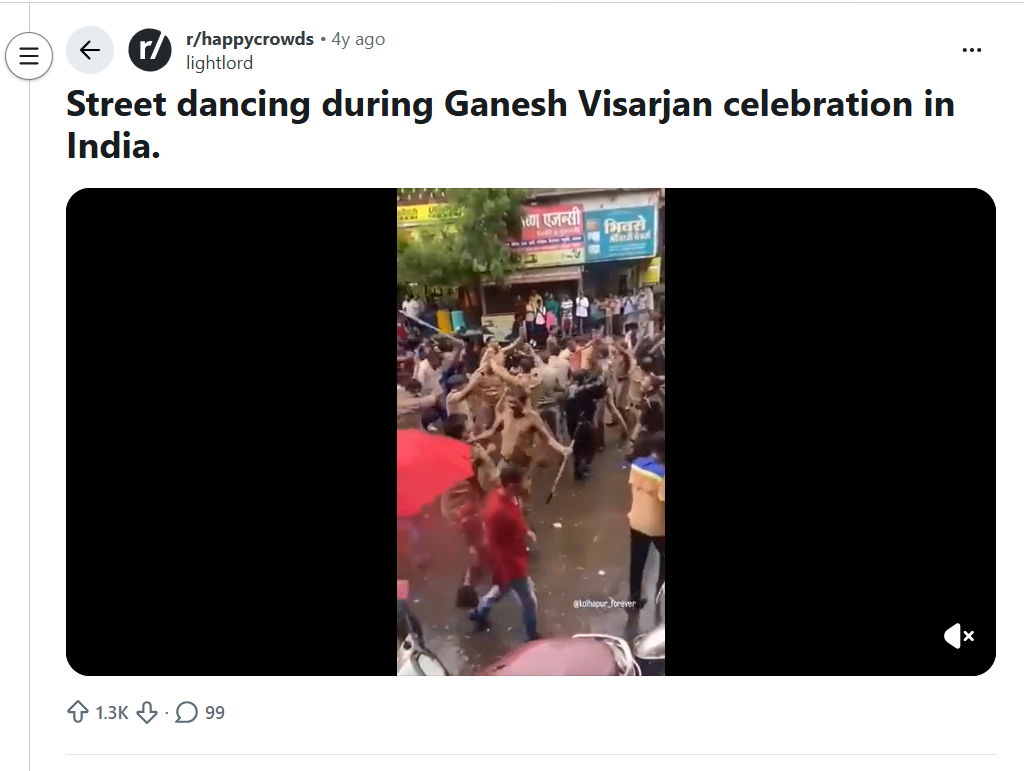
To verify the claim, we extracted keyframes from the viral video and conducted a reverse image search. This led us to a Reddit post dated September 13, 2022, where the same video was shared. The post described it as footage from Ganesh Visarjan celebrations in India, and several users in the comments identified the location as Maharashtra.
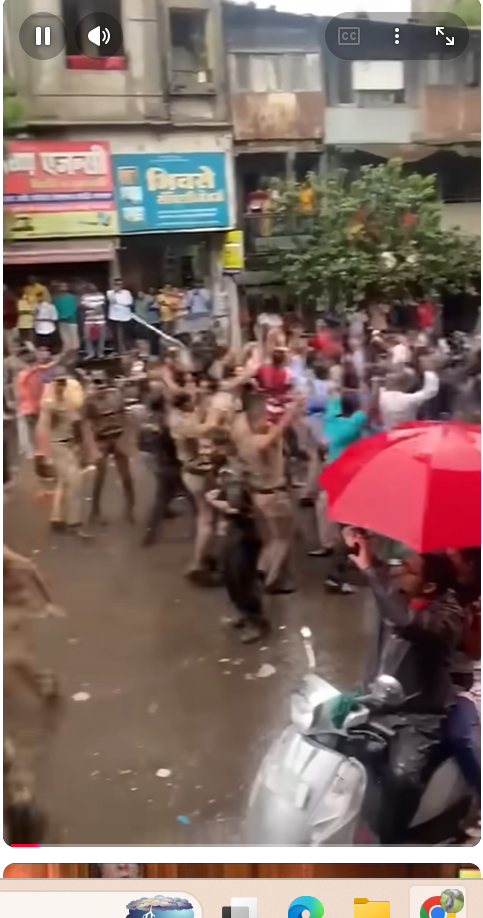
Further research led us to a YouTube channel “Yash Arate Vlogs,” which uploaded the same video on September 10, 2022. The description stated that the clip was recorded during Ganpati immersion celebrations in Kolhapur.
https://www.youtube.com/shorts/0_w5t-4rmTY
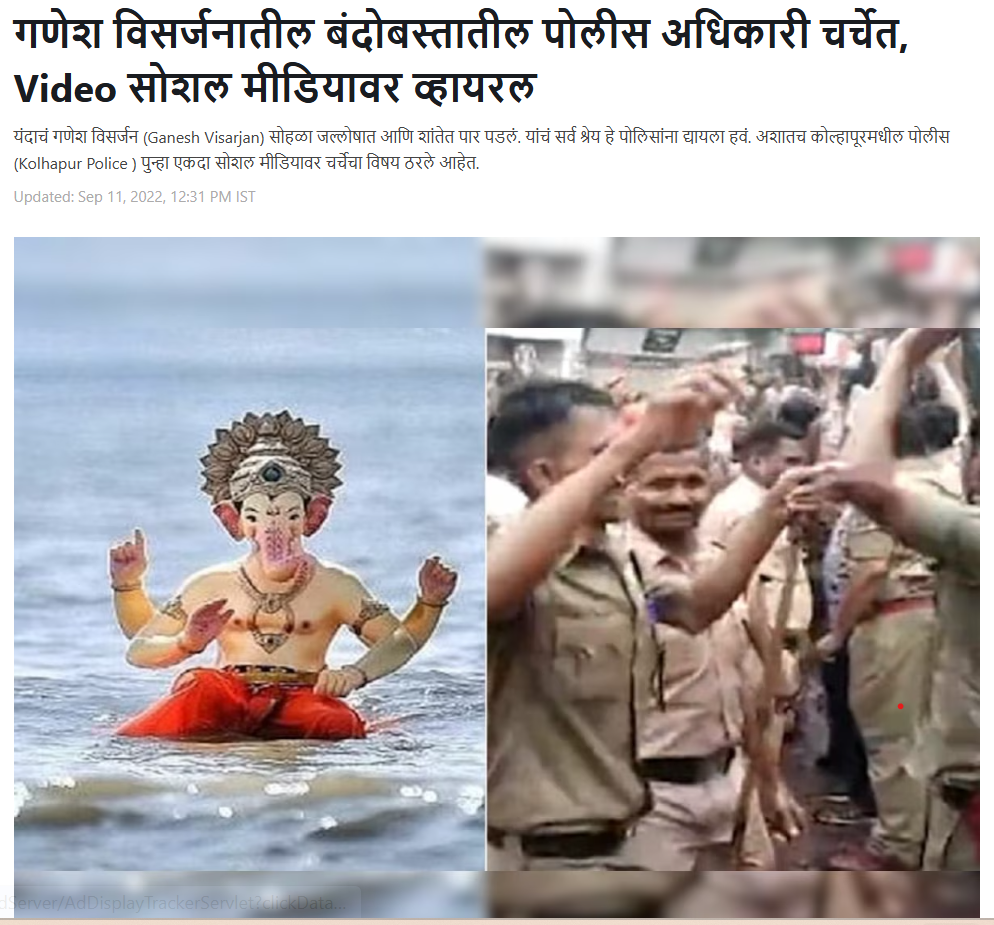
We also found media reports from September 2022 indicating that during Ganesh Visarjan in Kolhapur, loud music and festive atmosphere led even on-duty police personnel to briefly join the celebrations.
Conclusion
Our research confirms that the viral video does not show any post-election celebration in West Bengal. It is an old clip from Maharashtra, recorded during Ganesh Visarjan festivities, and is being falsely shared with a misleading political claim.
