
#FactCheck: US Senator Richard Blumenthal Did Not Call India a “Failed State”; Viral Statement Is Misleading
Executive Summary
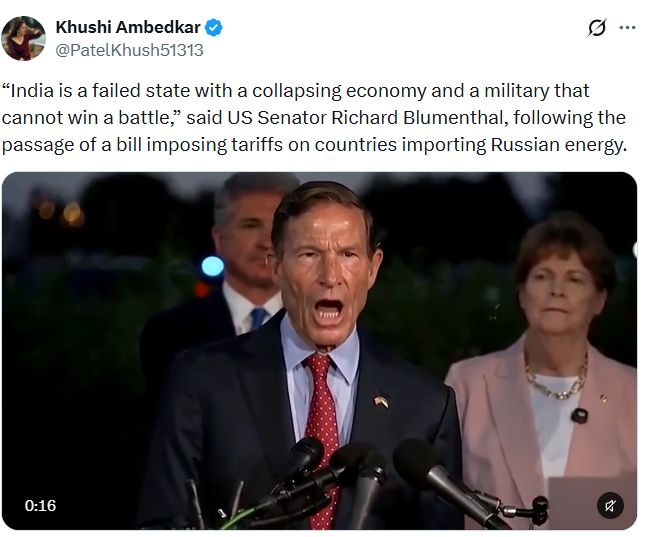
A statement attributed to US Senator Richard Blumenthal is going viral on social media, claiming that he described India as a “failed state” with a collapsing economy and a military that cannot win any battle. The statement is being linked to the passage of a bill imposing tariffs on countries importing Russian energy.
CyberPeace Research found that US Senator Richard Blumenthal did not make the viral statement describing India as a “failed state.” Blumenthal had expressed concerns over India and China purchasing Russian oil and gas, but the remarks attributed to him in the viral post do not match his actual statements. Therefore, the viral claim is misleading.
Claim
A social media user shared a statement attributed to US Senator Richard Blumenthal on X, claiming that he said, “India is a failed state with a collapsing economy and a military that cannot win a battle.” The statement is being portrayed as a remark made following the passage of a bill imposing tariffs on countries importing Russian energy.
https://x.com/PatelKhush51313/status/2112099213802869021?s=20
Fact Check
To verify the viral claim, we searched for relevant keywords but did not find any credible media reports supporting it.
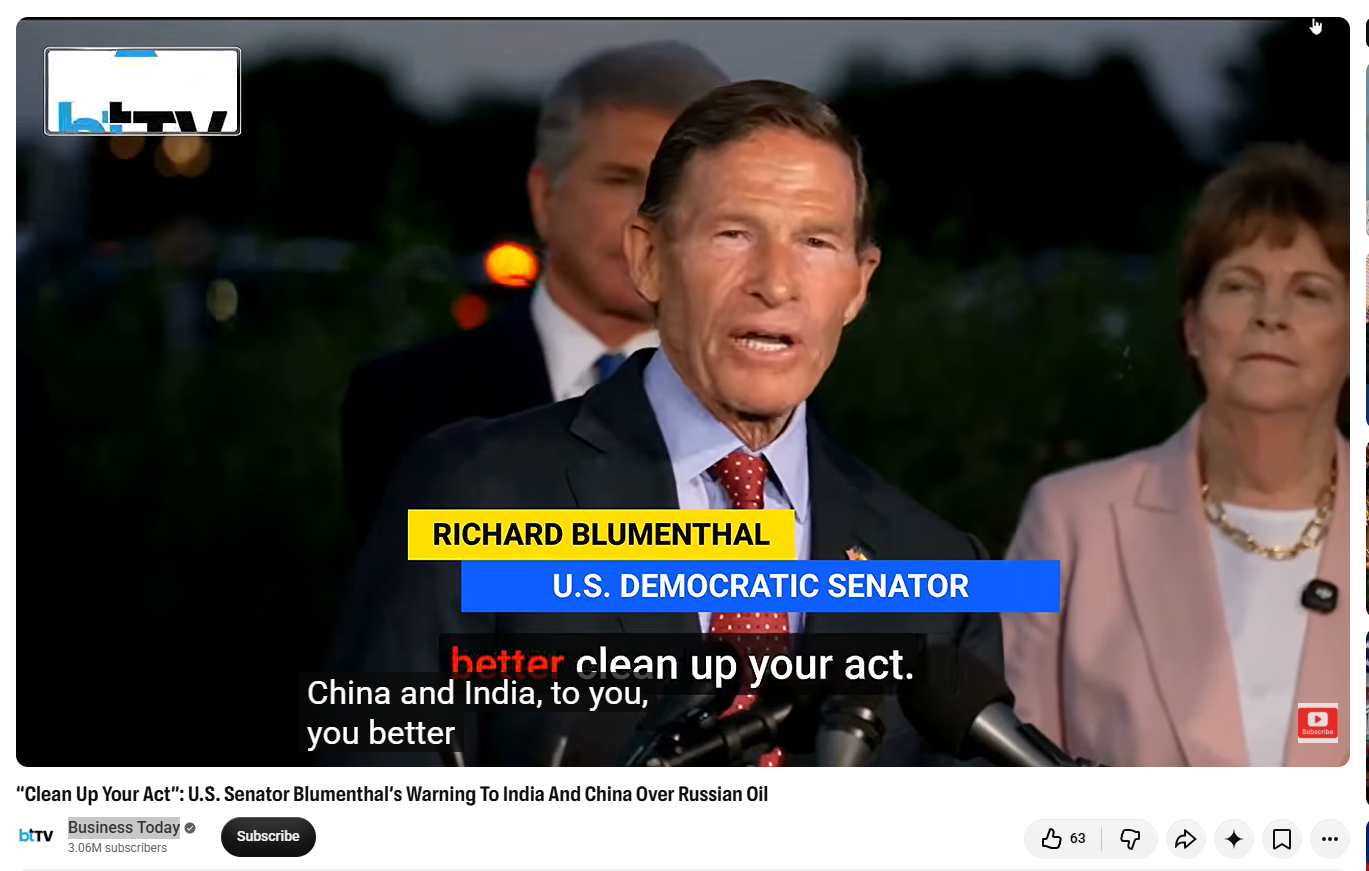
As the next step in our research, we found the original video published on Business Today's YouTube channel on September 17, 2026. In the video, US Senator Richard Blumenthal can be heard commenting on India and China purchasing Russian oil and gas. However, he did not make the statement about India's economy and military that is being attributed to him in the viral post. Therefore, the viral claim is misleading.
https://www.youtube.com/watch?v=L2W30xSSYHc
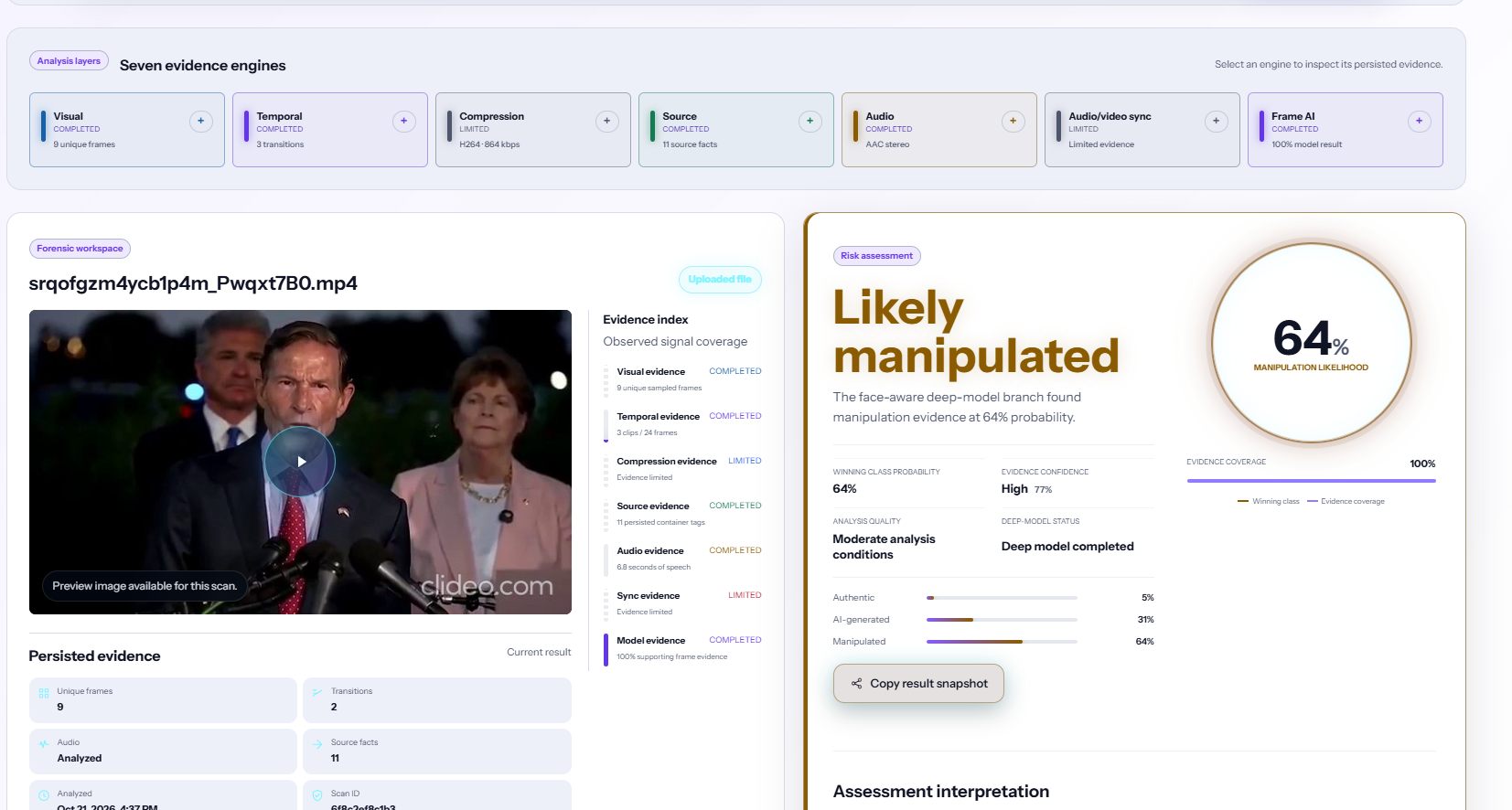
As the next step in our research, we scanned the viral video using the AI detection tool DETECT VIDEO AI. According to the results, the video is 64% AI-generated.
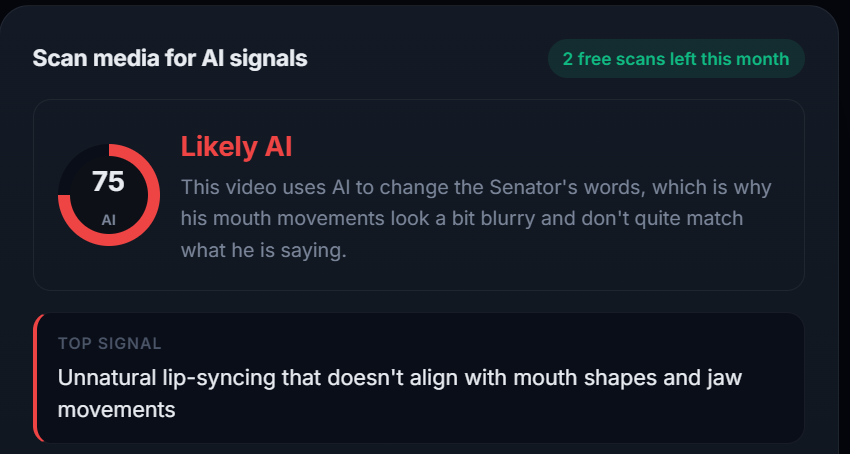
We scanned the viral video using another AI detection tool, HUMAN METER. According to the results, the video is 75% AI-generated.
Conclusion
Our research found that US Senator Richard Blumenthal did not make the viral statement describing India as a “failed state.” Blumenthal had expressed concerns over India and China purchasing Russian oil and gas, but the remarks attributed to him in the viral post do not match his actual statements. Therefore, the viral claim is misleading.

Related Blogs
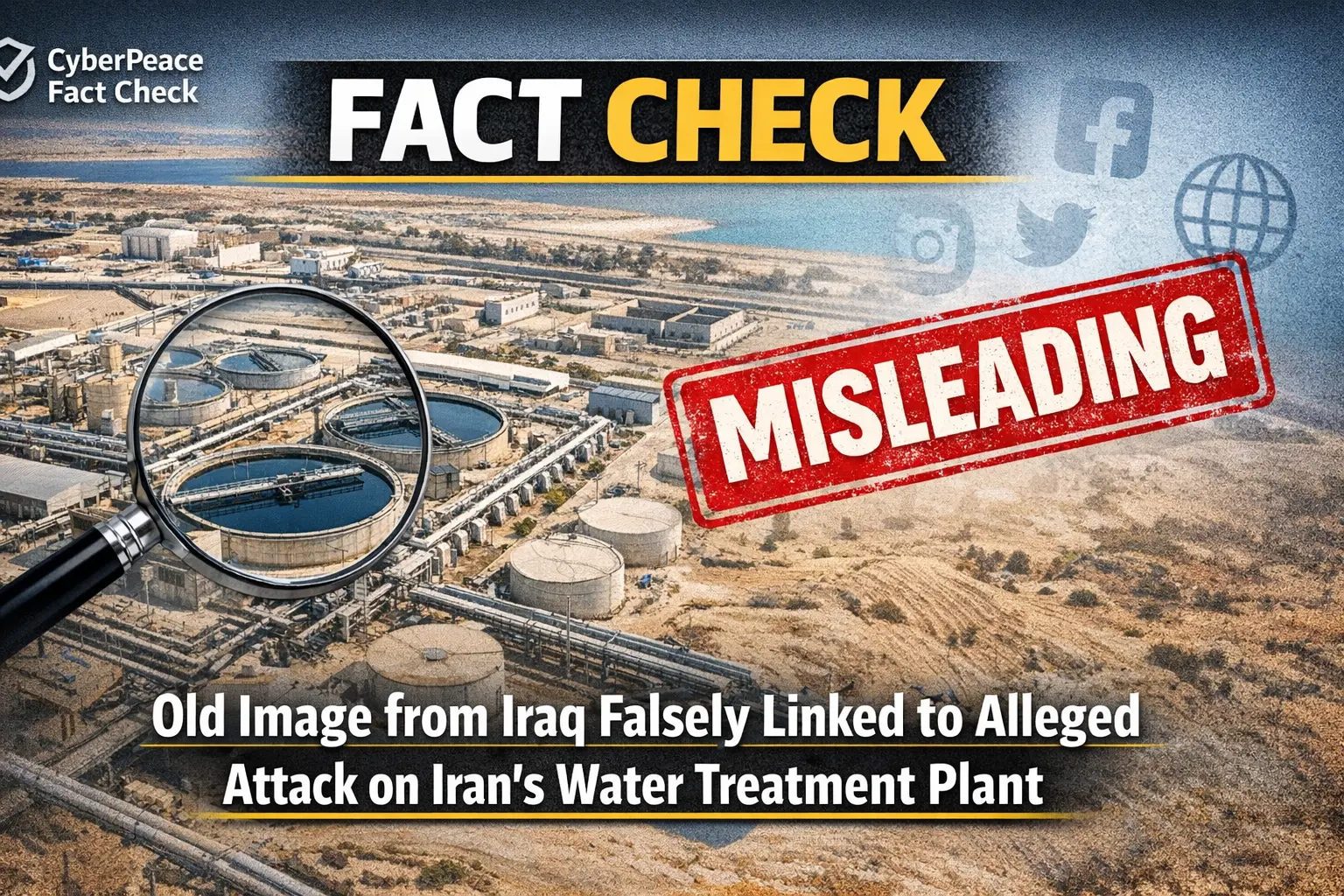
Executive Summary:
Amid the ongoing tensions and conflict involving the United States, Israel, and Iran, an image of a heavily damaged industrial facility is circulating widely on social media. Several users are sharing the picture claiming that it shows an Iranian water treatment or desalination plant destroyed in a US–Israel attack. Some media reports have also used the same image while reporting on the alleged attack on a freshwater desalination plant in Iran.
However, a research by the CyberPeace found that the claim is misleading. The viral image is not from Iran. It actually shows the aftermath of a drone attack on a warehouse belonging to a US company in Basra, Iraq.
Claim
X user “Shashank Shekhar Jha” shared the image on March 8, 2026, claiming that a freshwater desalination plant in Qeshm, Iran, had been destroyed.
Fact check
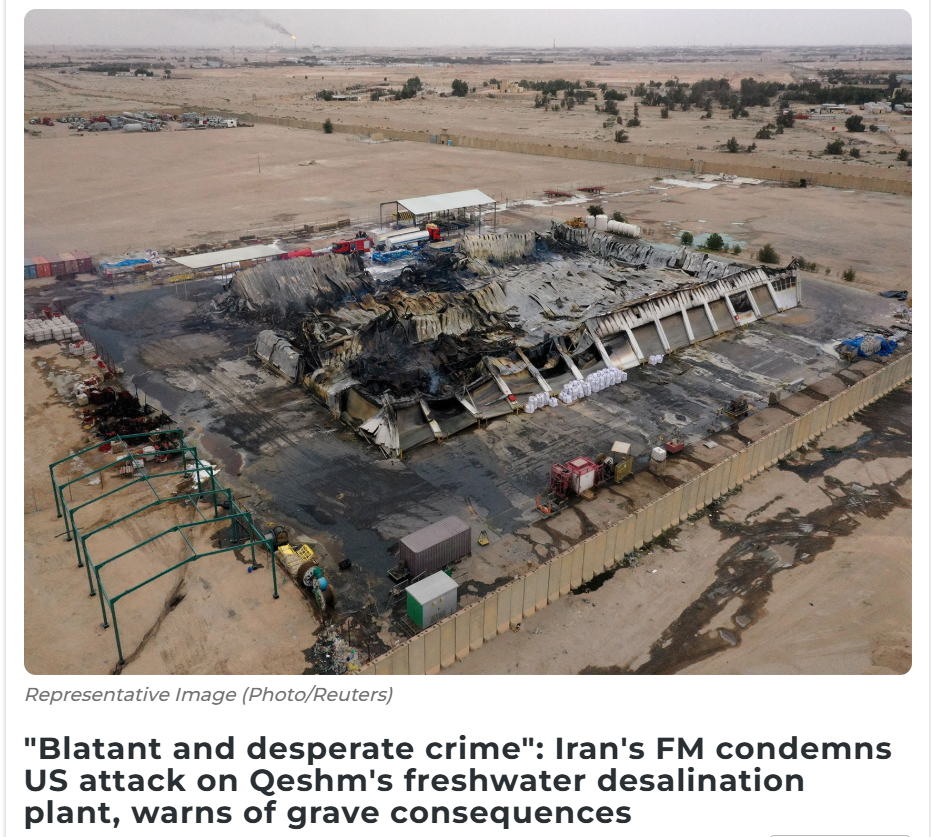
To verify the claim, we conducted a reverse image search using Google Lens. During the search, we found a report published on March 7, 2026, on the website of Asian News International (ANI). The report stated that Iran’s Foreign Minister Seyed Abbas Araghchi condemned a US attack on a freshwater desalination plant on Qeshm Island, calling it a “blatant and desperate crime.”
The report used the same viral image; however, the caption clearly mentioned that it was a representational image credited to Reuters.
https://www.aninews.in/news/world/middle-east/blatant-and-desperate-crime-irans-fm-condemns-us-attack-on-qeshms-freshwater-desalination-plant-warns-of-grave-consequences20260307212645/
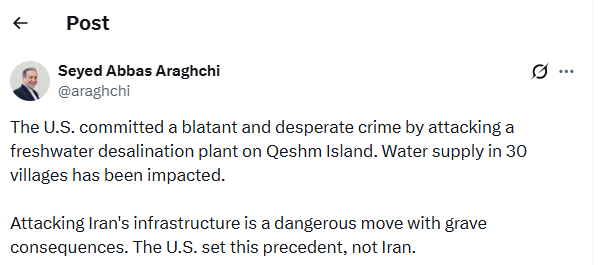
To further confirm the claim, we checked the official X account of Seyed Abbas Araghchi. In a post on March 7, he condemned the alleged attack on the desalination plant in Qeshm and stated that the strike had disrupted water supply to around 30 villages. However, the post did not include any image of the incident.
Conclusion
The viral image being shared as evidence of a US–Israel attack on Iran’s water treatment plant is misleading. The photo actually shows the aftermath of a drone strike on a warehouse belonging to a US company in Basra, Iraq, and has been wrongly linked to the situation in Iran.

Introduction
This tale, the Toothbrush Hack, straddles the ordinary and the sophisticated; an unassuming household item became the tool for committing cyber crime. Herein lies the account of how three million electronic toothbrushes turned into the unwitting infantry in a cyber skirmish—a Distributed Denial of Service (DDoS) assault that flirted with the thin line that bridges the real and the outlandish.
In January, within the Swiss borders, a story began circulating—first reported by the Aargauer Zeitung, a Swiss German-language daily newspaper. A legion of cybercriminals, with honed digital acumen, had planted malware on some three million electric toothbrushes. These devices, mere slivers of plastic and circuitry, became agents of chaos, converging their electronic requests upon the servers of an undisclosed Swiss firm, hurling that digital domain into digital blackout for several hours and wreaking an economic turmoil calculated in seven-figure sums.
The entire Incident
It was claimed that three million electric toothbrushes were allegedly used for a distributed denial-of-service (DDoS) attack, first reported by the Aargauer Zeitung, a Swiss German-language daily newspaper. The article claimed that cybercriminals installed malware on the toothbrushes and used them to access a Swiss company's website, causing the site to go offline and causing significant financial loss. However, cybersecurity experts have questioned the veracity of the story, with some describing it as "total bollocks" and others pointing out that smart electric toothbrushes are connected to smartphones and tablets via Bluetooth, making it impossible for them to launch DDoS attacks over the web. Fortinet clarified that the topic of toothbrushes being used for DDoS attacks was presented as an illustration of a given type of attack and that no IoT botnets have been observed targeting toothbrushes or similar embedded devices.
The Tech Dilemma - IOT Hack
Imagine the juxtaposition of this narrative against our common expectations of technology: 'This example, which could have been from a cyber thriller, did indeed occur,' asserted the narratives that wafted through the press and social media. The story radiated outward with urgency, painting the image of IoT devices turned to evil tools of digital unrest. It was disseminated with such velocity that face value became an accepted currency amid news cycles. And yet, skepticism took root in the fertile minds of those who dwell in the domains of cyber guardianship.
Several cyber security and IOT experts, postulated that the information from Fortinet had been contorted by the wrench of misinterpretation. They and their ilk highlighted a critical flaw: smart electric toothbrushes are bound to their smartphone or tablet counterparts by the tethers of Bluetooth, not the internet, stripping them of any innate ability to conduct DDoS or any other type of cyber attack directly.
With this unraveling of an incident fit for our cyber age, we are presented with a sobering reminder of the threat spectrum that burgeons as the tendrils of the Internet of Things (IoT) insinuate themselves into our everyday fabrics. Innocuous devices, previously deemed immune to the internet's shadow, now stand revealed as potential conduits for cyber evil. The layers of impact are profound, touching the private spheres of individuals, the underpinning frameworks of national security, and the sinews that clutch at our economic realities. The viral incident was a misinformation.
IOT Weakness
IoT devices bear inherent weaknesses for twin reasons: the oft-overlooked element of security and the stark absence of a means to enact those security measures. Ponder this problem Is there a pathway to traverse the security settings of an electric toothbrush? Or to install antivirus measures within the cooling confines of a refrigerator? The answers point to an unsettling simplicity—you cannot.
How to Protect
Vigilance - What then might be the protocol to safeguard our increasingly digital space? It begins with vigilance, the cornerstone of digital self-defense. Ensure the automatic updating of all IoT devices when they beckon with the promise of a new security patch.
Self Awareness - Avoid the temptation of public USB charging stations, which, while offering electronic succor to your devices, could also stand as the Trojan horses for digital pathogens. Be attuned to signs of unusual power depletion in your gadgets, for it may well serve as the harbinger of clandestine malware. Navigate the currents of public Wi-Fi with utmost care, as they are as fertile for data interception as they are convenient for your connectivity needs.
Use of Firewall - A firewall can prove stalwart against the predators of the internet interlopers. Your smart appliances, from the banality of a kitchen toaster to the novelty of an internet-enabled toilet, if shielded by this barrier, remain untouched, and by extension, uncompromised. And let us not dismiss this notion with frivolity, for the prospect of a malware-compromised toilet or any such smart device leaves a most distasteful specter.
Limit the use of IOT - Additionally, and this is conveyed with the gravity warranted by our current digital era, resist the seduction of IoT devices whose utility does not outweigh their inherent risks. A smart television may indeed be vital for the streaming aficionado amongst us, yet can we genuinely assert the need for a connected laundry machine, an iron, or indeed, a toothbrush? Here, prudence is a virtue; exercise it with judicious restraint.
Conclusion
As we step forward into an era where connectivity has shifted from a mere luxury to an omnipresent standard, we must adopt vigilance and digital hygiene practices with the same fervour as those for our corporal well-being. Let the toothbrush hack not simply be a tale of caution, consigned to the annals of internet folklore, but a fable that imbues us with the recognition of our role in maintaining discipline in a realm where even the most benign objects might be mustered into service by a cyberspace adversary.
References
- https://www.bleepingcomputer.com/news/security/no-3-million-electric-toothbrushes-were-not-used-in-a-ddos-attack/
- https://www.zdnet.com/home-and-office/smart-home/3-million-smart-toothbrushes-were-not-used-in-a-ddos-attack-but-they-could-have-been/
- https://www.securityweek.com/3-million-toothbrushes-abused-for-ddos-attacks-real-or-not/

Introduction
The role of ‘Small and Medium Enterprises’ (SMEs) in the economic and social development of the country is well established. The SME sector is often driven by individual creativity and innovation. With its contribution at 8% of the country’s GDP, and 45% of the manufactured output and 40% of its exports, SMEs provide employment to about 60 million persons through over 26 million enterprises producing over six thousand products.
It would be an understatement to say that the SMEs sector in India is highly heterogeneous in terms of the size of the enterprises, variety of products and services produced and the levels of technology employed. With the SME sector booming across the country, these enterprises are contributing significantly to local, state, regional and national growth and feeding into India’s objectives of inclusive, sustainable development.
As the digital economy expands, SMEs cannot be left behind and must integrate online to be able to grow and prosper. This development is not without its risks and cybersecurity concerns and digital threats like misinformation are fast becoming a pressing pain point for the SME sector. The unique challenge posed to SMEs by cyber threats is that while the negative consequences of digital risks are just as damaging for the SMEs as they are for larger industries, the former’s ability to counter these threats is not at par with the latter, owing to the limited nature of resources at their disposal. The rapid development of emerging technologies like artificial intelligence makes it easier for malicious actors to develop bots, deepfakes, or other forms of manipulated content that can steer customers away from small businesses and the consequences can be devastating.
Misinformation is the sharing of inaccurate and misleading information, and the act can be both deliberate and unintentional. Malicious actors can use fake reviews, rumours, or false images to promote negative content or create backlash against a business’ brand and reputation. For a fledgling or growing enterprise, its credibility is a critical asset and any threat to the same is as much a cause for concern as any other operational hindrance.
Relationship Building to Counter Misinformation
We live in a world that is dominated by brands. A brand should ideally inspire trust. It is the single most powerful and unifying characteristic that embodies an organisation's culture and values and once well-established, can create incremental value. Businesses report industry rumours where misinformation resulted in the devaluation of a product, sowing mistrust among customers, and negatively impacting the companies’ revenue. Mitigating strategies to counter these digital downsides can include implementing greater due diligence and basic cyber hygiene practices, like two-factor or multi-factor authentication, as well as open communication of one’s experiences in the larger professional and business networks.
The loss of customer trust can be fatal for a business, and for an SME, the access to the scale of digital and other resources required to restore reputations may simply not be a feasible option. Creating your brand story is not just the selling pitch you give to customers and investors, but is also about larger qualitative factors such as your own motivation for starting the enterprise or the emotional connection your audience base enjoys with your organisation. The brand story is a mosaic of multiple tangible and intangible elements that all come together to determine how the brand is perceived by its various stakeholders. Building a compelling and fortified brand story which resonates deeply with people is an important step in developing a robust reputation. It can help innoculate against several degrees of misinformation and malicious attempts and ensure that customers continue to place their faith in the brand despite attempts to hurt this dynamic.
Engaging with the target audience, ie, the customer base is part of an effective marketing tool and misinformation inoculation strategy. SMEs should also continuously assess their strategies, adapt to market changes, and remain agile in their approach to stay competitive and relevant in today's dynamic business environment. These strategies will lead to greater customer engagement through the means of feedback, reviews and surveys which help in building trust and loyalty. Innovative and dynamic customer service engages the target audience and helps in staying in the competition and being relevant.
Crisis Management and Response
Having a crisis management strategy is an important practice for all SMEs and should be mandated for better policy implementation. Businesses need greater due diligence and basic cyber hygiene practices, like two-factor authentication, essential compliances, strong password protocols, transparent disclosure, etc.
The following steps should form part of a crisis management and response strategy:
- Assessing the damage by identifying the misinformation spread and its impact is the first step.
- Issuing a response in the form of a public statement by engaging the media should precede legal action.
- Two levels of communication need to take place in response to a misinformation attack. The first tier is internal, to the employees and it should clarify the implications of the incident and the organisation’s response plan. The other is aimed at customers via direct outreach to clarify the situation and provide accurate information in regard to the matter. If required the employees can be provided training related to the handling of the customer enquiries regarding the misinformation.
- The digital engagement of the enterprise should be promptly updated and social media platforms and online communications must address the issue and provide clarity and factual information.
- Immediate action must include a plan to rebuild reputations and trust by ensuring customers of the high quality of products and services. The management should seek customer feedback and show commitment to improving processes and transparency. Sharing positive testimonials and stories of satisfied customers can also help at this stage.
- Engaging with the community and collaborating with organisations is also an important part of crisis management.
While these steps are for rebuilding and crisis management, further steps also need to be taken:
- Monitoring customer sentiment and gauging the effectiveness of the efforts taken is also necessary. And if required, strategic adjustments can be made in response to the evolving circumstances.
- Depending on the severity of the impact, management may choose to engage the professional help of PR consultants and crisis management experts to develop comprehensive recovery plans and help navigate the situation.
- A long-term strategy which focuses on building resilience against future attacks is important. Along with this, engaging in transparency and proactive communication with stakeholders is a must.
Legal and Ethical Considerations
SMEs administrators must prioritise ethical market practices and appreciate that SMEs are subject to laws which deal with defamation, intellectual property rights- trademark and copyright infringement in particular, data protection and privacy laws and consumer protection laws. Having the knowledge of these laws and ensuring that there is no infringement upon the rights of other enterprises or their consumers is integral in order to continue engaging in business legally.
Ethical and transparent business conduct includes clear and honest communication and proactive public redressal mechanisms in the event of misinformation or mistakes. These efforts go a long way towards building trust and accountability.
Proactive public engagement is an important step in building relationships. SMEs can engage with the community where they conduct their business through outreach programs and social media engagement. Efforts to counter misinformation through public education campaigns that alert customers and other stakeholders about misinformation serve the dual purpose of countering misinformation and creating deep community ties. SME administrators should monitor content and developments in their markets and sectors to ensure that their marketing practices are ethical and not creating or spreading misinformation, be it in the form of active sensationalising of existing content or passive dissemination of misinformation created by others. Fact-checking tools and expert consultations can help address and prevent a myriad of problems and should be incorporated into everyday operations.
Conclusion
Developing strong cybersecurity protocols, practising basic digital hygiene and ensuring regulatory compliances are crucial to ensure that a business not only survives but also thrives. Therefore, a crisis management plan and trust-building along with ethical business and legal practices go a long way in ensuring the future of SMEs. In today's digital landscape, misinformation is pervasive, and trust has become a cornerstone of successful business operations. It is the bedrock of a resilient and successful SME. By implementing and continuously improving trust-building efforts, businesses can not only navigate the challenges of misinformation but also create lasting value for their customers and stakeholders. Prioritising trust ensures long-term growth and sustainability in an ever-evolving digital landscape.
References
- https://SME.gov.in/sites/default/files/SME-Strategic-Action-Plan.pdf
- https://carnegieendowment.org/research/2024/01/countering-disinformation-effectively-an-evidence-based-policy-guide?lang=en
- https://dcSME.gov.in/Report%20of%20Expert%20Committee%20on%20SMEs%20-%20The%20U%20K%20Sinha%20Committee%20constitutes%20by%20RBI.pdf
