
#FactCheck: Old Dance Video From Punjab College Falsely Linked to Protest Against CEC Gyanesh Kumar
Executive Summary:
A video of girls dancing is being shared on social media. The video is being circulated with the claim that it shows a recent protest against Chief Election Commissioner Gyanesh Kumar. Social media users are sharing the video as footage from the protest and attempting to link it to the ongoing developments. However, CyberPeace Research found the viral claim to be false. Our research found that the video is not recent. The viral video is from an event organised at a college under Panjab University and has no connection with the ongoing protests against Chief Election Commissioner Gyanesh Kumar.
Claim:
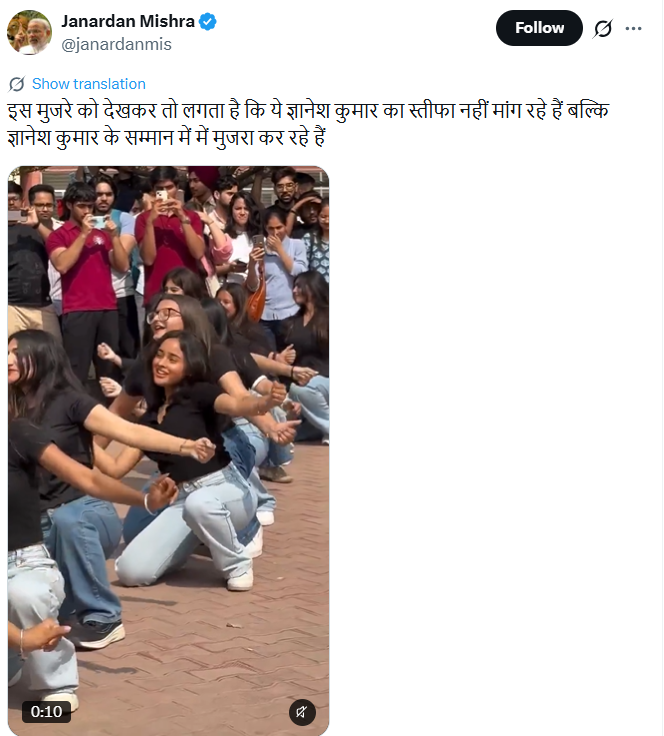
A user on the social media platform X (formerly Twitter) shared the viral video on October 5, 2026, with the caption: “Looking at this mujra, it seems they are not demanding Gyanesh Kumar’s resignation, but rather performing a mujra in his honour.” The post link, archive link, and screenshot are provided below.
https://x.com/janardanmis/status/2107092458731614355
Fact Check
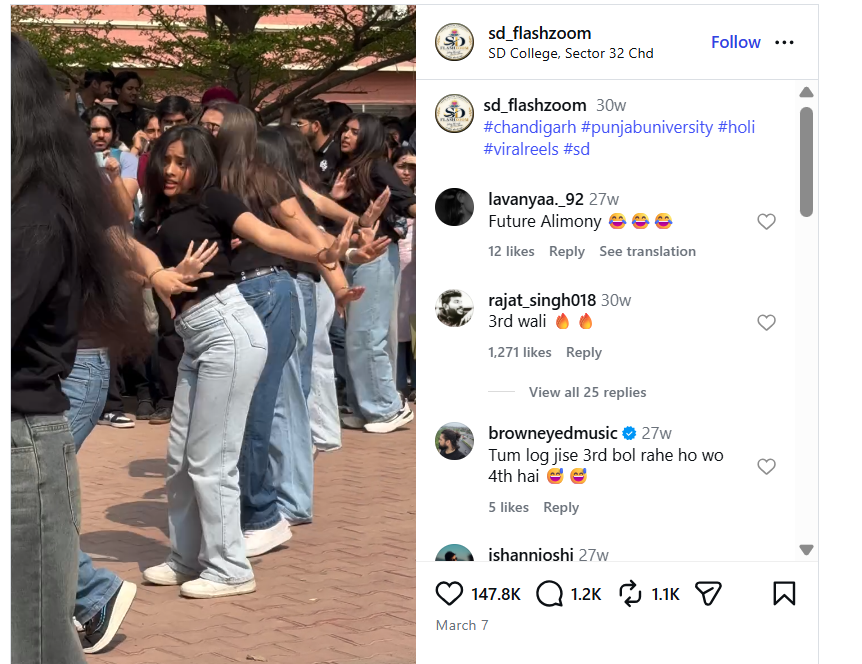
To verify the authenticity of the viral claim, we conducted a reverse image search using keyframes from the video. During the search, we found the same video uploaded on the Instagram account named “SD Flash Zoom” on March 7, 2026. Upon examining the Instagram account, we found that the page posts videos related to dance programmes organised at Goswami Ganesh Dutta Sanatan Dharma College (GGDSD College), affiliated with Panjab University. The post link and screenshot are provided below.
https://www.instagram.com/p/DVkLftuCW_G/
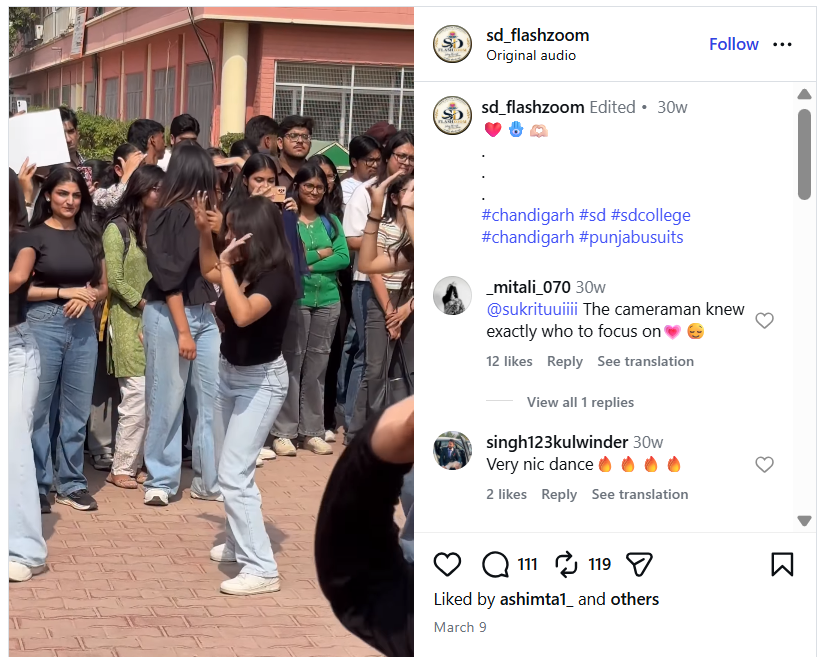
During our research, we found another video uploaded on the same account on March 9, 2026. Watch the video. The visuals seen in this video match those in the viral video, confirming that both videos are from the same event. The post link and screenshot are provided below.
https://www.instagram.com/p/DVqRuIdiQ7t/
Conclusion
The evidence gathered during our research makes it clear that the video being shared on social media as footage of a protest against Chief Election Commissioner Gyanesh Kumar is not recent. The viral video is actually from an event held at SD College in Punjab in March 2026. Therefore, the claim that the video shows a protest against Chief Election Commissioner Gyanesh Kumar is misleading.

Related Blogs

Introduction
The debate between free speech and social responsibility is one of the oldest, long-running debates in history. Free speech is considered to be at the heart of every democracy. It is considered the “mother” of all other freedoms, enshrined in Article 19(1)(a) of the Indian Constitution under Part III: Fundamental Rights. It takes various shapes and forms according to the sociopolitical context of society. Evelyn Beatrice Hall, a prominent English writer of the 19th century, laid the foundation of every democracy when she wrote in her book, "I disapprove of what you say, but I willdefend to the death your right to say it." The drastic misuse of social media to disseminate propaganda and fakenews makes it a marketplace of half-baked truth, becoming the antithesis ofwhat early philosophers dreamed of for a democratic modern age. Losethe ethics, and there you have it, the modern conceptualisation of freedom ofspeech and expression in the digital age. The right to freedom of speech andexpression is one of the most fundamental rights, but its exercise is notunfettered, and certain limits are placed upon this right under Art. 19 (2).Every right comes with a corresponding duty, and the exercise of such freedomalso puts the citizenry under the responsibility not to violate the rights ofothers and not to use the media to demean any other person.
SocialMedia: The New Public Square or a Weaponised Echo Chamber
InIndia, Art. 19(1)(a) of the constitution guarantees the right to freedom ofspeech and expression, but it is not absolute. Under Art. 19(2), this right issubject to reasonable restrictions in the interest of public order, decency,morality, and national security. This is construed as a freedom for everyindividual to freely express their opinions, but not to incite violence, spreadfalsehoods, or harm others’ dignity. Unfortunately, the boundaries betweenthese are increasingly blurred.
Thedissemination of unfiltered media and the strangulation of innocence by pushingoften vulgar and obscene content down the throats of individuals, withoutverifying the age and gender profile of the social media user, is a big farcein the name of free speech and a conscious attempt by the intermediaries andsocial media platforms such as Facebook, Instagram, Threads, etc., to wriggleout of their responsibility. A prime example is when Meta’s Mark Zuckerberg, on7th January 2025, gave a statement asserting less intervention into what peoplefind on its social media platforms as the new “best practice”. While lessinterference would have worked in a generation that merely operated on thediffering, dissenting, and raw ideas bred by the minds of differentindividuals, it is not the case for this day and age. There has been asignificant rise in cases where social media platforms have been used as abattleground for disputes, spreading communal violence, misinformation, anddisinformation.
Thereis no debate about the fact that social media platforms have fostered a globalexpression, making the world a global village, bringing everyone together. Onthe other hand, the platforms have become the epicentre of computer-basedcrimes, where children and teenagers often become prey to these crimes,cyberbullying, and cyberstalking.
Rising Importance of Platform Accountability
Themost pertinent question that is to be asked with a conscious mind is whether anunregulated media is a reflection of Freedom of Speech, a right given to us byour constitution under Article. 19(1)(a), or whether free speech is just a garbby big stakeholders, and we are all victims of an impending infodemic andvictims of AI algorithms, because, as per the reports that surfaced during theCovid-19 pandemic, India saw a dramatic 214% rise in false information. Anotherreport by the UNESCO-Ipsos survey revealed that 85% of Indian respondentsencounter online hate speech, with around 64% pointing to social media as aprimary source.
While the focus on platform accountability is critical, it is equally important to recognise that the right to free speech is not absolute. Therefore, users also bear a constitutional responsibility while exercising this right. Free expression in a democratic society must be accompanied by civic digital behaviour, which includes refraining from spreading hate speech, misinformation, or engaging in harmful conduct online. The most recent example of this is the case of Ranveer Gautam Allahabadia vs. UOI (popularly known as “Latent Case”); the court came down heavily on the hosts and makers of the show and made its position crystal clear by stating, “there is nothinglike a fundamental right on platter...the fundamental rights are all followedby a duty...unless those people understand duty, there is no [...] deal withthat kind of elements...if somebody wants to enjoy fundamental rights, thiscountry gives a guarantee to enjoy, but guarantee is with a duty so thatguarantee will involve performing that duty also” .
The Way Forward: CyberPeace Suggests
In order to realise the benefits and derive the true benefits from the rights we are provided, especially the one in discussion, i.e., Freedom of Speech and Expression, the government and the designated intermediaries and regulators have to prepare both roadmaps, one for “Platform Accountability” and one for "User Accountability”, wherein the regulators with a reasonable foresight should conduct Algorithm Risk Audits which is a technique to make algorithms and there effects on content feeds visible. It can be an effective tool and an objective manner to compare how algorithms are automatically pushing different content to different users in an unfair or unbalanced way. As for user accountability, “Digital Literacy” is the way forward, ensuring that social media remains a marketplace of ideas and does not become a minefield of misfires.
Introduction
The two-day Apple’s Worldwide Developer Conference (WWDC) 2023, which was held on the 6th & 7th of June, has become an essential and highly anticipated part of our calendar as frequently as the trend. This year’s keynote announcements will include all of the usual enhancements for iOS, iPadOS, watchOS, macOS, and more. However, this year is also unique due to the unveiling of the Vision Pro headset, a brand-new Apple product.
In this blog, we will examine the exciting announcements made at Apple WWDC 2023, which was a ground-breaking event.
macOS Sonoma
macOS Sonoma, the new presentation of macOS disclosed at the WWDC full of exciting features. It comes with stunning video screensavers that show stunning scenes from all over the world. Gadgets can now be added genuinely to the work area and adjusted totally based on the client’s action. Also, it changes variety and blurring out of the spotlight while utilising applications. In addition, Death Stranding: Directors Cut for Mac announced that the Game Mode is added to make Macs more suitable for gaming. A presenter overlay enhances video presentations, and viewers can respond to them with interactive responses. Updated Safari is also included in the WebApp feature that turns frequently used websites into dedicated windows, a new Profile system for separating browsing history, and secure password sharing. Currently, the developer beta is available and the public beta will be available in July, and the final release is anticipated for the fall.
ios 16
Apple WWDC 2023 shows the following iOS, and iOS 16 replication, offering plenty of energising highlights for iPhone and iPad clients. Apple maintains its commitment to privacy with iOS 16, which introduces enhanced privacy settings that give users even more control over their data and online privacy. Users can also personalise their devices according to their preferences thanks to the new operating system’s refinement and customisable user interface.Improved multitasking capabilities like redesigned Files app and advanced note-taking features are just a few of the productivity enhancements included in the iOS 16. With iOS 16, Apple also improves its AR capabilities, allowing developers to develop even more immersive and interactive AR experiences.

WatchOS 9
Apple WWDC 2023 carried energising updates to the Apple Watch with the presentation of watchOS 9. The Apple Watch is an essential companion for sustaining a healthy lifestyle because the most recent version of the operating system includes cutting-edge health and fitness features. WatchOS 9 gives users unprecedented control over their health, offering personalised fitness recommendations and advanced sleep tracking.
Additionally, new watch faces were added, enhancing communication capabilities and improving app performance in watchOS 9, making the Apple Watch even easier to use daily.
ios 17
Rather than focusing on major features, Apple focused on quality-of-life enhancements when it announced iOS 17 at WWDC 2023. Live Voicemail with real-time transcripts of voicemails, personalised personal contact “posters,” and video voicemails for FaceTime are all part of the update. Search filters, a catch-up arrow, live location sharing, and a safety feature called Check-In are all available in Messages. AirDrop now supports NameDrop for transferring contact information; stickers have been expanded. The autocorrect and recording features on the keyboard have been improved for accuracy. Standby in the lock screen is an intelligent home display that shows the weather, upcoming appointments, and notifications. Siri works on Standby and adjusts itself for the night. The developer beta is currently available now, and a public beta will take place next month before the full release is in the fall.
Vision Pro VR Headset
Apple unveiled the Vision Pro AR headset, their first foray into virtual reality (VR), during the WWDC keynote. The Vision Pro is a virtual reality headset that competes with PlayStation VR2 and Meta Quest 3. This is in contrast to the long-awaited Apple smart glasses. Apple put a lot of effort into making a thin and light headset by using premium materials when needed. Voice, hand, and eye commands are all used to operate the Digital Crown-equipped device. The showcases offer extraordinary clarity, which is fueled by Apple’s M2 processor with a committed R1 chip. The Vision Pro combines virtual reality (VR) and augmented reality (AR), enabling users to interact with Apple apps and gain access to the company’s existing ecosystem. The expanded reality space created by the headset’s sensors and cameras allows users to place apps in real-world environments and adjust their level of concentration. Optic ID is a security and unlocking eye-tracking technology that is incorporated into the Vision Pro. It allows for a more immersive screen experience because it is compatible with Apple accessories like Magic Keyboard and Mac. At launch, the Vision Pro supports over a hundred Apple game galleries. Disney gave a hint that Apple and Disney might work together in the future by announcing support for the Vision Pro and making the Disney Plus app available immediately. The show highlighted the headset’s lightweight plan and recommended Apple clients wear it for extended periods. However, widespread adoption may be difficult due to the high price of $3,499 (₹289,093.01 approx). Apple is expected to release the Vision Pro for public use in 2024.

15-inch MacBook Air
At the WWDC event, Apple revealed a new MacBook Air with a larger 15-inch model instead of the standard 13-inch model. The 15-inch MacBook Air features a powerful Apple M2 processor, a thin, light, and long-lasting design, and a stunning 15.3-inch Retina display. It comes in four colours and has a headphone jack, two USB-C ports, and MagSafe charging. The display has six spatial speakers, a 1080p webcam, and 500 nits of brightness. Apple claims a battery life of up to 18 hours.
Conclusion
At Apple’s 2023 WWDC, the company demonstrated its commitment to developing technology that is user-friendly and accessible to all. Apple’s commitment to improving the user experience across all of its products is demonstrated in the updates to operating systems, improvements of Siri, breakthroughs in augmented reality, and enhancements to health and fitness.By making complex innovations more like-minded and easy to understand, Apple is enabling people to use the maximum capacity of their gadgets. Apple’s innovations at WWDC 2023 are expected to shape the future of technology, simplifying everyday tasks and revolutionising how we interact with the digital world.As we push ahead, it is exciting to guess what these advancements will proceed to develop and decidedly mean for our lives. The future holds even more incredible possibilities for all of us because of Apple’s focus on privacy, user-centric design, and pushing the boundaries of innovation. Thus, prepare to embrace a future where innovation flawlessly incorporates into our lives because of the endeavours displayed at Apple WWDC 2023.

Introduction
Twitter is a popular social media plate form with millions of users all around the world. Twitter’s blue tick system, which verifies the identity of high-profile accounts, has been under intense scrutiny in recent years. The platform must face backlash from its users and brands who have accused it of basis, inaccuracy, and inconsistency in its verification process. This blog post will explore the questions raised on the verification process and its impact on users and big brands.
What is Twitter’s blue trick System?
The blue tick system was introduced in 2009 to help users identify the authenticity of well-known public figures, Politicians, celebrities, sportspeople, and big brands. The Twitter blue Tick system verifies the identity of high-profile accounts to display a blue badge next to your username.
According to a survey, roughly there are 294,000 verified Twitter Accounts which means they have a blue tick badge with them and have also paid the subscription for the service, which is nearly $7.99 monthly, so think about those subscribers who have paid the amount and have also lost their blue badge won’t they feel cheated?
The Controversy
Despite its initial aim, the blue tick system has received much criticism from consumers and brands. Twitter’s irregular and non-transparent verification procedure has sparked accusations of prejudice and inaccuracy. Many Twitter users have complained that the network’s verification process is random and favours account with huge followings or celebrity status. In contrast, others have criticised the platform for certifying accounts that promote harmful or controversial content.
Furthermore, the verification mechanism has generated user confusion, as many need to understand the significance of the blue tick badge. Some users have concluded that the blue tick symbol represents a Twitter endorsement or that the account is trustworthy. This confusion has resulted in users following and engaging with verified accounts that promote misleading or inaccurate data, undermining the platform’s credibility.
How did the Blue Tick Row start in India?
On 21 May 2021, when the government asked Twitter to remove the blue badge from several profiles of high-profile Indian politicians, including the Indian National Congress Party Vice-President Mr Rahul Ghandhi.
The blue badge gives the users an authenticated identity. Many celebrities, including Amitabh Bachchan, popularly known as Big B, Vir Das, Prakash Raj, Virat Kohli, and Rohit Sharma, have lost their blue tick despite being verified handles.
What is the Twitter policy on blue tick?
To Twitter’s policy, blue verification badges may be removed from accounts if the account holder violates the company’s verification policy or terms of service. In such circumstances, Twitter typically notifies the account holder of the removal of the verification badge and the reason for the removal. In the instance of the “Twitter blue badge row” in India, however, it appears that Twitter did not notify the impacted politicians or their representatives before revoking their verification badges. Twitter’s lack of communication has exacerbated the controversy around the episode, with some critics accusing the company of acting arbitrarily and not following due process.
Is there a solution?
The “Twitter blue badge row” has no simple answer since it involves a complex convergence of concerns about free expression, social media policies, and government laws. However, here are some alternatives:
- Establish clear guidelines: Twitter should develop and constantly implement clear guidelines and policies for the verification process. All users, including politicians and government officials, would benefit from greater transparency and clarity.
- Increase transparency: Twitter’s decision-making process for deleting or restoring verification badges should be more open. This could include providing explicit reasons for badge removal, notifying impacted users promptly, and offering an appeals mechanism for those who believe their credentials were removed unfairly.
- Engage in constructive dialogue: Twitter should engage in constructive dialogue with government authorities and other stakeholders to address concerns about the platform’s content moderation procedures. This could contribute to a more collaborative approach to managing online content, leading to more effective and accepted policies.
- Follow local rules and regulations: Twitter should collaborate with the Indian government to ensure it conforms to local laws and regulations while maintaining freedom of expression. This could involve adopting more precise standards for handling requests for material removal or other actions from governments and other organisations.
Conclusion
To sum up, the “Twitter blue tick row” in India has highlighted the complex challenges that Social media faces daily in handling the conflicting interests of free expression, government rules, and their own content moderation procedures. While Twitter’s decision to withdraw the blue verification badges of several prominent Indian politicians garnered anger from the government and some public members, it also raised questions about the transparency and uniformity of Twitter’s verification procedure. In order to deal with this issue, Twitter must establish clear verification procedures and norms, promote transparency in its decision-making process, participate in constructive communication with stakeholders, and adhere to local laws and regulations. Furthermore, the Indian government should collaborate with social media platforms to create more effective and acceptable laws that balance the necessity for free expression and the protection of citizens’ rights. The “Twitter blue tick row” is just one example of the complex challenges that social media platforms face in managing online content, and it emphasises the need for greater collaboration among platforms, governments, and civil society organisations to develop effective solutions that protect both free expression and citizens’ rights.
