
#FactCheck-Two Old Videos Falsely Linked to Devastating Floods in Nepal
Executive Summary
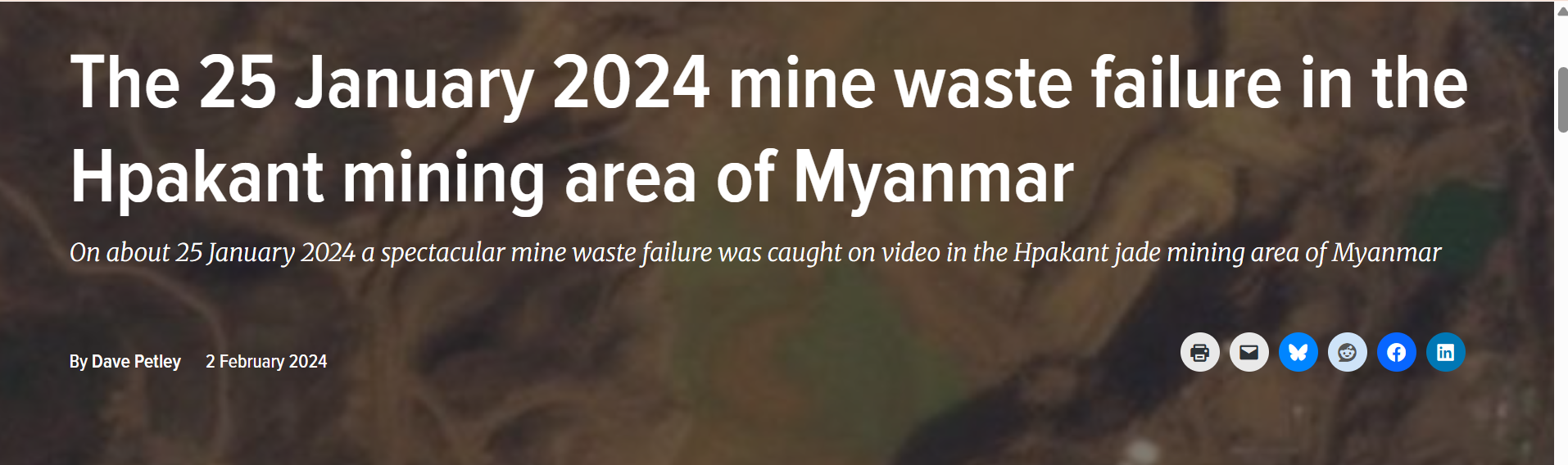
Following the flash floods that struck the Nepal-Tibet border on Wednesday morning, 289 bodies have so far been recovered, while around 1,500 people remain missing. A large number of foreign nationals, along with Nepali citizens, are also among those reported missing. Meanwhile, a video showing a massive landslide is being widely circulated on social media. The viral clip is actually a compilation of two separate videos. The first shows a landslide rapidly turning into a torrent of muddy floodwater, while the second shows a two-storey house on a riverbank being swept away by rising floodwaters. A research done by the Research Wing of the CyberPeace found that both videos are old and unrelated to Nepal. The first video is from Myanmar, while the second was recorded in the United States.
Claim:
A user on social media platform Facebook shared the video, claiming that it shows the initial scenes of the devastating floods and landslides that struck Nepal.
https://www.facebook.com/reel/1572666177989617

Fact Check:
To verify the first video, we conducted a reverse image search of its keyframes. During the search, we found a longer version of the same footage, which was shared on an Instagram account on June 30. This confirmed that the viral clip is unrelated to the recent floods in Nepal.
https://www.instagram.com/reels/DaLtKtjzTtq/

During the research, we also found the full version of the video on a YouTube channel, where it was uploaded on January 28, 2024. Although the video caption did not clearly specify the location of the incident, it mentioned Myanmar several times. This confirms that the viral video is old footage from Myanmar and not related to the recent disaster in Nepal.
https://www.youtube.com/watch?v=_z2_IEqOBNg&t=3s

We found another report, published on January 25, 2024, that carried screenshots from the viral footage. It stated that the incident took place between January 24 and 25, 2024, in Myanmar’s Hpakant mining area. Further verification led us to a report published by EOS.org, the digital science news outlet of the American Geophysical Union. The report examined the incident by comparing Planet Labs satellite imagery captured before and after the event, providing further evidence about the location of the incident.
https://www.geoengineer.org/news/mine-waste-dam-failure-in-myanmar-caught-on-video
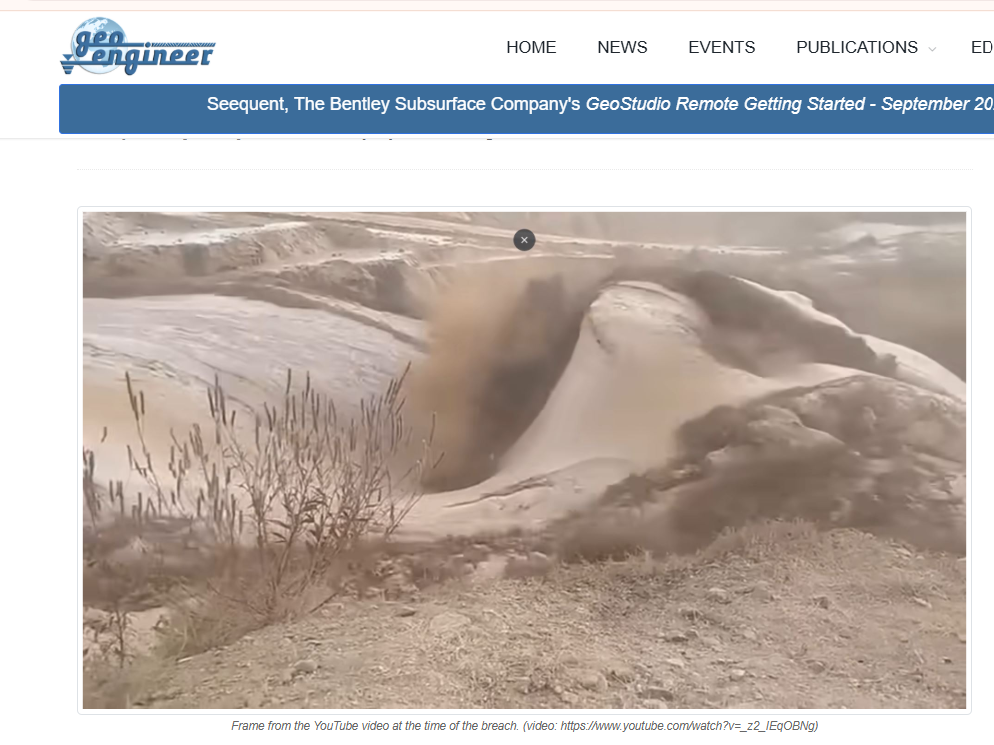
https://eos.org/thelandslideblog/myanmar-1
Second Clip
For the second clip, a reverse image search of its keyframes led us to a CBC report dated June 14, 2022, which carried a photograph of the same two-storey house seen in the viral footage. The report identified the location as Gardiner, Montana, USA, where the Yellowstone River experienced severe flooding and a rapid rise in water levels. It also stated that the house belonged to Parker Manning, who recorded the footage himself while vacationing with his family at a spot roughly half a mile upstream from the house.
https://www.cbsnews.com/news/yellowstone-flooding-video-house-collapses-river/

We also found a post related to the viral video on FOX 61, where the footage was shared with a generic caption. The link to the post and a screenshot are provided below.

Conclusion
Our research found that both videos are old and unrelated to Nepal. The first video is from Myanmar, while the second is from the United States.

Related Blogs
Introduction
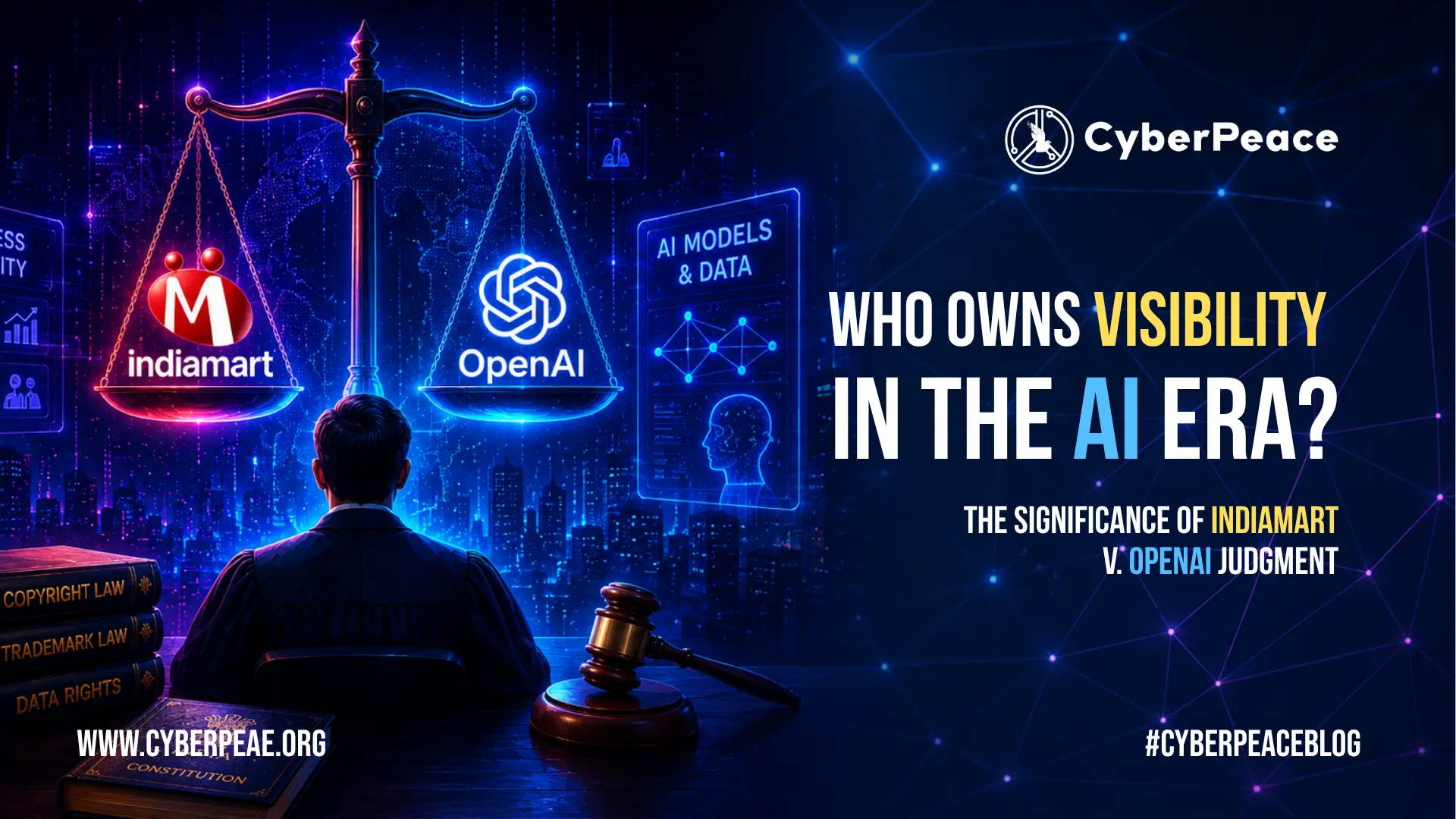
The rise of artificial intelligence has transformed how individuals search for information, buy and compare products online. Unlike the traditional search engines like Google that presents the user with a set of links and directs users to websites, AI-powered systems provide synthesised answers and recommendations which means we don't have to click through every link to find what we are looking for, we simply have to ask an LLM and it provides recommendations based on our needs expressed through prompt. This development has raised important legal and commercial questions, one such question was addressed in the judgement of Indiamart Inter Mesh Limited v. Open AI Inc. and Others (2026 SCC OnLine Cal 5738) decided by HMJ Ravi Krishan Kapur of Calcutta High court on 20 May 2026. If an AI platform becomes a primary source of information, can a business demand inclusion in its responses? Is it a legal injury if the LLM omits a business? More fundamentally, how do the existing laws classify technologies that not only process information, but also generate new content? These were the questions that came before Calcutta High Court. Although the dispute arose from Indiamart’s complaint regarding visibility on ChatGPT search, the judgement explored beyond the disagreement between two private entities.
The Dispute
IndiaMart is one of India’s largest electronic business-to-business marketplaces since 1996, serving millions of buyers and sellers across India. They also have registered trademarks and their entire business depends on visibility on the internet considering the digitalisation of the market. Open AI launched ChatGPT search in October 2024, which is a feature that supplements AI responses with links to relevant web sources. Indiamart alleged that ChatGPT was not displaying links to their online platform in the same way that it displayed links to other competing services or individual sellers. A major grievance raised by Indiamart was that ChatGPT allegedly bypassed IndiaMart market listings by directing users to sellers’ individual websites while continuing to provide platform level links for other competing platforms. Hence, they contended that this practice diverted users away from their platform and negatively affected their business interests. The company argued that such exclusion amounted to discriminatory treatment and resulted in economic harm, diluted its trademarks and amounted to disparagement. They alleged that it violated their rights under article 14, 19, 21 under the constitution and rights under IT Act and IT Rules also. When IndiaMart sought an explanation from OpenAI, the company stated that its decision was influenced by the inclusion of IndiaMart in the United States Trade Representative (USTR) Review of Notorious Markets for Counterfeiting and Piracy 2024, a U.S. government report that identifies online and physical marketplaces alleged to facilitate intellectual property infringements. IndiaMart challenged this justification, arguing that the USTR report has no statutory or binding force in India. It further alleged selective discrimination, pointing out that several other platforms featured on the same USTR list including DHGate, Pinduoduo, Shopee, and Taobao continued to remain accessible through ChatGPT-generated responses. Consequently, IndiaMart approached the Calcutta High Court seeking interim relief directing ChatGPT to display and provide access to IndiaMart links in its responses.
ARGUMENTS BEFORE THE COURT
IndiaMart's contentions: They argued that ChatGPT, because its search feature, performs the role of an "intermediary" within the meaning of Section 2(1)(w) of the IT Act and is therefore required to comply with the obligations imposed under the Information Technology (Intermediary Guidelines and Digital Media Ethics Code) Rules, 2021. Relying on Rule 3(1)(n), IndiaMart argued that an intermediary cannot engage in discriminatory treatment of platforms or selectively restrict access to information. IndiaMart further maintained that users have a right to access information relating to its platform and that the omission of IndiaMart links from ChatGPT's responses violated this interest. They alleged violation of Articles 14, 19, and 21 of the Constitution, along with the broader principle of a user's "right to know", to argue that OpenAI owed an obligation to display IndiaMart listings in response to relevant queries. In addition, IndiaMart alleged that the exclusion of its links caused commercial harm, diluted its trademarks, amounted to disparagement, and constituted an unfair trade practice that adversely affected its business and reputation.
OpenAI's contentions: OpenAI asserted that IndiaMart had no legally enforceable ‘Right to visibility’ on ChatGPT. They argued that neither contract, statute, nor constitutional law imposed any obligation on OpenAI to display, prioritise, or recommend IndiaMart links in response to user queries. In the absence of any recognised legal right, there could be no actionable injury and therefore no valid cause of action. OpenAI also challenged the classification of ChatGPT as an "intermediary" under the Information Technology Act, 2000. According to OpenAI, ChatGPT does not merely host, transmit, or facilitate access to third-party content but also generates responses through its large language model (LLM) and therefore functions more closely as an "originator" than an intermediary. Consequently, the obligations applicable to intermediaries under the Information Technology (Intermediary Guidelines and Digital Media Ethics Code) Rules, 2021, including those relied upon by IndiaMart, were inapplicable. With respect to the USTR Notorious Markets List, OpenAI submitted that its reliance on the report formed part of its internal risk-management and business policies. Such decisions, it argued, were matters of private commercial judgment and not ordinarily subject to judicial review. OpenAI further pointed out that IndiaMart had also previously blocked ChatGPT from accessing and crawling its website that weakened the company's demand for greater visibility within ChatGPT-generated responses.
Court’s decision: The court rejected Indiamart's claim that they were entitled to be displayed in ChatGPT searches. The court emphasised the autonomy of private businesses, the court held that the right to carry on trade and business is "inviolable" and that no law can compel one private entity to operate their platform for the benefit of another, which is based on foundational economic philosophy of laissez faire. Unless there is a contractual, statutory or constitutional obligation, a platform has no duty to the other platform to promote or advance their economic interest. Applying this principle, the court found no such duty or “vested legal right” that entitled IndiaMart’s visibility on ChatGPT. The court reasoned that even if users possess the ‘right to know’, Indiamart could not convert that interest into an enforceable claim under article 19(1)(g) or other legal provision. The court looked at the dispute as one arising from commercial disadvantage rather than violation of any legally protected right. Although the reduced visibility may have had economic consequences, economic harm does not by itself create a cause of action.
The court also took into consideration whether ChatGPT should be classified as an intermediary under Section 2(1)(w) of the Information Technology Act, 2000 or as an originator under Section 2(1)(za). This was an important distinction, because the intermediaries can claim safe harbour protection under section 79 of the IT act, but the originators cannot. The court expressed a preliminary view that ChatGPT is generative capabilities, place it closer to an originator than an intermediary because, unlike conventional search engines, which identify and rank existing information, Generative AI systems, analyse the data and produce new output based on algorithms, which is in response to the user’s prompt. The Court also referenced the NITI Aayog National Strategy for Artificial Intelligence (pages 7 to 12) to support its observations that ChatGPT does not merely store, host or transmit information, it can produce essays, research material, code, creative writing, and other forms of content that did not previously exist in that exact form, hence extending beyond the conventional understanding of an intermediary. The court also recognised that it is a vexed issue and remains unsettled because AI systems operate in response to users instructions and do not function independently, which is why the court refrained from providing a definitive classification and acknowledged that the question may ultimately require legislative clarification as well.
In addition to this, the Court took the view that the IndiaMart’s grievances did not amount to an Intellectual property dispute, as they found no trademark infringement or dilution because any reference to the "IndiaMart" mark was merely descriptive and did not constitute commercial use "in the course of trade" under Section 29(4) of the Trade Marks Act. IndiaMart also hadn’t demonstrated any false or misleading use of its trademark.
Similarly, the Court found that claims of disparagement, trade libel, and injurious falsehood were unsustainable because such claims require the publication of a false statement that harms reputation and since ChatGPT had not published any derogatory statement about IndiaMart, the mere omission of links could not amount to disparagement or libel. The Court relied on Tech Plus Media v. Jyoti Janda, that allegations of unfairness or copyright infringement must be supported by specific pleadings and evidence.
Beyond the immediate dispute, the judgment shed light on the growing difficulty of applying legal categories created for an earlier internet era to generative AI systems. The Information Technology Act was enacted at a time when internet regulation focused primarily on websites, service providers, and electronic communications and therefore existing classifications may not adequately address the hybrid nature of contemporary AI technologies. The Court acknowledged OpenAI's concern that granting IndiaMart's request could trigger floodgates of litigation on similar claims from businesses dissatisfied with AI-generated visibility, however, it clarified that such concerns cannot outweigh genuine legal claims or fundamental rights. The Court suggested that legislative intervention may eventually be necessary.
Conclusion
This judgement not only addressed the visibility issue in AI generated responses, but also whether visibility itself can become a legally protected interest in AI-driven searches? As more and more users rely on AI generated output for their preference rather than traditional search engine output, the power to decide what information is displayed and what is not will eventually become economically significant. The Calcutta High Court through this judgement declined to create any such right through judicial interventions and also highlighted that the existing legal framework is not adequately equipped to address the novel challenges posed by generative AI.
(This blog is based on the judgment in Indiamart Inter Mesh Limited v. Open AI Inc. and Others, 2026 SCC OnLine Cal 5738, decided on May 20, 2026 by the Calcutta High Court, and related reporting by LiveLaw and SCC Times.)
References
- https://www.livelaw.in/high-court/calcutta-high-court/no-right-to-visibility-exists-on-private-ai-platforms-calcutta-high-court-refuses-to-direct-chatgpt-to-display-indiamart-links-536891
- https://www.scconline.com/blog/post/2026/06/03/chatgpt-intermediary-originator-it-act-calcutta-high-court/
- https://indiankanoon.org/doc/198449710/

Introduction
Search engines have become indispensable in our daily lives, allowing us to find information instantly by entering keywords or phrases. Using the prompt "search Google or type a URL" reflects just how seamless this journey to knowledge has become. With millions of searches conducted every second, and Google handling over 6.3 million searches per minute as of 2023 (Statista), one critical question arises: do search engines prioritise results based on user preferences and past behaviours, or are they truly unbiased?
Understanding AI Bias in Search Algorithms
AI bias is also known as machine learning bias or algorithm bias. It refers to the occurrence of biased results due to human biases that deviate from the original training data or AI algorithm which leads to distortion of outputs and creation of potentially harmful outcomes. The sources of this bias are algorithmic bias, data bias and interpretation bias which emerge from user history, geographical data, and even broader societal biases in training data.
Common biases include excluding certain groups of people from opportunities because of AI bias. In healthcare, underrepresenting data of women or minority groups can skew predictive AI algorithms. While AI helps streamline the automation of resume scanning during a search to help identify ideal candidates, the information requested and answers screened out can result in biased outcomes due to a biased dataset or any other bias in the input data.
Case in Point: Google’s "Helpful" Results and Its Impact
Google optimises results by analysing user interactions to determine satisfaction with specific types of content. This data-driven approach forms ‘filter bubbles’ by repeatedly displaying content that aligns with a user’s preferences, regardless of factual accuracy. While this can create a more personalised experience, it risks confining users to a limited view, excluding diverse perspectives or alternative viewpoints.
The personal and societal impacts of such biases are significant. At an individual level, filter bubbles can influence decision-making, perceptions, and even mental health. On a societal level, these biases can reinforce stereotypes, polarise opinions, and shape collective narratives. There is also a growing concern that these biases may promote misinformation or limit users’ exposure to diverse perspectives, all stemming from the inherent bias in search algorithms.
Policy Challenges and Regulatory Measures
Regulating emerging technologies like AI, especially in search engine algorithms, presents significant challenges due to their intricate, proprietary nature. Traditional regulatory frameworks struggle to keep up with them as existing laws were not designed to address the nuances of algorithm-driven platforms. Regulatory bodies are pushing for transparency and accountability in AI-powered search algorithms to counter biases and ensure fairness globally. For example, the EU’s Artificial Intelligence Act aims to establish a regulatory framework that will categorise AI systems based on risk and enforces strict standards for transparency, accountability, and fairness, especially for high-risk AI applications, which may include search engines. India has proposed the Digital India Act in 2023 which will define and regulate High-risk AI.
Efforts include ethical guidelines emphasising fairness, accountability, and transparency in information prioritisation. However, a complex regulatory landscape could hinder market entrants, highlighting the need for adaptable, balanced frameworks that protect user interests without stifling innovation.
CyberPeace Insights
In a world where search engines are gateways to knowledge, ensuring unbiased, accurate, and diverse information access is crucial. True objectivity remains elusive as AI-driven algorithms tend to personalise results based on user preferences and past behaviour, often creating a biased view of the web. Filter bubbles, which reinforce individual perspectives, can obscure factual accuracy and limit exposure to diverse viewpoints. Addressing this bias requires efforts from both users and companies. Users should diversify sources and verify information, while companies should enhance transparency and regularly audit algorithms for biases. Together, these actions can promote a more equitable, accurate, and unbiased search experience for all users.
References
- https://www.bbc.com/future/article/20241101-how-online-photos-and-videos-alter-the-way-you-think
- https://www.bbc.com/future/article/20241031-how-google-tells-you-what-you-want-to-hear
- https://www.ibm.com/topics/ai-bias#:~:text=In%20healthcare%2C%20underrepresenting%20data%20of,can%20skew%20predictive%20AI%20algorithms

Introduction
In today’s digital environment, national security challenges extend well beyond traditional military domains. One growing concern is the unauthorised extraction of information, which is increasingly being used through subtle and gradual methods rather than overt force. Recent advisories point to a rising pattern in which foreign organisations seek to recruit individuals to collect and handle sensitive material, often using financial cybercrime networks as part of their operational ecosystem. This trend has implications for journalists, defence personnel, researchers, students, and academics working in strategic, geopolitical, and security-related fields. The core risk lies in the fact that these activities can proceed quietly and without coercion, with participants sometimes unaware that their actions may contribute to intelligence gathering efforts.
Digital Platforms as Vectors for Targeted Recruitment
Professional networking and job portals have become central to modern career development. The same visibility that supports professional advancement is being misused by others. Foreign entities reportedly use these platforms to identify individuals with experience in journalism, defence services, strategic studies, cybersecurity, and international relations.
Early-career professionals and students from reputed Higher Education Institutions (HEIs) are particularly vulnerable because they seek freelance work, research experience and international partnerships. Initial outreach is often framed as legitimate consultancy, research assistance, or content development work, which creates the impression of professional credibility through normal business operations.
Task-Based Information Extraction
The organisation assigns writing and research duties to new employees, which seem simple to perform. The topics of source-based articles and analytical pieces include the following two subjects about India.
- The first subject examines India's foreign relations with its strategic partnerships.
- The second subject investigates how armed forces operate through different military movements.
- The third subject focuses on defence procurement activities, which include weapon system development and modernisation projects.
- The fourth subject investigates military activities through joint training exercises and war simulation exercises.
The public possesses most of this knowledge, but its threat emerges from the process of collecting and interpreting data with contextual information. The collection of insights from various sources enables organisations to identify operational patterns, strategic priorities and capacity evaluations which go beyond particular data points.
The Financial Cybercrime Nexus
The financial system that pays contributors presents itself as a major problem for this activity. Payments are often routed through:
- Indian bank accounts, including student accounts
- Funds originating from cyber fraud or financial crimes
- Occasional overseas transfers structured to avoid scrutiny
The system establishes a direct connection between financial cybercrime activities and the theft of confidential information, which brings unintentional danger of legal issues and public image damage to those involved. The Indian legal system considers all connections to illegal financial activities as serious offenses even when the person involved did not intend to commit any crime.
Concealed Identities and Data Harvesting
The entities that conduct recruitment activities willfully hide their real identities. The organisation uses intermediaries for their operations, which they present as foreign consulting firms, think tanks and analytics companies. Contributors who have defence or security experience will face requests to provide their personal data, which includes their PAN and Aadhaar information.
The collection of such data raises significant concerns. The system creates permanent privacy hazards that permit unauthorised access to personal data and identity theft and coercive practices. The ultimate use of this information often remains opaque to the individuals providing it.
Why Incremental Leakage Matters
The threat operates silently because it lacks the visibility of major cyberattacks. The combined effect of all articles and research notes becomes dangerous because no single element can cause harm. Hostile organisations can use incremental information leakage to undermine national security because they can analyse their gathered data to create:
- maps of strategic capabilities,
- defence readiness evaluations,
- security and foreign policy narrative control.
The process of information sovereignty erosion occurs through the establishment of undefined boundaries between journalism and academic research, and consultancy and strategic analysis. The lack of clear boundaries between journalism and academic research, consultancy and strategic analysis makes it difficult to determine who is responsible for research outcomes.
The Role of Institutions and Individuals
The universities and media outlets, together with the professional organizations have essential functions in their quest to diminish environmental effects. The organisation should perform the following proactive steps:
- The organisation should organise training programs which will educate people about its services.
- The organisation should require researchers to conduct thorough investigations before they accept paid assignments for research work and writing tasks.
- The organisation should recommend that people do not share their identity documents except when their institution requires it for authentication purposes.
- The organisation should create specific methods to report any suspicious activities that people might encounter.
Students and professionals need to understand that their specialised knowledge and trustworthiness can be used against them. People must protect their digital identities through three actions, which include verifying their affiliations and assessing the complete effects of their daily activities.
Conclusion
Cyber enabled threats to national security increasingly operate in grey zones, which makes their legality, legitimacy, and true intent difficult to assess. The convergence of foreign recruitment efforts, financial cybercrime, and covert information gathering creates a persistent risk that is still not widely recognised or fully understood. The state does not bear exclusive responsibility for protecting sensitive information. National resilience in an interconnected knowledge economy requires organisations to develop three core capacities, which include institutional awareness and restraint and institutional vigilance. Cyber resilience depends on two essential factors, which include secure systems and informed citizens, because data continues to determine power relationships.
References
- https://reports.weforum.org/docs/WEF_Global_Cybersecurity_Outlook_2025.pdf
- https://www.cyber-espionage.ch/
- https://www.theguardian.com/world/2025/nov/18/mi5-issues-alert-to-mps-and-peers-over-chinese-espionage
- http://cybercrimejournal.com/menuscript/index.php/cybercrimejournal/article/download/263/92
- https://www.researchgate.net/publication/368461675_Cyber_Espionage_Consequences_as_a_Growing_Threat
