
#FactCheck: Old Video of BJP MLA Bhupesh Chaubey Performing Sit-Ups During 2022 Party Workers’ Meeting Falsely Shared as Recent
Executive Summary
A video is being shared on social media with the claim that a Bharatiya Janata Party (BJP) leader is doing sit-ups in front of the public. Some users are sharing the video as a recent incident, claiming that a BJP MLA performed sit-ups in front of the public. CyberPeace Research found the claim to be misleading. Our research revealed that the viral video is not recent but dates back to February 2022, when Bhupesh Chaubey, the BJP MLA from the Robertsganj Assembly constituency in Sonbhadra, apologised to disgruntled party workers during a party workers' convention.
Claim:
A user on Facebook shared the viral image on October 11, 2026, with the caption: “This is the bond submitted by coward Abhijeet Dipke in court for his release, and he says he will take to the streets again.” The link to the post, its archive link, and a screenshot are provided below.
https://www.facebook.com/reel/1806020163922780

Fact Check
We conducted a reverse image search using keyframes from the viral video. During the search, we found a report published on the Dainik Bhaskar website on February 23, 2022, which featured the same video. According to the report, polling in Sonbhadra was scheduled for March 7 as part of the seventh phase of the Assembly elections. During the election campaign, Bhupesh Chaubey, the BJP MLA and candidate from the Robertsganj Assembly constituency, was seen adopting an unusual approach. He stood on a chair, held his ears and performed sit-ups on the chair, apologising to the public for the mistakes he had made over the previous five years.The link to the report and a screenshot are provided below.

In the next stage of our research, we found a report published on ABP News’ Hindi website on February 25, 2022, which featured the viral video in a general context. We found the same video in this report as well. The link to the report and a screenshot are provided below.

Conclusion
Our research found that the viral video is not recent but dates back to February 2022, when Bhupesh Chaubey, the BJP MLA from the Robertsganj Assembly constituency in Sonbhadra, apologised to disgruntled party workers during a party workers' convention.

Related Blogs

Introduction
In the advanced age of digitalization, the user base of Android phones is high. Our phones have become an integral part of our daily life activities from making online payments, booking cabs, playing online games, booking movie & show tickets, conducting online business activities, social networking, emailing and communication, we utilize our mobile phone devices. The Internet is easily accessible to everyone and offers various convenient services to users. People download various apps and utilize various services on the internet using their Android devices. Since it offers convenience, but in the growing digital landscape, threats and vulnerabilities have also emerged. Fraudsters find the vulnerabilities and target the users. Recently, various creepy online scams such as AI-based scams, deepfake scams, malware, spyware, malicious links leading to financial frauds, viruses, privacy breaches, data leakage, etc. have been faced by Android mobile users. Android mobile devices are more prone to vulnerabilities as compared to iOS. However, both Android and iOS platforms serve to provide safer digital space to mobile users. iOS offers more security features. but we have to play our part and be careful. There are certain safety measures which can be utilised by users to be safe in the growing digital age.
User Responsibility:
Law enforcement agencies have reported that they have received a growing number of complaints showing malware being used to compromise Android mobile devices. Both the platforms, Android and Google, have certain security mechanisms in place. However, cybersecurity experts emphasize that users must actively take care of safeguarding their mobile devices from evolving online threats. In this era of evolving cyber threats, being precautious and vigilant and personal responsibility for digital security is paramount.
Being aware of evolving scams
- Deepfake Scams: Deepfake is an AI-based technology. Deepfake is capable of creating realistic images or videos which in actuality are created by machine algorithms. Deepfake technology, since easily accessible, is misused by fraudsters to commit various cyber crimes or deceive and scam people through fake images or videos that look realistic. By using the Deepfake technology, cybercriminals manipulate audio and video content which looks very realistic but, in actuality, is fake.
- Voice cloning: To create a voice clone of anyone's, audio can be deepfaked too, which closely resembles a real one but, in actuality, is a fake voice created through deepfake technology. Recently, in Kerala, a man fell victim to an AI-based video call on WhatsApp. He received a video call from a person claiming to be his former colleague. The scammer, using AI deepfake technology, impersonated the face of his former colleague and asked for financial help of 40,000.
- Stalkerware or spyware: Stalkware or spyware is one of the serious threats to individual digital safety and personal information. Stalkware is basically software installed into your device without your consent or knowledge in order to track your activities and exploit your data. Stalkware, also referred to as spyware, is a type of malicious software secretly installed on your device without your knowledge. Its purpose is to track you or monitor your activities and record sensitive information such as passwords, text messages, GPS location, call history and access to your photos and videos. Cybercriminals and stalkers use this malicious software to unauthorisedly gain access to someone's phone devices.
Best practices or Cyber security tips:
- Keep your software up to date: Turn on automatic software updates for your device and make sure your mobile apps are up to date.
- Using strong passwords: Use strong passwords on your lock/unlock and on important apps on your mobile device.
- Using 2FA or multi-factor authentication: Two-factor authentication or multi-factor authentication provides extra layers of security. Be cautious before clicking on any link and downloading any app or file: Users are often led to click on malicious online links. Scammers may present such links to users through false advertisements on social media platforms, payment processes for online purchases, or in phone text messages. Through the links, victims are led either to phishing sites to give away personal data or to download harmful Android Package Kit (APK) files used to distribute and install apps on Android mobile phones.
- Secure Payments: Do not open any malicious links. Always make payments from secure and trusted payment apps. Use strong passwords for your payment apps as well. And secure your banking credentials.
- Safe browsing: Pay due care and attention while clicking on any link and downloading content. Ignore the links or attachments of suspicious emails which are from an unknown sender.
- Do not download third-party apps: Using an APK file to download a third-party app to an Android device is commonly known as sideloading. Be cautious and avoid downloading apps from third-party or dubious sites. Doing so may lead to the installation of malware in the device, which in turn may result in confidential and sensitive data such as banking credentials being stolen. Always download apps only from the official app store.
- App permissions: Review app permission and only grant permission which is necessary to use that app.
- Do not bypass security measures: Android offers more flexibility in the mobile operating system and in mobile settings. For example, sideloading of apps is disabled by default, and alerts are also in place to warn users. However, an unwitting user who may not truly understand the warnings may simply grant permission to an app to bypass the default setting.
- Monitoring: Regularly monitor your devices and system logs for security check-ups and for detecting any suspicious activity.
- Reporting online scams: A powerful resource available to victims of cybercrime is the National Cyber Crime Reporting Portal, equipped with a 24x7 helpline number, 1930. This portal serves as a centralized platform for reporting cybercrimes, including financial fraud.
Conclusion:
The era of digitalisation has transformed our lives, with Android phones becoming an integral part of our daily routines. While these devices offer convenience, they also expose us to online threats and vulnerabilities, such as scams like deepfake technology-based scams, voice clones, spyware, malware, and malicious links that can lead to significant financial and privacy breaches. Android devices might be more susceptible to such scams. By being aware of emerging scams like deepfakes, spyware, and other malicious activities, we can take proactive steps to safeguard our digital lives. Our mobile devices remain as valuable assets for us. However, they are also potential targets for cybercriminals. Users must remain proactive in protecting their devices and personal data from potential threats. By taking personal responsibility for our digital security and following these best practices, we can navigate the digital landscape with confidence, ensuring that our Android phones remain powerful tools for convenience and connection while keeping our data and privacy intact and staying safe from online threats and vulnerabilities.
References:
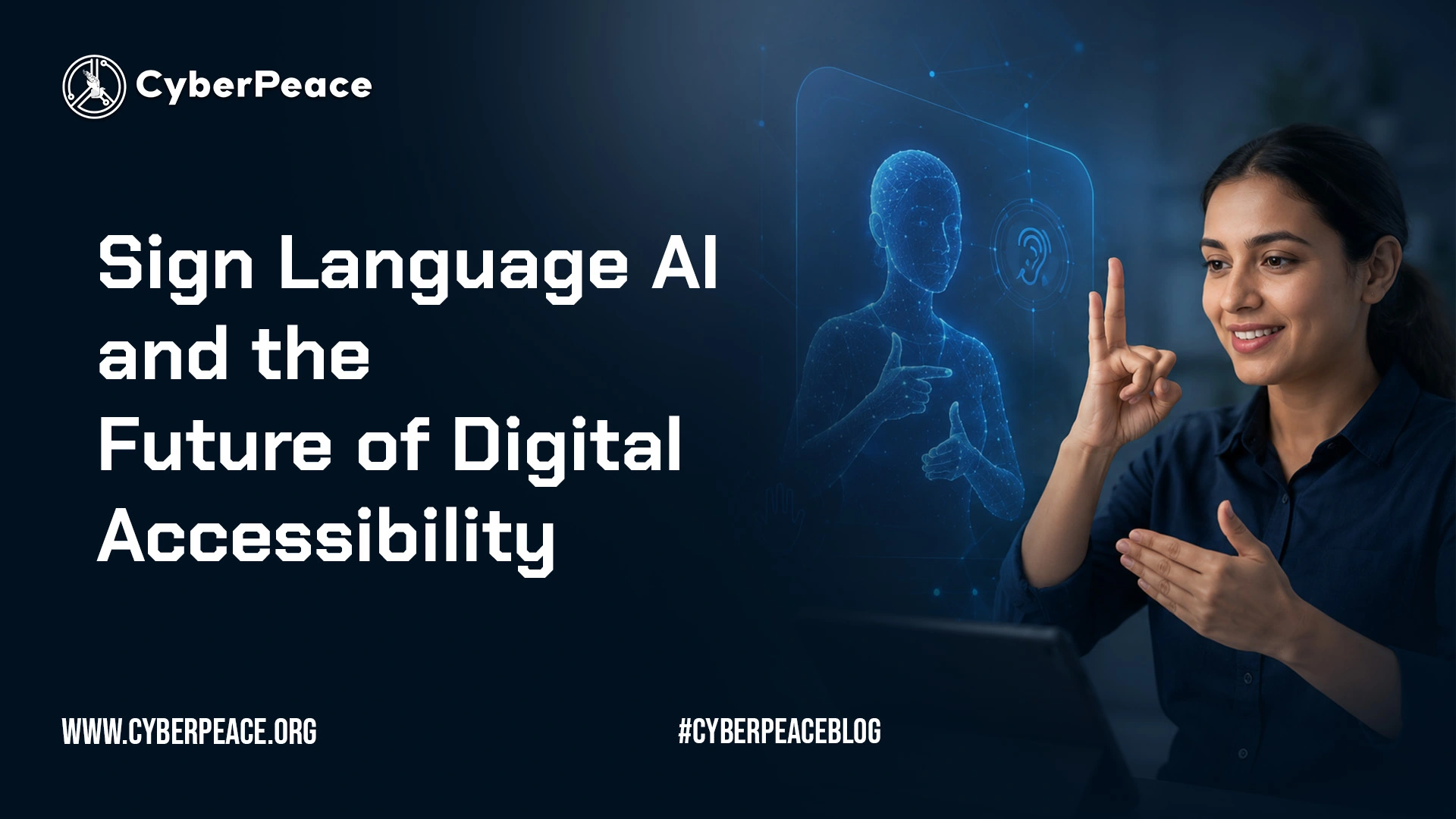
The Emerging Landscape of AI-Enabled Sign Language Technologies
Consumer technology has been moving in a single, steady direction for decades: machines are getting increasingly sensitive to human speech. The phone transcribes what we say into it. An algorithm responds to a question we ask. With just one tap, we can translate across languages. However, sign language, one of the most essential forms of human expression, has largely escaped this change for millions of Deaf and hard-of-hearing people. At last, that omission may finally be narrowing.
For the first time, sign language recognition is now widely available in consumer goods thanks to Google DeepMind’s massively multilingual sign language-to-text model. Starting with American Sign Language to English, the technology currently powers sign-to-text dictation within Gboard and Live Transcribe on Pixel 11. Additional devices and languages are promised. In addition to using Live Transcribe to sign during live conversations, users can sign anywhere they would normally type, such as while conducting a web search, writing a message or interacting with an AI assistant. However, this development’s importance goes far beyond a single accessibility function.
Reimagining How We connect with Technology
The most noteworthy is a conceptual change, sign language is starting to be recognised as a valid interface for human-computer interaction in and of itself , rather than as a modality that technology can accept. Because sign languages are not spoken languages that are represented by hand, this distinction is important. The hands, arms, torso, head and facial expressions all simultaneously convey meaning in these independent natural languages, which have their own grammar, vocabulary and syntax. Compared to traditional voice recognition, this presents a far more complex computing task.
In terms of architecture, the model does not keep raw video instead, it processes pose landmark sequences. The original footage may be destroyed while an on-device mechanism tracks locations on the signer’s body and transmits only geometric coordinates for translation. Instead than using intermediate “gloss” representations, which sometimes lose the spatial and non-manual components crucial to meaning, translation happens directly. Accessibility and privacy meet at this point, a technology designed to grant independence shouldn’t require the surrender of personal biometric information in return.
The Indian question is larger than ASL
A more significant concern for India is raised by this development, whose sign language will artificial intelligence eventually comprehend? It is not possible to import an ASL-to-English model and claim it to be a solution. The linguistic architecture, communities and regional variations of Indian Sign Language are unique. ISL recognition and its translation into Hindi, Telugu and Bengali are the subject of an expanding amount of study yet this same research openly highlights the shortcomings of existing systems including limited vocabularies, isolated word recognition and noticeable sensitivity to individual signing style.
This is not a coincidental distinction. Benchmark accuracy alone cannot be used to gauge inclusive AI; instead, it must be effective under typical circumstances for a variety of individuals, geographical locations and sign languages. It is clear from research on low resource sign languages that over three hundred sign languages are still woefully under-resourced and under-documented. A growing body of research supports signer-adaptive modelling, privacy preserving representations, community co-design and dialectical variety preservation. Therefore, making data collecting, engagement and design more truly inclusive may be the next real advancement rather than further scaling models.
A Legal Architecture already in place
India’s statutory framework offers a firm foundation for this trajectory. The Rights of Persons with Disabilities Act, 2016 defines universal design broadly enough to include cutting edge technologies and assistive devices. It is based on the ideals of equality, dignity, participation and accessibility. Information and communication technology access is specifically covered by Section 42, which requires captioning, sign language interpretation, accessible electronic content and universal design in common electronic products. In this context, accessible AI is an issue of statutory rights rather than technological generosity. This stance is supported by the UN Convention on the Rights of Persons with Disabilities, which addresses accessibility in Article 9 and information access and freedom of speech in Article 21. As a result, the central policy topic is changing from whether technology should be made accessible to how accessibility should be incorporated from the start.
Beyond sign-to-text
Beyond Transcription, Google has expressed aspirations for more sign languages, sign language production and expanded AI capabilities. Future architecture could be imagined as running along a continuous circuit that connects sign, text, speech and AI in both directions rather than just from sign to text. A consumer could deal with a bank without completely relying on an interpreter; a student could learn in her favourite language; or someone could sign a question to an assistant and could get an answer in generated sign language. However , there are still important unanswered questions about this future, such as who owns the data used to train these systems, how signers’ meaningful consent is obtained, how systematic misrecognition of specific communities is prevented and who is responsible when translation fails in an emergency, legal or medical setting.
The Real Measure of Inclusion
The mere fact that a machine has discovered something humans have long understood makes it easy to characterise innovations like these as breakthroughs. The most accurate way to put it is that technology becomes inclusive when individuals can use it without changing who they are or how they interact, not when it acknowledges more human behaviours. This means that India must continue to invest not only in models but also in Indian Sign Language databases, community-led research, accessibility standards and the meaningful involvement of the Deaf and hard-of-hearing populations in both design and evaluation. The ability of a system to detect a hand gesture will not define the future of accessible AI.
References
- https://aclanthology.org/2025.wslp-main.5/
- The Rights of Persons with Disabilities Act 2016 (Act No 49 of 2016), s 42.
- Convention on the Rights of Persons with Disabilities (adopted 13 December 2006, entered into force 3 May 2008) 2515 UNTS 3, art 9.

Introduction
The fast-paced development of technology and the wider use of social media platforms have led to the rapid dissemination of misinformation with characteristics such as diffusion, fast propagation speed, wide influence, and deep impact through these platforms. Social Media Algorithms and their decisions are often perceived as a black box introduction that makes it impossible for users to understand and recognise how the decision-making process works.
Social media algorithms may unintentionally promote false narratives that garner more interactions, further reinforcing the misinformation cycle and making it harder to control its spread within vast, interconnected networks. Algorithms judge the content based on the metrics, which is user engagement. It is the prerequisite for algorithms to serve you the best. Hence, algorithms or search engines enlist relevant items you are more likely to enjoy. This process, initially, was created to cut the clutter and provide you with the best information. However, sometimes it results in unknowingly widespread misinformation due to the viral nature of information and user interactions.
Analysing the Algorithmic Architecture of Misinformation
Social media algorithms, designed to maximize user engagement, can inadvertently promote misinformation due to their tendency to trigger strong emotions, creating echo chambers and filter bubbles. These algorithms prioritize content based on user behaviour, leading to the promotion of emotionally charged misinformation. Additionally, the algorithms prioritize content that has the potential to go viral, which can lead to the spread of false or misleading content faster than corrections or factual content.
Additionally, popular content is amplified by platforms, which spreads it faster by presenting it to more users. Limited fact-checking efforts are particularly difficult since, by the time they are reported or corrected, erroneous claims may have gained widespread acceptance due to delayed responses. Social media algorithms find it difficult to distinguish between real people and organized networks of troll farms or bots that propagate false information. This creates a vicious loop where users are constantly exposed to inaccurate or misleading material, which strengthens their convictions and disseminates erroneous information through networks.
Though algorithms, primarily, aim to enhance user engagement by curating content that aligns with the user's previous behaviour and preferences. Sometimes this process leads to "echo chambers," where individuals are exposed mainly to information that reaffirms their beliefs which existed prior, effectively silencing dissenting voices and opposing viewpoints. This curated experience reduces exposure to diverse opinions and amplifies biased and polarising content, making it arduous for users to discern credible information from misinformation. Algorithms feed into a feedback loop that continuously gathers data from users' activities across digital platforms, including websites, social media, and apps. This data is analysed to optimise user experiences, making platforms more attractive. While this process drives innovation and improves user satisfaction from a business standpoint, it also poses a danger in the context of misinformation. The repetitive reinforcement of user preferences leads to the entrenchment of false beliefs, as users are less likely to encounter fact-checks or corrective information.
Moreover, social networks and their sheer size and complexity today exacerbate the issue. With billions of users participating in online spaces, misinformation spreads rapidly, and attempting to contain it—such as by inspecting messages or URLs for false information—can be computationally challenging and inefficient. The extensive amount of content that is shared daily means that misinformation can be propagated far quicker than it can get fact-checked or debunked.
Understanding how algorithms influence user behaviour is important to tackling misinformation. The personalisation of content, feedback loops, the complexity of network structures, and the role of superspreaders all work together to create a challenging environment where misinformation thrives. Hence, highlighting the importance of countering misinformation through robust measures.
The Role of Regulations in Curbing Algorithmic Misinformation
The EU's Digital Services Act (DSA) applicable in the EU is one of the regulations that aims to increase the responsibilities of tech companies and ensure that their algorithms do not promote harmful content. These regulatory frameworks play an important role they can be used to establish mechanisms for users to appeal against the algorithmic decisions and ensure that these systems do not disproportionately suppress legitimate voices. Independent oversight and periodic audits can ensure that algorithms are not biased or used maliciously. Self-regulation and Platform regulation are the first steps that can be taken to regulate misinformation. By fostering a more transparent and accountable ecosystem, regulations help mitigate the negative effects of algorithmic misinformation, thereby protecting the integrity of information that is shared online. In the Indian context, the Intermediary Guidelines, 2023, Rule 3(1)(b)(v) explicitly prohibits the dissemination of misinformation on digital platforms. The ‘Intermediaries’ are obliged to ensure reasonable efforts to prevent users from hosting, displaying, uploading, modifying, publishing, transmitting, storing, updating, or sharing any information related to the 11 listed user harms or prohibited content. This rule aims to ensure platforms identify and swiftly remove misinformation, and false or misleading content.
Cyberpeace Outlook
Understanding how algorithms prioritise content will enable users to critically evaluate the information they encounter and recognise potential biases. Such cognitive defenses can empower individuals to question the sources of the information and report misleading content effectively. In the future of algorithms in information moderation, platforms should evolve toward more transparent, user-driven systems where algorithms are optimised not just for engagement but for accuracy and fairness. Incorporating advanced AI moderation tools, coupled with human oversight can improve the detection and reduction of harmful and misleading content. Collaboration between regulatory bodies, tech companies, and users will help shape the algorithms landscape to promote a healthier, more informed digital environment.
References:
- https://www.advancedsciencenews.com/misformation-spreads-like-a-nuclear-reaction-on-the-internet/
- https://www.niemanlab.org/2024/09/want-to-fight-misinformation-teach-people-how-algorithms-work/
- Press Release: Press Information Bureau (pib.gov.in)
