
#FactCheck-Old Dehradun Video Falsely Shared as Police Assault on Women Protesters at Jantar Mantar
Executive Summary
A video showing a scuffle between a group of women and police personnel is being widely shared on social media with the claim that it shows Delhi Police assaulting women protesters at Jantar Mantar. CyberPeace Research Wing ’s research found the claim to be misleading. The viral video is not from Jantar Mantar in Delhi but from an unrelated incident in Dehradun, Uttarakhand. The old footage is being falsely circulated as a recent video from the ongoing protests.
Claim:
A Facebook user shared the viral video claiming that Delhi Police personnel were assaulting women and girls during the protest at Jantar Mantar.
The post link, archive link and screenshot are provided below.
https://www.facebook.com/reel/2864826433884333

Fact Check:
To verify the claim, we extracted keyframes from the viral video and conducted a reverse image search using Google Lens. This led us to the same video uploaded on the Instagram account iamvikasbaliyan on October 15, 2025.
https://www.instagram.com/reels/DP0H_SSE625/
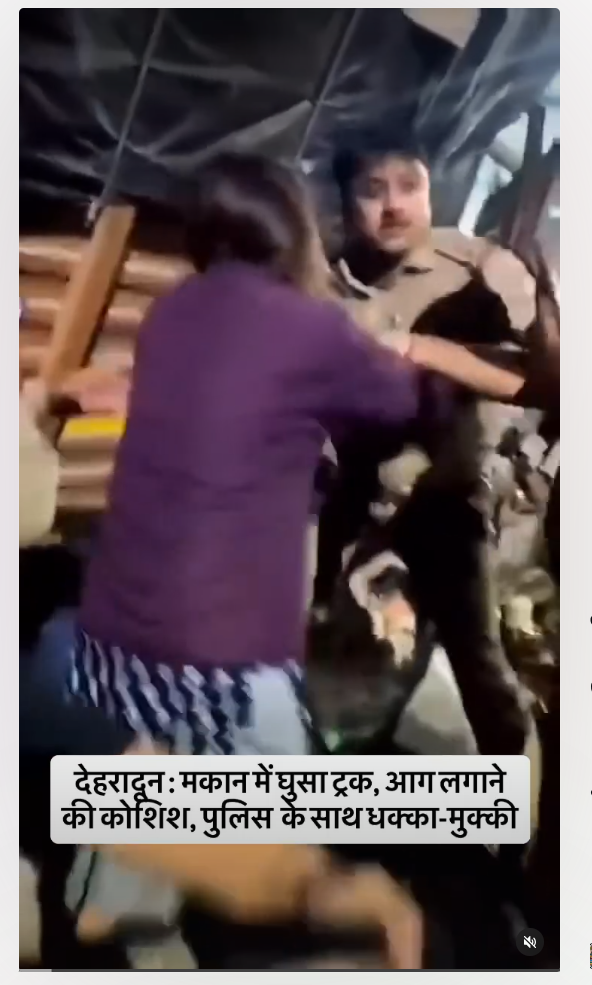
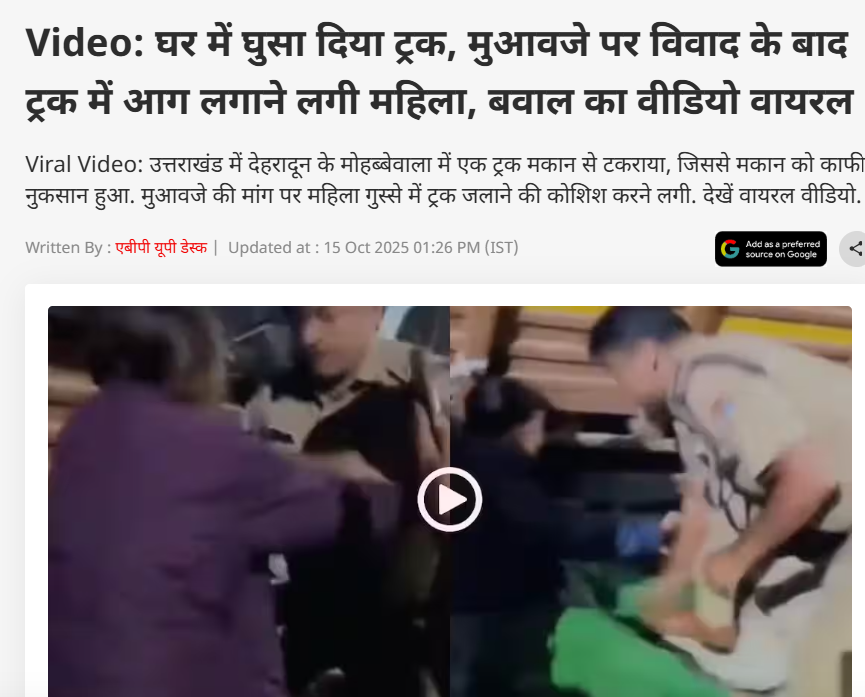
According to the information shared with the post, the incident took place in Mohabbewala, Dehradun, Uttarakhand, after a truck crashed into a house, damaging the property. The homeowner allegedly demanded compensation and, when the issue remained unresolved, attempted to set the truck on fire. When police personnel intervened to stop her, a scuffle broke out between the woman and the police. The viral video captures this incident. In the next stage of the research, we found an ABP News report published on October 15, 2025, carrying the same visuals as the viral video. The report also identified the incident as having occurred in Mohabbewala, Dehradun.
Conclusion:
CyberPeace Research Wing ’s research found the viral claim to be misleading. The video does not show Delhi Police assaulting women protesters at Jantar Mantar. It is an old video from Dehradun, Uttarakhand, showing an unrelated incident that has been falsely linked to the ongoing protests in Delhi.

Related Blogs
Introduction
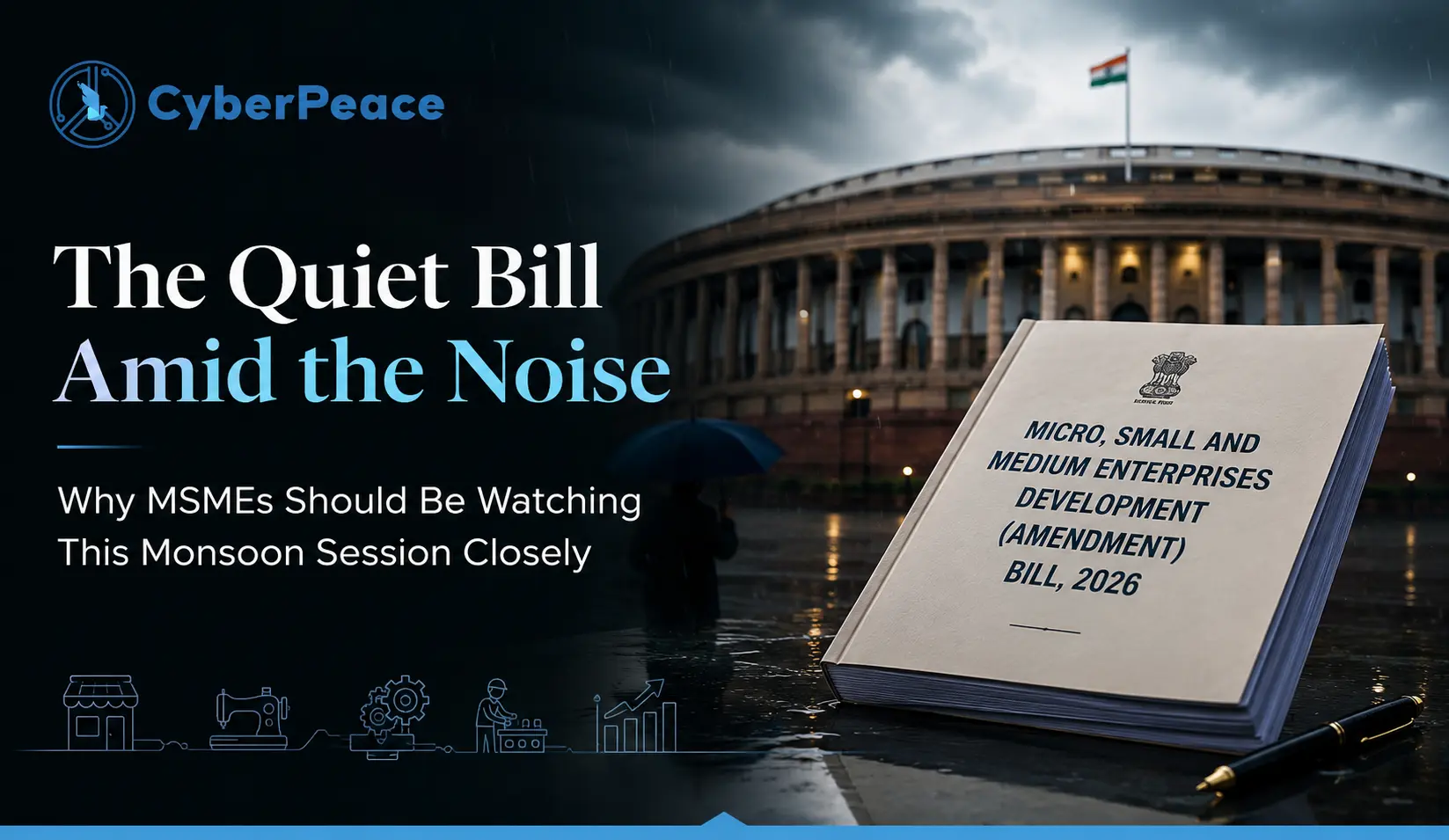
Parliament is about to begin its Monsoon Session from July 20, 2026 to August 13, 2026, and the mood in Delhi already feels charged. Ahead of the opening bell, the government has flagged five new bills for introduction, alongside a couple of pending pieces of legislation it may take up for passage. Predictably, the political oxygen in the run-up has gone almost entirely to what isn't on that list — reports this week noted the conspicuous absence of the long-anticipated Delimitation Bill and a Constitutional amendment for women's reservation in the Lok Sabha, a gap that has already drawn sharp reactions from Congress leaders. What is on the list has generated its own share of noise: a Foreign Contribution (Regulation) Amendment Bill that NGOs are watching warily, a Prevention of Insults to National Honour (Amendment) Bill tied to safeguards for the National Flag and Anthem, and a Supreme Court (Number of Judges) Amendment Bill proposing to raise the Court's sanctioned strength from 33 to 37. Every one of these will command its share of prime-time debate. But tucked quietly among the five is a bill that, headline for headline, may end up mattering more to the everyday Indian economy than all the others combined: the Micro, Small and Medium Enterprises Development (Amendment) Bill, 2026.
MSMEs play a foundational role in India’s economic engine, powering employment, entrepreneurship and growth across the country. That makes this Bill one worth watching closely, because even seemingly technical changes to the MSME framework could have very real consequences for millions of businesses and the people whose livelihoods depend on them.
What the Bill Actually Does
The MSME sector hasn't seen a structural legal update since the original MSMED Act of 2006 nearly two decades in an economy that looks nothing like it did back then. The new amendment is designed to close that gap. According to the government's own description of the bill, it aims to align the 2006 law with the sector's changed realities, improve ease of doing business, and shift toward what officials are calling "trust-based" regulation rather than a purely compliance-driven approach.
Three provisions stand out.
- First, it strengthens the mechanism for resolving delayed payments to micro and small enterprises, arguably the single biggest complaint MSME owners have voiced for years.
- Second, it creates a pathway to enforce arbitral awards specifically for micro and small units, giving smaller suppliers real teeth when a dispute is decided in their favor.
- Third, it gives states more flexibility in deciding the composition of Micro and Small Enterprises Facilitation Councils (MSEFCs) , the bodies that adjudicate payment disputes which should allow more councils to be formed and cut down on case backlogs.
The Delayed Payment Crisis, in Numbers
To understand why this matters, look at the scale of the problem the bill is trying to fix. The MSME Ministry's Samadhaan portal, which lets small enterprises file delayed-payment complaints online, had received close to 2.57 lakh applications as of June 2026, involving claimed dues of roughly ₹55,244 crore. Of these, only about 58,000 cases had actually been resolved by facilitation councils. That's a resolution rate that leaves the vast majority of small businesses waiting often for money already owed to them for goods or services delivered.
The government did tighten the screws somewhat in 2024 through Section 43B(h) of the Income Tax Act, which denies large buyers a tax deduction if they don't pay MSME suppliers within the 15-to-45-day window mandated by law. Enforcement, however, has remained patchy, and industry bodies like Assocham have continued to flag delayed payments including from PSUs and government departments as a core source of financial stress for small firms, with high interest charges on overdue statutory dues compounding the problem.
Why This Is Bigger Than One Bill
A regulation targeting the payments practices of India's micro, small, and medium-sized enterprises is more than just paperwork and procedural wrangling; the stakes for the Indian economy and society are enormous. According to the 2025-26 Economic Survey, MSMEs now contribute about 31.1% of India’s GDP, 35.4% of its manufacturing output, and 48.58% of its exports, while employing 33 to 39 crore people and providing India’s second largest source of employment after agriculture. The official Udyam database of MSMEs crossed the 8.7 crore mark by June 2026, underscoring a clear trend towards the sector’s formalisation in the last few years. Access to finance is the second pillar of MSME empowerment. The Credit Guarantee Fund Trust for Micro and Small Enterprises has authorised several lakh crores in guarantees, and most recently, the government increased its loan guarantee cover ceiling from Rs 5 crore to Rs 10 crore to facilitate more collateral-free loans to businesses. However, the actual credit gap remains estimated in the tens of lakh crores, with the biggest gaps faced by women-led and medium enterprises. While the MSME Bill doesn’t directly address access to finance, improved and quicker payment settlement mechanisms are expected to relieve some working-capital stress and dissuade small firms from falling into expensive informal credit markets. The MSME Bill also adds to a wave of recent measures to de-regulate smaller enterprises, such as the Jan Vishwas (Amendment of Provisions) Bill that was passed earlier in 2026. That Bill modified or deleted criminal offences with a more lenient civil equivalent across numerous central acts, a change industry lobby FISME called a significant move towards ease of doing business.
The Data Protection Clock Is Already Ticking - The Gap Payment Reform Won't Close
It's also worth noting that India's Digital Personal Data Protection (DPDP) Act, 2023 is now in force, with rules notified in November 2025 and full compliance — including breach notification, security safeguards. With nearly half of Indian small businesses already reporting cyber incidents each year, MSMEs have a narrowing runway to build the security practices this regime will expect of them. Given that scale of exposure, there's a real case for the MSME Amendment Bill, or a companion policy, to go further — mandating baseline cyber-hygiene standards for Udyam-registered firms or tying credit-guarantee schemes to demonstrated security practices. Payment reform alone protects an MSME's right to be paid; it does little to protect what happens to that money, or that data, once it arrives.Payment reform alone protects an MSME's right to be paid; it does little to protect what happens to that money, or that data, once it arrives. CyberPeace calls on relevant agencies to issue clearer advisories and introduce additional, cost-friendly cybersecurity safeguards tailored to MSMEs' limited budgets and IT capacity.
What to Watch For
Whether the MSME Bill gets the attention it deserves during this session is an open question. With the Opposition expected to spend political capital on delimitation, the Vande Mataram bill, unemployment, inflation, and the NEET paper-leak controversy, a technical amendment to an enterprise development law is unlikely to dominate floor debate even though it may end up affecting more households than any single headline bill this session.
Conclusion
For India's roughly 7-8 crore MSMEs, most of them family-run and thinly capitalised, the details that get finalised in the coming weeks how MSEFCs are reconstituted, how arbitral awards get enforced, how "trust-based" regulation is actually defined will matter far more than who wins the argument over delimitation. It's worth watching this one closely, even if the cameras are pointed elsewhere.
Sources
- https://www.business-standard.com/india-news/vande-mataram-bill-among-five-new-legislations-listed-for-monsoon-session-126071601319_1.html
- https://www.prokerala.com/news/articles/a1780267.html

Introduction
In September 2025, social media feeds were flooded with strikingly vintage saree-type portraits. These images were not taken by professional photographers, but AI-generated images. More than a million people turned to the "Nano Banana" AI tool of Google Gemini, uploading their ordinary selfies and watching them transform into Bollywood-style, cinematic, 1990s posters. The popularity of this trend is evident, as are the concerns of law enforcement agencies and cybersecurity experts regarding risks of infringement of privacy, unauthorised data sharing, and threats related to deepfake misuse.
What is the Trend?
This trend in AI sarees is created using Google Geminis' Nano Banana image-editing tool, editing and morphing uploaded selfies into glitzy vintage portraits in traditional Indian attire. A user would upload a clear photograph of a solo subject and enter prompts to generate images of cinematic backgrounds, flowing chiffon sarees, golden-hour ambience, and grainy film texture, reminiscent of classic Bollywood imagery. Since its launch, the tool has processed over 500 million images, with the saree trend marking one of its most popular uses. Photographs are uploaded to an AI system, which uses machine learning to alter the pictures according to the description specified. The transformed AI portraits are then shared by users on their Instagram, WhatsApp, and other social media platforms, thereby contributing to the viral nature of the trend.
Law Enforcement Agency Warnings
- A few Indian police agencies have issued strong advisories against participation in such trends. IPS Officer VC Sajjanar warned the public: "The uploading of just one personal photograph can make greedy operators go from clicking their fingers to joining hands with criminals and emptying one's bank account." His advisory had further warned that sharing personal information through trending apps can lead to many scams and fraud.
- Jalandhar Rural Police issued a comprehensive warning stating that such applications put the user at risk of identity theft and online fraud when personal pictures are uploaded. A senior police officer stated: "Once sensitive facial data is uploaded, it can be stored, analysed, and even potentially misused to open the way for cyber fraud, impersonation, and digital identity crimes.
The Cyber Crime Police also put out warnings on social media platforms regarding how photo applications appear entertaining but can pose serious risks to user privacy. They specifically warned that selfies uploaded can lead to data misuse, deepfake creation, and the generation of fake profiles, which are punishable under Sections 66C and 66D of the IT Act 2000.
Consequences of Such Trends
The massification of AI photo trends has several severe effects on private users and society as a whole. Identity fraud and theft are the main issues, as uploaded biometric information can be used by hackers to generate imitated identities, evading security measures or committing financial fraud. The facial recognition information shared by means of these trends remains a digital asset that could be abused years after the trend has passed. ‘Deepfake’ production is another tremendous threat because personal images shared on AI platforms can be utilised to create non-consensual artificial media. Studies have found that more than 95,000 deepfake videos circulated online in 2023 alone, a 550% increase from 2019. The images uploaded can be leveraged to produce embarrassing or harmful content that can cause damage to personal reputation, relationships, and career prospects.
Financial exploitation is also when fake applications in the guise of genuine AI tools strip users of their personal data and financial details. Such malicious platforms tend to look like well-known services so as to trick users into divulging sensitive information. Long-term privacy infringement also comes about due to the permanent retention and possible commercial exploitation of personal biometric information by AI firms, even when users close down their accounts.
Privacy Risks
A few months ago, the Ghibli trend went viral, and now this new trend has taken over. Such trends may subject users to several layers of privacy threats that go far beyond the instant gratification of taking pleasing images. Harvesting of biometric data is the most critical issue since facial recognition information posted on these sites becomes inextricably linked with user identities. Under Google's privacy policy for Gemini tools, uploaded images might be stored temporarily for processing and may be kept for longer periods if used for feedback purposes or feature development.
Illegal data sharing happens when AI platforms provide user-uploaded content to third parties without user consent. A Mozilla Foundation study in 2023 discovered that 80% of popular AI apps had either non-transparent data policies or obscured the ability of users to opt out of data gathering. This opens up opportunities for personal photographs to be shared with anonymous entities for commercial use. Exploitation of training data includes the use of personal photos uploaded to enhance AI models without notifying or compensating users. Although Google provides users with options to turn off data sharing within privacy settings, most users are ignorant of these capabilities. Integration of cross-platform data increases privacy threats when AI applications use data from interlinked social media profiles, providing detailed user profiles that can be taken advantage of for purposeful manipulation or fraud. Inadequacy of informed consent continues to be a major problem, with users engaging in trends unaware of the entire context of sharing information. Studies show that 68% of individuals show concern regarding the misuse of AI app data, but 42% use these apps without going through the terms and conditions.
CyberPeace Expert Recommendations
While the Google Gemini image trend feature operates under its own terms and conditions, it is important to remember that many other tools and applications allow users to generate similar content. Not every platform can be trusted without scrutiny, so users who engage in such trends should do so only on trustworthy platforms and make reliable, informed choices. Above all, following cybersecurity best practices and digital security principles remains essential.
Here are some best practices:-
1.Immediate Protection Measures for User
In a nutshell, protection of personal information may begin by not uploading high-resolution personal photos into AI-based applications, especially those trained for facial recognition. Instead, a person can play with stock images or non-identifiable pictures to the degree that it satisfies the program's creative features without compromising biometric security. Strong privacy settings should exist on every social media platform and AI app by which a person can either limit access to their data, content, or anything else.
2.Organisational Safeguards
AI governance frameworks within organisations should enumerate policies regarding the usage of AI tools by employees, particularly those concerning the upload of personal data. Companies should appropriately carry out due diligence before the adoption of an AI product made commercially available for their own use in order to ensure that such a product has its privacy and security levels as suitable as intended by the company. Training should instruct employees regarding deepfake technology.
3.Technical Protection Strategies
Deepfake detection software should be used. These tools, which include Microsoft Video Authenticator, Intel FakeCatcher, and Sensity AI, allow real-time detection with an accuracy higher than 95%. Use blockchain-based concepts to verify content to create tamper-proof records of original digital assets so that the method of proposing deepfake content as original remains very difficult.
4.Policy and Awareness Initiatives
For high-risk transactions, especially in banks and identity verification systems, authentication should include voice and face liveness checks to ensure the person is real and not using fake or manipulated media. Implement digital literacy programs to empower users with knowledge about AI threats, deepfake detection techniques, and safe digital practices. Companies should also liaise with law enforcement, reporting purported AI crimes, thus offering assistance in combating malicious applications of synthetic media technology.
5.Addressing Data Transparency and Cross-Border AI Security
Regulatory systems need to be called for requiring the transparency of data policies in AI applications, along with providing the rights and choices to users regarding either Biometric data or any other data. Promotion must be given to the indigenous development of AI pertaining to India-centric privacy concerns, assuring the creation of AI models in a secure, transparent, and accountable manner. In respect of cross-border AI security concerns, there must be international cooperation for setting common standards of ethical design, production, and use of AI. With the virus-like contagiousness of AI phenomena such as saree editing trends, they portray the potential and hazards of the present-day generation of artificial intelligence. While such tools offer newer opportunities, they also pose grave privacy and security concerns, which should have been considered quite some time ago by users, organisations, and policy-makers. Through the setting up of all-around protection mechanisms and keeping an active eye on digital privacy, both individuals and institutions will reap the benefits of this AI innovation, and they shall not fall on the darker side of malicious exploitation.
References
- https://www.hindustantimes.com/trending/amid-google-gemini-nano-banana-ai-trend-ips-officer-warns-people-about-online-scams-101757980904282.html%202
- https://www.moneycontrol.com/news/india/viral-banana-ai-saree-selfies-may-risk-fraud-warn-jalandhar-rural-police-13549443.html
- https://www.parliament.nsw.gov.au/researchpapers/Documents/Sexually%20explicit%20deepfakes.pdf
- https://www.mckinsey.com/capabilities/quantumblack/our-insights/the-state-of-ai-in-2023-generative-ais-breakout-year
- https://www.mckinsey.com/capabilities/quantumblack/our-insights/the-state-of-ai-in-2023-generative-ais-breakout-year
- https://socradar.io/top-10-ai-deepfake-detection-tools-2025/
Executive Summary
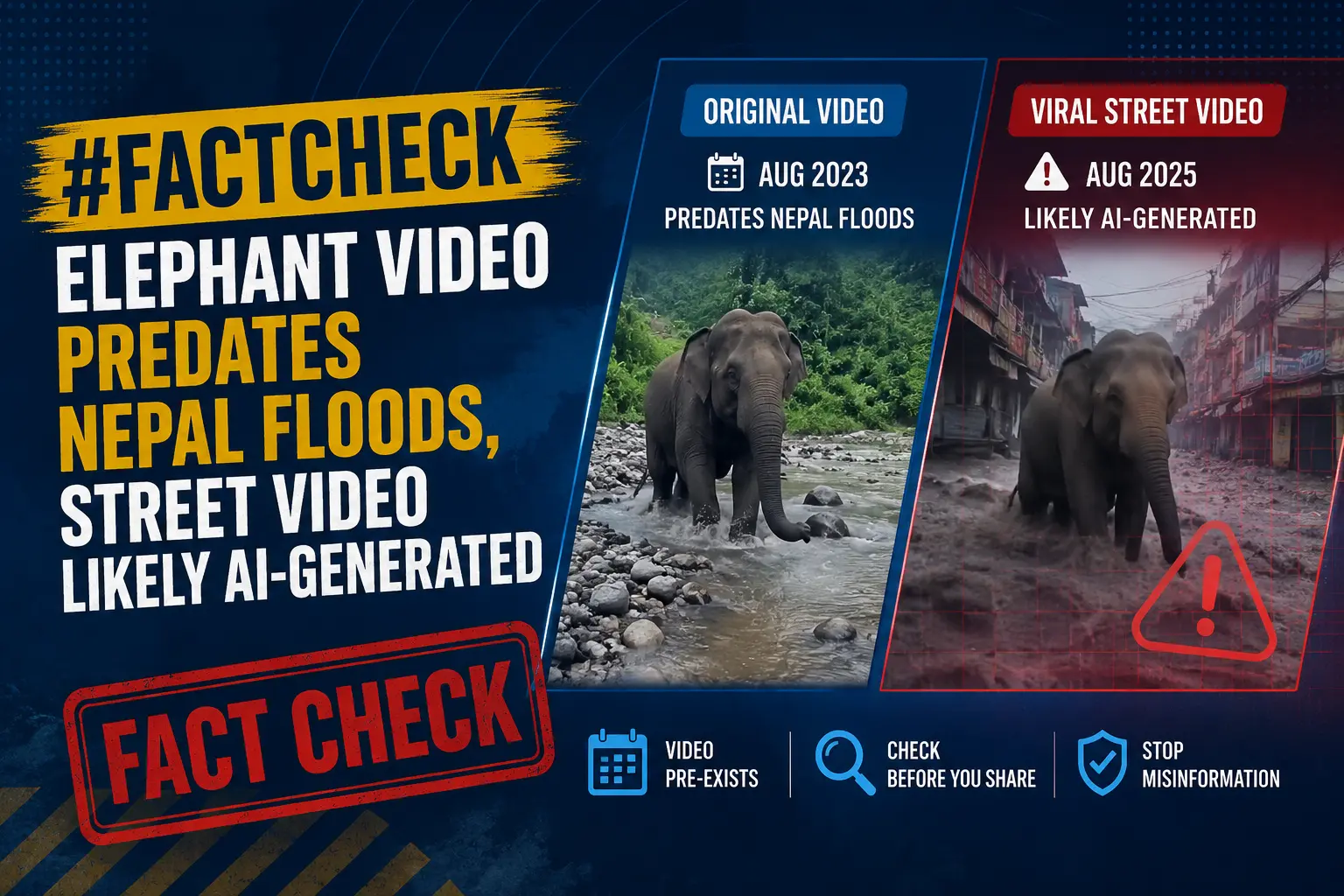
Amid the floods in Nepal, several videos are being shared on social media, claiming to show the current situation in the country. A research done by the Research Wing of the CyberPeace found that the video showing elephants is from an incident that occurred before the floods in Nepal, while the video showing the street is likely AI-generated.
Claim 1
Videos claiming to show a street being swept away by flash floods in Nepal and a herd of elephants being carried away by the floods and reaching Uttar Pradesh are going viral on social media.
https://www.instagram.com/p/DcimGaiiCa7/

Claim 2
A newly surfaced video purportedly shows the devastation caused by floods in Nepal, with cars and homes being destroyed. It is being claimed that 350 people have died and 750 are missing so far
https://x.com/UTDbrims/status/2092829398462341484?s=48

Fact Check 1
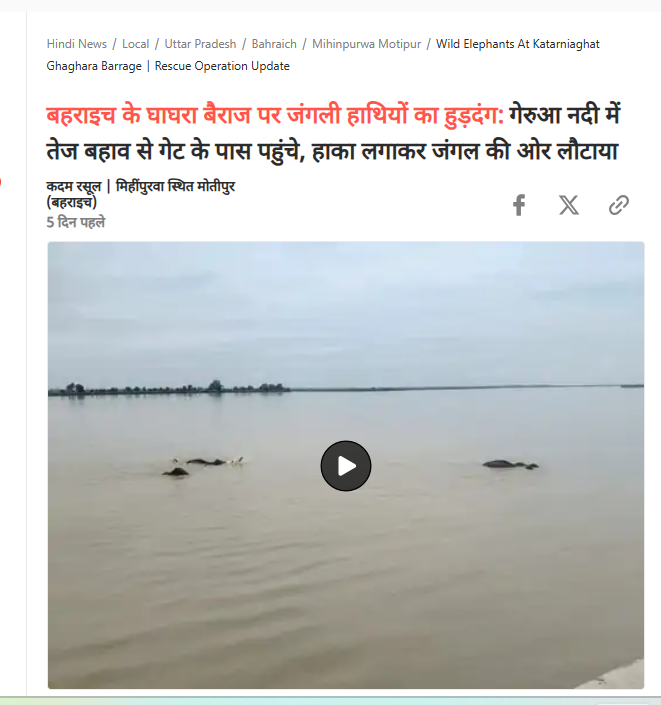
The first video claims to show a herd of wild elephants that was swept away by the floods in Nepal and reached Uttar Pradesh. We conducted a reverse image search of the first video using Google Lens and found a report by Hindi news publication Dainik Bhaskar, which shared a video featuring visuals similar to those in the viral clip. According to the report, a herd of wild elephants coming from the Gerua River reached the gates of the Chaudhary Charan Singh Ghaghra Barrage in Bahraich district, Uttar Pradesh, due to the strong current of the river. The report also quoted the Forest Range Officer as saying that the area is adjacent to an elephant corridor, which is why elephants frequently move through the region.
Fact Check 2
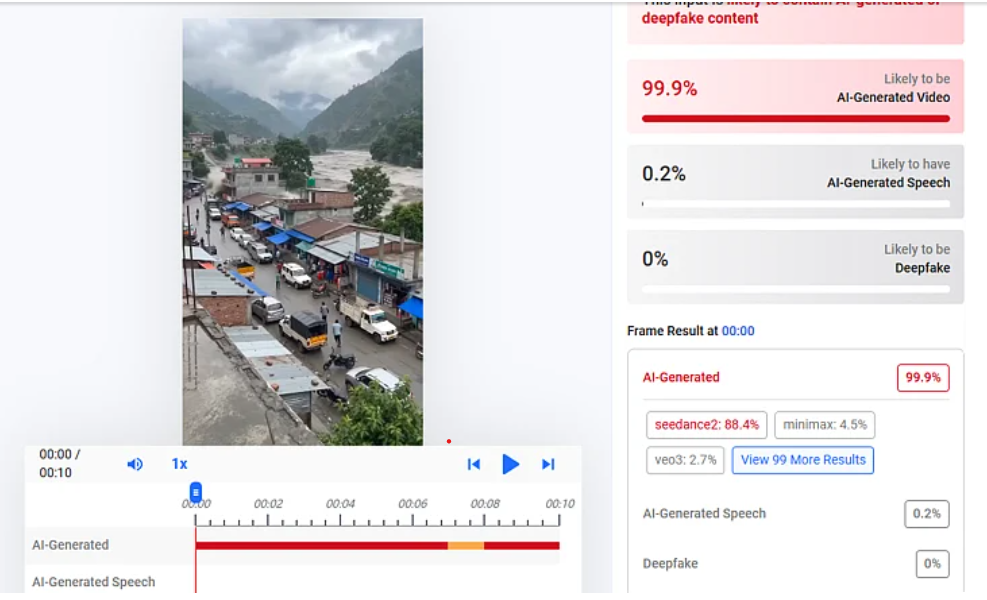
The second video shows a street being completely swept away by floodwaters. We conducted a reverse image search of the video using Google Lens but could not find any credible source that had shared the footage. Following this, we ran the video through the AI detection tool Hive Moderation, which flagged it as 99 percent likely to be AI-generated.
Conclusion
Our research found that the viral videos being shared as scenes of devastation caused by the recent floods in Nepal are misleading. The video showing a herd of elephants is from a separate incident in Bahraich, Uttar Pradesh, and predates the Nepal floods. Meanwhile, the video showing a street being swept away could not be traced to any credible source and was flagged as 99 percent likely to be AI-generated by Hive Moderation.
