
#FactCheck-No, This Video Does Not Show Soldiers Travelling to Delhi to Support CJP Protest
Executive Summary:
A video showing a convoy of soldiers travelling on motorcycles is being widely shared on social media with the claim that the personnel were heading towards Delhi’s Jantar Mantar to support the ongoing protest led by the Cockroach Janata Party (CJP). CyberPeace Research Wing’s research found the claim to be false. The viral video is not related to the CJP protest at Jantar Mantar. The footage predates the ongoing demonstration and is being circulated with a misleading claim.
Claim:
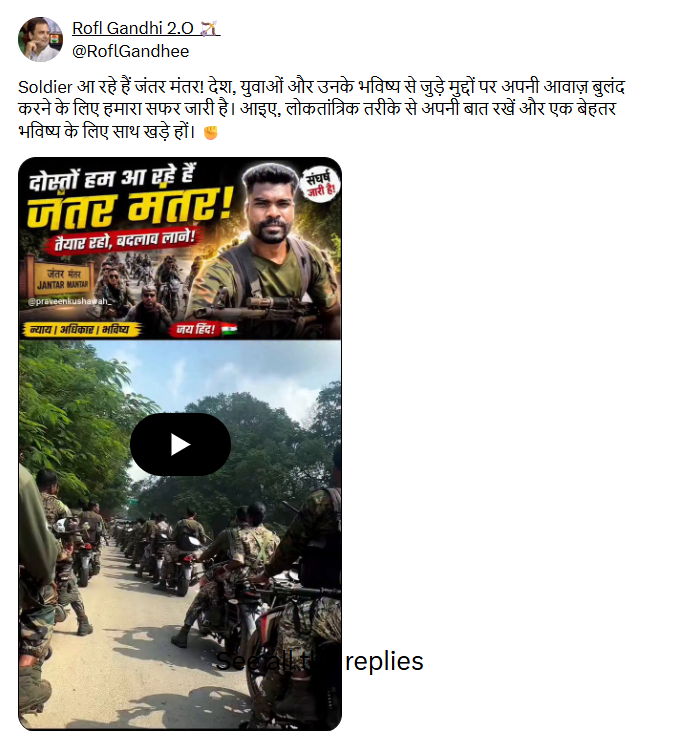
A social media user shared the viral video claiming that soldiers were travelling towards Delhi’s Jantar Mantar to support the youth participating in the CJP protest over issues related to the country’s education system. The post claimed that the soldiers were joining the protest to raise their voice on issues concerning the nation, youth, and their future.
https://x.com/RoflGandhee/status/2079986496556204066?s=20
A reverse image search using Google Lens led the Desk to a video uploaded on a YouTube channel named Commando Journey. Upon comparison, the Desk found that the YouTube video contained the same visuals as the viral video under research. Further verification of the video details revealed that the footage predates the ongoing Cockroach Janata Party (CJP) protest at Jantar Mantar. The protest, which began in June 2026, has been demanding the resignation of Union Education Minister Dharmendra Pradhan over alleged irregularities in examinations. The video was uploaded on the YouTube channel in February 2026, several months before the CJP protest began, confirming that it has been falsely linked to the recent demonstration.
https://www.youtube.com/shorts/cMvai580gdo

As part of the next phase of the research, the Desk reviewed several other videos uploaded on the same YouTube channel. During the analysis, the Desk identified multiple videos featuring visuals matching those seen in the viral clip. However, these videos were also uploaded before the CJP protest in Delhi, with one of the videos dating back to October 2025.
https://www.youtube.com/shorts/7eDc9TqOpzM

Conclusion
While the Desk could not independently verify the exact origin and context of the video, the research established that the footage predates the CJP protest and has been falsely linked to the demonstration. Based on the findings, the Desk concluded that the video shared on social media does not show soldiers travelling to Delhi’s Jantar Mantar to support the Cockroach Janata Party (CJP) protest. The footage is unrelated to the ongoing protest and has been circulated with a misleading claim.

Related Blogs

As AI language models become more powerful, they are also becoming more prone to errors. One increasingly prominent issue is AI hallucinations, instances where models generate outputs that are factually incorrect, nonsensical, or entirely fabricated, yet present them with complete confidence. Recently, ChatGPT released two new models—o3 and o4-mini, which differ from earlier versions as they focus more on step-by-step reasoning rather than simple text prediction. With the growing reliance on chatbots and generative models for everything from news summaries to legal advice, this phenomenon poses a serious threat to public trust, information accuracy, and decision-making.
What Are AI Hallucinations?
AI hallucinations occur when a model invents facts, misattributes quotes, or cites nonexistent sources. This is not a bug but a side effect of how Large Language Models (LLMs) work, and it is only the probability that can be reduced, not their occurrence altogether. Trained on vast internet data, these models predict what word is likely to come next in a sequence. They have no true understanding of the world or facts, they simulate reasoning based on statistical patterns in text. What is alarming is that the newer and more advanced models are producing more hallucinations, not fewer. seemingly counterintuitive. This has been prevalent reasoning-based models, which generate answers step-by-step in a chain-of-thought style. While this can improve performance on complex tasks, it also opens more room for errors at each step, especially when no factual retrieval or grounding is involved.
As per reports shared on TechCrunch, it mentioned that when users asked AI models for short answers, hallucinations increased by up to 30%. And a study published in eWeek found that ChatGPT hallucinated in 40% of tests involving domain-specific queries, such as medical and legal questions. This was not, however, limited to this particular Large Language Model, but also similar ones like DeepSeek. Even more concerning are hallucinations in multimodal models like those used for deepfakes. Forbes reports that some of these models produce synthetic media that not only look real but are also capable of contributing to fabricated narratives, raising the stakes for the spread of misinformation during elections, crises, and other instances.
It is also notable that AI models are continually improving with each version, focusing on reducing hallucinations and enhancing accuracy. New features, such as providing source links and citations, are being implemented to increase transparency and reliability in responses.
The Misinformation Dilemma
The rise of AI-generated hallucinations exacerbates the already severe problem of online misinformation. Hallucinated content can quickly spread across social platforms, get scraped into training datasets, and re-emerge in new generations of models, creating a dangerous feedback loop. However, it helps that the developers are already aware of such instances and are actively charting out ways in which we can reduce the probability of this error. Some of them are:
- Retrieval-Augmented Generation (RAG): Instead of relying purely on a model’s internal knowledge, RAG allows the model to “look up” information from external databases or trusted sources during the generation process. This can significantly reduce hallucination rates by anchoring responses in verifiable data.
- Use of smaller, more specialised language models: Lightweight models fine-tuned on specific domains, such as medical records or legal texts. They tend to hallucinate less because their scope is limited and better curated.
Furthermore, transparency mechanisms such as source citation, model disclaimers, and user feedback loops can help mitigate the impact of hallucinations. For instance, when a model generates a response, linking back to its source allows users to verify the claims made.
Conclusion
AI hallucinations are an intrinsic part of how generative models function today, and such a side-effect would continue to occur until foundational changes are made in how models are trained and deployed. For the time being, developers, companies, and users must approach AI-generated content with caution. LLMs are, fundamentally, word predictors, brilliant but fallible. Recognising their limitations is the first step in navigating the misinformation dilemma they pose.
References
- https://www.eweek.com/news/ai-hallucinations-increase/
- https://www.resilience.org/stories/2025-05-11/better-ai-has-more-hallucinations/
- https://www.ekathimerini.com/nytimes/1269076/ai-is-getting-more-powerful-but-its-hallucinations-are-getting-worse/
- https://techcrunch.com/2025/05/08/asking-chatbots-for-short-answers-can-increase-hallucinations-study-finds/
- https://en.as.com/latest_news/is-chatgpt-having-robot-dreams-ai-is-hallucinating-and-producing-incorrect-information-and-experts-dont-know-why-n/
- https://www.newscientist.com/article/2479545-ai-hallucinations-are-getting-worse-and-theyre-here-to-stay/
- https://www.forbes.com/sites/conormurray/2025/05/06/why-ai-hallucinations-are-worse-than-ever/
- https://towardsdatascience.com/how-i-deal-with-hallucinations-at-an-ai-startup-9fc4121295cc/
- https://www.informationweek.com/machine-learning-ai/getting-a-handle-on-ai-hallucinations
Executive Summary
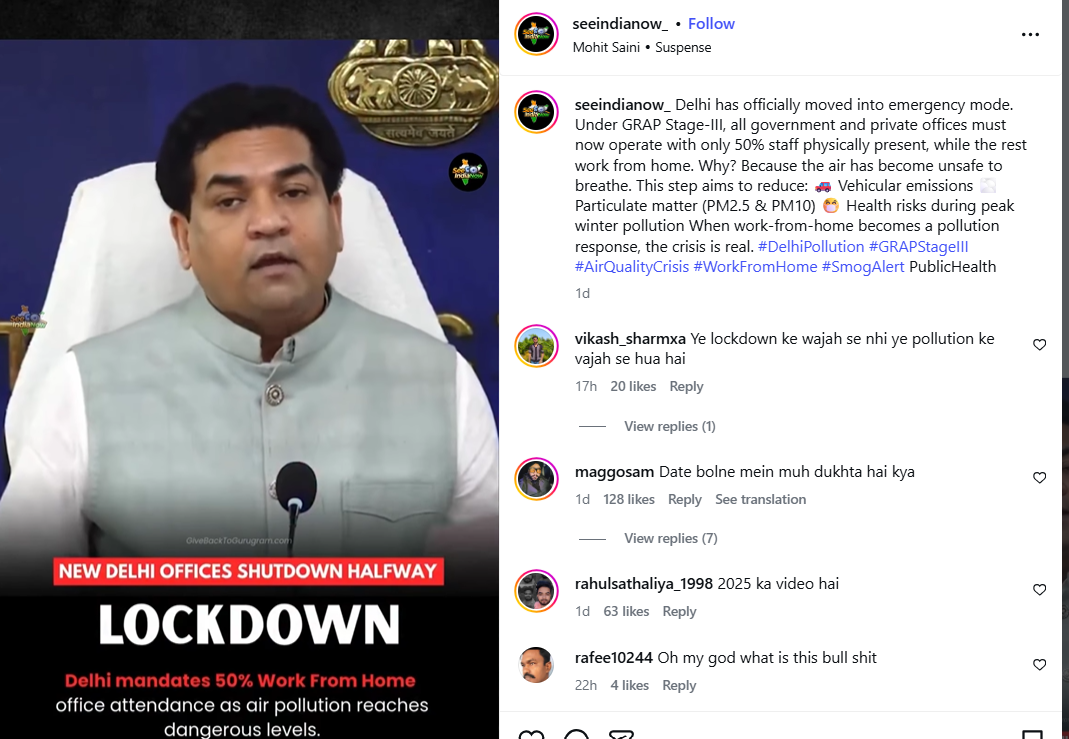
A video of Delhi government cabinet minister Kapil Mishra is being shared on social media. In the clip, he can be heard saying that from the next day, only 50 percent attendance will be allowed in offices, while the remaining 50 percent employees will work from home. He also states that all institutions must comply with this. Users are sharing the video as a recent development. However, a study by the CyberPeace found the viral claim to be misleading. Our research revealed that the video is not recent but dates back to December 2025.
Claim:
An Instagram user shared the viral video on March 24, 2026. The link to the post is given below.
Fact Check:
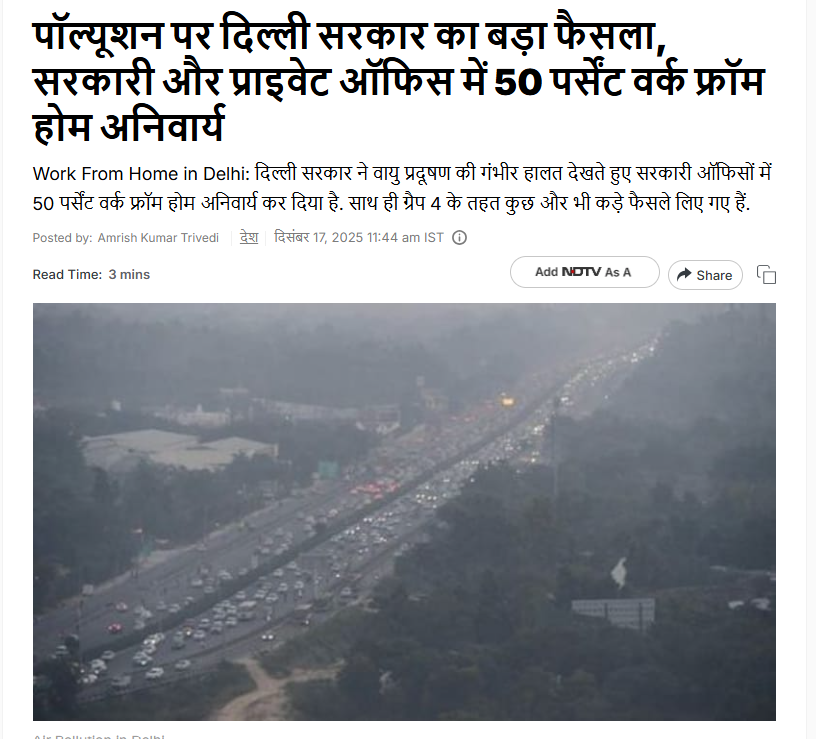
To verify the claim, we conducted a keyword search on Google. During this process, we found a report published on December 17, 2025, on NDTV Hindi. According to the report, the Delhi government had made 50 percent work-from-home mandatory in government offices due to severe air pollution. Additional restrictions were also imposed under GRAP Stage IV.
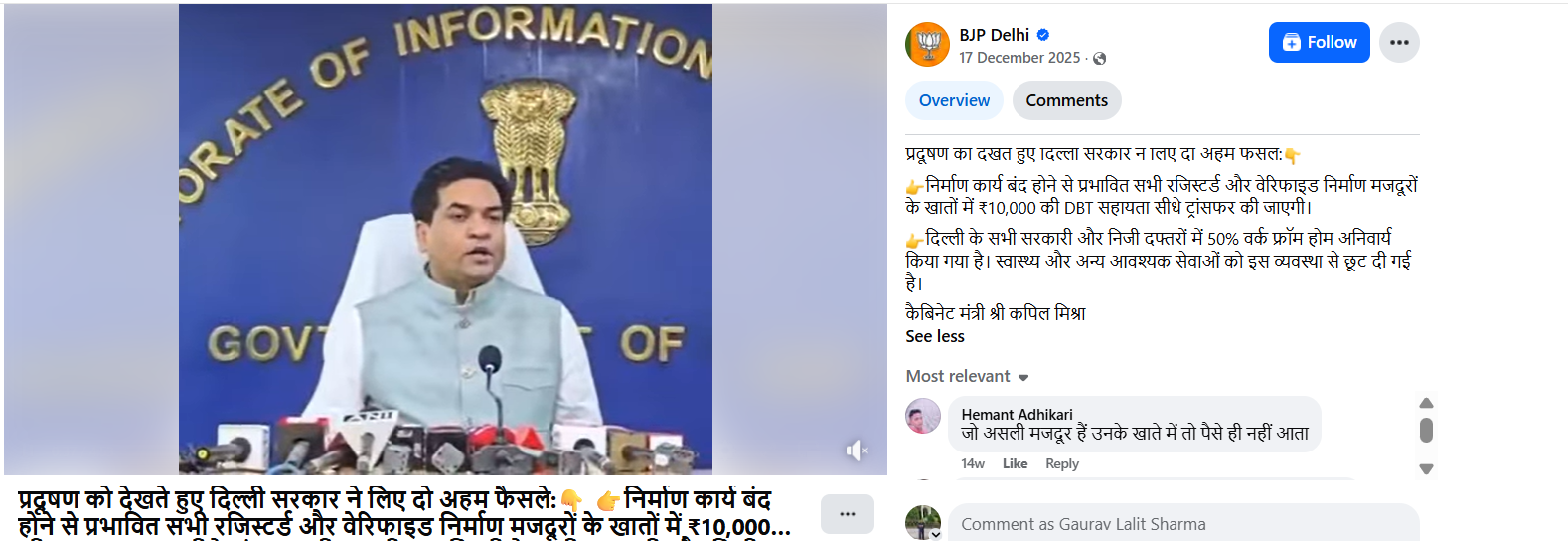
Further, we found the original video on the official social media handle of BJP Delhi. In this video, Kapil Mishra can be heard stating that 50 percent work-from-home has been made mandatory in all government and private offices in Delhi, while health and other essential services have been exempted from this arrangement.
Conclusion:
Our research found that the viral video is not recent. It is from December 2025 and is being shared with a misleading claim.

Executive Summary
A video of US Secretary of State Marco Rubio is rapidly going viral on social media, in which he can allegedly be heard making a statement regarding the 2025 India-Pakistan conflict. Along with the video, it is being claimed that the US played a crucial role in ending the conflict between the two countries, but India was the first to initiate a ceasefire with Pakistan. Users are sharing this video believing it to be true.
Research by the CyberPeace Research Wing revealed that the video has been digitally manipulated. Rubio did state that the United States played a role in ending the conflict, but he never said that India was the first to request a ceasefire from Pakistan. This alleged statement was not part of the original video and was added later to alter the clip.
Claim
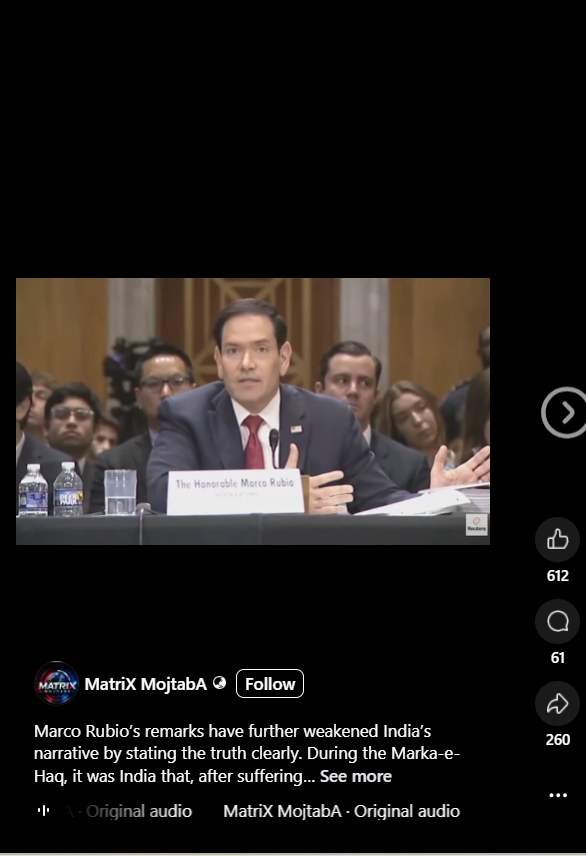
A user on a Facebook page shared the viral video and wrote, "Marco Rubio's statement has clearly brought out the truth, weakening India's claim. During 'Maarka-e-Haq', after suffering heavy losses, India was the first party to request a ceasefire from Pakistan. This highlights the gap between India's public claims and the ground reality, where the military..." The post link, archive link, and screenshot can be seen below. https://www.facebook.com/reel/1015648544746728
https://www.facebook.com/reel/1015648544746728
Fact Check
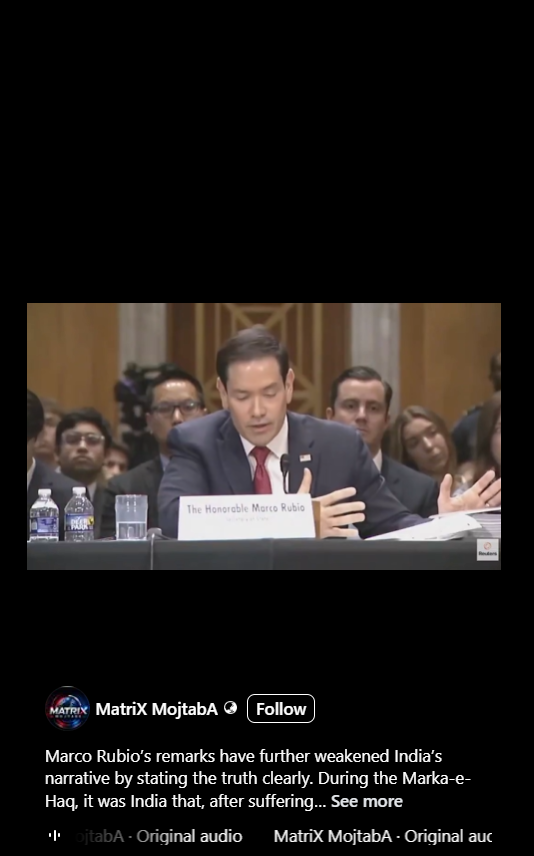
We investigated the viral video using the InVid tool and extracted several of its keyframes. These keyframes were then subjected to a reverse image search via Google Lens. The investigation revealed that the exact same video had been shared on social media previously, showing the same background and setting. The post link and screenshot can be seen below.
https://www.facebook.com/reel/1015648544746728
In the next step of our investigation, we found a video published on Reuters' official YouTube channel on June 2, 2026, whose background matches the viral video. However, nowhere in this original video is Marco Rubio heard saying that India was the first to request a ceasefire from Pakistan. The post link and screenshot can be seen below.
https://www.youtube.com/watch?v=qSpp5IYO6Cs
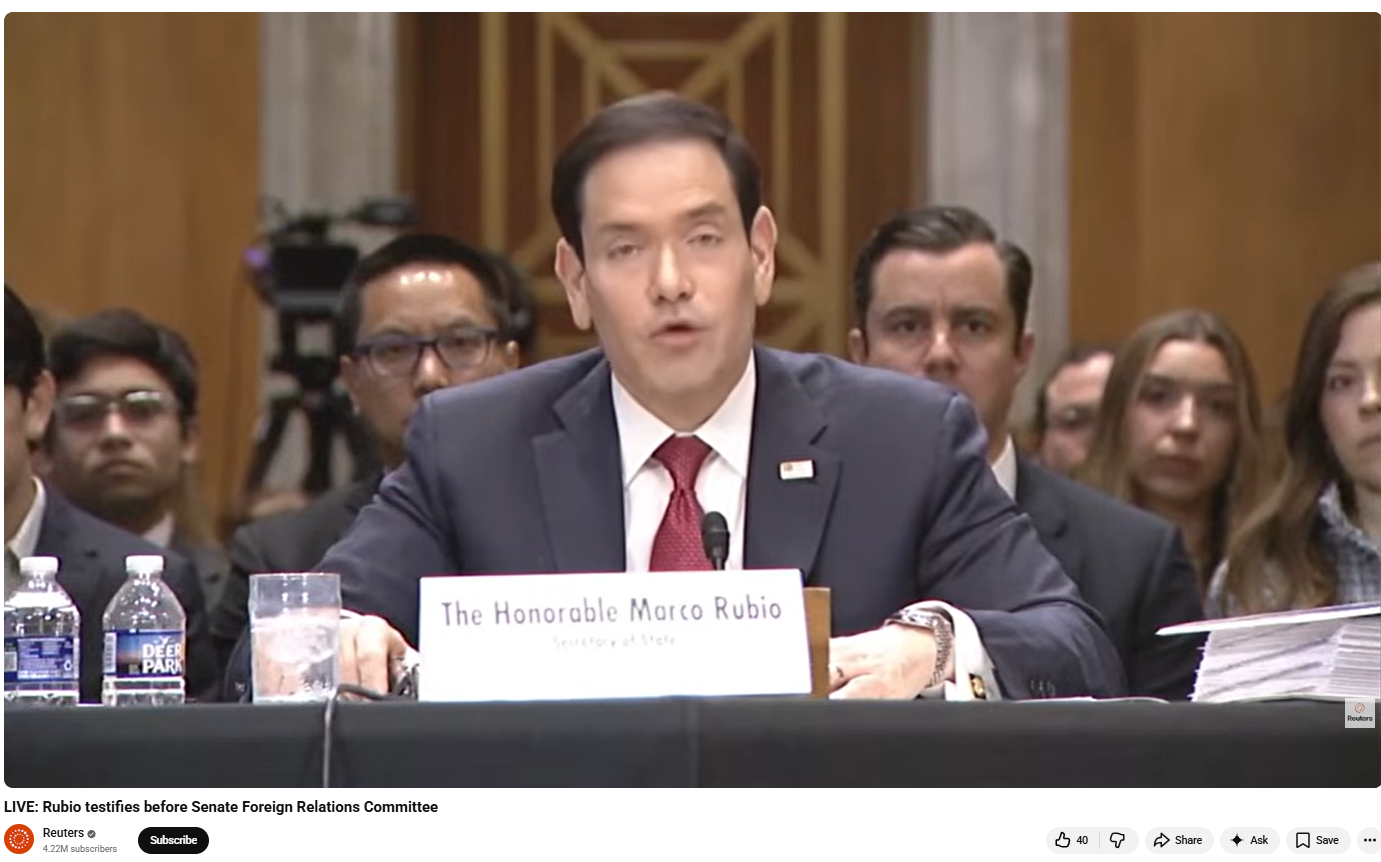
At the 2-hour 8-minute 55-second mark of the Reuters video, Rubio only states that the US played a role in ending the India-Pakistan conflict. Following this, he discusses the Thailand-Cambodia conflict. This makes it clear that the alleged statement in the viral video was digitally added or edited in, and is not part of the original footage.
Taking the investigation further, we scanned the suspicious audio portion of the viral video using the AI detection tool 'Resemble AI'. According to the analysis results, clear signs of audio manipulation were detected.
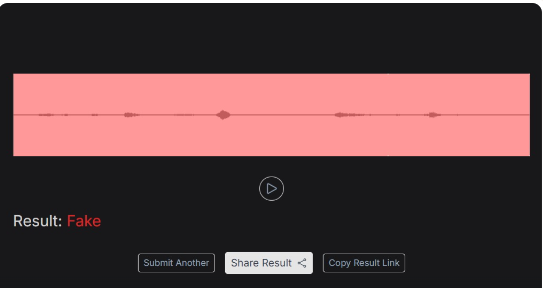
Conclusion:
Our investigation revealed that the video has been digitally manipulated. Rubio did state that the United States played a role in ending the conflict, but he never said that India was the first to request a ceasefire from Pakistan. This alleged statement was not part of the original video and was altered by adding it later.
