
#FactCheck- Viral Kapil Mishra Video on 50% Attendance Not Recent
Executive Summary
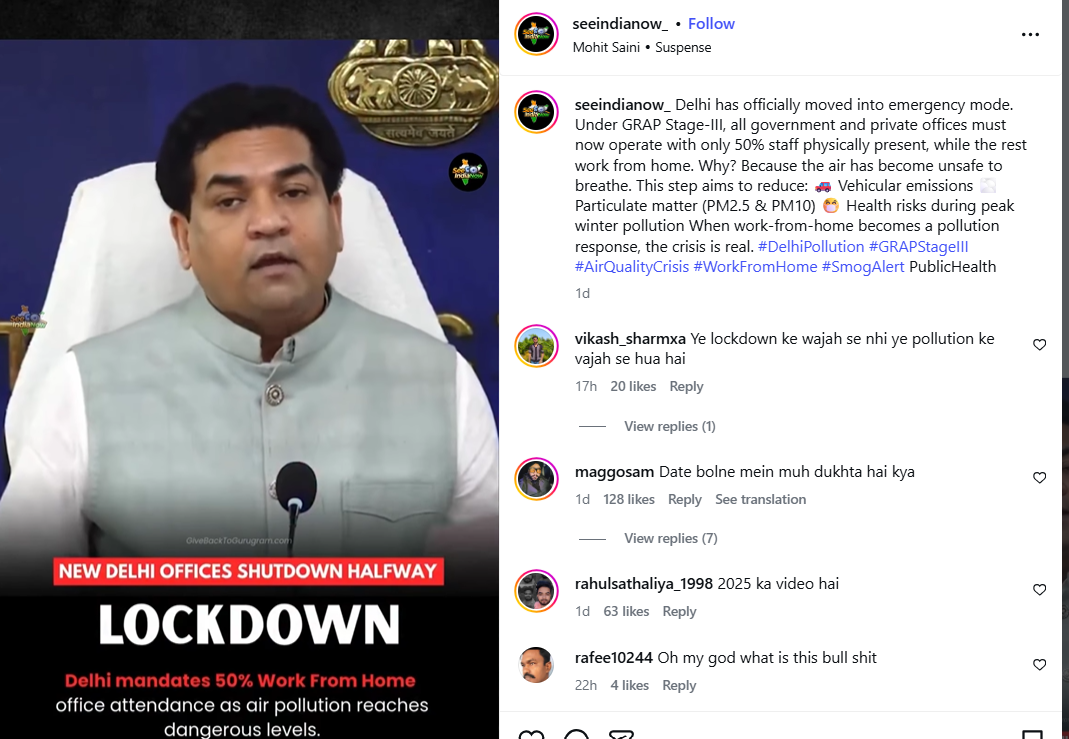
A video of Delhi government cabinet minister Kapil Mishra is being shared on social media. In the clip, he can be heard saying that from the next day, only 50 percent attendance will be allowed in offices, while the remaining 50 percent employees will work from home. He also states that all institutions must comply with this. Users are sharing the video as a recent development. However, a study by the CyberPeace found the viral claim to be misleading. Our research revealed that the video is not recent but dates back to December 2025.
Claim:
An Instagram user shared the viral video on March 24, 2026. The link to the post is given below.
Fact Check:
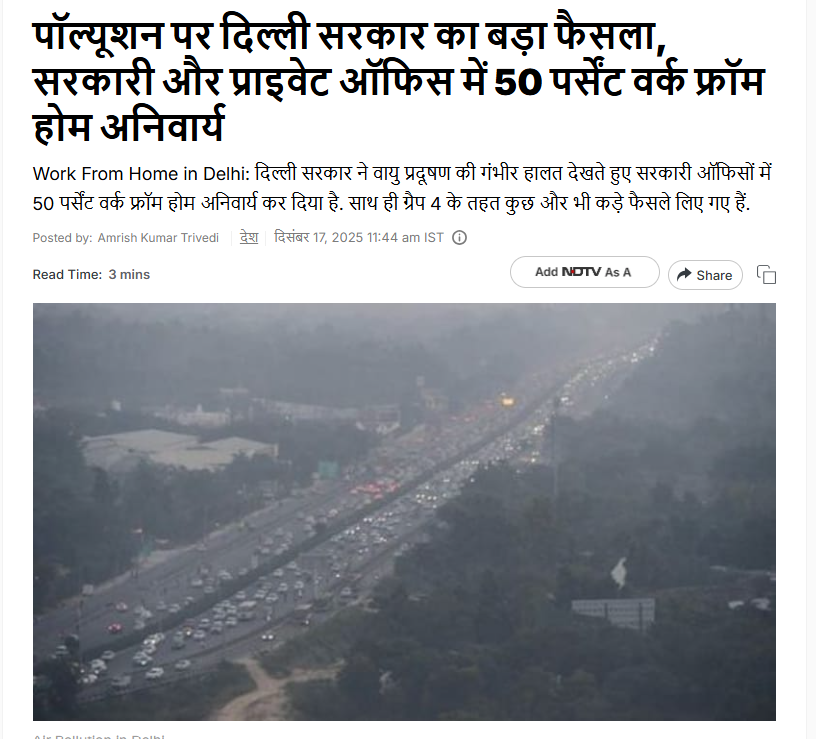
To verify the claim, we conducted a keyword search on Google. During this process, we found a report published on December 17, 2025, on NDTV Hindi. According to the report, the Delhi government had made 50 percent work-from-home mandatory in government offices due to severe air pollution. Additional restrictions were also imposed under GRAP Stage IV.
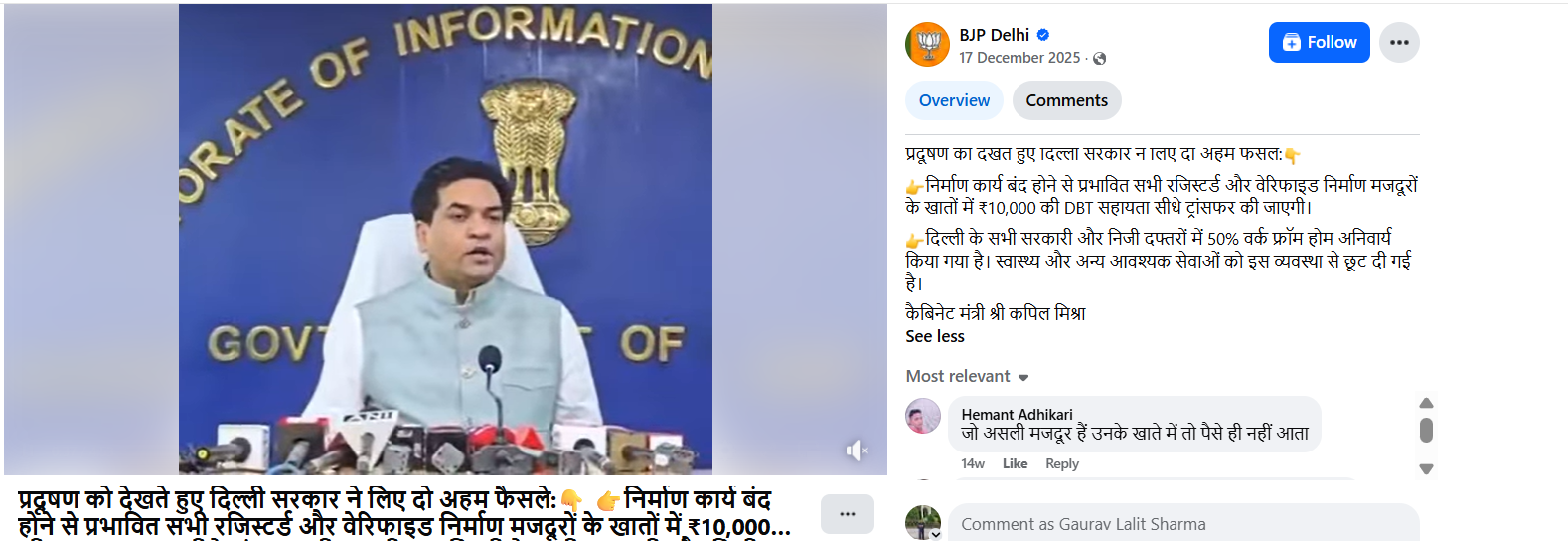
Further, we found the original video on the official social media handle of BJP Delhi. In this video, Kapil Mishra can be heard stating that 50 percent work-from-home has been made mandatory in all government and private offices in Delhi, while health and other essential services have been exempted from this arrangement.
Conclusion:
Our research found that the viral video is not recent. It is from December 2025 and is being shared with a misleading claim.

Related Blogs

Executive Summary:
Our team has come across a recent social media post highlighting a report on fraudulent activities involving deceptive websites and emails impersonating India’s Oil Marketing Companies (OMCs). These phishing scams falsely promise LPG distributorships and retail outlet dealerships, aiming to extract money and personal information from unsuspecting individuals. We strongly urge the public to exercise caution and verify all information exclusively through official OMC channels to avoid falling victim to such fraudulent schemes.

Claim:
It has been reported that fraudsters are impersonating Indian Oil, Bharat Petroleum, and Hindustan Petroleum through fake websites and emails, promising LPG distributorships and seeking money from victims.

Fact Check:
After our research, we came upon more information about this topic and found out that the Press Information Bureau (PIB) has released an official notice confirming that fraudulent websites and emails are impersonating India's Oil Marketing Companies (OMCs), which include Indian Oil Corporation Ltd., Bharat Petroleum Corporation Ltd., and Hindustan Petroleum Corporation Ltd. The scams falsely promise LPG distributorships and retail outlet dealerships while demanding large sums of money from unsuspecting individuals. On June 19, 2019, this was confirmed. The PIB highlighted that OMCs have not allowed any person or organization to charge a fee for dealership selection. All authentic information on these offers is available at the websites of the OMCs: www.iocl.com, www.bharatpetroleum.com, and www.hindustanpetroleum.com. The general public is cautioned to rely only on these sources and report suspicious approaches to the offices of concerned OMCs. If someone finds such an approach, he should immediately contact the cybercrime branch. HPCL has issued alerts on fake websites and emails that promise LPG distributorships and jobs, mimicking official HPCL sites to deceive people.

On the official website of HPCL list down the malicious URLs. They are mentioned below:
- https://kskdealerchayan.com/
- bajajgas.com/index
- hindustanbiofuel.in
- petrolpumpchayanonline.com
- dealerchayanpetrolpump.in
- petrolpumpdealarchayan.com
- petrolpumpsdealerchayan.co.in
- petrolpumpdealershipchayan.org.in
- petrolpumpdealerchayangov.in
- petrolpumpdealership.info
- petrolpumpsdealershipchayan.in
- allindiagasdealership.com
- hindustanpetroleum.online
- hindustanpetroleumcorp.com
- hpcldelership.com
- ujjwalalpgvitarak.org
- ujjwaladealership.com
- lpgvitrakkendra.com
- kissansevakendra.org
- lpgvitarakchayanltd.org
- petrolpumpdelerchayan.in
- petrolpumpdealerschayan.in
- petrolepumpsdelearchayan.in
- kissansevakendra.org
- petrolpumpdealerchayanpro.com
- petrolpumchayanweb.com
- onlinepetrolpumpdealerchayan.com/
HPCL also shared an advisory for their applicants regarding Beware Of Fraudsters.


Conclusion:
It has been proven that fraud offers for LPG distributorships and retail outlet dealerships are being made through fake websites and emails. To avoid such scams, people are advised to be more vigilant, verify all information through official OMC platforms, and immediately report any suspicious activities to the concerned authorities. Being alert and informed is the key to preventing financial loss and protecting personal data from exploitation.
- Claim: Is this HPCL approval letter for an LPG agency dealership legit?
- Claimed On: Social Media
- Fact Check: False and Misleading

Executive Summary
A CCTV video showing a man being shot is being widely circulated on social media with the claim that it depicts the killing of Lashkar-e-Taiba terrorist Amir Hamza in Pakistan. However, research by the CyberPeace Research Wing found that the claim is misleading. The viral video existed online even before the reported attack on Amir Hamza.
Claim
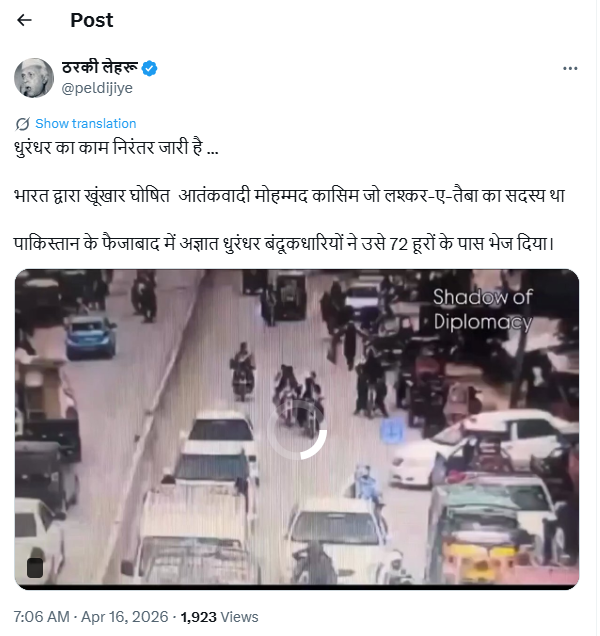
Social media users are sharing a CCTV clip claiming that Lashkar-e-Taiba terrorist Amir Hamza was shot dead in Pakistan.
Fact Check
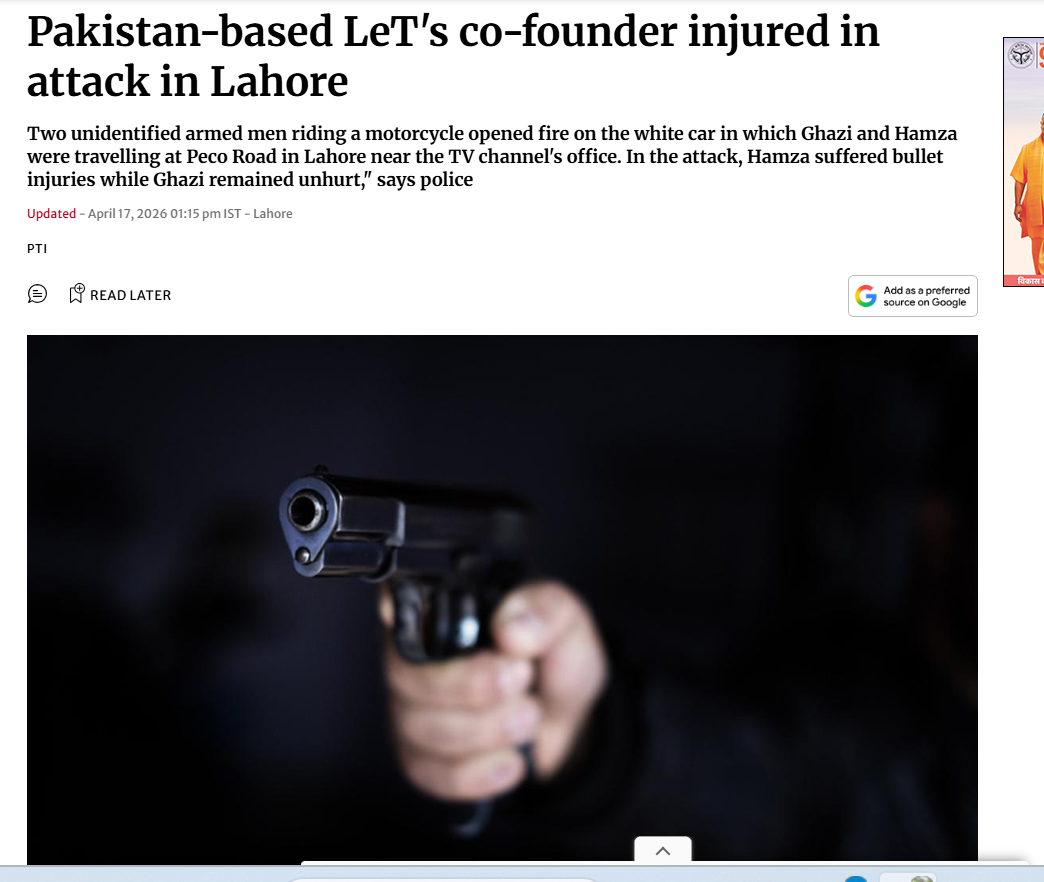
To verify the claim, we first searched relevant keywords such as “Maulana Amir Hamza firing Lahore.” This led us to a report published on April 17, 2026, by The Hindu. Citing Pakistani channel 24 News HD TV, the report stated that unidentified attackers opened fire on the car of TV host Justice Nazir Ahmed Ghazi. Amir Hamza was injured in the incident, not killed.
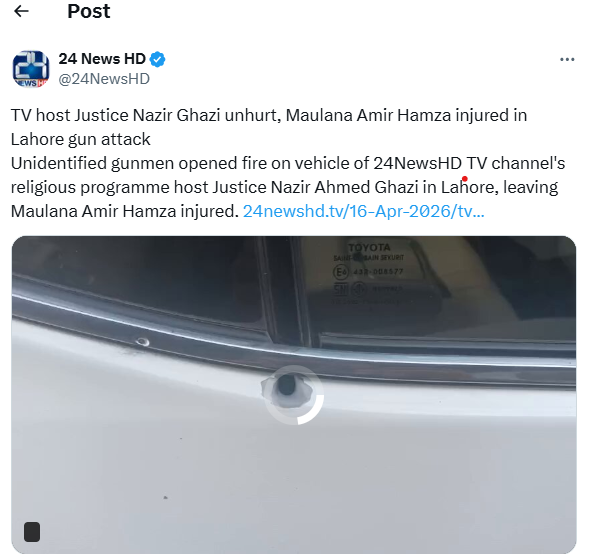
We also reviewed the official social media accounts of 24 News HD TV. A post on its X handle (@24NewsHD) confirmed that Justice Ghazi was safe, while Amir Hamza sustained injuries in the firing incident in Lahore.
For further verification, we extracted keyframes from the viral video and performed a reverse image search. The same clip was found uploaded on March 28, 2026, on a Pakistani Facebook page. According to the post, the CCTV footage was linked to the killing of an individual named Saifullah Malakhel.
Although we could not independently verify the exact origin of the video, our findings clearly indicate that the footage predates the recent attack on Amir Hamza and is unrelated to the incident.
Conclusion
The viral claim is false. Amir Hamza was not killed but reportedly injured in the firing incident, as per credible media reports. The CCTV video being shared in this context is old and unrelated, and has been circulated with a misleading narrative.

On June 5th, the world comes together to reflect on how the way we live impacts the environment. We discuss conserving water, cutting back on plastic, and planting trees, but how often do we think about the environmental impact of our digital lives?
The internet is ubiquitous but invisible in a world that is becoming more interconnected by the day. It drives our communications, meetings, and recollections. However, there is a price for this digital convenience: carbon emissions.
A Digital Carbon Footprint: What Is It?
Electricity is necessary for every video we stream, email we send, and file we store on the cloud. But almost 60% of the electricity produced today is generated from burning fossil fuels. The digital world uses an incredible amount of energy, from the energy-hungry data centres that house our information to the networks that send it. Thus, the greenhouse gas emissions produced by our use of digital tools and services are referred to as our "digital carbon footprint."
To put it in perspective:
- Up to 150–200 grams of CO₂ can be produced by streaming an hour-long HD video on your phone.
- A typical email sent can release about 4 grams of CO₂, and more if it contains attachments.
- Comparable to the airline industry, the internet as a whole accounts for 1.5% to 4% of global greenhouse gas emissions.
Why It Matters
Ironically, despite the fact that digital life frequently feels "clean" and weightless, it is backed by enormous, power-hungry infrastructures. Additionally, our online activity is growing at a rapid pace as digital penetration increases. Plus, with the advent of AI and big data, the demand for energy is only going to rise. The harms of air, water, and soil degradation, and biodiversity loss are already upon us. It's high time we reconsider how we use technology on World Environment Day.
What Can You Do?
The good news is that even minor adjustments to our online conduct can have an impact.
🗑️ Clear out your digital clutter by getting rid of unnecessary emails, apps, and files.
📥 Unsubscribe from mailing lists that you no longer use.
📉 When HD is not required, stream videos with lower quality.
⚡ Make use of energy-saving gadgets and disconnect them when not in use.
🌐 Make the move to renewable energy-powered, environmentally friendly cloud providers.
🗳️ Support informed policy by engaging with your elected representatives and advocating for greener tech policies. Knowing your digital rights and responsibilities can help shape smarter policies and a healthier planet.
We at the CyberPeace Foundation think that cyberspace needs to be sustainable. An eco-friendly digital world is also a safer one, where all communities can thrive in harmony. We must promote digital responsibility, including its environmental component, as we work towards digital equity and resilience.
On this World Environment Day, let's go one step further and work towards a greener internet as well as a greener planet.
