
#FactCheck-Mock Drill Video from Kishtwar Falsely Shared as Terror Attack in Jammu & Kashmir
Executive Summary
A video is going viral on social media showing ‘injured’ security personnel being carried into ambulances. The clip is being shared with claims that a terrorist attack recently took place in Kishtwar. The video surfaced nearly a year after the terror attack in Pahalgam on April 22, 2025, adding to confusion among users online. Research by CyberPeace Research Wing found that the claim is false. The viral video is actually from a mock drill conducted in Kishtwar, not a real terror incident.
Claim
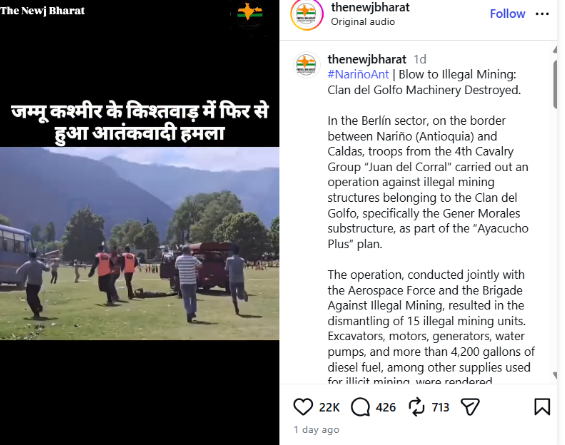
An Instagram user ‘thenewjbharat’ shared the video on April 30, 2026, claiming that a terrorist attack had taken place again in Kishtwar.
https://www.instagram.com/thenewjbharat/
Fact Check
To verify the claim, we extracted keyframes from the viral video and conducted a reverse image search using Google Lens. This led us to the same clip uploaded on April 24, 2026 by an Instagram user ‘kishtwar_breaking_news’. According to the post, the video shows a mock drill conducted by local authorities to assess emergency preparedness. Officials and rescue teams participated in the exercise.

We also found a related news video uploaded on April 23, 2026, by the YouTube channel of Daily Excelsior, which featured visuals matching the viral clip. The report confirmed that the drill was carried out to evaluate readiness for emergency situations.

Conclusion
Our research confirms that the viral video does not show a real terrorist attack. It is footage from a mock drill conducted in Kishtwar and is being falsely shared with misleading claims.

Related Blogs

Executive Summary
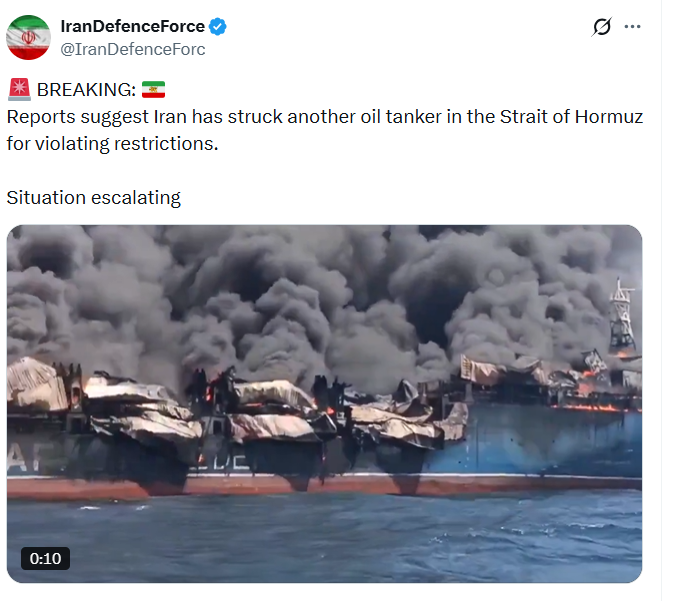
Amid the ongoing tensions involving the United States, Israel, and Iran, a video of a cargo ship engulfed in flames is being widely shared across social media platforms. The clip shows a vessel burning intensely at sea, with users claiming that Iran targeted the ship with a drone for attempting to cross the Strait of Hormuz without permission. Some users have also claimed that the destroyed vessel was a Pakistani-flagged oil tanker hit by Iranian missiles. However, research by CyberPeace found the claim to be false. Our verification also reveals that the viral video is being misrepresented.
Claim
Social media users, including an X (formerly Twitter) account named “IranDefenceForce,” shared the video claiming that Iran targeted an oil tanker in the Strait of Hormuz for allegedly violating restrictions.
Fact Check
A keyword-based news search led us to multiple credible reports mentioning a statement by Iran’s Foreign Minister Abbas Araghchi. According to reports, Iran had allowed ships from “friendly countries” including India, China, Russia, Iraq, and Pakistan to pass through the Strait of Hormuz.
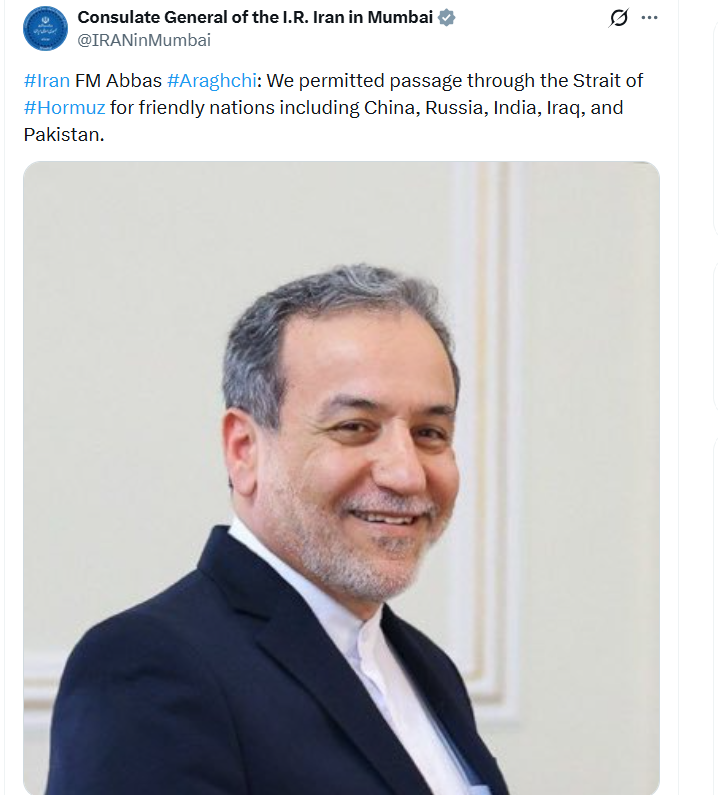
A March 26, 2026 report by The Hindu stated that Araghchi also emphasized Iran’s assertion of sovereignty over the strategic waterway connecting the Persian Gulf and the Gulf of Oman. The same statement was also shared via the official X handle of the Iranian Consulate in Mumbai. During a frame-by-frame analysis of the viral video, we noticed the word “SAFEEN” written on a part of the ship. Using this clue, we conducted a targeted news search and found a report by Reuters dated March 4, 2026.
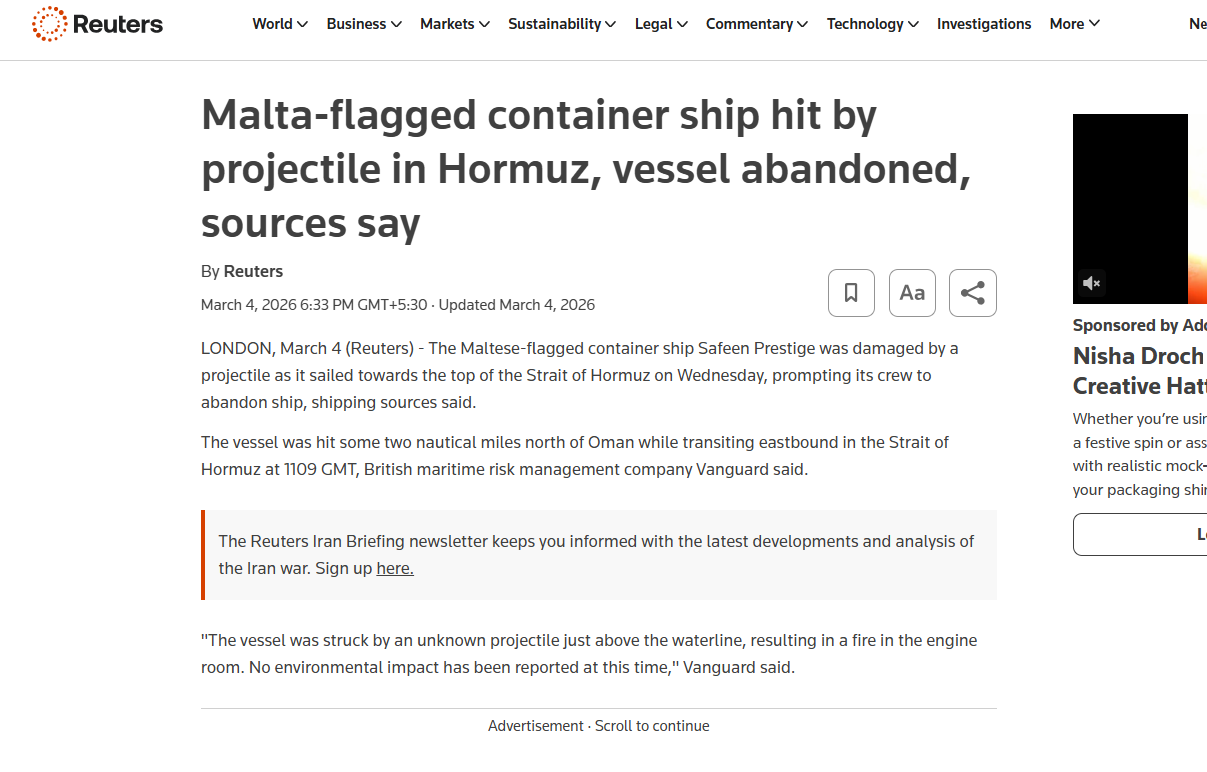
According to the report, a Malta-flagged container ship named Safeen Prestige was damaged in an attack while heading toward the Strait of Hormuz. Shipping sources cited in the report stated that the vessel was struck around 1109 GMT while sailing eastward, approximately two nautical miles north of Oman. The ship had reportedly departed from Sharjah Port in the United Arab Emirates but was damaged before reaching its destination. Its last known location was in the Persian Gulf. Additionally, earlier this month, another cargo vessel named Mayuri Naree was also attacked near Iran’s Qeshm Island. As per Reuters, an explosion caused a fire in the engine room, after which 20 crew members were rescued by the Omani navy, while three remained missing.
Conclusion
The viral video does not show Iran targeting a Pakistani oil tanker for violating restrictions in the Strait of Hormuz. In reality, the clip features the Malta-flagged container ship Safeen Prestige, which was damaged in an unidentified attack in the Persian Gulf. The claim being circulated on social media is misleading.
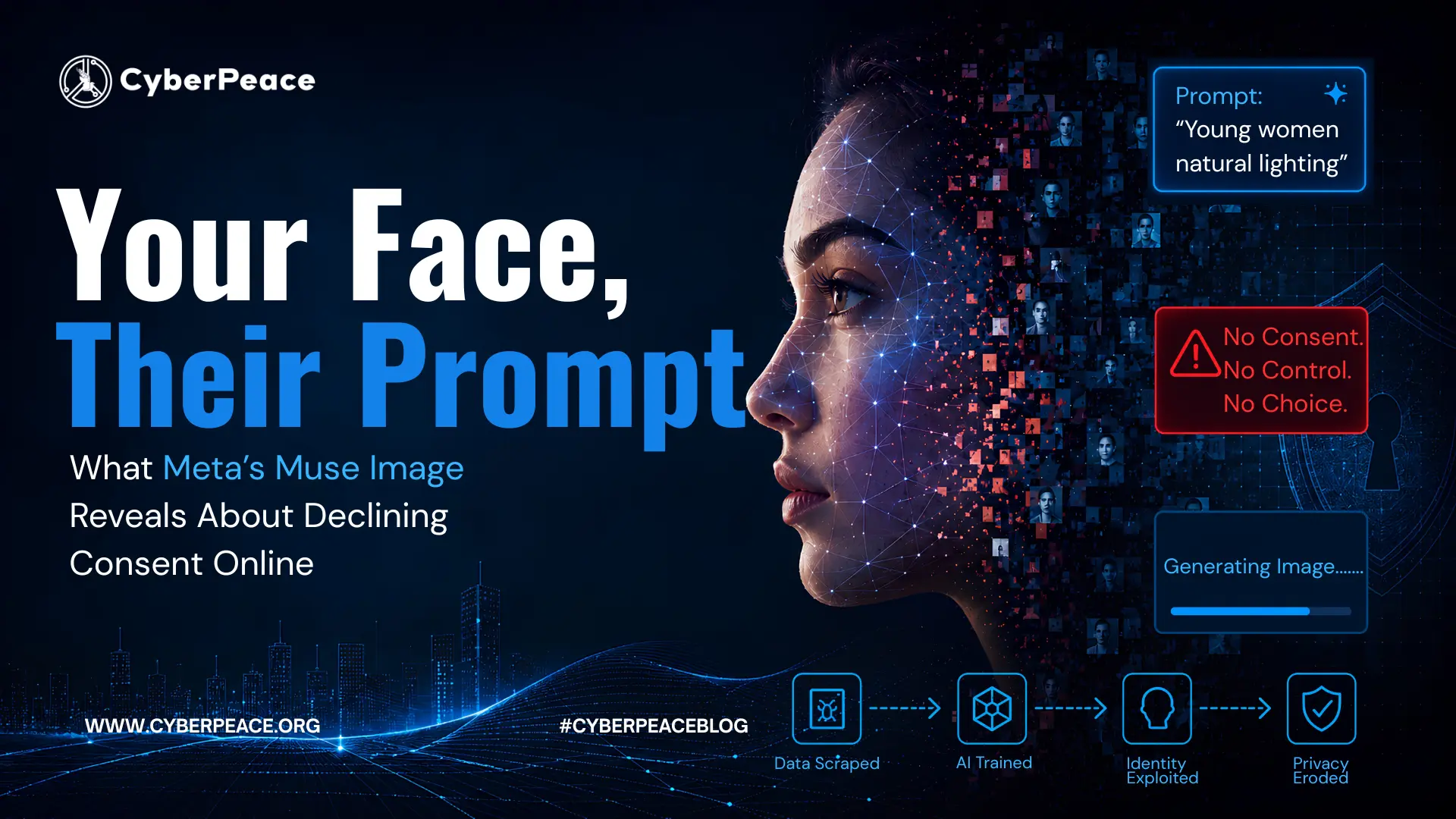
When your digital identity becomes raw material for someone else’s imagination, who really owns your face?
On July 7, 2026, Meta launched Muse Image, the first standalone image-generation model developed by Meta Superintelligence Labs under Alexandr Wang. Positioned as a competitor to OpenAI’s GPT Images 2.0 and Google’s Nano Banana 2, the launch highlights Meta’s growing ambitions in the generative AI race. Yet beneath the technical advancements lies a far more consequential question than what AI can create, but about who gets to decide what it creates with?
That ambition of generative AI comes with a cost, and one of Muse Image's most controversial design choices is its integration with Instagram, which allows public profiles to become creative references for AI-generated images. Users can tag public Instagram accounts in prompts and generate AI images inspired by that person’s publicly available content. Meta presents this as a new form of personalization and creativity. However, critics argue that the feature transforms years of personal photographs into a massive library of AI-ready human identities, where non-action automatically becomes permission. The concern is not just that AI can generate realistic images. The concern is that consent itself is being manipulated in a way.
The opt-out system most users never asked for
Muse Image operates through Meta AI’s integration with Instagram. A user can reference a public Instagram profile in a prompt, allowing the system to generate images influenced by that person’s existing content and likeness. Under the default arrangement, the person whose profile is being referenced may not necessarily approve the generation beforehand.
Meta does provide users with controls to restrict this functionality. The setting exists under Instagram’s “Sharing and reuse” options, where users can disable permissions related to the use of their posts and reels with Meta’s AI features. But the larger issue is the direction in which responsibility flows. Instead of requiring active permission before someone’s likeness becomes available for AI-generated content, the burden is placed on individuals to discover the feature, understand the implications, locate the setting, and disable it. In a digital environment where users already navigate endless privacy menus, cookie banners, and terms of service agreements, expecting meaningful awareness from billions of people becomes unrealistic. Consent that depends on finding the exit door is very different from consent that begins with a choice.
A guide for opting-out
One way of opting out is to have a private account. As verified, Meta does not encroach on private accounts as of now for image-generation.
But if you have a public account, here are the steps that can be followed to secure yourself from Meta’s Muse automatic consent:
On your profile, tap the menu bar which is on the top right (≡), you will enter into ‘setting and activity’, after that you will see an option of ‘sharing and refuse’ and then disable the options under it, namely- Allow people to reuse your content on Instagram and with AI features at Meta. Notably, the changes made will be only for your future content not the already existing content on your public profile.
Why “public” does not mean “available for anything”
The debate around Muse Image highlights a deeper misunderstanding at the center of modern digital platforms: the difference between visibility and reuse. When someone makes an Instagram account public, they are generally making a decision about the audience. They are allowing others to view their photos, discover their profile, or engage with their content. That decision was never traditionally understood as permission for their face, appearance, personal moments, or identity markers to become reusable components in AI-generated media. A photograph posted online has context. It represents a specific moment, purpose, relationship, or expression. Generative AI changes that equation because it separates identity from context. A person’s likeness can be extracted from its original context and placed into entirely new situations created by someone else. Muse Image does not just expand who can see your content. It expands what can be done with it. That distinction is what scales the problem for every public user on the app. The privacy implications become significantly larger because of Instagram’s global reach. With billions of users worldwide, even a small percentage of affected public accounts represents an enormous number of people. Many public profiles do not belong to celebrities, influencers, or creators who intentionally operate as public brands. They belong to students, professionals, small businesses, artists, photographers, and everyday users who simply chose visibility within a social network.
For years, platforms encouraged people to share more, build audiences, and maintain a public digital presence. Now, the meaning of that public presence is changing after the fact. The question becomes: should a decision made years ago to share photos socially automatically extend into permission for generative AI systems built years later?
There is also a catch while opting out. Changing these settings only protects your content from being used in future AI generations, it does not undo anything that has already happened. Any AI images previously created using your public profile will remain unaffected. Essentially, the opt-out works as a shield for what comes next, not a reset button for what has already been created.
A familiar pattern in the AI era
Muse Image reflects a broader pattern emerging across the technology industry. New AI capabilities are introduced at massive scale, participation becomes the default, and individual control arrives afterward through settings that many users may never find. The same debates that once surrounded targeted advertising, data collection, and algorithmic profiling are now moving into a far more personal territory, the human identity itself. Faces are not ordinary data points. Unlike a username, password, or preference setting, a person cannot simply replace their appearance once it has been widely replicated.
Technical solutions such as AI watermarking and content labels may help identify generated material, but they address authenticity after creation. They do not answer the question of whether the generation should have happened in the first place.
Innovation cannot replace consent
The technological progress behind Muse Image is significant. Better image generation, improved text rendering, and more personalized creative tools represent genuine advances in artificial intelligence. But capability alone cannot determine acceptability. The future of AI will not only depend on how realistic images become, how powerful models become, or how quickly companies can deploy new features. It will also depend on whether people feel they have meaningful control over their own digital identities. Muse Image is therefore more than another AI product launch. It represents a defining question for the next phase of the internet: Will our online presence remain something we control, or will it become something others can generate?
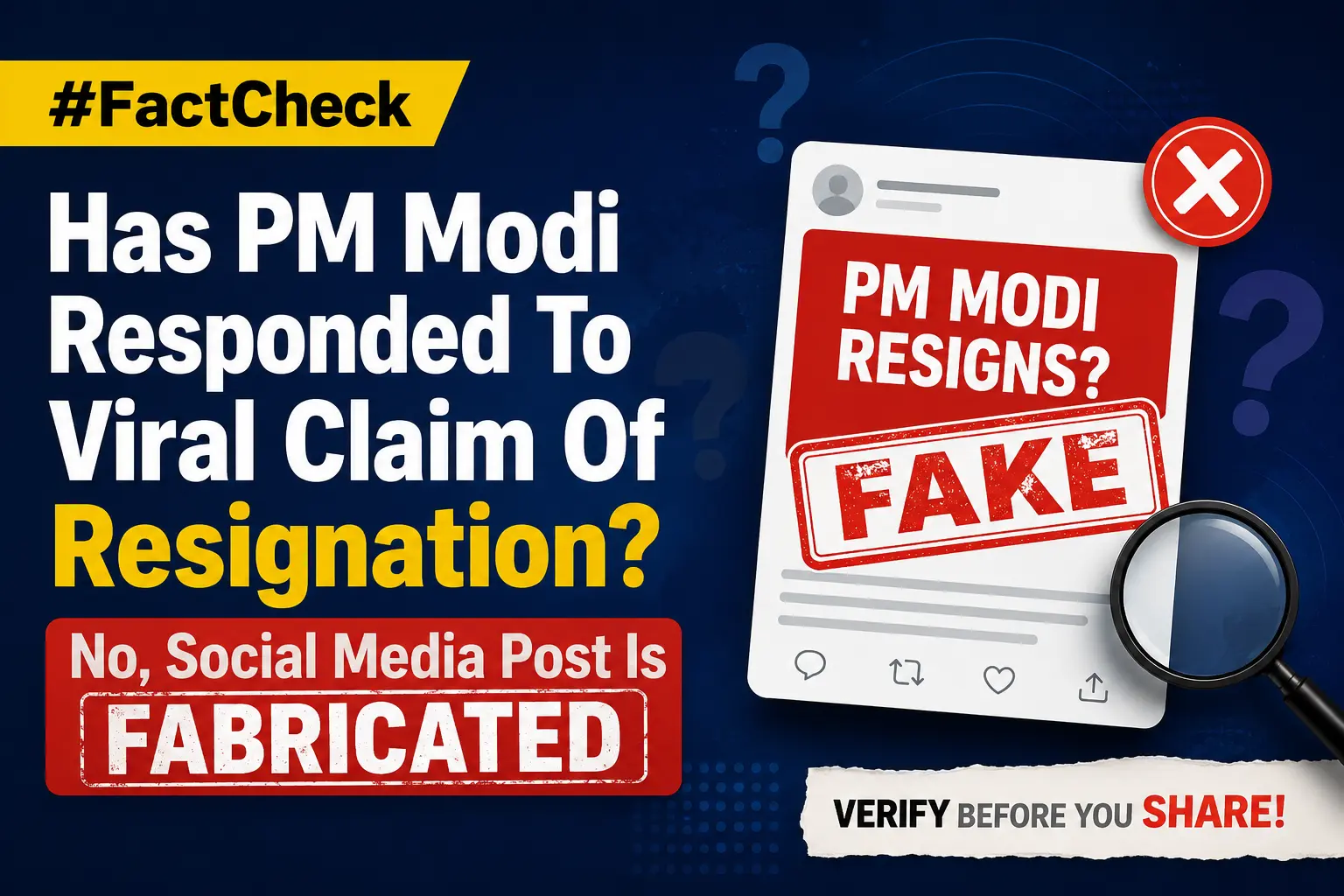
Executive Summary
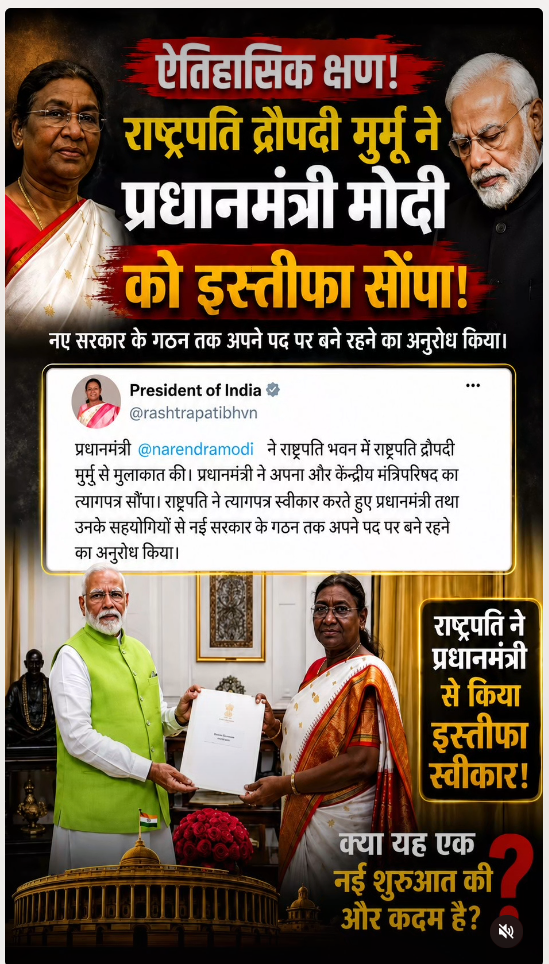
A poster is being shared on social media claiming that Prime Minister Narendra Modi has submitted his resignation to President Droupadi Murmu. The post also includes a screenshot of an X (formerly Twitter) account allegedly belonging to President Droupadi Murmu, stating that the Prime Minister has tendered his resignation, along with his Union Council of Ministers, to the President. Research by the CyberPeace Research Wing proved the viral claim to be fake. The research revealed that the poster being shared on social media is fabricated.
Claim:
Sharing the viral poster on the social media platform Instagram, a user wrote, “President Droupadi Murmu accepted the resignation of Prime Minister Narendra Modi and requested him to continue in office until the formation of the new government. This is part of the constitutional process of Indian democracy. What is your opinion? Is this just a formality or a step towards a new beginning?” The archive link and screenshot of the post are given below:
https://www.instagram.com/reels/DcA0HqhN3Fr/
FactCheck
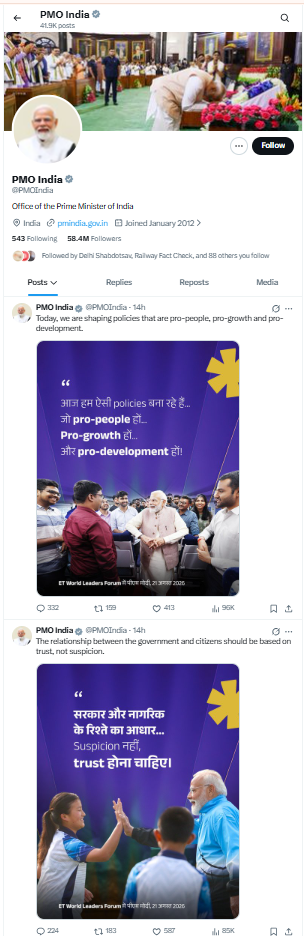
To ascertain the truth behind the viral claim, we conducted a search on Google using relevant keywords. During this, we did not find any credible media reports confirming the viral claim. In the next step of the research, we scanned the X account of the Prime Minister’s Office (PMO). We did not find any such post there either. The link and screenshot of the relevant post are given below:
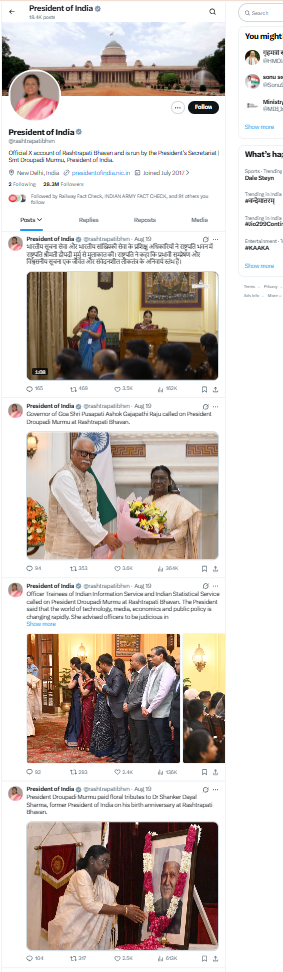
Proceeding further with the research, we scanned the X account of the President. We did not find any post confirming the viral claim there as well. The link and screenshot of the relevant post are given below:
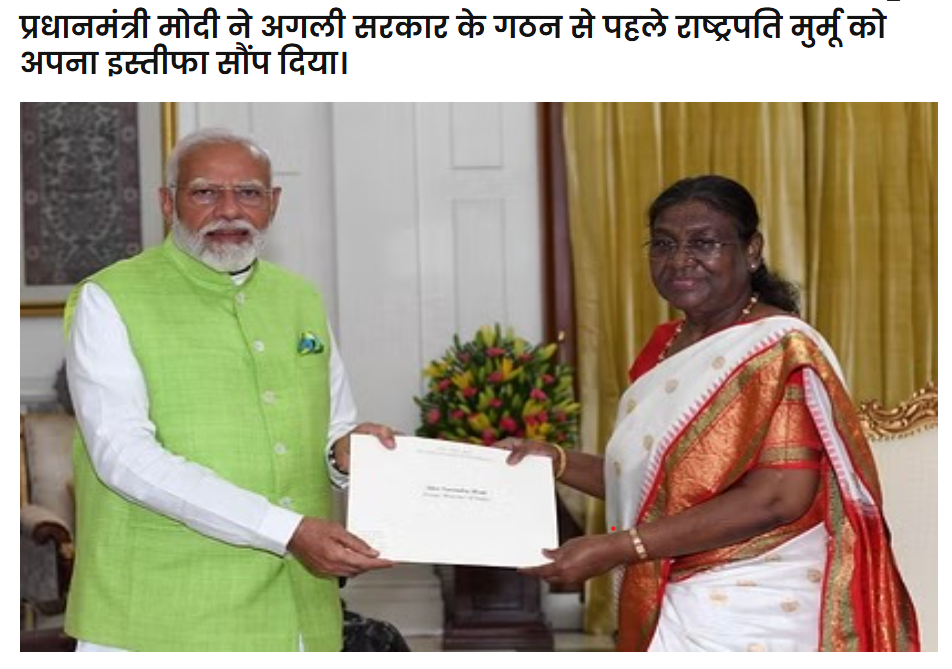
In the next stage of our research, we found a report published on the DD News website on June 5, 2024. According to the report, ahead of the formation of the next Bharatiya Janata Party (BJP)-led NDA government, Prime Minister Narendra Modi, along with his Council of Ministers, had tendered his resignation to President Droupadi Murmu. This paved the way for the dissolution of the 17th Lok Sabha, which ran from 2019 to 2024. President Droupadi Murmu accepted the resignation of Prime Minister Modi and his Council of Ministers, and requested them to continue in office until the new government assumed charge. The link and screenshot of the post are given below:
Conclusion:
In our research, the viral claim turned out to be fake. The research revealed that the poster being shared on social media is fake.
