
#FactCheck: False Claims Circulate Linking Former CEC Achal Kumar Jyoti to EVM Chip Manufacturing
Executive Summary
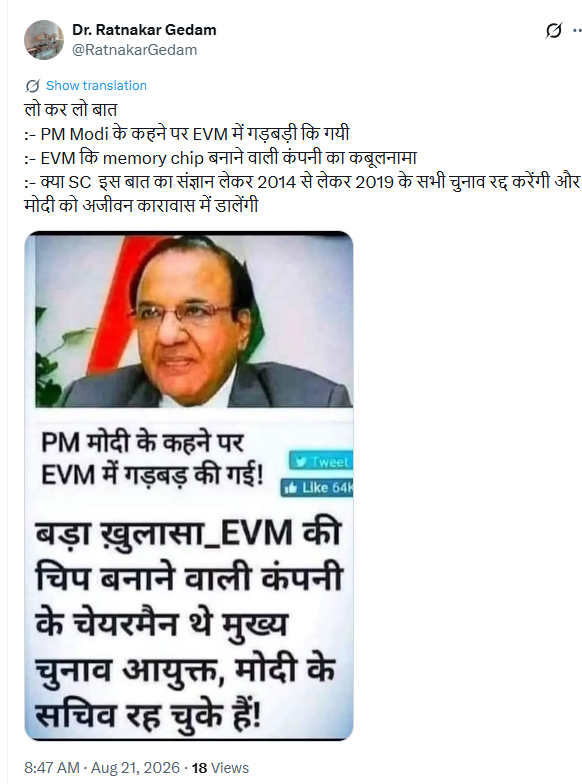
A viral social media post featuring a picture of former Chief Election Commissioner Achal Kumar Jyoti claims he served as the chairman of the company manufacturing EVM microchips and altered EVM settings at the behest of PM Modi. According to a research done by CyberPeace's research wing, the claim that former Chief Election Commissioner Achal Kumar Jyoti was the chairman of an EVM chip manufacturing company and altered EVMs at the behest of PM Modi is completely false.
Claim
Social media posts circulated statements claiming: "PM Modi ordered EVM tampering; the company manufacturing EVM memory chips confessed. Will the SC take note, cancel all elections from 2014 to 2019, and send Modi to life imprisonment?"
https://x.com/RatnakarGedam/status/2090639442411470936?s=20
Fact-Check
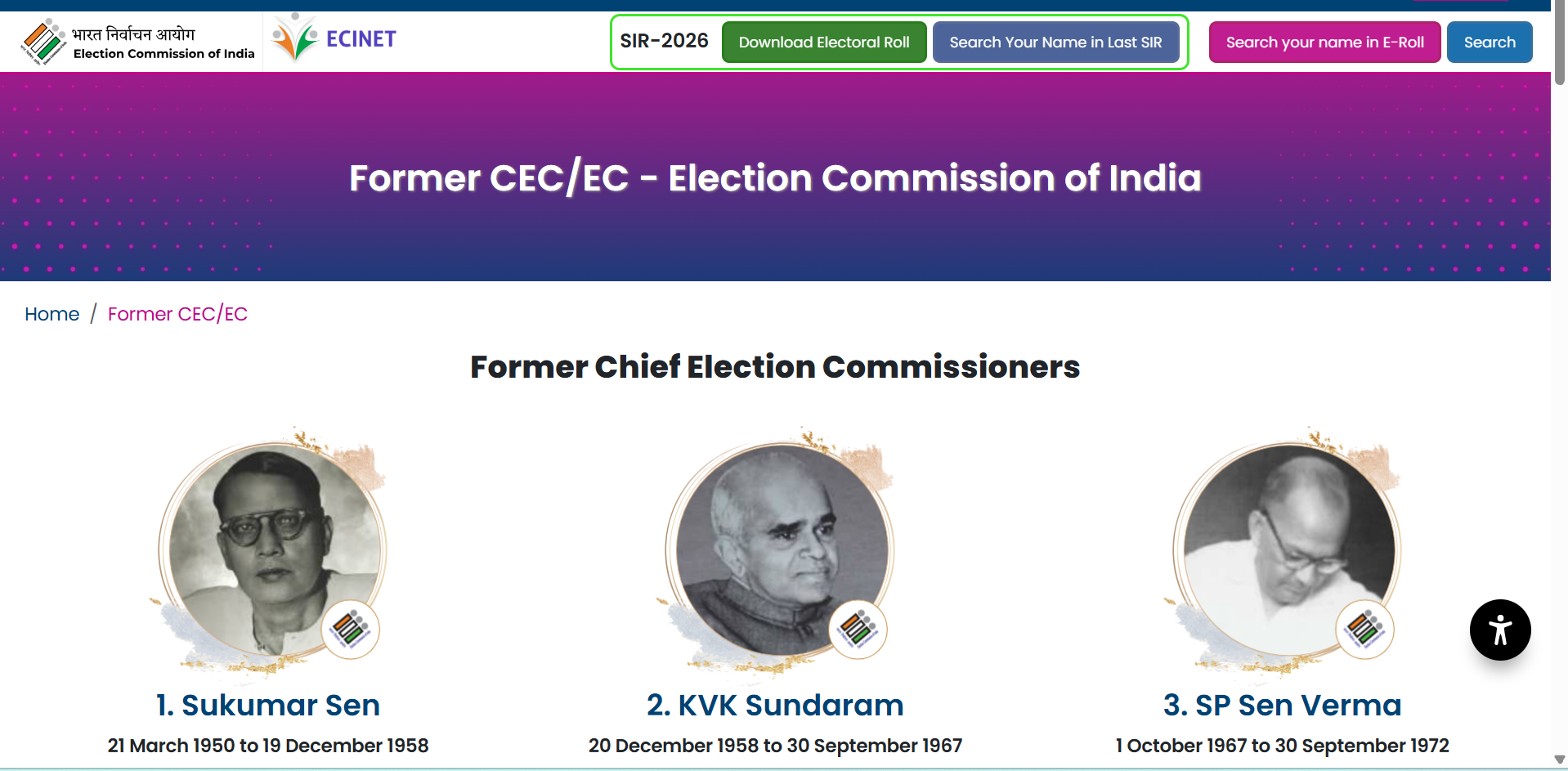
Relevant keyword searches yield no credible news reports, official statements, or legal documentation supporting claims that Achal Kumar Jyoti tampered with EVMs or issued any such confession. Achal Kumar Jyoti served as the Chief Election Commissioner of India from July 6, 2017, to January 22, 2018. Prior to this, he was a 1975-batch IAS officer of the Gujarat cadre who served in various administrative roles, including Chief Secretary of Gujarat.
https://www.eci.gov.in/former-cec-ec?utm_source
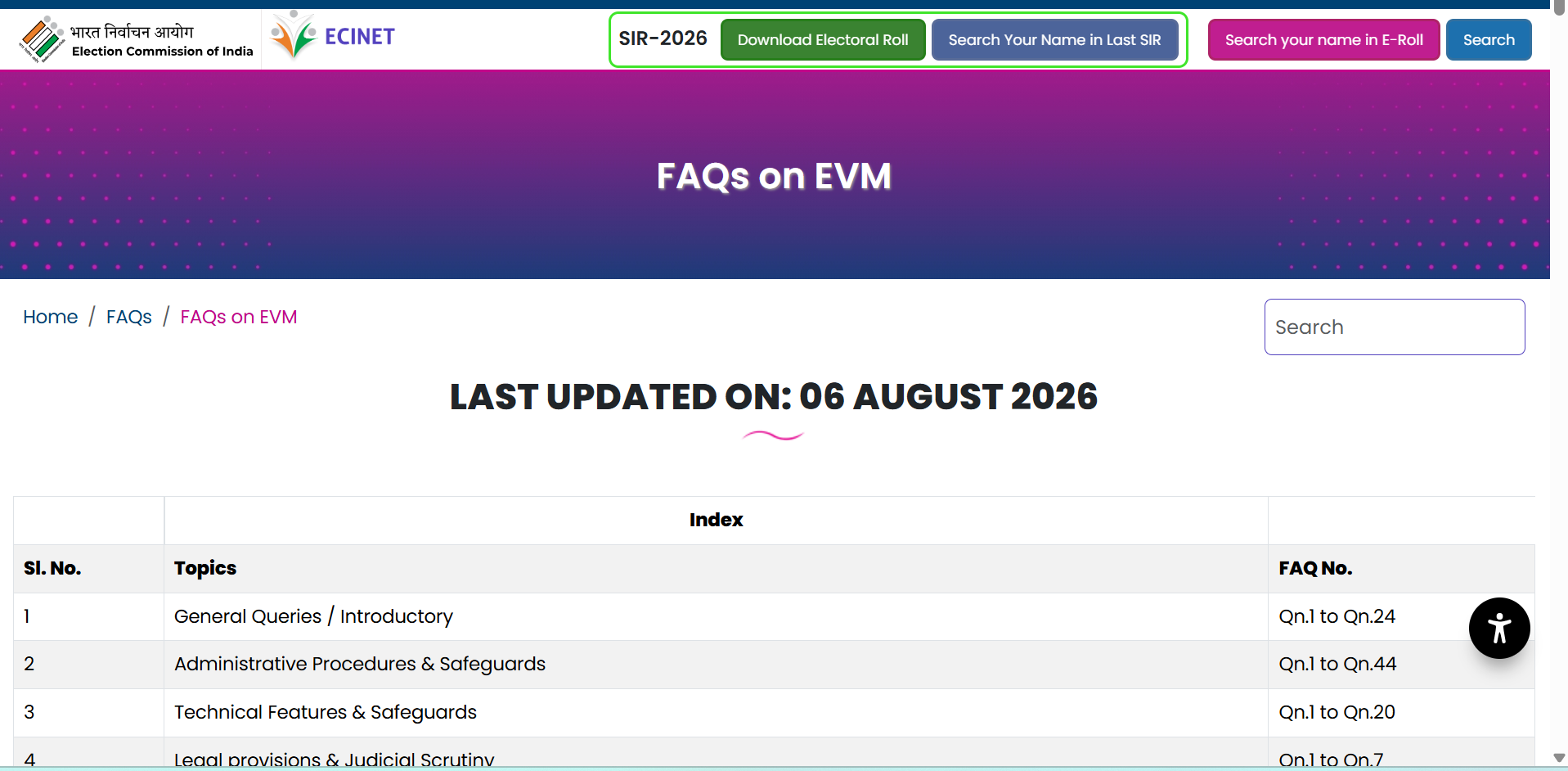
According to official information, Electronic Voting Machines (EVMs) used in Indian elections are manufactured exclusively by two Public Sector Undertakings (PSUs): Bharat Electronics Limited (BEL) and Electronics Corporation of India Limited (ECIL). Official records confirm that Achal Kumar Jyoti was never appointed as the Chairman or Director of BEL, ECIL, or any entity manufacturing microchips for EVMs.
https://www.eci.gov.in/evm-faqs/?utm_source
Conclusion
The claim that former Chief Election Commissioner Achal Kumar Jyoti headed an EVM chip manufacturing company and tampered with voting machines is completely fabricated and baseless.

Related Blogs

Introduction
In the hyper-connected era, something as mundane as charging your phone can become a gateway to cyberattacks. A recent experience of Assam Chief Minister Himanta Biswa Sarma has reignited fears of an emerging digital menace called juice jacking. Sarma, who was taking an Emirates flight from Delhi to Dubai, used an international charger and cable provided by another passenger on board. As he afterwards reported on X (formerly Twitter), the passenger got off while he slept and so could not return the borrowed items. Though most people admired the CM's humility and openness, cybersecurity experts and citizens were quick to point out a possible red flag, that it could be a juice-jacking attempt. Whether by design or not, the scene calls out to the concealed risks of using unfamiliar charging equipment, particularly for those who hold sensitive roles.
What Is Juice Jacking?
Juice jacking takes advantage of the multi-purpose nature of USB connectors, which can carry both electrical energy and information. Attackers hack USB ports or cables to either:
- Insert harmful payloads (malware, spyware, ransomware) during power transfer, or
- Create unauthorised data pathways for silent information exfiltration.
Types of Juice Jacking Attacks
- Data Theft (Exfiltration Attack): The USB cable or port is rigged to silently extract files, media, contacts, keystrokes, or login information from the attached phone.
- Malware Injection (Payload Attack): The USB device is set to impersonate a Human Interface Device (HID), such as a keyboard. It sends pre-defined commands (shell scripts, command-line inputs) to the host, loading backdoors or spying tools.
- Firmware Tampering: In more sophisticated cases, attackers implement persistent malware at the bootloader or firmware level, bypassing antivirus protection and living through factory resets.
- Remote Command-and-Control Installation: Certain strains of malware initiate backdoors to enable remote access to the device over the internet upon reconnection to a live network.
Why the Assam CM’s Incident Raised Flags
Whereas CM Sarma's experience was one of thanks, the digital repercussions of this scenario are immense:
- High-value targets like government officials, diplomats, and corporate executives tend to have sensitive information.
- A hacked cable can be used as a spy tool, sending information or providing remote access.
- With the USB On-The-Go (OTG) feature in contemporary Android and iOS devices, an attacker can run autorun scripts and deploy payloads at device connect/disconnect.
- If device encryption is poor or security settings are incorrectly configured, attackers may gain access to location, communication history, and app credentials.
Technical Juice Jacking Indicators
The following are indications that a device could have been attacked:
- Unsolicited request for USB file access or data syncing on attaching.
- Faster battery consumption (from background activities).
- The device is acting strangely, launching apps or entering commands without user control.
- Installation of new apps without authorisation.
- Data consumption increases even if no browsing is ongoing.
CyberPeace Tech-Policy Advisory: Preventing Juice Jacking
- Hardware-Level Mitigation
- Utilise USB Data Blockers: Commonly referred to as "USB condoms," such devices plug the data pins (D+ and D-), letting only power (Vcc and GND) pass through. This blocks all data communication over USB.
- Charge-Only Cables: Make use of cables that physically do not have data lines. These are specifically meant to provide power only.
- Carry a Power Bank: Use your own power source, if possible, for charging, particularly in airports, conferences, or flights.
- Operating System(OS) Level Protections
- iOS Devices:
Enable USB Restricted Mode:
Keep USB accessories from being able to connect when your iPhone is locked.
Settings → Face ID & Passcode → USB Accessories → Off
- Android Devices:
Disable USB Debugging:
Debugging makes device access available for development, but it can be taken advantage of. If USB Debugging is turned on, and someone connects your phone to a computer, they might be able to access your data, install apps, or even control your phone, especially if your phone is unlocked. Hence, it should be kept off.
Settings → Developer Options → USB Debugging → Off
- Set USB Default to 'Charge Only'
Settings → Connected Devices → USB Preferences → Default USB Configuration → Charge Only
3) Behavioural Recommendations
- Never take chargers or USB cables from strangers.
- Don't use public USB charging points, particularly at airports or coffee shops.
- Turn full-disk encryption on on your device. It is supported by most Android and all iOS devices.
- Deploy endpoint security software that can identify rogue USB commands and report suspicious behaviour.
- Check cables or ports physically, many attack cables are indistinguishable from legitimate ones (e.g., O.MG cables).
Conclusion
"Juice jacking is no longer just a theoretical or obscure threat. In the age of highly mobile, USB-charged devices, physical-layer attacks are becoming increasingly common, and their targets are growing more strategic. The recent case involving the Assam Chief Minister was perhaps harmless, but it did serve to underscore a fundamental vulnerability in daily digital life. As mobile security becomes more relevant to individuals and organisations worldwide, knowing about hardware-based attacks like juice jacking is essential. Security never needs to be sacrificed for convenience, particularly when an entire digital identity might be at risk with just a single USB cable.
References
- https://www.indiatoday.in/trending-news/story/assam-chief-minister-himanta-biswa-sarma-x-post-on-emirates-passenger-sparks-juice-jacking-concerns-2706349-2025-04-09
- https://www.cert-in.org.in/s2cMainServlet?pageid=PUBVLNOTES02&VLCODE=CIAD-2016-0085
- https://www.fcc.gov/juice-jacking-tips-to-avoid-it
- https://www.cyberpeace.org/resources/blogs/juice-jacking
- https://support.apple.com/en-in/HT208857
- https://developer.android.com/studio/debug/dev-options

Executive Summary:
A social media viral post claims to show a mosque being set on fire in India, contributing to growing communal tensions and misinformation. However, a detailed fact-check has revealed that the footage actually comes from Indonesia. The spread of such misleading content can dangerously escalate social unrest, making it crucial to rely on verified facts to prevent further division and harm.

Claim:
The viral video claims to show a mosque being set on fire in India, suggesting it is linked to communal violence.

Fact Check
The investigation revealed that the video was originally posted on 8th December 2024. A reverse image search allowed us to trace the source and confirm that the footage is not linked to any recent incidents. The original post, written in Indonesian, explained that the fire took place at the Central Market in Luwuk, Banggai, Indonesia, not in India.

Conclusion: The viral claim that a mosque was set on fire in India isn’t True. The video is actually from Indonesia and has been intentionally misrepresented to circulate false information. This event underscores the need to verify information before spreading it. Misinformation can spread quickly and cause harm. By taking the time to check facts and rely on credible sources, we can prevent false information from escalating and protect harmony in our communities.
- Claim: The video shows a mosque set on fire in India
- Claimed On: Social Media
- Fact Check: False and Misleading
.webp)
Introduction
As the 2024 Diwali festive season approaches, netizens eagerly embrace the spirit of celebration with online shopping, gifting, and searching for the best festive deals on online platforms. Historical web data from India shows that netizens' online activity spikes at this time as people shop online to upgrade their homes, buy unique presents for loved ones and look for services and products to make their celebrations more joyful.
However, with the increase in online transactions and digital interactions, cybercriminals take advantage of the festive rush by enticing users with fake schemes, fake coupons offering freebies, fake offers of discounted jewellery, counterfeit product sales, festival lotteries, fake lucky draws and charity appeals, malicious websites and more. Cybercrimes, especially phishing attempts, also spike in proportion to user activity and shopping trends at this time.
Hence, it becomes important for all netizens to stay alert, making sure their personal information and financial data is protected and ensure that they exercise due care and caution before clicking on any suspicious links or offers. Additionally, brands and platforms also must make strong cybersecurity a top priority to safeguard their customers and build trust.
Diwali Season and Phishing Attempts
Last year's report from CloudSEK's research team noted an uptick in cyber threats during the Diwali period, where cybercriminals leveraged the festive mood to launch phishing, betting and crypto scams. The report revealed that phishing attempts target the e-commerce industries and seek to damage the image of reputable brands. An astounding 828 distinct domains devoted to phishing activities were found in the Facebook Ads Library by CloudSEK's investigators. The report also highlighted the use of typosquatting techniques to create phony-but-plausible domains that trick users into believing they are legitimate websites, by exploiting common typing errors or misspellings of popular domain names. As fraudsters are increasingly misusing AI and deepfake technologies to their advantage, we expect even more of these dangers to surface this year over the festive season.
CyberPeace Advisory
It is important that netizens exercise caution, especially during the festive period and follow cyber safety practices to avoid cybercrimes and phishing attempts. Some of the cyber hygiene best practices suggested by CyberPeace are as follows:
- Netizens must verify the sender’s email, address, and domain with the official site for the brand/ entity the sender claims to be affiliated with.
- Netizens must avoid clicking links received through email, messages or shared on social media and consider visiting the official website directly.
- Beware of urgent, time-sensitive offers pressuring immediate action.
- Spot phishing signs like spelling errors and suspicious URLs to avoid typosquatting tactics used by cybercriminals.
- Netizens must enable two-factor authentication (2FA) for an additional layer of security.
- Have authenticated antivirus software and malware detection software installed on your devices.
- Be wary of unsolicited festive deals, gifts and offers.
- Stay informed on common tactics used by cybercriminals to launch phishing attacks and recognise the red flags of any phishing attempts.
- To report cybercrimes, file a complaint at cybercrime.gov.in or helpline number 1930. You can also seek assistance from the CyberPeace helpline at +91 9570000066.
References
- https://www.outlookmoney.com/plan/financial-plan/this-diwali-beware-of-these-financial-scams
- https://www.businesstoday.in/technology/news/story/diwali-and-pooja-domains-being-exploited-by-online-scams-see-tips-to-help-you-stay-safe-405323-2023-11-10
- https://www.abplive.com/states/bihar/bihar-crime-news-15-cyber-fraud-arrested-in-nawada-before-diwali-2024-ann-2805088
- https://economictimes.indiatimes.com/tech/technology/phishing-you-a-happy-diwali-ai-advancements-pave-way-for-cybercriminals/articleshow/113966675.cms?from=mdr
