
#FactCheck - AI-Generated Video Falsely Shared as Iran’s Attack on Israeli Nuclear Site
Executive Summary:
A video is going viral on social media linking it to the ongoing conflict between the US-Israel and Iran. The clip shows explosions on buildings and is being shared with the claim that it depicts an attack on Israel. It is further claimed that Iran targeted a nuclear site located near the sea in Israel, and this video shows that attack. However, an research by the CyberPeace found the claim to be false. The video is not from a real incident but has been created using AI.
Claim:
On social media platform X, a user shared the viral video on March 8, 2026, with the caption: “Iran attacked an Israeli nuclear site located near the sea.”

Fact Check:
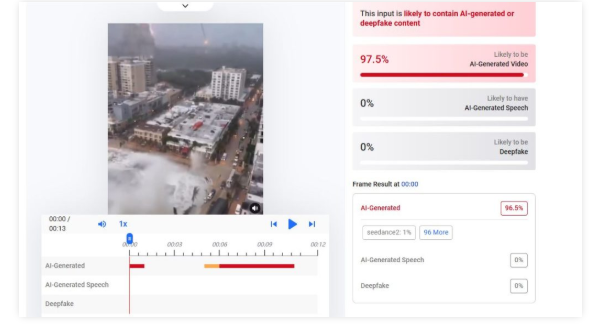
To verify the viral claim, we searched relevant keywords on Google but found no credible news reports supporting it.On closely examining the video, we observed several technical inconsistencies. The person seen in the video appears robotic, raising suspicion that the content may be AI-generated. To confirm this, we analyzed the video using AI detection tools. The tool Hive Moderation indicated that the video is approximately 97.5 percent likely to be generated using artificial intelligence.
We also used the AI detection tool Matrix.Tencent. The results suggested that the video is likely AI-generated, with around a 77 percent probability.

Conclusion:
Our research found that the viral video claiming to show an Iranian attack on Israel is AI-generated and not related to any real incident.

Related Blogs

Executive Summary:
A video circulating on social media falsely claims that India’s Finance Minister, Smt. Nirmala Sitharaman, has endorsed an investment platform promising unusually high returns. Upon investigation, it was confirmed that the video is a deepfake—digitally manipulated using artificial intelligence. The Finance Minister has made no such endorsement through any official platform. This incident highlights a concerning trend of scammers using AI-generated videos to create misleading and seemingly legitimate advertisements to deceive the public.

Claim:
A viral video falsely claims that the Finance Minister of India Smt. Nirmala Sitharaman is endorsing an investment platform, promoting it as a secure and highly profitable scheme for Indian citizens. The video alleges that individuals can start with an investment of ₹22,000 and earn up to ₹25 lakh per month as guaranteed daily income.

Fact check:
By doing a reverse image search from the key frames of the viral fake video we found an original YouTube clip of the Finance Minister of India delivering a speech on the webinar regarding 'Regulatory, Investment and EODB reforms'. Upon further research we have not found anything related to the viral investment scheme in the whole video.
The manipulated video has had an AI-generated voice/audio and scripted text injected into it to make it appear as if she has approved an investment platform.

The key to deepfakes is that they seem relatively realistic in their facial movement; however, if you look closely, you can see that there are mismatched lip-syncing and visual transitions that are out of the ordinary, and the results prove our point.
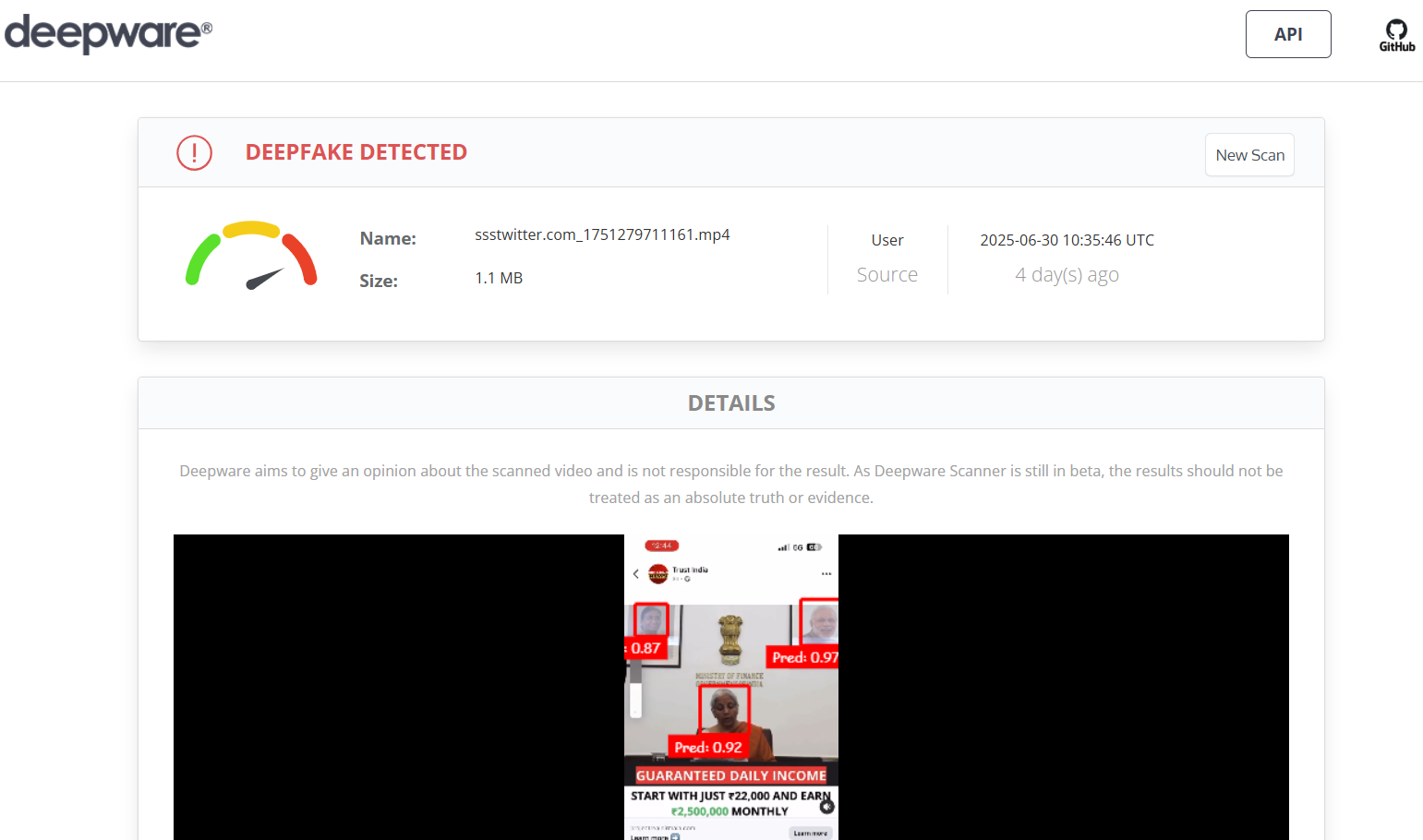
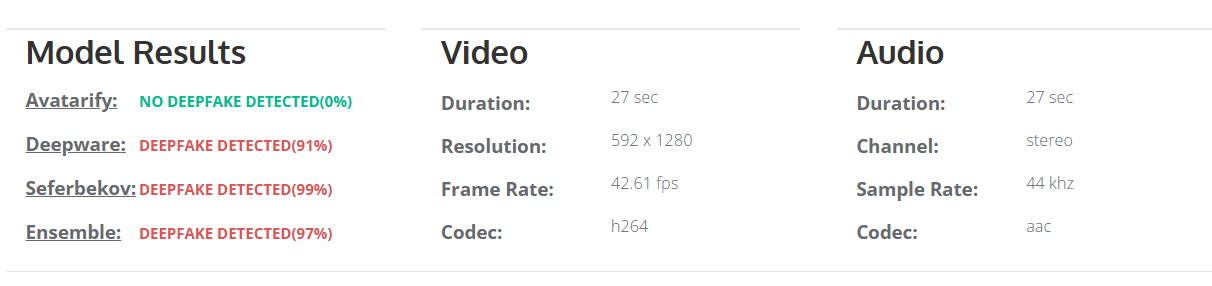
Also, there doesn't appear to be any acknowledgment of any such endorsement from a legitimate government website or a credible news outlet. This video is a fabricated piece of misinformation to attempt to scam the viewers by leveraging the image of a trusted public figure.
Conclusion:
The viral video showing the Finance Minister of India, Smt. Nirmala Sitharaman promoting an investment platform is fake and AI-generated. This is a clear case of deepfake misuse aimed at misleading the public and luring individuals into fraudulent schemes. Citizens are advised to exercise caution, verify any such claims through official government channels, and refrain from clicking on unknown investment links circulating on social media.
- Claim: Nirmala Sitharaman promoted an investment app in a viral video.
- Claimed On: Social Media
- Fact Check: False and Misleading
.webp)
Introduction
The judiciary as an institution has always been kept on a pedestal and is often seen as the embodiment of justice. From Dictatorship to Democracy, the judiciary plays a central role; even where the judiciary is controlled, the legitimacy of the policies, in one sense or another, is derived from it. In democracies around the world, the independence and well-being of the judiciary are seen as the barometer of democracy’s strength. In this global age, where technology is omnipresent, it seems the judiciary is no exception. Now more than ever, when the judiciary is at the centre of evaluative focus, it becomes imperative to make the judiciary transparent. Digitisation of the judiciary is not just an administrative reform; it is an extension of constitutionalism into the technological realm, an effort to ensure that justice is accessible, transparent, and efficient. On July 25, which is the International Day on Judicial Well-being, is commemorated every year with a clear message that judicial well-being supports “anti-corruption, access to justice, and sustainable peace.”
Digitisation by Design: Justice in the Age of Transformation
The Prime Minister of India envisioned the future of the Indian legal system in alignment with the digitised world, as when he said, “Technology will integrate police, forensics, jails, and courts, and will speed up their work as well. We are moving towards a justice system that will be fully future-ready,” he said, almost predicting the future. Although there are many challenges in the face of this future, there are various initiatives that ease the transition. To clarify, India is streamlining operations, reducing delays, and enhancing access to justice for all by integrating AI into legal research, case management, judicial procedures, and law enforcement. Machine Learning (ML), Natural Language Processing (NLP), Optical Character Recognition (OCR), and predictive analytics are just a few of the AI-powered technologies that are currently being used to increase crime prevention, automate administrative duties, and improve case monitoring.
The digitisation of Indian courts is a structural necessity rather than just a question of contemporary convenience. Miscarriages of justice have frequently resulted from the growing backlog of cases, challenges with maintaining records, and the loss of physical files. In the seminal case of State of U.P. v. Abhay Raj Singh, the courts acknowledged that a conviction could be overturned by missing records alone. With millions of legal documents at risk, digitisation becomes a shield against such a collapse and a tool for preserving judicial memory.
Judicial Digitalisation in India: Institutional Initiatives and Infrastructural Advancements
For centuries, towering bundles of courtroom files stood as dusty monuments to knowledge, sacred, chaotic, and accessible to a select few. But as we now stand in 2025, the physical boundaries of a traditional courtroom have blurred, and the Indian government is actively working towards transforming the legal system. The e-Courts Mission Mode Project is a flagship initiative that aims to utilise Information and Communication Technology (ICT) to modernise and advance the Indian judiciary. This groundbreaking effort, led by the Department of Justice, Government of India, is being carried out in close coordination with the Supreme Court of India’s e-Committee. As a news report suggests, the Supreme Court (SC) held 7.5 lakh hearings through video conferencing between 2020 and 2024, as stated by the Ministry of Law and Justice, responding to a query in the Rajya Sabha on Thursday. Technological tools such as the Supreme Court Vidhik Anuvaad Software (SUVAS), the Case Information Software (CIS), and the Supreme Court Portal for Assistance in Court’s Efficiency (SUPACE) were established to make all pertinent case facts easily available. In another move, the Registry, SC, in close coordination with IIT, Madras, has created and implemented AI and ML-based technologies that are integrated with the Registry’s electronic filing software. This serves as a statement to the fact that cybersecurity and digital infrastructure are no longer administrative add-ons but essential building blocks for ensuring judicial transparency, efficiency, and resilience.
E-Governance and Integrity: The Judiciary in Transition
The United Nations recognises the fundamentals of the judiciary’s well-being and how corruption acts like water to the rust and taints the integrity of not a single judge in general but creates a perception of the whole institution. This threat of corruption is recognised by the United Nations Convention against Corruption (UNCAC), particularly Article 11, which urges the protection of the judiciary’s independence and integrity. Digitisation, while it cannot operate in a vacuum, acts as a structural antidote to corruption by embedding transparency into the fabric of justice delivery as automated registry systems, e-filing, and real-time access to case data drastically reduce discretionary power and the potential for behind-the-scenes manipulation. However, digital systems are only as ethical as the people who design, maintain, and oversee them, bringing their own limitations.
Conclusion: CyberPeace and the Future of Ethical Digital Justice
The potential of digitalisation resides not just in efficiency but also in equity, as India’s judiciary balances tradition and change. A robust democracy, where justice is lit by code rather than hidden under files, is built on a foundation of an open, accessible, and technologically advanced court. This change is not risk-free, though. Secure justice must also be a component of digital justice. The very values that digitisation seeks to preserve are at risk from algorithmic opacity, data breaches, and insecure technologies.
Our vision is not just of a digitalised court system but of a digitally just society, one where judicial data is protected, legal processes are democratised, and innovation upholds constitutionalism. Therefore, as a step forward, CyberPeace resolves to support AI upskilling for legal professionals, advocate for secure-by-design court infrastructure, and facilitate dialogue between technologists and judicial actors to build trust in the digital justice ecosystem. CyberPeace is dedicated to cyber transparency, privacy protection, and ethical AI.
References
- https://www.un.org/en/observances/judicial-well-being
- https://www.pib.gov.in/PressReleasePage.aspx?PRID=2106239
- https://www.pib.gov.in/PressReleasePage.aspx?PRID=2106239
- https://www.barandbench.com/view-point/facilitating-legal-access-digitalization-of-supreme-court-high-court-records
- https://www.pib.gov.in/PressReleaseIframePage.aspx?PRID=2085127
- https://www.medianama.com/2024/12/223-supreme-court-seven-lakh-video-conferences-four-year-rajya-sabha/

Overview of the India-UK Joint Tech Security Initiative
India and the UK have been deepening their technological and security ties through various initiatives and agreements. One of the key developments in this partnership is the India-UK Joint Tech Security Initiative, which focuses on enhancing collaboration in areas like cybersecurity, artificial intelligence (AI),telecommunications, and critical technologies. Building upon the bilateral cooperation agenda set out in the India-UK Roadmap 2030, which seeks to bolster cooperation across various sectors, including trade, climate change, antidefense, the UK and India launched the Joint Tech Security Initiative (TSI) on July 24, 2024. This initiative will priorities collaboration in critical and emerging technologies across priority sectors. Coordinating with the national security agencies of both countries, the TSI will set priority areas and identify interdependencies for cooperation on critical and emerging technologies. This, in turn, will help build meaningful technology value chain partnerships between India & the UK.
The TSI will be coordinated by the National Security Advisors (NSAs) of both countries through existing and new dialogues. The NSAswill set priority areas and identify interdependencies for cooperation on critical and emerging tech, helping build meaningful technology value chain partnerships between the two countries. Progress made on the initiative will be reviewed on a half-yearly basis at the Deputy NSA level. A bilateral mechanism will be established led by India's Ministry of External Affairs and the UK government for promotion of trade in critical and emerging technologies, including resolution of relevant licensing or regulatory issues. Both countries view this TSI as a platform and a strong signal of intent to build and grow sustainable and tangible partnerships across priority tech sectors. They will explore how to build a deeper strategic partnership between UK and Indian research and technology centres and Incubators, enhance cooperation across UK and India tech and innovation ecosystems, and create a channel for industry and academia to help shape the TSI.
The UK and India are launching new bilateral initiatives to expand and deepen their technology security partnership. These initiatives will focus on various domains, including telecoms, critical minerals, semiconductors, and energy security.
In telecoms, the UK and India will build a new Future Telecoms Partnership, focusing on joint research on future telecoms, open RAN systems, testbed linkups, telecoms security, spectrum innovation, software and systems architecture. This will include collaboration between UK's SONIC Labs, India's Centre for Development of Telematics (C-DOT), and Dot's Telecoms Startup Mission.
In critical minerals, the UK and India will expand their collaboration on critical minerals, working together to improve supply chain resilience, explore possible research and development and technology partnerships along the complete critical minerals value chain, and share best practices on ESG standards. They will establish a roadmap for cooperation and establish a UK-India ‘critical minerals’ community of academics, innovators, and industry.
Key Areas of Collaboration:
- Strengthening cybersecurity defense and enhancing resilience through joint cybersecurity exercises and information-sharing and developing common standards and best practices while collaborating with their respective organisations, ie, CERT-In and NCSC.
- Promotion of ethical AI development and deployment with AI ethics guidelines and frameworks, and efforts encouraging academic collaborations. Support for new partnerships between UK and Indian research organizations alongside existing joint programmes using AI to tackle global challenges.
- Building secure and resilient telecom infrastructure with a focus on security and exchange of expertise and regulatory cooperation. Collaboration on Open Radio Access Networks tech to name as an example.
- Critical and emerging technologies development by advancing research and innovation in the quantum, semiconductors and biotechnology niches. Promoting and investing in tech startups and innovation ecosystems. Engaging in policy dialogues on tech governance and standards.
- Digital economy and trade facilitation to promote economic growth by enhancing frameworks and agreements for it. Collaborating on digital payment systems and fintech solutions and most importantly promoting data protection and privacy standards.
Outlook and Impact on the Industry
The initiative sets out a new approach for how the UK and India work together on the defining technologies of this decade. These include areas such as telecoms, critical minerals, AI, quantum, health/biotechnology, advanced materials and semiconductors. While the initiative looks promising, several challenges need to be addressed such as the need to put robust regulatory frameworks in place, and develop a balanced approach for data privacy and information exchange in the cross-border data flows. It is imperative to install mechanisms that ensure that intellectual property is protected while the facilitation of technology transfer is not hampered. Above all, geopolitical risks need to be navigated in a manner that the tensions are reduced and a stable partnership grows. The Initiative builds on a series of partnerships between India and the UK, as well as between industry and academia. Abilateral mechanism, led by India’s Ministry of External Affairs and the UK government, will promote trade in critical and emerging technologies, including the resolution of relevant licensing or regulatory issues.
Conclusion
This initiative, at its core, will drive forward a bilateral partnership that is framed on boosting economic growth and deepening cooperation across key issues including trade, technology, education, culture and climate. By combining their strengths, the UK and India are poised to create a robust framework for technological innovation and security that could serve as a model for international cooperation in tech.
References
- https://www.hindustantimes.com/india-news/india-uk-launch-joint-tech-security-initiative-101721876539784.html
- https://www.gov.uk/government/publications/uk-india-technology-security-initiative-factsheet/uk-india-technology-security-initiative-factsheet
- https://www.business-standard.com/economy/news/india-uk-unveil-futuristic-technology-security-initiative-to-seal-fta-soon-124072500014_1.htm
- https://bharatshakti.in/india-uk-technology-security-initiative/
