
Union Govt’s Push for Sanchar Saathi: CyberPeace Insights
Introduction
The Department of Telecommunications (DoT) changed course just 48 hours after the directive dated December 1, 2025, sparked controversy. On December 3, 2025, the department publicly reversed its directive to smartphone manufacturers to pre-install the Sanchar Saathi app starting in March of the following year. The withdrawal marked the ending of a tumultuous, quick-paced event that highlighted how dynamic digital policy can be in a democracy.
The DoT explained its move in calculated terms. The government said that the first mandate was no longer necessary due to an abrupt increase in voluntary app downloads brought on by the public furore. The agency stated , “The mandate to install the app was meant to accelerate the process because the number of users has been growing rapidly.”
The app in question is not new. When it was first introduced in 2023, it was intended to be a public safety where people could report suspicious calls, identify numbers registered in their name, block stolen devices using their IMEI, confirm the authenticity of their handset, and report fraudulent international calls that were disguised as Indian numbers. The platform has quietly expanded over the past two years with features like utilities to check mobile connections, as well as Chakshu for reporting fraud. When used freely, it has helped numerous people in navigating the increasingly complex web of online scams.
Balancing Protection and Personal Freedom
In India, there isn’t much precedent for requiring all phones to have a certain government backed app installed. While operators supported TRAI’s DND app in 2018 and emergency numbers were integrated during the pandemic, they did not go into the territory of compulsory pre-installation.
Legal experts have time and again pointed out that although the government can control telecommunications for security reasons, any mandatory action pertaining to personal devices may be subject to constitutional review under the right to privacy, as stated in the Puttaswamy ruling. Not because the app is flawed in and of itself, but rather because every transition from voluntary adoption to mandatory compliance necessitates a higher standard of necessity, proportionality, and protections.
The Pulse of the Policy
The DoT’s stated rationale was clear: fake, duplicated or spoofed IMEIs represent a major cyber-security threat. India currently faces some of the world’s highest levels of SIM misuse, digital impersonation, online extortion, and device cloning crimes. Even a small fraction of compromised devices can do great harm in a nation with over a billion active mobile users.
The DoT’s AI and Digital Intelligence Unit, a small seven-person team in charge of SIM security, fighting illicit telecom setups, and collaborating with financial regulators on quickly changing fraud patterns, issued the Sanchar Saathi directive as part of a larger set of security-focused measures. One order required platforms such as WhatsApp to make sure that web sessions were terminated after six hours and that accounts only functioned when the registered SIM card was present in the device.
When taken as a whole, these orders indicate a clear strategic goal, the government is working to close systemic gaps that organised crime, particularly identity theft and device-level fraud, exploits. However, they also highlight the complex relationship between public opinion and security requirements. The government’s quick reversal in the Sanchar Saathi case demonstrated a crucial realization: digital safety mechanisms can only be effective when people feel educated, valued, and in charge.
CyberPeace Perspective & The Middle Path
CyberPeace stated that whenever a digital tool comes into contact with identity, data, or mobile access, public concern is inevitable. However, it is also emphasised that Sanchar Saathi is not a surveillance tool, instead can empower citizens.
Even with the rolled back mandate, it is reaffirmed that cornerstones of digital trust are accountability, openness, audits, and unambiguous permissions. India can maintain both safety and rights through responsible implementation, ethical design, and open communication.
References
- https://www.thehindu.com/sci-tech/technology/what-is-the-sanchar-saathi-app-why-is-the-government-mandating-its-pre-installation/article70350322.ece
- https://theprint.in/opinion/sharp-edge/sanchar-saathi-app-modi-govt/2797917/
- https://www.pib.gov.in/PressReleasePage.aspx?PRID=2198110®=3&lang=2
- https://sancharsaathi.gov.in/SancharSaathiDocuments/ImportantDocuments/DoT%20issues%20directions%20for%20pre-installation%20of%20Sanchar%20Saathi%20App%20in%20mobile%20handsets%20to%20verify%20the%20genuineness%20of%20mobile%20handsets.pdf
- https://cyberpeace.org/resources/blogs/sanchar-saathi-portal-a-solution-for-mobile-phone-theft-and-data-protection
- https://cyberpeace.org/resources/blogs/chakshu-and-dip-shielding-citizens-from-online-frauds
- https://cyberpeace.org/resources/blogs/financial-risk-indicator-launched-by-dot-to-strengthen-cybersecurity

Related Blogs
Executive Summary
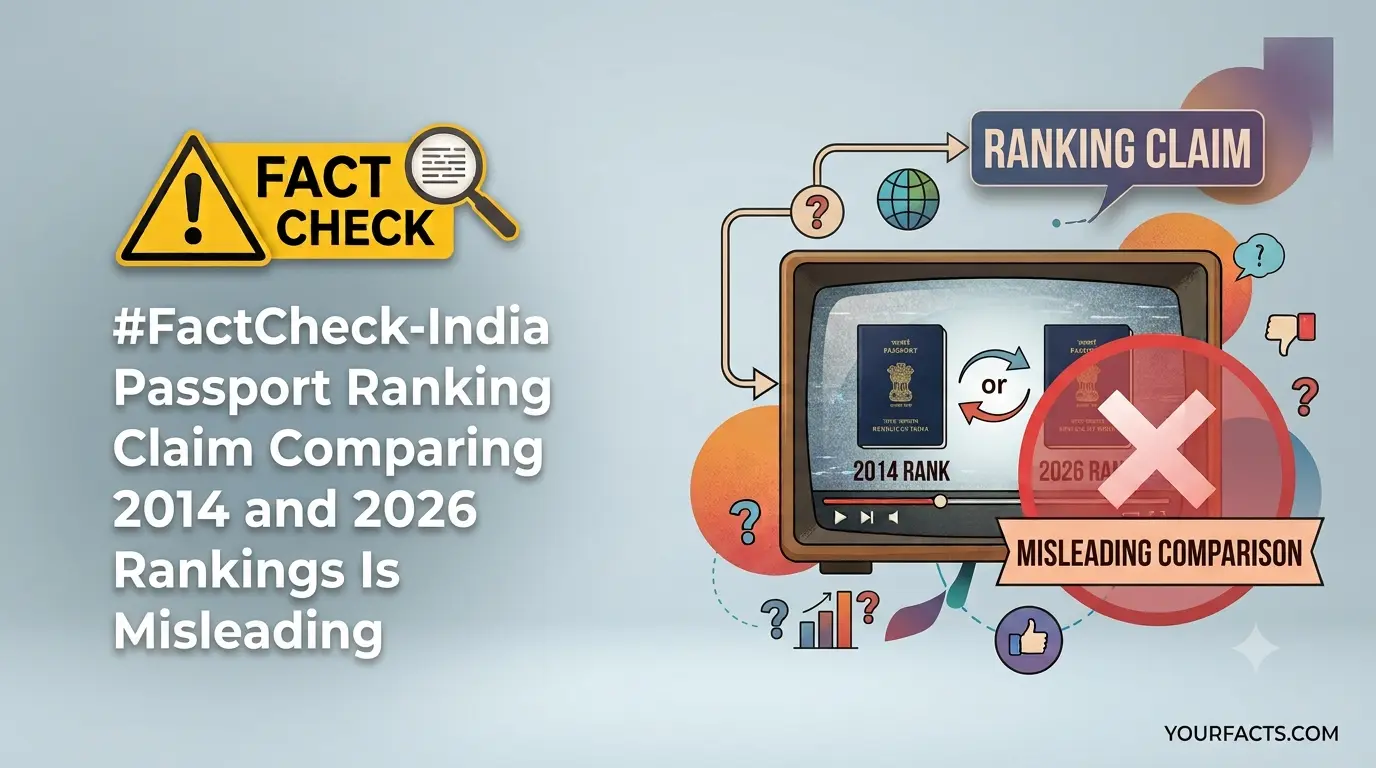
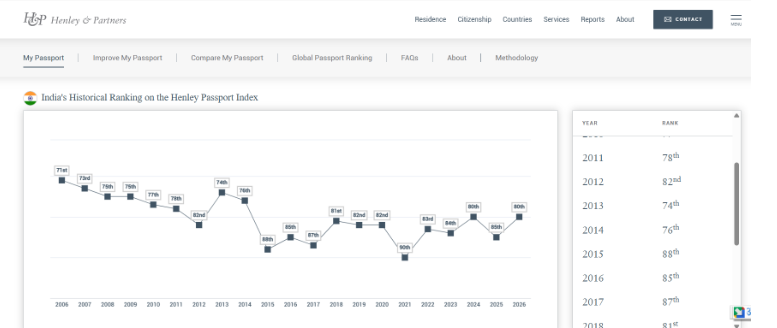
A claim is going viral on social media stating that India’s passport ranking has declined from the 76th position in 2014 to the 125th position this year. CyberPeace Research Wing’s research found the claim to be misleading. The two rankings mentioned in the viral claim were issued by different agencies. The 76th rank in 2014 was given by the Henley Passport Index, while the 125th rank this year was assigned by the Global Passport Index.
Claim
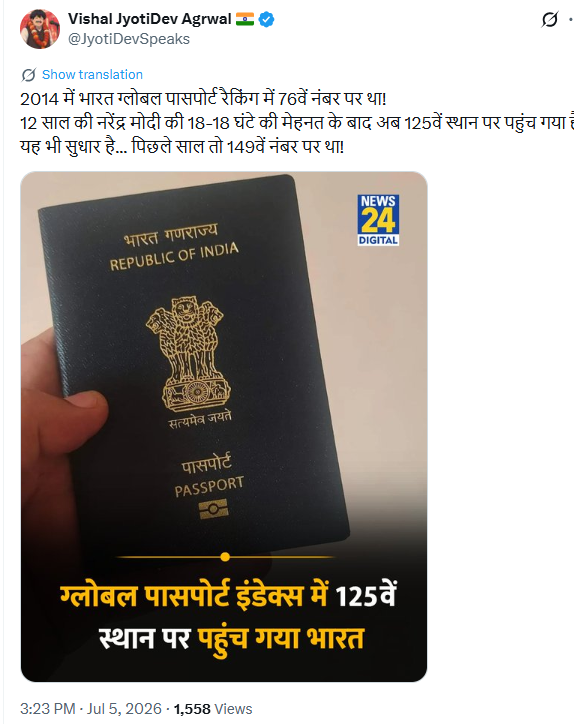
The viral claim states that India’s passport ranking, which was 76th in 2014, has fallen to the 125th position this year. The claim was shared on X (formerly Twitter) with a Hindi caption.
https://x.com/JyotiDevSpeaks/status/2073706900437508468
FactCheck
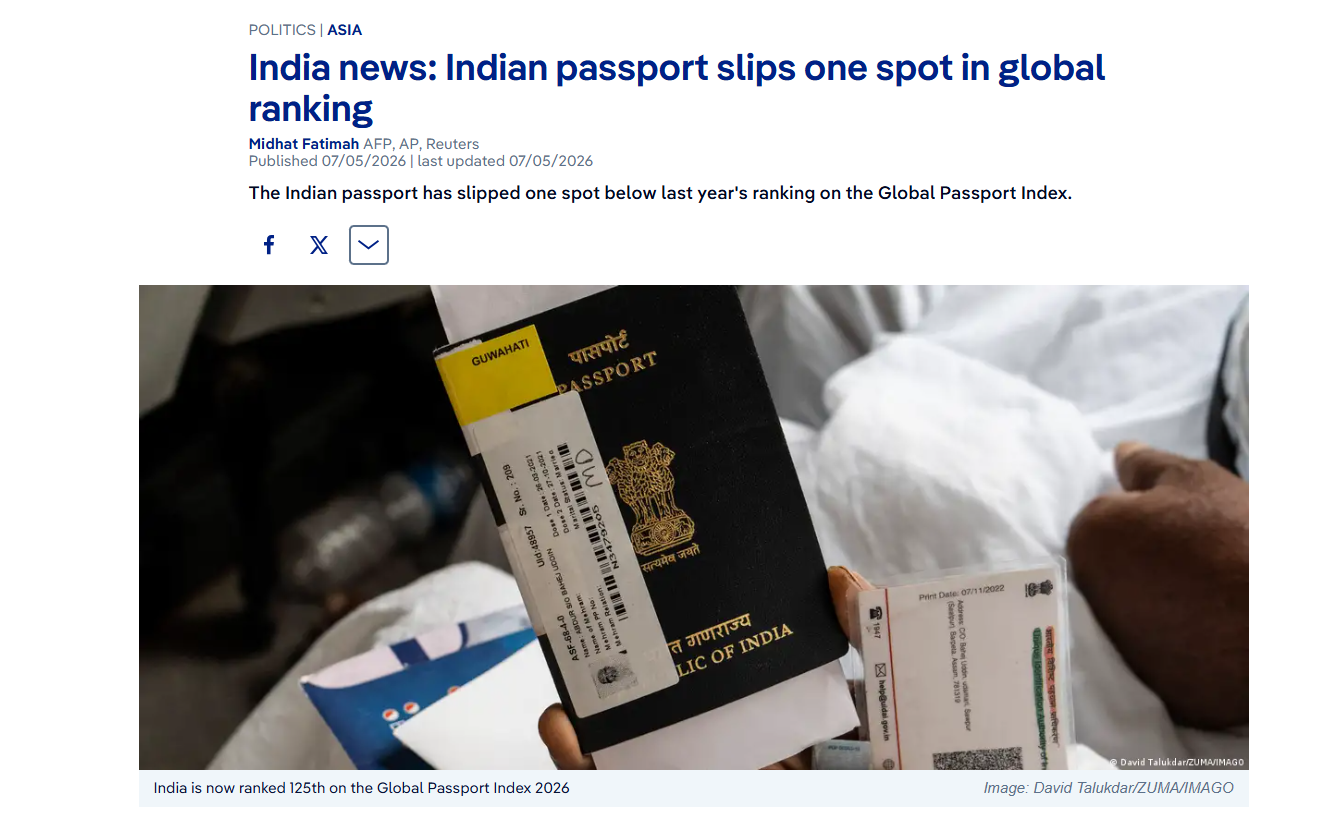
To verify the claim, we first searched relevant news reports and found that India’s passport has been ranked 125th in the latest Global Passport Index.
https://www.dw.com/en/india-news-indian-passport-slips-one-spot-in-global-ranking/live-77836287
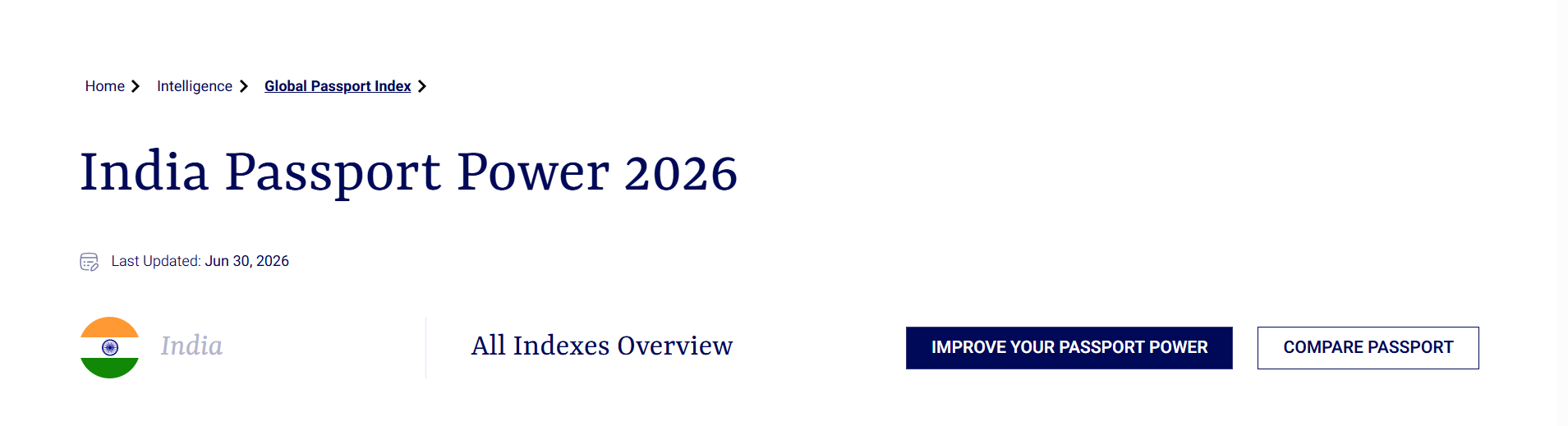
We then checked the official website of Global Citizen Solutions, the organization that publishes the Global Passport Index. The data available on the website confirms that India’s passport has been placed at the 125th position in the latest ranking.
https://www.globalcitizensolutions.com/passport-index/india/
Further, we investigated which organization had ranked the Indian passport 76th in 2014. The search revealed that the ranking was issued by the Henley Passport Index, published by Henley & Partners. According to the information available on the Henley Global website, India’s passport was ranked 76th in 2014, while it stands at the 80th position in the 2026 Henley Passport Index. The rankings assigned to the Indian passport from 2006 to 2026 can be seen in the image below.
https://www.henleyglobal.com/passport-index
Conclusion
Our research found that the claim stating India’s passport ranking declined from 76th position to 125th position is misleading. The two rankings cited in the viral claim were issued by different organizations and cannot be compared directly. The 2014 ranking came from the Henley Passport Index, while the 125th position refers to the Global Passport Index.
Executive Summary:
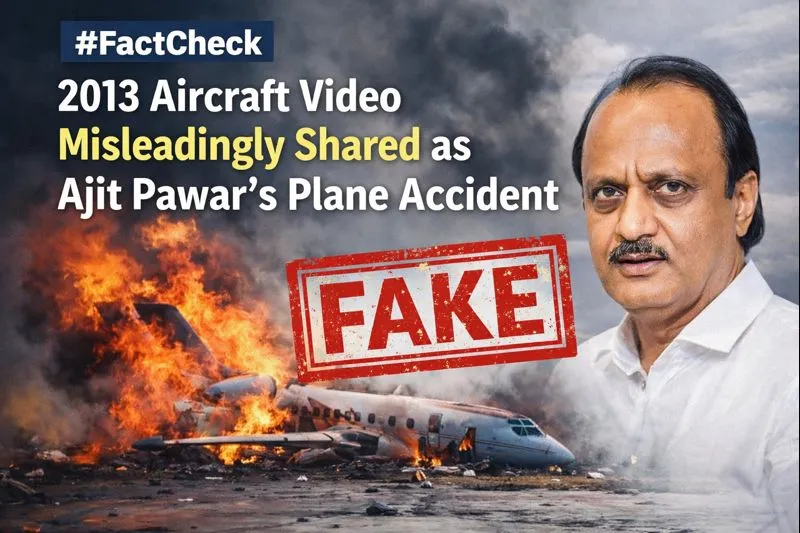
A video showing poor runway visibility from inside an aircraft cockpit is being widely shared on social media, linking it to an alleged aircraft accident involving Maharashtra Deputy Chief Minister Ajit Pawar in Baramati on January 28, 2025. Users claim that the footage captured the final moments before the crash, suggesting that the runway visibility disappeared just seconds before landing. However, research conducted by the CyberPeace found the viral claim to be misleading. The research revealed that the video has no connection to any aircraft accident involving Deputy Chief Minister Ajit Pawar. In reality, the video dates back to 2013 and shows a pilot attempting to land an aircraft amid heavy rain. During the approach, the runway briefly disappears from the pilot’s view, prompting the pilot to abort the landing and execute a go-around. The aircraft later lands safely after weather conditions improve.
Claim
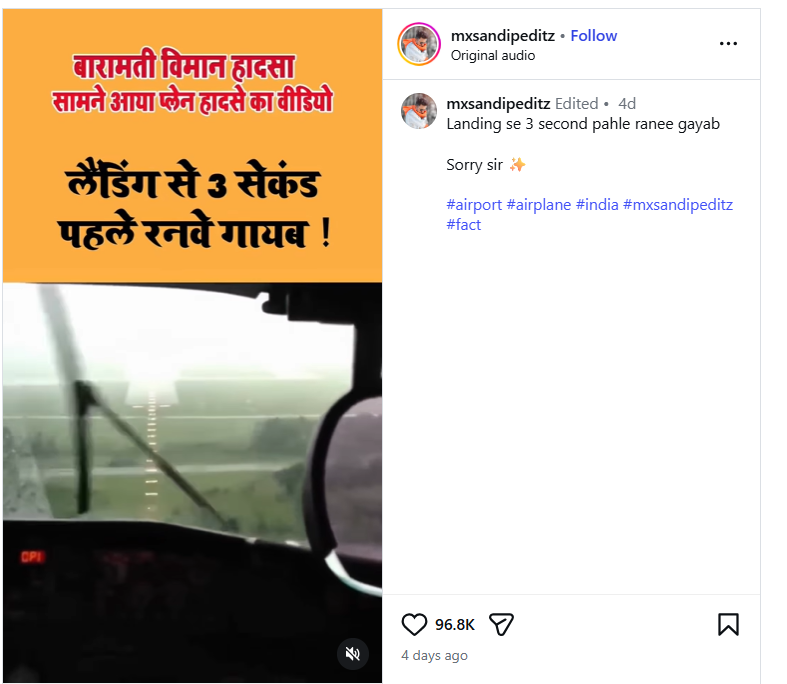
An Instagram user shared the viral video on January 29, 2026, claiming:“Baramati plane crash: video of the aircraft accident surfaces. Runway disappears just three seconds before landing.” (The link to the post, its archived version, and screenshots are provided below.)
Fact Check
To verify the claim, we extracted keyframes from the viral video and conducted a reverse image search using Google Lens. The search led us to the same video uploaded on a YouTube channel named douglesso, which was published on June 12, 2013. (Footage link and screenshot available below.)
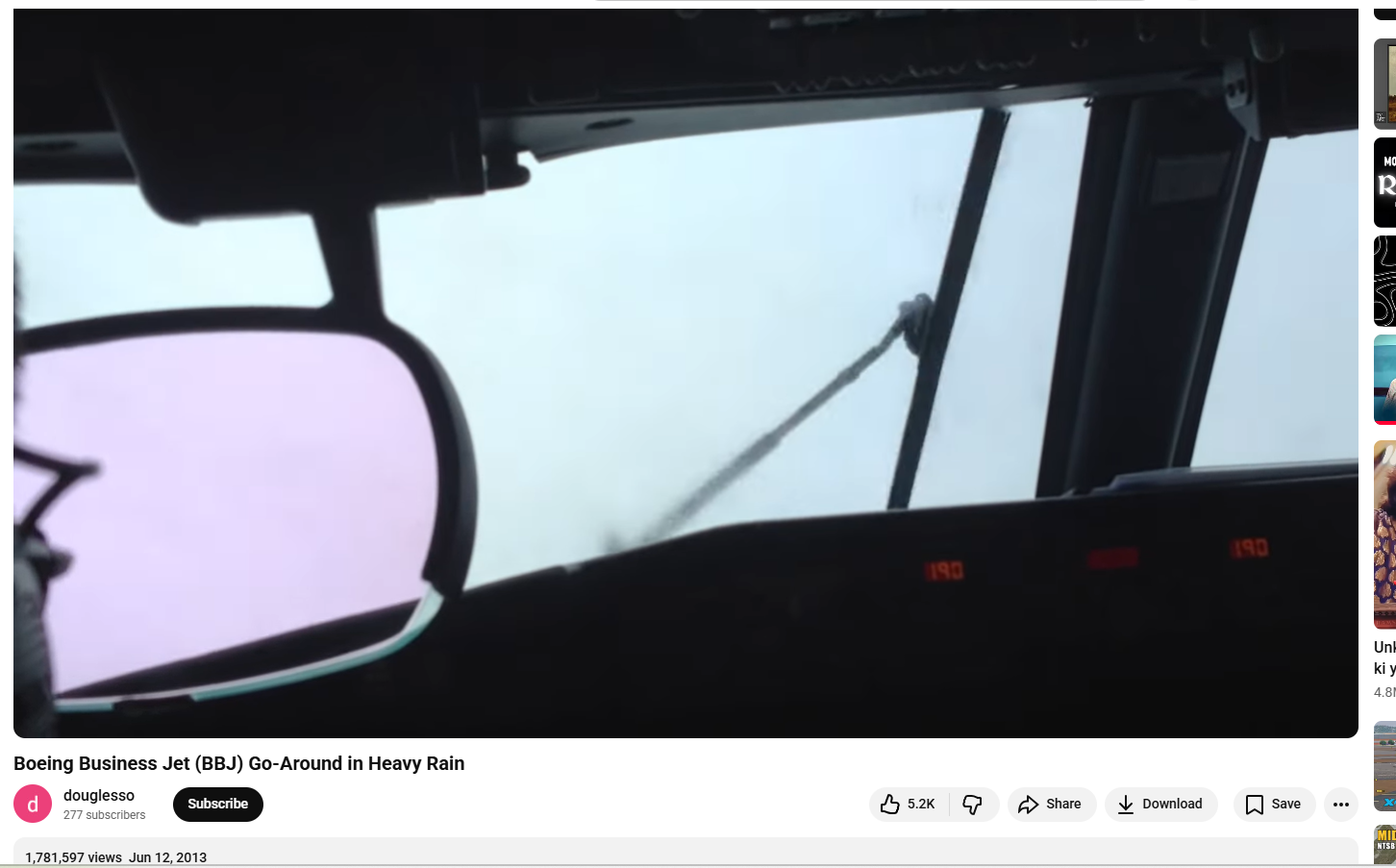
Further research led us to a report published by the American media website CNET, which featured the same visual. According to the report, the video shows a Boeing Business Jet attempting to land during heavy rainfall. The aircraft was conducting a CAT I Instrument Landing System (ILS) approach when a sudden downpour drastically reduced visibility at decision height. As the runway briefly disappeared from view, the pilots aborted the landing and carried out a go-around. The aircraft later landed safely once weather conditions improved. (The link to the CNET report and its screenshot are provided below.)
- https://www.cnet.com/culture/this-is-what-happens-when-a-plane-is-landing-and-the-runway-disappears/
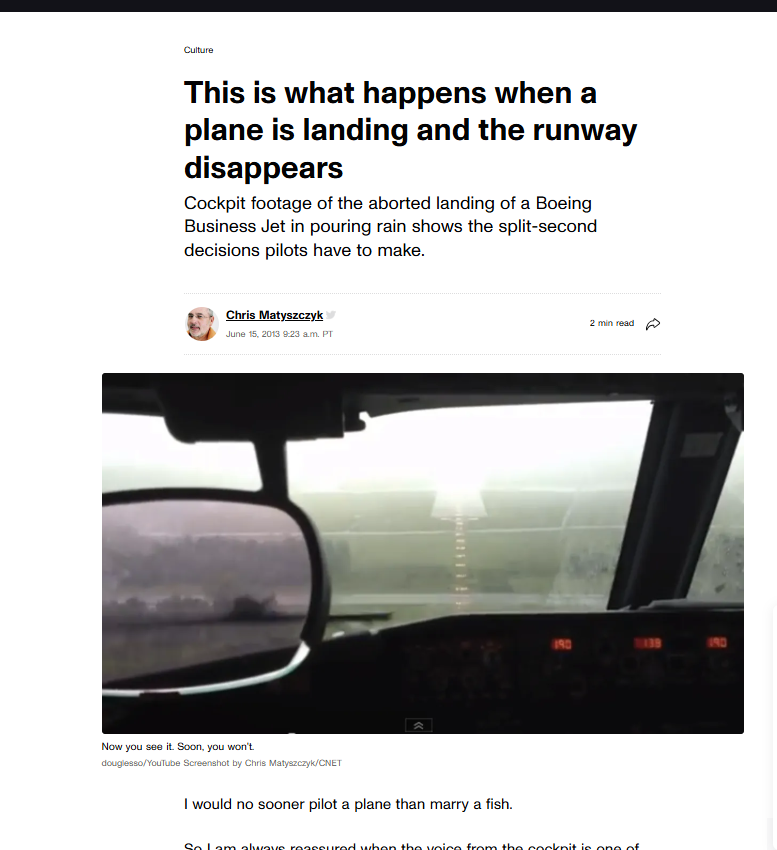
Conclusion
Our research confirms that the video circulating on social media is unrelated to any recent aircraft accident involving Maharashtra Deputy Chief Minister Ajit Pawar. The clip is an old video from 2013, which is now being shared with a false and misleading claim.

Executive Summary
Amid rising tensions involving Iran, Israel and the United States following reports in early April 2026 that Iran had shot down an American fighter aircraft, a picture is going viral on social media claiming to show Iranian soldiers standing beside the wreckage of a destroyed helicopter while holding the Iranian flag. Research by CyberPeace Research Wing found that the viral claim is false. The image has been created using artificial intelligence and does not depict any real incident. The picture was generated using Google AI tools and is being misleadingly circulated online with different claims.
Claim
A Facebook page named “official salman 09” shared the image on May 1, 2026, along with a lengthy caption describing the scene as a symbol of Iran’s battlefield success. The post portrayed the image as evidence of a helicopter being brought down during ongoing tensions in the Middle East and suggested that the photo reflected strength, morale and victory in war.
- https://www.facebook.com/permalink.phpstory_fbid=pfbid02TAac6JwZha2UU4T8QiCGq4ENmsnNSwvigaz3vKxr9UWLbhghNsnMMpZdQ3dUuQ1rl&id=100092392280139
- https://archive.ph/

Fact Check
To verify the authenticity of the image, we first conducted a reverse image search using Google Lens. The image did not appear in any credible news reports or authentic media coverage. Instead, it was found circulating mainly on social media platforms, raising suspicion about its authenticity. We then analyzed the image using Google’s SynthID detector. The analysis confirmed the presence of a SynthID watermark with a “very high confidence” score, indicating that the image had been generated using Google AI tools. SynthID is Google’s watermarking technology used to identify AI-generated content created through its models.

Further verification using another AI-detection platform, Hive Moderation, also indicated a high probability that the image had been generated using AI. The tool identified Gemini as the likely source and assessed the image as overwhelmingly AI-generated.

Conclusion
Our research confirms that the viral image is AI-generated and unrelated to any real-world event. The picture showing soldiers holding the Iranian flag near helicopter wreckage was created using Google AI tools and is being falsely shared on social media to spread misleading claims.
