
#FactCheck:False claim that video shows aircraft losing control amid strong winds caused by Cyclone Arnab in Ahmedabad is AI-generated
Executive Summary
A video is being shared on social media showing an aircraft seemingly losing control amid strong winds. The video is being claimed to be from Ahmedabad, with users alleging that it shows the aircraft being affected by Cyclone Arnab. CyberPeace Research found the viral claim to be false. Our research found that the video is AI-generated. Gujarat is not among the states affected by Cyclone Arnab.
Claim:
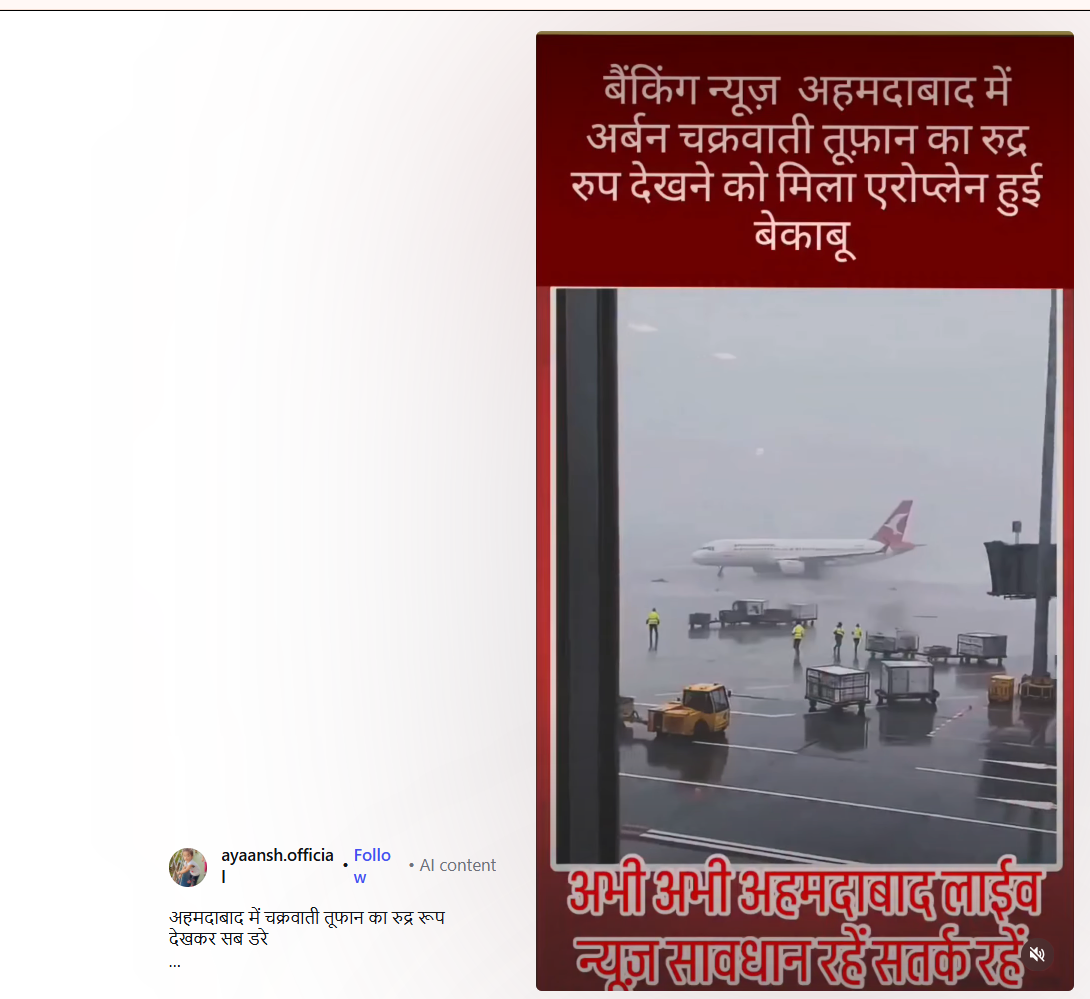
A Facebook user shared the viral video on September 28 with the caption: “The terrifying form of Cyclone Arnab was witnessed in Ahmedabad! An airplane lost control during the storm. The power of nature is truly incredible. Stay alert, stay safe.” The post link, archive link and screenshot are provided below.
https://www.facebook.com/watch/?v=1076505855146958

Fact Check
To verify the authenticity of the viral claim, we conducted a Google search using relevant keywords. During the search, we found a report published on the DD News website on September 25, 2026. According to the report, Cyclone Arnab, which formed over the Bay of Bengal, weakened after making landfall along the coastal areas of Odisha and Andhra Pradesh. The cyclone made landfall along the coast of north Andhra Pradesh and south Odisha between around 11 pm and 1 am, bringing heavy rainfall and strong winds to both states.The report, citing the India Meteorological Department (IMD), stated that rainfall was forecast across 22 states and Union Territories in the country. A heavy rainfall alert was issued for Odisha, Chhattisgarh, Madhya Pradesh, Maharashtra, West Bengal, Sikkim, Uttarakhand, Uttar Pradesh, Bihar, Jharkhand, Andhra Pradesh and Telangana. Meanwhile, light rainfall was expected in Delhi-NCR and Karnataka. Rain accompanied by strong winds was also forecast in the northeastern states, the Andaman and Nicobar Islands, and Kerala.The post link and screenshot are provided below.
https://ddnews.gov.in/cyclone-arnab-weakens-rain-forecast-for-22-states-today/
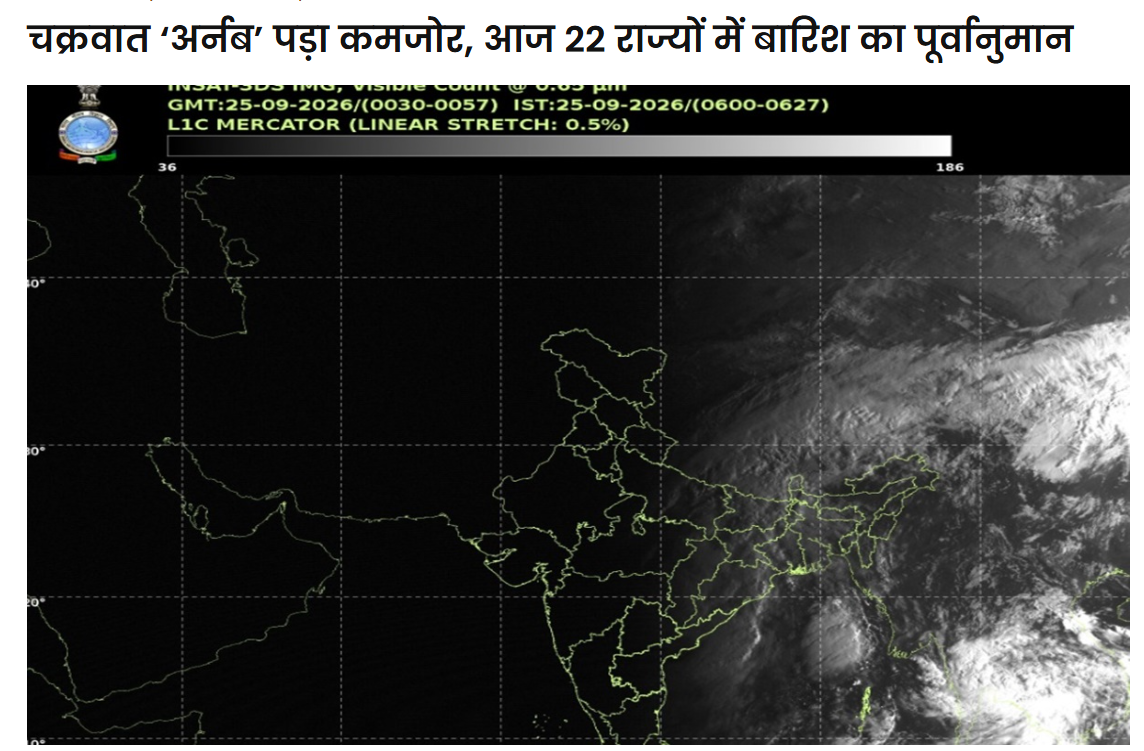
The report made no mention of Gujarat. This raised doubts about the authenticity of the viral video. As part of the next step in our research, we conducted a reverse image search on Google using keyframes from the video. During the search, we found the same video on an Instagram channel that posts AI-generated content. The link and screenshot of the relevant post are provided below.
https://www.instagram.com/reels/Ddya_O1O1rP/
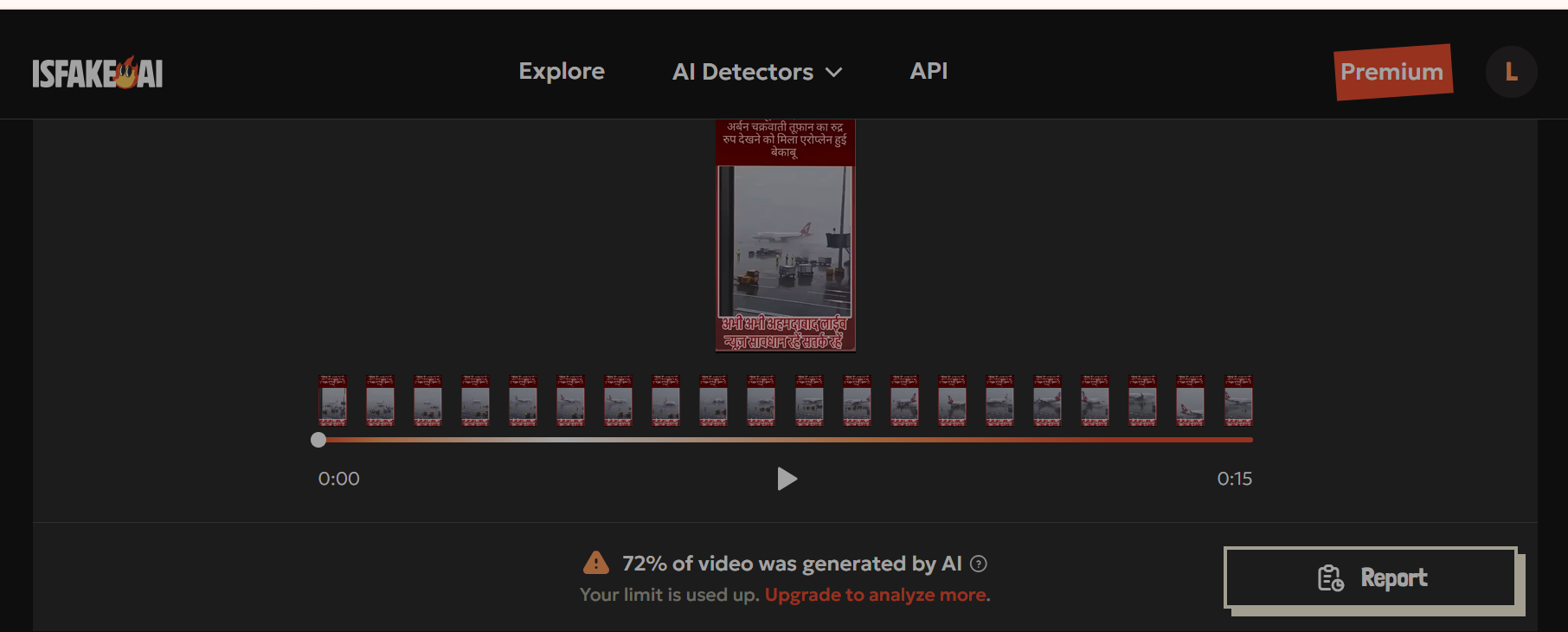
Taking the research forward, we scanned the viral video using the AI detection tool IsFakeAI. According to the results generated by the tool, the viral video was found to be AI-generated.
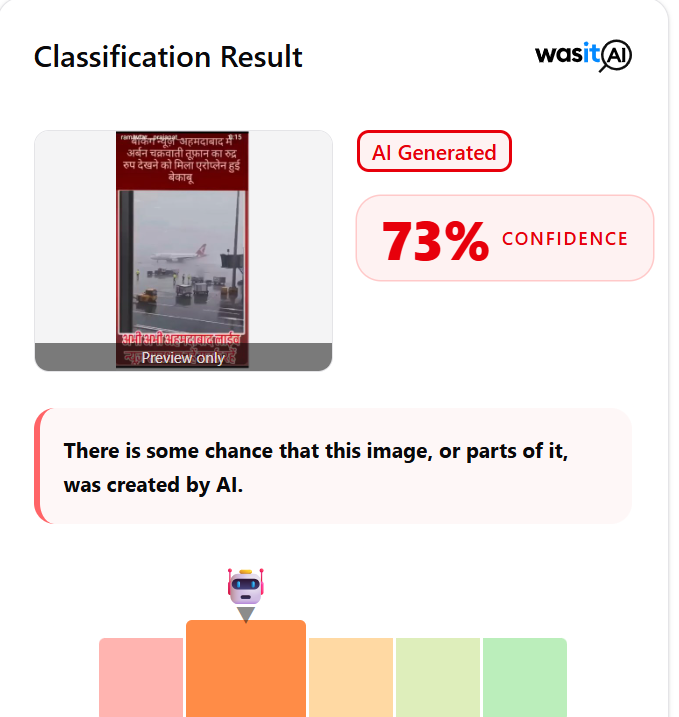
As part of the next step in our research, we scanned the viral video using another AI detection tool, WasIt AI. According to the results, the viral video has a 73 per cent likelihood of being AI-generated.
Conclusion
Our research found the viral claim to be false. We found that the video is AI-generated. Gujarat is not among the states affected by Cyclone Arnab.

Related Blogs

Introduction
The emergence of deepfake technology has become a significant problem in an era driven by technological growth and power. The government has reacted proactively as a result of concerns about the exploitation of this technology due to its extraordinary realism in manipulating information. The national government is in the vanguard of defending national interests, public trust, and security as the digital world changes. On the 26th of December 2023, the central government issued an advisory to businesses, highlighting how urgent it is to confront this growing threat.
The directive aims to directly address the growing concerns around Deepfakes, or misinformation driven by AI. This advice represents the result of talks that Union Minister Shri Rajeev Chandrasekhar, had with intermediaries during the course of a month-long Digital India dialogue. The main aim of the advisory is to accurately and clearly inform users about information that is forbidden, especially those listed under Rule 3(1)(b) of the IT Rules.
Advisory
The Ministry of Electronics and Information Technology (MeitY) has sent a formal recommendation to all intermediaries, requesting adherence to current IT regulations and emphasizing the need to address issues with misinformation, specifically those driven by artificial intelligence (AI), such as Deepfakes. Union Minister Rajeev Chandrasekhar released the recommendation, which highlights the necessity of communicating forbidden information in a clear and understandable manner, particularly in light of Rule 3(1)(b) of the IT Rules.
Advise on Prohibited Content Communication
According to MeitY's advice, intermediaries must transmit content that is prohibited by Rule 3(1)(b) of the IT Rules in a clear and accurate manner. This involves giving users precise details during enrollment, login, and content sharing/uploading on the website, as well as including such information in customer contracts and terms of service.
Ensuring Users Are Aware of the Rules
Digital platform suppliers are required to inform their users of the laws that are relevant to them. This covers provisions found in the IT Act of 2000 and the Indian Penal Code (IPC). Corporations should inform users of the potential consequences of breaking the restrictions outlined in Rule 3(1)(b) and should also urge users to notify any illegal activity to law enforcement.
Talks Concerning Deepfakes
For more than a month, Union Minister Rajeev Chandrasekhar had a significant talk with various platforms where they addressed the issue of "deepfakes," or computer-generated fake videos. The meeting emphasized how crucial it is that everyone abides by the laws and regulations in effect, particularly the IT Rules to prevent deepfakes from spreading.
Addressing the Danger of Disinformation
Minister Chandrasekhar underlined the grave issue of disinformation, particularly in the context of deepfakes, which are false pieces of content produced using the latest developments such as artificial intelligence. He emphasized the dangers this deceptive data posed to internet users' security and confidence. The Minister emphasized the efficiency of the IT regulations in addressing this issue and cited the Prime Minister's caution about the risks of deepfakes.
Rule Against Spreading False Information
The Minister referred particularly to Rule 3(1)(b)(v), which states unequivocally that it is forbidden to disseminate false information, even when doing so involves cutting-edge technology like deepfakes. He called on intermediaries—the businesses that offer digital platforms—to take prompt action to take such content down from their systems. Additionally, he ensured that everyone is aware that breaking such rules has legal implications.
Analysis
The Central Government's latest advisory on deepfake technology demonstrates a proactive strategy to deal with new issues. It also highlights the necessity of comprehensive legislation to directly regulate AI material, particularly with regard to user interests.
There is a wider regulatory vacuum for content produced by artificial intelligence, even though the current guideline concentrates on the precision and lucidity of information distribution. While some limitations are mentioned in the existing laws, there are no clear guidelines for controlling or differentiating AI-generated content.
Positively, it is laudable that the government has recognized the dangers posed by deepfakes and is making appropriate efforts to counter them. As AI technology develops, there is a chance to create thorough laws that not only solve problems but also create a supportive environment for the creation of ethical AI content. User protection, accountability, openness, and moral AI use would all benefit from such laws. This offers an opportunity for regulatory development to guarantee the successful and advantageous incorporation of AI into our digital environment.
Conclusion
The Central Government's preemptive advice on deepfake technology shows a great dedication to tackling new risks in the digital sphere. The advice highlights the urgent need to combat deepfakes, but it also highlights the necessity for extensive legislation on content produced by artificial intelligence. The lack of clear norms offers a chance for constructive regulatory development to protect the interests of users. The advancement of AI technology necessitates the adoption of rules that promote the creation of ethical AI content, guaranteeing user protection, accountability, and transparency. This is a turning point in the evolution of regulations, making it easier to responsibly incorporate AI into our changing digital landscape.
References
- https://economictimes.indiatimes.com/tech/technology/deepfake-menace-govt-issues-advisory-to-intermediaries-to-comply-with-existing-it-rules/articleshow/106297813.cms
- https://pib.gov.in/PressReleaseIframePage.aspx?PRID=1990542#:~:text=Ministry%20of%20Electronics%20and%20Information,misinformation%20powered%20by%20AI%20%E2%80%93%20Deepfakes.
- https://www.timesnownews.com/india/centres-deepfake-warning-to-it-firms-ensure-users-dont-violate-content-rules-article-106298282#:~:text=The%20Union%20government%20on%20Tuesday,actors%2C%20businesspersons%20and%20other%20celebrities

Introduction
Quantum technology involves the study of matter and energy at the sub-atomic level. This technology uses superposition and entanglement to provide new capabilities in computing, cryptography and communication and solves problems at speeds not possible with classical computers. Unlike classical bits, qubits can exist in a superposition of states, representing 0, 1, or any combination of these states simultaneously. The Union Cabinet approved the National Quantum Mission on 19 April 2023, with a budget allocation of Rs 6000 Crore. The mission will seed, nourish, and scale up scientific and industrial R&D in the domain of quantum technology so that India emerges as one of the leaders in developing quantum technologies and their applications.
The Union Minister for Science and Technology and Minister of Earth Sciences, Dr. Jitendra Singh announced the selection of 8 start-ups for support under India’s National Quantum Mission and the National Mission on Interdisciplinary Cyber-Physical Systems (NM-ICPS). The selected start-ups represent diverse quantum tech domains and were chosen via a rigorous evaluation process. These startups are poised to be critical enablers in translating quantum research into practical applications. This start-up selection aligns with India’s broader vision for technological self-reliance and innovation by 2047.
Policy Landscape and Vision
The National Quantum Mission’s main goal is to develop intermediate-scale quantum computers with 50-1000 physical qubits in 8 years, across diverse platforms such as superconducting and photonic technology. The mission deliverables include the development of satellite-based secure quantum communications between ground stations over a range of 2000 km within India, long-distance secure quantum communications with other countries, inter-city quantum key distribution over 2000 km, and multi-node quantum networks with quantum memories.
The National Mission on Interdisciplinary Cyber-Physical Systems aims to promote translational research in Cyber-Physical Systems and associated technologies and prototypes and demonstrates applications for national priorities. The other expectations are enhancing the top-of-the-line research base, human resource development and skill sets in these emerging areas. These missions align with India’s broader ideals such as the Digital India and Make in India campaigns to strengthen India’s technological ecosystem.
Selected Startups and Their Innovations
The startups selected reflect alignment with India’s National Quantum Mission, oriented towards fostering cutting-edge research and innovation and have industrial applications aiming at placing India as the global leader in quantum technology. The selections are:
- QNu Labs (Bengaluru): is advancing quantum communication by developing end-to-end quantum-safe heterogeneous networks.
- QPiAI India Pvt. Ltd. (Bengaluru): is building a superconducting quantum computer.
- Dimira Technologies Pvt. Ltd. (IIT Mumbai): is creating indigenous cryogenic cables, essential for quantum computing.
- Prenishq Pvt. Ltd. (IIT Delhi): developing precision diode-laser systems.
- QuPrayog Pvt. Ltd. (Pune): is working on creating optical atomic clocks and related technologies.
- Quanastra Pvt. Ltd. (Delhi): is developing advanced cryogenics and superconducting detectors.
- Pristine Diamonds Pvt. Ltd. (Ahmedabad): is creating diamond materials for quantum sensing.
- Quan2D Technologies Pvt. Ltd. (Bengaluru): is making advancements in superconducting Nanowire Single-photon Detectors.
References
Introduction
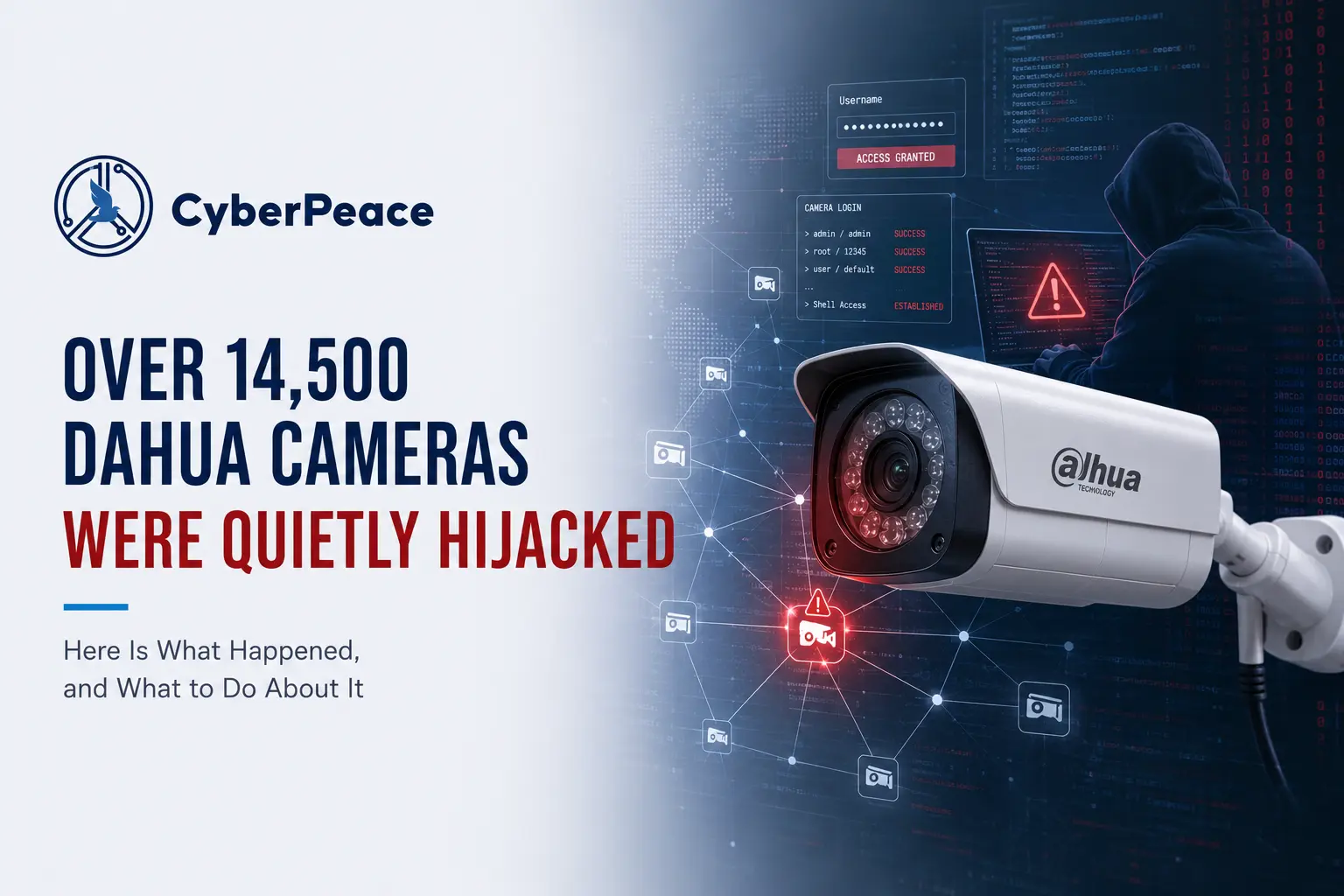
Not every major breach begins with a sophisticated new exploit. Sometimes it begins with a device nobody remembered to update, and this one began exactly that way, at scale. Security researchers have disclosed a campaign that compromised more than 14,530 internet connected cameras made by Dahua Technology, (one of the world's largest surveillance equipment manufacturers), using a mix of stolen credentials, two long known authentication flaws, and a peer to peer relay technique that let attackers reach devices tucked behind home and office routers. The operation, tracked by researchers at Hunt.io, has been named Operation CameraSwarm. It ran between June 17 and July 22, 2026, and was reconstructed almost entirely from an exposed 407 megabyte working directory the attackers themselves left accessible, containing over 2,600 files, campaign logs, shell history, and tooling. Confirmed compromises were concentrated in Ukraine and Russia, and researchers described the operators/attackers as Russian speaking based on language artifacts found in the recovered material, suggesting the campaign was most plausibly built around surveillance or access relevant to the ongoing conflict between the two countries, though no formal attribution to a named threat actor or state entity has been established or claimed. What makes this worth understanding in detail is not just the scale, though 14,500 compromised cameras is a serious number, but how mundane the actual break in methods were. None of this depended on the attackers discovering some brand new, unknown flaw, the kind of vulnerability security researchers call a ‘zero day’. It depended on something far more ordinary: thousands of devices running years-old software that had never been patched, combined with cheap automated tools that could try weak passwords and known exploits at scale.
What is Dahua, and why does this matter
Dahua Technology, founded in Hangzhou in 2001, is a publicly traded, partially state owned Chinese company and the world's second largest video surveillance manufacturer by revenue, trailing only fellow Chinese firm Hikvision. Its cameras, digital video recorders, and network video recorders are sold in roughly 180 countries through more than 2,100 partners, and the company has shipped tens of millions of devices into homes, retail stores, offices, and public infrastructure worldwide. That scale is precisely what makes any systemic vulnerability in Dahua's product line consequential well beyond a single country or sector.
How the attackers actually got in
Hunt.io attributed the compromises to three distinct attack paths. The largest, by far, was straightforward credential attacks, essentially automated login guessing using weak, default, or previously leaked passwords, which researchers traced to 12,324 unique IP addresses across more than 13,000 recorded campaign attempts. The second path exploited two authentication bypass flaws, catalogued as CVE-2021-33044 and CVE-2021-33045, both rated a severe 9.8 out of 10 on the current CVSS severity scale used by the US National Vulnerability Database. These are not new vulnerabilities. They were publicly disclosed back in 2021, and Dahua issued fixed firmware for them years ago, yet both remain listed today on the US Cybersecurity and Infrastructure Security Agency's Known Exploited Vulnerabilities catalog, a designation reserved specifically for flaws still being actively exploited in the wild despite available patches. The third and most technically interesting path involved a peer to peer, or P2P, relay mechanism built into Dahua's own Easy4IP cloud infrastructure, a system designed to let users remotely access their camera without manually configuring network settings. Security firm ITRES Labs, which documented this exposure separately in 2025, found that on firmware released before mid-2024, simply knowing a device's serial number was enough to establish a connection route through Dahua's relay servers before the camera's own login check ever kicked in, a design gap that let attackers reach devices even when they sat behind network address translation, the technical barrier that normally shields home devices from direct internet exposure. Hunt.io's recovered operator logs claimed an extraordinary 89.4 percent of live serial numbers tested returned an open channel without any authentication at all, though it is worth noting that figure comes solely from the attackers' own recovered data and has not been independently verified by Dahua, ITRES Labs, or any public incident response body as of this writing. Beyond the initial break in, the campaign also planted 1,923 cameras with a persistent account, essentially a backdoor login the operators could return to later, and researchers found evidence suggesting parts of the toolkit may have been built specifically to hand off access to a third party, though no confirmed link to a named threat actor or state sponsor has been established.
Why cameras remain such a persistent target
Internet connected cameras occupy an unusual position in the broader device ecosystem. Unlike a laptop or phone, they are rarely patched by an end user paying regular attention, they are often installed once and forgotten, and many owners never change the default credentials shipped from the factory. A compromised camera also offers an attacker something more than a foothold, live or recorded video feeds of homes, businesses, and sometimes sensitive facilities, which carries value well beyond the kind of access a compromised laptop typically provides.
CyberPeace Advisory | What device owners should do now
For anyone running Dahua surveillance equipment, or any internet connected camera system, several concrete steps meaningfully reduce exposure.
For Dahua device owners specifically:
Two steps address the exact mechanisms this campaign exploited.
- First, check the device's firmware version against Dahua's official download portal and apply the latest available update immediately, since the fixes for both 2021 authentication bypass vulnerabilities have existed for years and simply have not been applied on thousands of devices.
- Second, disable the P2P or Easy4IP remote access feature entirely unless it is actively required, since this is the exact mechanism the third attack path, the serial number based relay, relied on to reach cameras without any login check at all.
For any internet connected camera system, including in India:
The remaining precautions apply regardless of manufacturer, and are worth following on any brand of camera, DVR, or NVR connected to the internet.
- Replace default or weak passwords with strong, unique credentials on every camera and recorder, and remove any unused or unrecognised accounts, since the persistent account technique this campaign used depends entirely on unnoticed access surviving unchecked.
- Place surveillance devices on a segmented network separate from computers and phones, so that a compromised camera cannot become a stepping stone into more sensitive systems.
- Periodically audit which devices on a home or office network are internet facing at all, since many cameras end up exposed simply because remote access was left switched on by default and nobody thought to check.
- And where a device offers the option, disable any built in peer to peer or cloud relay convenience feature unless genuinely needed, since the underlying design pattern this campaign exploited, a remote access shortcut that runs before proper authentication.Is not unique to Dahua and has shown up across other camera brands in the past.
The view from India
This disclosure lands at a particularly relevant moment for India, which enforced sweeping new restrictions on Chinese origin CCTV equipment earlier this year. Since April 1, 2026, internet connected surveillance cameras sold in India have been required to carry Standardisation Testing and Quality Certification under Essential Requirements norms first introduced by the Ministry of Electronics and Information Technology in April 2024, It's a country-of-origin requirement under the Essential Requirements norms (introduced by India's Ministry of Electronics and Information Technology in April 2024), manufacturers must disclose the origin of key components like the System-on-Chip (SoC), and devices using Chinese-origin chipsets are reportedly not being granted approval by certifying authorities. Since Dahua's cameras, like Hikvision's and TP-Link's, generally rely on Chinese-made chipsets, the practical effect is that their products haven't received STQC certification, which functions as a blanket exclusion without the government needing to name any single company in the rule text itself. The stated rationale for that policy, concerns over hidden backdoor access, transmission of data to foreign servers, and deployment near sensitive locations, reads almost like a preview of exactly the kind of exposure Operation CameraSwarm has now documented in the wild. It is worth being precise here: the restriction applies to new sales, not existing installations, and CameraSwarm's confirmed victims were concentrated in Ukraine and Russia rather than India. But the underlying lesson travels well beyond any one country's borders. A camera manufactured with a convenience feature that bypasses its own login check, sitting unpatched for years despite a fix being publicly available, is a vulnerability that does not respect national boundaries, and India's decision to tighten certification requirements before an incident of this scale surfaced looks, in hindsight, considerably more prudent than reactive.
References
- The Hacker News, "Hackers Compromised 14,500+ Dahua Devices Using Credential Attacks, Auth Bypasses, and P2P." August 19, 2026. https://thehackernews.com/2026/08/hackers-compromised-14500-dahua-devices.html
- Hunt.io, "Operation CameraSwarm: Dahua Cameras Compromised." https://hunt.io/blog/operation-cameraswarm-dahua-cameras-compromised
- ITRES Labs, "Dahua Beyond CVE-2025-31702: P2P Relay Exposure." October 29, 2025. https://labs.itresit.es/2025/10/29/dahua-beyond-cve-2025-31702-p2p-relay-exposure?
- Dahua Security, "DHCC-SA-202106-001: Security Advisory - Identity Authentication Bypass Vulnerability Found in Some Dahua Products." https://www.dahuasecurity.com/about-dahua/trust-center/dahua-psirt/dhcc-sa-202106-001%3Asecurity-advisory---identity-authentication-bypass-vulnerability-found-in-some-dahua-products
- National Vulnerability Database, "CVE-2021-33044 Detail." https://nvd.nist.gov/vuln/detail/CVE-2021-33044
- CISA, "Known Exploited Vulnerabilities Catalog." https://www.cisa.gov/known-exploited-vulnerabilities-catalog
- Business Standard, "India to ban Chinese CCTV from Apr 1 as security concerns reshape market." https://www.business-standard.com/industry/news/india-ban-chinese-cctv-government-security-concerns-hikvision-dahua-market-126033000316_1.html
- PTC News, "India CCTV ban 2026: Hikvision, Dahua face STQC block as new security rules begin." https://www.ptcnews.tv/amp/nation/india-cctv-ban-hikvision-dahua-stqc-rules-2026-4422961
- Uyghur Human Rights Project, "Surveillance Tech Series: Dahua's Links to Human Rights Abuses in East Turkistan." https://uhrp.org/report/dahuas-links-to-human-rights-abuses-in-east-turkistan/
