
#FactCheck-Bangladesh Video Falsely Shared as Security Forces Action During West Bengal Elections 2026
Executive Summary
As West Bengal heads for vote counting on May 4, 2026, following the second phase of Assembly polling held on April 29, a video is being widely shared on social media. The clip shows security personnel baton-charging civilians, with users claiming it depicts force being used during the West Bengal Assembly Elections 2026. Research by CyberPeace Research Wing found that the viral claim is misleading. The video is actually from Bangladesh and is being falsely linked to the West Bengal elections to spread confusion.
Claim
A Facebook user named “Adv Mohd Salman” shared the clip on April 29, 2026, using Bengal-related hashtags and claiming that voters standing in line were beaten to influence the election outcome. The post alleged that free and fair voting rights were being suppressed.
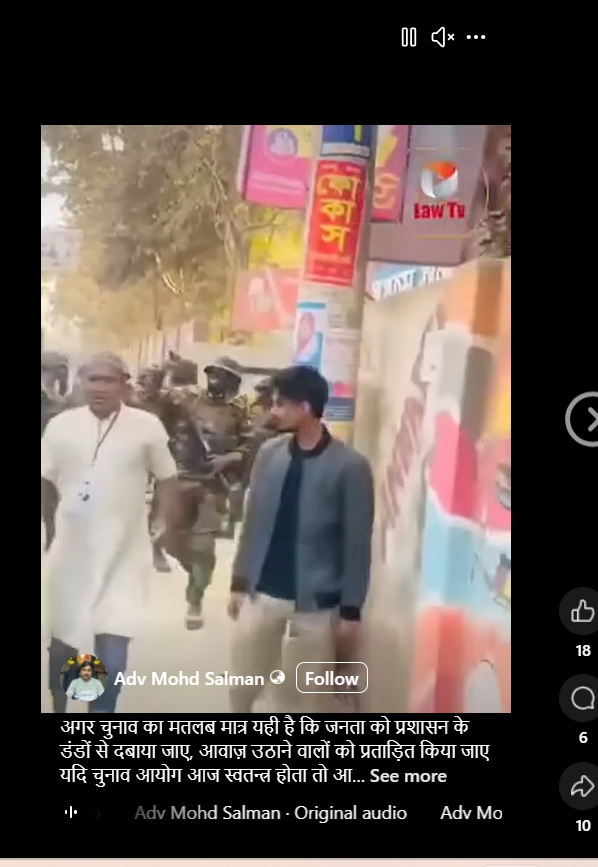
Fact Check
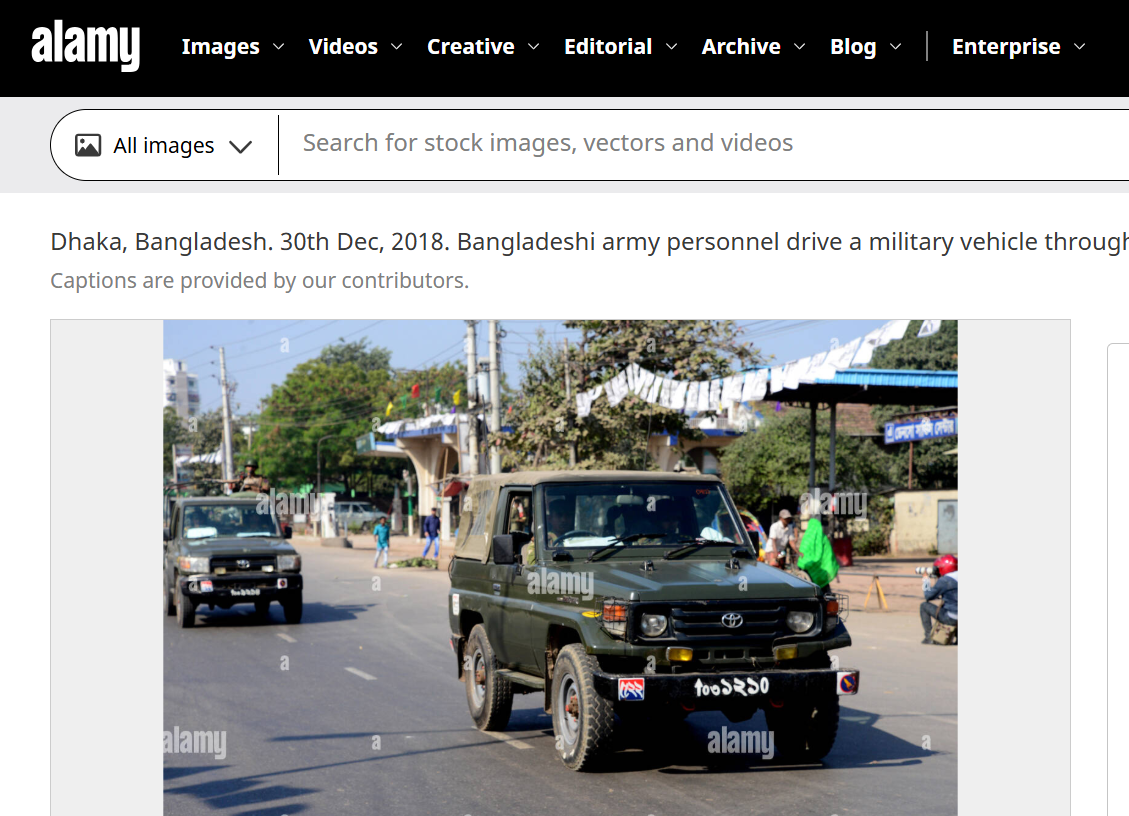
To verify the claim, we closely examined the viral video. A vehicle visible in the footage had a registration number written in a non-Hindi script. Using Google Lens reverse image search, we found a matching image uploaded on Alamy on December 30, 2018. The image showed a military vehicle with the same script and registration style seen in the viral clip.
According to the description on the platform, the image was taken in Dhaka during Bangladesh’s national elections and showed Bangladeshi army personnel moving through a street near a polling station. This confirms that the viral footage is not related to the 2026 West Bengal Assembly elections.
Conclusion
Our research confirms that the video showing security personnel baton-charging civilians is from Bangladesh, not West Bengal. It is being falsely shared as footage from the 2026 West Bengal Assembly elections to mislead users.

Related Blogs

Executive Summary:
A widely circulated claim on social media, including a post from the official X account of Pakistan, alleges that the Pakistan Air Force (PAF) carried out an airstrike on India, supported by a viral video. However, according to our research, the video used in these posts is actually footage from the video game Arma-3 and has no connection to any real-world military operation. The use of such misleading content contributes to the spread of false narratives about a conflict between India and Pakistan and has the potential to create unnecessary fear and confusion among the public.

Claim:
Viral social media posts, including the official Government of Pakistan X handle, claims that the PAF launched a successful airstrike against Indian military targets. The footage accompanying the claim shows jets firing missiles and explosions on the ground. The video is presented as recent and factual evidence of heightened military tensions.


Fact Check:
As per our research using reverse image search, the videos circulating online that claim to show Pakistan launching an attack on India under the name 'Operation Sindoor' are misleading. There is no credible evidence or reliable reporting to support the existence of any such operation. The Press Information Bureau (PIB) has also verified that the video being shared is false and misleading. During our research, we also came across footage from the video game Arma-3 on YouTube, which appears to have been repurposed to create the illusion of a real military conflict. This strongly indicates that fictional content is being used to propagate a false narrative. The likely intention behind this misinformation is to spread fear and confusion by portraying a conflict that never actually took place.


Conclusion:
It is true to say that Pakistan is using the widely shared misinformation videos to attack India with false information. There is no reliable evidence to support the claim, and the videos are misleading and irrelevant. Such false information must be stopped right away because it has the potential to cause needless panic. No such operation is occurring, according to authorities and fact-checking groups.
- Claim: Viral social media posts claim PAF attack on India
- Claimed On: Social Media
- Fact Check: False and Misleading
Executive Summary
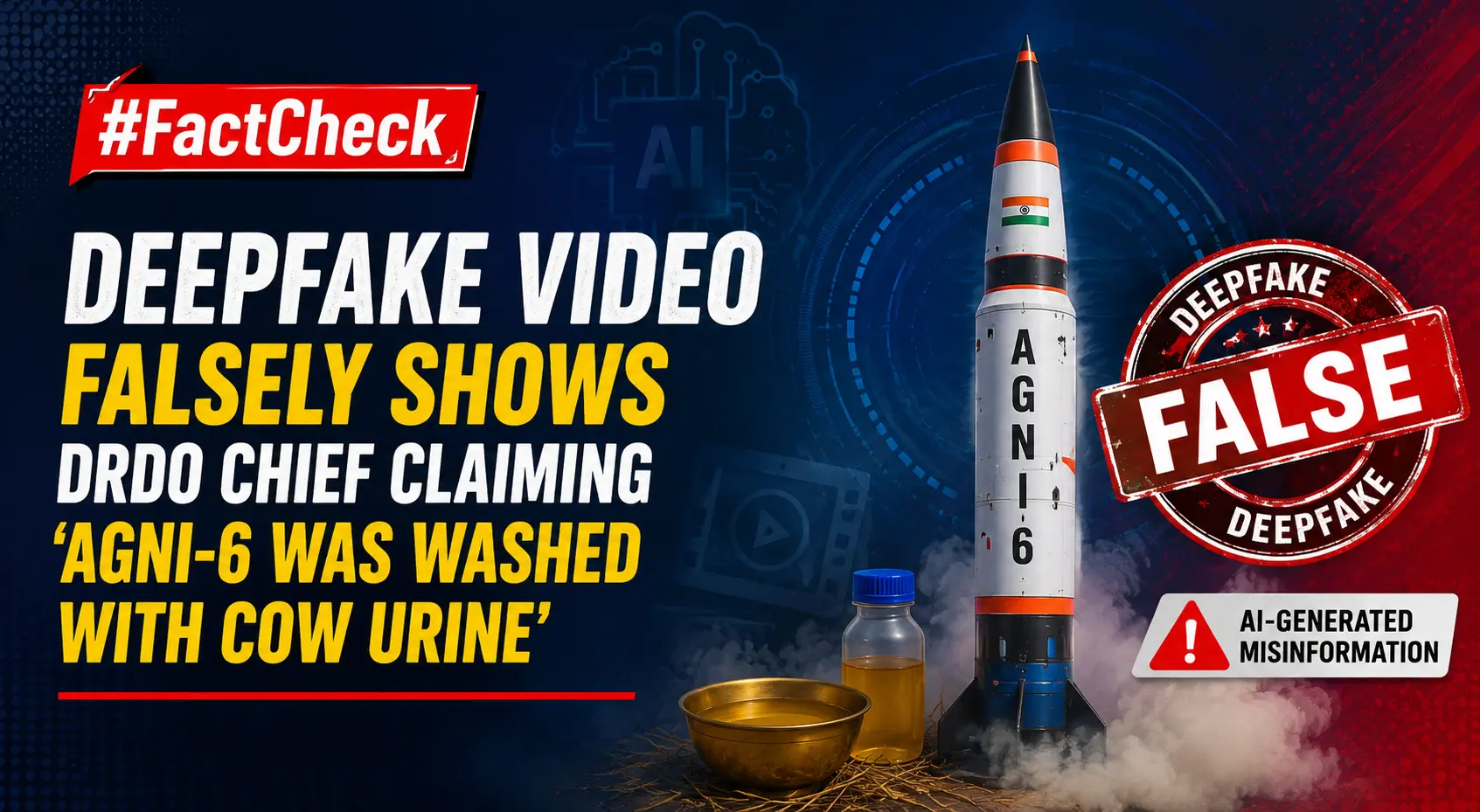
A video of Dr. Samir V. Kamat, Chairman of the Defence Research and Development Organisation (DRDO), is going viral on social media. In the clip, he appears to claim that Prime Minister Narendra Modi instructed scientists to wash the Agni-6 missile with cow urine, and later use a mixture of cow dung and urine to prevent rusting. Research by CyberPeace Research Wing found that the video is a deepfake, created by manipulating original footage using AI tools. It was also shared by an account previously known for posting anti-India misinformation and is reportedly banned in India.
Claim
An X user named “Lovely” shared the video on May 1, 2026, alleging that Indian scientists were using cow urine and dung in missile development under government direction. The post used derogatory language and criticized India’s scientific community.
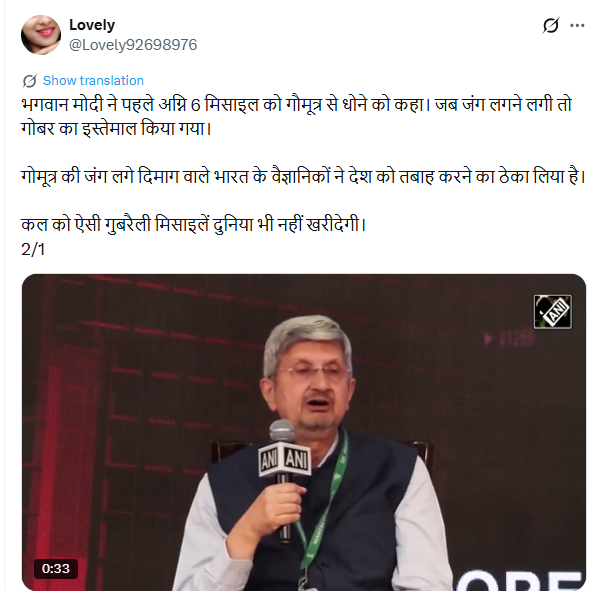
Fact Check
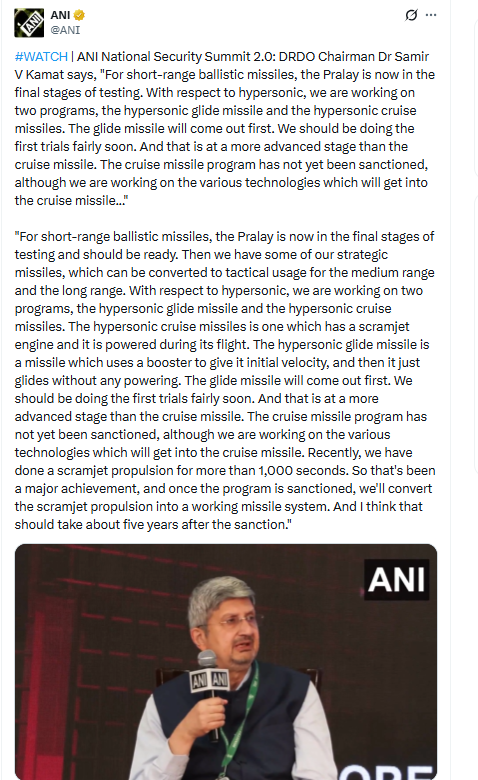
To verify the claim, we searched relevant keywords on Google but found no credible media reports supporting such statements by the DRDO chief. We then extracted keyframes from the viral clip and conducted a reverse image search using Google Lens. This led us to the original video posted by ANI on April 30, 2026. The footage is from the National Security Summit 2.0, where Dr. Kamat spoke about India’s missile development programs.
In the authentic video, Dr. Kamat discusses short-range ballistic missiles like ‘Pralay’, and advancements in hypersonic glide and cruise missile technologies, including scramjet propulsion. There is no mention of cow urine, cow dung, or any such practices.
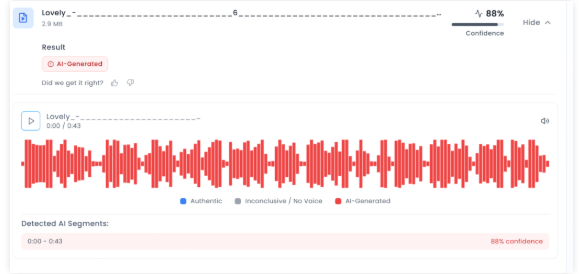
Further analysis using AI detection tool Aurigin indicated an 88% probability that the viral video was AI-generated or manipulated.
Conclusion
Our research confirms that the viral video is fake and AI-manipulated. Dr. Samir V. Kamat never made any statement about washing missiles with cow urine. The clip is a deepfake created to spread misinformation and mislead viewers.

Introduction
In the interconnected world of social networking and the digital landscape, social media users have faced some issues like hacking. Hence there is a necessity to protect your personal information and data from scammers or hackers. In case your email or social media account gets hacked, there are mechanisms or steps you can utilise to recover your email or social media account. It is important to protect your email or social media accounts in order to protect your personal information and data on your account. It is always advisable to keep strong passwords to protect your account and enable two-factor authentication as an extra layer of protection. Hackers or bad actors can take control of your account, they can even change the linked mail ID or Mobile numbers to take full access to your account.
Recent Incident
Recently, a US man's Facebook account was deleted or disabled by Facebook. He has sued Facebook and initiated a legal battle. He has contended that there was no violation of any terms and policy of the platform, and his account was disabled. In the first instance, he approached the platform. However, the platform neglected his issue then he filed a suit, where the court ordered Facebook's parent company, Meta, to pay $50,000 compensation, citing ignorance of the tech company.
Social media account recovery using the ‘Help’ Section
If your Facebook account has been disabled, when you log in to your account, you will see a text saying that your account is disabled. If you think that your account is disabled by mistake, in such a scenario, you can make a request to Facebook to ‘review’ its decision using the help centre section of the platform. To recover your social media account, you can go to the “Help” section of the platform where you can fix a login problem and also report any suspicious activity you have faced in your account.
Best practices to stay protected
- Strong password: Use strong and unique passwords for your email and all social media accounts.
- Privacy settings: You can utilise the privacy settings of the social media platform, where you can set privacy as to who can see your posts and who can see your contact information, and you can also keep your social media account private. You might have noticed a few accounts on which the user's name is unusual and isn’t one which you recognise. The account has few or no friends, posts, or visible account activity.
- Avoid adding unknown users or strangers to your social networking accounts: Unknown users might be scammers who can steal your personal information from your social media profiles, and such bad actors can misuse that information to hack into your social media account.
- Report spam accounts or posts: If you encounter any spam post, spam account or inappropriate content, you can report such profile or post to the platform using the reporting centre. The platform will review the report and if it goes against the community guidelines or policy of the platform. Hence, recognise and report spam, inappropriate, and abusive content.
- Be cautious of phishing scams: As a user, we encounter phishing emails or links, and phishing attacks can take place on social media as well. Hence, it is important that do not open any suspicious emails or links. On social media, ‘Quiz posts’ or ‘advertisement links’ may also contain phishing links, hence, do not open or click on such unauthenticated or suspicious links.
Conclusion
We all use social media for connecting with people, sharing thoughts, and lots of other activities. For marketing or business, we use social media pages. Social media offers a convenient way to connect with a larger community. We also share our personal information on the platform. It becomes important to protect your personal information, your email and all your social media accounts from hackers or bad actors. Follow the best practices to stay safe, such as using strong passwords, two-factor authentication, etc. Hence contributing to keeping your social media accounts safe and secure.
References:
- https://www.gpb.org/news/2023/07/11/facebook-wrongfully-deleted-his-account-he-sued-the-company-and-won
- https://consumer.ftc.gov/articles/how-recover-your-hacked-email-or-social-media-account
