
#FactCheck:AI-Generated War Video Falsely Linked to Israel-Iran Tensions Goes Viral
Executive Summary
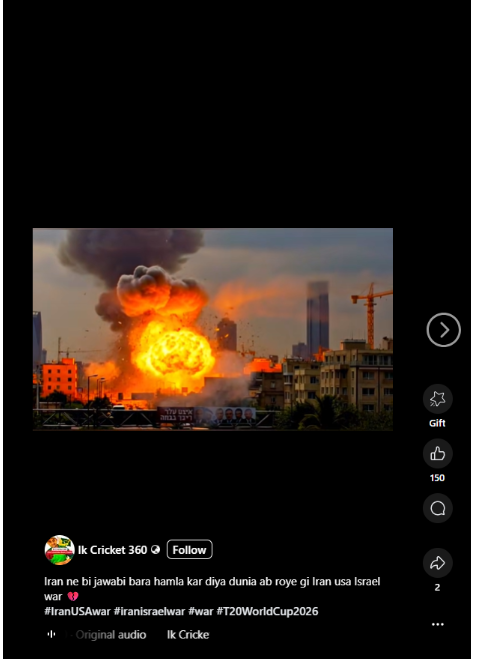
A video is being widely shared on social media linking it to the ongoing tensions between Israel and Iran. The clip shows multiple fighter jets flying across the sky, while massive flames appear to be rising from tall buildings below. The visuals are dramatic and alarming, creating the impression of a large-scale military strike. Users sharing the video claim that after Israel carried out an attack, Iran launched a retaliatory strike on Israel, and that the viral footage captures the aftermath of this counterattack. However, research conducted by the CyberPeace found the claim to be misleading. Our research revealed that the viral video is not authentic but AI-generated.
Claim
On the social media platform Facebook, a user shared the viral video with the caption: “Iran has also carried out a retaliatory attack on Israel.”
(Post link and archive link provided above.)
Factcheck
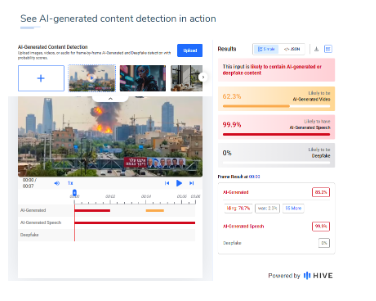
Upon closely examining the video, we noticed several irregularities in the visuals and motion patterns, which raised suspicion that the footage may have been generated using artificial intelligence. To verify this, we analyzed the video using the AI detection tool developed by Hive Moderation. According to the analysis report, there is a 62 percent likelihood that the viral video is AI-generated.
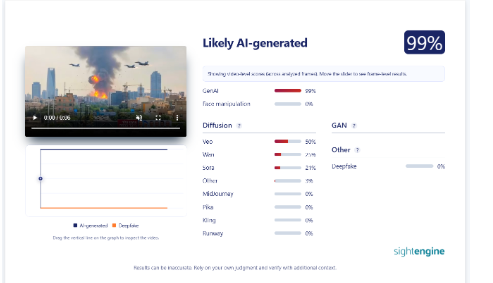
As part of further verification, we also scanned the video using Sightengine. The results indicated an even stronger probability, suggesting that the video is 99 percent AI-generated.
Conclusion
Our research confirms that the viral video does not depict a real military attack. It is AI-generated content being falsely shared in the context of Israel-Iran tensions.

Related Blogs

Brief Overview of the EU AI Act
The EU AI Act, Regulation (EU) 2024/1689, was officially published in the EU Official Journal on 12 July 2024. This landmark legislation on Artificial Intelligence (AI) will come into force just 20 days after publication, setting harmonized rules across the EU. It amends key regulations and directives to ensure a robust framework for AI technologies. The AI Act, a set of EU rules governing AI, has been in development for two years and now, the EU AI Act enters into force across all 27 EU Member States on 1 August 2024, with certain future deadlines tied up and the enforcement of the majority of its provisions will commence on 2 August 2026. The law prohibits certain uses of AI tools, including those that threaten citizens' rights, such as biometric categorization, untargeted scraping of faces, and systems that try to read emotions are banned in the workplace and schools, as are social scoring systems. It also prohibits the use of predictive policing tools in some instances. The law takes a phased approach to implementing the EU's AI rulebook, meaning there are various deadlines between now and then as different legal provisions will start to apply.
The framework puts different obligations on AI developers, depending on use cases and perceived risk. The bulk of AI uses will not be regulated as they are considered low-risk, but a small number of potential AI use cases are banned under the law. High-risk use cases, such as biometric uses of AI or AI used in law enforcement, employment, education, and critical infrastructure, are allowed under the law but developers of such apps face obligations in areas like data quality and anti-bias considerations. A third risk tier also applies some lighter transparency requirements for makers of tools like AI chatbots.
In case of failure to comply with the Act, the companies in the EU providing, distributing, importing, and using AI systems and GPAI models, are subject to fines of up to EUR 35 million or seven per cent of the total worldwide annual turnover, whichever is higher.
Key highlights of EU AI Act Provisions
- The AI Act classifies AI according to its risk. It prohibits Unacceptable risks such as social scoring systems and manipulative AI. The regulation mostly addresses high-risk AI systems.
- Limited-risk AI systems are subject to lighter transparency obligations and according to the act, the developers and deployers must ensure that the end-users are aware that the interaction they are having is with AI such as Chatbots and Deepfakes. The AI Act allows the free use of minimal-risk AI. This includes the majority of AI applications currently available in the EU single market like AI-enabled video games, and spam filters, but with the advancement of Gen AI changes with regards to this might be done. The majority of obligations fall on providers (developers) of high-risk AI systems that intend to place on the market or put into service high-risk AI systems in the EU, regardless of whether they are based in the EU or a third country. And also, a third-country provider where the high-risk AI system’s output is used in the EU.
- Users are natural or legal persons who deploy an AI system in a professional capacity, not affected end-users. Users (deployers) of high-risk AI systems have some obligations, though less than providers (developers). This applies to users located in the EU, and third-country users where the AI system’s output is used in the EU.
- General purpose AI or GPAI model providers must provide technical documentation, and instructions for use, comply with the Copyright Directive, and publish a summary of the content used for training. Free and open license GPAI model providers only need to comply with copyright and publish the training data summary, unless they present a systemic risk. All providers of GPAI models that present a systemic risk – open or closed – must also conduct model evaluations, and adversarial testing, and track and report serious incidents and ensure cybersecurity protections.
- The Codes of Practice will account for international approaches. It will cover but not necessarily be limited to the obligations, particularly the relevant information to include in technical documentation for authorities and downstream providers, identification of the type and nature of systemic risks and their sources, and the modalities of risk management accounting for specific challenges in addressing risks due to the way they may emerge and materialize throughout the value chain. The AI Office may invite GPAI model providers, and relevant national competent authorities to participate in drawing up the codes, while civil society, industry, academia, downstream providers and independent experts may support the process.
Application & Timeline of Act
The EU AI Act will be fully applicable 24 months after entry into force, but some parts will be applicable sooner, for instance the ban on AI systems posing unacceptable risks will apply six months after the entry into force. The Codes of Practice will apply nine months after entry into force. Rules on general-purpose AI systems that need to comply with transparency requirements will apply 12 months after the entry into force. High-risk systems will have more time to comply with the requirements as the obligations concerning them will become applicable 36 months after the entry into force. The expected timeline for the same is:
- August 1st, 2024: The AI Act will enter into force.
- February 2025: Prohibition of certain AI systems - Chapters I (general provisions) & II (prohibited AI systems) will apply; Prohibition of certain AI systems.
- August 2025: Chapter III Section 4 (notifying authorities), Chapter V (general purpose AI models), Chapter VII (governance), Chapter XII (confidentiality and penalties), and Article 78 (confidentiality) will apply, except for Article 101 (fines for General Purpose AI providers); Requirements for new GPAI models.
- August 2026: The whole AI Act applies, except for Article 6(1) & corresponding obligations (one of the categories of high-risk AI systems);
- August 2027: Article 6(1) & corresponding obligations apply.
The AI Act sets out clear definitions for the different actors involved in AI, such as the providers, deployers, importers, distributors, and product manufacturers. This means all parties involved in the development, usage, import, distribution, or manufacturing of AI systems will be held accountable. Along with this, the AI Act also applies to providers and deployers of AI systems located outside of the EU, e.g., in Switzerland, if output produced by the system is intended to be used in the EU. The Act applies to any AI system within the EU that is on the market, in service, or in use, covering both AI providers (the companies selling AI systems) and AI deployers (the organizations using those systems).
In short, the AI Act will apply to different companies across the AI distribution chain, including providers, deployers, importers, and distributors (collectively referred to as “Operators”). The EU AI Act also has extraterritorial application and can also apply to companies not established in the EU, or providers outside the EU if they -make an AI system or GPAI model available on the EU market. Even if only the output generated by the AI system is used in the EU, the Act still applies to such providers and deployers.
CyberPeace Outlook
The EU AI Act, approved by EU lawmakers in 2024, is a landmark legislation designed to protect citizens' health, safety, and fundamental rights from potential harm caused by AI systems. The AI Act will apply to AI systems and GPAI models. The Act creates a tiered risk categorization system with various regulations and stiff penalties for noncompliance. The Act adopts a risk-based approach to AI governance, categorizing potential risks into four tiers: unacceptable, high, limited, and low. Violations of banned systems carry the highest fine: €35 million, or 7 percent of global annual revenue. It establishes transparency requirements for general-purpose AI systems. The regulation also provides specific rules for general-purpose AI (GPAI) models and lays down more stringent requirements for GPAI models with 'high-impact capabilities' that could pose a systemic risk and have a significant impact on the internal market. For high-risk AI systems, the AI Act addresses the issues of fundamental rights impact assessment and data protection impact assessment.
The EU AI Act aims to enhance trust in AI technologies by establishing clear regulatory standards governing AI. We encourage regulatory frameworks that strive to balance the desire to foster innovation with the critical need to prevent unethical practices that may cause user harm. The legislation can be seen as strengthening the EU's position as a global leader in AI innovation and developing regulatory frameworks for emerging technologies. It sets a global benchmark for regulating AI. The companies to which the act applies will need to make sure their practices align with the same. The act may inspire other nations to develop their own legislation contributing to global AI governance. The world of AI is complex and challenging, the implementation of regulatory checks, and compliance by the concerned companies, all pose a conundrum. However, in the end, balancing innovation with ethical considerations is paramount.
At the same hand, the tech sector welcomes regulatory progress but warns that overly-rigid regulations could stifle innovation. Hence flexibility and adaptability are key to effective AI governance. The journey towards robust AI regulation has begun in major countries, and it is important that we find the right balance between safety and innovation and also take into consideration the industry reactions.
References:
- https://eur-lex.europa.eu/legal-content/EN/TXT/PDF/?uri=OJ:L_202401689
- https://www.theverge.com/2024/7/12/24197058/eu-ai-act-regulations-bans-deadline
- https://techcrunch.com/2024/07/12/eus-ai-act-gets-published-in-blocs-official-journal-starting-clock-on-legal-deadlines/
- https://www.wsgr.com/en/insights/eu-ai-act-to-enter-into-force-in-august.html
- https://www.techtarget.com/searchenterpriseai/tip/Is-your-business-ready-for-the-EU-AI-Act
- https://www.simmons-simmons.com/en/publications/clyimpowh000ouxgkw1oidakk/the-eu-ai-act-a-quick-guide

Executive Summary
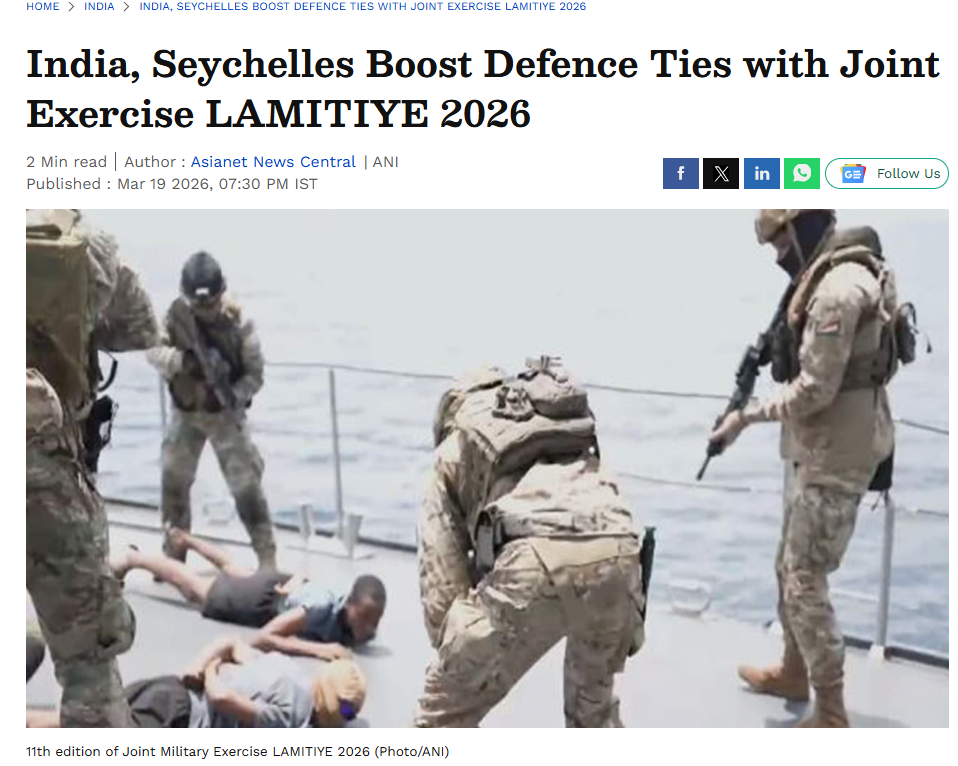
A video showing armed personnel detaining individuals on board a ship is being widely shared on social media with the claim that Indian Navy’s MARCOS captured 35 Somali pirates during a recent anti-piracy operation. However, research by the CyberPeace Research Wing found the claim to be misleading. The viral video is actually from the joint military exercise ‘LAMITIYE 2026’, held in Seychelles in March, involving the Indian Armed Forces and the Seychelles Defence Forces.
Claim
Users on X (formerly Twitter) shared the clip with captions such as: “Indian Navy MARCOS captured 35 Somali pirates,” presenting it as footage of a recent anti-piracy mission.

Fact Check
To verify the claim, we extracted keyframes from the viral video and conducted a reverse image search. This led us to the same video posted on March 20 by a Facebook page named “Defence Squad.” The caption identified the visuals as showing Indian Navy MARCOS and the Seychelles Defence Forces’ Special Operations Unit during the joint military exercise LAMITIYE 2026.
Link:
- https://www.facebook.com/reel/1263962865936234
- https://www.facebook.com/reel/1263962865936234

Further keyword searches led to multiple news reports carrying screenshots from the same video. These reports confirmed that the 11th India-Seychelles joint military exercise, LAMITIYE 2026, was conducted in Seychelles from March 9 to March 20.
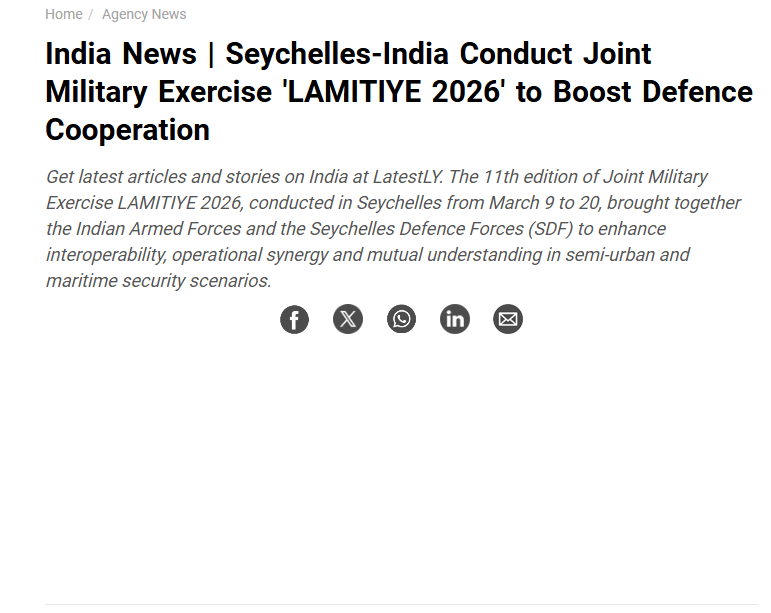
We did not find any recent reports about the Indian Navy capturing Somali pirates. However, in March 2024, the Indian Navy had captured 35 Somali pirates who had hijacked a bulk carrier and taken hostages. The suspects were later handed over to Mumbai Police for legal proceedings.
Conclusion
The viral claim is misleading. The video being circulated as footage of an anti-piracy operation by the Indian Navy does not show the capture of Somali pirates. Instead, it is from the India-Seychelles joint military exercise ‘LAMITIYE 2026’, conducted in March with the participation of the Indian Armed Forces and the Seychelles Defence Forces. While the Indian Navy had indeed captured 35 Somali pirates in a separate incident in March 2024, there are no credible or recent reports linking such an operation to the viral video. The clip has been taken out of context and is being shared with a false narrative, leading to misinformation about a routine military exercise.

Executive Summary
A video is being widely circulated on social media showing thousands of drones forming an image of Cristiano Ronaldo wearing his iconic Portugal jersey over what appears to be a water body. Moments later, the drones are seen creating his famous “SIUUU” celebration pose. The video is being shared with the claim that this spectacular aerial drone show was organised as a tribute to Ronaldo.
CyberPeace Research Wing’s research found the viral claim to be false. The research revealed that the video is not a real drone display but was created using Artificial Intelligence (AI) and is being circulated with a misleading claim.
Claim
The viral video is being shared on social media with the claim that the drone show was organised in honour of Cristiano Ronaldo.
https://www.instagram.com/reel/DamaeegILpU/?igsh=NmtjOTN4cWJzenJ1

Fact Check
To verify the claim, we extracted multiple keyframes from the viral video and conducted a reverse image search using Google Lens. During the research, we did not find any credible video, news report, or reliable source confirming that such a drone show was organised for Cristiano Ronaldo.
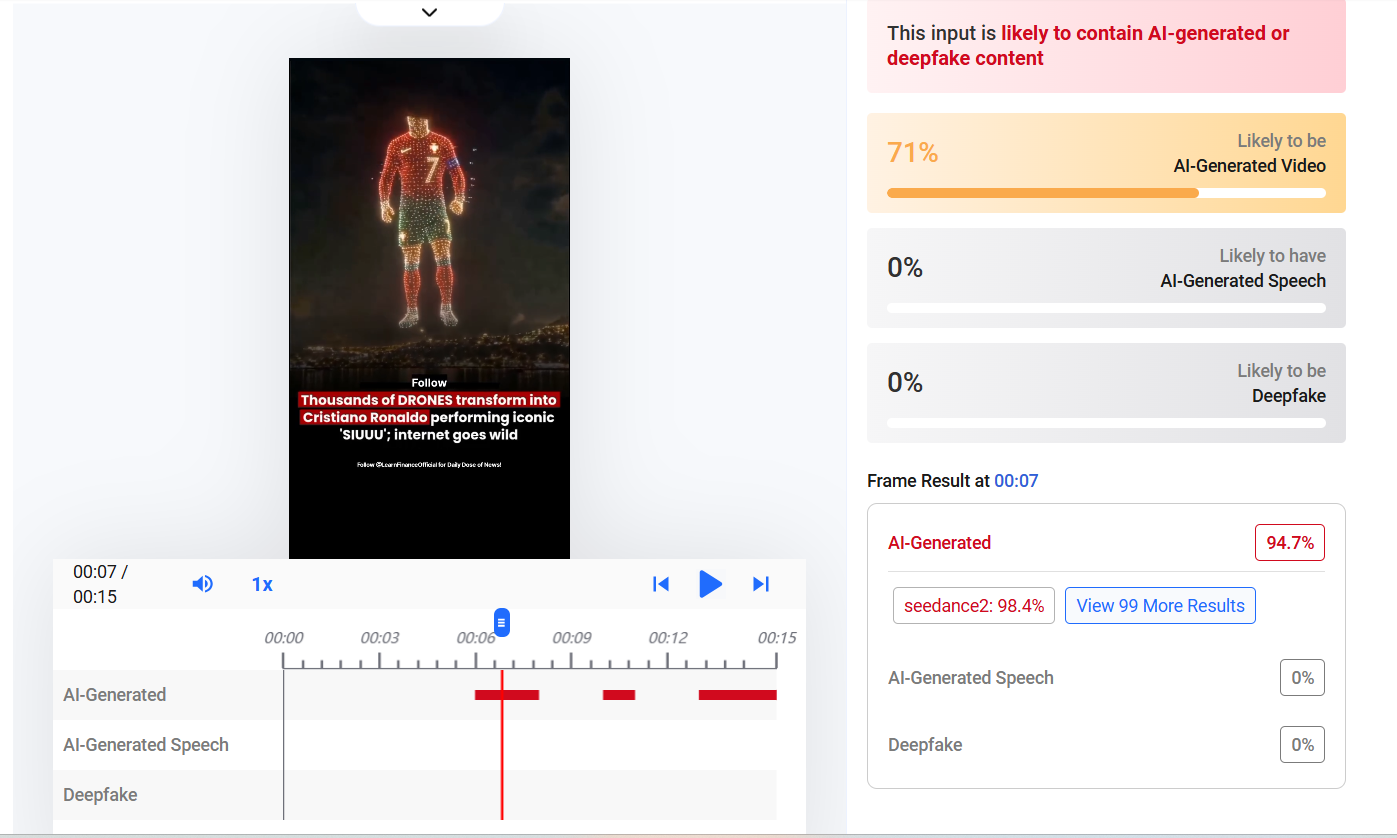
In the next stage of the research, we analysed the video using the AI detection tool Hive Moderation. The tool’s results indicated that the viral video had a 71% probability of being AI-generated.
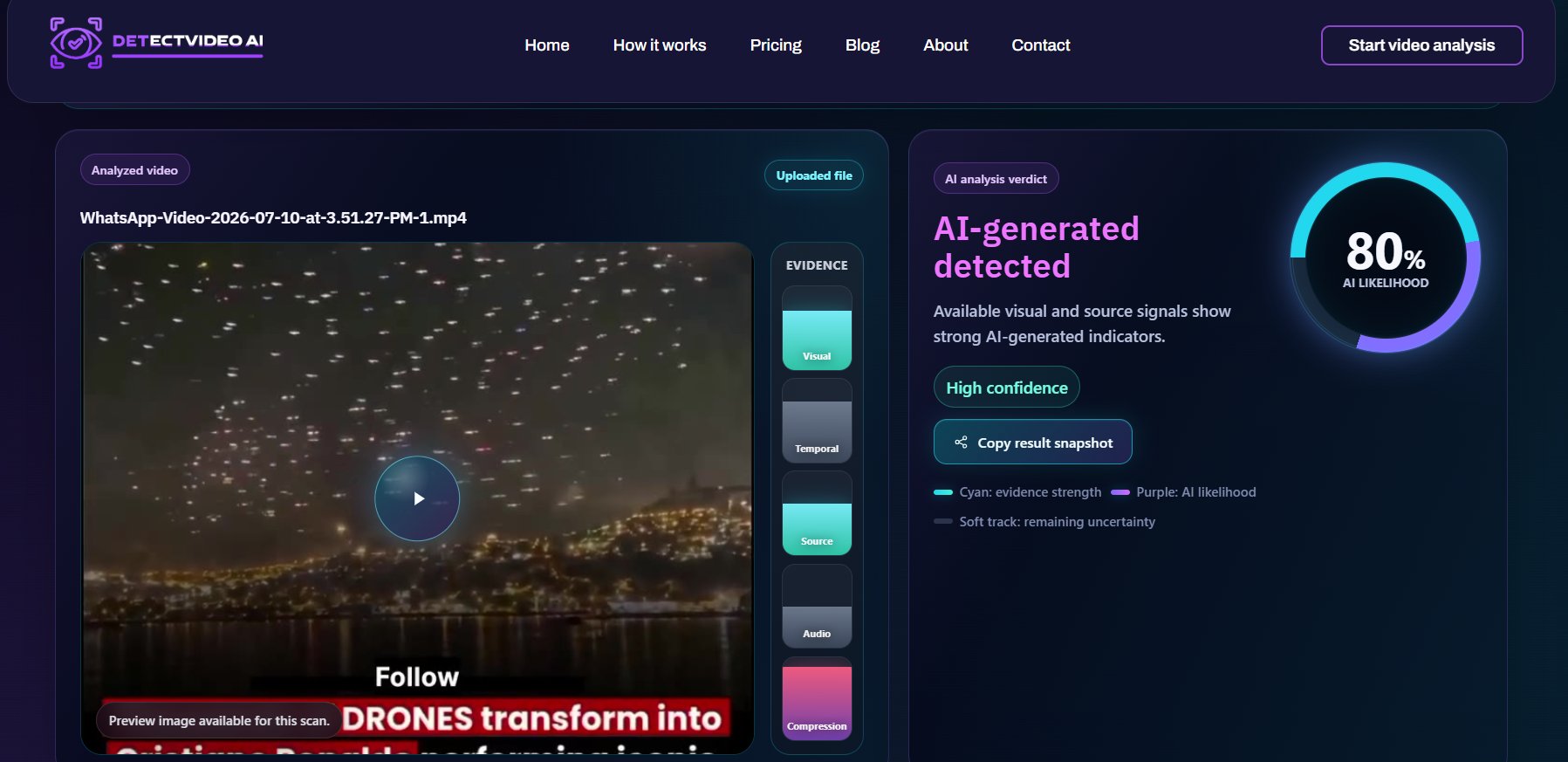
For further verification, we checked the video using another AI detection tool, DetectVideo AI. The analysis showed that the video had an 80% probability of being AI-generated.
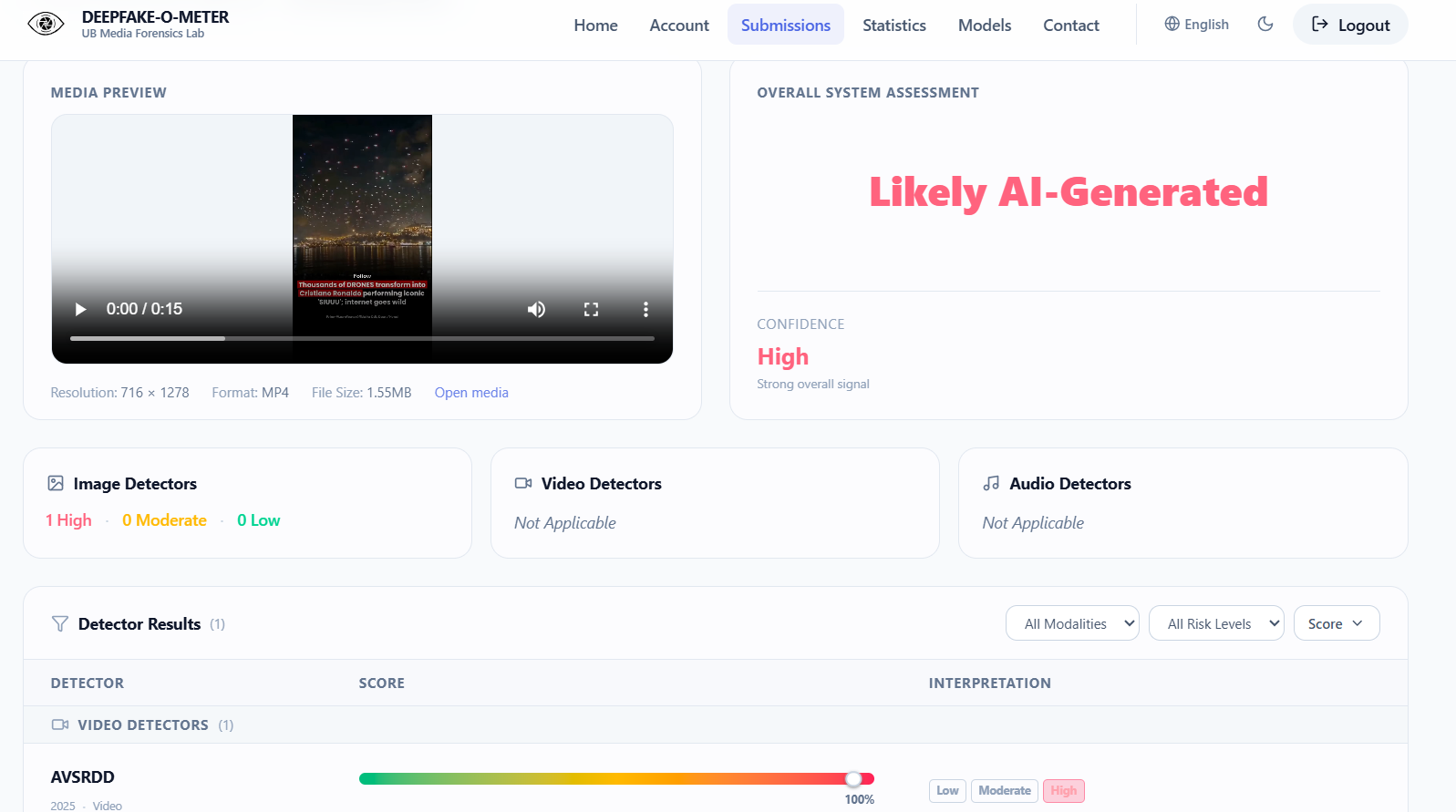
At the final stage of the research, the video was also analysed using Deepfake-O-Meter. The tool indicated an almost 100% probability that the video was AI-generated.
Conclusion
Our research found that the viral claim is false. The video does not show a real drone show organised in honour of Cristiano Ronaldo. The footage was found to be AI-generated and is being circulated on social media with a false narrative.
