
#FactCheck: AI-Generated Video of Girl Performing Daring Backflips on Pillars in a Lake Goes Viral as Real
Executive Summary
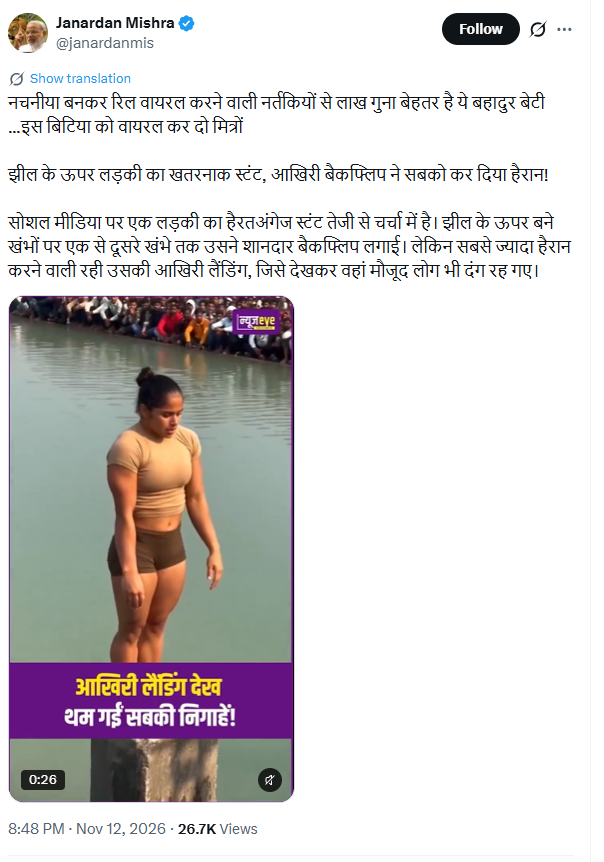
A video showing a girl performing astonishing backflip stunts is going viral on social media. In the video, a girl can be seen jumping from one pillar to another in a lake and performing consecutive backflips on pillars standing in the water. At the end of the video, people present at the spot applaud her impressive performance, while the girl appears emotional.
However, CyberPeace Research found that the video was generated using artificial intelligence (AI).
Claim:
Sharing the video on X, a user wrote: “This brave girl is a million times better than those dancers who make reels by performing vulgar dances. Friends, make this girl viral. A girl’s dangerous stunt over a lake has left everyone stunned, with her final backflip being particularly astonishing! A video of a girl performing an incredible stunt is gaining attention on social media. She performs impressive backflips while jumping from one pillar to another over a lake. However, her final landing is the most astonishing part, leaving everyone present amazed.”
https://x.com/janardanmis/status/2120898979617759521
Fact Check
To verify the authenticity of the viral video showing the backflip stunts, we conducted a reverse image search using its keyframes. During the search, we did not find any credible media reports identifying the video as footage of a real incident.
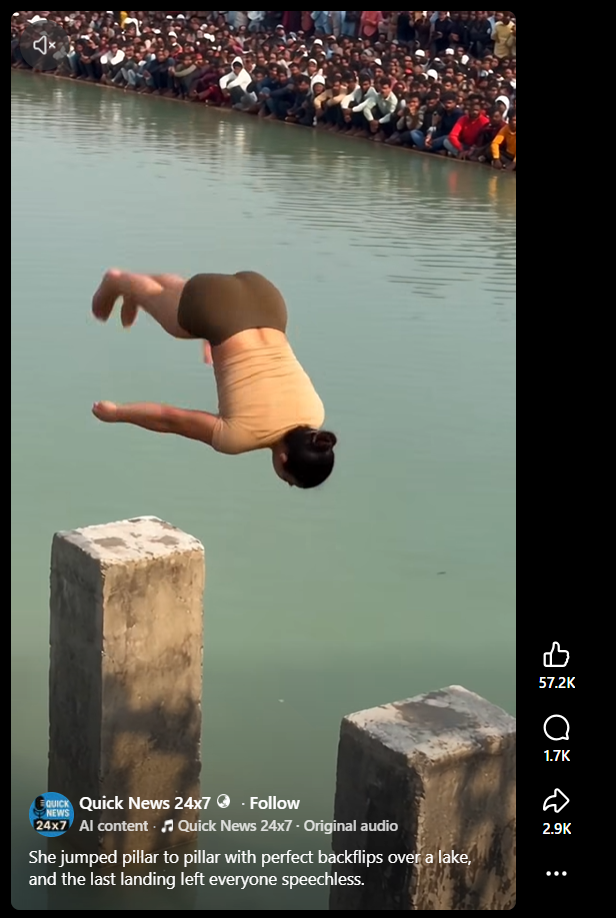
However, we came across the same video on the Facebook page of Quick News 24×7, where it was uploaded on November 9. Notably, the post also carried an AI-generated content label. The caption accompanying the video also described the girl's astonishing backflip stunts.
https://www.facebook.com/reel/1104244285777812
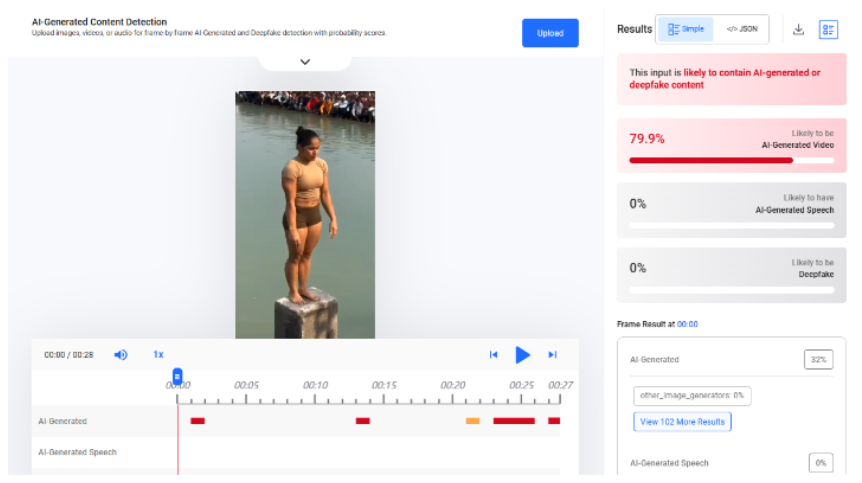
To verify the authenticity of the video, we also analysed it using various AI detection tools. During the analysis, Hive Moderation identified the video as potentially AI-generated, giving it a score of 79.9 per cent.
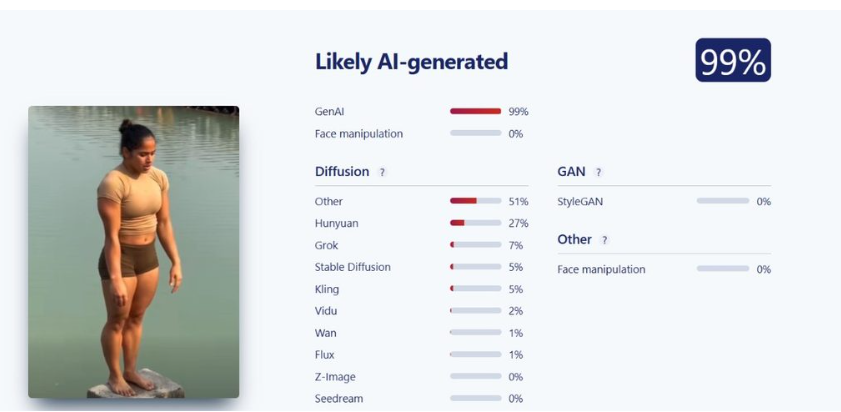
Additionally, we analysed the visuals in the viral backflip stunt video using various AI detection tools. During the analysis, Sightengine identified the visuals as AI-generated.
Conclusion
The evidence gathered during our research establishes that the viral video showing a girl performing backflip stunts on pillars standing in a lake was generated using artificial intelligence (AI).

Related Blogs
Executive Summary
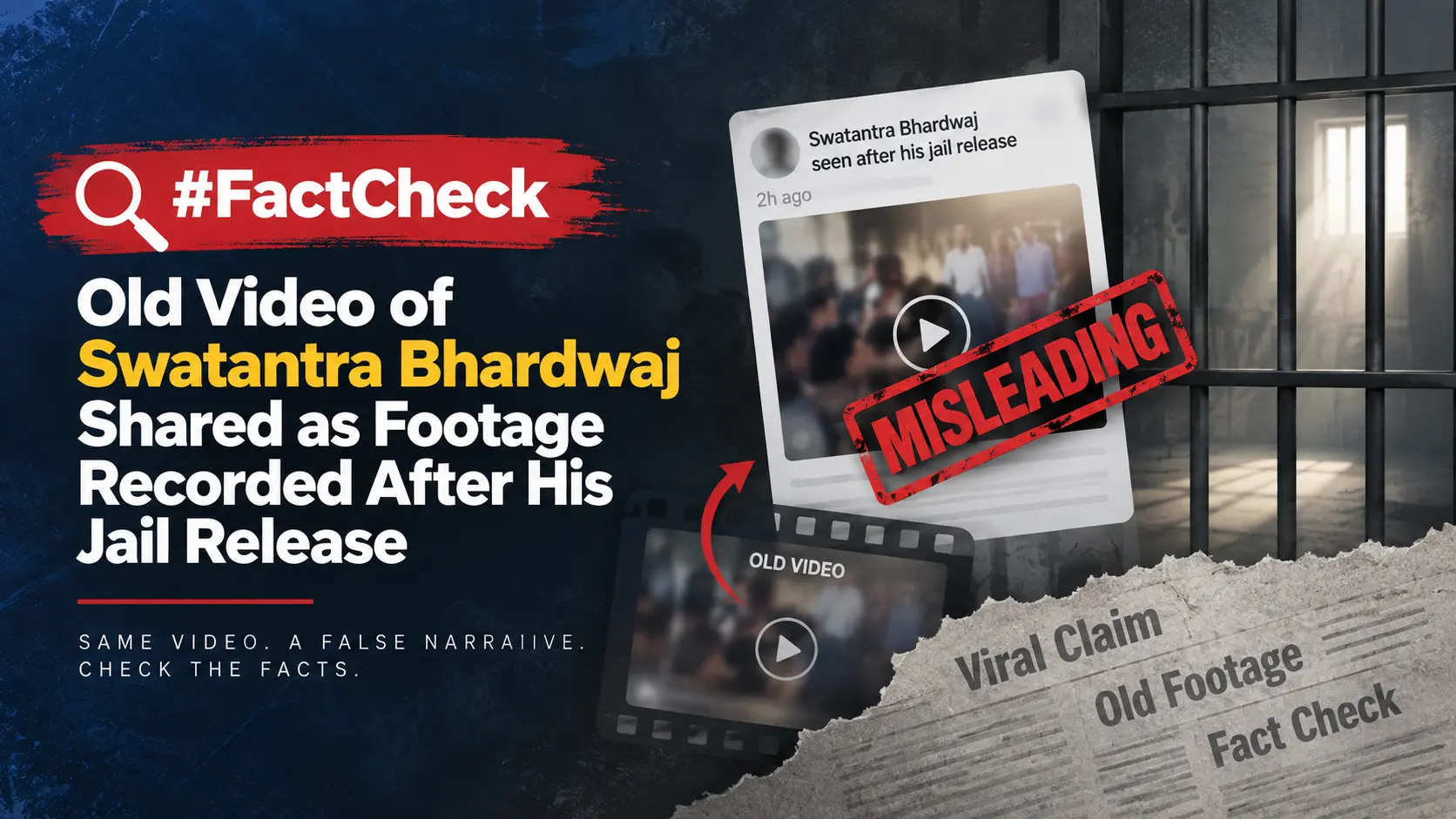
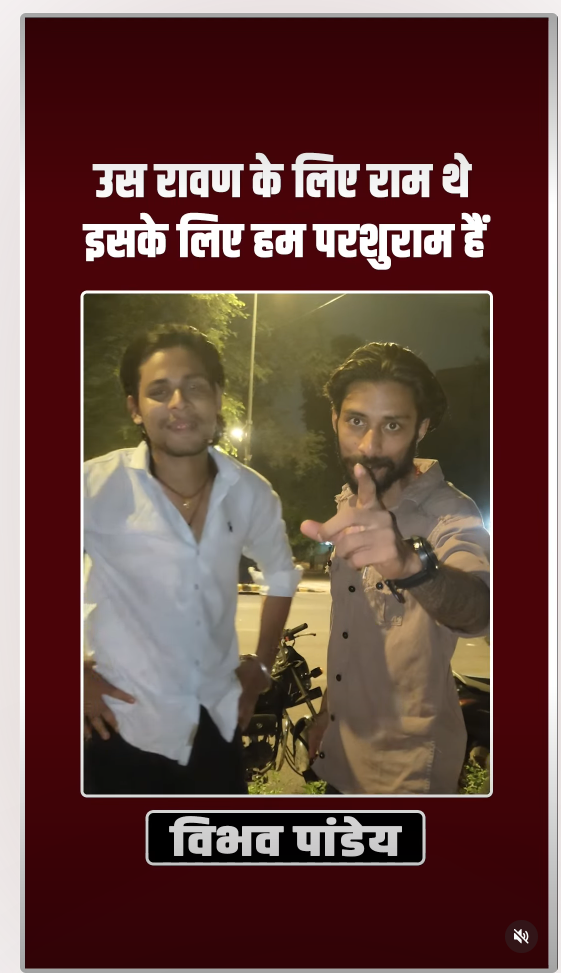
A video of Swatantra Bhardwaj is being shared on social media. Another man can also be seen with Bhardwaj in the video. Swatantra Bhardwaj came into the spotlight following an alleged assault involving the father of a protester during a protest by the Cockroach Janta Party at Jantar Mantar. Social media posts claim that the video was recorded immediately after his release from jail and shows him openly threatening people. CyberPeace Research Wing’s Research found the viral claim to be false. Our Research revealed that the video being shared on social media is old. Swatantra Bhardwaj was released from jail on September 17, while our Research found that the video has been available online since June. Therefore, the claim that the video was recorded immediately after Bhardwaj’s release from jail is misleading.
Claim:
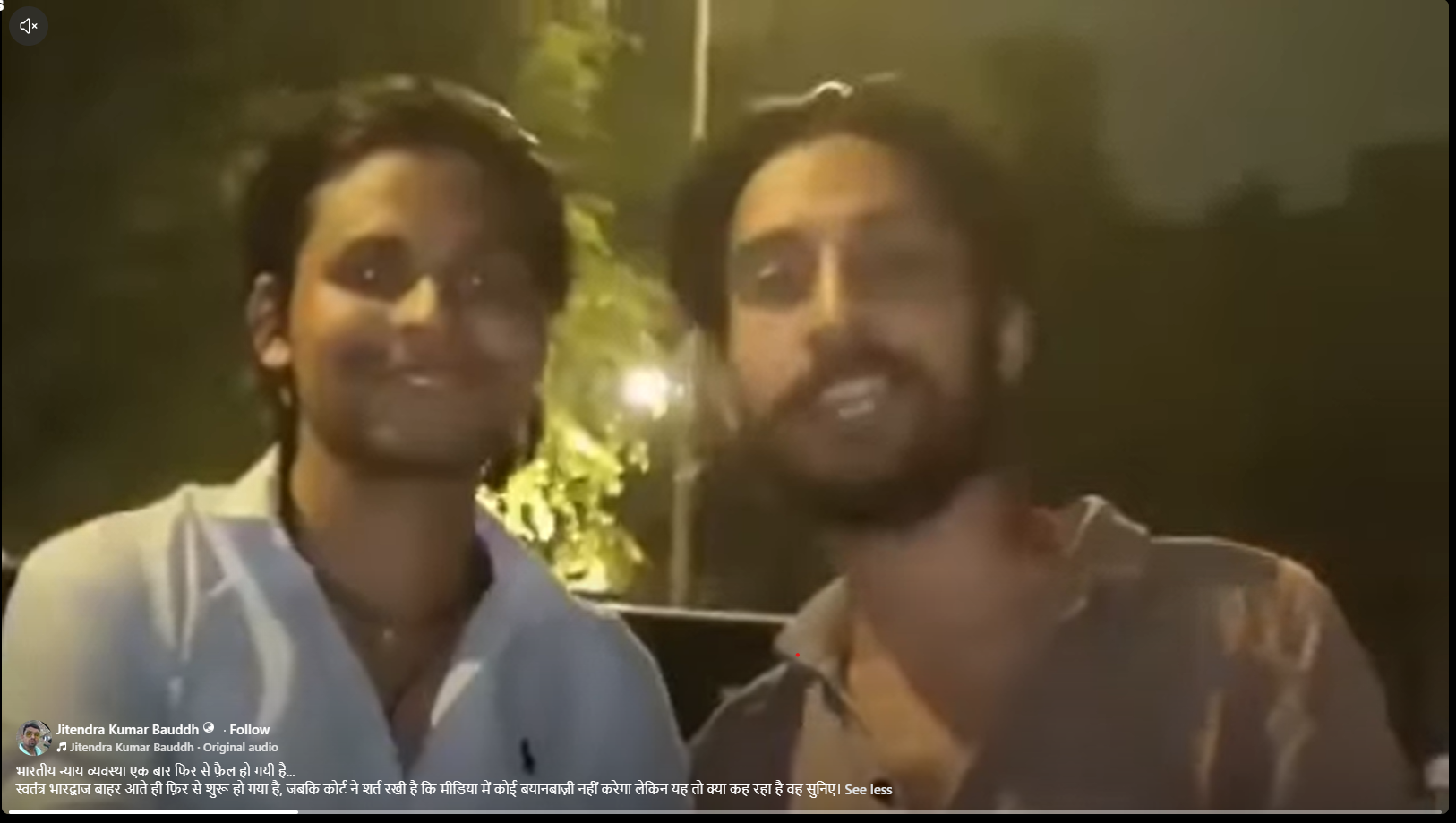
A Facebook user shared the viral video on September 17, 2026, with the caption: “The Indian judicial system has failed once again... Swatantra Bhardwaj has started again immediately after coming out, even though the court has imposed a condition that he will not make any statements to the media. But listen to what he is saying.” The post link, archive link, and screenshot are provided below.
https://www.facebook.com/reel/1349048917301713
Fact Check
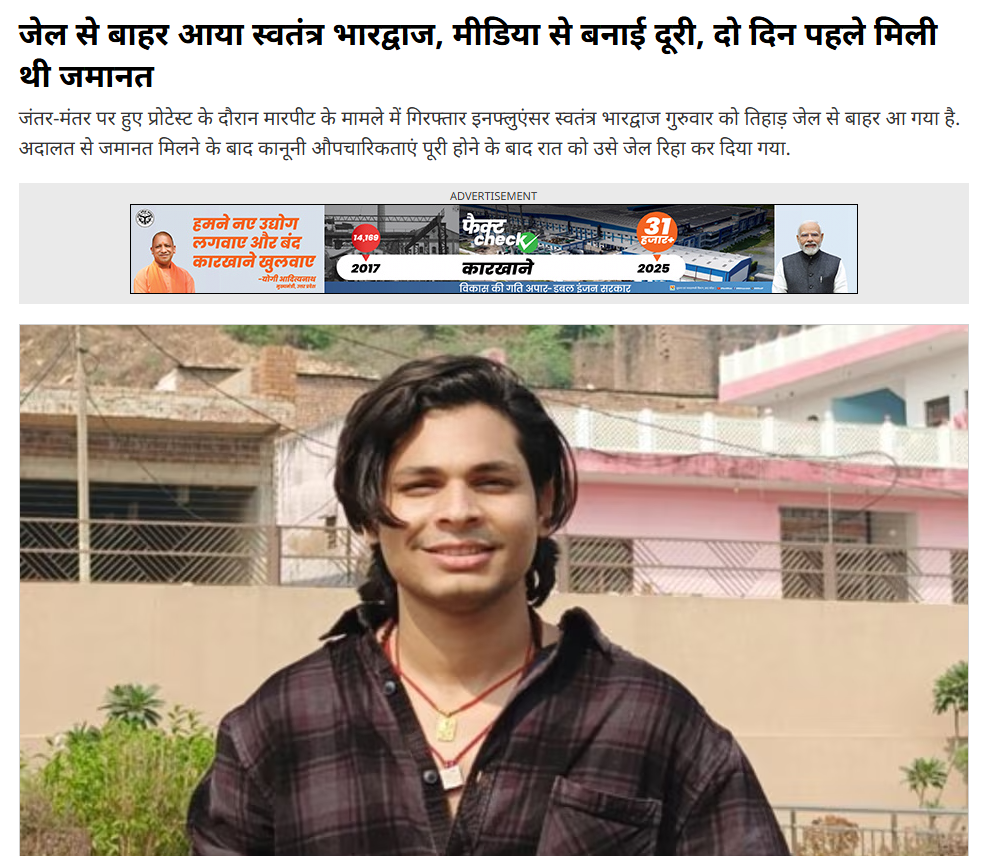
To verify the date of Swatantra Bhardwaj’s release from jail, we searched Google using relevant keywords. During the search, we found a report published by Aaj Tak on September 18, 2026. According to the report, social media influencer Swatantra Bhardwaj, who came into the spotlight following an alleged assault during a protest at Jantar Mantar, was released from Delhi’s Tihar Jail on September 17, 2026, after being granted bail by the court and completing the necessary legal formalities. Soon after walking out of the main gate of the jail, he ran towards a taxi and left without speaking to the media personnel present there. The post link and screenshot are provided below.
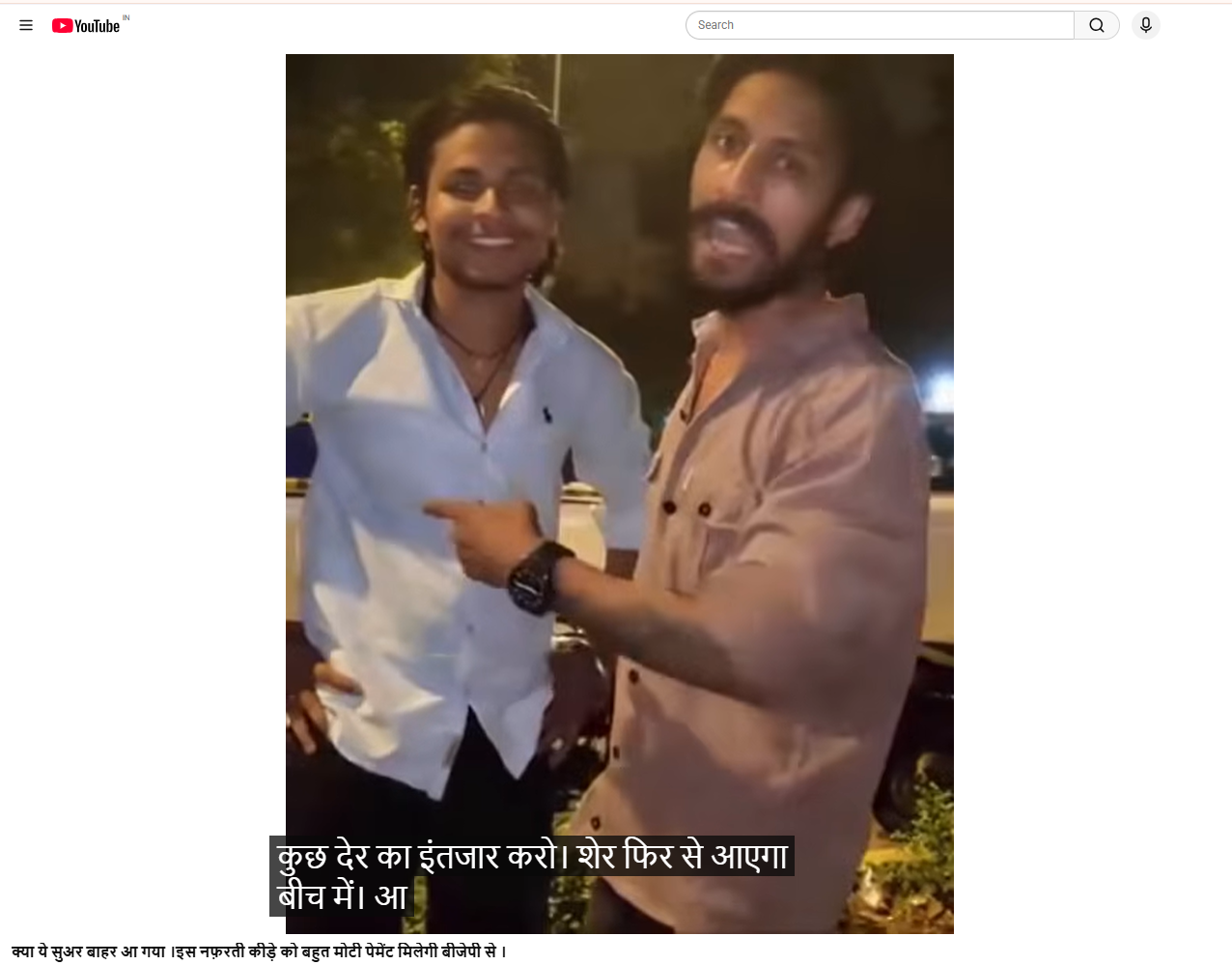
To verify the authenticity of the viral claim, we conducted a reverse image search of the keyframes from the video. During the search, we found the same video on a YouTube channel, where it was published on September 7, 2026. Meanwhile, the report mentioned above clearly states that Swatantra Bhardwaj was released from Delhi’s Tihar Jail on September 17, 2026. The report link and screenshot are provided below.
https://www.youtube.com/watch?v=-3V0pwJbpwg
At the end of our Research, we found another version of the same video, which was uploaded by a person identified as Vaibhav Kumar on June 26, 2026. The post link and screenshot are provided below.
https://www.instagram.com/reels/DaBs7Q-T8xc/
Conclusion
Our Research found that the video being shared on social media is old. Swatantra Bhardwaj was released from jail on September 17, while our Research found that the video had already been available online since June. Therefore, the claim that the video was recorded immediately after Bhardwaj’s release from jail is misleading.

Introduction
In a world where Artificial Intelligence (AI) is already changing the creation and consumption of content at a breathtaking pace, distinguishing between genuine media and false or doctored content is a serious issue of international concern. AI-generated content in the form of deepfakes, synthetic text and photorealistic images is being used to disseminate misinformation, shape public opinion and commit fraud. As a response, governments, tech companies and regulatory bodies are exploring ‘watermarking’ as a key mechanism to promote transparency and accountability in AI-generated media. Watermarking embeds identifiable information into content to indicate its artificial origin.
Government Strategies Worldwide
Governments worldwide have pursued different strategies to address AI-generated media through watermarking standards. In the US, President Biden's 2023 Executive Order on AI directed the Department of Commerce and the National Institute of Standards and Technology (NIST) to establish clear guidelines for digital watermarking of AI-generated content. This action puts a big responsibility on large technology firms to put identifiers in media produced by generative models. These identifiers should help fight misinformation and address digital trust.
The European Union, in its Artificial Intelligence Act of 2024, requires AI-generated content to be labelled. Article 50 of the Act specifically demands that developers indicate whenever users engage with synthetic content. In addition, the EU is a proponent of the Coalition for Content Provenance and Authenticity (C2PA), an organisation that produces secure metadata standards to track the origin and changes of digital content.
India is currently in the process of developing policy frameworks to address AI and synthetic content, guided by judicial decisions that are helping shape the approach. In 2024, the Delhi High Court directed the central government to appoint members for a committee responsible for regulating deepfakes. Such moves indicate the government's willingness to regulate AI-generated content.
China, has already implemented mandatory watermarking on all deep synthesis content. Digital identifiers must be embedded in AI media by service providers, and China is one of the first countries to adopt stern watermarking legislation.
Understanding the Technical Feasibility
Watermarking AI media means inserting recognisable markers into digital material. They can be perceptible, such as logos or overlays or imperceptible, such as cryptographic tags or metadata. Sophisticated methods such as Google's SynthID apply imperceptible pixel-level changes that remain intact against standard image manipulation such as resizing or compression. Likewise, C2PA metadata standards enable the user to track the source and provenance of an item of content.
Nonetheless, watermarking is not an infallible process. Most watermarking methods are susceptible to tampering. Aforementioned adversaries with expertise, for instance, can use cropping editing or AI software to delete visible watermarks or remove metadata. Further, the absence of interoperability between different watermarking systems and platforms hampers their effectiveness. Scalability is also an issue enacting and authenticating watermarks for billions of units of online content necessitates huge computational efforts and routine policy enforcement across platforms. Scientists are currently working on solutions such as blockchain-based content authentication and zero-knowledge watermarking, which maintain authenticity without sacrificing privacy. These new techniques have potential for overcoming technical deficiencies and making watermarking more secure.
Challenges in Enforcement
Though increasing agreement exists for watermarking, implementation of such policies is still a major issue. Jurisdictional constraints prevent enforceability globally. A watermarking policy within one nation might not extend to content created or stored in another, particularly across decentralised or anonymous domains. This creates an exigency for international coordination and the development of worldwide digital trust standards. While it is a welcome step that platforms like Meta, YouTube, and TikTok have begun flagging AI-generated content, there remains a pressing need for a standardised policy that ensures consistency and accountability across all platforms. Voluntary compliance alone is insufficient without clear global mandates.
User literacy is also a significant hurdle. Even when content is properly watermarked, users might not see or comprehend its meaning. This aligns with issues of dealing with misinformation, wherein it's not sufficient just to mark off fake content, users need to be taught how to think critically about the information they're using. Public education campaigns, digital media literacy and embedding watermarking labels within user-friendly UI elements are necessary to ensure this technology is actually effective.
Balancing Privacy and Transparency
While watermarking serves to achieve digital transparency, it also presents privacy issues. In certain instances, watermarking might necessitate the embedding of metadata that will disclose the source or identity of the content producer. This threatens journalists, whistleblowers, activists, and artists utilising AI tools for creative or informative reasons. Governments have a responsibility to ensure that watermarking norms do not violate freedom of expression or facilitate surveillance. The solution is to achieve a balance by employing privacy-protection watermarking strategies that verify the origin of the content without revealing personally identifiable data. "Zero-knowledge proofs" in cryptography may assist in creating watermarking systems that guarantee authentication without undermining user anonymity.
On the transparency side, watermarking can be an effective antidote to misinformation and manipulation. For example, during the COVID-19 crisis, misinformation spread by AI on vaccines, treatments and public health interventions caused widespread impact on public behaviour and policy uptake. Watermarked content would have helped distinguish between authentic sources and manipulated media and protected public health efforts accordingly.
Best Practices and Emerging Solutions
Several programs and frameworks are at the forefront of watermarking norms. Adobe, Microsoft and others' collaborative C2PA framework puts tamper-proof metadata into images and videos, enabling complete traceability of content origin. SynthID from Google is already implemented on its Imagen text-to-image model and secretly watermarks images generated by AI without any susceptibility to tampering. The Partnership on AI (PAI) is also taking a leadership role by building out ethical standards for synthetic content, including standards around provenance and watermarking. These frameworks become guides for governments seeking to introduce equitable, effective policies. In addition, India's new legal mechanisms on misinformation and deepfake regulation present a timely point to integrate watermarking standards consistent with global practices while safeguarding civil liberties.
Conclusion
Watermarking regulations for synthetic media content are an essential step toward creating a safer and more credible digital world. As artificial media becomes increasingly indistinguishable from authentic content, the demand for transparency, origin, and responsibility increases. Governments, platforms, and civil society organisations will have to collaborate to deploy watermarking mechanisms that are technically feasible, compliant and privacy-friendly. India is especially at a turning point, with courts calling for action and regulatory agencies starting to take on the challenge. Empowering themselves with global lessons, applying best-in-class watermarking platforms and promoting public awareness can enable the nation to acquire a level of resilience against digital deception.
References
- https://artificialintelligenceact.eu/
- https://www.cyberpeace.org/resources/blogs/delhi-high-court-directs-centre-to-nominate-members-for-deepfake-committee
- https://c2pa.org
- https://www.cyberpeace.org/resources/blogs/misinformations-impact-on-public-health-policy-decisions
- https://deepmind.google/technologies/synthid/
- https://www.imatag.com/blog/china-regulates-ai-generated-content-towards-a-new-global-standard-for-transparency

Introduction
Today, on the International Day of UN Peacekeepers, we honour the brave individuals who risk their lives to uphold peace in the world’s most fragile and conflict-ridden regions. These peacekeepers are symbols of hope, diplomacy, and resilience. But as the world changes, so do the arenas of conflict. In today’s interconnected age, peace and safety are no longer confined to physical spaces—they extend to the digital realm. As we commemorate their service, we must also reflect on the new frontlines of peacekeeping: the internet, where misinformation, cyberattacks, and digital hate threaten stability every day.
The Legacy of UN Peacekeepers
Since 1948, UN Peacekeepers have served in over 70 missions, protecting civilians, facilitating political processes, and rebuilding societies. From conflict zones in Africa to the Balkans, they’ve worked in the toughest terrains to keep the peace. Their role is built on neutrality, integrity, and international cooperation. But as hybrid warfare becomes more prominent and digital threats increasingly influence real-world violence, the peacekeeping mandate must evolve. Traditional missions are now accompanied by the need to understand and respond to digital disruptions that can escalate local tensions or undermine democratic institutions.
The Digital Battlefield
In recent years, we’ve seen how misinformation, deepfakes, online radicalisation, and coordinated cyberattacks can destabilise peace processes. Disinformation campaigns can polarise communities, hinder humanitarian efforts, and provoke violence. Peacekeepers now face the added challenge of navigating conflict zones where digital tools are weaponised. The line between physical and virtual conflict is blurring. Cybersecurity has gone beyond being just a technical issue and is now a peace and security issue as well. From securing communication systems to monitoring digital hate speech that could incite violence, peacekeeping must now include digital vigilance and strategic digital diplomacy.
Building a Culture of Peace Online
Safeguarding peace today also means protecting people from harm in the digital space. Governments, tech companies, civil society, and international organisations must come together to build digital resilience. This includes investing in digital literacy, combating online misinformation, and protecting human rights in cyberspace. Peacekeepers may not wear blue helmets online, but their spirit lives on in every effort to make the internet a safer, kinder, and more truthful place. The role of youth, educators, and responsible digital citizens has never been more crucial. A culture of peace must be cultivated both offline and online.
Conclusion: A Renewed Pledge for Peace
On this UN Peacekeepers’ Day, let us not only honour those who have served and sacrificed but also renew our commitment to peace in all its dimensions. The world’s conflicts are evolving, and so must our response. As we support peacekeepers on the ground, let’s also become peacebuilders in the digital world, amplifying truth, rejecting hate, and building safer, inclusive communities online. Peace today is not just about silencing guns but also silencing disinformation. The call for peace is louder than ever. Let’s answer it, both offline and online.
