
#FactCheck-AI-Generated Newspaper Clipping Falsely Claims Salman Khan Was Injured in Firing Incident Introduction
Executive Summary
A newspaper clipping is being widely shared on social media with the claim that more than 200 bullets were fired at actor Salman Khan’s vehicle, two of which allegedly hit him and left him seriously injured. CyberPeace Research Wing’s research found the viral claim to be false. The research revealed that Salman Khan is safe and healthy, and there is no credible information confirming any such firing incident. The probe further found that the alleged newspaper clipping circulating on social media was created using Artificial Intelligence (AI).
Claim
An Instagram user shared the viral newspaper clipping on July 11, 2026, claiming that more than 200 bullets were fired at Salman Khan’s vehicle, two bullets hit him, and he was seriously injured.
https://www.instagram.com/reel/DaqNtAfSGyI/
https://ghostarchive.org/archive/81qpF

Fact Check
To verify the viral claim, we conducted a keyword-based search on Google. However, we did not find any credible media report confirming that Salman Khan was injured in any such firing incident.
During further research, we found a report published by Dainik Bhaskar on July 11, 2026. According to the report, actor Salman Khan sold another apartment located in Bandra, Mumbai. The report did not mention any incident involving an attack or injury.

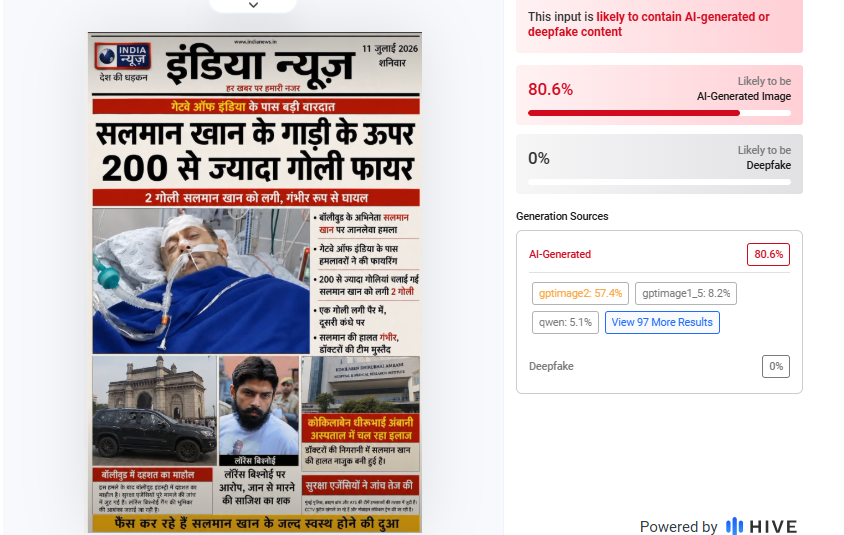
In the next step of the research, we analysed the viral newspaper clipping using the AI detection tool Hive Moderation. The tool’s analysis indicated an 80% probability that the newspaper clipping was AI-generated.
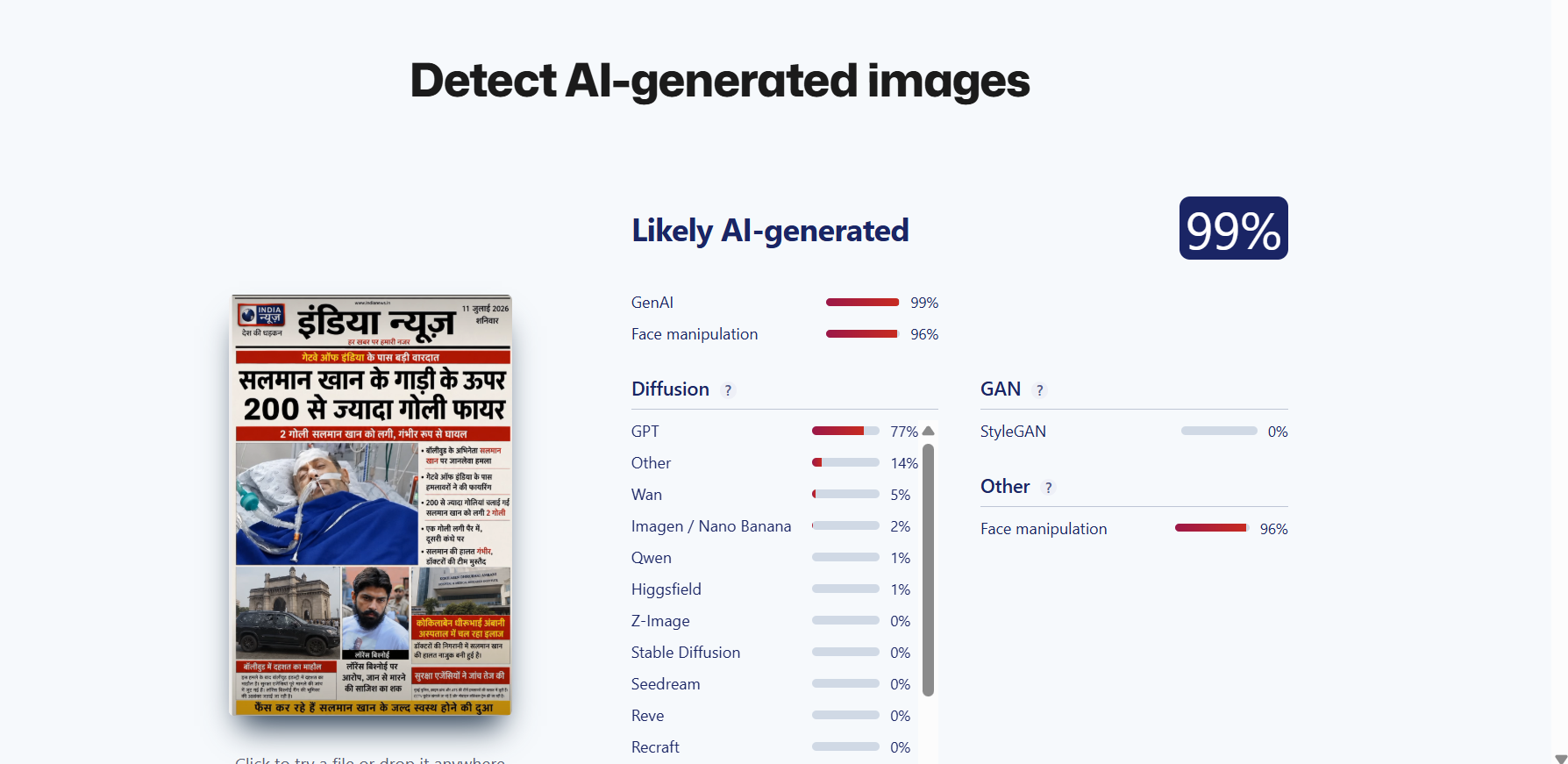
For further verification, the viral image was also checked using another AI detection tool, Sightengine. The tool’s result showed a 99% probability that the image was AI-generated.
Conclusion
Our research found that the viral claim is false. There is no evidence that actor Salman Khan was injured in a firing incident or that more than 200 bullets were fired at his vehicle. The alleged newspaper clipping being circulated on social media was found to be AI-generated and is being shared with a false narrative

Related Blogs

India’s cities are rapidly embracing digital technologies, transforming the way essential urban services operate. From traffic management and water supply to online grievance redressal, connected systems are making city life more efficient. As the Prime Minister has emphasised, smart cities are not just a fancy concept; they aim to ensure basic services, including housing and infrastructure for the urban poor, are delivered comprehensively and equitably.
But improved cybersecurity has become essential with th increasing reliance on digital systems in daily life. A single breach in digital public systems could jeopardise citizen data and interrupt vital services. In light of this, MoHUA organised the National Conference on Making Cities Cyber Secure in collaboration with MHA and MeitY. This is in spirit with the goal of Digital India, which is to create a safer online environment for all. More than 300 representatives from Central Ministries, National Cybersecurity Agencies, State Governments, State IT and Urban Development Secretaries, Additional Director Generals, Municipal Commissioners, CEOs of Smart Cities, and representatives from organisations like CERT-In, NCIIPC, I4C, and STQC attended the conference.
Key Initiatives Presented
MoHUA showcased a series of city-level cybersecurity initiatives designed to create a common framework for all smart cities. These include:
- Mandatory appointment of Chief Information Security Officers (CISOs) at city level which maintain and oversee the security of digital infrastructure in smart cites
- Completion of regular cybersecurity audits to identify and address vulnerabilities in there seem
- Consistent Risk Management Across Services: A structured approach to risk management will be used so that critical areas like traffic systems, utilities and public services all follow the same high standards of protection.
CISOs and Cybersecurity Frameworks
At the conference, the Union Home Secretary underscored a clear message: every city needs its own Chief Information Security Officer (CISO) backed by a capable technical team. This isn’t just a box-ticking exercise. A dedicated CISO brings focus to meeting national security norms, coordinating quick responses to cyber incidents, and lifting the overall level of cyber hygiene in the city.
Naming a single officer also creates accountability and gradually builds local expertise instead of constant dependence on outside consultants. Over time, this leadership position can help cities develop their own in-house capacity to manage the increasingly complex digital systems that keep public services running.
The SPV Dimension: Beyond Implementation
An important theme of the conference was the future of Special Purpose Vehicles (SPVs)(SPVs means government-backed companies set up under the Companies Act, 2013 with joint shareholding between State/UT administrations and Urban Local Bodies to implement the Smart Cities Mission) which have been the implementing arms of the Smart Cities Mission. Drawing from Advisory No. 27 (June 2025), stakeholders discussed repositioning SPVs as dynamic, innovation-driven bodies capable of supporting long-term urban development beyond the initial project phase.
Key points included:
- Expanding SPVs’ role in consultancy, investment facilitation, technology integration, and policy research.
- Ensuring SPVs act as hubs of expertise and innovation, rather than just project managers.
- Aligning SPV functions with the evolving cybersecurity and technology needs of urban local bodies.
This expanded mandate could allow SPVs to become sustainable institutions that continuously support cities in managing digital risks and adopting new technologies responsibly.
Building a Culture of Cyber Preparedness
One clear takeaway from the conference was that cybersecurity can’t just be added on later — it needs to be part of every step in the digital planning process, from purchasing technology and designing systems to daily operations. Experts from the Intelligence Bureau (IB) pointed out that as more government services go online, the potential risks grow, and cities must always be ready to respond. They highlighted emerging cyber risks linked to the rapid digitisation of governance.
Some of the practical steps highlighted included regular security audits, penetration testing, staff training, and campaigns to raise awareness among citizens. Equally important to have CISO which lead cybersecurity and creating strong communication channels between city teams, state agencies, and national cybersecurity bodies, so that information is shared promptly and responses can be coordinated effectively
Conclusion
The Ministry of Home Affairs’ directive on strengthening cybersecurity in smart cities represents a major milestone in safeguarding India’s urban digital infrastructure and shows the government's proactive step in cybersecurity . By mandating the appointment of Chief Information Security Officers (CISOs), enforcing regular audits, and promoting structured risk management, the MHA has set clear expectations for city administration. The conference also highlighted the evolving role of Special Purpose Vehicles (SPVs) in supporting long-term technological resilience. Embedding cybersecurity at every stage of planning, from system design to daily operations, signals a shift toward a culture of proactive defence. As highlighted by the Intelligence Bureau, emerging cyber risks linked to the rapid digitisation of governance make robust cybersecurity measures the need of the hour for India’s smart cities.
- https://www.pib.gov.in/PressReleasePage.aspx?PRID=2146180
- https://www.pib.gov.in/PressReleasePage.aspx?PRID=2135474
- https://m.economictimes.com/news/economy/infrastructure/pm-narendra-modi-launches-smart-city-projects/articleshow/52916581.cms
- https://the420.in/mha-orders-stronger-cybersecurity-in-smart-cities/
- https://www.newindianexpress.com/nation/2025/Sep/20/tighten-cyber-security-measures-in-smart-cities-mha-to-housing-ministry

Executive Summary
A purported video of Hindi news channel Aaj Tak anchor Anjana Om Kashyap is being widely shared on social media. In the viral clip, Kashyap appears to be apologising and questioning her own journalistic credibility. The CyberPeace Research Wing research found the claim to be false. The probe revealed that the viral video was created by manipulating an original video of Anjana Om Kashyap. Her voice and statements were altered to falsely portray her as issuing an apology, whereas she made no such remarks in the original footage.
Claim:
A YouTube user shared the viral video claiming that Anjana Om Kashyap was apologising. The post can be seen here:

Fact Check
The keyframes of the viral video were analysed using reverse image search. During the research , the original reel was found on Anjana Om Kashyap’s Instagram account, where it was posted on December 26, 2023. In the original reel, Kashyap is seen praising Bihar. At no point does she apologise or make any statements similar to those heard in the viral clip.

Further research led to the original version of the video on Anjana Om Kashyap’s YouTube channel, uploaded on October 17, 2023. According to the video description, the speech was delivered during the ‘Bihar Meet’ event organised by the Indian People Forum in the UAE. Notably, none of the statements heard in the viral clip appear in the original speech.

The viral video was also analysed using the AI-detection tool Hive Moderation, which indicated a high likelihood of AI-generated or deepfake manipulation.

Conclusion
The research found that the viral video has been digitally altered and falsely shared on social media. The original video of Anjana Om Kashyap was edited, and the audio was manipulated to create the misleading impression that she was apologising. No such statement was made by her in the authentic video.

Executive Summary
A video showing several houses being swept away by floodwaters is being shared on social media, claiming that it shows flooding in the Rasuwa area of Nepal. Research done by the CyberPeace research wing found that the video is not from Nepal, but is from the floods that occurred in Keyi Panyor district of Arunachal Pradesh in June.
Claim
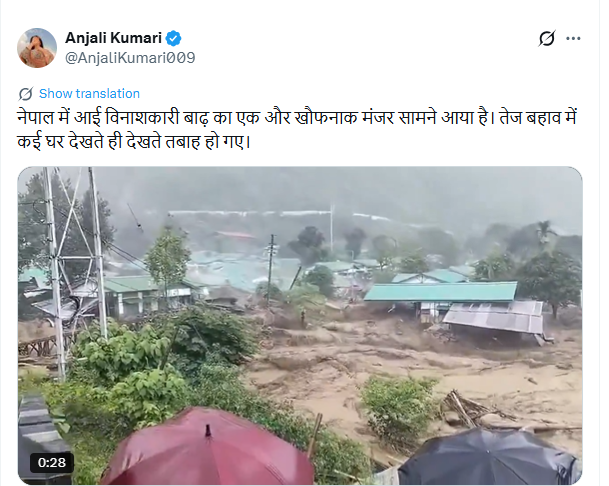
The video was shared on X with the caption: “Another horrifying scene from the devastating floods in Nepal has emerged. Several houses were destroyed within moments by the strong current.”
https://x.com/anjalikumari009/status/2093257147094335652
FactCheck
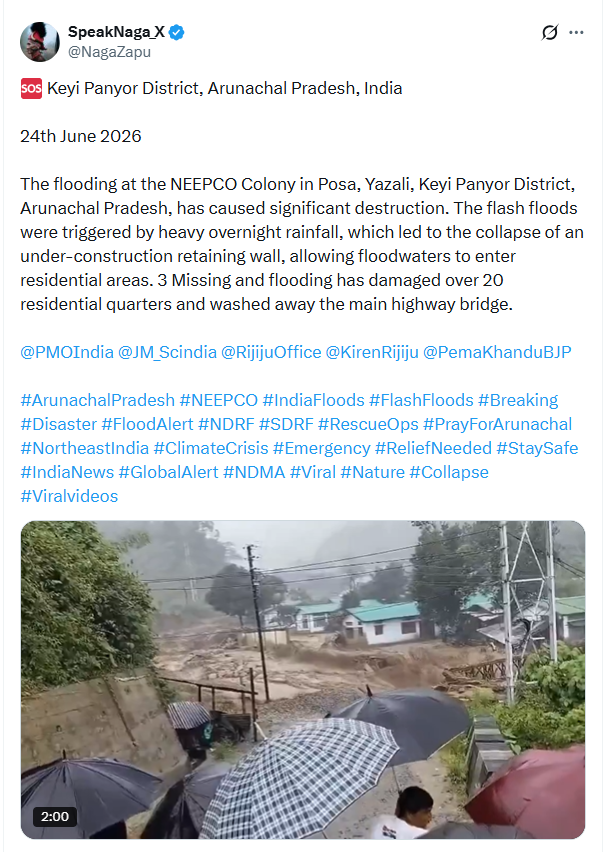
During our research of the video being shared as footage of floods in Nepal’s Rasuwa area, we conducted a reverse image search using keyframes and found a longer version of the video posted on an X account on June 24, 2026. The caption accompanying the video identified it as footage of a flash flood and the resulting devastation in Nipko Colony, Possa, in Arunachal Pradesh’s Keyi Panyor district, on June 24.
https://x.com/NagaZapu/status/2069747140608331962
During the research, we also found videos of the flooding in Nipko Colony uploaded on several social media accounts from Arunachal Pradesh on June 24. These posts contained visuals matching those seen in the viral video.
https://www.facebook.com/reel/977442025167230
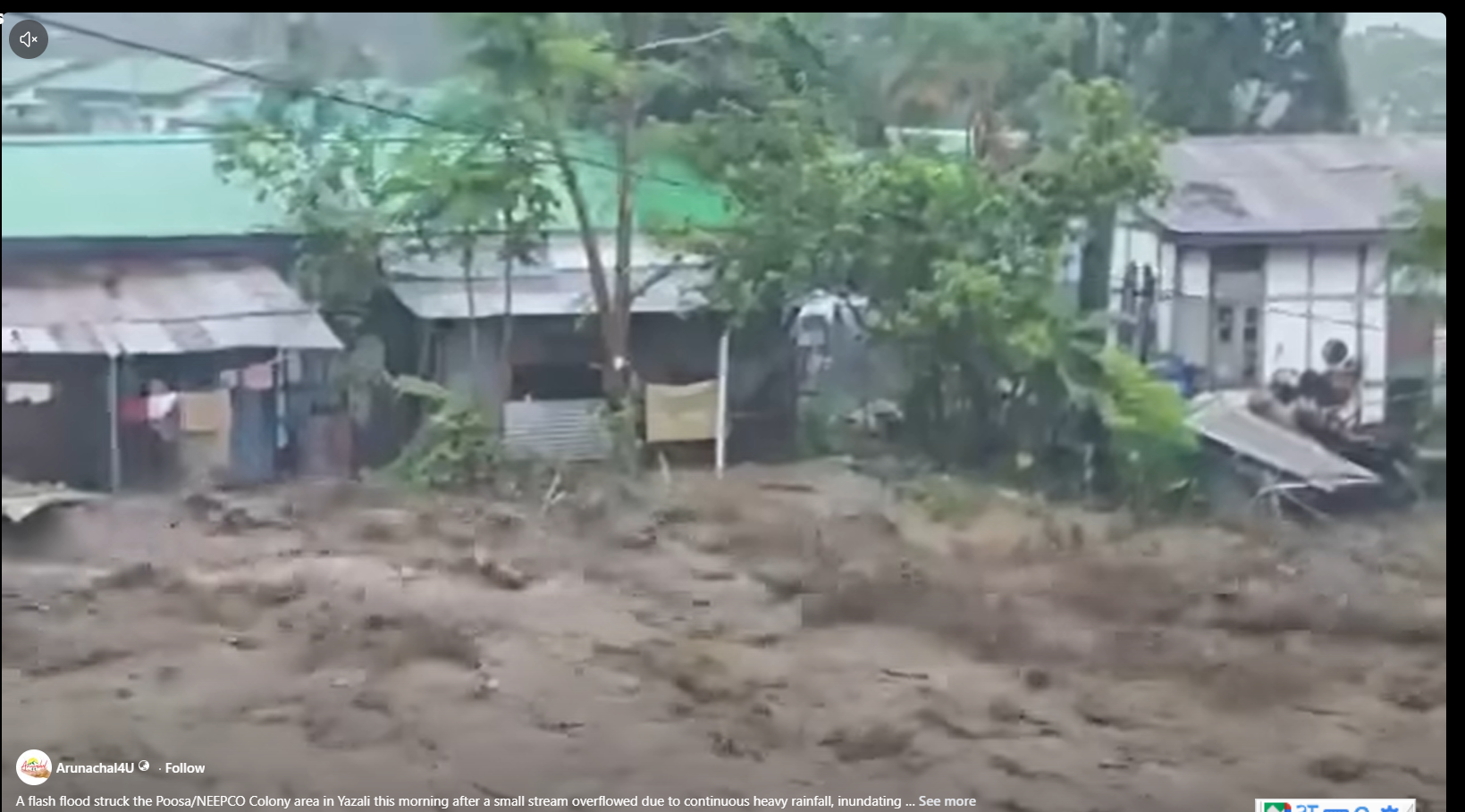
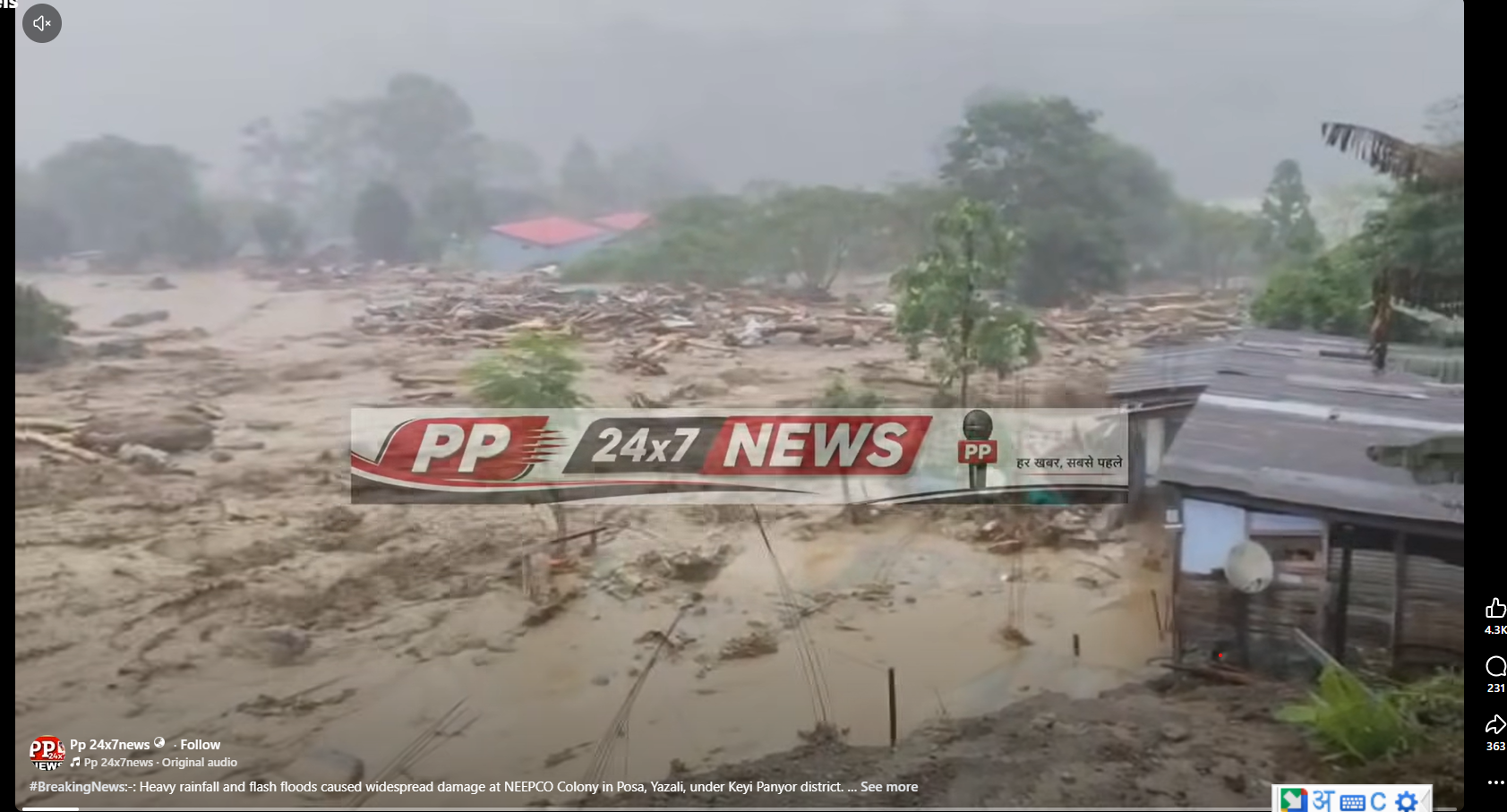
Additionally, we found a video report uploaded on June 24, 2026, on the Facebook account of a media outlet from Arunachal Pradesh. The report featured footage of the flooding in Nipko Colony. In the audio accompanying the video, the person recording the footage can also be heard describing the devastation caused by the floods.
https://www.facebook.com/reel/1571580381035813
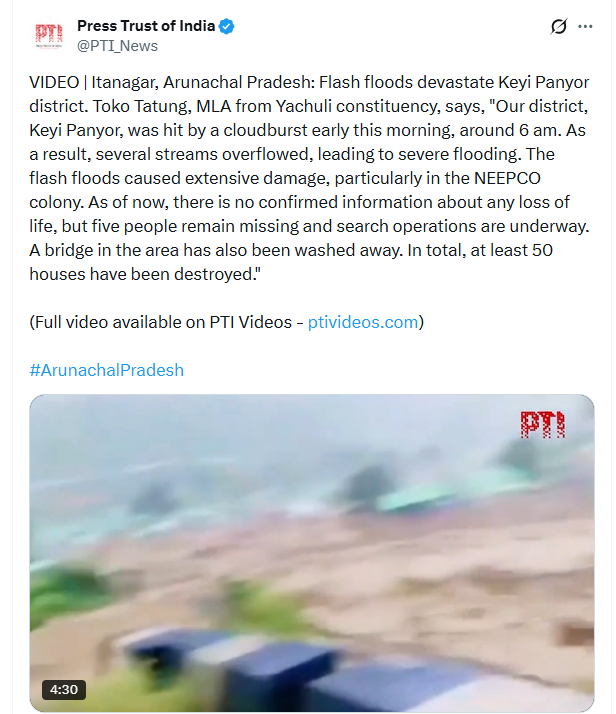
Additionally, we found visuals matching those in the viral video in a 4-minute-35-second video posted on the Press Trust of India’s X account on June 24, 2026. According to media reports, around three people were killed in the floods in Nipko Colony, while approximately 18 houses were swept away.
https://x.com/PTI_News/status/2069747746525835341
Conclusion
The evidence gathered during our research clearly establishes that the video being shared as footage of the floods in Nepal’s Rasuwa area is actually from the floods that struck Keyi Panyor district in Arunachal Pradesh on June 24.
