
#FactCheck: AI-Generated Image Falsely Shared as Photo of INDIA Bloc Rally at Delhi’s Ramlila Maidan
Executive Summary
A rally was organised by the opposition INDIA bloc at Delhi’s Ramlila Maidan on November 1, 2026, under the slogans of “Vote Chori” and “Save Democracy”, along with a “Chalo Delhi” march. Meanwhile, a photograph is being shared on social media with the claim that it shows the same rally. A large crowd of people can be seen in the picture.
CyberPeace Research found the viral claim to be false. Our research found that the viral image is not authentic but AI-generated.
Claim:
A photograph is being shared on social media with the claim that it shows a rally held at Delhi’s Ramlila Maidan on the issues of “Vote Chori” and “Save Democracy”, which was attended by a large number of people.
https://x.com/CJP_for_India/status/2117125139003588873?a=NW3G6-9xW1sPqHOkUTo&s=20

Fact Check
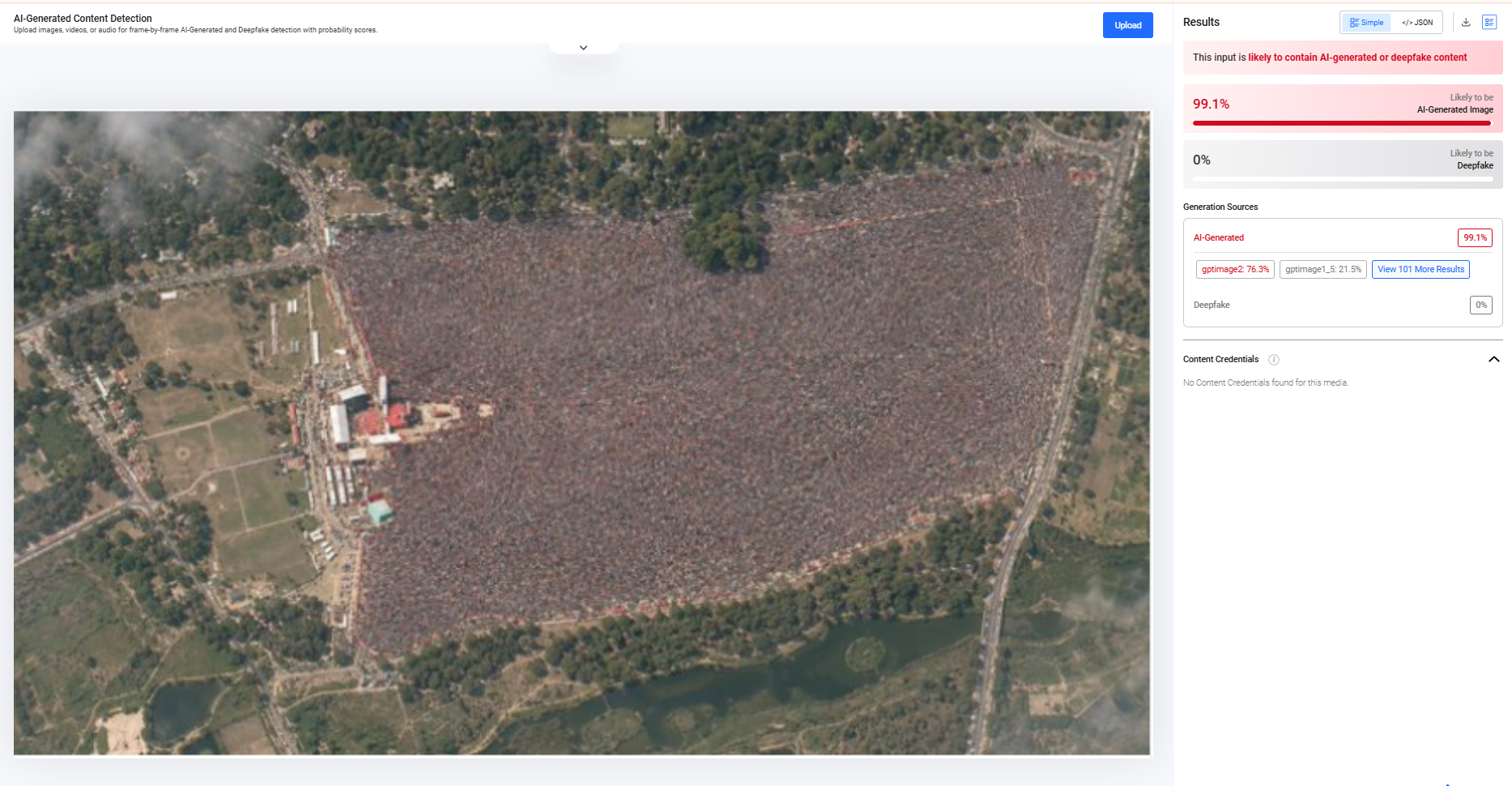
Upon closely examining the viral image, we noticed certain inconsistencies that raised suspicions that it was AI-generated. We then scanned the image using the AI detection tool Hive Moderation. According to the results, the image is 99 per cent likely to be AI-generated.
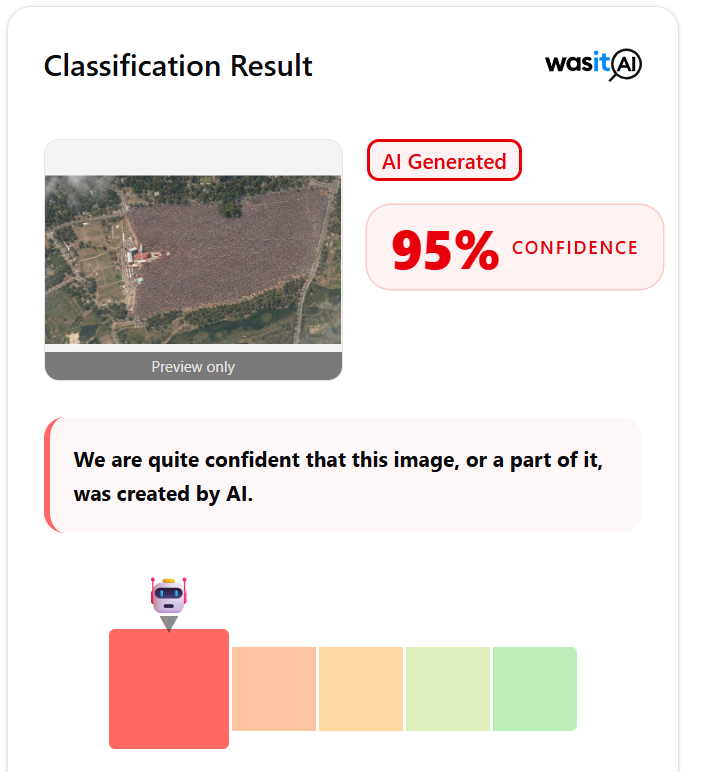
Taking our research forward, we scanned the viral image using another AI detection tool, Wasit AI. According to the results, the image is 95 per cent likely to be AI-generated.
Conclusion
Our research found that the viral image is not authentic but AI-generated.

Related Blogs
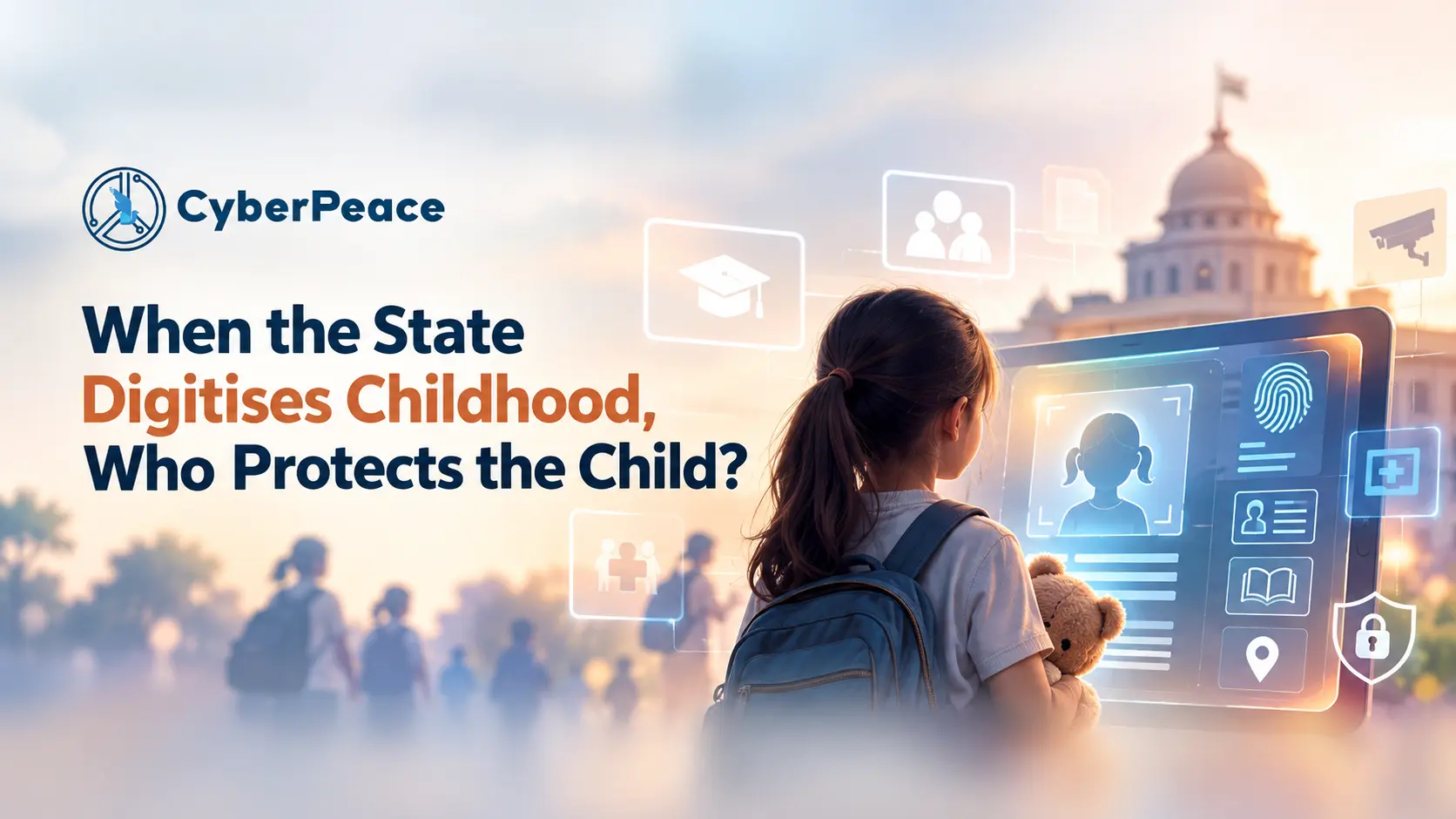
"India’s digital public infrastructure promises inclusion and efficiency. But when essential services depend on handing over data, children become legible to the state long before anyone listens to them."
India’s digital transformation deserves much of the praise it gets. Digital Public Infrastructure (DPI) has taken public services to people at a scale few countries have managed. Still, one question gets less attention than it should: what happens when the state’s wish for a neatly administered citizen starts to override the rights of a child?
Aditi Pillai takes this up in From Principle(al) to Practice: The Child as a Datafied Digital Citizen in India’s Digital Public Infrastructure. She doesn’t argue against digital infrastructure. Her point is that its claim to serve the public can’t be separated from the power it holds over the people enrolled in it. The most obvious example is children. When they are persons with rights today, they run the risk of being reduced to administrative categories, data points and future projections. A child’s citizenship is suspended until adulthood. These days, identity, privacy and agency are important but digital governance frequently views childhood as something that needs to be tracked, controlled and maximised.
Protection without participation
Pillai’s sharpest idea is what she calls “double paternalism.” She uses 49-story completion responses from parents who completed brief hypothetical situations regarding enrolling a child in a computerised system, as well as expert interviews. Her focus is on how parental and institutional power reinforce one another and prevent kids from making decisions about their own online life.
Consider the Automated Permanent Academic Account Registry (APAAR), which provides a permanent academic identification for every student. Consolidating records may well help administrators. The harder questions are whether enrolment is truly voluntary, whether refusing carries a penalty, and whether a family can question how data is collected and linked without risking the child’s schooling.
The answers weren’t encouraging. Many parents either accepted enrolment despite their reservations or viewed it as a requirement that wasn’t worth challenging. Out of the 48, only four exhibited aggressive resistance and just one admitted that the adolescent in the scenario might have a voice. It is not appropriate to interpret this little qualitative study as a statistical representation of Indian parents. Nevertheless, it implies that there was never a choice and that obedience may be mistaken for informed agreement.
That is the double edge. The state compels, or strongly nudges, parents to enrol their children. Parents then decide on the child’s behalf without involving them. Both layers claim to protect the child’s interests, and the child’s own voice is missing from both.
When convenience becomes compulsion
It is easy to treat digital systems as neutral tools. They aren’t. Every system embodies decisions about what is collected, which records are linked, who can see them, and what happens to someone who can’t or won’t comply.
Pillai points to what can follow when educational records are tied to identity systems. Persistent data trails can expose children to long-term profiling. Rigid identification rules can shut out those whose lives don’t fit the institutional template: children without reliable documents, those who have left abusive homes, those who can’t provide valid biometrics.
There is an irony here. A system built to make citizens more visible to the state can make its most vulnerable citizens less visible as people. When a child can’t meet the system’s requirements, the result is often exclusion, not accommodation.
All of this does not imply that India should abandon digital infrastructure.The true debate is whether people’s freedom of choice, privacy and equitable access should be sacrificed for efficiency. A system can’t call itself inclusive if participation is compulsory in practice and the exceptions are badly designed.
Parents can’t carry this alone
Pillai also names “potentiality risk,” the worry that data gathered in childhood will quietly shape future opportunities, reputation or identity. A school record can outlast the circumstances that produced it. A bad year, once logged, may follow a student if institutions come to read them through a permanent digital profile.
Parents are left in an impossible spot. They are expected to guard their children against risks they may not fully understand and have little power to control. Responsibility slides from the institutions that build and run these systems to the families who must live with them. That is a weak form of accountability. Parental consent can’t justify every kind of data processing involving a child, and parents shouldn’t have to bargain one by one with schools or authorities when the alternative is losing an essential service.
The Digital Personal Data Protection Act, 2023, treats children as a distinct category of data principals and requires verifiable parental consent, subject to its provisions and rules. That is a start. The deeper question remains: does a child-focused data regime only regulate what adults decide about children, or does it also leave room for children’s own evolving views and abilities? Protection without participation can turn into control by another name.
From data subjects to digital citizens
Pillai’s strategy is built on two interconnected concepts: a rights-based perspective of data justice rooted in the UN Convention on the Rights of the Child (UNCRC) and participatory digital citizenship.
In actuality, this entails consulting kids before systems are developed rather than after. Parents need clear information and practical options to raise concerns about enrolment. Accessible grievance procedures, real alternatives when necessary and safeguards against exclusion are all necessary for institutions. Collection and linking of data should be proportionate to a legitimate purpose with clear accountability for how it is used later. Above all, the child’s best interests should be a standard that actually governs decisions, not a phrase invoked to excuse administrative convenience.
India’s digital ambitions and children’s rights don’t have to collide. A public system is best judged by how it treats the people least able to challenge it. The real test of a digital state is not how many people it can enrol or connect, but whether they keep their dignity and agency once inside. Children should not end up as records to be maintained or risks to be managed. They are citizens now, and their rights matter now.
References
- Aditi Pillai, ‘From Principle(al) to Practice: The Child as a Datafied Digital Citizen in India’s Digital Public Infrastructure’ (2026) 22(2) Indian Journal of Law and Technology, Article 3. DOI: 10.55496/NFYV5618.
- Digital Personal Data Protection Act 2023, s 9.
- United Nations Convention on the Rights of the Child (adopted 20 November 1989, entered into force 2 September 1990) 1577 UNTS 3.
- Government of India, ‘G20 New Delhi Leaders’ Declaration’ (2023).
Introduction
The Telecom Regulatory Authority of India (TRAI) issued a consultation paper titled “Encouraging Innovative Technologies, Services, Use Cases, and Business Models through Regulatory Sandbox in Digital Communication Sector. The paper presents a draft sandbox structure for live testing of new digital communication products or services in a regulated environment. TRAI seeks comments from stakeholders on several parts of the framework.
What is digital communication?
Digital communication is the use of internet tools such as email, social media messaging, and texting to communicate with other people or a specific audience. Even something as easy as viewing the content on this webpage qualifies as digital communication.
Aim of Paper
- Frameworks are intended to support regulators’ desire for innovation while also ensuring economic resilience and consumer protection. Considering this, the Department of Telecom (DoT) asked TRAI to offer recommendations on a regulatory sandbox framework. TRAI approaches the issue with the goal of encouraging creativity and hastening the adoption of cutting-edge digital communications technologies.
- Artificial intelligence, the Internet of Things, edge computing, and other emerging technologies are revolutionizing how we connect, communicate, and access information, driving the digital communication sector to rapidly expand. To keep up with this dynamic environment, an enabling environment for the development and deployment of novel technologies, services, use cases, and business models is required.
- The regulatory sandbox concept is becoming increasingly popular around the world as a means of encouraging innovation in a range of industries. A regulatory sandbox is a regulated environment in which businesses and innovators can test their concepts, commodities, and services while operating under changing restrictions.
- Regulatory Sandbox will benefit the telecom startup ecosystem by providing access to a real-time network environment and other data, allowing them to evaluate the reliability of new applications before releasing them to the market. Regulatory Sandbox also attempts to stimulate cross-sectoral collaboration for carrying out such testing by engaging the assistance of other ministries and departments in order to give the starting company with a single window for acquiring all clearances.
What is regulatory sandbox?
- A regulatory sandbox is a controlled regulatory environment in which new products or services are tested in real-time.
- It serves as a “safe space” for businesses because authorities may or may not allow certain relaxations for the sole purpose of testing.
- The sandbox enables the regulator, innovators, financial service providers, and clients to perform field testing in order to gather evidence on the benefits and hazards of new financial innovations, while closely monitoring and mitigating their risks.
What are the advantages of having a regulatory sandbox?
- Firstly, regulators obtain first-hand empirical evidence on the benefits and risks of emerging technologies and their implications, allowing them to form an informed opinion on the regulatory changes or new regulations that may be required to support useful innovation while mitigating the associated risks.
- Second, sandbox customers can evaluate the viability of a product without the need for a wider and more expensive roll-out. If the product appears to have a high chance of success, it may be authorized and delivered to a wider market more quickly.
Digital communication sector and Regulatory Sandbox
- Many countries’ regulatory organizations have built sandbox settings for telecom tech innovation.
- These frameworks are intended to encourage regulators’ desire for innovation while also promoting economic resilience and consumer protection.
- In this context, the Department of Telecom (DoT) had asked TRAI to give recommendations on a regulatory sandbox framework.
- Written comments on the drafting framework will be received until July 17, 2023, and counter-comments will be taken until August 1, 2023. The Authority’s goal in the digital communication industry is to foster creativity and expedite the use of emerging technologies such as artificial intelligence (AI), the Internet of Things (IoT), and edge computing. These technologies are changing the way individuals connect, engage, and access information, causing rapid changes in the industry.
Conclusion
According to TRAI, these technologies are changing how individuals connect, engage, and obtain information, resulting in significant changes in the sector.
The regulatory sandbox also wants to stimulate cross-sectoral collaboration for carrying out such testing by engaging the assistance of other ministries and departments in order to give the starting company with a single window for acquiring all clearances. The consultation paper covers some of the worldwide regulatory sandbox frameworks in use in the digital communication industry, as well as some of the frameworks in use inside the country in other sectors.

Introduction
India envisions reaching its goal of becoming Viksit Bharat by 2047. With a net-zero emissions target by 2070, it has already reduced GDP emission intensity by 36% (from 2005 to 2020) and is working towards a 45% reduction goal by 2030. This will help the country achieve economic growth while minimizing environmental impact, ensuring sustainable development for the future. The 2025 Union Budget prioritises energy security, clean energy expansion, and green tech manufacturing. Furthermore, India’s promotion of sustainability policies in startups, MSMEs, and clean tech shows its commitment to COP28 and SDGs. India’s key policy developments for sustainability and energy efficiency include the Energy Conservation Act (2022), PAT scheme, S&L scheme, and the Energy Conservation Building Code, driving decarbonization, energy efficiency, and a sustainable future.
India’s Policy and Regulatory Landscape
The Indian law of Energy Conservation (Amendment) Act which was enacted in 2022 aims at enhancing energy efficiency while ensuring economic growth. It works on the aim of reducing emission intensity by 2030. The Act tackles regulatory, financial, and awareness barriers to promote energy-saving technologies. Next, the Perform, Achieve, and Trade (PAT) Scheme improves cost-effective energy efficiency in energy-intensive industries through tradable energy-saving certificates. Adding on, the PLI Scheme boosts green manufacturing by attracting investments, both domestically and internationally. The Bureau of Energy Efficiency (BEE) enforces Minimum Energy Performance Standards (MEPS) and star ratings for appliances, guiding consumers toward energy-efficient choices. These initiatives collectively drive carbon reduction and sustainable energy use in India.
Growth of Energy-Efficient Technologies
India has been making massive strides in its integration of renewable energy, such as solar and wind energies, mainly due to improvements in storage technologies. Another key development is the real-time optimization of energy usage through smart grids and AI-driven energy management. The EV and green mobility boom has been charged through by the rapid expansion of charging infrastructure and the policy interventions to support the shift. The building of green building codes and IoT-driven energy management has led to building efficiency, and finally, the efforts for industrial energy optimisation have been met through AI/ML-driven demand-side management in heavy industries.
Market Trends, Investment, and Industry Adoption
The World Energy Investment Report 2024 (IEA) projects global energy investment to surpass $3 trillion, with $2 trillion allocated to clean energy. India’s clean energy investment reached $68 billion in 2023, a 40%+ rise from 2016-2020, with nearly 50% directed toward low-emission power, including solar PV. Investment is set to double by 2030 but needs a 20% further rise to meet climate goals.
India’s ESG push is driven by Net Zero 2070, SEBI’s BRSR mandates, and UN SDGs, with rising scrutiny on corporate governance. ESG-aligned investments are expanding, reinforcing sustainability. Meanwhile, energy efficiency in manufacturing minimizes waste and environmental impact, while digital transformation in energy management boosts renewable integration, grid reliability, and cost efficiency, ensuring a sustainable energy transition.
The Way Forward
There are multiple implementation bottlenecks present for the active policies which include infrastructure paucity, financing issues and even the on-ground implementational challenges of the active policies. To combat these issues India needs to adopt measures for promoting public-private partnerships to scale energy-efficient solutions. Incentives for industries to adopt green technologies should be strengthened (tax exemptions and subsidies for specific periods), with increased R&D support and regulatory sandboxes to encourage adoption. Finally, the role of industries, policymakers and consumers needs to be in tandem to accelerate the efforts made towards a sustainable and green future for India. Emerging technologies play an important in bridging gaps and aim towards the adoption of global best practices for India.
References
- https://instituteofsustainabilitystudies.com/insights/lexicon/green-technologies-innovations-opportunities-challenges/
- https://powermin.gov.in/sites/default/files/The_Energy_Conservation_Amendment_Act_2022_0.pdf
- https://www.ibef.org/blogs/esg-investing-in-india-navigating-environmental-social-and-governance-factors-for-sustainable-growth
