
#FactCheck: 2020 Paris Protest Video Falsely Linked to Recent Demonstrations in France
Executive Summary
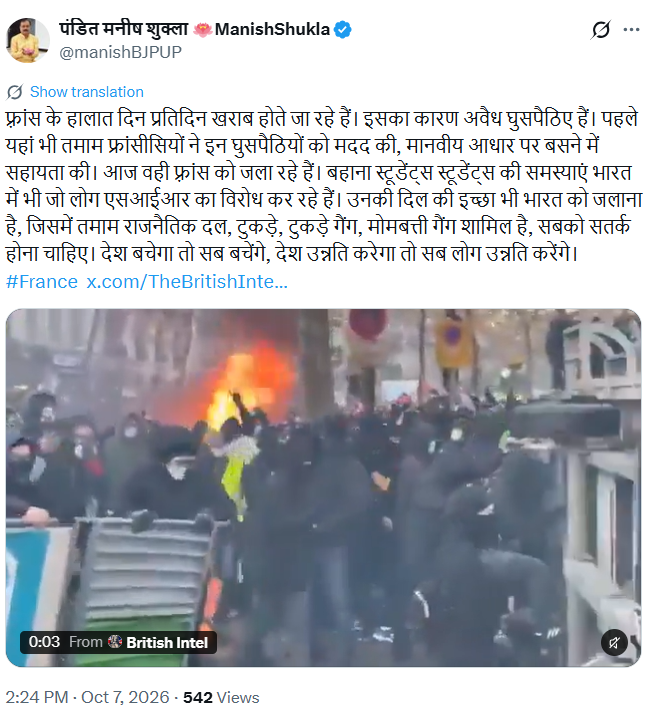
A video is being shared on social media showing violent clashes between protesters and police. The video is being circulated with the claim that it is from recent protests in France and shows clashes between protesters and police during the ongoing demonstrations. However, CyberPeace Research found the viral claim to be misleading. Our research found that the viral video is not recent; it dates back to a violent protest held in Paris on November 28, 2020.
Claim:
A user on the social media platform X (formerly Twitter) shared the viral video on October 7, 2026, with the caption: “The situation in France is worsening day by day. The reason for this is illegal immigrants. Initially, many French people helped these infiltrators settle there on humanitarian grounds. Today, the same people are burning France. They are using students’ issues as an excuse. Those opposing SIR in India also have the same intention of setting India on fire. Several political parties, the ‘tukde-tukde gang’ and the ‘candlelight gang’ are involved. Everyone should remain vigilant. If the country survives, everyone will survive; if the country progresses, everyone will progress.”The post link, archive link, and screenshot are provided below.
https://x.com/manishBJPUP/status/2107756379372990575?s=20
Fact Check
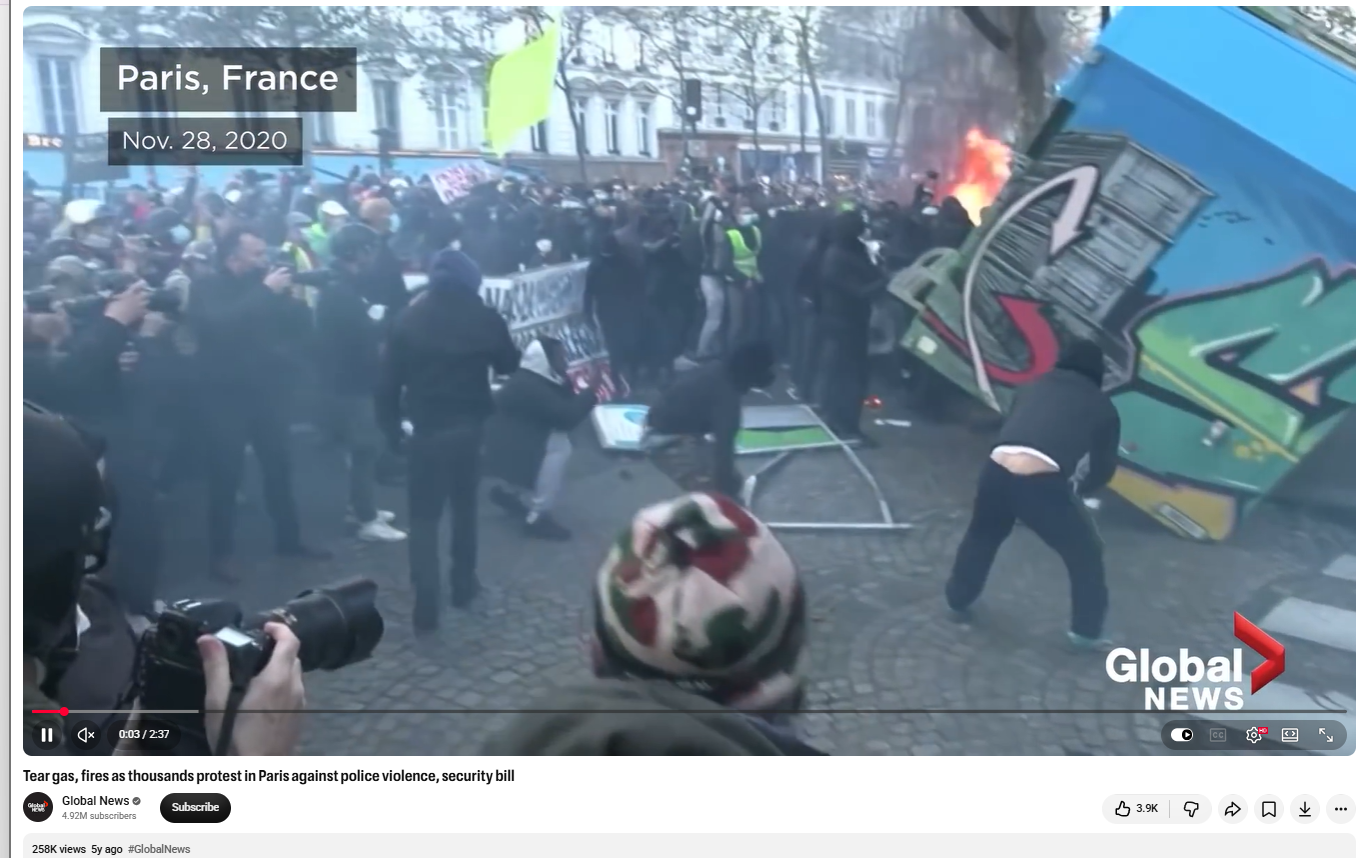
In the next step of our research, we extracted keyframes from the video and conducted a reverse image search. During the search, we found a video uploaded on the Global Times YouTube account on November 28, 2020. The title and description of the video identified it as footage from protests in Paris, France, against police violence and the security bill. The report link and screenshot are provided below.
https://www.youtube.com/watch?v=hCMA8Vqqsr8
In the next step of our research, we found a report published on the China Daily website on November 30, 2020. The report also contained the visuals seen in the viral video. The report link and screenshot are provided below.
https://www.chinadailyhk.com/hk/article/150932
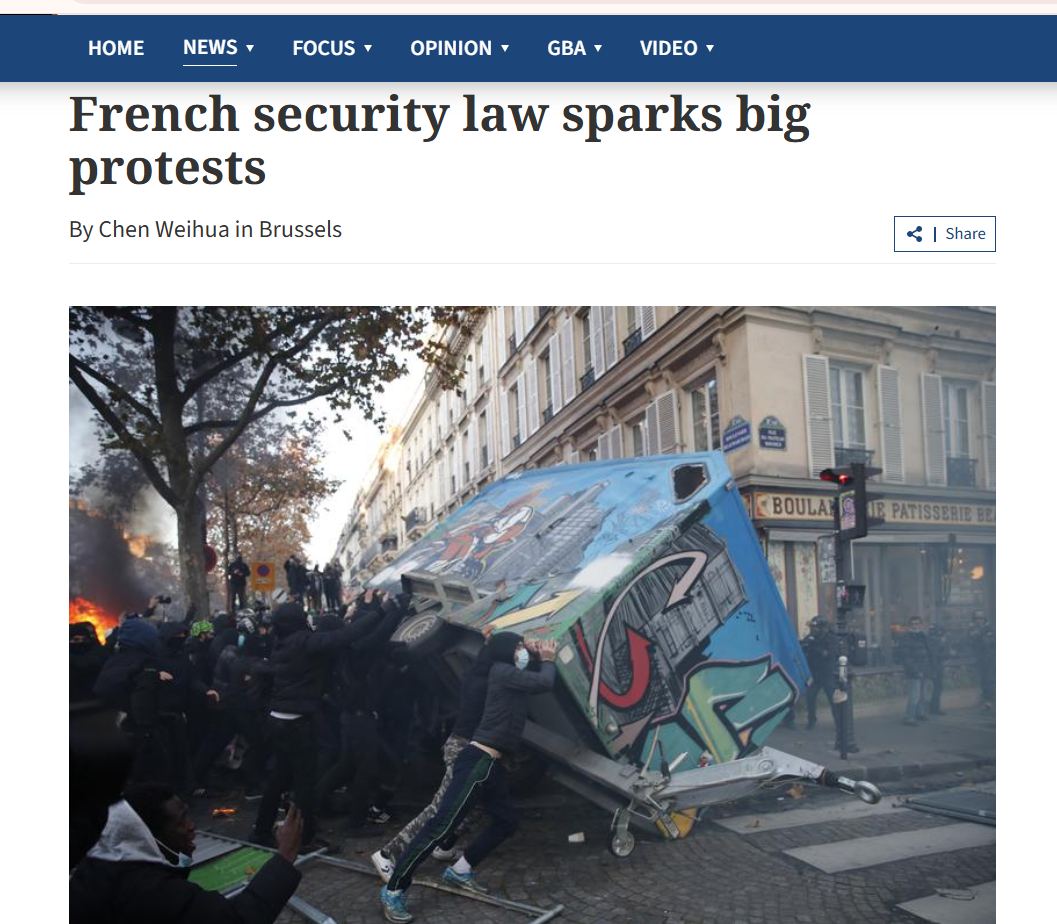
According to a report published by China Daily, hundreds of thousands of people took to the streets across France on Saturday to protest against a proposed law that included provisions restricting the filming of police officers and addressing racial discrimination. The protests followed the alleged brutal beating of a Black man by police in Paris. A controversial provision, particularly Article 24 of the National Security Law, criminalised the dissemination of photos or videos of police officers carrying out their duties if done with malicious intent. The provision carried a penalty of up to 45,000 euros (US$53,800) and one year in prison. In Paris, police used tear gas and stun grenades after clashes broke out between protesters and police. Some people in the crowd threw stones and fireworks at police. Several cars and a newspaper kiosk were set on fire, while dozens of people were arrested.
Conclusion
Our research found that the viral video is not recent but dates back to a violent protest held in Paris on November 28, 2020.

Related Blogs

Introduction
In recent years, the city of Hyderabad/Cyberabad has emerged as a technology hub, a place with the strong presence of multi corporations, Startups, and research institutions, Hyderabad has become a hub of innovations and technological advancement. However, this growing land of cyber opportunities has also become a hub for cybercriminals as well. In this blog post, we shall explore the reasons why professionals are being targeted and the effects of cyber fraud on techies. Through this investigation, we hope to raise awareness about the seriousness of the problem as well as give vital insights and techniques for Cyberabad’s computer workers to defend themselves against cyber theft. We can work together to make Cyberabad’s technology ecosystem safer and more secure.
Defining Cyber Fraud
In today’s age, where everything has an interconnected digital world, cyber fraud cases are increasing daily. Cyber fraud encompasses a wide range of threats and techniques employed by bad actors, such as Phishing, Ransomware, identity theft, online scams, data breaches, and fake websites designed for users. The sophistication of cyber fraud techniques is constantly evolving, making it challenging for individuals and organisations to stay ahead. Cybercriminals use software vulnerabilities, social engineering tactics, and flaws in cybersecurity defences to carry out their harmful operations. Individuals and organisations must grasp these dangers and tactics to protect themselves against cyber fraud.
Impact of Cyber Frauds
The consequences of Falling victim to cyber fraud can be devastating, both personally and professionally. The emotional and financial toll on individuals may be a challenge. Identity theft may lead to damaged credit scores, fraudulent transactions, and years of recovery work to rehabilitate one’s image. Financial fraud can result in depleted bank accounts, unauthorised charges, and substantial monetary losses. Furthermore, being tricked and violated in the digital environment can generate anxiety, tension, and a lack of confidence.
The impact of cyber fraud goes beyond immediate financial losses and can have long-term consequences for individuals’ and organisations’ entire well-being and stability. As the threat environment evolves, it is critical for people and organisations to recognise the gravity of these repercussions and take proactive actions to protect themselves against cyber theft.

Why are Cyberabad Tech Professionals Targeted?
Tech professionals in Cyberabad are particularly vulnerable to cyber due to various factors. Firstly, their expertise and knowledge in technology make them attractive targets for cybercrooks. These professionals possess valuable coding, Software, and administration skills, making them attractive to cybercriminals.
Secondly, the nature of work often involves enormous use of technology, including regular internet contacts, email exchanges, and access to private information. This expanded digital presence exposes them to possible cyber dangers and makes them more vulnerable to fraudsters’ social engineering efforts. Furthermore, the fast-moving nature of the tech industry, with many deadlines and work pressure to deliver, can create a distraction. This can let them click on some malicious links or share sensitive information unknowingly all these factors let the cyber criminals exploit vulnerabilities.
Unveiling the Statistics
According to various reports, 80% of cyber fraud victims in Hyderabad are techies; the rest are the public targeted by cyber crooks. This surprising number emphasises the critical need to address the vulnerabilities and threats this specific segment within the IT community faces.
Going further into the data, we can acquire insights into the many forms of cyber fraud targeting tech workers, the strategies used by cybercriminals, and the impact these occurrences have on individuals and organisations. Examining precise features and patterns within data might give important information for developing successful preventative and protection methods.
Factors Contributing
Several reasons contribute to the elevated risk of cyber fraud among ICT professionals in Cyberabad. Understanding these aspects helps explain why this group is specifically targeted and may be more vulnerable to such assaults.
Technical Expertise: Tech workers frequently have specialised technical knowledge, but this knowledge may only sometimes extend to cybersecurity. Their primary concentration is writing software, designing systems, or implementing technologies, which may result in missing possible vulnerabilities or a lack of overall cybersecurity understanding.
Confidence in Technology: IT workers have a higher level of confidence in technology because of their knowledge and dependence on technology. This trust can sometimes make individuals more vulnerable to sophisticated frauds or social engineering approaches that prey on their faith in the services they utilise.
Time Constraints and Pressure: Tech workers frequently operate under tight deadlines and tremendous pressure to reach project milestones. This may result in hurried decision-making or disregarding possible warning signals of cyber fraud, rendering them more exposed to assaults that prey on time-sensitive circumstances.
Cybercriminals know that technology workers have valuable knowledge, trade secrets, and intellectual property that may be economically profitable. As a result, they are attractive targets for attacks aiming at stealing sensitive data or gaining unauthorised access to critical systems.
The best practices that cyber techies can apply to safeguard their personal and professional data by following these simple tips:
Strong Passwords: create a strong password, using passwords for all your online accounts and changing them regularly. Remember to use unique combinations!
MFA (Multi-Factor Authentication): Enable MFA wherever possible. This provides an extra degree of protection by requiring a second form of verification, such as a code texted to your mobile device and your password.
Use Secured WiFi: Use secure and encrypted Wi-Fi networks, especially while viewing sensitive information. Avoid connecting to public or unprotected networks, as they can be readily exploited. Recognising Red Flags and Staying Ahead
Social Engineering: Be sceptical of unwanted solicitations or offers, both online and offline. Cybercriminals may try to persuade or fool you using social engineering tactics. Before revealing any personal or private information, think critically and confirm the veracity of the request.
Secure Web Browsing: Only browse trustworthy websites with valid SSL certificates (look for “https://” in the URL). Avoid clicking on strange links or downloading files from unknown sources since they may contain malware or ransomware.
Report Suspicious actions: If you encounter any suspicious or fraudulent actions, report them to the relevant authorities, such as the Cyber Crime Police or your organisation’s IT department. Reporting events can assist in avoiding additional harm and aid in identifying and apprehending hackers.
Stay Current on Security Practises: Stay up to speed on the newest cybersecurity risks and best practices. Follow credible sources, participate in cybersecurity forums or seminars, and remain current on new threats and preventative measures.

Conclusion
The rise in cybercrimes and fraud cases among tech experts in Cyberabad is a disturbing trend that requires prompt intervention. We can establish a safer tech cluster that lives on creativity, trust, and resilience by adopting proactive actions, raising awareness, and encouraging cooperation. Let us work together to prevent cybercrime and ensure the future of Cyberabad’s IT ecosystem.

Introduction
Governments worldwide are enacting cybersecurity laws to enhance resilience and secure cyberspace against growing threats like data breaches, cyber espionage, and state-sponsored attacks in the digital landscape. As a response, the EU Council has been working on adopting new laws and regulations under its EU Cybersecurity Package- a framework to enhance cybersecurity capacities across the EU to protect critical infrastructure, businesses, and citizens. Recently, the Cyber Solidarity Act was adopted by the Council, which aims to improve coordination among EU member states for increased cyber resilience. Since regulations in the EU play a significant role in shaping the global regulatory environment, it is important to keep an eye on such developments.
Overview of the Cyber Solidarity Act
The Act sets up a European Cyber Security Alert System consisting of Cross-Border Cyber Hubs across Europe to collect intelligence and act on cyber threats by leveraging emerging technology such as Artificial Intelligence (AI) and advanced data analytics to share warnings on cyber threats with other cyber data centres across the national borders of the EU. This is expected to assist authorities in responding to cyber threats and incidents more quickly and effectively.
Further, it provides for the creation of a new Cybersecurity Emergency Mechanism to enhance incident response systems in the EU. This will include testing the vulnerabilities in critical sectors like transport, energy, healthcare, finance, etc., and creating a reserve of private parties to provide mutual technical assistance for incident response requests from EU member-states or associated third countries of the Digital Europe Programme in case of a large-scale incident.
Finally, it also provides for the establishment of a European Cybersecurity Incident Review Mechanism to monitor the impact of the measures under this law.
Key Themes
- Greater Integration: The success of this Act depends on the quality of cooperation and interoperability between various governmental stakeholders across defence, diplomacy, etc. with regard to data formats, taxonomy, data handling and data analytics tools. For example, Cross-Border Cyber Hubs are mandated to take the interoperability guidelines set by the European Union Agency for Cybersecurity (ENISA) as a starting point for information-sharing principles with each other.
- Public-Private Collaboration: The Act provides a framework to govern relationships between stakeholders such as the public sector, the private sector, academia, civil society and the media, identifying that public-private collaboration is crucial for strengthing EUs cyber resilience. In this regard, National Cyber Hubs are proposed to carry out the strengthening of information sharing between public and private entities.
- Centralized Regulation: The Act aims to strengthen all of the EU's cyber solidarity by outlining dedicated infrastructure for improved coordination and intelligence-sharing regarding cyber events among member states. Equal matching contribution for procuring the tools, infrastructure and services is to be made by each selected member state and the European Cybersecurity Competence Centre, a body tasked with funding cybersecurity projects in the EU.
- Setting a Global Standard: The underlying rationale behind strengthening cybersecurity in the EU is not just to protect EU citizens from cyber-threats to their fundamental rights but also to drive norms for world-class standards for cybersecurity for essential and critical services, an initiative several countries rely on.
Conclusion
In the current digital landscape, governments, businesses, critical sectors and people are increasingly interconnected through information and network connection systems and are using emerging technologies like AI, exposing them to multidimensional vulnerabilities in cyberspace. The EU in this regard continues to be a leader in setting standards for the safety of participants in the digital arena through regulations regarding cybersecurity. The Cyber Solidarity Act’s design including cross-border cooperation, public-private collaboration, and proactive incident-monitoring and response sets a precedent for a unified approach to cybersecurity. As the EU’s Cybersecurity Package continues to evolve, it will play a crucial role in ensuring a secure and resilient digital future for all.
Sources
- https://www.consilium.europa.eu/en/press/press-releases/2024/12/02/cybersecurity-package-council-adopts-new-laws-to-strengthen-cybersecurity-capacities-in-the-eu/
- https://data.consilium.europa.eu/doc/document/PE-94-2024-INIT/en/pdf
- https://digital-strategy.ec.europa.eu/en/policies/cybersecurity-strategy
- https://www.weforum.org/stories/2024/10/cybersecurity-regulation-changes-nis2-eu-2024/

Executive Summary
A video is being widely shared on social media with the claim that it shows the aftermath of a recent Israeli attack on Iran. The footage shows multiple residential high-rise buildings engulfed in flames, with thick plumes of smoke rising into the sky. Users sharing the video claim that Israel carried out more than 500 airstrikes on Iran. CyberPeace Research Wingresearch found the claim to be misleading. The viral video is not related to any Israeli attack on Iran. It actually shows a massive fire that broke out in a residential complex in Hong Kong in November 2025.
Claim:
An X user shared the viral video and wrote, “Israel has carried out more than 500 surgical strikes on Iran in the last 24 hours. Enjoying it thoroughly. Keep it up.”
Post link, archive link and screenshot can be seen below:
https://x.com/ocjain4/status/2064715707997413618?s=20

Fact Check:
To verify the authenticity of the viral video, we extracted keyframes and conducted a Google Lens search. During the research, we found the same footage on Reuters’ website, where it had been published on November 26, 2025.
Report link and screenshot can be seen below:
https://www.reuters.com/video/watch/idRW511126112025RP1/

According to Reuters, the video shows a massive fire that engulfed multiple high-rise residential buildings in Hong Kong’s northern Tai Po district. The blaze claimed the lives of at least four people. Thick smoke could be seen billowing from the buildings as firefighters and emergency response teams worked to bring the fire under control.
After establishing the source of the video, we conducted a keyword search on Google and found a report published by NDTV on November 27, 2025, which also covered the incident.
Report link and screenshot can be seen below:

Conclusion:
Our research found that the viral video is not related to any Israeli attack on Iran. The footage actually shows a massive fire that broke out in residential buildings in Hong Kong in November 2025. Chinese President Xi Jinping had expressed condolences to the victims, including a firefighter who lost his life while on duty.
