
#FactCheck: AI-Generated Footage Fuels False Claim of Strike on Al Udeid Air Base
Executive Summary
The ongoing conflict between the US-Israel and Iran has entered its third week. During this period, Iran reportedly targeted the US military base at Al Udeid in Qatar. Amid this, a video is going viral on social media showing people, vehicles, and chaos following an alleged attack. Some users are sharing it as footage of an Iranian missile strike on the Al Udeid Air Base. However, an research by the CyberPeacefound that the viral video is not real but AI-generated.
Claim:
An Instagram user “thenewscartel” shared the video on March 17, 2026, with the caption: “Al Udeid Air Base, Qatar (March 16, 2026): Iran launched ballistic missiles and drones at the US military’s largest Middle East base near Doha as retaliation for US-Israel strikes in Tehran. Qatar’s Defense Ministry confirmed multiple launches. Most were intercepted by Qatari air defense. One missile landed near the base or in an uninhabited area. No casualties or major damage reported. Explosions were heard in Doha, and smoke was seen in the sky.”

Fact Check:
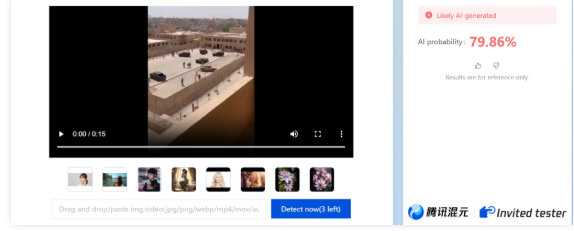
To verify the claim, we closely examined the viral video. We observed multiple visual inconsistencies—one person appears to be walking in reverse, another disappears and reappears, and the body shapes of people distort as they begin to run. These anomalies strongly indicate AI manipulation. We then analyzed the video using the AI detection tool Zhuque AI, which indicated an approximately 80 percent likelihood that the video is AI-generated.
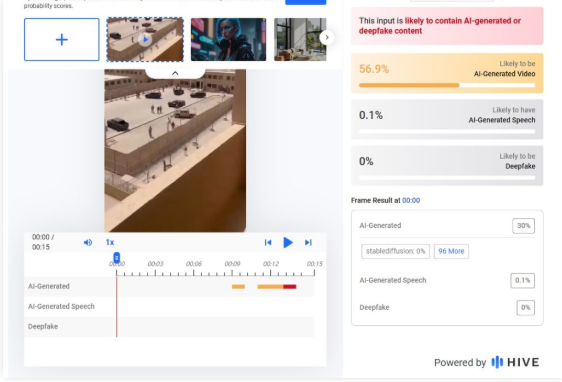
Further analysis using Hive Moderation showed around a 57 percent probability of the video being AI-generated.
Conclusion:
Our research found that the viral video being shared as footage of an Iranian attack on the US military base at Al Udeid in Qatar is AI-generated and not related to any real incident.

Related Blogs
.webp)
Starting on 16th February 2025, Google changed its advertisement platform program policy. It will permit advertisers to employ device fingerprinting techniques for user tracking. Organizations that use their advertising services are now permitted to use fingerprinting techniques for tracking their users' data. Originally announced on 18th December 2024, this rule change has sparked yet another debate regarding privacy and profits.
The Issue
Fingerprinting is a technique that allows for the collection of information about a user’s device and browser details, ultimately enabling the creation of a profile of the user. Not only used for or limited to targeting advertisements, data procured in such a manner can be used by private entities and even government organizations to identify individuals who access their services. If information on customization options, such as language settings and a user’s screen size, is collected, it becomes easier to identify an individual when combined with data points like browser type, time zone, battery status, and even IP address.
What makes this technique contentious at the moment is the lack of awareness regarding the information being collected from the user and the inability to opt out once permissions are granted.
This is unlike Google’s standard system of data collection through permission requests, such as accepting website cookies—small text files sent to the browser when a user visits a particular website. While contextual and first-party cookies limit data collection to enhance user experience, third-party cookies enable the display of irrelevant advertisements while users browse different platforms. Due to this functionality, companies can engage in targeted advertising.
This issue has been addressed in laws like the General Data Protection Regulation (GDPR) of the European Union (EU) and the Digital Personal Data Protection (DPDP) Act, 2023 (India), which mandate strict rules and regulations regarding advertising, data collection, and consent, among other things. One of the major requirements in both laws is obtaining clear, unambiguous consent. This also includes the option to opt out of previously granted permissions for cookies.
However, in the case of fingerprinting, the mechanism of data collection relies on signals that users cannot easily erase. While clearing all data from the browser or refusing cookies might seem like appropriate steps to take, they do not prevent tracking through fingerprinting, as users can still be identified using system details that a website has already collected. This applies to all IoT products as well. People usually do not frequently change the devices they use, and once a system is identified, there are no available options to stop tracking, as fingerprinting relies on device characteristics rather than data-collecting text files that could otherwise be blocked.
Google’s Changing Stance
According to Statista, Google’s revenue is largely made up of the advertisement services it provides (amounting to 264.59 billion U.S. dollars in 2024). Any change in its advertisement program policies draws significant attention due to its economic impact.
In 2019, Google claimed in a blog post that fingerprinting was a technique that “subverts user choice and is wrong.” It is in this context that the recent policy shift comes as a surprise. In response, the ICO (Information Commissioner’s Office), the UK’s data privacy watchdog, has stated that this change is irresponsible. Google, however, is eager to have further discussions with the ICO regarding the policy change.
Conclusion
The debate regarding privacy in targeted advertising has been ongoing for quite some time. Concerns about digital data collection and storage have led to new and evolving laws that mandate strict fines for non-compliance.
Google’s shift in policy raises pressing concerns about user privacy and transparency. Fingerprinting, unlike cookies, offers no opt-out mechanism, leaving users vulnerable to continuous tracking without consent. This move contradicts Google’s previous stance and challenges global regulations like the GDPR and DPDP Act, which emphasize clear user consent.
With regulators like the ICO expressing disapproval, the debate between corporate profits and individual privacy intensifies. As digital footprints become harder to erase, users, lawmakers, and watchdogs must scrutinize such changes to ensure that innovation does not come at the cost of fundamental privacy rights
References
- https://www.techradar.com/pro/security/profit-over-privacy-google-gives-advertisers-more-personal-info-in-major-fingerprinting-u-turn
- https://www.ccn.com/news/technology/googles-new-fingerprinting-policy-sparks-privacy-backlash-as-ads-become-harder-to-avoid/
- https://www.emarketer.com/content/google-pivot-digital-fingerprinting-enable-better-cross-device-measurement
- https://www.lewissilkin.com/insights/2025/01/16/google-adopts-new-stance-on-device-fingerprinting-102ju7b
- https://www.lewissilkin.com/insights/2025/01/16/ico-consults-on-storage-and-access-cookies-guidance-102ju62
- https://www.bbc.com/news/articles/cm21g0052dno
- https://www.techradar.com/features/browser-fingerprinting-explained
- https://fingerprint.com/blog/canvas-fingerprinting/
- https://www.statista.com/statistics/266206/googles-annual-global-revenue/#:~:text=In%20the%20most%20recently%20reported,billion%20U.S.%20dollars%20in%202024

Executive Summary
A video of actor Ranbir Kapoor is being shared on social media amid the ongoing Ganesh festivities across the country. The video is being shared with the claim that Ranbir Kapoor refused to accept prasad on the occasion of Ganesh Chaturthi. CyberPeace Research found the claim to be misleading. Our research revealed that the viral video is from 2023. At the time, Ranbir Kapoor had attended a Ganpati puja at the T-Series office. After the puja, when he was handed a box of prasad, he gave the box to another person and said that he was on a diet.
Claim:
A user on the social media platform Facebook shared the video with the caption, “Ranbir Kapoor refused to eat prasad, saying, ‘I am on a diet.’” The post link, archive link and screenshot are provided below.
https://www.facebook.com/reel/1563843065515757

Fact Check:
To verify the viral claim, we conducted a Google search using relevant keywords. During the search, we found a report published on the Dainik Hindustan website. According to the report, the Ambani family once again hosted a Ganpati celebration.Several Bollywood celebrities, including Salman Khan, Ranbir Kapoor, Katrina Kaif and Alia Bhatt, attended the event. Photographs from the celebration were also shared on social media. However, the clothes worn by Ranbir Kapoor in the photographs featured in the report are different from those seen in the viral video. The report link and screenshot are provided below.

To verify the viral claim, we conducted a reverse image search of keyframes from the video. During the search, we found the same video on the YouTube channel of Gujarati Midday, where it was published on September 25, 2023. The report link and screenshot are provided below.
https://www.youtube.com/watch?v=JoBwpC-jr5A

According to the video description, actor Ranbir Kapoor, known for his role in the film ‘Animal’, visited the T-Series office for Ganpati darshan. Our research established that the video is from 2023 and is being shared on social media with a misleading claim by presenting it as a recent incident. At the end of our research, we found the same video on the YouTube channel of Ei Samay. It was published on September 25, 2023. The video also contains the same scene seen in the viral clip.
https://www.youtube.com/watch?v=vmDsoRu8Aco

Conclusion
Our research found that the viral video is from 2023. At the time, Ranbir Kapoor attended a Ganpati puja at the T-Series office. After the puja, when he was handed a box of prasad, he gave the box to another person and said that he was on a diet.

Introduction
Digital arrest scams operate by fraudsters convincing individuals that they are under official scrutiny, often through fabricated notices, video calls, and staged procedures. The harm is not just technical, it is psychological. It works because it feels real.
It is in this context that the Central Bureau of Investigation has introduced ABHAY, an AI based chatbot intended to help individuals verify whether a notice issued in the name of the agency is genuine or not. At one level, this is a simple verification tool. But on closer inspection, it reflects a deeper shift in how cyber threats are being understood and dealt with.
Understanding ABHAY as a Public Interface
ABHAY is designed as a citizen facing mechanism. A person who receives a suspicious communication can use the tool to check its authenticity. This becomes particularly relevant in situations where individuals are pressured into immediate compliance.
What stands out here is the timing. Traditional responses to cybercrime begin after harm has occurred. Complaints are filed, investigations begin, and then some form of remedy follows. ABHAY, however, operates before that stage. It intervenes at the point where a person is still deciding whether to believe what they have received.
“The AI-powered notice verification chatbot, ABHAY, will allow the public to verify the genuineness of a notice purportedly issued by the CBI. In the context of digital arrest frauds, this provides a much required tool for the citizens,” a CBI spokesperson said.
While this may seem like a small shift, but it changes the logic of response. It introduces verification as a first step, rather than enforcement as a later one. Verification tools aim to interrupt that process at a preventive stage. At the same time, their effectiveness depends on awareness along with the precision and functionality of the ABHAY AI. A tool cannot assist if it is not known or trusted. This places some responsibility on institutions to ensure that such initiatives are communicated clearly and remain accessible.
Digital Arrest Scams and the Problem of Legitimacy
Digital arrest scams depend on imitation and make-believe; all tied up with instilling fear through social engineering. Fraudsters replicate the form and language of legal authority. They even use official looking documents, adopt institutional identities, and often create a controlled environment where the victim feels watched and isolated.
The law usually assumes that a reasonable person can distinguish between genuine and fake communication. But in these cases, that assumption begins to weaken. The more convincing the imitation, the harder it becomes to question it.
ABHAY attempts to address this very gap. It does not investigate or punish, it simply verifies. In doing so, it restores a basic distinction that has become blurred. The distinction between lawful authority and its digital imitation.
Legal Context and Emerging Questions
From a legal perspective, this development sits slightly outside conventional frameworks. Under the Information Technology Act, 2000, offences such as cheating by personation and identity misuse are recognized, but the emphasis is on post facto liability. Similarly, consumer protection law addresses misleading conduct after it has affected consumers.
ABHAY operates at an earlier stage. It functions in what may be called a pre liability space.
This raises certain questions, even if they are not immediately visible. When a state agency provides an AI based verification tool, what is the nature of reliance that can be placed on it. If an individual acts based on its output, does that create any expectation of accuracy or responsibility. These are not yet settled issues, but they are likely to become relevant as such tools become more common.
Conclusion
ABHAY reflects a subtle but important shift in approach. By allowing individuals to verify authenticity at the moment of interaction, it introduces a form of prevention and protection that is immediate and practical. At the same time, it opens up questions around reliability, accountability, and long-term integration of such tools into legal frameworks. These questions will need attention as similar technologies are adopted more widely.
For now, ABHAY represents an early attempt to respond to a changing problem. One where trust itself has become a site of vulnerability.
