
#FactCheck -Viral video of Yogi Adityanath and Ravi Kishan’s march is not a UGC protest
Executive Summary
A video circulating on social media shows Uttar Pradesh Chief Minister Yogi Adityanath and Gorakhpur MP Ravi Kishan walking with a group of people. Users are claiming that the two leaders were participating in a protest against the University Grants Commission (UGC). Research by CyberPeace has found the viral claim to be misleading. Our research revealed that the video is from September 2025 and is being shared out of context with recent events. The video was recorded when Chief Minister Yogi Adityanath undertook a foot march in Gorakhpur on a Monday. Ravi Kishan, MP from Gorakhpur, was also present. During the march, the Chief Minister visited local markets, malls, and shops, interacting with traders and gathering information on the implementation of GST rate cuts.
Claim Details:
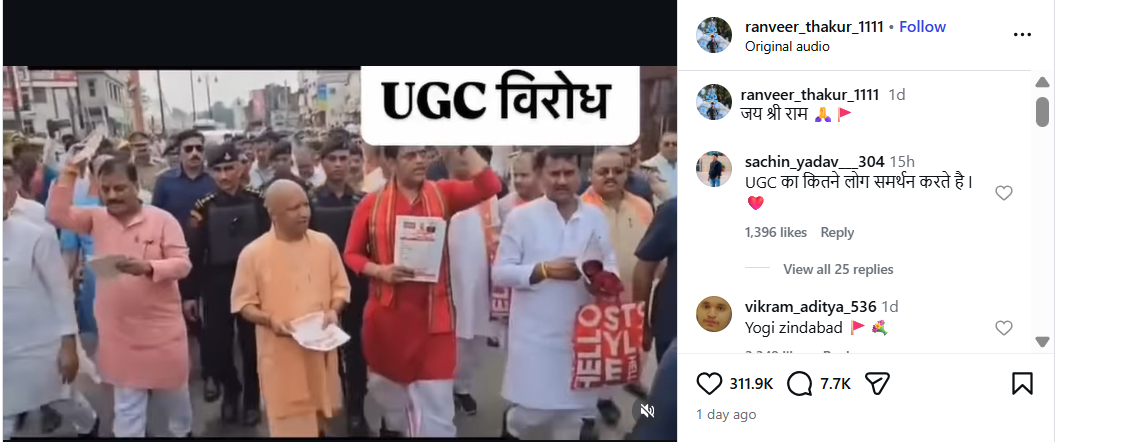
On Instagram, a user shared the viral video on 27 January 2026. The video shows the Chief Minister and the MP walking with a group of people. The text “UGC protest” appears on the video, suggesting that it is connected to a protest against the University Grants Commission.
Fact Check:
To verify the claim, we searched Google using relevant keywords, but found no credible media reports confirming it.Next, we extracted key frames from the video and searched them using Google Lens. The video was traced to NBT Uttar Pradesh’s X (formerly Twitter) account, posted on 22 September 2025.
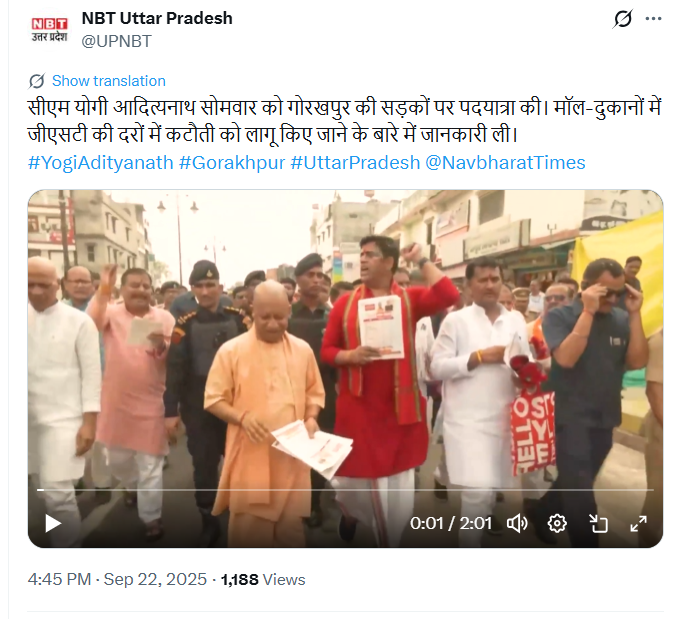
According to NBT Uttar Pradesh, CM Yogi Adityanath undertook a foot march in Gorakhpur, visiting malls and shops to interact with traders and check the implementation of GST rate cuts.
Conclusion:
The viral video is not related to any recent UGC guidelines. It dates back to September 2025, showing CM Yogi Adityanath and MP Ravi Kishan on a foot march in Gorakhpur, interacting with traders about GST rate cuts.The claim that the video depicts a protest against the University Grants Commission is therefore false and misleading.

Related Blogs

Executive Summary
On September 30, 2026, reports emerged that Captain Smith Machhar, the Indian pilot of flydubai flight FZ1073 travelling from Dubai to Tel Aviv, was attacked by his co-pilot in the cockpit. Despite sustaining serious injuries, Captain Machhar reportedly managed to land the aircraft safely, saving the lives of all 174 passengers. Following the incident, a video is going viral on social media with the claim that a picture of Captain Smith Machhar was displayed on Dubai’s Burj Khalifa in his honour.
However, CyberPeace Research found the claim to be false. Our research found that the viral video is AI-generated and is being circulated on social media with a misleading claim.
Claim:
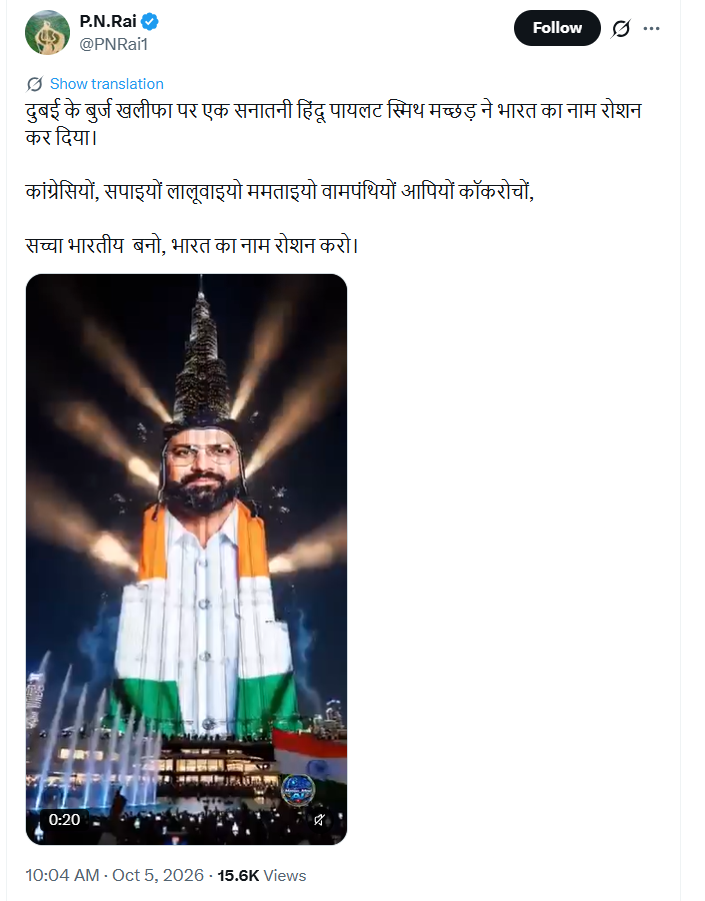
A user on the social media platform X (formerly Twitter) shared the viral video on October 5, 2026, with the caption: “A Sanatani Hindu pilot, Smith Machhar, has made India proud on Dubai’s Burj Khalifa. Congressis, Samajwadis, Lalu supporters, Mamata supporters, Leftists, AAP supporters and cockroaches, become true Indians and make India proud.” The post link, archive link and screenshot are provided below.
https://x.com/PNRai1/status/2106966191386611900
https://ghostarchive.org/archive/3RroW
Fact Check
To verify the viral claim, we conducted a Google search using relevant keywords. During the search, we did not find any credible media report confirming the claim.In the next stage of our research, we closely examined the video.
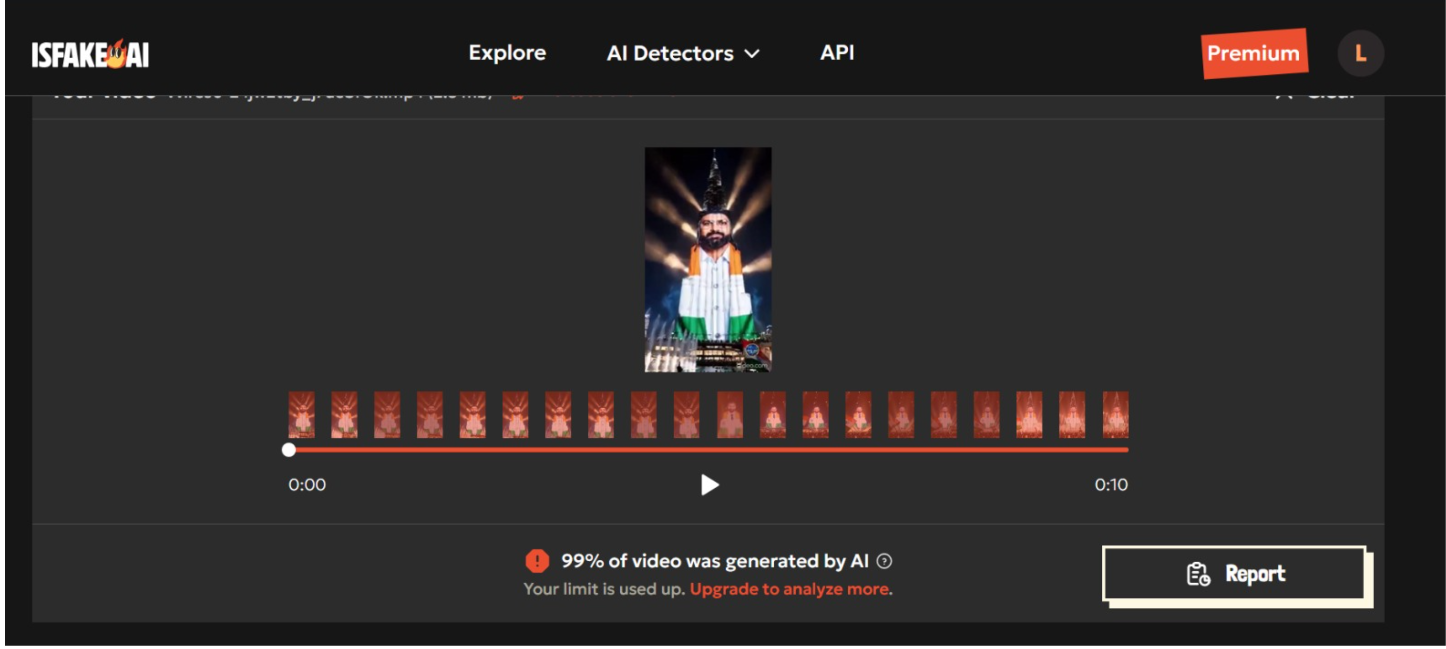
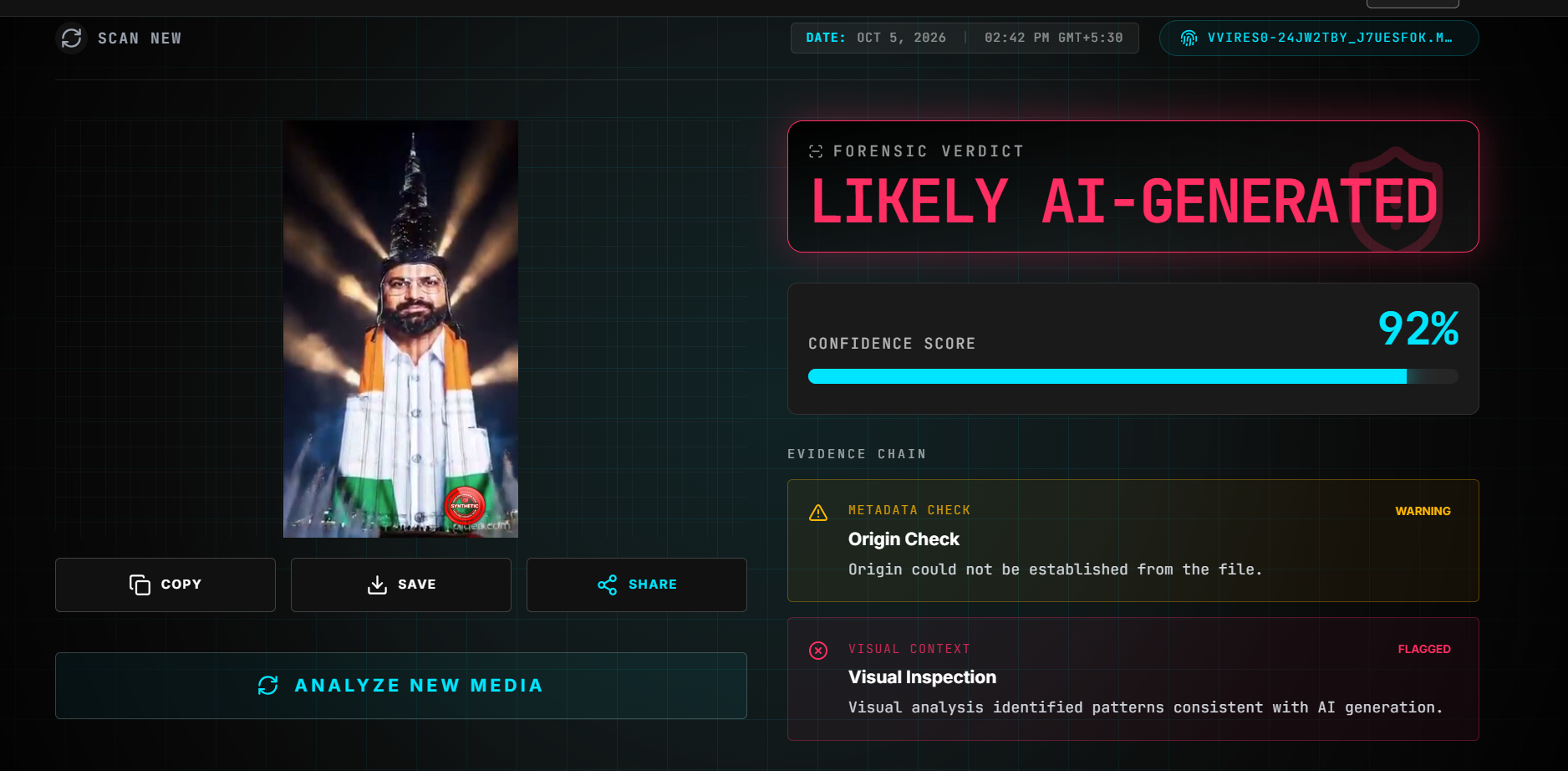
We noticed several inconsistencies that raised suspicions that it was AI-generated. In the video, the building’s texture appears to blend and shift strangely into a person’s clothing. Such changes do not appear natural or consistent with a genuine video. We then analysed the viral video using the AI detection tool ISFAKEAI. According to the results, the viral video is 99 per cent AI-generated.
In the next stage of our research, we analysed the viral video using the AI detection tool FauxLens. According to the results, the viral video is 92 per cent AI-generated.
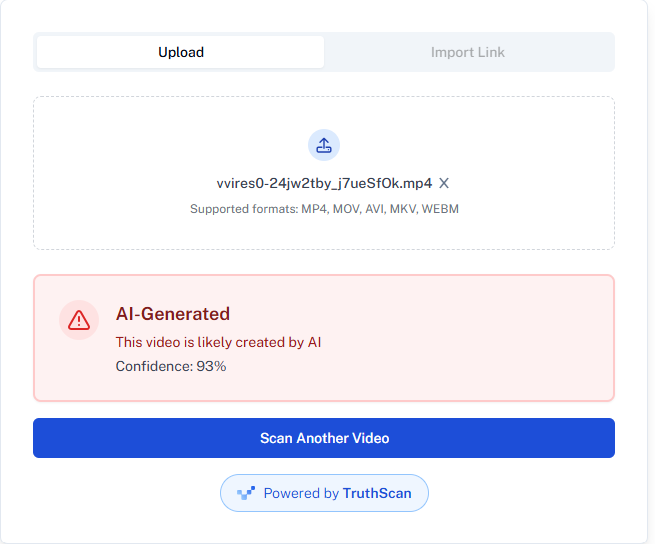
At the end of our research, we analysed the viral video using the AI detection tool Undetectable AI. According to the tool’s results, the viral video is 93 per cent AI-generated.
Conclusion
Our research found that the viral video is AI-generated and is being circulated on social media with a misleading claim. The video does not provide authentic evidence that a picture of Captain Smith Machhar was displayed on the Burj Khalifa. The visual inconsistencies observed in the video, along with the results of multiple AI detection tools, further indicate that the video has been digitally created or manipulated using AI.

Introduction
The Sexual Harassment of minors in cyberspace has become a matter of grave concern that needs to be addressed. Sextortion is the practice of extorting individuals into sharing explicit and sexual content under the threat of exposure. This grim activity has evolved into a pervasive issue on several social media platforms, particularly Instagram. To combat this illicit act, big corporate giants such as Meta have deployed a comprehensive ‘nudity protection’ feature, leveraging the use of AI (Artificial Intelligence) algorithms to ascertain and address the rapid distribution of unsolicited explicit content.
The Meta Initiative presented a multifaceted approach to improve user safety, especially for young people online, who are more vulnerable to predatory behavior.
The Salient Feature
Instagram’s use of advanced AI algorithms to automatically identify and blur out explicit images shared within direct messages is the driving force behind this initiative. This new safety measure serves two essential purposes.
- Preventing dissemination of sensitive content - The feature, when enabled, obstructs the visibility of sensitive personal pictures and also limits dissemination of the same.
- Empower minors to exercise more control over their social media - This cutting feature comes with the ability to disable the nudity protection at the will of users, allowing users, including minors, to regulate their exposure to age-inappropriate and harmful materials online. The nudity protection feature is enabled for all users under 18 as a default setting on Instagram globally. This measure guarantees a baseline standard of security for the most vulnerable demographic of users. Adults are able to exercise more autonomy over the feature, receiving periodic prompts for its voluntary activationWhen this feature detects an explicit image, it automatically blurs the image with cautionary overlay, enabling recipients to make an informed decision about whether or not they wish to view the flagged content. The decision to introduce this feature is an interesting and sensitive approach to balancing individual agency with institutionalising online protection.
Comprehensive Safety Measures Beyond Nudity Detection
The cutting-edge nudity protection feature is a crucial element of Instagram’s new strategy and is supported by a comprehensive set of measures devised to tackle sextortion and ensure a safe cyber environment for its users:
Awareness Drives and Safety Tips - Users sending and receiving sexually explicit content are directed to a screen with curated safety tips to ensure complete user awareness and inspire due diligence. These safety tips are critical in raising awareness about the risks of sharing sensitive content and inculcating responsible online behaviour.
New Technology to Identify Sextortionists - Meta Platforms are constantly evolving, and new sophisticated algorithms are introduced to better detect malicious accounts engaged in possible sextortion. These proactive measures check for any predatory behaviour so that such threats can be neutralised before they escalate and do grave harm.
Superior Reporting and Support Mechanisms - Instagram is implementing new technology to bolster its reporting mechanisms so that users reporting concerns pertaining to nudity, sexual exploitation and threats are instantaneously directed to local child safety authorities for necessary support and assistance.
This new sophisticated approach highlights Instagram's Commitment to forging a safer haven for users by addressing various aspects of this grim issue through the three-pronged strategy of detection, prevention and support.
User’s Safety and Accountability
The implementation of the nudity protection feature and various associated safety measures is Meta’s way of tackling the growing concern about user safety in a more proactive manner, especially when it concerns minors. Instagram’s experience with this feature will likely be the sandbox in which Meta tests its new user protection strategy and refines it before extending it to other platforms like Facebook and WhatsApp.
Critical Reception and Future Outlook
The nudity protection feature has been met with positive feedback from experts and online safety advocates, commending Instagram for taking a proactive stance against sextortion and exploitation. However, critics also emphasise the need for continued innovation, transparency, and accountability to effectively address evolving threats and ensure comprehensive protection for all users.
Conclusion
As digital spaces continue to evolve, Meta Platforms must demonstrate an ongoing commitment to adapting its safety measures and collaborating with relevant stakeholders to stay ahead of emerging challenges. Ongoing investment in advanced technology, user education, and robust support systems will be crucial in maintaining a secure and responsible online environment. Ultimately, Instagram's nudity protection feature represents a significant step forward in the fight against online sexual exploitation and abuse. By leveraging cutting-edge technology, fostering user awareness, and implementing comprehensive safety protocols, Meta Platforms is setting a positive example for other social media platforms to prioritise user safety and combat predatory behaviour in digital spaces.
References
- https://www.nbcnews.com/tech/tech-news/instagram-testing-blurring-nudity-messages-protect-teens-sextortion-rcna147402
- https://techcrunch.com/2024/04/11/meta-will-auto-blur-nudity-in-instagram-dms-in-latest-teen-safety-step/
- https://hypebeast.com/2024/4/instagram-dm-nudity-blurring-feature-teen-safety-info

Executive Summary
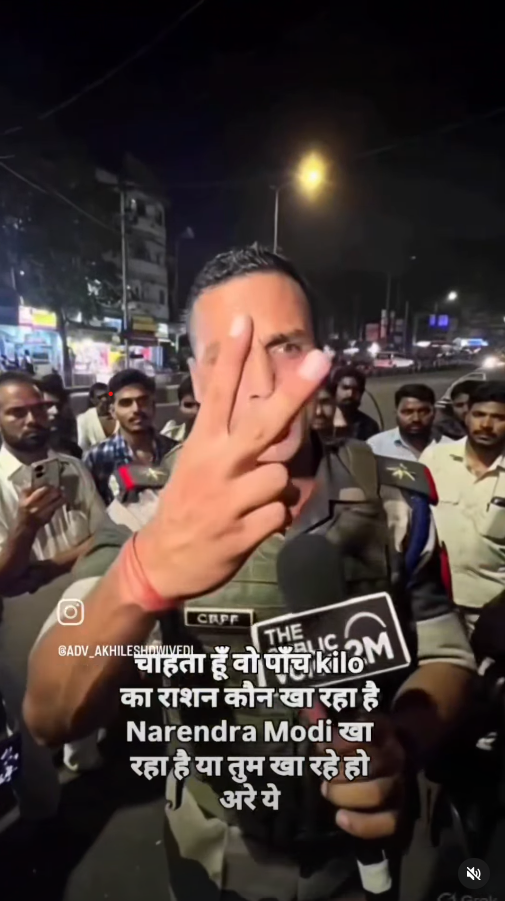
A video is being widely shared on social media showing a purported CRPF trooper accusing Prime Minister Narendra Modi and his government of corruption. In the video, the individual is also seen urging people to vote the BJP government out of power. CyberPeace Research Wing research found that the video was created using artificial intelligence (AI). There is no evidence that any CRPF personnel made such statements.
Claim
An Instagram user shared the viral video, claiming that a CRPF trooper was criticizing Prime Minister Narendra Modi and his government over corruption allegations. The post link, archived link, and screenshot are provided below. https://www.instagram.com/reels/DZ_dbj_SNTf/ , https://www.awesomescreenshot.com/video/53998219?key=46c661b505ba61d19e7d9be97a17c273
FactCheck
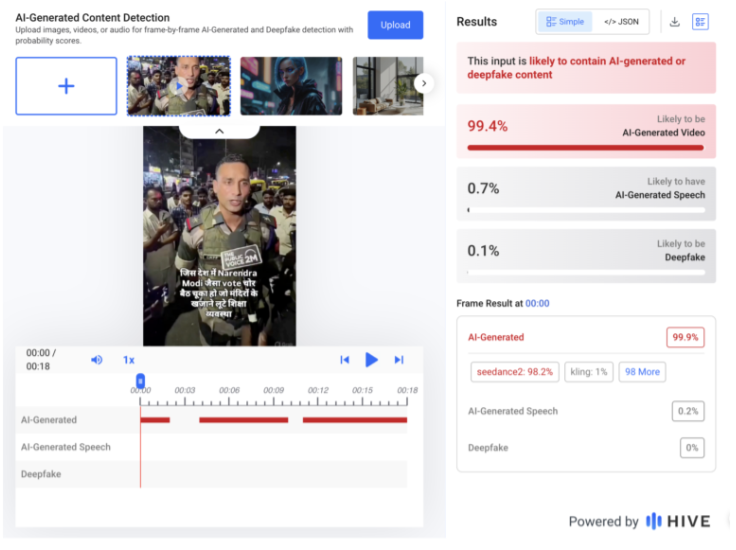
A closer examination of the video revealed several inconsistencies. The name tag on the uniform displayed only “CRPF,” which does not match the standard naming format used on official CRPF uniforms. Additionally, several faces visible in the background appeared blurred and distorted, which are common indicators of AI-generated content. We also noticed a visible Grok watermark in the bottom-right corner of the viral clip, suggesting that the video may have been generated or modified using artificial intelligence. Further analysis was conducted using Hive Moderation’s AI detection tool, which indicated the presence of AI-generated or deepfake elements in the video.
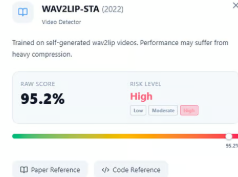
To further verify the authenticity of the clip, we analyzed it using Deepfake-O-Meter. The tool indicated a probability of more than 95 percent that the video was generated using artificial intelligence.
Conclusion
The viral video purportedly showing a CRPF trooper criticizing Prime Minister Narendra Modi and the BJP government is AI-generated. Multiple indicators, AI detection tools, and the clarification issued by the government’s PIB Fact Check confirm that the video is not authentic.
