
#FactCheck- Viral video of fighter jet striking dam falsely linked to alleged Israeli attack on Iran; actually AI-generated content
Executive Summary
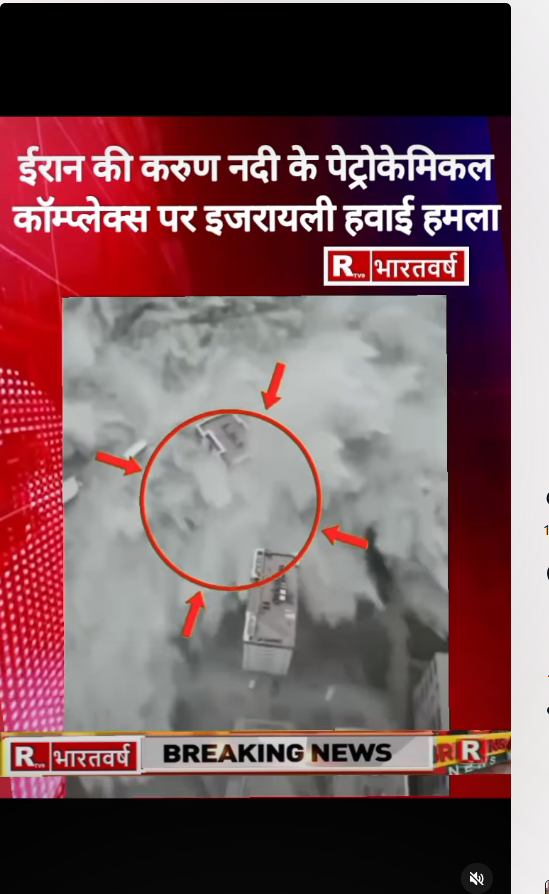
Amid escalating tensions between Iran and Israel, a video showing a fighter jet launching a missile at a massive dam, followed by its collapse and widespread flooding, is being widely shared on social media. Users are claiming that the video depicts a recent Israeli airstrike on a petrochemical plant located along Iran’s Karun River. CyberPeace Research Wing research found that the viral claim is false. The video is not related to any real-world incident and has been generated using artificial intelligence (AI).
Claim:
An Instagram user shared the viral video with a caption claiming that Israel carried out an airstrike on a petrochemical complex along Iran’s Karun River. The post further suggested that the facility is a key industrial site and that the attack caused widespread panic in the region. Post link:
https://www.instagram.com/reels/DZhNuiRx_v1/
https://www.instagram.com/reels/DZhNuiRx_v1/
Fact Check:
A reverse image search of keyframes from the video led to its appearance on a Facebook page named Warfare NextGen. The page clearly described the footage as “dramatic content,” indicating that it is not a real incident.
https://www.facebook.com/reel/1027249019882257

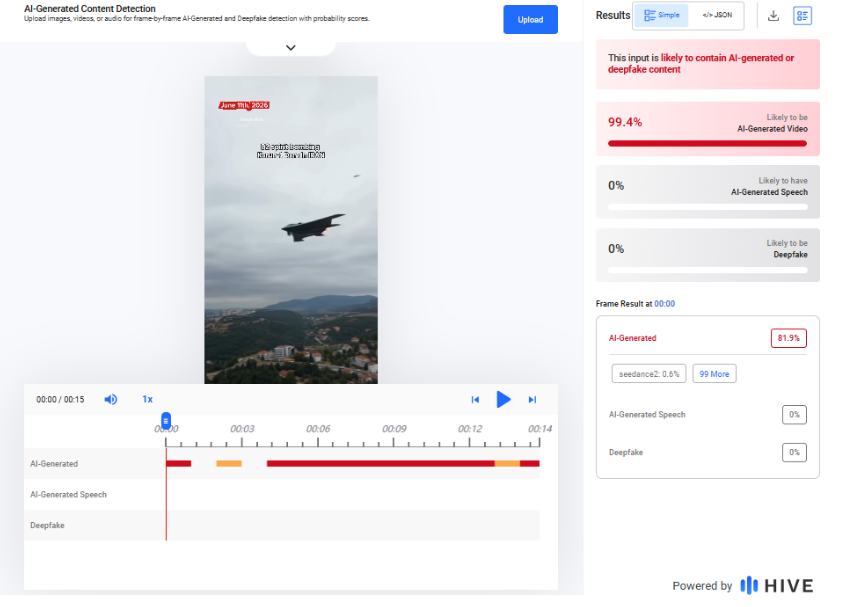
A closer analysis of the visuals also revealed several inconsistencies that raise doubts about its authenticity. To further verify the video, it was analyzed using the AI detection tool Hive Moderation, which indicated a 99.4% probability that the content is AI-generated.
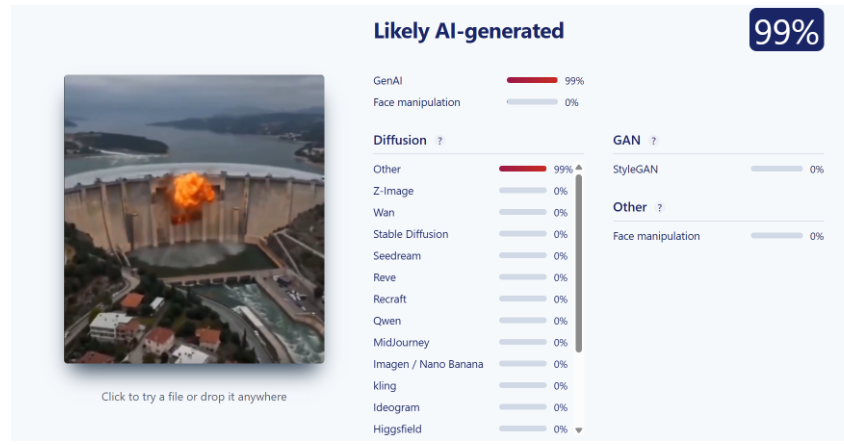
Additionally, a separate analysis using SIGHTENGINE also classified the video as approximately 99% AI-generated.
Conclusion:
The research confirms that the viral video is not a real incident. It has been created using artificial intelligence and is being falsely shared as a depiction of an Israeli strike on a petrochemical plant along Iran’s Karun River.

Related Blogs

Executive Summary:
A short video clip of Prime Minister Narendra Modi is going viral on social media. In the clip, he can be heard saying, “What sins did we commit in our previous life that we were born in India?” Users are sharing this video claiming that the Prime Minister insulted India and its people during a foreign visit. However, an research by the CyberPeace found that the claim is misleading. The viral clip is taken out of context from a longer speech delivered by Modi during his visit to Shanghai, China, in 2015
Claim:
A Facebook user named “Bittu Yadav” shared the reel, portraying the statement as anti-India. The caption reads:“Look at this, and you supporters—see how your ‘leader’ is praising the country.”
Post link and archive link:

Fact Check:
To verify the claim, we searched relevant keywords on Google and found the full video uploaded on May 16, 2015, on the official YouTube channel of the Bharatiya Janata Party. The video shows Prime Minister Narendra Modi addressing the Indian community in Shanghai, China.
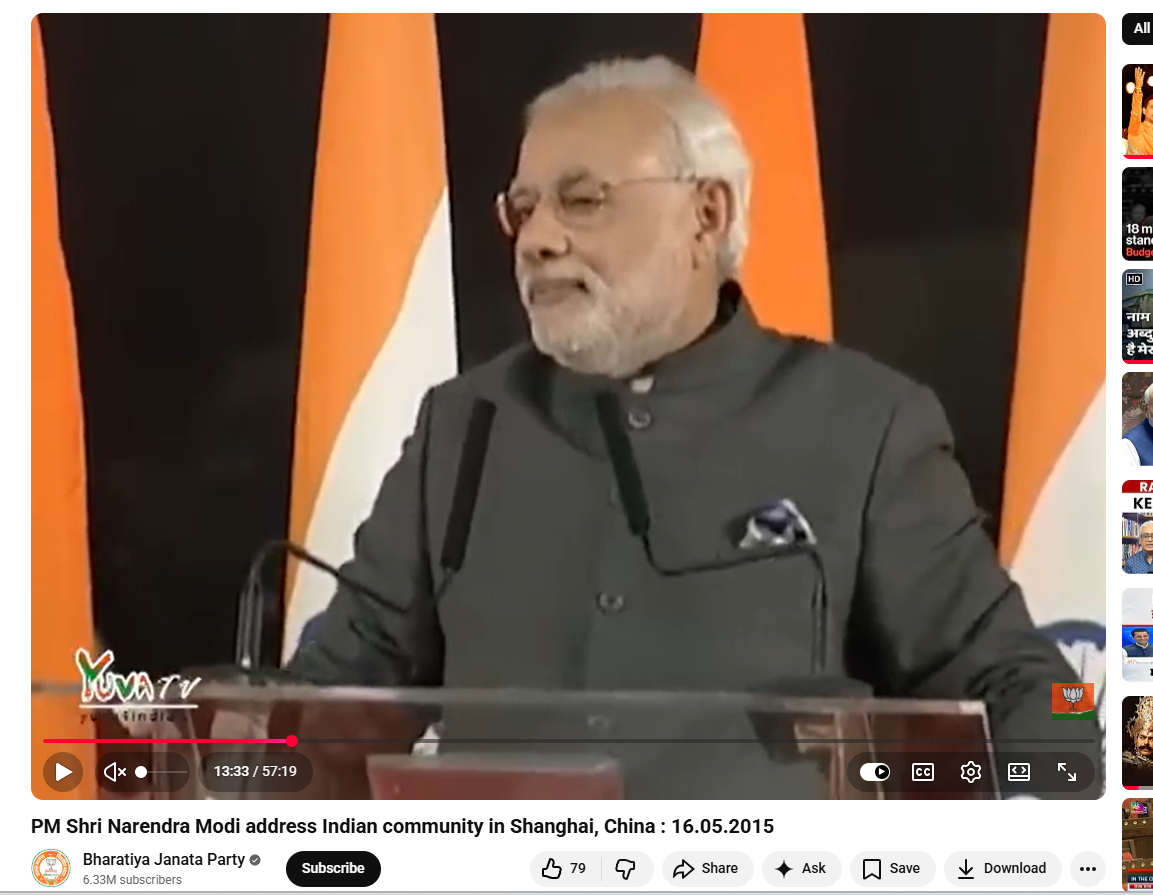
In the 57-minute speech, at around 51 minutes 25 seconds, Modi was referring to the pessimistic atmosphere in India before 2014. He said: “Within a year… people used to say, ‘Leave it, nothing will happen now. Who knows what sins we committed in our previous life that we were born in India’… From that mindset, today the world says that if there is a country growing at the fastest pace, it is India.”
This clearly shows that Modi was citing a past sentiment to highlight how perceptions about India have changed over time, not expressing his personal view. Media reports from his May 2015 China visit also noted that he addressed around 5,000 members of the Indian community in Shanghai, where he spoke about India’s economic growth and initiatives like “Make in India.”

Conclusion:
The viral claim is false. The video has been edited and shared out of context. In reality, Prime Minister Narendra Modi was referring to a past mindset before 2014 while highlighting the change in India’s global perception.

Introduction
On 14 October 2026, ANI reported that the Sashastra Seema Bal (SSB), the force responsible for guarding India’s borders with Nepal and Bhutan, had directed its personnel not to fall for online honey traps, open suspicious APK files, or become victims of cyber scams. The warning was issued a day after the force’s annual cybersecurity awareness week and is relevant to every smartphone user in India. The three threats highlighted in the advisory, emotional exploitation, malware disguised as APK files, and financial scams, are often interconnected in a cyberattack chain that can compromise a person’s device or finances. This blog examines the advisory, the methods used by cybercriminals, and the everyday precautions users can take to stay safe.
What the Advisory Says
As per the ANI report, the SSB has cautioned its personnel about talking to strangers on the internet, where they have been instructed not to share photos or videos with anyone in the public eye, accept suspicious calls or video calls, or entertain requests for money, and not to install APKs or applications from any untrusted sources or websites, only use an authorised Android market to install applications, not to share your OTP, PIN, password, or banking details, and to be cautious while receiving an unknown call, suspicious SMS, or click on unknown links and scan QR codes. Personnel have been told not to tell something that does not seem right, and any fraud should be reported through cybercrime helpline number 1930 or cybercrime.gov.in. "Always verify before any transaction" & "Stop, think, check, then act." The SSB caution has been read.
How Online Honey Traps Operate
A honey trap, by definition, is a trap set through the manipulation of a fictitious romantic or social identity designed to gain trust, which is then used against it. There are certain elements that almost always constitute the honey trap.
- Contact: A fake profile, typically an attractive picture, reaches out to the targeted person on social media or a messaging platform.
- Rapport: Created via a mix of small talk, flattery, and "shares" or "interests."
- Escalation: The chatting advances to private messaging, involving sharing of photos or video.
- Extortion: The victim is subsequently threatened with blackmail through recordings, forced to make payments, or extorted for personal information.
This is not an isolated case. Earlier, the Delhi Police had revealed that fake Facebook female profiles were used to lure and befriend defence personnel and extract confidential information (The Quint). Even more recently, a case was reported of an IAF wing commander being lured on social media while undergoing troubled times and, thereafter, made to reveal sensitive defence-related information (Outlook India). While the matter is sub judice, it draws our attention towards an important point of analytical significance – most probably it is emotional trauma, which an attacker would rely upon, rather than technical and security flaws.
The Risk of Malicious APK Files
APK – Android Package Kit, is the package file format used by the Android operating system for the distribution and installation of mobile applications. Downloaded from Play Store, the application goes through a rigorous screening. However, those downloaded from WhatsApp, Telegram or SMS have not been screened. This is the modus operandi of the cybercriminals. They hide malware behind seemingly harmless files like a challan, a gas bill update, a KYC or a wedding invite. Proof from Moneylife pointing to an alert issued by CERT-In as well as file names like RTO Challan.apk and Gas Bill Update.apk establishes that government departments would not send an APK file over any messaging platform.
According to the CERT-In research of India's cybersecurity agency, the way this malware works: The malware Drinik posed as a download application from the Income Tax Department and asked for a long list of admin permissions, including SMS, call history, and contacts. It then presented a fake banking app to steal credentials, as Madhyamam reports. The Tribune reported that the SOVA trojan was hidden in fake apps with famous brands' logos. The report also states that the Black Rock malware variant was targeting 337 applications, including social, communication, and dating applications.
A security advisory by the bank, dated 24 November 2023, mentions what happens if a virus-infected app is installed. Once installed, the attackers would be able to access the messages with the one-time passwords (OTPs) and personal identification numbers (PINs). They could take over the device and make money transactions from the bank account of the owner of the device, says the advisory.
Social Engineering: The Common Thread
Although honey traps and APK frauds may appear on the surface to be very different, there is one aspect they have in common: both are social engineering tricks. The attacker does not rely solely on technological control or access control but also on human vulnerabilities – the fear, intimidation, lust, or love – to persuade the target to behave in a certain manner. The "opposite" sex may ask you to install some "video call app", or a "bank officer" may advise you to update KYC via a file that you may or may not be having. In any of these instances, it is the final step that you will likely carry out without hesitation. The SSB's four steps (stop, think, check, then act) provide a mechanism to break this cycle.
Implications for Personal, Financial and National Security
A phone on the compromised list reveals contacts, snaps, messages and location. Honey trap nudity can take a toll on a person's mental health and reputation via sextortion.
Financial security- Since malware can read SMS, OTP-based protection works quietly. The fraudster can authorise the transaction without the victim providing a code.
National security – For service members, it's not just their personal information at risk. A compromised device can disclose information about their location and their colleagues or how they operate. Border forces operate in a high-risk environment, and no information is too small; even duty rosters or images taken against a landmark background could be of interest to a hostile person, and honey trap recruitment for spy work is one of the oldest.
Practical Precautions
- Avoid sideloading APKs at all costs. Sideloading APKs is highly discouraged. It is best to keep the "Install from unknown sources" option turned off and install apps only from the Google Play Store or the Apple App Store.
- Whenever you have an unsolicited contact, it is not worth believing. It is believed that reversing the search of profile images and being very careful with new acquaintances who quickly begin chatting in private is protective. Never comply with any requests for money.
- Sharing intimate images or receiving surprise video calls from unknown people should be avoided.
- Storing credentials is especially sensitive. Research has shown that a legitimate bank or government body would not typically ask for details like OTPs, PINs or passwords.
- Scrutinise app permissions. Beware of a seemingly simple app requesting permission to access SMS, call logs or contacts.
- It should be verified from an official source. Challans, KYC or taxes are to be submitted using the official website or app and not the link provided in the message.
- It is important to keep professional and personal lives separate. Do not discuss comments, movements or chores or post location-tagged updates.
- Keeping your devices updated and turning on Google Play Protect are crucial.
- In case you are a victim, do take quick actions. Remove the suspicious app, disconnect from the web, and inform your bank. You can report to 1930 or cybercrime.gov.in. Do not pass the suspicious file as it is going to pass on the same.
Conclusion
The SSB advisory today is a reminder that cyberattacks are less about technology and more about exploiting human vulnerabilities. Studies indicate that fake ID cards, realistic files and misinformation are easy to implement and hard to detect. It appears that cultivating verification routines, instilling a "careful hygiene of use", and quick reporting on 1930 or cybercrime.gov.in are the best initiatives that border forces and citizens can take. Creating awareness about pausing, analysing, verifying and acting if in doubt could be an even better way of building resilience. It is crucial for everyone to remain cognisant and alert and keep cyber safety at the top of the mind.

Executive Summary
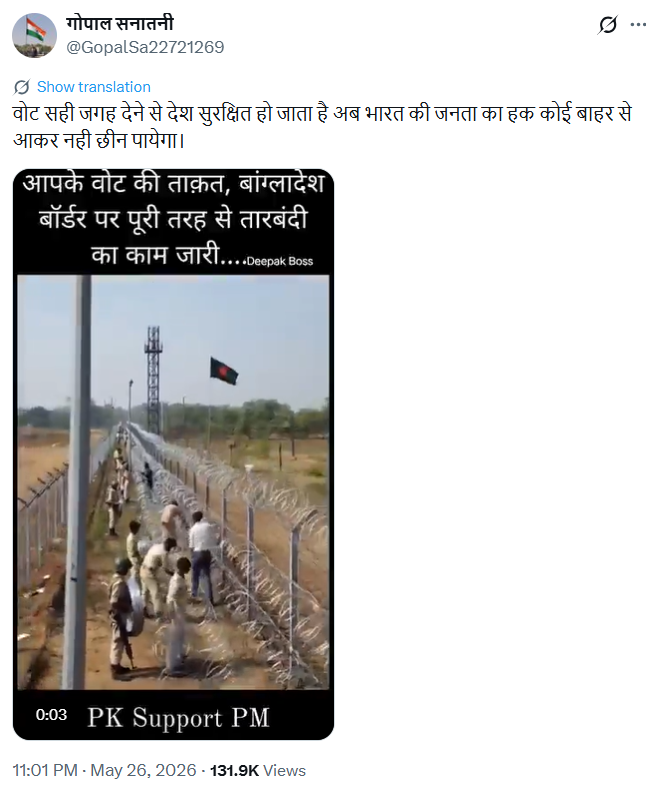
A video showing people installing fencing along a border has gone viral on social media. In the clip, several individuals along with security personnel can be seen laying barbed wire fencing near a border area. The video is being shared with the claim that it shows fencing work underway on the India-Bangladesh border in West Bengal after the Bharatiya Janata Party (BJP) allegedly came to power in the state.
However, CyberPeace Research Wing investigation found the viral claim to be false. The video is not from a real incident and has been created using Artificial Intelligence (AI).
Claim
An X user named “Gopal Sanatani” shared the viral video on May 26, 2026, with the caption:“Voting in the right place keeps the country secure. Now no outsider will be able to snatch the rights of Indian citizens.”The archived link to the post is provided below.
Fact Check
To verify the authenticity of the viral claim, we extracted several key frames from the video and conducted reverse image searches using Google. However, we could not find any credible information or authentic reports related to the visuals shown in the clip. We also searched using relevant keywords on Google, but no trustworthy news reports connected to the claim were found.
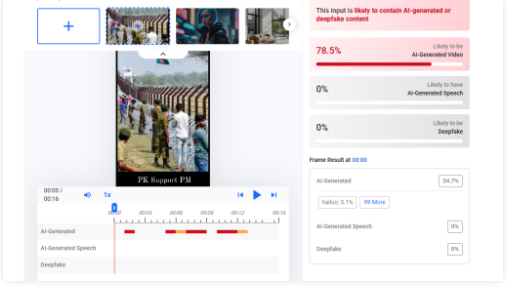
Upon closely examining the video, several visual inconsistencies became noticeable. At one point, an object resembling a piece of paper suddenly appears in a soldier’s hand and then disappears moments later. In another scene, a man installing the fencing appears to pass directly through the barbed wire and emerges unharmed, despite the sharp wires visible in the video. These irregularities raised suspicion that the clip had been artificially generated. To further investigate, we analysed the video using AI detection tools. The analysis conducted through Hive Moderation indicated a high probability — around 80 percent — that the video was AI-generated.
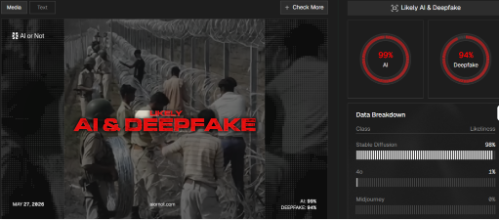
Additionally, the video was examined using another AI detection platform, “AI or Not,” which indicated nearly a 99 percent likelihood that the clip had been created using artificial intelligence.
Conclusion
Our investigation found that the viral video claiming to show fencing work along the West Bengal-Bangladesh border is fake. The footage does not depict a real incident and was generated using Artificial Intelligence (AI).
