
#FactCheck- Viral video does not show Iran targeting a Pakistani tanker in Strait of Hormuz
Executive Summary
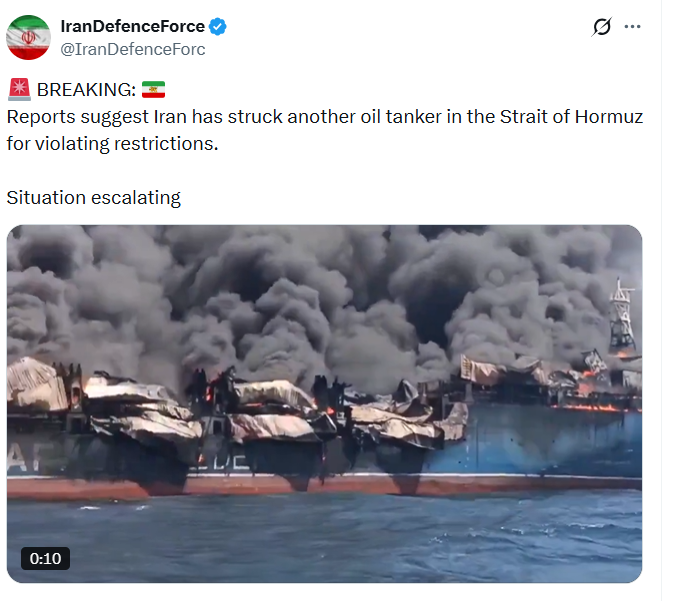
Amid the ongoing tensions involving the United States, Israel, and Iran, a video of a cargo ship engulfed in flames is being widely shared across social media platforms. The clip shows a vessel burning intensely at sea, with users claiming that Iran targeted the ship with a drone for attempting to cross the Strait of Hormuz without permission. Some users have also claimed that the destroyed vessel was a Pakistani-flagged oil tanker hit by Iranian missiles. However, research by CyberPeace found the claim to be false. Our verification also reveals that the viral video is being misrepresented.
Claim
Social media users, including an X (formerly Twitter) account named “IranDefenceForce,” shared the video claiming that Iran targeted an oil tanker in the Strait of Hormuz for allegedly violating restrictions.
Fact Check
A keyword-based news search led us to multiple credible reports mentioning a statement by Iran’s Foreign Minister Abbas Araghchi. According to reports, Iran had allowed ships from “friendly countries” including India, China, Russia, Iraq, and Pakistan to pass through the Strait of Hormuz.
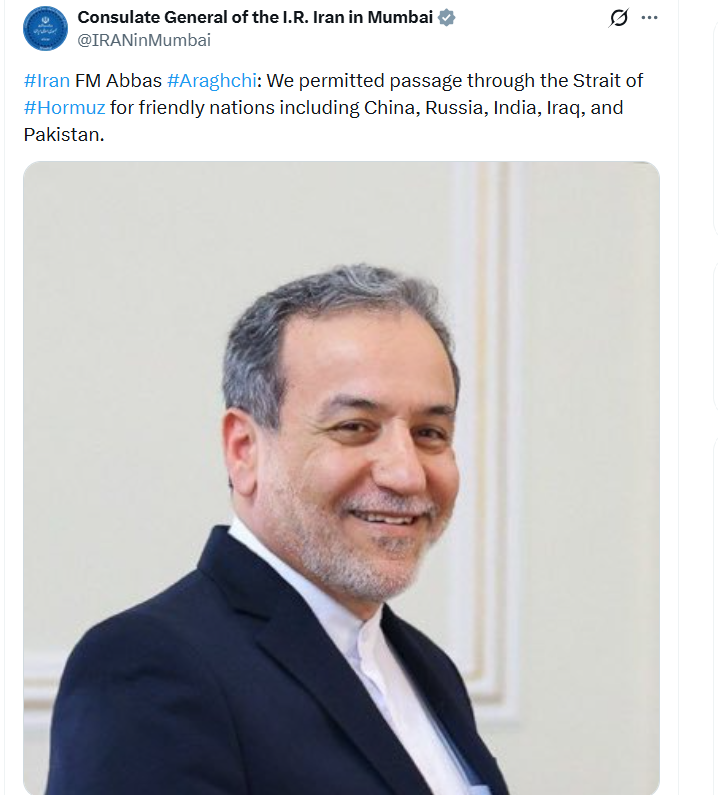
A March 26, 2026 report by The Hindu stated that Araghchi also emphasized Iran’s assertion of sovereignty over the strategic waterway connecting the Persian Gulf and the Gulf of Oman. The same statement was also shared via the official X handle of the Iranian Consulate in Mumbai. During a frame-by-frame analysis of the viral video, we noticed the word “SAFEEN” written on a part of the ship. Using this clue, we conducted a targeted news search and found a report by Reuters dated March 4, 2026.
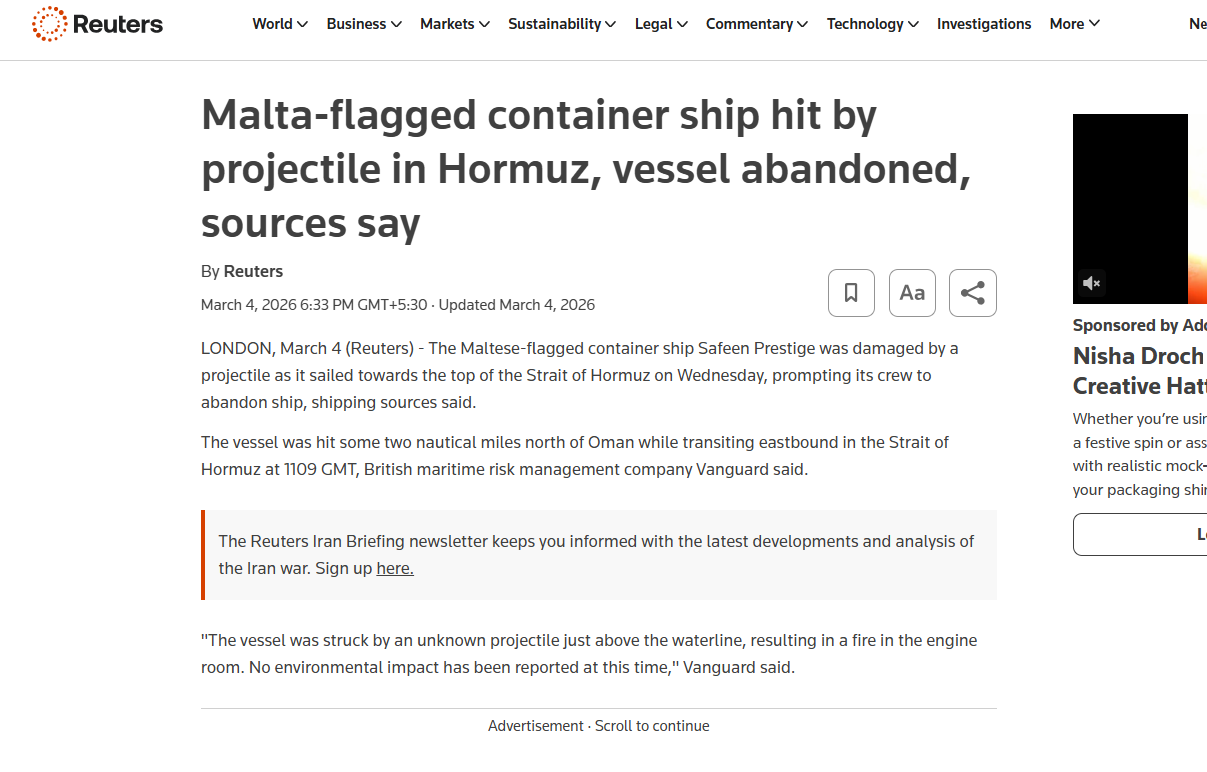
According to the report, a Malta-flagged container ship named Safeen Prestige was damaged in an attack while heading toward the Strait of Hormuz. Shipping sources cited in the report stated that the vessel was struck around 1109 GMT while sailing eastward, approximately two nautical miles north of Oman. The ship had reportedly departed from Sharjah Port in the United Arab Emirates but was damaged before reaching its destination. Its last known location was in the Persian Gulf. Additionally, earlier this month, another cargo vessel named Mayuri Naree was also attacked near Iran’s Qeshm Island. As per Reuters, an explosion caused a fire in the engine room, after which 20 crew members were rescued by the Omani navy, while three remained missing.
Conclusion
The viral video does not show Iran targeting a Pakistani oil tanker for violating restrictions in the Strait of Hormuz. In reality, the clip features the Malta-flagged container ship Safeen Prestige, which was damaged in an unidentified attack in the Persian Gulf. The claim being circulated on social media is misleading.

Related Blogs

Cyber, is the new weapon today! Cyber Violence is violence in cyber-space that has led to violation of cyber rights of individuals, especially those of children and women. Online violence and harassment have been overlooked laying more emphasis on offline or physical violence.
New Delhi [India], November 12 (ANI/NewsVoir): Cyber, is the new weapon today! Cyber Violence is violence in cyber-space that has led to violation of cyber rights of individuals, especially those of children and women. Online violence and harassment have been overlooked laying more emphasis on offline or physical violence. Cyber violence very often permanently, psychologically impacts the victims and their families. Various forms of threats ranging from morphing, stalking, solicitation of children for sexual purposes, online grooming, have grave consequences on the victims disturbing their mental well-being. Maintaining mental well-being in cyber space is a challenge we wish to promote and advocate for, in order to build responsible netizens.
Together, we stand against violation of cyber rights and strongly believe; it is critical to allow everyone to feel safe online. Netizen’s safety rights must be protected from all kinds of abuse and violence. Setting a mission of ‘Making India Cyber Safe for Children and Women’, Responsible Netism a social purpose organization in association with CyberPeace Foundation, an award-winning Cyber Security think tank working towards bringing CyberPeace in CyberSpace for more than two decades, host its 6th Annual National Conference on Cyber Psychology themed “India Fights Cyber Violence”, scheduled for Saturday, January 22, 2022. Ta advocate on the theme, the campaign #IndiaFightsCyberViolence was launched on November 11, 2021 by Vinay Sahasrabuddhe – President ICCR, Member of Parliament, Priyank Kanoongo – Chairperson, NCPCR and Rekha Sharma, Chairperson NCW at the ICCR Auditorium Delhi. The session was also attended by the CyberPeace Foundation team members.
Vinay Sahasrabuddhe has been a strong advocate of online safety of children, he shared his visionary words and focused on 3 R’s, Research, Reform and Reshape. He recommended extensive research was necessary to strongly voice concerns and remedies based on evidence-based research which would help us reform intervention strategies and the reshape the existing framework to best suit the needs to protect women and children in cyber space. The NCW Chairperson Rekha Sharma shared how critical it is to create awareness about online safety rights of women and reiterated the need for spreading awareness about online safety to reach the last mile in order to build collective action and bring change. She also mentioned the need to conducting nationwide trainings for the police personal to handle and report online distress.
Priyank Kanoongo, the Chairperson of NCPCR has been very proactively advocating for the cause of child online protection and has been instrumental in voicing critical in fiercely voicing his thoughts on protecting online safety rights of children across India. He shared the following thoughts at the launch. He said there is dire need to educate parents about online safety in order to let the information trickle down to their children. He said NCPCR does not hold any inhibitions in naming and shaming violators of child rights be it offline or online and will always raise a strong voice against platform ‘s inability to protect children in cyber space.
Vineet Kumar, Founder and Global President, CyberPeace Foundation, the partnering organization shared that this nationwide movement will build great momentum on the cause of online protection of children and women cross the country and urged organizations across India to pledge their support to the cause. The more people joining this movement would build collective pressure to formulate guidelines and policies the make cyber space safe for children and women. Sonali Patankar – Founder Responsible Netism shared the objective of the campaign was to let online safety reach the last mile and build on aggressive reporting of online content. The movement was an effort to make the campaign India Fights Cyber Violence to make India cyber safe for children.
She shared that the campaign launch would be followed by a nationwide research conducted to understand parents perspectives on cyber violence which would be handy in representing recommendations on women and child safety protocols through commoners. There would be a round table for organizations working with children chaired by Priyank Kanoongo on November 22 followed by a round table held for organizations working with Women chaired by Rekha Sharma Madam on December 22, 2021. The campaign would culminate in the Responsible Netism 6th National Cyber Psychology Conference scheduled for January 22, 2022 that would witness a compilation of the research and the work done throughout the campaign.
The launch was attended by Sujay Patki – Social Activist and Advisor Responsible Netism and Shilpa Chandolikar trustee Responsible Netism, Adv Khushbu Jain Advocate Supreme Court of India followed by the vote of thanks by Unmesh Joshi – Co-founder Responsible Netism. With the success of the launch and the support of NCPCR and NCW, we are sure to make this a nation-wide movement to protect cyber safety rights of netizens and strongly believe in collective action to make India Cyber Safe for Women and Children.
This story is provided by NewsVoir. ANI will not be responsible in any way for the content of this article. (ANI/NewsVoir)(This story has not been edited by Devdiscourse staff and is auto-generated from a syndicated feed.)
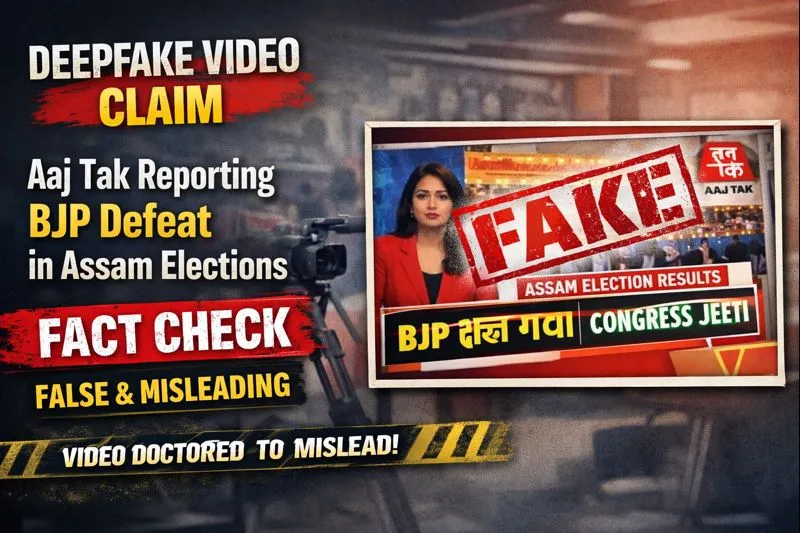
Assembly elections are due to be held in Assam later this year, with polling likely in April or May. Ahead of the elections, a video claiming to be an Aaj Tak news bulletin is being widely circulated on social media.
In the viral video, Aaj Tak anchor Rajiv Dhoundiyal is allegedly seen stating that a leaked intelligence report has issued a warning for the ruling Bharatiya Janata Party (BJP) in Assam. The clip claims that according to this purported report, the BJP may suffer significant losses in the upcoming Assembly elections. Several social media users sharing the video have also claimed that the alleged intelligence report signals the possible removal of Assam Chief Minister Himanta Biswa Sarma from office.
However, an investigation by the Cyber Peace Foundation found the viral claim to be false. Our probe clearly established that no leaked intelligence report related to the Assam Assembly elections exists.
Further, Aaj Tak has neither published nor broadcast any such report on its official television channel, website, or social media platforms. The investigation also revealed that the viral video itself is not authentic and has been created using deepfake technology.
Claim
On social media platform Facebook, a user shared the viral video claiming that the BJP has been pushed on the back foot following organisational changes in the Congress—appointing Priyanka Gandhi Vadra as chairperson of the election screening committee and Gaurav Gogoi as the Assam Pradesh Congress Committee president. The post further claims that an Intelligence Bureau report predicts that the current Assam government will not return to power.
(Link to the post, archive link, and screenshots are available.)
FactCheck:
To verify the claim, we first searched for reports related to any alleged leaked intelligence assessment concerning the Assam Assembly elections using relevant keywords. However, no credible or reliable reports supporting the claim were found. We then reviewed Aaj Tak’s official website, social media pages, and YouTube channel. Our examination confirmed that no such news bulletin has been published or broadcast by the network on any of its official platforms.
- https://www.facebook.com/aajtak/?locale=hi_IN
- https://www.instagram.com/aajtak/
- https://x.com/aajtak
- https://www.youtube.com/channel/UCt4t-jeY85JegMlZ-E5UWtA
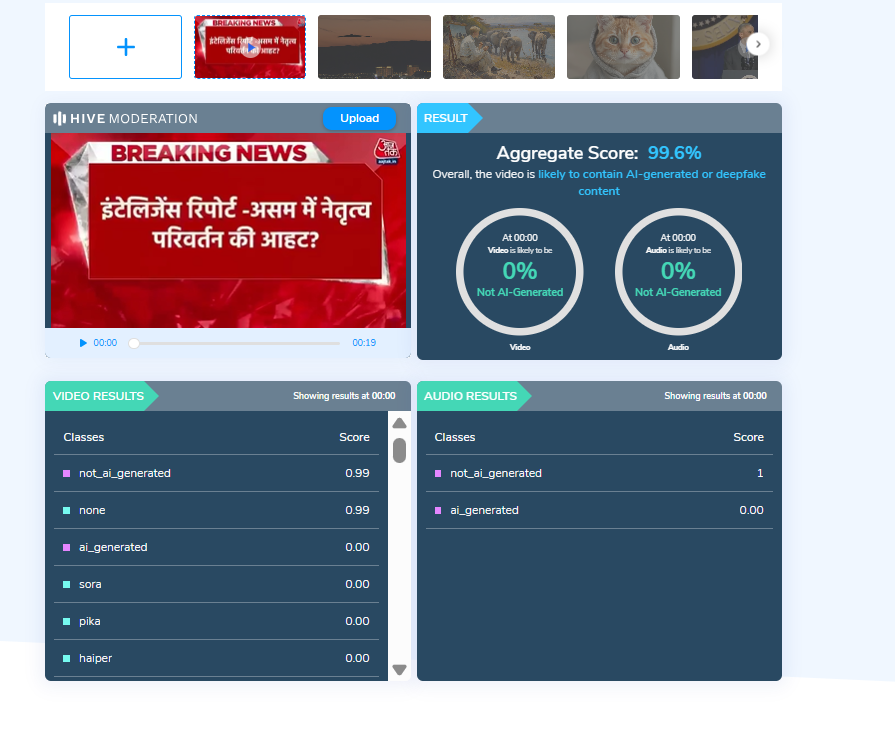
To further verify the authenticity of the video, its audio was scanned using the deepfake voice detection tool HIVE Moderation.
The analysis revealed that the voice heard in the video is 99 per cent AI-generated, clearly indicating that the audio is not genuine and has been artificially created using artificial intelligence.
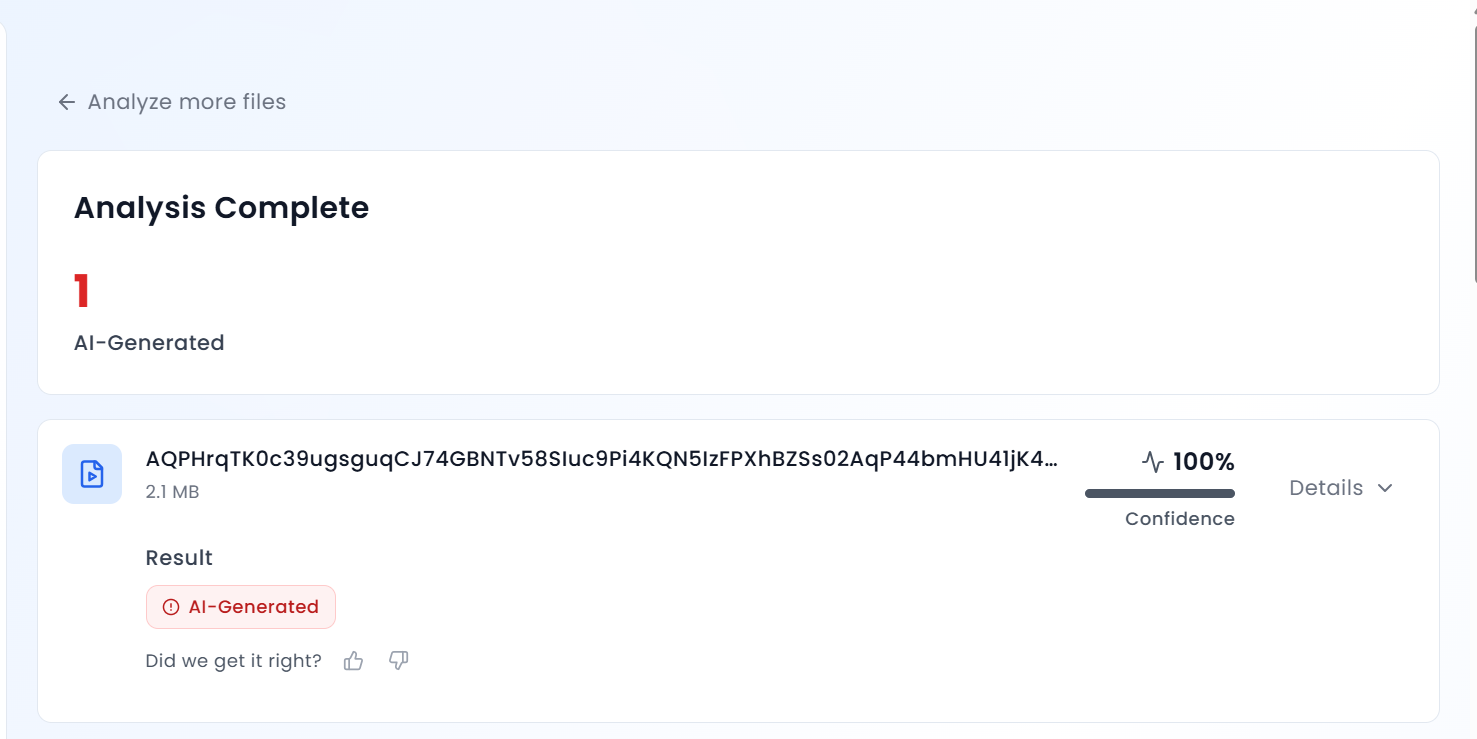
Additionally, the video was analysed using another AI detection tool, Aurigin AI, which also identified the viral clip as AI-generated.
Conclusion:
The investigation clearly establishes that there is no leaked intelligence report predicting BJP’s defeat in the Assam Assembly elections. Aaj Tak has not published or broadcast any such content on its official platforms. The video circulating on social media is not authentic and has been created using deepfake technology to mislead viewers.

Introduction
As digital platforms rapidly become repositories of information related to health, YouTube has emerged as a trusted source people look to for answers. To counter rampant health misinformation online, the platform launched YouTube Health, a program aiming to make “high-quality health information available to all” by collaborating with health experts and content creators. While this is an effort in the right direction, the program needs to be tailored to the specificities of the Indian context if it aims to transform healthcare communication in the long run.
The Indian Digital Health Context
India’s growing internet penetration and lack of accessible healthcare infrastructure, especially in rural areas, facilitates a reliance on digital platforms for health information. However, these, especially social media, are rife with misinformation. Supplemented by varying literacy levels, access disparities, and lack of digital awareness, health misinformation can lead to serious negative health outcomes. The report ‘Health Misinformation Vectors in India’ by DataLEADS suggests a growing reluctance surrounding conventional medicine, with people looking for affordable and accessible natural remedies instead. Social media helps facilitate this shift. However, media-sharing platforms such as WhatsApp, YouTube, and Facebook host a large chunk of health misinformation. The report identifies that cancer, reproductive health, vaccines, and lifestyle diseases are four key areas susceptible to misinformation in India.
YouTube’s Efforts in Promoting Credible Health Content
YouTube Health aims to provide evidence-based health information with “digestible, compelling, and emotionally supportive health videos,” from leading experts to everyone irrespective of who they are or where they live. So far, it executes this vision through:
- Content Curation: The platform has health source information panels and content shelves highlighting videos regarding 140+ medical conditions from authority sources like All India Institute of Medical Sciences (AIIMS), National Institute of Mental Health and Neurosciences (NIMHANS), Max Healthcare etc., whenever users search for health-related topics.
- Localization Strategies: The platform offers multilingual health content in regional languages such as Hindi, Tamil, Telugu, Marathi, Kannada, Malayalam, Punjabi, and Bengali, apart from English. This is to help health information reach viewers across most of the country.
- Verification of professionals: Healthcare professionals and organisations can apply to YouTube’s health feature for their videos to be authenticated as an authority health source on the platform and for their videos to show up on the ‘Health Sources’ shelf.
Challenges
- Limited Reach: India has a diverse linguistic ecosystem. While health information is made available in over 8 languages, the number is not enough to reach everyone in the country. Efforts to reach more people in vernacular languages need to be ramped up. Further, while there were around 50 billion views of health content on YouTube in 2023, it is difficult to measure the on-ground outcomes of those views.
- Lack of Digital Literacy: Misinformation on digital platforms cannot be entirely curtailed owing to the way algorithms are designed to enhance user engagement. However, uploading authoritative health information as a solution may not be enough, if users lack awareness about misinformation and the need to critically evaluate and trust only credible sources. In India, this critical awareness remains largely underdeveloped.
Conclusion
Considering that India has over 450 million users, by far the highest number of users in any country in the world, the platform has recognized that it can play a transformative role in the country’s digital health ecosystem. To accomplish its mission “to combat the societal threat of medical misinformation,” YouTube will have to continue to take several proactive measures. There is scope for strengthening collaborations with Indian public health agencies and trusted public figures, national and regional, to provide credible health information to all. The approach will have to be tailored to India’s vast linguistic diversity, by encouraging capacity-building for vernacular creators to produce credible content. Finally, multiple stakeholders will need to come together to promote digital literacy through education campaigns about identifying trustworthy sources.
Sources
- https://indianexpress.com/article/technology/tech-news-technology/youtube-health-dr-garth-graham-interview-9746673/
- https://economictimes.indiatimes.com/news/india/cancer-misinformation-extremely-prevalent-in-india-trust-in-science-medicine-crucial-report/articleshow/115931783.cms?from=mdr
- https://health.youtube/our-mission/
- https://health.youtube/features-application/
- https://backlinko.com/youtube-users
