
Hackers Target Social Media Influencers

Introduction
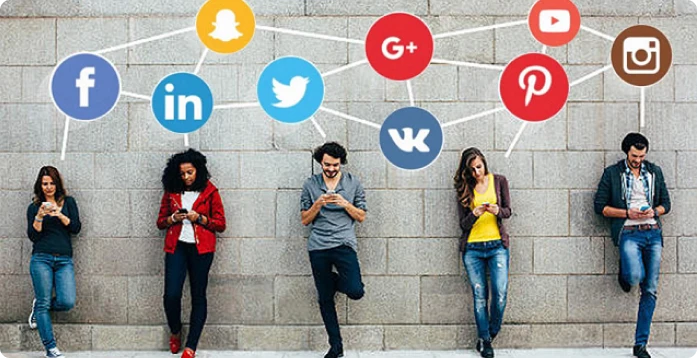
Social media has become integral to our lives and livelihood in today’s digital world. Influencers are now strong people who shape trends, views, and consumer behaviour. Influencers have become targets for bad actors aiming to abuse their fame due to their significant internet presence. Unfortunately, account hacking has grown frequently, with significant ramifications for influencers and their followers. Furthermore, the emergence of social media platforms in recent years has opened the way for influencer culture. Influencers exert power over their followers’ ideas, lifestyle choices, and purchase decisions. Influencers and brands frequently collaborate to exploit their reach, resulting in a mutually beneficial environment. As a result, the value of influencer accounts has risen dramatically, attracting the attention of hackers trying to abuse their potential for financial gain or personal advantage.
Instances of recent attacks
Places of worship
The hackers have targeted renowned temples for fulfilling their malicious activities the recent attack happened on The Khautji Shyam Temple, a famous religious institution with enormous cultural and spiritual value for its adherents. It serves as a place of worship, community events, and numerous religious activities. However, since technology has invaded all sectors of life, the temple’s online presence has developed, giving worshippers access to information, virtual darshans (holy viewings), and interactive forums. Unfortunately, this digital growth has also rendered the shrine vulnerable to cyber threats. The hackers hacked the Facebook page twice in the month, demanded donations and hacked the cheques the devotes gave to the trust. The second event happened by posting objectional images on the page and hurting the sentiments of the devotees. The Committee of the temple has filed an FIR under various charges and is also seeking help from the cyber cell.
Social media Influencers
Influencers enjoy a vast online following worldwide, but their presence is limited to the digital space. Hence every video, photo is of importance to them. An incident took place with leading news anchor and reporter Barkha Dutt, where in her youtube channel was hacked into, and all the posts made from the channel were deleted. The hackers also replaced the channel’s logo with Tesla and were streaming a live video on the channel featuring Elon Musk. A similar incident was reported by influencer Tanmay Bhatt, who also lost all the content e had posted on his channel. The hackers use the following methods to con social media influencers:
- Social engineering
- Phishing
- Brute Force Attacks
Such attacks on influencers can cause harm to their reputation, can also cause financial loss, and even lose the trust of the viewers or the followers who follow them, thus further impacting the collaborations.
Safeguards
Social media influencers need to be very careful about their cyber security as their prominent presence is in the online world. The influencers from different platforms should practice the following safeguards to protect themselves and their content better online
Secure your accounts
Protecting your accounts with passphrases or strong passwords is the first step. The best strategy for doing this is to create a passphrase, a phrase only you know. We advise choosing a passphrase with at least four words and 15 characters.
To further secure your accounts, you must enable multi-factor authentication in the second step.
To access your account, a hacker must guess your password and provide a second authentication factor (such as a face scan or fingerprint) that matches yours.
Be careful about who has access
Many social media influencers collaborate with a team to help generate and post content while building their personal brands.
This entails using team members who can write and produce material that influencers can share themselves, according to some of them. In these situations, the influencer is the only person who still has access to the account.
There are more potential weak spots when more people have access. Additionally, it increases the number of ways a password or account access could fall into the hands of a cybercriminal. Only some staff members will be as cautious about password security as you may be.
Stay up-to-date on the threats
What’s the most significant way to combat threats to computer security? Information.
Cybercriminals constantly adapt their methods. It’s crucial to stay informed about these threats and how they can be utilised against you.
But it’s not just threats. Social media platforms and other service providers are likewise changing their offerings to avoid these challenges.
Educate yourself to protect yourself. You can keep one step ahead of the hazards that cybercriminals offer by continuously educating yourself.
Preach cybersecurity
As influencers, cyber security should be preached, no matter your agenda.
This will also enable users to inculcate best practices for digital hygiene.
This will also boost the reporting numbers and increase population awareness, thus eradicating such bad actors from our cyberspace.
Acknowledge the risks
Keeping a blind eye will always hurt the safety aspects, as ignorance always causes issues.
Risks should be kept in mind while creating the digital routine and netiquette
Always inform your users of risk existing and potential risks
Monitor threats
After the acknowledgement, it is essential to monitor threats.
Active lookout for threats will allow you to understand the modus Operandi and the vulnerabilities to avoid criminals
Threats monitoring is also a basic netizens’ responsibility to ensure that the threats are reported as they emerge.
Interpret the data
All cyber nodal agencies release data and trends of cybercrimes, understand the trends and protect your vulnerabilities.
Data interpretation can lead to an early flagging of threats and issues, thus protecting the cyber ecosystem by and large.
Create risk profiles
All influencers should create risk profiles and backup profiles.
This will also help protect one’s data as it can be stored on different profiles.
Risk profiles and having a private profile are essential to safeguard the basic cyber interests of an influencer.

Conclusion
As we go deeper into the digital age, we see more technologies emerging, but along with them, we see a new generation of cyber threats and challenges. The physical, as well as the cyberspace, is now inter twinned and interdependent. Practising basic cyber security practices, hygiene, netiquette, and monitoring best practices will go a long way in protecting the online interests of the Influencers and will impact their followers to engage in best practices thus safeguarding the cyber ecosystem at large.

Related Blogs

Executive Summary
A purported news clip circulating on social media claims that the Bharatiya Janata Party (BJP) purchased Bhupen Bora, a leader of the Indian National Congress, for ₹50 crore as part of a political deal in Assam. The viral clip further alleges that the transaction took place under the leadership of Assam Chief Minister Himanta Biswa Sarma and included an agreement to induct several Congress leaders into the BJP.
However, research by CyberPeace found the viral claim to be false and revealed that the original news video had been manipulated using AI and shared with misleading claims.
Claim
On February 18, 2026, a user shared the viral video on Facebook, claiming that the Assam BJP had bought a Congress leader who had lost the last three elections for ₹50 crore, and that the alleged deal led by Himanta Biswa Sarma had drawn public criticism.

Fact Check:
To verify the authenticity of the claim, we extracted key frames from the viral video and conducted a reverse image search using Google Lens. During the research, we found the original version of the video published on the website of Aaj Tak on February 16, 2026. In the original report, the anchor is only seen reporting on Bhupen Bora’s resignation from the party. The report does not mention any alleged financial transaction or political deal, contrary to the claims made in the viral clip.

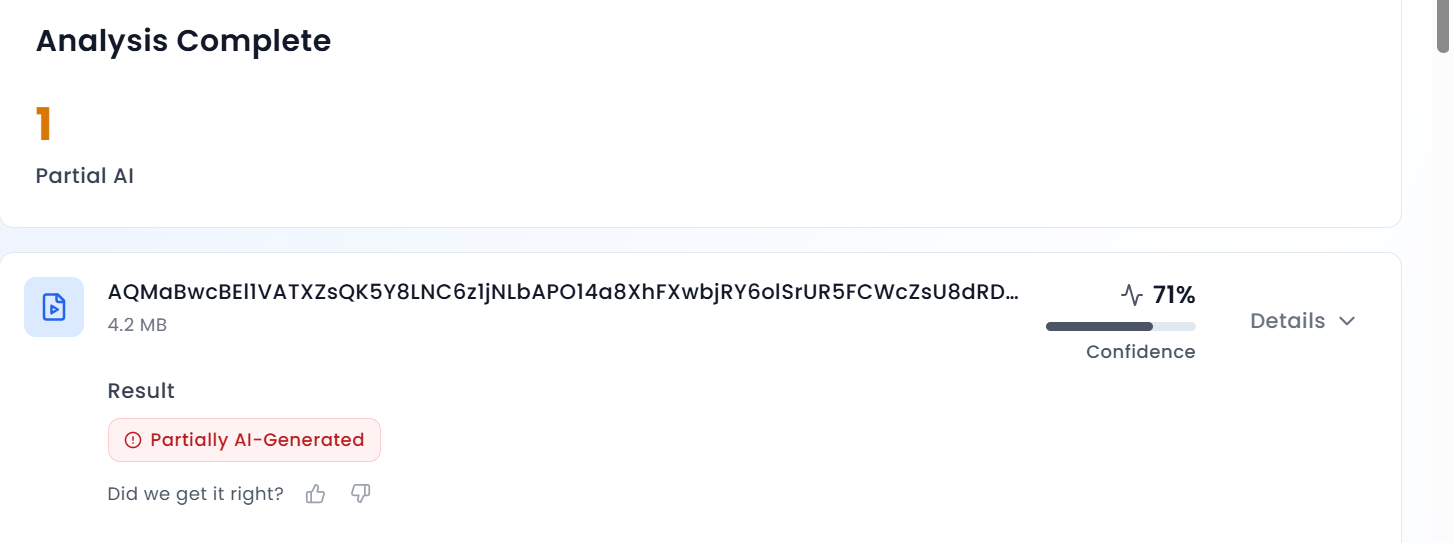
In the next stage of the research, the viral video was analysed using the AI detection tool AURGIN AI, which identified the video as AI-generated.
Conclusion
Our research found that users had manipulated the original news broadcast using AI and shared it with misleading claims. The viral clip does not show any real financial deal between Bhupen Bora and the Assam Chief Minister.

Executive Summary
Amid rising tensions in West Asia and concerns over the safety of Indian seafarers, a video showing a vessel engulfed in flames and thick black smoke is being widely circulated on social media. The clip is being shared with the claim that it depicts a US attack on a ship carrying Indian nationals in Omani waters. CyberPeace Research Wing research found the claim to be misleading. The viral video predates the incident it is being linked to and is not related to any recent attack.
Claim:
A Facebook user shared the video alleging that the United States attacked a ship carrying Indian citizens in the maritime region near Oman. The post has been widely circulated as part of the ongoing West Asia tensions. Facebook link: https://www.facebook.com/reel/3031094270427837, https://www.facebook.com/reel/3031094270427837

Fact Check:
A reverse image search of keyframes from the viral video led to several media reports published on 2 March 2026, which carried the same visuals seen in the circulating clip. The reports indicated that the footage showed a vessel targeted amid escalating tensions in the Strait of Hormuz, following restrictions on maritime movement in the region. https://www.ndtv.com/world-news/iran-targets-6th-ship-in-hormuz-strait-video-shows-billowing-smoke-11159019

Further research also found the same visuals in a Moneycontrol report published on 2 March 2026. The report clearly established that the footage is from an earlier incident and not linked to any recent developments. https://www.moneycontrol.com/world/indian-crew-member-killed-after-drone-boat-strikes-oil-tanker-off-oman-coast-first-indian-casualty-in-us-iran-tensions-article-13848303.html

Conclusion:
The research confirms that the viral video is not related to any recent US attack on a vessel carrying Indian nationals. The footage has been online since at least March 2026 and shows an earlier incident involving the oil tanker Skylight during tensions in the Strait of Hormuz. Hence, the claim being circulated on social media is misleading.

The European Union (EU) has made trailblazing efforts regarding protection and privacy, coming up with the most comprehensive and detailed regulation called the GDPR (General Data Protection Regulation). As countries worldwide continue to grapple with setting their laws, the EU is already taking on issues with tech giants and focusing on the road ahead. Its contentious issues with Meta and the launch of Meta’s AI assistant in the EU are thus seen as a complex process, shaped by stringent data privacy regulations, ongoing debates over copyright, and ethical AI practices. This development is considered important as previously, the EU and Meta have had issues (including fines and and also received a pushback concerning its services), which broadly include data privacy regarding compliance with GDPR, antitrust law concerns- targeting ads, facebook marketplace activities and content moderation with respect to the spread of misinformation.
Privacy and Data Protection Concerns
A significant part of operating Large Language Models (LLMs) is the need to train them with a repository of data/ plausible answers from which they can source. If it doesn’t find relevant information or the request is out of its scope, programmed to answer, it shall continue to follow orders, but with a reduction in the accuracy of its response. Meta's initial plans to train its AI models using publicly available content from adult users in the EU received a setback from privacy regulators. The Irish Data Protection Commission (DPC), acting as Meta's lead privacy regulator in Europe, raised the issue and requested a delay in the rollout to assess its compliance with GDPR. It has also raised similar concerns with Grok, the AI tool of X, to assess whether the EU users’ data was lawfully processed for training it.
In response, Meta stalled the release of this feature for around a year and agreed to exclude private messages and data from users under the age of 18 and implemented an opt-out mechanism for users who do not wish their public data to be used for AI training. This approach aligns with GDPR requirements, which mandate a clear legal basis for processing personal data, such as obtaining explicit consent or demonstrating legitimate interest, along with the option of removal of consent at a later stage, as the user wishes. The version/service available at the moment is a text-based assistant which is not capable of things like image generation, but can provide services and assistance which include brainstorming, planning, and answering queries from web-based information. However, Meta has assured its users of expansion and exploration regarding the AI features in the near future as it continues to cooperate with the regulators.
Regulatory Environment and Strategic Decisions
The EU's regulatory landscape, characterised by the GDPR and the forthcoming AI Act, presents challenges for tech companies like Meta. Citing the "unpredictable nature" of EU regulations, Meta has decided not to release its multimodal Llama AI model—capable of processing text, images, audio, and video—in the EU. This decision underscores the tension between innovation and regulatory compliance, as companies navigate the complexities of deploying advanced AI technologies within strict legal frameworks.
Implications and Future Outlook
Meta's experience highlights the broader challenges faced by AI developers operating in jurisdictions with robust data protection laws. The most critical issue that remains for now is to strike a balance between leveraging user data for AI advancement while respecting individual privacy rights.. As the EU continues to refine its regulatory approach to AI, companies need to adapt their strategies to ensure compliance while fostering innovation. Stringent measures and regular assessment also keep in check the accountability of big tech companies as they make for profit as well as for the public.
Reference:
- https://thehackernews.com/2025/04/meta-resumes-eu-ai-training-using.html
- https://www.thehindu.com/sci-tech/technology/meta-to-train-ai-models-on-european-users-public-data/article69451271.ece
- https://about.fb.com/news/2025/04/making-ai-work-harder-for-europeans/
- https://www.theregister.com/2025/04/15/meta_resume_ai_training_eu_user_posts/
- https://noyb.eu/en/twitters-ai-plans-hit-9-more-gdpr-complaints
- https://www.businesstoday.in/technology/news/story/meta-ai-finally-comes-to-europe-after-a-year-long-delay-but-with-some-limitations-468809-2025-03-21
- https://www.bloomberg.com/news/articles/2025-02-13/meta-opens-facebook-marketplace-to-rivals-in-eu-antitrust-clash
- https://www.nytimes.com/2023/05/22/business/meta-facebook-eu-privacy-fine.html#:~:text=Many%20civil%20society%20groups%20and,million%20for%20a%20data%20leak.
- https://ec.europa.eu/commission/presscorner/detail/en/ip_24_5801
- https://www.thehindu.com/sci-tech/technology/european-union-accuses-facebook-owner-meta-of-breaking-digital-rules-with-paid-ad-free-option/article68358039.ece
- https://www.theregister.com/2025/04/14/ireland_investigation_into_x/
- https://www.theverge.com/2024/7/18/24201041/meta-multimodal-llama-ai-model-launch-eu-regulations?utm_source=chatgpt.com
- https://www.axios.com/2024/07/17/meta-future-multimodal-ai-models-eu?utm_source=chatgpt.com
