
#FactCheck- Pakistan Video Falsely Shared as Attack on Army in West Bengal
Executive Summary:
Assembly elections are underway in several Indian states, including West Bengal, Assam, Kerala, Tamil Nadu, and Puducherry. While voting has already taken place in Assam, Kerala, and Puducherry, polling is still pending in West Bengal. In view of the elections, central security forces have been deployed across West Bengal. Amid this, a video showing a group of people pelting stones at a security vehicle is being widely shared on social media. Some users claim that the incident took place in West Bengal and allege that Muslims attacked an army vehicle. However, research by CyberPeace found the claim to be false. The viral video is from Pakistan and has no connection to West Bengal.
Claim
A social media user shared the video on April 5, 2026, claiming that an army vehicle was attacked in West Bengal.
Post links:

Fact Check
To verify the claim, we extracted keyframes from the viral video and conducted a reverse image search using Google Lens. This led us to a video posted on a Facebook page on October 13, 2025. The caption of that post indicated that the video was from Lahore, showing clashes between members of Tehreek-e-Labbaik and the police.

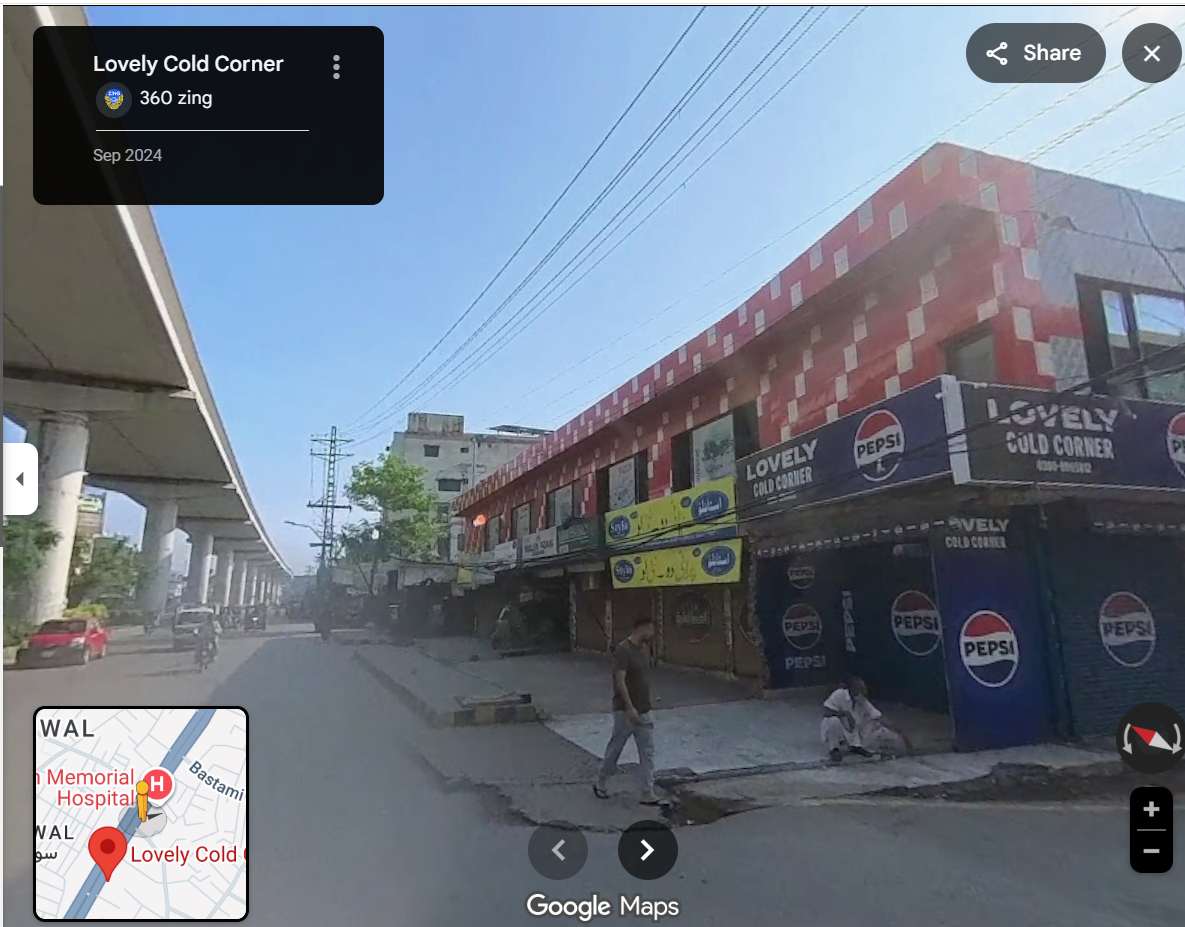
Further clues in the video also pointed to Pakistan. A shop sign reading “Lovely Drink Corner” is visible in the footage. A Google search confirmed that this establishment is located in Lahore, Pakistan.
Conclusion
The viral claim is misleading. Although central forces have been deployed in West Bengal for the ongoing elections, the video showing stone-pelting on a security vehicle is not from the state. It is an old video from Lahore, Pakistan, and is being falsely shared with a communal angle to mislead users.

Related Blogs
Most laws regulate what people do. This one regulates what clock everyone is doing it by, and once you sit with that idea for a moment, it stops sounding like a bureaucratic footnote and starts sounding like something genuinely foundational.
On 27 August 2026, India's Department of Consumer Affairs notified the Legal Metrology (Indian Standard Time) Rules, 2026, making Indian Standard Time the single legally binding reference for every legal, administrative, commercial, and official purpose across the country. The Rules will come into force 180 days after their publication in the Official Gazette, giving government departments, businesses, and institutions a compliance runway to align their systems before the requirement actually bites.
Why time needed a law at all
It might seem strange that a country needs legislation to tell everyone what time it is. India has used IST, a single time zone five and a half hours ahead of Coordinated Universal Time, since 1947. But using a time zone informally and legally mandating it as the sole authoritative reference for every official and commercial transaction are two very different things, and the gap between them is exactly where this rule lives.
The government's own reasoning, laid out in its official statement, centres on a shift most people experience daily without ever thinking about its plumbing. Banking and digital payments, telecommunications networks, railways, power grids, and government record systems all depend on accurate, synchronised time stamps to function correctly. When different systems quietly draw their time from different sources, even by fractions of a second, the resulting inconsistencies can affect the coordination and recording of transactions in ways that are invisible until something goes wrong. A trade executed on a stock exchange, a UPI payment cleared between banks, a railway signal handoff between two junctions, and an emergency service dispatch all depend on every clock in the chain agreeing with every other clock, and until now, India had no single rule compelling that agreement.
The quieter, more interesting part of the rule
Buried inside the announcement is a detail that matters more than the headline. The Rules do not simply declare IST the law of the land; they also authorise the use of NavIC, India's own satellite navigation system, alongside other approved domestic timing sources, as legitimate means of disseminating that time. The government's stated rationale is candid about the current state of affairs: several critical Indian systems presently draw their time from foreign satellite based sources, and building domestic timing infrastructure through NavIC and legal metrology laboratories is intended to reduce that dependence going forward.
That single sentence carries real weight once you consider how global positioning and timing systems actually work. Most of the world's precise digital time synchronisation ultimately traces back to GPS, the American satellite constellation, whose signals also happen to be notoriously easy to disrupt. GPS and other satellite navigation signals arrive at receivers on Earth as extremely weak radio transmissions, weak enough that they can be jammed with cheap equipment or spoofed, meaning an attacker broadcasts a counterfeit signal that mimics a legitimate one closely enough to fool a receiver into accepting false position or timing data. Researchers and government reports going back years have flagged that a large share of critical infrastructure sectors, power grids, financial markets, telecommunications, and transport among them, carry meaningful dependence on GPS derived timing, and a 2017 UK government assessment specifically warned that systematic satellite signal jamming could cause serious disruption to a country's financial, electricity, and communications systems all at once. Cybersecurity researchers have separately demonstrated proof of concept attacks where a deliberately falsified timing signal, rather than a falsified position, was enough to destabilise systems that assumed their clock could always be trusted.
Seen against that backdrop, embedding NavIC as an approved domestic timing source inside a legal metrology framework is not merely a nationalistic footnote about self reliance. It is a genuine resilience decision. A country that can generate, verify, and distribute its own trusted time signal, independent of a foreign satellite constellation that it does not control and cannot secure on its own, has a meaningfully smaller attack surface for an entire category of infrastructure disruption that rarely makes headlines until it actually happens.
Who actually built this, and why that composition matters
The drafting process itself offers a useful clue about how seriously this was treated. Reports on the rule making process indicate the Rules were shaped by a high powered inter ministerial committee chaired by the Secretary of Consumer Affairs, with representation from the National Physical Laboratory and the Indian Space Research Organisation for the underlying science and satellites, IIT Kanpur for engineering expertise, the National Informatics Centre and CERT In for network infrastructure and its security, the Securities and Exchange Board of India for financial market implications, and the Railways, Telecom, and Financial Services departments for the systems that will actually have to run on this new standard day to day. That is not a committee assembled around a single ministry's convenience; it is a committee assembled around the actual shape of the problem, spanning physics, engineering, finance, and network security together. As part of the broader One Nation, One Time initiative, a White Rabbit Technology based IST Dissemination Demonstration Network was already commissioned at the Regional Reference Standard Laboratory in Bengaluru back in July 2026, suggesting the infrastructure groundwork was underway well before the legal framework caught up to it.
What the 180 day window actually means in practice
It is worth being precise about what compliance actually requires here. This is not a deadline demanding new hardware overnight; for most organisations, it means auditing which internal systems currently reference time from an unverified or foreign source and ensuring they align with certified IST going forward, alongside institutions preparing to receive that certified time through the domestic infrastructure the government is simultaneously building out. The six month runway exists precisely because this touches an unusually wide spread of sectors at once, and forcing an abrupt cutover would create more operational risk than the rule is designed to remove.
The bigger picture
A rule about what time it is legally does not sound like cybersecurity news, and on the surface, it is not. But underneath the administrative language sits a genuinely forward looking recognition: as more of daily life, banking, communication, transport, and governance runs on systems that must agree, down to the second, on a shared reference point, the integrity of that reference point becomes critical infrastructure in its own right. India choosing to build, verify, and legally anchor its own trusted time source, rather than continuing to quietly rely on a foreign satellite system it cannot secure independently, is less about symbolism and more about closing a vulnerability most people never knew existed until they were asked to think about it.
References
- OpenGov Asia, "India Issues Rules to Standardise National Time Reference Systems." https://opengovasia.com/india-issues-rules-to-standardise-national-time-reference-systems/?c=us
- Daily Excelsior, "Centre notifies rules mandating IST as common time reference; 180 day window for compliance." https://www.dailyexcelsior.com/centre-notifies-rules-mandating-ist-as-common-time-reference-180-day-window-for-compliance/
- Greater Kashmir, "Department of Consumer Affairs notifies Legal Metrology Rules, 2026." https://www.greaterkashmir.com/national/department-of-consumer-affairs-notifies-legal-metrology-rules-2026-12454447
- Insights on India, "Legal Metrology (Indian Standard Time) Rules, 2026." https://www.insightsonindia.com/2026/08/31/legal-metrology-indian-standard-time-rules-2026/
- Blitz India Media, "Indian Standard Time Rules 2026: NavIC, Legal Metrology." https://blitzindiamedia.com/news/indian-standard-time-rules-2026-navic-legal-metrology/
- Observer Voice, "India Establishes Legal Framework for Standard Time." https://observervoice.com/india-establishes-legal-framework-for-standard-time-225958/
- The Live Nagpur, "Govt notifies rules to make IST the common time reference." https://thelivenagpur.com/2026/08/31/govt-notifies-rules-to-make-ist-the-common-time-reference/
- Safran Navigation and Timing, "GNSS Security and Cybersecurity: What are the Parallels?" https://safran-navigation-timing.com/gnss-security-and-cybersecurity-what-are-the-parallels/
- Safran Navigation and Timing, "Securing Critical Infrastructures from Jamming and Spoofing Cyberattacks." https://safran-navigation-timing.com/securing-critical-infrastructures-from-jamming-and-spoofing-cyberattacks/
- Combain, "The Silent Threat In The Sky: GPS Jamming, GPS Spoofing." https://combain.com/gps-jamming-spoofing/

Introduction
India's Computer Emergency Response Team (CERT-In) has unfurled its banner of digital hygiene, heralding the initiative 'Cyber Swachhta Pakhwada,' a clarion call to the nation's citizens to fortify their devices against the insidious botnet scourge. The government's Cyber Swachhta Kendra (CSK)—a Botnet Cleaning and Malware Analysis Centre—stands as a bulwark in this ongoing struggle. It is a digital fortress, conceived under the aegis of the National Cyber Security Policy, with a singular vision: to engender a secure cyber ecosystem within India's borders. The CSK's mandate is clear and compelling—to detect botnet infections within the subcontinent and to notify, enable cleaning, and secure systems of end users to stymie further infections.
What are Bots?
Bots are automated rogue software programs crafted with malevolent intent, lurking in the shadows of the internet. They are the harbingers of harm, capable of data theft, disseminating malware, and orchestrating cyberattacks, among other digital depredations.
A botnet infection is like a parasitic infestation within the electronic sinews of our devices—smartphones, computers, tablets—transforming them into unwitting soldiers in a hacker's malevolent legion. Once ensnared within the botnet's web, these devices become conduits for a plethora of malicious activities: the dissemination of spam, the obstruction of communications, and the pilfering of sensitive information such as banking details and personal credentials.
How, then, does one's device fall prey to such a fate? The vectors are manifold: an infected email attachment opened in a moment of incaution, a malicious link clicked in haste, a file downloaded from the murky depths of an untrusted source, or the use of an unsecured public Wi-Fi network. Each action can be the key that unlocks the door to digital perdition.
In an era where malware attacks and scams proliferate like a plague, the security of our personal devices has ascended to a paramount concern. To address this exigency and to aid individuals in the fortification of their smartphones, the Department of Telecommunications(DoT) has unfurled a suite of free bot removal tools. The government's outreach extends into the ether, dispatching SMS notifications to the populace and disseminating awareness of these digital prophylactics.
Stay Cyber Safe
To protect your device from botnet infections and malware, the Government of India, through CERT-In, recommends downloading the 'Free Bot Removal Tool' at csk.gov.in.' This SMS is not merely a reminder but a beacon guiding users to a safe harbor in the tumultuous seas of cyberspace.
Cyber Swachhta Kendra
The Cyber Swachhta Kendra portal emerges as an oasis in the desert of digital threats, offering free malware detection tools to the vigilant netizen. This portal, also known as the Botnet Cleaning and Malware Analysis Centre, operates in concert with Internet Service Providers (ISPs) and antivirus companies, under the stewardship ofCERT-In. It is a repository of knowledge and tools, a digital armoury where users can arm themselves against the specters of botnet infection.
To extricate your device from the clutches of a botnet or to purge the bots and malware that may lurk within, one must embark on a journey to the CSK website. There, under the 'Security Tools' tab, lies the arsenal of antivirus companies, each offering their own bot removal tool. For Windows users, the choice includes stalwarts such as eScan Antivirus, K7 Security, and Quick Heal. Android users, meanwhile, can venture to the Google Play Store and seek out the 'eScan CERT-IN Bot Removal ' tool or 'M-Kavach2,' a digital shield forged by C-DAC Hyderabad.
Once the chosen app is ensconced within your device, it will commence its silent vigil, scanning the digital sinews for any trace of malware, excising any infections with surgical precision. But the CSK portal's offerings extend beyond mere bot removal tools; it also proffers other security applications such as 'USB Pratirodh' and 'AppSamvid.' These tools are not mere utilities but sentinels standing guard over the sanctity of our digital lives.
USB Pratirodh
'USB Pratirodh' is a desktop guardian, regulating the ingress and egress of removable storage media. It demands authentication with each new connection, scanning for malware, encrypting data, and allowing changes to read/write permissions. 'AppSamvid,' on the other hand, is a gatekeeper for Windows users, permitting only trusted executables and Java files to run, safeguarding the system from the myriad threats that lurk in the digital shadows.
Conclusion
In this odyssey through the digital safety frontier, the Cyber Swachhta Kendra stands as a testament to the power of collective vigilance. It is a reminder that in the vast, interconnected web of the internet, the security of one is the security of all. As we navigate the dark corners of the internet, let us equip ourselves with knowledge and tools, and may our devices remain steadfast sentinels in the ceaseless battle against the unseen adversaries of the digital age.
References
- https://timesofindia.indiatimes.com/gadgets-news/five-government-provided-botnet-and-malware-cleaning-tools/articleshow/107951686.cms
- https://indianexpress.com/article/technology/tech-news-technology/cyber-swachhta-kendra-free-botnet-detection-removal-tools-digital-india-8650425/

Executive Summary:
An alleged video is making the rounds on the internet featuring Ranveer Singh criticizing the Prime Minister Narendra Modi and his Government. But after examining the video closely it revealed that it has been tampered with to change the audio. In fact, the original videos posted by different media outlets actually show Ranveer Singh praising Varanasi, professing his love for Lord Shiva, and acknowledging Modiji’s role in enhancing the cultural charms and infrastructural development of the city. Differences in lip synchronization and the fact that the original video has no sign of criticizing PM Modi show that the video has been potentially manipulated in order to spread misinformation.

Claims:
The Viral Video of Bollywood actor Ranveer Singh criticizing Prime Minister Narendra Modi.

Fact Check:
Upon receiving the Video we divided the video into keyframes and reverse-searched one of the images, we landed on another video of Ranveer Singh with lookalike appearance, posted by an Instagram account named, “The Indian Opinion News''. In the video Ranveer Singh talks about his experience of visiting Kashi Vishwanath Temple with Bollywood actress Kriti Sanon. When we watched the Full video we found no indication of criticizing PM Modi.

Taking a cue from this we did some keyword search to find the full video of the interview. We found many videos uploaded by media outlets but none of the videos indicates criticizing PM Modi as claimed in the viral video.

Ranveer Singh shared his thoughts about how he feels about Lord Shiva, his opinions on the city and the efforts undertaken by the Prime Minister Modi to keep history and heritage of Varanasi alive as well as the city's ongoing development projects. The discrepancy in the viral video clip is clearly seen when we look at it closely. The lips are not in synchronization with the words which we can hear. It is clearly seen in the original video that the lips are in perfect synchronization with the words of audio. Upon lack of evidence to the claim made and discrepancies in the video prove that the video was edited to misrepresent the original interview of Bollywood Actor Ranveer Singh. Hence, the claim made is misleading and false.
Conclusion:
The video that claims Ranveer Singh criticizing PM Narendra Modi is not genuine. Further investigation shows that it has been edited by changing the audio. The original footage actually shows Singh speaking positively about Varanasi and Modi's work. Differences in lip-syncing and upon lack of evidence highlight the danger of misinformation created by simple editing. Ultimately, the claim made is false and misleading.
- Claim: A viral featuring Ranveer Singh criticizing the Prime Minister Narendra Modi and his Government.
- Claimed on: X (formerly known as Twitter)
- Fact Check: Fake & Misleading
