
#FactCheck -Doctored Images of Trump–Xi and Biden–Xi Meetings Go Viral; Fact Check Finds No Evidence of Claims
Executive Summary
Following the recent meeting between US President Donald Trump and Chinese President Xi Jinping, two images began circulating widely on social media. One image showed Trump shaking hands with Xi, while another purportedly showed former US President Joe Biden turning his back on the Chinese leader during a previous meeting. The viral posts claimed that Trump showed respect to Xi Jinping, whereas Biden had allegedly insulted him. However, an research found that the image involving Biden was digitally altered and that no such moment appeared in authentic video footage. At the same time, another image showing Trump bowing before Xi Jinping also went viral across multiple social media platforms. This image, too, was found to be manipulated and misleading. Research by the CyberPeace Research Wing confirmed that both viral visuals had been doctored and were being shared with false claims.
Claim
The viral post juxtaposes two images. The first photograph, dated May 14, shows Donald Trump and Xi Jinping shaking hands at the beginning of a landmark summit in Beijing. The second image allegedly depicts Joe Biden turning away from Xi during their 2023 meeting near San Francisco.
- https://web.archive.org/web/20260519173701/https://truthsocial.com/@realDonaldTrump/116585350109647241/embed
- https://truthsocial.com/@realDonaldTrump/116585350109647241/embed

Fact Check
The side-by-side comparison surfaced amid years of criticism by Donald Trump targeting Joe Biden’s age and mental fitness. Trump shared the image after his China visit, which included high-level discussions on trade and the Middle East conflict, along with a temple tour and tea meeting with Xi Jinping. Meanwhile, another manipulated image spread rapidly online, falsely portraying Trump bowing while greeting Xi Jinping. The image circulated widely in several languages, accompanied by captions attacking Trump
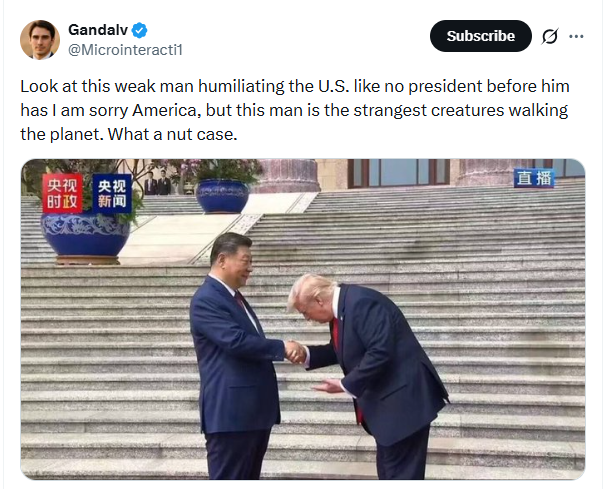
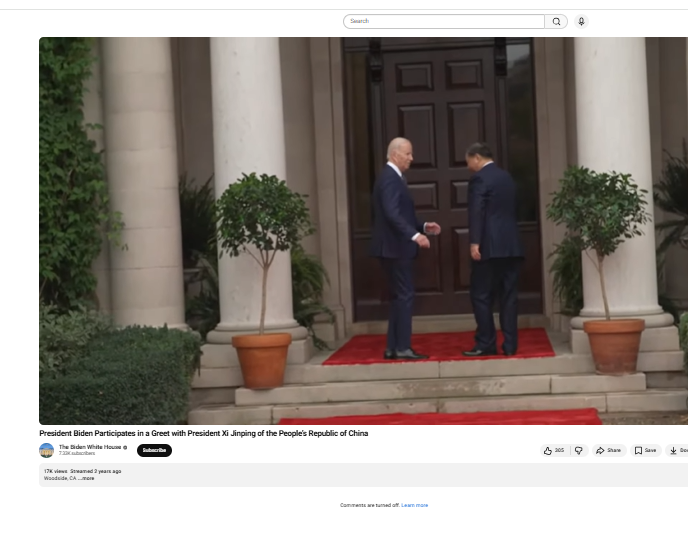
However, a review of the The White House livestream on YouTube showed that Joe Biden greeted Xi Jinping immediately after he stepped out of his vehicle and shook hands with him before both leaders walked inside together. At no point in the footage did Biden turn his back or look away from Xi.
Further examination also revealed inconsistencies in the manipulated Trump image. A subtle crease visible near the side pocket of Trump’s suit jacket in authentic footage was missing in the viral version, indicating that the image had been digitally edited.
Conclusion
The research found that both viral images were digitally manipulated and shared with misleading narratives. Neither Joe Biden ignored Xi Jinping during their 2023 meeting, nor did authentic footage show Donald Trump bowing before the Chinese president.

Related Blogs

Introduction
Taj Hotels Group is well known for its luxurious ambience and old-world grace and charm, blended with contemporary comforts and amenities for its guests or customers. But what can make all the netizens perplexed is the recent data breach incident which took place in Tata-owned Taj hotels. The hotel suffer from a data breach that compromises nearly 1.5 million customers' data which includes addresses, membership IDs, mobile numbers and other personally identifiable information, according to sources. This news was brought to light which raised concerns about the privacy and data protection of personal data of individuals. We are living in a space influenced by advanced technology and digital communication which throws a concern or challenge to secure the personal information of individuals.
Unveiling the incident
Tata-owned Taj Hotels group has suffered a data breach that compromise information of over 1.5 million customers, according to a news report. A bad actor or entity going by the name “Dnacookies” claimed data set contains data from the 2014-2020 period and has not been disclosed anywhere till now. Such personal data includes name, address, customer ID, mobile number and other personally identifiable information. This shows the risks or challenges of data protection and security. The incidents raise an alarm about the risks and vulnerabilities that might be faced even by the big corporate giants. The bad actor with the handle “Dnacookies” also demanded a ransom of a sum of about Rs 4.16 lakh from the Taj hotel group. In response to the incident, a spokesperson from the concerned hotel group said that we have been made aware of someone claiming possession of a limited data customer data set, which is non-sensitive in nature. Investigation is underway and relevant authorities have been notified about the incident.
A demand for ransom
The report from CNBC-TV18 clears that the bad actor not only purloined the data but also demanded around 4.16 lakh as a ransom for the database. Along with this, the bad actor kept three conditions ahead. Firstly there has to be a middleman for a negotiable deal secondly the data cannot be split either the entire data has to be taken with the ransom demand or no data at all. Thirdly additional samples of data will not be provided. Further, the spokesperson of Indian Hotel Company Limited mentioned that they have been escalated with the fact that someone is claiming authority in a limited data set. The bad actor claimed that the database contains information from 2014- 2020 which has been kept confidential till now. The audacity of the bad actor went to such an extent that the sample containing one thousand rows of unique entries from the bad actor dataset was also provided by the bad actor as proof of the deed. This incident underlines the growing threat in cyberspace and the urgency for individuals, organizations or entities to priorities data security measures and maintain cyber resilience.
Personal Data on Stake
Such data is the personal information of the individuals and also constitutes the personal tastes and preferences of individuals which can be exploited. The biggest gush of winds the hotel and individuals face by such a data breach is not only the volume of data compromised but also the potential ways it can get misused and exploited against the hotel or its customers by cyber crooks. This paves the way for cybercriminals to put forward any demand knowing the sensitivity of the data. Followed by creating a dilemmatic situation for the affected entities to either accept the ransom demands or to stand against ransom. Since the risks are high, going ahead with any of these situations can have an adverse impact on the security of personal data. The organisation or entities holding the personal data need to make sure that data under their realm is well protected and secured.
While the organisation has to sail through the aftermath of this breach, such incidents also pose a challenge for the organisation to maintain the trust and reputation of the organization since these incidents question the cyber security posture of the organisation. It is suggested to be transparent with its stakeholders, and open about the vulnerabilities and steps taken against this. They should also discuss the amplified step added for safeguarding their customer's personal data. Since Taj is well known for its out-of-the-box luxury and for providing comfort to its customers it should take a step ahead to reinforce its digital infrastructure to ensure the security of data.
Digital Personal Data Protection Act, 2023
The newly enacted Digital Personal Data Act, 2023 put certain obligations on data fiduciaries to take reasonable measures to maintain the security of personal data. The Act also requires to inform about the data breach to the data protection board constituted under the Act. The Act aims to protect the individual's digital personal data. The Act casts certain obligations on data principals and data fiduciaries. The Act provides penalty upto 250 crores in case of a data breach. The Act aims to provide consent-based data collection techniques. The Act also establishes the Data Protection Board to ensure compliance with the provisions of the Act and address grievances.
Conclusion
Data breach in such a big giant in the market serves as an alarming concern to be more cautious and proactively take precautionary measures to protect the security of data and compliance with data protection laws and regulations. We are living in an era where digital security is as important as the basic fundamental rights of an individual. Taj Hotels Group has actively taken steps to handle the aftermath of the data breach by informing the incident to law enforcement agencies and taking necessary steps. It is also on our part to be more aware, and vigilant about our personal data. Entities need to ensure compliance and measures to protect personal data and overall ensure a true cyber-safe & digital environment.
References

Executive Summary
A post is being widely circulated on social media claiming that the entire Delhi airport was submerged following heavy rainfall. The post questions the airport’s drainage system and attributes the situation to the negligence of its staff. The post further claims that the airport’s arrangements were exposed after just one spell of rain and that its drainage system needs to be upgraded using better technology. A research by the research wing of CyberPeace found that the viral video is not from Delhi airport but dates back to April 2024. At the time, heavy rainfall in Dubai caused flood-like conditions at the airport, affecting flight operations on waterlogged runways as well. Thus, an old video from Dubai is being falsely shared on social media as footage of Delhi airport.
Claim:
A user on the social media platform X (formerly Twitter) shared the viral video with the caption: “Delhi Airport — the entire airport is submerged. This is the situation after just one spell of rain. A minor issue of drainage and negligence by the staff — the public is aware — now the negligence will be punished. ‘The drainage system technology must be developed.’”
https://x.com/RJMediaGroups/status/2096470339060736149

Factcheck
As part of our investigation, we conducted a reverse image search of keyframes from the video. During the search, we found the original video on a YouTube channel named The Indian Express, which was uploaded on April 17, 2024. According to the video description, the incident took place in Dubai. The post link and screenshot are provided below.
https://www.youtube.com/watch?v=O9F1qTMIO5M
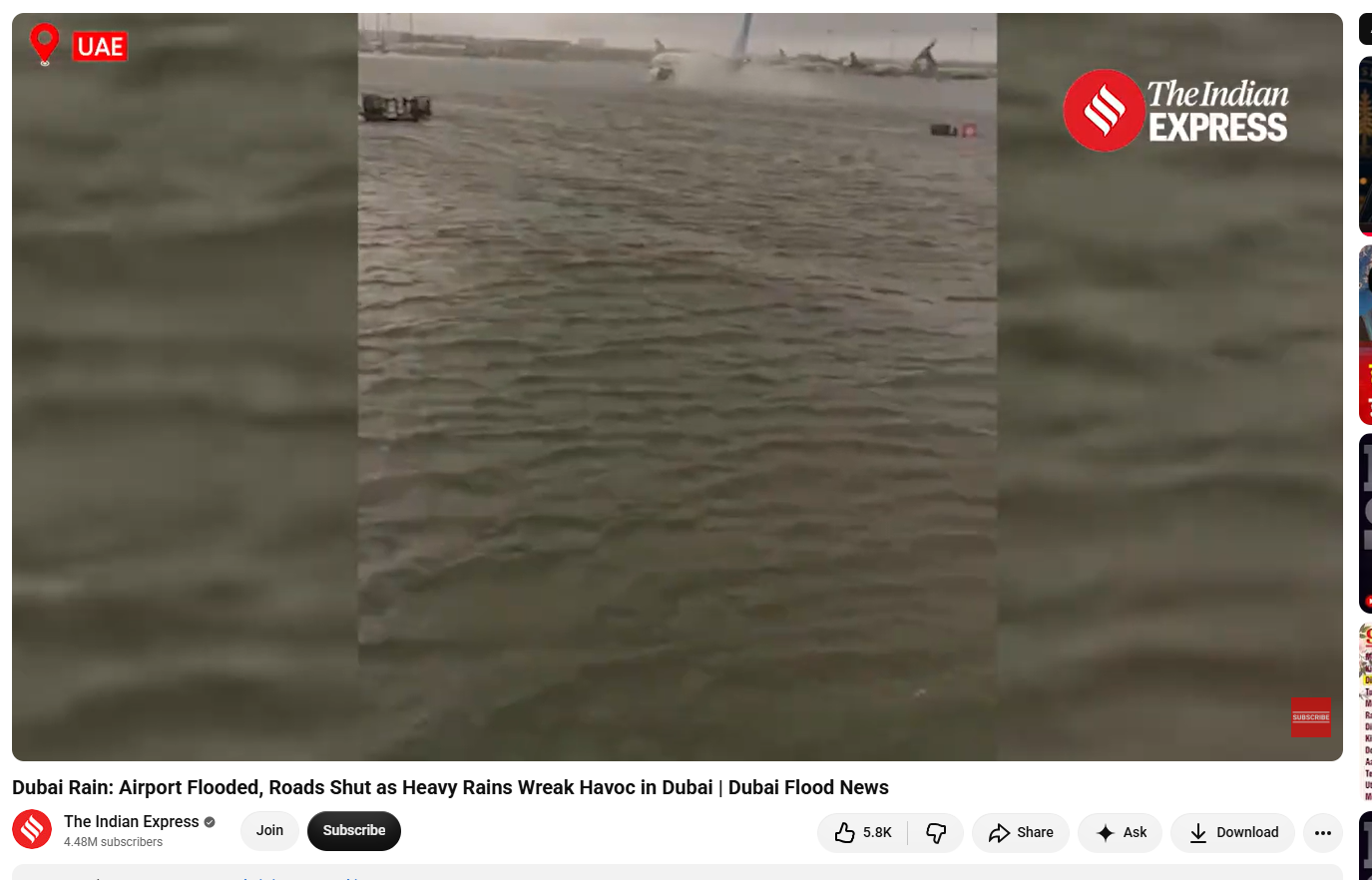
During our investigation, we found visuals similar to those in the viral video on the YouTube channel AlArabiyaEnglish. The video was uploaded on April 16, 2024. According to the information provided in the video description, several parts of the UAE were affected by flooding following sudden heavy rainfall on April 16, 2024. The heavy rains also affected operations at Dubai Airport, disrupting several flights. According to the report, the UAE recorded a record 254 mm of rainfall in less than 24 hours. In view of the adverse weather conditions, Dubai Airport advised passengers to travel only if absolutely necessary. The post link and screenshot are provided below.
https://www.youtube.com/shorts/KzIstkiOdp4

Conclusion:
Our investigation found that the viral video does not show Delhi Airport after heavy rainfall. The visuals are actually from Dubai Airport, where severe rainfall in the UAE in April 2024 led to flooding and disruptions to airport operations. Therefore, the viral video is old and has been falsely shared on social media with the misleading claim that it shows the current condition of Delhi Airport.
Executive Summary
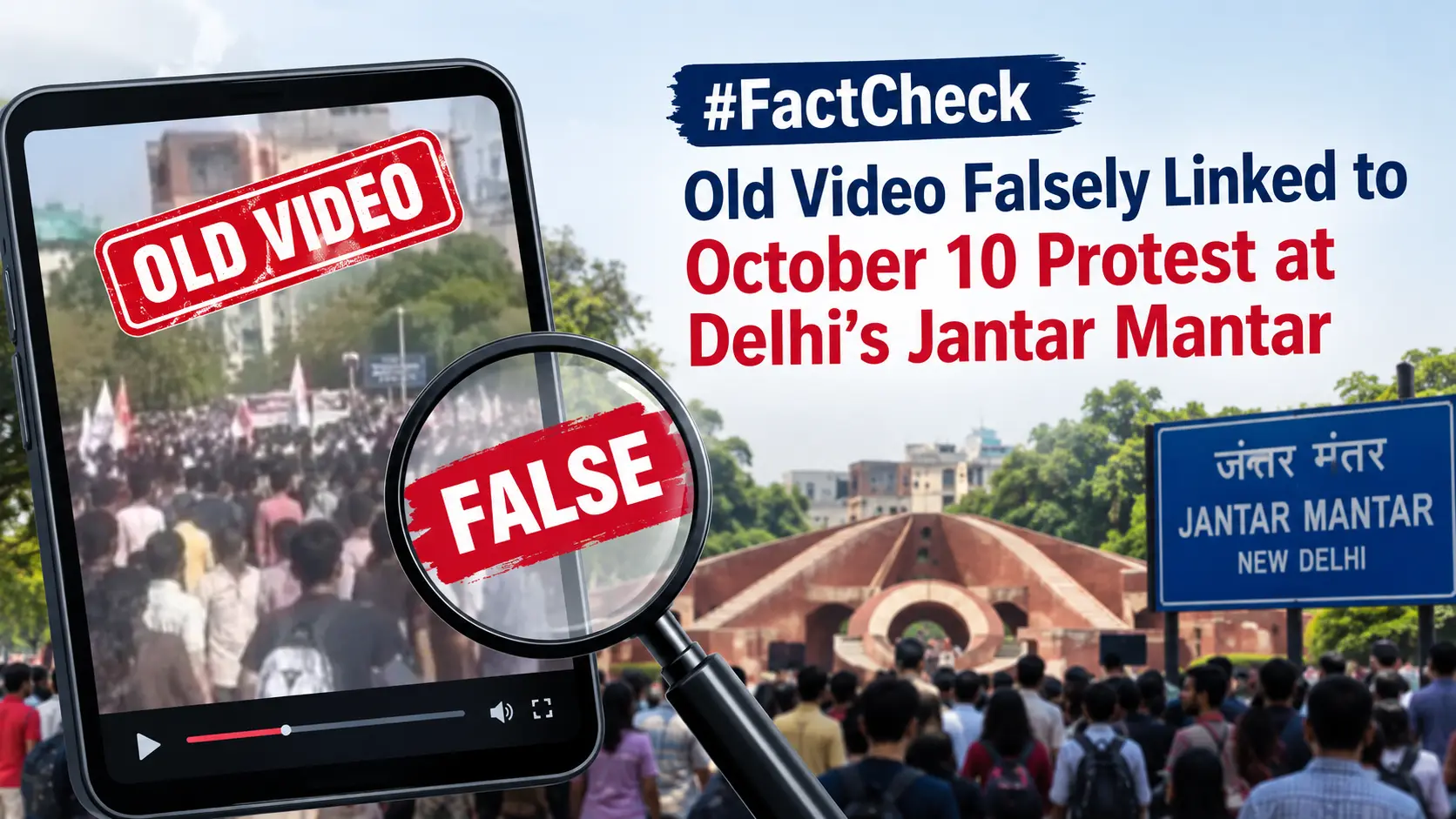
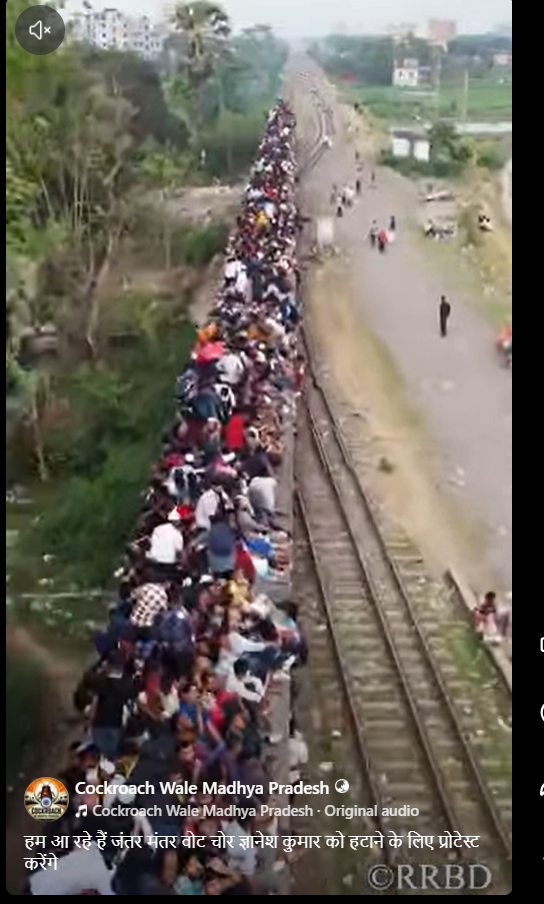
The Cockroach Janta Party (CJP) announced a protest at Jantar Mantar in Delhi on October 10, seeking the removal of Chief Election Commissioner Gyanesh Kumar. Media reports claimed that more than 250 trains, including local services bound for Delhi, had been cancelled. There were also claims that people planning to join the demonstration were being detained or kept under house arrest, while internet services at the protest venue had been suspended. However, CyberPeace Research found that the viral video was unrelated to the October 10 protest. Our research revealed that the footage had already been circulating on social media since September 5, well before the planned demonstration. Therefore, the video does not establish that it shows the October 10 protest.
Claim:
A Facebook user posted the video alongside a caption stating that they were heading to Jantar Mantar to demand the removal of Chief Election Commissioner Gyanesh Kumar, whom the post accused of stealing votes. The caption was originally written in Hindi. An archived version of the post is available below.
https://www.facebook.com/reel/1098834383046385
Fact-check
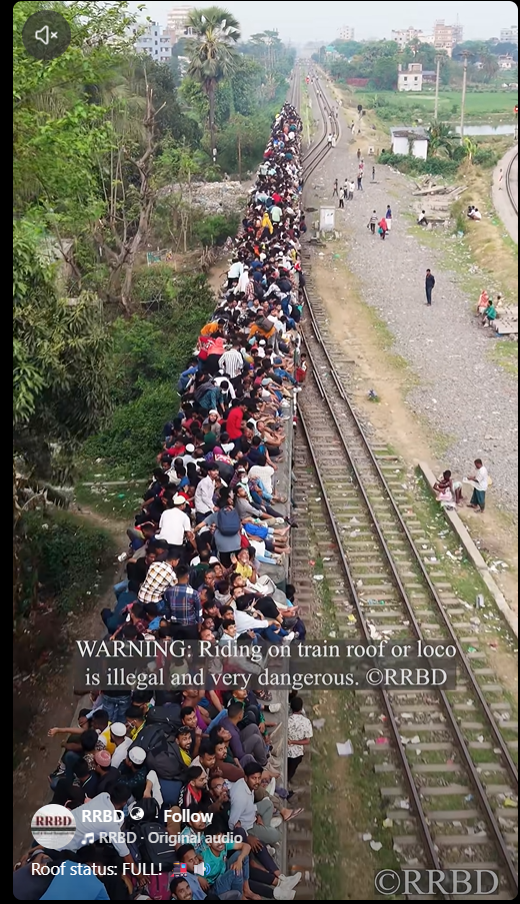
A reverse image search revealed that the viral video was shared on Facebook by a user named ‘RRBD’ on September 5. The account has more than 636,000 followers. The video was posted with the caption, “Roof status: FULL!”
https://www.facebook.com/reel/1720670926511274
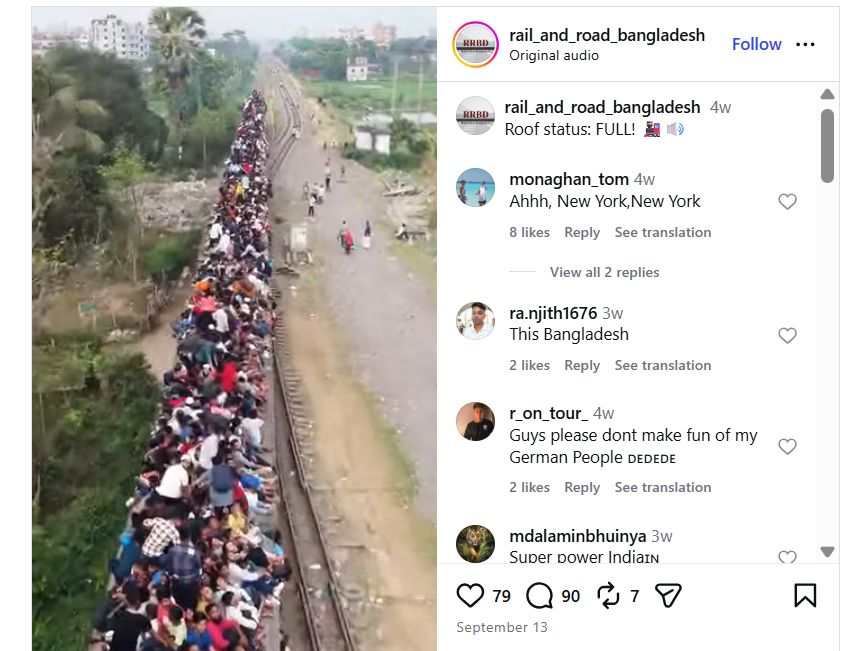
The Facebook account’s description also links to an Instagram account named ‘rail_and_road_bangladesh’, which has over 307,000 followers. The video was shared on this Instagram account on September 13 with the same caption as the Facebook post.
https://www.instagram.com/rail_and_road_bangladesh/reel/DdN6Dx9CVMH/
Conclusion
Our research found that the viral video is unrelated to the protest held at Jantar Mantar in Delhi on October 10. The video has been circulating on social media since September 5 and predates the protest. Therefore, the viral claim is false.
