
#FactCheck - Misleading Viral Video Targets Rubika Liyaquat, Original Footage Tells Different Story
Executive Summary
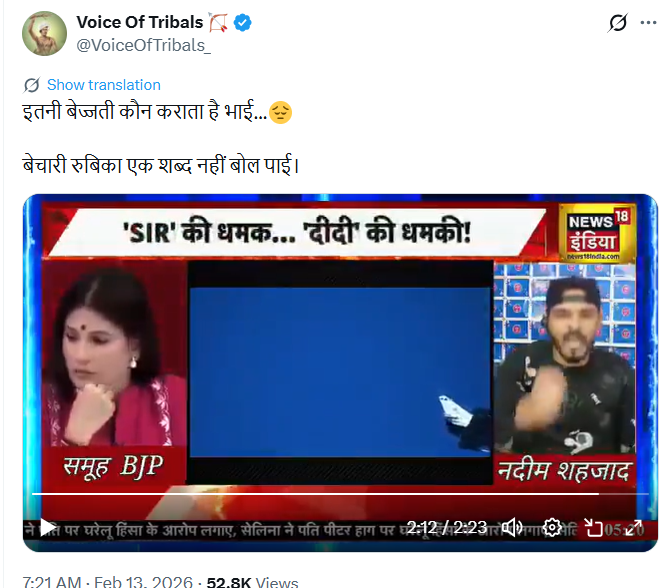
A video circulating on social media claims that a Pakistani man misbehaved with TV anchor Rubika Liyaquat during a live television debate. Users sharing the clip alleged that the Pakistani participant silenced the anchor on live TV.
However, research by CyberPeace found the viral claim to be false and revealed that the video being shared on social media is edited. In the original video, published on YouTube on November 26, 2025, the alleged Pakistani man was not present in the TV debate.
Claim
On February 13, 2026, a user shared the viral clip on X (formerly Twitter), claiming that the anchor was insulted during the debate and was left speechless. Another user on February 11, 2026, asked News18 India to verify the video and questioned who allowed such behaviour towards the journalist on air.
Fact Check:
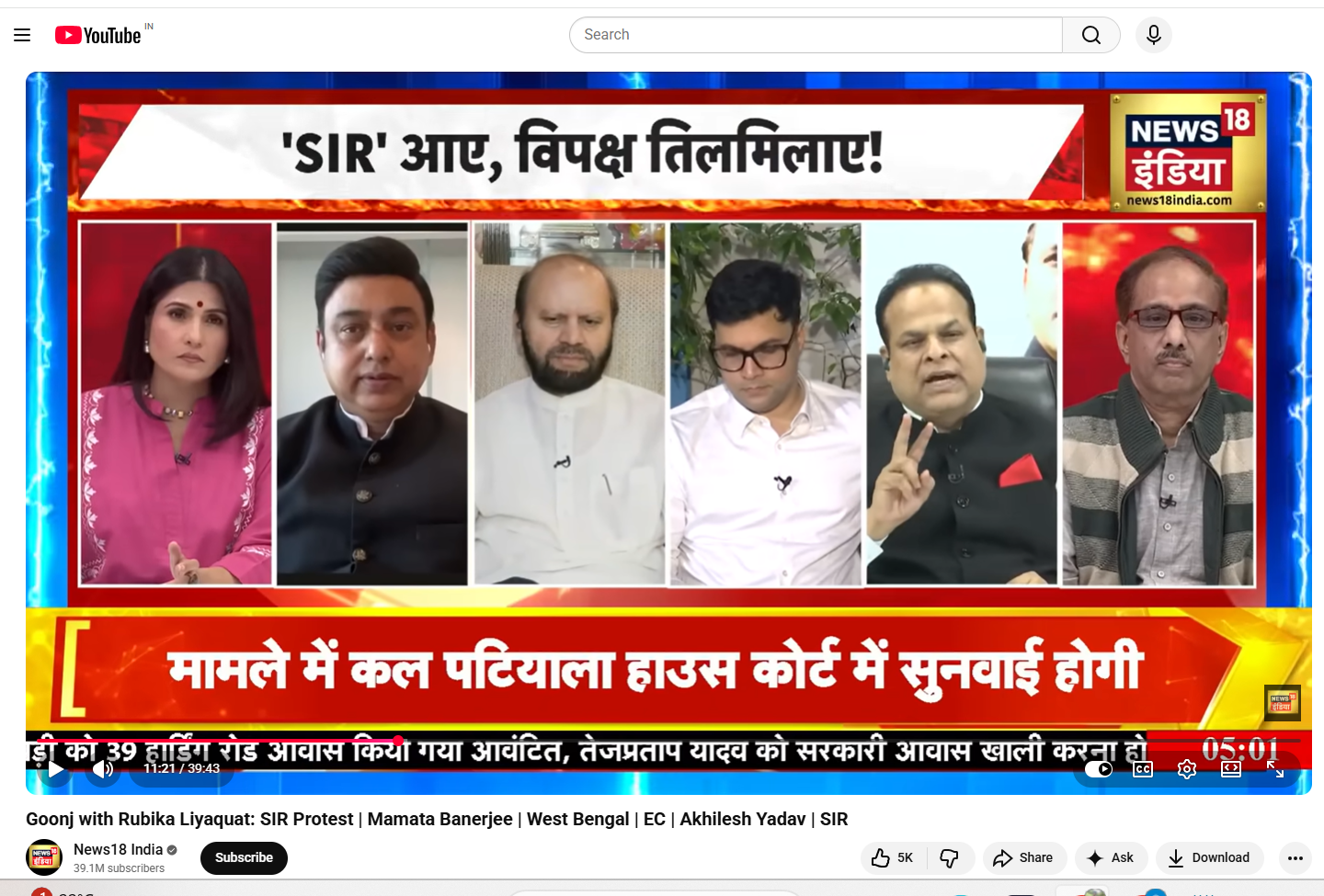
To verify the claim, we extracted key frames from the viral video and conducted a reverse image search using Google Lens. During the research, we found the full version of the debate uploaded on the official YouTube channel of News18 India on November 26, 2025. The nearly 40-minute original broadcast featured anchor Rubika Liyaquat along with panelists Zafar Islam, Varun Purohit, Prateek Kumar, Arvind Kumar Vajpayee, Tausif Ahmed Khan, and Aziz Khan. However, the person seen misbehaving with the anchor in the viral clip was not present in the original video.
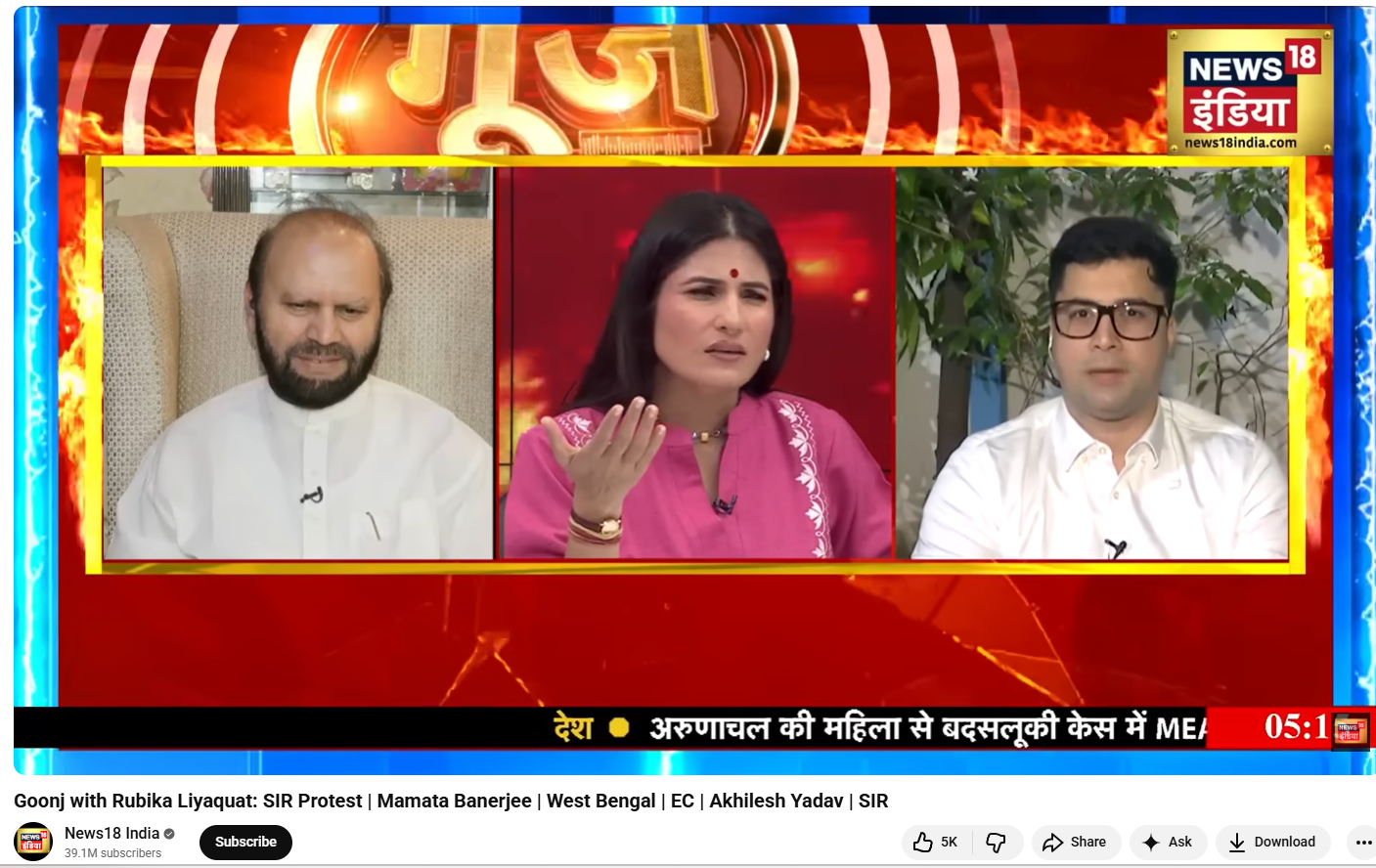
Upon carefully reviewing the footage, we located the actual segment around the 25-minute 40-second mark. In this portion, the anchor can be heard asking panelist Tausif Ahmed Khan to leave the show, using the same words heard in the viral clip. However, the original broadcast does not feature any Pakistani participant or any individual named “Nadeem Shahzad.”
Conclusion
Our research found that the viral claim is false. The circulating video has been edited, and the alleged Pakistani participant does not appear in the original debate uploaded on November 26, 2025.

Related Blogs
.webp)
The Equitable Growth Approach of AI and Digital Twins
Digital Twins can be simply described as virtual replicas of physical assets or systems, powered by real-time data and advanced simulations. When this technology is combined with AI, the impact it has on enabling real-time monitoring, predictive maintenance, optimised operations, and improved design processes through the creation of virtual replicas of physical assets becomes even greater. The greatest value of AI is its ability to make data actionable. And when combined with digital twins, these data can be collated, analysed, inefficiencies removed, and better decisions can be taken to improve efficiency and quality.
This intersection between AI and Digital Twins holds immense potential for addressing key challenges, particularly in countries like India, which is rapidly embracing digital adoption to achieve its economic ambitions and sustainability goals. According to Salesforce’s most recent survey on generative AI use among the general population within the U.S., UK, Australia and India, 75% of generative AI users are looking to automate repetitive tasks and use generative AI for work communications. India is particularly looking towards a rapid digital adoption, economic ambitions, and sustainable developments to be achieved through AI adoption. This blog discuss the intersection of equitable growth, sustainability, and AI-driven policies in India.
Sustainability and the Path Ahead: Digital Twin and AI-Driven Solutions
India faces sustainability challenges which are mainly associated with issues such as urban congestion, the rising demand for energy along with climate change and environmental degradation. AI and Digital Twins provide solutions for real-time simulations and predictive analysis. Some of the examples are its applications in sustainable urban planning such as smart cities like the Indore Smart City Initiative and traffic optimisation, energy efficiency/optimisation through AI-driven renewable energy projects and power grid optimisation and even water resource management through leak detection, equitable distribution and conservation.
The need is to balance innovation with regulation, particularly, underscoring the importance of ethical and sustainable deployment of AI and digital twins and addressing data privacy with AI ethics with recent developments such as the India’s evolving AI policy landscape, including the National Strategy for Artificial Intelligence and its focus on AI for All, regulatory frameworks such as DPDP Act and the manner in which they address AI ethics, data privacy, and digital governance.
The need is to initiate targeted policies that promote research and development in AI and digital twin technologies, skill development and partnerships with the private sector, think tanks, nonprofits and others. Also, collaborations at the global level would include aligning our domestic policies with global AI and sustainability initiatives and leveraging the international frameworks for climate tech and smart infrastructure.
Cyberpeace Outlook
As part of specific actions, policymakers need to engage in proactive governance to ensure the responsible use and development of AI. This includes enacting incentive schemes for sustainable AI projects and strengthening the enforcement of data privacy laws. Industry leaders must support equitable access to AI and digital twin technologies and develop tailored AI tools for resource-constrained settings, particularly in India. Finally, researchers need to drive innovation in alignment with sustainability goals, such as those related to agriculture and groundwater management.
References
- https://economictimes.indiatimes.com/tech/artificial-intelligence/technologies-like-ai-and-digital-twins-can-tackle-challenges-like-equitable-growth-to-sustainability-wef/articleshow/117121897.cms
- https://www.salesforce.com/news/stories/generative-ai-statistics/
- https://www.mdpi.com/2673-2688/4/3/38
- https://www.ibm.com/think/topics/generative-ai-for-digital-twin-energy-utilities
Risk Management
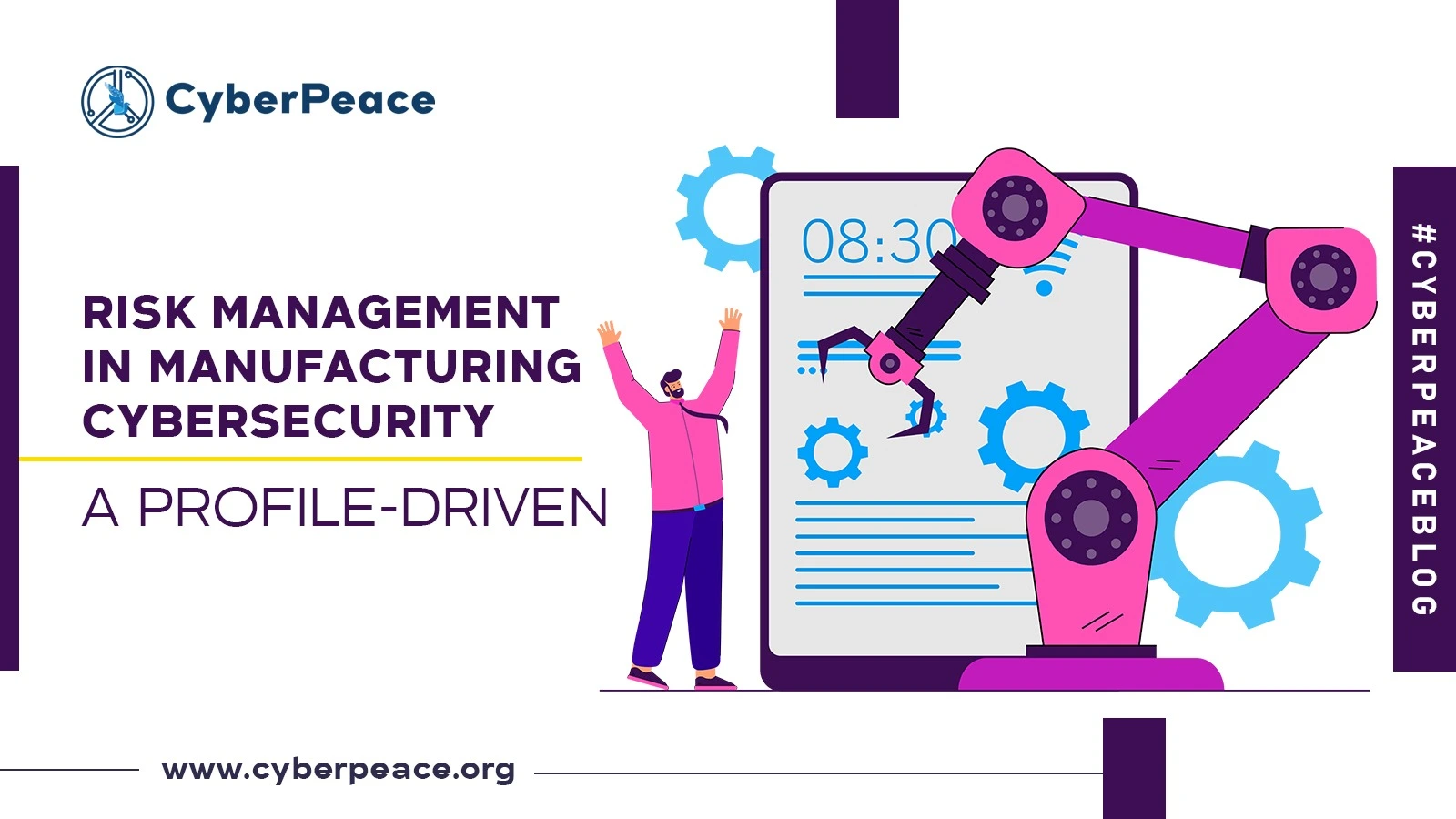
The ‘Information Security Profile’ prioritises and informs cybersecurity operations based on the company's risk administration procedures. It assists in choosing areas of focus for security operations that represent the desired results for producers by supporting periodic risk evaluations and validating company motivations. A thorough grasp of the business motivations and safety requirements unique to the Production system and its surroundings is necessary in order to manage cybersecurity threats. Because every organisation has different risks and uses ICS and IT in different ways, there will be variations in how the profile is implemented.
Companies are currently adopting industry principles and cybersecurity requirements, which the Manufacturing Information is intended to supplement, not replace. Manufacturers have the ability to identify crucial operations for key supply chains and can order expenditures in a way that will optimise their impact on each dollar. The Profile's primary objective is to lessen and manage dangers associated with cybersecurity more effectively. The Cybersecurity Framework and the Profile are not universally applicable methods for controlling security risks for essential infrastructure.
Producers will always face distinct risks due to their distinct dangers, weaknesses, and tolerances for danger. Consequently, the ways in which companies adopt security protocols will also change.
Key Cybersecurity Functions: Identify, Protect, Detect, Respond, and Recover
- Determine
Create the organisational knowledge necessary to control the potential hazards of cybersecurity to information, systems, resources, and competencies. The Identify Function's tasks are essential for using the Framework effectively. An organisation can concentrate its efforts in a way that aligns with its approach to risk mitigation and company needs by having a clear understanding of the business environment, the financial resources that assist with vital operations, and the associated cybersecurity threats. Among the outcome characteristics that fall under this function are risk evaluation, mitigation strategy, the administration of assets, leadership, and the business environment.
- Protect
Create and put into place the necessary measures to guarantee the provision of crucial infrastructure amenities. The Protect Function's operations enable the limitation or containment of the possible impact of a cybersecurity incident. Instances of results Access Management, Knowledge and Instruction, Data Safety and Security, Data Protection Processes and Instructions, Repair, and Defensive Systems are some of the classifications that fall under this role.
- Detect
Create and carry out the necessary actions to determine whether a cybersecurity event has occurred. The Detect Function's operations make it possible to find vulnerability occurrences in an efficient way. This function's result subcategories include things like abnormalities and incidents, constant security monitoring, and identification processes.
- React
Create and carry out the necessary plans to address a cybersecurity event that has been discovered. The Response Function's operations facilitate the capacity to mitigate the effects of a possible cybersecurity incident. Within this Scope, emergency planning, interactions, analysis, prevention, and enhancements are a few examples of result categories.
- Recover
Create and carry out the necessary actions to uphold resilience tactics and restore any services or competencies that were hampered by a cybersecurity incident. In order to lessen the effects of a vulnerability incident, the Recovery Function's efforts facilitate a prompt return to regular operations. The following are a few instances of outcome subcategories under this role: communications, enhancements, and recovery planning.
Conclusion
The Information Security Profile, when seen in the framework of risk mitigation, offers producers a tactical method to deal with the ever-changing cybersecurity danger scenario. The assessment directs safeguarding operations prioritisation by recognising specific business reasons and connecting with corporate goals. The Profile enhances the cybersecurity standards and established industry guidelines by taking into account the differences in vulnerabilities and organisational subtleties among producers. It highlights the significance of a customised strategy, acknowledging that every business has unique risks and weaknesses.
The fundamental tasks of the Framework, to Identify, Protect, Detect, Respond, and Recover, serve as a thorough roadmap, guaranteeing a proactive and flexible approach to cybersecurity. The Profile's ultimate goal is to increase the efficacy of risk mitigation techniques, understanding that cybersecurity is a constantly shifting and evolving subject for the manufacturing sector.
References
- https://csrc.nist.gov/news/2020/cybersecurity-framework-v1-1-manufacturing-profile
- https://nvlpubs.nist.gov/nistpubs/ir/2020/NIST.IR.8183r1.pdf
- https://mysecuritymarketplace.com/reports/cybersecurity-framework-version-1-1-manufacturing-profile/

Executive Summary
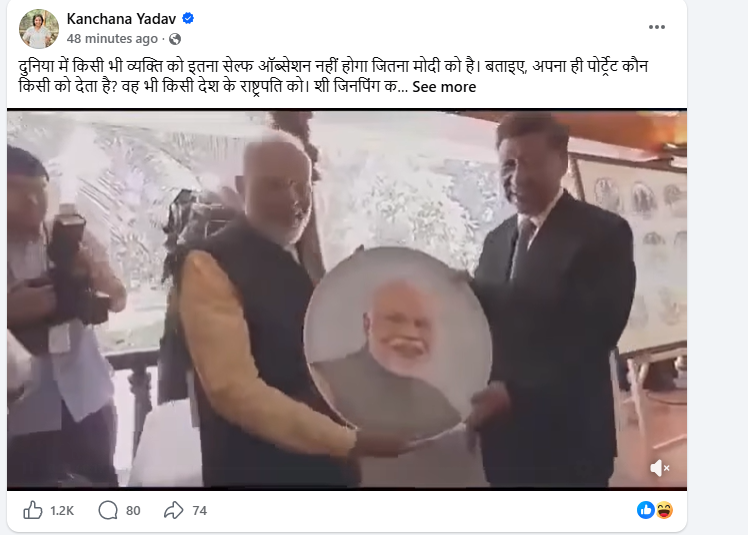
A video of Prime Minister Narendra Modi and Chinese President Xi Jinping is being shared on social media. The video is being shared with the claim that during the BRICS Summit, Prime Minister Modi gifted Xi Jinping a portrait featuring his own image. The post also takes aim at Prime Minister Modi based on this claim. Research by CyberPeace found that the video dates back to October 2019 and shows an exchange of gifts between Prime Minister Narendra Modi and Chinese President Xi Jinping. On the concluding day of the Mamallapuram Summit, Prime Minister Modi gifted Xi Jinping a large, handcrafted silk shawl. In return, Xi Jinping presented Prime Minister Modi with a porcelain souvenir bearing his portrait.
Claim:
A video of Prime Minister Narendra Modi and Chinese President Xi Jinping is being shared on Facebook with the claim that during the BRICS Summit, Prime Minister Modi gifted Xi Jinping a portrait of himself.
https://www.facebook.com/watch/?v=1109664078425193
Fact Check
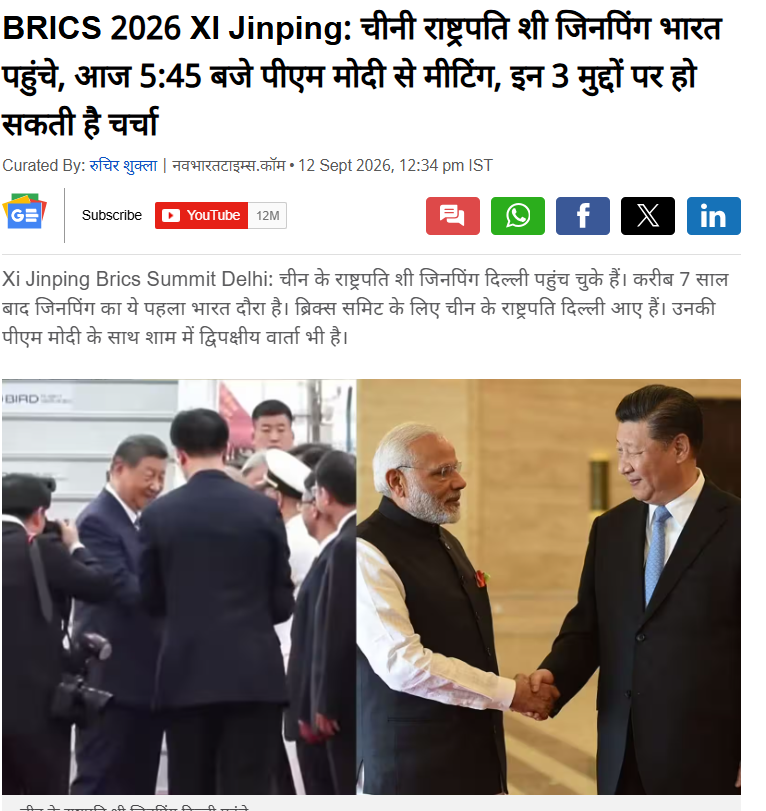
To verify the authenticity of the viral claim, we conducted a Google search using relevant keywords. During the search, we found a report published by Navbharat Times on September 12, 2026. According to the report, Chinese President Xi Jinping has arrived in Delhi to attend the 18th BRICS Summit. His aircraft landed at Palam Airport at around noon on Saturday. This is his first visit to India in nearly seven years.The report further stated that Prime Minister Narendra Modi and Xi Jinping were scheduled to meet at around 5 pm on the same day. This made it clear during our research that the video being shared on social media is not from the current BRICS Summit and is an old video.
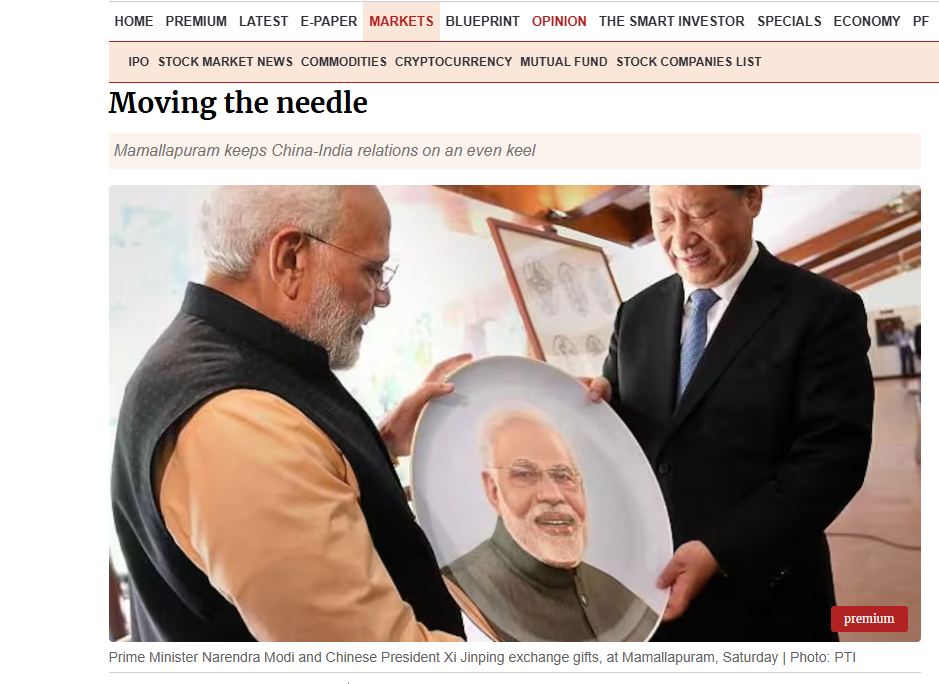
To verify the authenticity of the viral claim, we conducted a reverse image search of the keyframes from the video. During the search, we found a report published by Business Standard on October 13, 2019, which contained visuals from the viral video. According to the report, Chinese President Xi Jinping left for Nepal on Saturday aboard an Air China aircraft, concluding his second informal summit with Prime Minister Narendra Modi, which signalled a recalibration of bilateral ties. Xi spent around 24 hours in India.During his visit, he travelled to Mamallapuram near Chennai and held informal talks with Prime Minister Narendra Modi. Delegation-level talks between the two countries were also held.
https://www.business-standard.com/article/opinion/moving-the-needle-119101300820_1.html
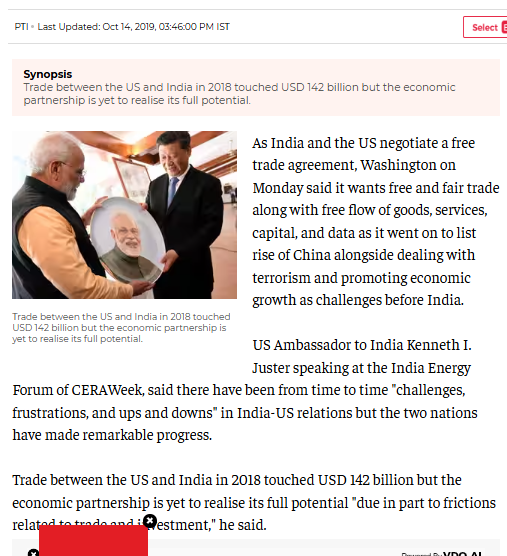
In the next step of our research, we found a report published by Economic Times on October 14, 2019. The report also contained the same visuals from the viral video and presented them in their original context.
Conclusion
The evidence gathered during our research makes it clear that the video being shared on social media is not from the BRICS Summit, but is an old video from 2019. This confirms that the video is being shared on social media by taking it out of its original context and falsely linking it to the BRICS Summit. Therefore, the claim that the viral video is from the BRICS Summit is misleading.
