
#FactCheck - Bangladesh video falsely shared as BSF arresting an infiltrator at Bengal border
Executive Summary
A video showing security personnel overpowering a man is being widely shared on social media with the claim that it shows the Border Security Force (BSF) arresting an infiltrator attempting to cross the India-Bangladesh border in West Bengal. However, research by CyberPeace Research Wing found that the claim is false. The viral video is from Bangladesh and is unrelated to India or the BSF.
Claim
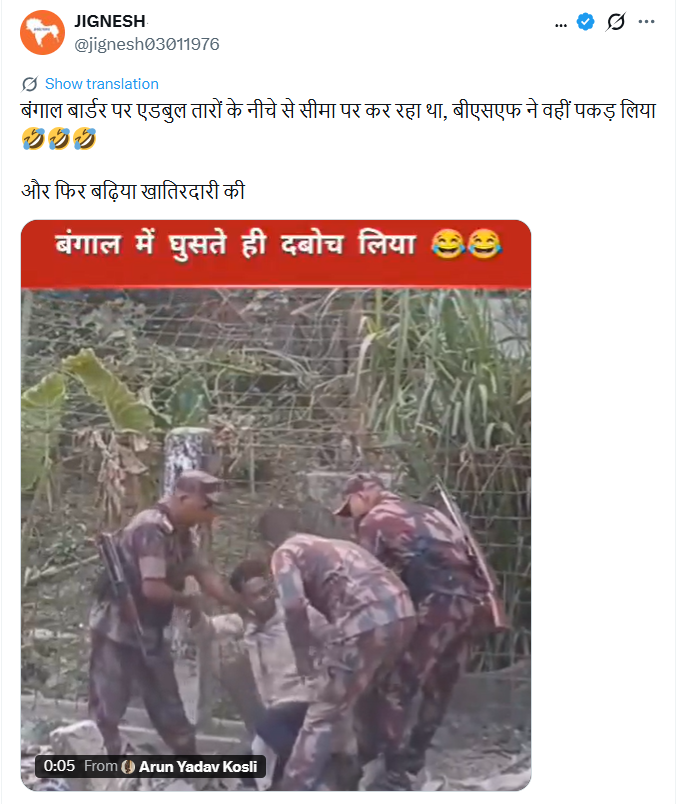
An X user shared the viral video claiming: “He was crossing the Bengal border from beneath the barbed fencing when the BSF caught him on the spot.”
The post was circulated as an incident from the India-Bangladesh border in West Bengal.
Fact Check
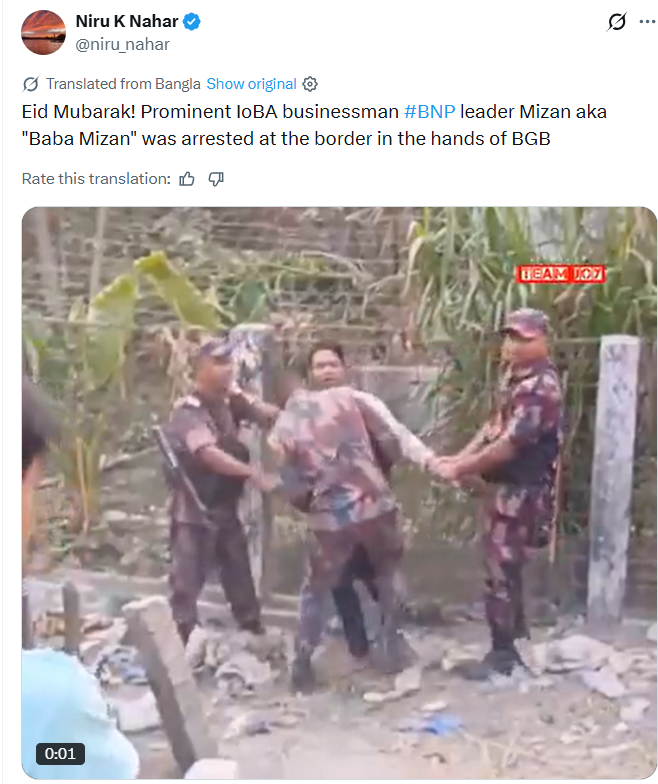
To verify the claim, we extracted keyframes from the viral video and conducted a reverse image search. During the research, we found the same video posted on 21 March 2026 by an X handle named “Niru Nahar.”
According to the caption of that post, the video showed Bangladesh Border Guards arresting BNP leader Mizan, also known as “Baba Mizan,” near the border.
Further research led us to a Facebook post uploaded on 22 March 2026 by Bangladeshi news platform Jono Pulse. The post identified the detained individual as “Juel,” an alleged drug trafficker from Chapainawabganj, and stated that he had been arrested by the Border Guard Bangladesh (BGB).
Chapainawabganj is located in Bangladesh, confirming that the video is unrelated to West Bengal or the BSF.

Conclusion
The viral claim is misleading. The video does not show the BSF arresting an infiltrator at the Bengal border. It is actually from Bangladesh and depicts a separate incident involving Border Guard Bangladesh personnel.

Related Blogs

Introduction
The use of digital information and communication technologies for healthcare access has been on the rise in recent times. Mental health care is increasingly being provided through online platforms by remote practitioners, and even by AI-powered chatbots, which use natural language processing (NLP) and machine learning (ML) processes to simulate conversations between the platform and a user. Thus, AI chatbots can provide mental health support from the comfort of the home, at any time of the day, via a mobile phone. While this has great potential to enhance the mental health care ecosystem, such chatbots can present technical and ethical challenges as well.
Background
According to the WHO’s World Mental Health Report of 2022, every 1 in 8 people globally is estimated to be suffering from some form of mental health disorder. The need for mental health services worldwide is high but the supply of a care ecosystem is inadequate both in terms of availability and quality. In India, it is estimated that there are only 0.75 psychiatrists per 100,000 patients and only 30% of the mental health patients get help. Considering the slow thawing of social stigma regarding mental health, especially among younger demographics and support services being confined to urban Indian centres, the demand for a telehealth market is only projected to grow. This paves the way for, among other tools, AI-powered chatbots to fill the gap in providing quick, relatively inexpensive, and easy access to mental health counseling services.
Challenges
Users who seek mental health support are already vulnerable, and AI-induced oversight can exacerbate distress due to some of the following reasons:
- Inaccuracy: Apart from AI’s tendency to hallucinate data, chatbots may simply provide incorrect or harmful advice since they may be trained on data that is not representative of the specific physiological and psychological propensities of various demographics.
- Non-Contextual Learning: The efficacy of mental health counseling often relies on rapport-building between the service provider and client, relying on circumstantial and contextual factors. Machine learning models may struggle with understanding interpersonal or social cues, making their responses over-generalised.
- Reinforcement of Unhelpful Behaviors: In some cases, AI chatbots, if poorly designed, have the potential to reinforce unhealthy thought patterns. This is especially true for complex conditions such as OCD, treatment for which requires highly specific therapeutic interventions.
- False Reassurance: Relying solely on chatbots for counseling may create a partial sense of safety, thereby discouraging users from approaching professional mental health support services. This could reinforce unhelpful behaviours and exacerbate the condition.
- Sensitive Data Vulnerabilities: Health data is sensitive personal information. Chatbot service providers will need to clarify how health data is stored, processed, shared, and used. Without strong data protection and transparency standards, users are exposed to further risks to their well-being.
Way Forward
- Addressing Therapeutic Misconception: A lack of understanding of the purpose and capabilities of such chatbots, in terms of care expectations and treatments they can offer, can jeopardize user health. Platforms providing such services should be mandated to lay disclaimers about the limitations of the therapeutic relationship between the platform and its users in a manner that is easy to understand.
- Improved Algorithm Design: Training data for these models must undertake regular updates and audits to enhance their accuracy, incorporate contextual socio-cultural factors for profile analysis, and use feedback loops from customers and mental health professionals.
- Human Oversight: Models of therapy where AI chatbots are used to supplement treatment instead of replacing human intervention can be explored. Such platforms must also provide escalation mechanisms in cases where human-intervention is sought or required.
Conclusion
It is important to recognize that so far, there is no substitute for professional mental health services. Chatbots can help users gain awareness of their mental health condition and play an educational role in this regard, nudging them in the right direction, and provide assistance to both the practitioner and the client/patient. However, relying on this option to fill gaps in mental health services is not enough. Addressing this growing —and arguably already critical— global health crisis requires dedicated public funding to ensure comprehensive mental health support for all.
Sources
- https://www.who.int/news/item/17-06-2022-who-highlights-urgent-need-to-transform-mental-health-and-mental-health-care
- https://health.economictimes.indiatimes.com/news/industry/mental-healthcare-in-india-building-a-strong-ecosystem-for-a-sound-mind/105395767#:~:text=Indian%20mental%20health%20market%20is,access%20to%20better%20quality%20services.
- https://www.frontiersin.org/journals/digital-health/articles/10.3389/fdgth.2023.1278186/full

Executive Summary
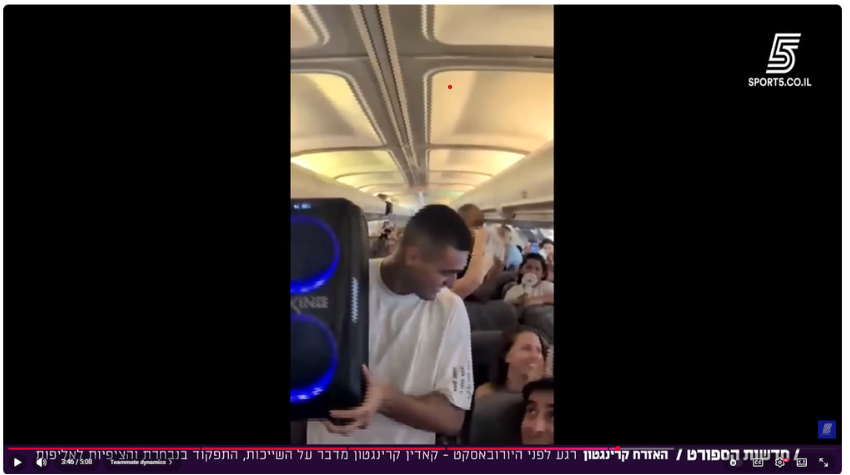
A video showing people dancing inside an aircraft with a speaker playing music is being shared on social media with the claim that they were celebrating after surviving an accident involving a flydubai flight travelling from Dubai to Tel Aviv. However, CyberPeace Research found that the video was actually shared by an Israeli sports media outlet in August 2025, and shows Israeli basketball player Yam Madar playing music through a speaker inside a flight.
Claim
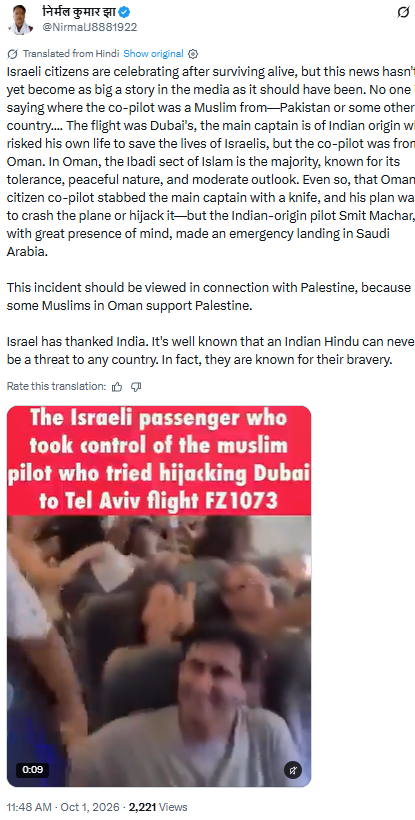
A video is going viral on social media showing a person playing music through a speaker inside an aircraft, while other passengers can be seen dancing to the song being played.
https://x.com/NirmalJ8881922/status/2105542863278973186
Fact Check:
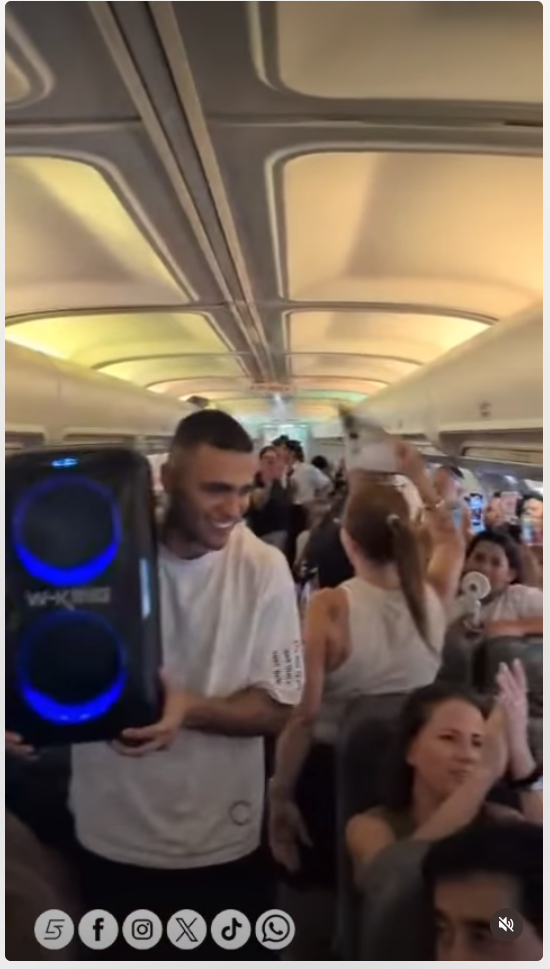
We began our research into the viral video using the InVID tool and extracted several keyframes from it. During this process, we found the same video on the Instagram account of Israeli sports media channel Sports 5, where it was uploaded on August 18, 2025. The video was accompanied by a caption in Hebrew, which translates into Hindi as: “Don’t take a sleeping pill: This is what it’s like to be on a flight with Yam Madar.”
https://www.instagram.com/reels/DNgQrgLsW11/
During our research, we also found an interview with another player from the Israeli basketball team, Khadeen Carrington, uploaded on Sports 5’s YouTube channel on August 26, 2025. During the interview, when Carrington was asked about his relationship with the other members of the team, he referred to the aforementioned video featuring Yam Madar.
https://www.youtube.com/watch?v=k_0AzSWlvJw
Conclusion
The evidence gathered during our research makes it clear that the video being linked to the flydubai flight accident is old. The person seen in the video is Yam Madar, a member of the Israeli basketball team.

On the occasion of 20th edition of Safer Internet Day 2023, CyberPeace in collaboration with UNICEF, DELNET, NCERT, and The National Book Trust (NBT), India, took steps towards safer cyberspace by launching iSafe Multimedia Resources, CyberPeace TV, and CyberPeace Café in an event held today in Delhi.
CyberPeace also showcased its efforts, in partnership with UNICEF, to create a secure and peaceful online world through its Project iSafe, which aims to bridge the knowledge gap between emerging advancements in cybersecurity and first responders. Through Project iSafe, CyberPeace has successfully raised awareness among law enforcement agencies, education departments, and frontline workers across various fields. The event marked a significant milestone in the efforts of the foundation to create a secure and peaceful online environment for everyone.
Launching the Cyberpeace TV, café and isafe material , National Cybersecurity coordinator of Govt of India, Lt Gen Rajesh Pant interacts with the students by introducing them with the theme of this safer internet day. He launched the coword cyber challenge initiative by the countries. Content is most important in cyberspace. He also assured everyone that the government of India is taking a lot of steps at national level to make cyber space safer. He compliments CPF for their initiatives.
Ms. Zafrin Chaudhry, Chief of Communication, UNICEF addresses students with the facts that children make out 1 out of 3 in cyberspace, so they should have a safe cyberspace. They should be informed and equipped with all the information on how to deal with any kind of issues they face in cyberspace. They should share their experience with everyone to make others aware. UNICEF in partnership with CPF is extending help to children to equip them with the help and information.
Major Vineet Kumar, Founder and Global President of CPF welcomed all and introduced us about the launching of iSafe Multimedia Resources, CyberPeace TV, and CyberPeace Café . With this launch he threw some light on upcoming plans like launching a learning module of metaverse with AR and VR. He wants to make cyberspace safe even in tier 3 cities that’s why he established the first cybercafé in Ranchi.
As the internet plays a crucial role in our lives, CyberPeace has taken action to combat potential cyber threats. They introduced CyberPeace TV, the world’s first multilingual TV Channel on Jio TV focusing on Education and Entertainment, a comprehensive online platform that provides the latest in cybersecurity news, expert analysis, and a community for all stakeholders in the field. CyberPeace also launched its first CyberPeace Café for creators and innovators and released the iSafe Multimedia resource containing Flyers, Posters, E hand book and handbook on digital safety for children developed jointly by CyberPeace, UNICEF and NCERT for the public.
O.P. Singh, Former DGP, UP Police & CEO Kailash Satyarthi foundation, , started with the data of internet users in India. The Internet is used in day-to -day activities nowadays and primarily in social media. Students should have a channelized approach to cyberspace like fixed screen time, information to the right content, and usage of the internet. I really appreciate the initiates that CyberPeace is taking in this direction.
The celebration continued by iSafe Panel Discussion on “Creating Safer Cyberspace for Children.” The discussion was moderated by Dr. Sangeeta Kaul, Director of DELNET, and was attended by panellists Mr. Rakesh Maheshwari from MeitY(Ministry of electronics and information Technology, Govt. of India), Dr. Indu Kumar from CIET-NCERT, Ms. Bindu Sharma from ICMEC, and Major Vineet Kumar from CyberPeace.
The event was also graced by professional artists from the National School of Drama, who performed Nukkad Natak and Qawwali based on cyber security themes. Students from SRDAV school also entertained the audience with their performances. The attendees were also given a platform to share their experiences with online security issues, and ICT Awardees, Parents and iSafe Champions shared their insights with the guests. The event also had stalls by CyberPeace Corps, a Global volunteer initiative, and CIET-NCERT for students to explore and join the cause. The event’s highlight was the 360 Selfie Booth, where attendees lined up to have their turn.
