
#FactCheck - AI-Generated Image Falsely Shared as ‘Border 2’ Shooting Photo Goes Viral
Executive Summary
Border 2 is set to hit theatres today, January 23. Meanwhile, a photograph is going viral on social media showing actors Sunny Deol, Suniel Shetty, Akshaye Khanna and Jackie Shroff sitting together and having a meal, while a woman is seen serving food to them. Social media users are sharing this image claiming that it was taken during the shooting of Border 2. It is being alleged that the photograph shows a moment from the film’s set, where the actors were having food during a break in shooting. However, Cyber Peace research has found the viral claim to be false. Our investigation revealed that users are sharing an AI-generated image with a misleading claim.
Claim
On Instagram, a user shared the viral image on January 9, 2026, with the caption: “During the shooting of Border 2.” The link to the post, its archive link and screenshots can be seen below.

Fact Check:
To verify the claim, we first checked Google for the official star cast of the film Border 2. Our search showed that the names of the actors seen in the viral image are not part of the film’s officially announced cast. Next, upon closely examining the image, we noticed that the facial structure and expressions of the actors appeared unnatural and distorted. The facial features did not look realistic, raising suspicion that the image might have been created using Artificial Intelligence (AI). We then scanned the viral image using the AI-generated content detection tool HIVE Moderation. The results indicated that the image is 95 per cent AI-generated.

In the final step of our investigation, we analysed the image using another AI-detection tool, Undetectable AI. According to the results, the viral image was confirmed to be AI-generated.
Conclusion:
Our research confirms that social media users are sharing an AI-generated image while falsely claiming that it is from the shooting of Border 2. The viral claim is misleading and false.

Our research revealed that users are sharing an AI-generated image along with misleading claims

Related Blogs

Introduction
In today’s time, everything is online, and the world is interconnected. Cases of data breaches and cyberattacks have been a reality for various organisations and industries, In the recent case (of SAS), Scandinavian Airlines experienced a cyberattack that resulted in the exposure of customer details, highlighting the critical importance of preventing customer privacy. The incident is a wake-up call for Airlines and businesses to evaluate their cyber security measures and learn valuable lessons to safeguard customers’ data. In this blog, we will explore the incident and discuss the strategies for protecting customers’ privacy in this age of digitalisation.
Analysing the backdrop
The incident has been a shocker for the aviation industry, SAS Scandinavian Airlines has been a victim of a cyberattack that compromised consumer data. Let’s understand the motive of cyber crooks and the technique they used :
Motive Behind the Attack: Understanding the reasons that may have driven the criminals is critical to comprehending the context of the Scandinavian Airlines cyber assault. Financial gain, geopolitical conflicts, activism, or personal vendettas are common motivators for cybercriminals. Identifying the purpose of the assault can provide insight into the attacker’s aims and the possible impact on both the targeted organisation and its consumers. Understanding the attack vector and strategies used by cyber attackers reveals the amount of complexity and possible weaknesses in an organisation’s cybersecurity defences. Scandinavian Airlines’ cyber assault might have included phishing, spyware, ransomware, or exploiting software weaknesses. Analysing these tactics allows organisations to strengthen their security against similar assaults.
Impact on Victims: The Scandinavian Airlines (SAS) cyber attack victims, including customers and individuals related to the company, have suffered substantial consequences. Data breaches and cyber-attack have serious consequences due to the leak of personal information.
1)Financial Losses and Fraudulent Activities: One of the most immediate and upsetting consequences of a cyber assault is the possibility of financial loss. Exposed personal information, such as credit card numbers, can be used by hackers to carry out illegal activities such as unauthorised transactions and identity theft. Victims may experience financial difficulties and the need to spend time and money resolving these concerns.
2)Concerns about privacy and personal security: A breach of personal data can significantly impact the privacy and personal security of victims. The disclosed information, including names, addresses, and contact information, might be exploited for nefarious reasons, such as targeted phishing or physical harassment. Victims may have increased anxiety about their safety and privacy, which can interrupt their everyday life and create mental pain.
3) Reputational Damage and Trust Issues: The cyber attack may cause reputational harm to persons linked with Scandinavian Airlines, such as workers or partners. The breach may diminish consumers’ and stakeholders’ faith in the organisation, leading to a bad view of its capacity to protect personal information. This lack of trust might have long-term consequences for the impacted people’s professional and personal relationships.
4) Emotional Stress and Psychological Impact: The psychological impact of a cyber assault can be severe. Fear, worry, and a sense of violation induced by having personal information exposed can create emotional stress and psychological suffering. Victims may experience emotions of vulnerability, loss of control, and distrust toward digital platforms, potentially harming their overall quality of life.
5) Time and Effort Required for Remediation: Addressing the repercussions of a cyber assault demands significant time and effort from the victims. They may need to call financial institutions, reset passwords, monitor accounts for unusual activity, and use credit monitoring services. Resolving the consequences of a data breach may be a difficult and time-consuming process, adding stress and inconvenience to the victims’ lives.
6) Secondary Impacts: The impacts of an online attack could continue beyond the immediate implications. Future repercussions for victims may include trouble acquiring credit or insurance, difficulties finding future work, and continuous worry about exploiting their personal information. These secondary effects can seriously affect victims’ financial and general well-being.
Apart from this, the trust lost would take time to rebuild.

Takeaways from this attack
The cyber-attack on Scandinavian Airlines (SAS) is a sharp reminder of cybercrime’s ever-present and increasing menace. This event provides crucial insights that businesses and people may use to strengthen cybersecurity defences. In the lessons that were learned from the Scandinavian Airlines cyber assault and examine the steps that may be taken to improve cybersecurity and reduce future risks. Some of the key points that can be considered are as follows:
Proactive Risk Assessment and Vulnerability Management: The cyber assault on Scandinavian Airlines emphasises the significance of regular risk assessments and vulnerability management. Organisations must proactively identify and fix possible system and network vulnerabilities. Regular security audits, penetration testing, and vulnerability assessments can help identify flaws before bad actors exploit them.
Strong security measures and best practices: To guard against cyber attacks, it is necessary to implement effective security measures and follow cybersecurity best practices. Lessons from the Scandinavian Airlines cyber assault emphasise the importance of effective firewalls, up-to-date antivirus software, secure setups, frequent software patching, and strong password rules. Using multi-factor authentication and encryption technologies for sensitive data can also considerably improve security.
Employee Training and Awareness: Human mistake is frequently a big component in cyber assaults. Organisations should prioritise employee training and awareness programs to educate employees about phishing schemes, social engineering methods, and safe internet practices. Employees may become the first line of defence against possible attacks by cultivating a culture of cybersecurity awareness.
Data Protection and Privacy Measures: Protecting consumer data should be a key priority for businesses. Lessons from the Scandinavian Airlines cyber assault emphasise the significance of having effective data protection measures, such as encryption and access limits. Adhering to data privacy standards and maintaining safe data storage and transfer can reduce the risks connected with data breaches.
Collaboration and Information Sharing: The Scandinavian Airlines cyber assault emphasises the need for collaboration and information sharing among the cybersecurity community. Organisations should actively share threat intelligence, cooperate with industry partners, and stay current on developing cyber threats. Sharing information and experiences can help to build the collective defence against cybercrime.
Conclusion
The Scandinavian Airlines cyber assault is a reminder that cybersecurity must be a key concern for organisations and people. Organisations may improve their cybersecurity safeguards, proactively discover vulnerabilities, and respond effectively to prospective attacks by learning from this occurrence and adopting the lessons learned. Building a strong cybersecurity culture, frequently upgrading security practices, and encouraging cooperation within the cybersecurity community are all critical steps toward a more robust digital world. We may aim to keep one step ahead of thieves and preserve our important information assets by constantly monitoring and taking proactive actions.
India’s Rapid Digital Expansion
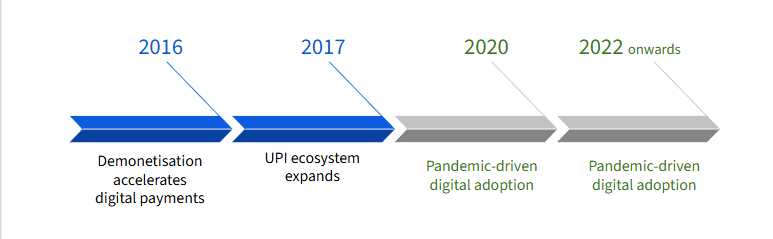
Over the past decade, India has experienced a rapid digitalisation process. The rise of digital financial services, affordable internet costs, and the penetration of smartphones have transformed the way people communicate, transact and do business online.
Online payment systems, including Unified Payments Interface (UPI), have enabled real-time transactions between banks and financial systems. As much as these systems have enhanced access to finance and efficiency, they have also created new opportunities for cybercriminals.
Cybercrime has evolved alongside the shift of financial and social interactions to digital platforms. The fraud attacks on online payments, online banking, and personal information have become common and increasingly costly.
To analyse the scale and trend of cybercrime in India, this analysis will use the datasets released by the National Crime Records Bureau (NCRB) and financial fraud data released by the Indian Cyber Crime Coordination Centre (I4C) under the Ministry of Home Affairs.
The Rise of Cybercrime in India
The Rise of Cybercrime in India
Source: National Crime Records Bureau – Crime in India Reports
The data released by the NCRB documents cybercrime incidents registered by the police at the national level under the Information Technology Act, 2000 (IT Act) and criminal provisions covering offences such as cheating, impersonation, and digital fraud. In the past, the offences were listed in the provisions of the Indian Penal Code (IPC). Following criminal law reforms in India, on 1 July 2024, the Bharatiya Nyaya Sanhita (BNS), which replaced the IPC, came into force. Section 419 (cheating by impersonation), IPC, would be related to BNS Section 319 and Section 420 (cheating and dishonestly inducing delivery of property), which would be related to BNS Section 318(4). Similarly, crimes involving forgery and use of forged documents or electronic documents, which were previously contained in the IPC Sections 465-471, are dealt with in BNS Sections 335-340.
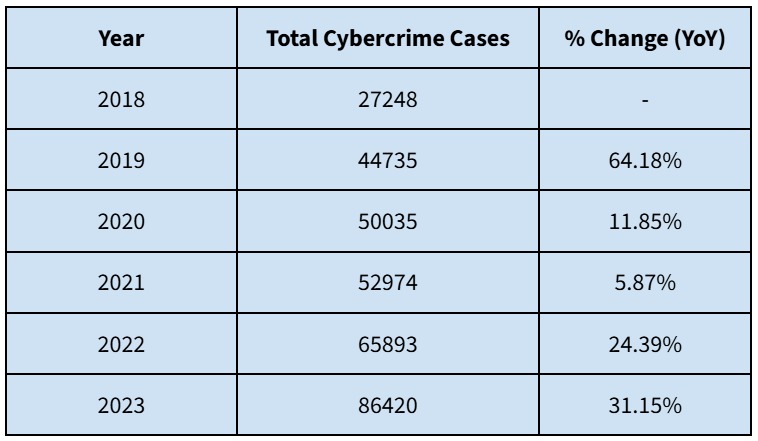
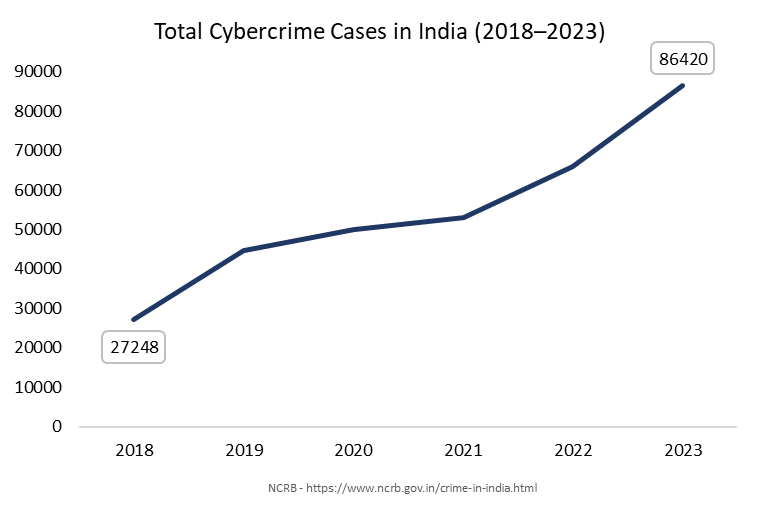
The data published by the NCRB represent the number of crimes that reached the point of the First Information Report (FIR) registration, meaning they reflect only cybercrime cases that were formally presented to the law enforcement system to investigate, rather than all complaints reported. The data shows that cybercrime cases increased from 27,248 in 2018 to 86,420 in 2023, a 3.17-fold increase in 5 years.
Two structural shifts are visible: the post-pandemic jump and subsequent acceleration.
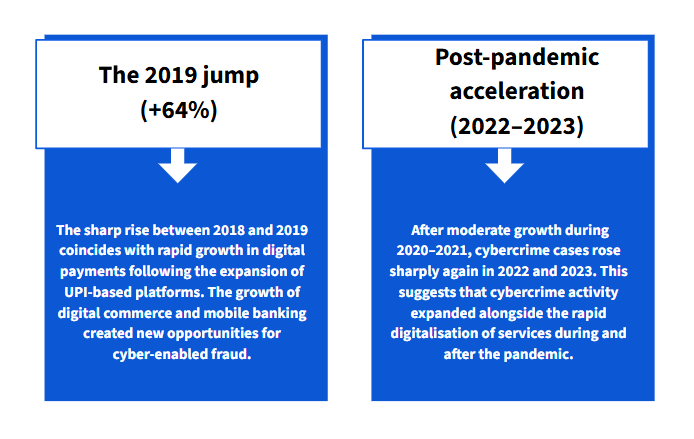
However, these figures likely underestimate the true scale of cybercrime because many incidents are reported only through online complaint portals and may not result in FIR registration.
The Financial Scale of Digital Fraud
The Financial Scale of Digital Fraud
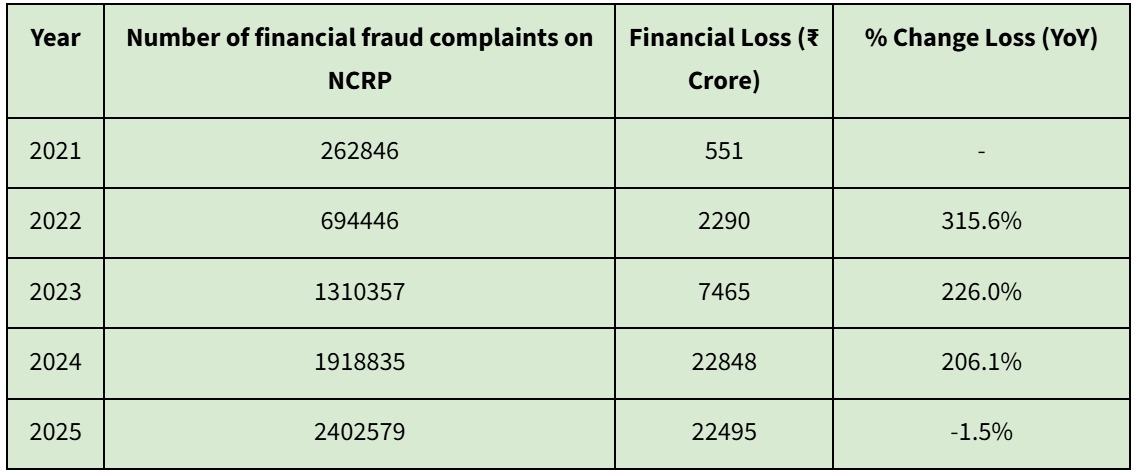
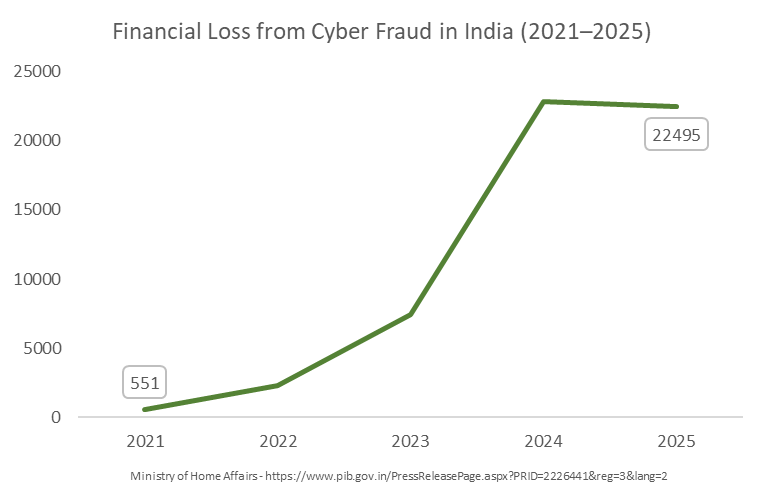
This dataset tracks financial fraud complaints reported through the National Cyber Crime Reporting Portal (NCRP) and the estimated financial losses associated with those complaints.
The financial losses reported between 2021 and 2024 increased by 41 times over four years, compared to 2021, from 551 crore to 22,848 crore. At the same time, the number of complaints rose from 262,846 to over 1.9 million, an increase of ~623%, indicating both rising victimisation and greater public awareness of reporting mechanisms.
The contrast between these two trends is striking:
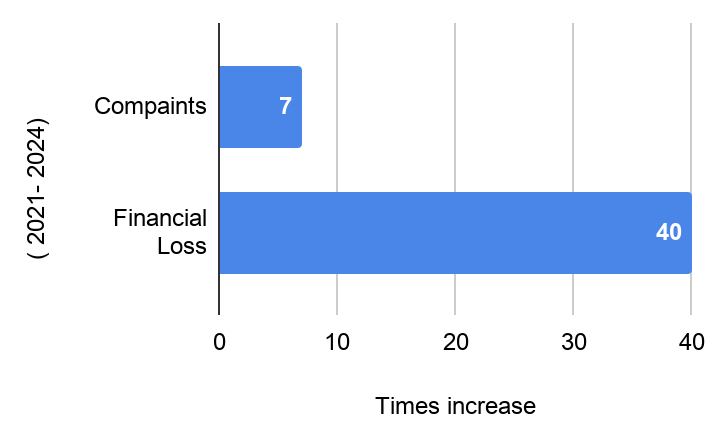
While complaints increased by around 7 times, financial losses increased by over 40 times.
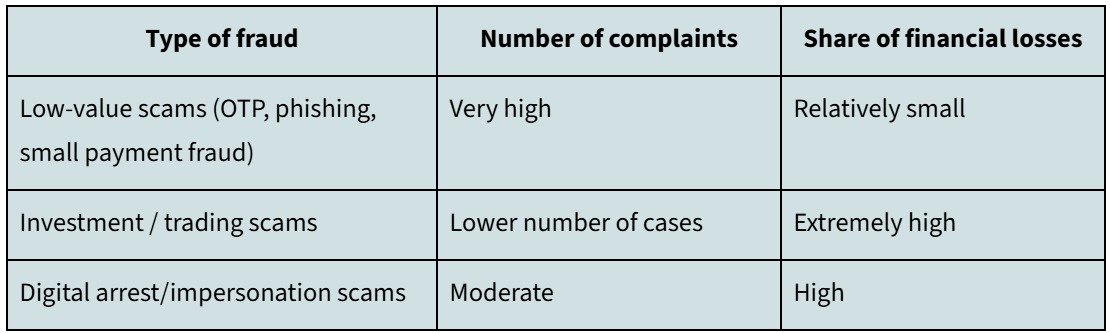
Distribution of Cyber-Fraud Complaints and Financial Losses by Fraud Type
This divergence implies an uneven relationship between the number of incidents and the financial damage that they inflict. Most cyber fraud incidents involve relatively small transaction values; however, a smaller group of fraud categories result in disproportionate numbers of financial losses.
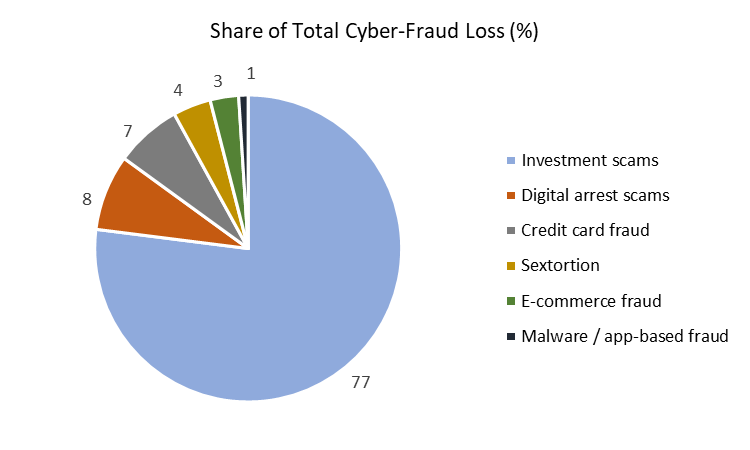
Distribution of Financial Losses Across Major Cyber-Fraud Categories in India
As reported by The Indian Express, based on the data compiled by the I4C, investment-related scams alone account for roughly 77% of reported cyber-fraud losses, followed by smaller shares from “digital arrest” scams (8%), credit card fraud (7%), sextortion (4%), e-commerce fraud (3%), and malware or app-based fraud (1%). This distribution means that even though scams with lower values, like phishing, OTP fraud, and small payment fraud, produce a high proportion of complaints, few categories of fraud produce most of the financial losses.
Analysis
1. Cybercrime is expanding faster than most traditional crimes: The fact that cybercrime cases have tripled in five years shows that cyber offences are presently becoming a significant element of Indian crime. Unlike conventional crimes that require physical proximity, cybercrime can be conducted remotely and at scale, enabling perpetrators to target large numbers of victims simultaneously.
2. Financial losses are concentrated in a small set of fraud categories: As cases of cybercrimes have been on the increase, the monetary losses of digital fraud cases have been increasing at a higher rate. The fact that the number of reported financial losses has increased 40 times in 4 years indicates that cybercrime has a very high economic impact.
3. Complaint volumes and financial damage follow different patterns: When comparing complaints and financial losses, it is evident that cyber fraud losses are unevenly distributed across types of incidents. Most of the prevalent scams reported, including phishing or OTP fraud, involve relatively small transaction values but yield a high portion of complaints. Conversely, fewer categories of fraud, especially investment-based schemes, contribute a significantly higher percentage of total financial losses.
4. Digital financial infrastructure has expanded the attack surface: India’s rapid adoption of digital payment systems, mobile banking and digital financial systems has dramatically increased the number of potential victims of cybercriminals. The scale of online transactions creates new vulnerabilities that organised cybercrime networks take advantage of.
5. Reporting improvements reveal previously hidden crime: The expansion of national reporting systems has enhanced the transparency in the trends of cybercrime. The increase in the number of complaints recorded is partially due to improved reporting systems and not necessarily to the increased criminal activity, meaning that previous data might have understated the magnitude of cyber fraud.
Recommendations
1. Move from reactive policing to proactive cyber-risk monitoring: The conventional models of policing focus on investigation of crimes that have already taken place. With such a magnitude and pace of cyber fraud, India should have systems that are designed to detect and prevent the fraud at its early stages, such as real-time observation of suspicious patterns in transactions by financial institutions.
2. Strengthen financial intelligence sharing across institutions: There are a lot of instances of cyber fraud that use more than one bank, payment system, and telecommunication provider. To detect new networks of fraud sooner, it can be suggested to establish more information-sharing measures between the financial institution and law enforcement agencies.
3. Target organised cyber fraud networks rather than individual incidents: Many digital scams operate through organised networks that coordinate phishing, mule accounts, and fake payment channels. The solution in regard to this involves dismantling these networks through investigative procedures instead of treating incidents on a case-by-case basis.
4. Improve recovery mechanisms for stolen funds: The recovery of the funds lost is one of the most difficult issues in cases of cyber fraud. Expanding systems such as the Citizen Financial Cyber Fraud Reporting and Management System (CFCFRMS) can improve the speed at which fraudulent transactions are frozen or reversed.
5. Strengthen digital financial literacy: A significant percentage of cyber frauds are based on social engineering methods that take advantage of user behaviour as opposed to technical weaknesses. Victimisation can be greatly reduced through specific public awareness efforts on typical scam schemes.
Conclusion
India’s experience illustrates a broader global trend: as economies digitise, crime increasingly follows the flow of digital money. While cybercrime incidents are rising steadily, the much faster growth in financial losses suggests that cybercriminals are becoming more organised, technologically sophisticated, and economically motivated.
References:
- https://indianexpress.com/article/india/indians-lost-rs-53000-crore-fraud-cheating-cases-six-years-maharashtra-2025-10452185/
- https://www.pib.gov.in/PressReleasePage.aspx?PRID=2226441®=3&lang=2 -
- https://www.ncrb.gov.in/crime-in-india.html
- https://i4c.mha.gov.in/index.aspx
- https://i4c.mha.gov.in/index.aspx

Executive Summary
Reports of differences between the Chief Election Commissioner and the two Election Commissioners over the functioning of the Election Commission have emerged, following which protests were held across the country. Protesters demanding the resignation of Chief Election Commissioner Gyanesh Kumar took out a ‘Citizens March’ to Jantar Mantar on October 4, 2026. Against this backdrop, a video is being widely shared on social media. The video purportedly shows a CRPF personnel lathi-charging protesters. It is being shared with the claim that the footage is from the protest against Chief Election Commissioner Gyanesh Kumar at Jantar Mantar in Delhi. However, CyberPeace Research found the viral claim to be false. The viral video is not recent; it dates back to July 2026. At that time, students in Delhi were protesting over the alleged NEET paper leak and demanding the resignation of then Union Education Minister Dharmendra Pradhan.
Claim:
A Facebook user, ‘Kuldeep Pandit’, shared the viral video on October 4, 2026, with the caption: “The only thing left was the last ball, when Modi ji hit a six at the Jantar Mantar stadium and broke the backsides of traitors... Jantar Mantar is now under the control of the Indian Army, and the Army is giving freedom by the trolley load... Jai Shri Ram.”The archive link to the post can be viewed here.
https://www.facebook.com/reel/1807020453964507
https://perma.cc/RN8J-XV4K?type=standard

Fact Check
To verify the authenticity of the viral video, we extracted several keyframes using the InVID tool and conducted a reverse image search on Google. During the search, we found the viral video shared on a Facebook account named ‘Jansandesh News’ on July 21, 2026. According to the information provided with the post, the video shows a protest held at Jantar Mantar over the alleged NEET paper leak.
https://www.facebook.com/watch/?v=1786356329397999

Based on the information obtained, we conducted a Google search using relevant keywords. We also found the viral video on an Instagram account named ‘datiabulletinofficial’. The video was shared on July 21, 2026, and was identified as footage from a protest held at Jantar Mantar. According to the caption, students were protesting over the alleged NEET paper leak and demanding the resignation of then Union Education Minister Dharmendra Pradhan.
https://www.instagram.com/reels/DbFXpGHzmwB/

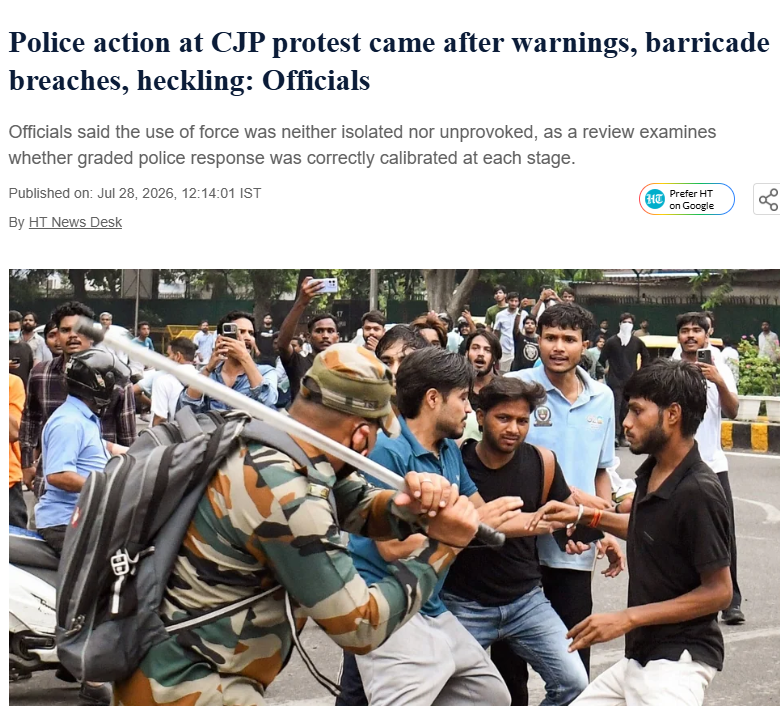
During our research, we found a news report related to the claim on the Hindustan Times website. The report was published on July 28, 2026. According to the report, “On July 20, students led by the ‘Cockroach Janta Party’ (CJP) marched towards Parliament. During the protest, police and Rapid Action Force (RAF) personnel lathi-charged the students, drawing considerable criticism. The Delhi Police later clarified that it would review the lathi-charge on the students and the action taken by the police.”The report also contains keyframes that closely resemble the visuals seen in the viral video.
Conclusion:
Our research found that the claim being made about the viral video of protesters being lathi-charged is false. The video dates back to July 2026, when students in Delhi held protests over the alleged NEET paper leak and demanded the resignation of then Union Education Minister Dharmendra Pradhan.
