

#FactCheck

Executive Summary
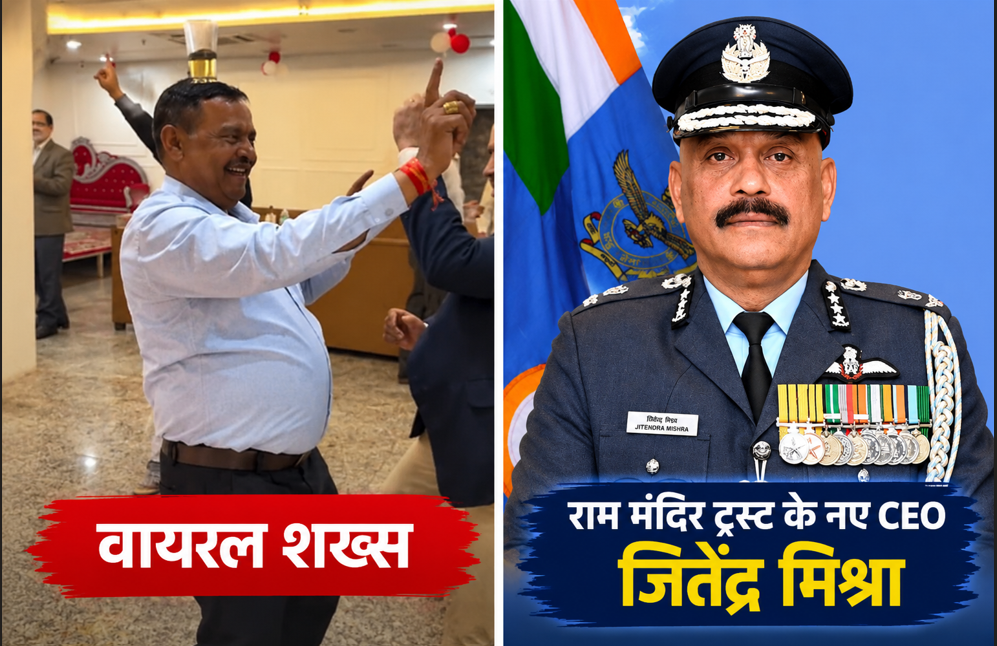
A video of a man dancing is going viral on social media. The man is being claimed to be Jitendra Mishra, the newly appointed CEO of the Ram Mandir Trust and a retired Air Marshal of the Indian Air Force. The claim states that the video shows Jitendra Mishra dancing and drinking alcohol while celebrating his appointment as the CEO of the Ram Mandir Trust. CyberPeace’s Research Wing found that the person seen in the viral video is not Jitendra Mishra, the CEO of the Ram Mandir Trust. The identity of the man seen in the video is different, and the video has been available on social media since November 2025.
Claim:
A user on social media platform X (formerly Twitter) shared the viral video with the caption: “Jitendra Mishra was seen dancing and drinking alcohol while celebrating his appointment. Earlier, those who counted donations used to steal; now the CEO is celebrating with a party. They have turned the temple into a company, brother, and even installed a dance floor.”

Fact Check
To verify the claim, we conducted a reverse image search of the keyframe from the viral video. During the search, we found the same video posted on an Instagram account named Vikas Rana on November 3, 2025.
https://www.instagram.com/reels/DQmLsEYD8nA/

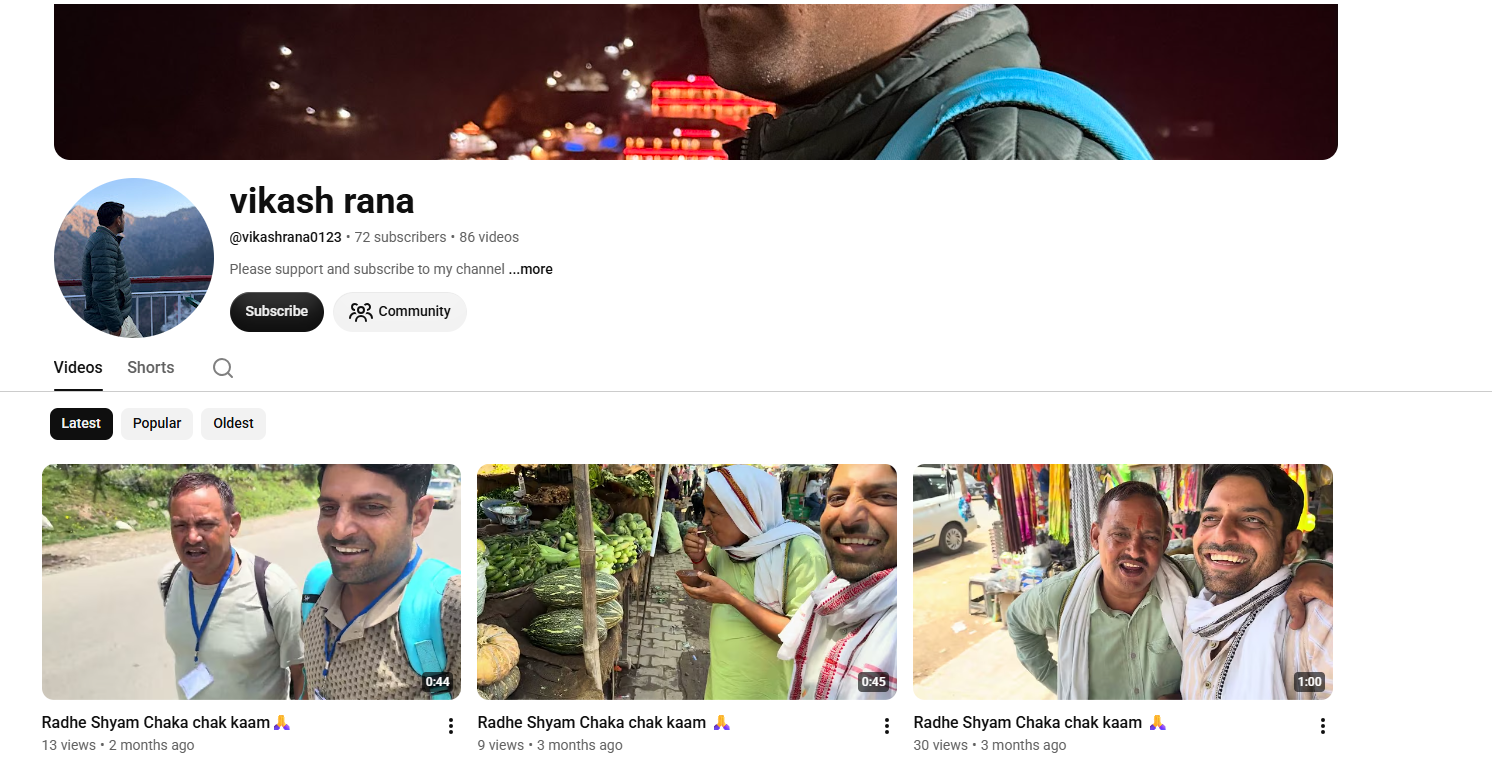
Upon examining Vikas Rana’s Instagram account, we found two videos featuring the person seen dancing. We also found a link to his YouTube channel in Vikas Rana’s Instagram bio.

As part of our research, we further examined Vikas Rana’s YouTube channel. In several videos available on the channel, the person seen in the viral video can be seen. In all the videos, Vikas Rana refers to the person in the viral video as “Captain Sahab.”
As part of our research, we compared the faces of the person seen in the viral video with those of the newly appointed CEO of the Ram Mandir Trust, Jitendra Mishra. The comparison revealed several differences between Jitendra Mishra’s face and that of the person seen in the viral video.
Conclusion
Our research found that the viral video is not of Jitendra Mishra, the newly appointed CEO of the Ram Mandir Trust. The video was found on Vikas Rana’s Instagram account, where two videos featuring the same person were posted. Further, several videos on Vikas Rana’s YouTube channel feature the same individual, whom Rana refers to as “Captain Sahab.” A facial comparison also revealed clear differences between the person in the viral video and Jitendra Mishra. Therefore, the claim that the viral video shows Jitendra Mishra celebrating his appointment as the Ram Mandir Trust CEO is false.

Executive Summary
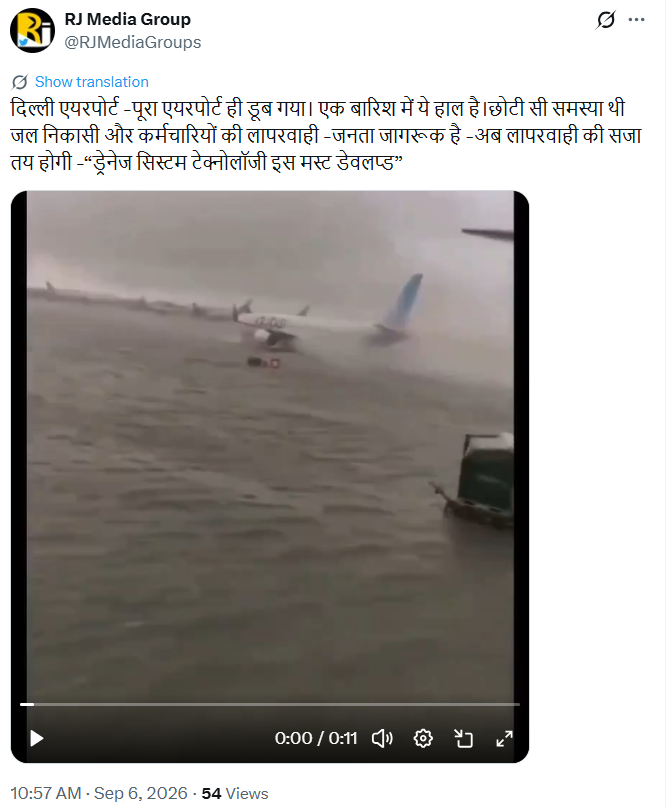
A post is being widely circulated on social media claiming that the entire Delhi airport was submerged following heavy rainfall. The post questions the airport’s drainage system and attributes the situation to the negligence of its staff. The post further claims that the airport’s arrangements were exposed after just one spell of rain and that its drainage system needs to be upgraded using better technology. A research by the research wing of CyberPeace found that the viral video is not from Delhi airport but dates back to April 2024. At the time, heavy rainfall in Dubai caused flood-like conditions at the airport, affecting flight operations on waterlogged runways as well. Thus, an old video from Dubai is being falsely shared on social media as footage of Delhi airport.
Claim:
A user on the social media platform X (formerly Twitter) shared the viral video with the caption: “Delhi Airport — the entire airport is submerged. This is the situation after just one spell of rain. A minor issue of drainage and negligence by the staff — the public is aware — now the negligence will be punished. ‘The drainage system technology must be developed.’”
https://x.com/RJMediaGroups/status/2096470339060736149
Factcheck
As part of our investigation, we conducted a reverse image search of keyframes from the video. During the search, we found the original video on a YouTube channel named The Indian Express, which was uploaded on April 17, 2024. According to the video description, the incident took place in Dubai. The post link and screenshot are provided below.
https://www.youtube.com/watch?v=O9F1qTMIO5M

During our investigation, we found visuals similar to those in the viral video on the YouTube channel AlArabiyaEnglish. The video was uploaded on April 16, 2024. According to the information provided in the video description, several parts of the UAE were affected by flooding following sudden heavy rainfall on April 16, 2024. The heavy rains also affected operations at Dubai Airport, disrupting several flights. According to the report, the UAE recorded a record 254 mm of rainfall in less than 24 hours. In view of the adverse weather conditions, Dubai Airport advised passengers to travel only if absolutely necessary. The post link and screenshot are provided below.
https://www.youtube.com/shorts/KzIstkiOdp4

Conclusion:
Our investigation found that the viral video does not show Delhi Airport after heavy rainfall. The visuals are actually from Dubai Airport, where severe rainfall in the UAE in April 2024 led to flooding and disruptions to airport operations. Therefore, the viral video is old and has been falsely shared on social media with the misleading claim that it shows the current condition of Delhi Airport.

Executive Summary
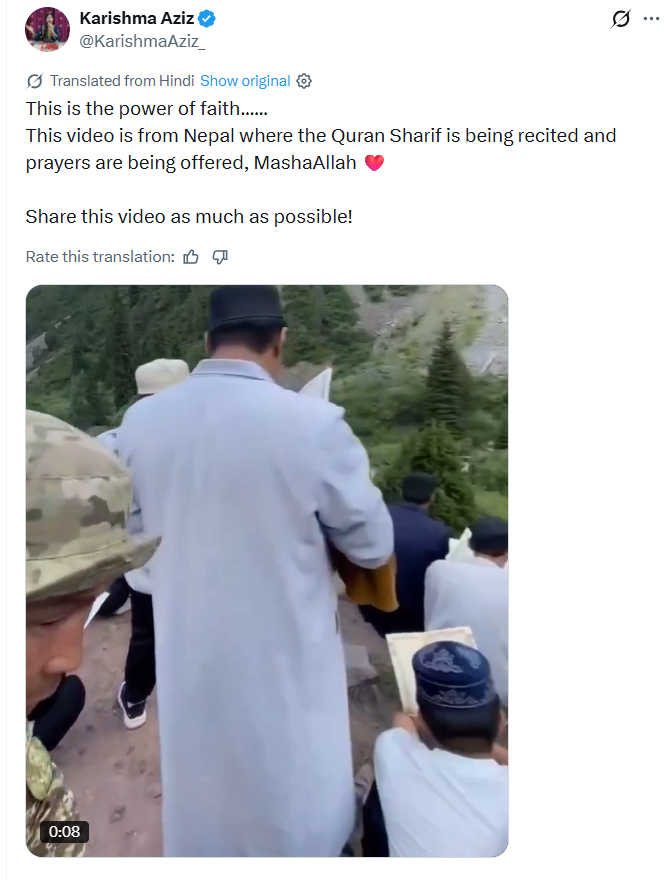
A video is being shared on social media with the claim that the Quran is being recited in Nepal to seek protection from floods. Research by the CyberPeace Research Wing found that the video is actually from Kyrgyzstan, a Central Asian country, and dates back to June. It shows people praying for the safety of a six-year-old boy who had been swept away by floodwaters.
Claim:
The video is being shared on X with a caption making the viral claim. It reads, “This is the power of faith. This video is from Nepal, where the Holy Quran is being recited and prayers are being offered. Mashallah.”
https://x.com/KarishmaAziz_/status/2095053199531286855
Fact Check
During our research into the viral video claiming that the Quran is being recited in Nepal to seek protection from floods, a reverse image search using keyframes led us to the same video uploaded on an Instagram account on June 25.
https://www.instagram.com/reels/DaAtnyUN4WP/
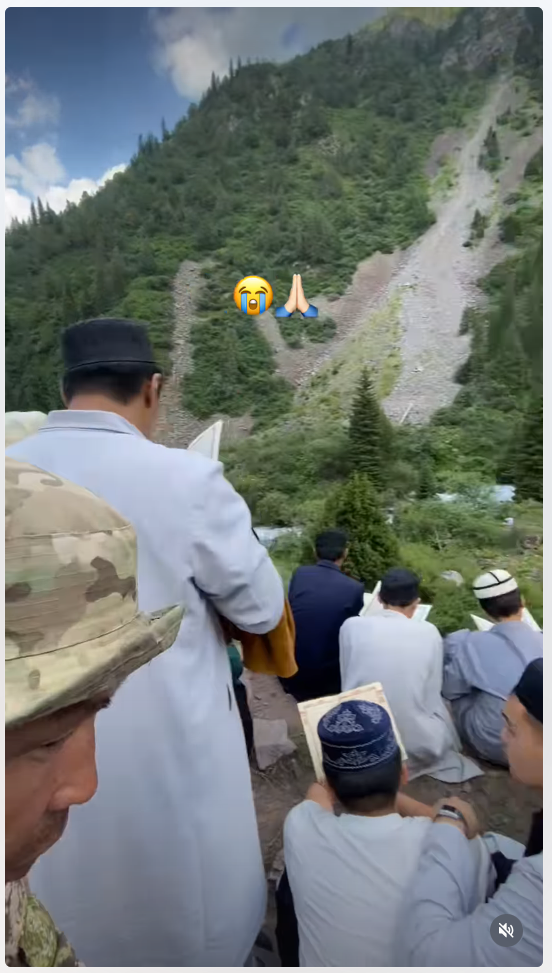
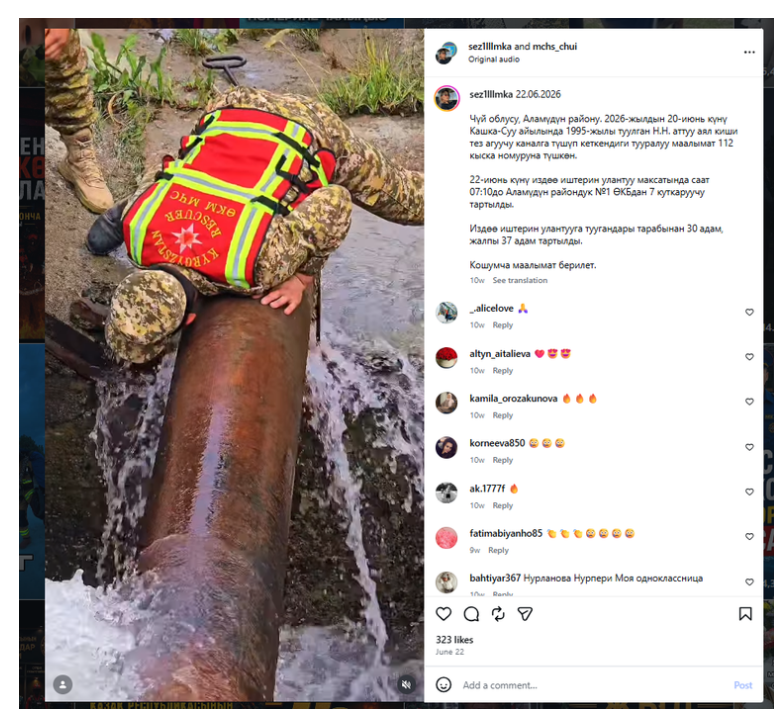
We translated the bio of the said Instagram account and found that it is associated with the Press Department of the Ministry of Emergency Situations in Kyrgyzstan’s Chuy Region. We also found several videos uploaded on the account featuring uniformed personnel wearing the same attire as those seen in the viral video.

The life jackets worn by the uniformed personnel in these videos also clearly bear the words “Kyrgyzstan Rescue.”
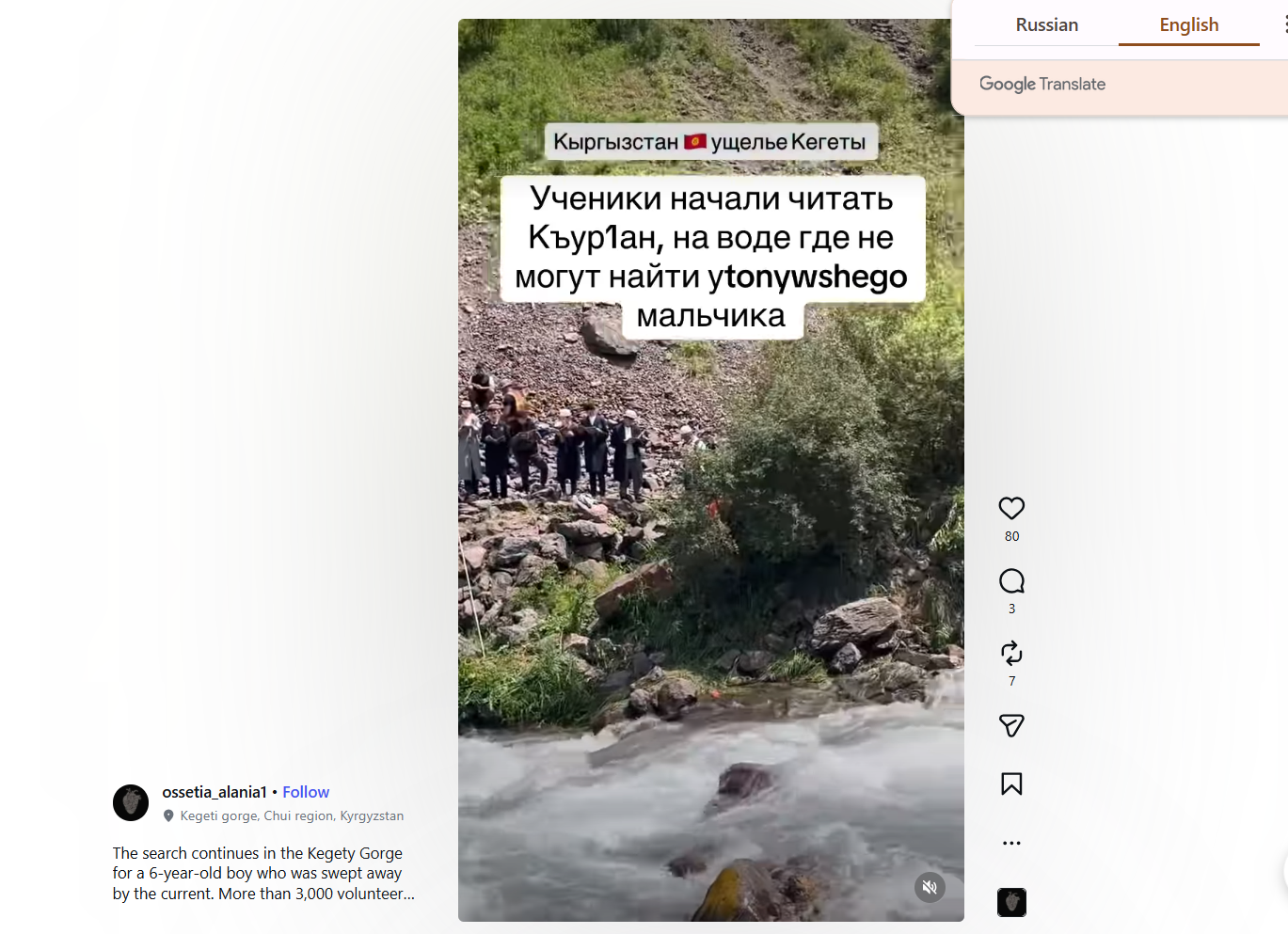
During our research, we also found several Instagram posts published on June 25 featuring visuals similar to those in the viral video. The captions stated that Hafizs were reciting the Quran and offering prayers for the safety of a six-year-old boy during his rescue operation.
https://www.instagram.com/reels/DaBK3nYtfDf/https://www.instagram.com/reels/DaBK3nYtfDf/
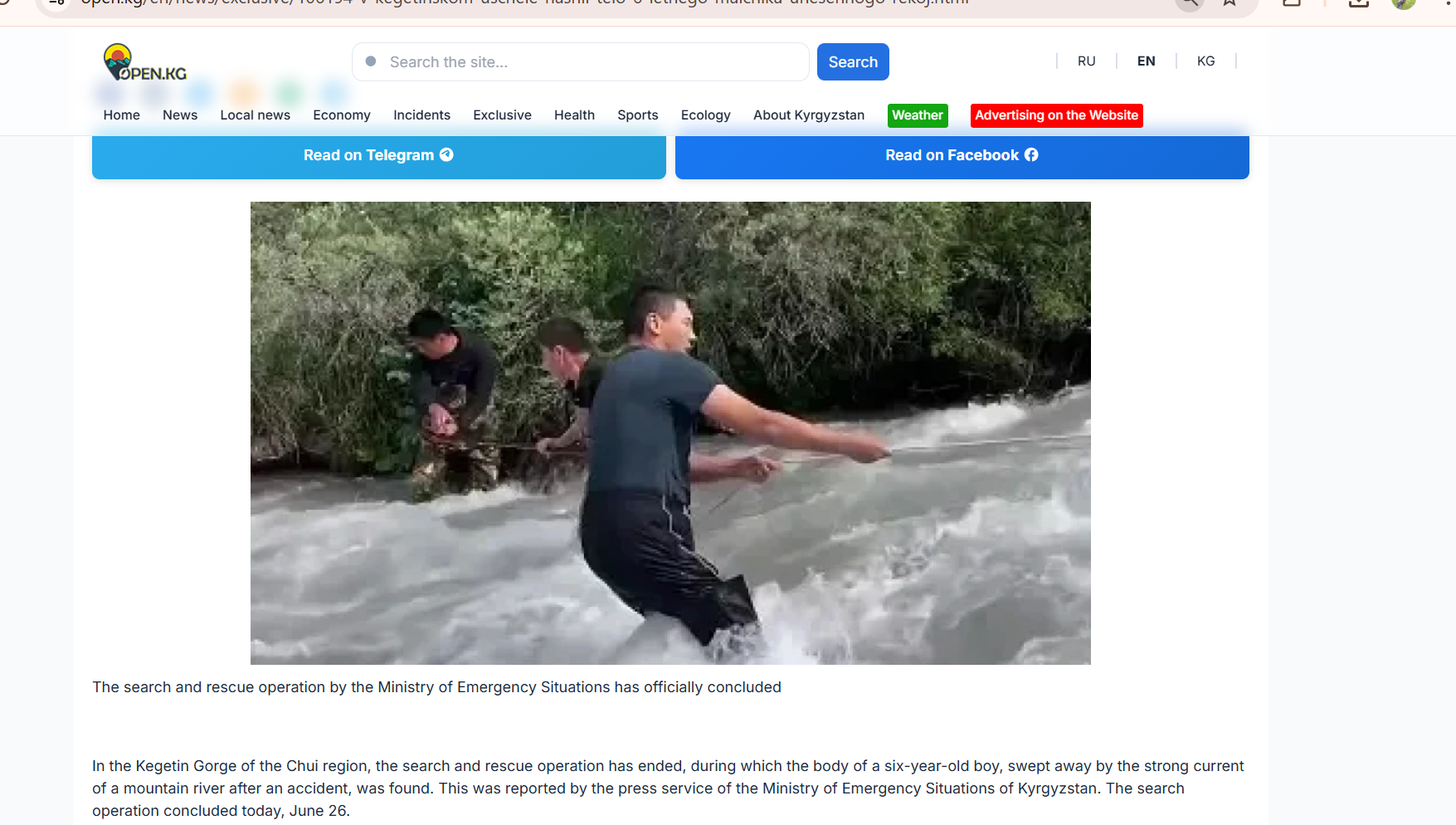
In this regard, we also found a report published on June 26 by a Kyrgyz news website. The report stated that on June 23, a car carrying two women and five children fell into the Kegety River. The two women and three children managed to get out of the vehicle, but two children remained trapped inside. The body of a 12-year-old girl had already been recovered by the rescue team. Later, on June 26, the body of the other child was also recovered.
Conclusion
Our research found that the viral claim is false. The video being shared with the claim that the Quran was being recited in Nepal to seek protection from floods is actually from Kyrgyzstan and dates back to June. The evidence gathered during our research, including the original social media posts and reports from Kyrgyzstan, confirms that the footage is related to a rescue operation involving children after a car fell into the Kegety River. Therefore, the viral video has no connection with the recent floods in Nepal and is being shared with a false claim.

Executive Summary
A video is going viral on social media, showing a young boy carrying an even younger child on his back. Several users are sharing the video and its screenshots, claiming that it shows the aftermath of the floods in Nepal. A research by CyberPeace Research Wing found the viral claim to be false. Our research revealed that the video has been available online since August 11, 2026, and is being identified as footage from Vietnam. Meanwhile, Nepal was hit by a devastating flash flood on the morning of August 26, 2026. Therefore, the viral video has no connection with the recent floods in Nepal.
Claim
A news channel shared the viral image on Facebook with the caption: “A heartbreaking video from flood-hit Nepal has gone viral, showing two young siblings reportedly separated from their parents in the aftermath of the disaster. The children were seen trying to find their parents amid the devastation. Scratches and injuries were visible on their faces.The footage also shows the young boy trying to protect and look after his younger sister during the ordeal. The emotional visuals have sparked concern among social media users, highlighting the devastating human toll of the floods in Nepal.”
https://www.facebook.com/photo/?fbid=1711778750991761&set=a.637353345100979
https://perma.cc/GU6W-WQJM?type=standard

Fact Check
During a reverse image search of keyframes from the viral video, we found an uncropped version of the footage uploaded to YouTube on August 30. The title of the video reads, “Those who don’t have parents, #parents #orphanchildren #homelesschildren #poorkids #shortsfeed …” The text overlaid on the video reads, “The little boy carries his younger sibling under the scorching midday sun. Seeing the two siblings covered in dust breaks my heart.” The uncropped version also features a logo that reads “Thiên Duyên.”
https://www.youtube.com/shorts/z9XoY5GCxWs

In another video, a man can be heard speaking in Vietnamese and offering the children clothes and food.
https://www.instagram.com/p/DcxJHDjTLec/

An examination of the account’s ‘About this account’ section also showed that the account is based in Vietnam.

A keyword search using the account’s username led us to a news report by The Statesman, which had spoken to the owner of the page. The report identified the person behind the video as Thien Duyen. Duyen confirmed to The Statesman that he had filmed the video in Ha Giang, a rural and mountainous area of Vietnam. https://www.thestatesman.com/world/fact-check-viral-grave-of-the-fireflies-video-falsely-linked-to-nepal-floods-creator-says-it-was-shot-in-vietnam-exclusive-1503633031.html/amp
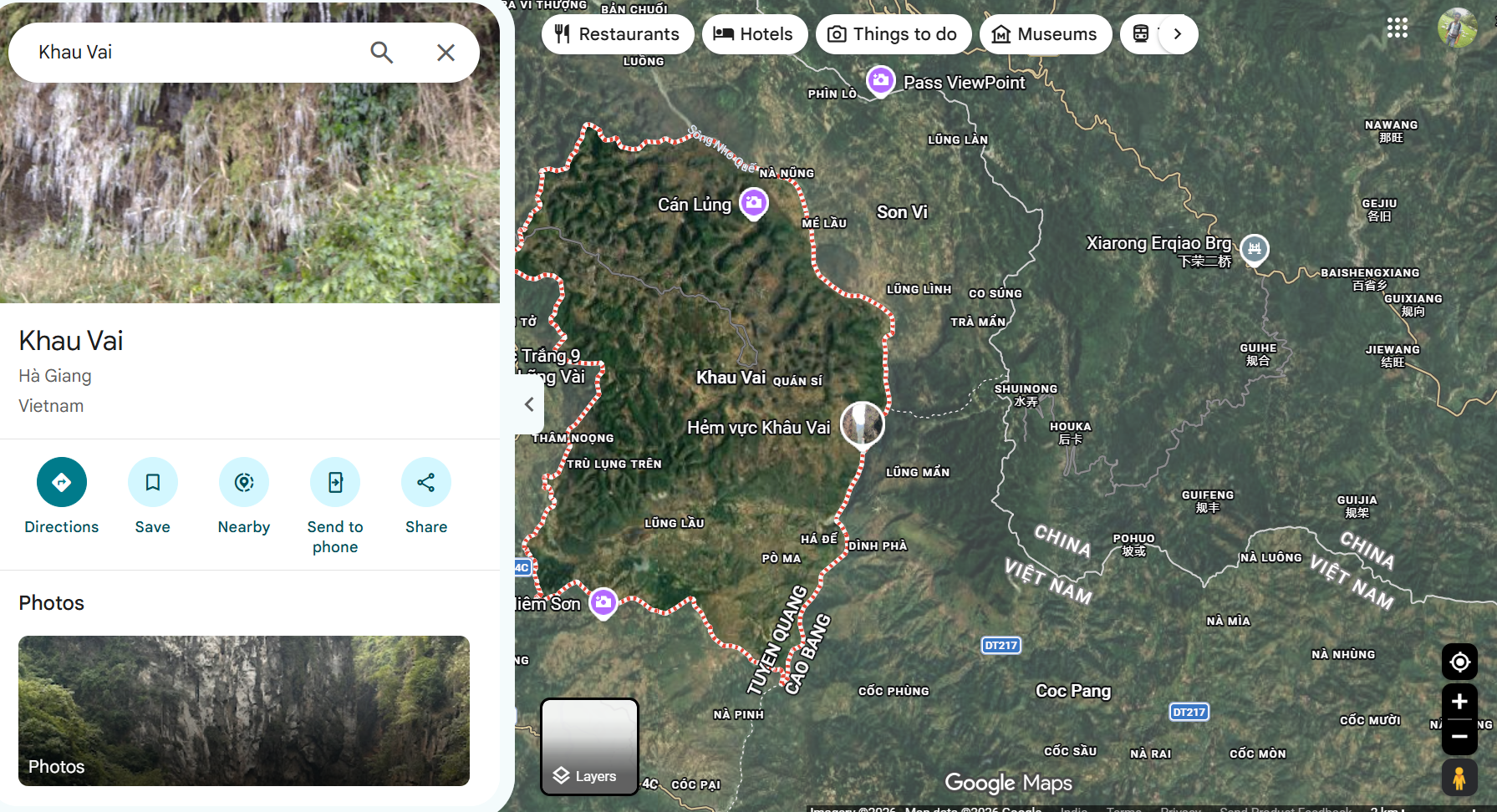
Using Google Maps and search, we found that Khau Vai is a remote mountain commune located in the Meo Vac district of Ha Giang Province, Vietnam.
Conclusion:
Our research found the viral claim to be false. The video has been available online since August 11, 2026, and has been identified as footage from Vietnam. Meanwhile, Nepal was hit by a devastating flash flood on August 26, 2026. This makes it clear that the viral video has no connection with the recent floods in Nepal.

Executive Summary
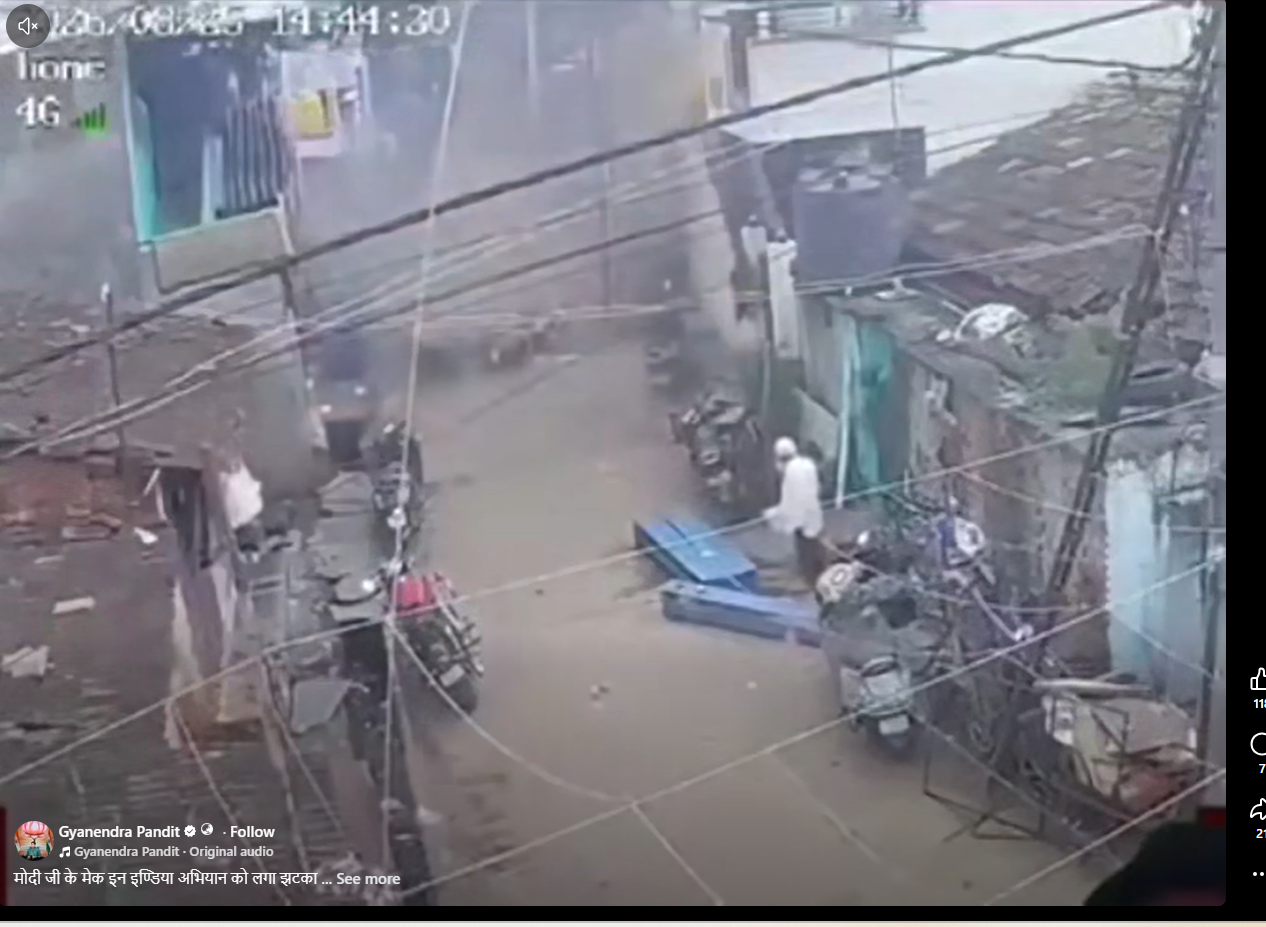
A CCTV video showing a powerful blast on a street lined with houses is going viral on social media. The video is being shared with the claim that it shows a bomb being tested. The posts also claim that the blast took place at the home of a ‘renowned madrasa scientist’ named Abdul Ghaffar and that his entire family was killed during the alleged bomb test. Research by the CyberPeace Research Wing found that the claim is false. The blast took place in Dharwad, Karnataka, on August 25 due to an LPG cylinder leak.
Claim
The video was shared on Facebook with the caption: “Setback for Modi’s ‘Make in India’ campaign: Renowned Madrasa scientist ‘Abdul Ghaffar’ has passed away along with his entire family. The incident occurred during a bomb test at home.”
https://www.facebook.com/reel/1439446978053404
Fact Check
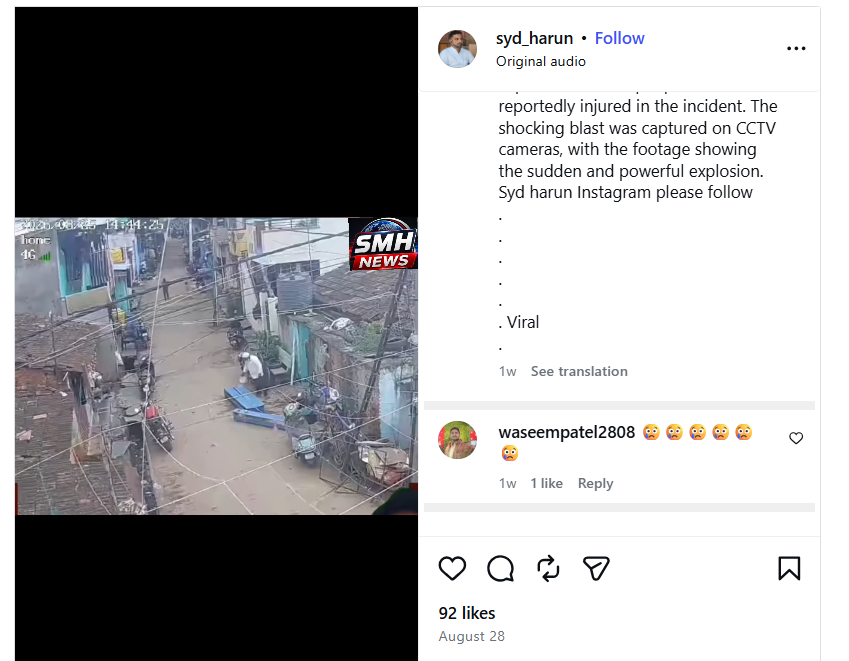
To verify the truth behind the viral claim, we conducted a Google search using relevant keywords. We did not find any news reports about a ‘madrasa teacher Abdul Ghaffar’ who died along with his family due to a bomb test at home. We also conducted a reverse image search of keyframes from the viral video. During the search, we found the same video shared on Instagram on August 28. The caption read, “A domestic LPG cylinder exploded inside a house in Dharwad, Karnataka, triggering panic in the area. The blast was so powerful that the gas cylinder was reportedly hurled out of the house at high speed.”
https://www.instagram.com/p/Dck0dlQRzMy/c/18102766577220962/
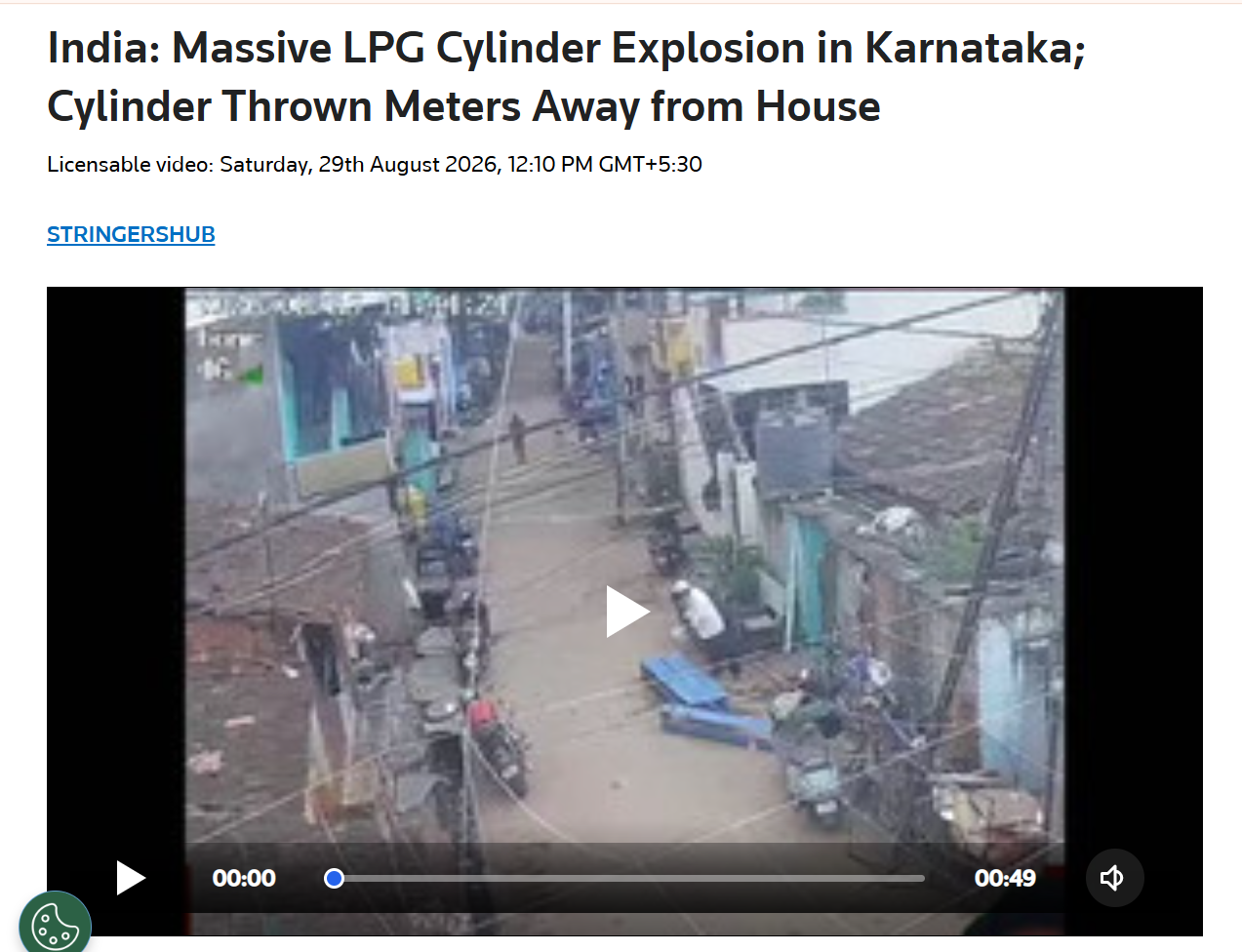
We also found the video shared on Reuters Connect, a media licensing platform. According to Reuters’ description, the incident shown in the video took place on August 25, when an LPG cylinder exploded due to a gas leak.
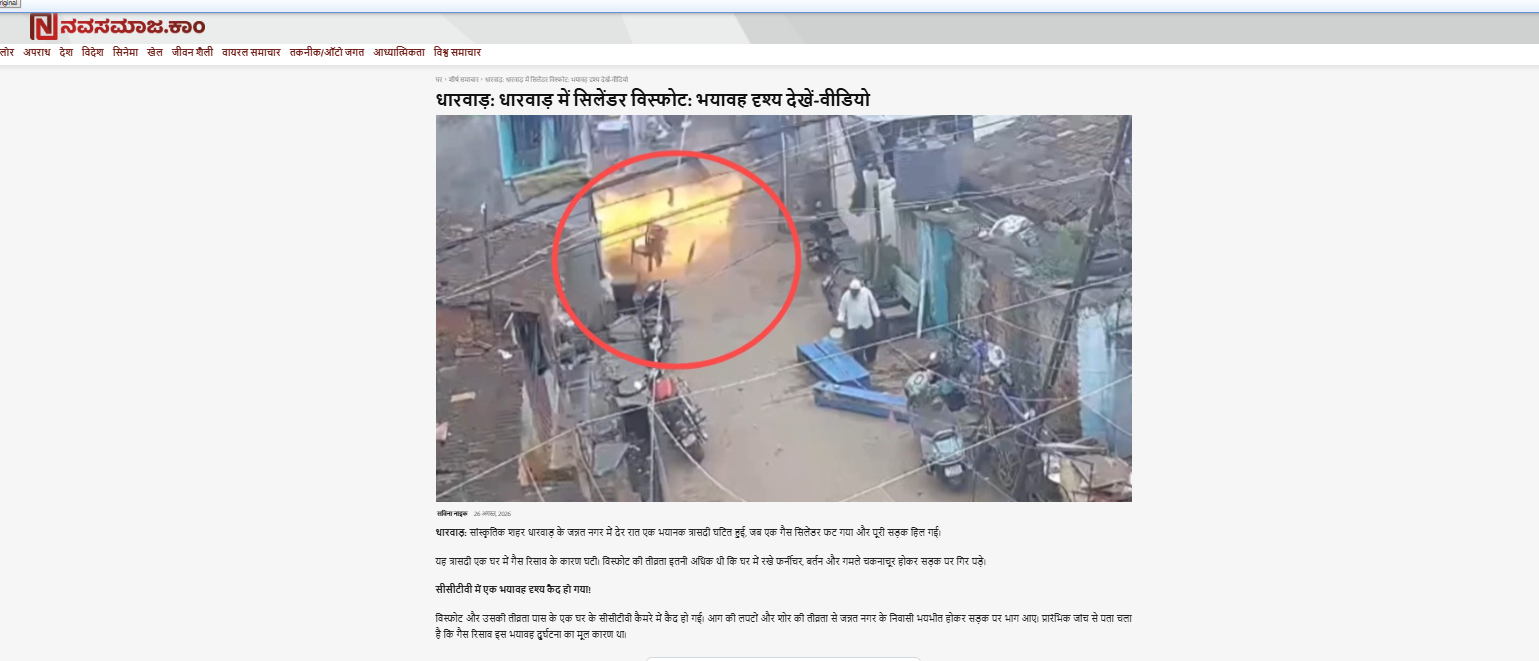
Karnataka-based website Navasamaja published a report on August 26, using a screenshot from the viral video as the cover image. According to the report, the incident took place in Jannat Nagar, Dharwad. The report states, “A young man named Rajasabh Neeralakatti was fast asleep at home when the incident occurred. The sudden blast left the young man severely burned and injured several parts of his body.”
Conclusion
Our research found that the viral claim is false. The video does not show a bomb test at the home of a ‘renowned madrasa scientist’ Abdul Ghaffar or the death of his family. The viral footage actually shows an LPG cylinder explosion that took place on August 25 in Jannat Nagar, Dharwad, Karnataka, following a gas leak. Reports about the incident, along with the original video, confirm that the blast was caused by an LPG cylinder and was unrelated to any bomb testing. Therefore, the viral video is being shared with a false and misleading claim.

Executive Summary
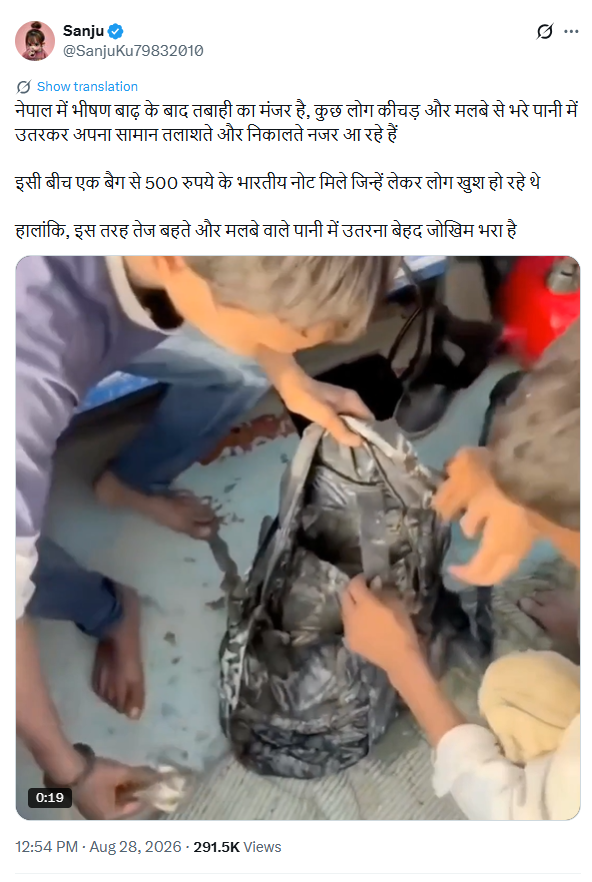
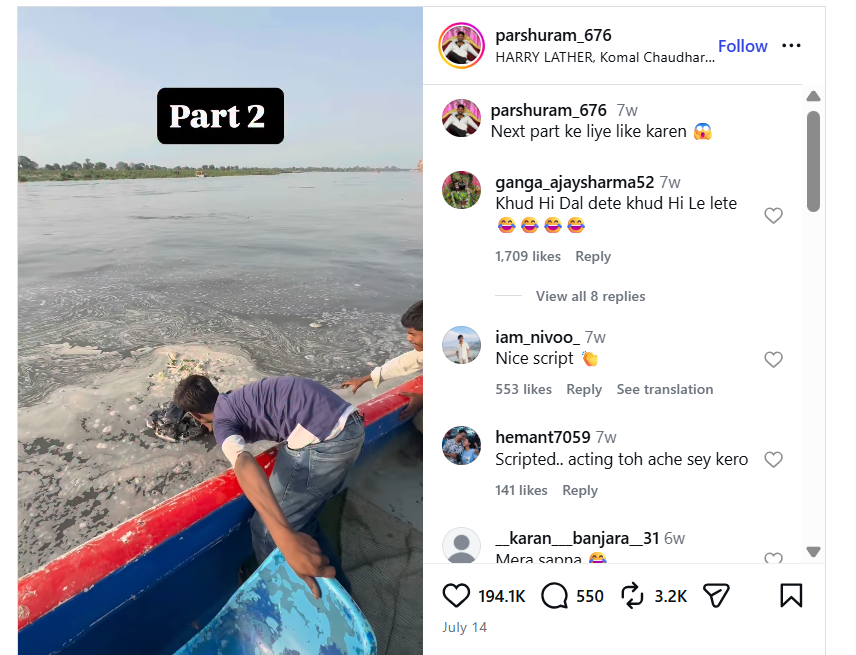
A video is going viral on social media with the claim that ₹500 Indian currency notes were found inside a bag during the floods in Nepal. A research by CyberPeace’s research wing found that the video is not from the recent floods in Nepal, but from Vrindavan in Uttar Pradesh. The video was uploaded on July 14 by an Instagram creator on their account. The 30-second video shows people travelling in a boat finding a bag floating in the water, from which several ₹500 currency notes are pulled out.
Claim:
The video has been shared on X with a caption claiming that Nepal is witnessing widespread destruction following severe floods, with people seen wading through muddy, debris-filled water to search for and recover their belongings. The caption further claims that people found a bag containing ₹500 Indian currency notes and were seen rejoicing over the discovery. It also cautions that entering fast-flowing, debris-filled floodwater is extremely dangerous.
https://x.com/SanjuKu79832010/status/2093238274206887946
Fact Check:
To verify the viral video claiming that a bag containing ₹500 Indian currency notes was found during the floods in Nepal, we conducted a reverse image search using keyframes from the footage. The search led us to a video uploaded on the Instagram account ‘parshuram_676’ on July 14, 2024.
https://www.instagram.com/p/Daw7aYJAjoc/
Additionally, we found the same boat seen in the viral video in several other videos uploaded on the same Instagram account.

Not only that, we also found several videos with visuals similar to those in the viral video uploaded on the same video creator’s Facebook account. The information provided on the Facebook account also lists Vrindavan, Uttar Pradesh, as the location.
https://www.facebook.com/profile.php?id=61567184794045

Conclusion:
The evidence gathered during our research clearly establishes that the video being circulated with the claim that ₹500 Indian currency notes were found inside a bag during the floods in Nepal was actually filmed by a video creator in Vrindavan, Uttar Pradesh.

Executive Summary:
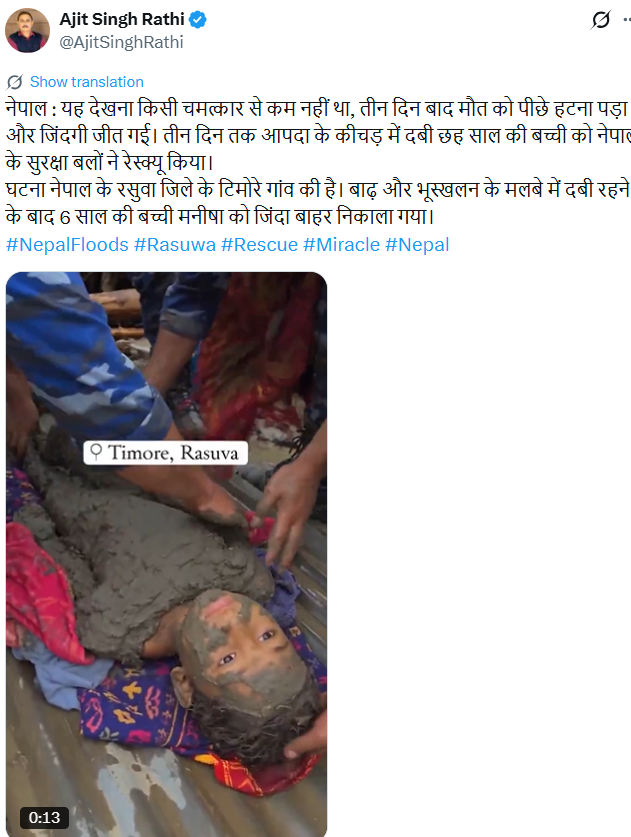
A video is being widely circulated on social media in connection with the relief and rescue operations following the devastating floods in Nepal. The video shows security personnel rescuing a girl trapped under debris and later giving her soup. The video is being shared with the claim that security personnel rescued a girl who had been buried under mud three days after the disaster in Timure village of Nepal’s Rasuwa district. A research by CyberPeace Research Wing found the viral claim to be false. Our research revealed that the viral video does not depict a real incident but is AI-generated.
Claim:
A user on social media platform X (formerly Twitter) shared the viral video with the caption: “Nepal: It was nothing short of a miracle to witness this. After three days, death had to retreat and life emerged victorious. A six-year-old girl, who had been buried under the disaster debris for three days, was rescued by Nepal’s security forces. The incident took place in Timure village of Nepal’s Rasuwa district. Six-year-old Manisha was pulled out alive after being buried under debris caused by floods and landslides.”
https://x.com/AjitSinghRathi/status/2094306889001742826?s=20
Fact Check:
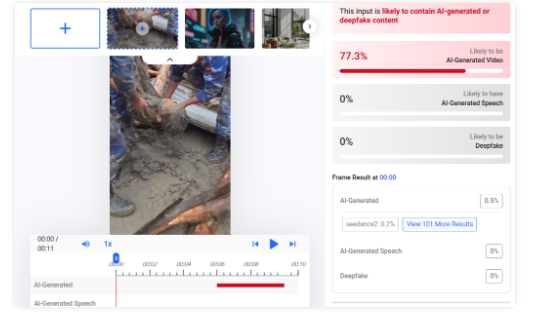
A close examination of the viral video revealed several inconsistencies, raising suspicions that the video was AI-generated. We then scanned the viral video using the AI detection tool Hive Moderation. According to the results, there is a 77 per cent likelihood that the viral video is AI-generated.
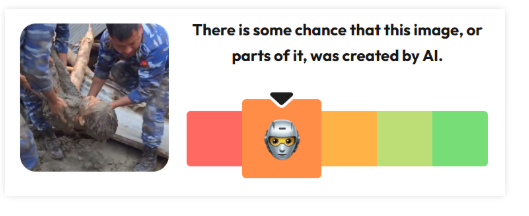
As part of our research, we scanned the video using the AI detection tool Wasitai. According to the results, the viral video is AI-generated.
Conclusion:
Our research found the viral claim to be false. Our findings revealed that the viral video does not depict a real incident but is AI-generated.
Executive Summary
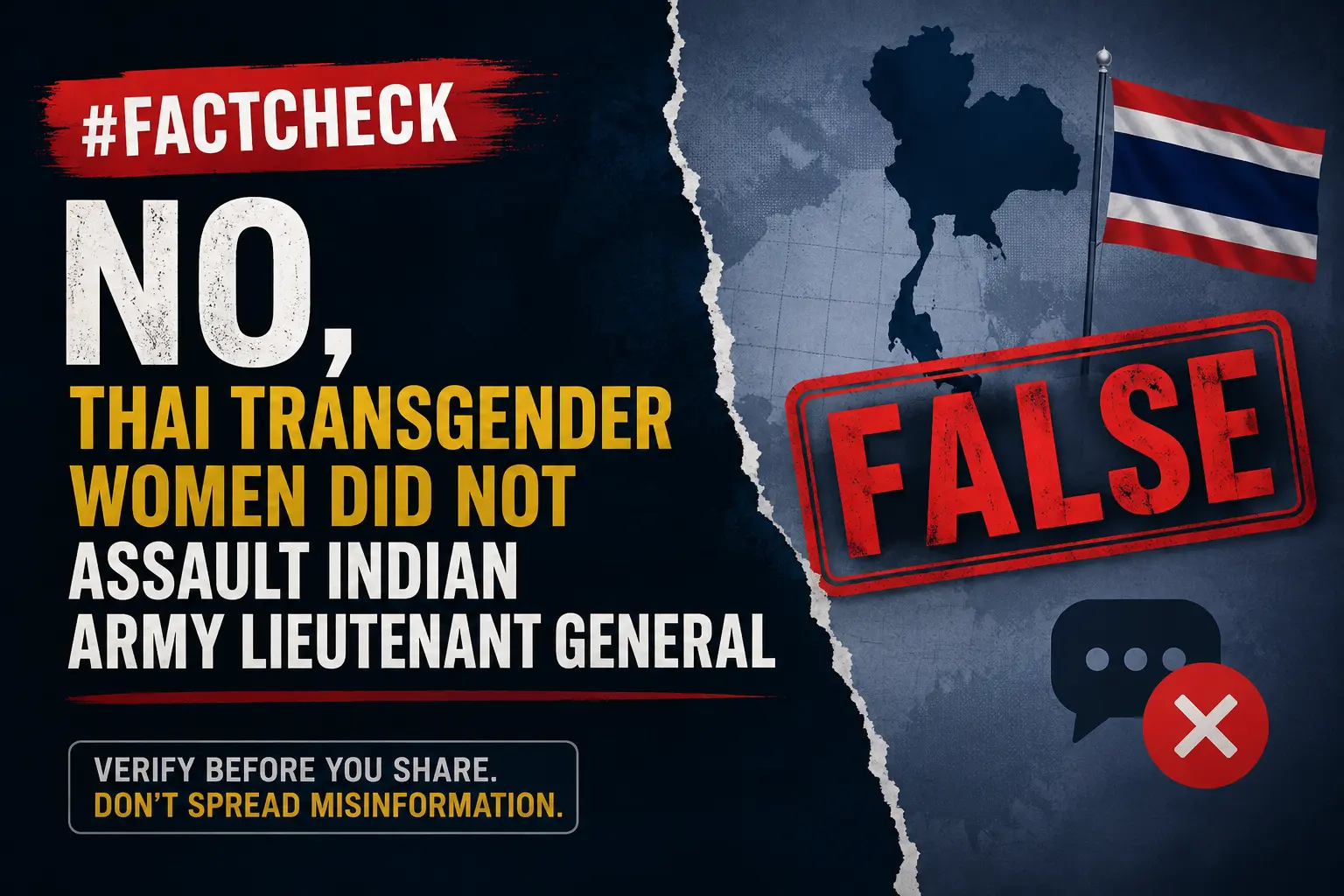
A video is rapidly going viral on social media, with the claim that transgender women assaulted an Indian Army officer in Thailand. The post further claims that the officer had failed to pay the agreed amount, following which the incident took place. A research by CyberPeace’s research wing found that the viral video is fake. In fact, the video shows an incident that took place in Pattaya, Thailand, in December 2025. The 52-year-old Indian national, Raj Jasuja, was allegedly assaulted by a group of transgender women following a dispute over payment for sexual services. Therefore, the claim made in the post is false.
Claim:
A video shared on social media claims that transgender women assaulted an Indian Army general in Thailand.
https://x.com/navyhato/status/2094322001490116659
https://archive.ph/Scfgd

Fact Check:
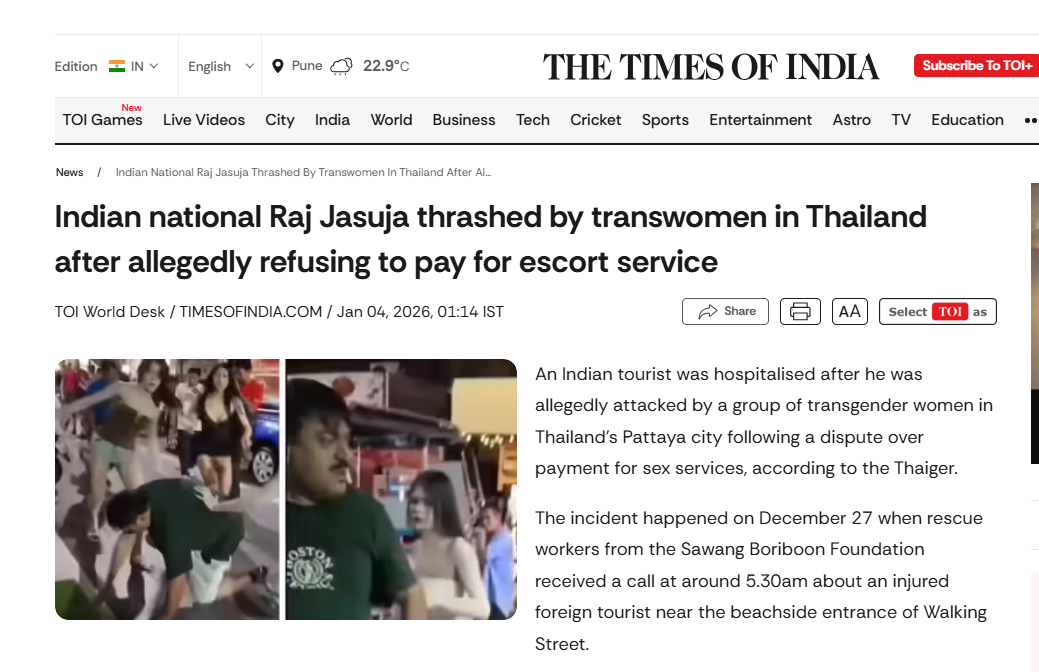
To verify the claim, we conducted a Google search using relevant keywords but found no credible media reports confirming that Indian Army Lieutenant General Rajiv Kumar Sahni was involved in the incident. During the subsequent research, we compared the viral screenshot with the original report published by The Times of India. The comparison revealed that the original headline, “Indian national Raj Jasuja thrashed by transwomen in Thailand after allegedly refusing to pay for escort service,” had been digitally altered to read, “Indian Army Lieutenant General Rajiv Kumar Sahni thrashed by transwomen in Thailand after allegedly refusing to pay for escort service.” Further, both the viral screenshot and the original report display the same breadcrumb trail — “News / Indian National Raj Jasuja Thrashed By Transwomen In T…”. This provides further evidence that the headline in the viral screenshot was digitally manipulated.
After establishing the context of the viral claim, we conducted a Google search using relevant keywords. During the search, we found a report published on The Indian Express website on January 5, 2026, which featured the same visuals as those seen in the viral video. According to the report, a 52-year-old Indian tourist was allegedly assaulted by a group of transgender women in Pattaya, Thailand. The incident reportedly stemmed from a dispute over an unpaid fee for sexual services. The viral video, recorded on December 27, shows three transgender women allegedly assaulting the man with slippers. According to the report, the dispute escalated after the man allegedly refused to pay the amount demanded and attempted to leave the spot in a car. One of the transgender women reportedly accused him of refusing to make the payment. He was subsequently kicked and beaten before emergency responders intervened.
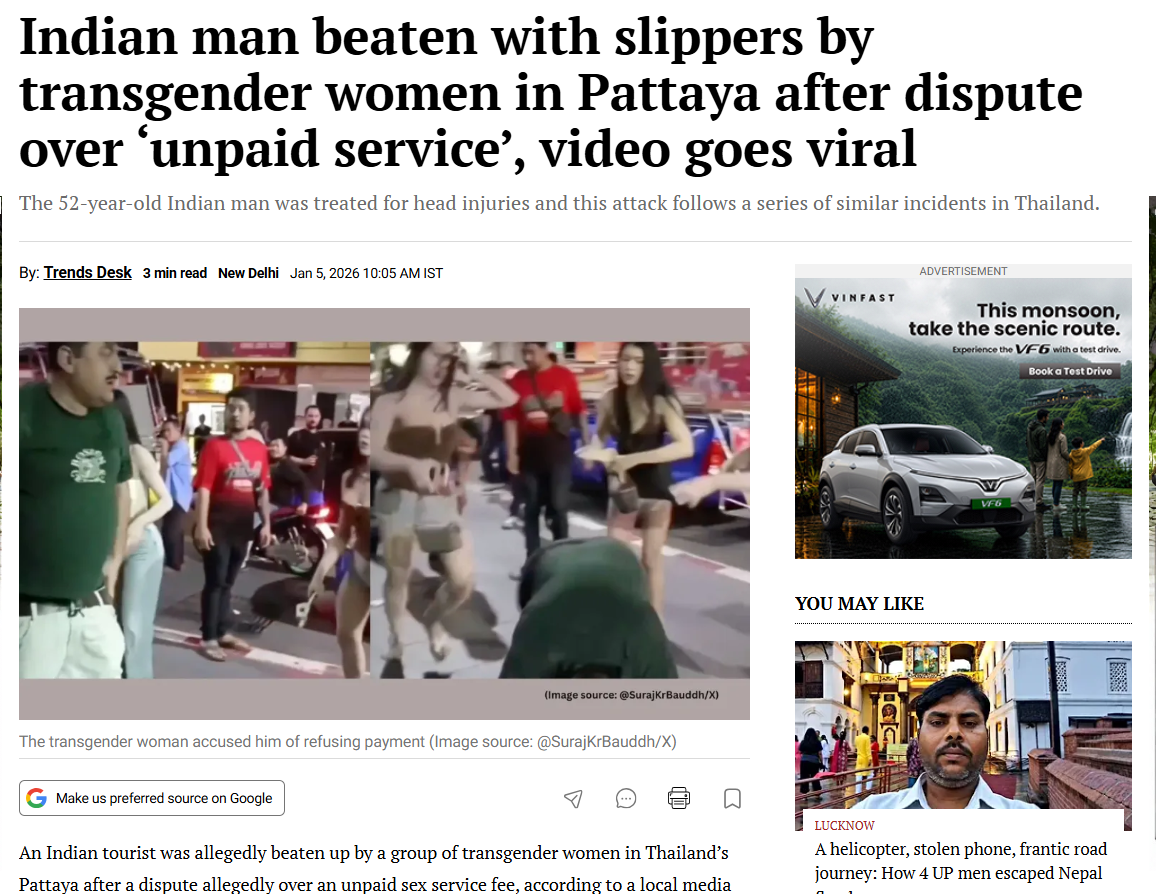
In the next step of our research, we found another report published on the India Today website on January 5, 2026. The report featured the same visuals as those seen in the viral video. According to the report, the incident took place on the morning of December 27, 2025, in the Walking Street area of Pattaya, Thailand.

Conclusion:
Our research found that the claim that Indian Army Lieutenant General Rajiv Kumar Sahni was assaulted in Thailand is false. The viral video actually shows an incident that took place in Pattaya, Thailand, in December 2025, in which 52-year-old Indian national Raj Jasuja was allegedly assaulted by a group of transgender women following a dispute over payment for sexual services. The viral post falsely links the incident to an Indian Army officer, thereby misrepresenting the identity of the person involved.

Executive Summary
A Pakistani propaganda account on social media has claimed that Russian President Vladimir Putin ignored Indian Prime Minister Narendra Modi and stood alongside the Pakistani Prime Minister. Research by CyberPeace’s research wing found that PM Modi and President Putin held a bilateral meeting on the sidelines of the SCO Summit in Bishkek, Kyrgyzstan. During the meeting, the two leaders exchanged warm greetings and discussed several issues, including the India-Russia strategic partnership.
Claim:
A social media post claims that Russian President Vladimir Putin ignored Prime Minister Narendra Modi and stood alongside the Pakistani Prime Minister.
https://x.com/TacticalTribun/status/2094808040973172786
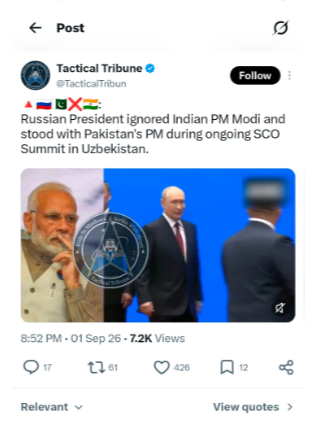
Fact Check:
To verify the truth behind the viral claim, we searched Google using relevant keywords related to Prime Minister Narendra Modi’s official visit to Kyrgyzstan. During the search, we found a video posted on ANI’s X handle on September 1, 2026. According to the video, Prime Minister Narendra Modi met Chinese President Xi Jinping and Russian President Vladimir Putin in Bishkek during the 26th Shanghai Cooperation Organisation (SCO) Summit.
https://x.com/ANI/status/2094675518897692896

In the next step of our research, we scanned Prime Minister Narendra Modi’s X account, where we found a post dated August 31, 2026. In the post, PM Modi wrote, “Had extensive discussions with President Putin. Discussed the full range of the India-Russia Special and Privileged Strategic Partnership. It is gladdening to see significant progress across various sectors in recent years. Focus areas for the India-Russia friendship remain energy, innovation, space, fertilisers and people-to-people linkages.”
https://x.com/narendramodi/status/2094433881714032725?s=20

At the end of our research, we found a report published on the Aaj Tak website on September 1, 2026. According to the report, Prime Minister Narendra Modi was in Bishkek, the capital of Kyrgyzstan, where he attended the Shanghai Cooperation Organisation (SCO) Summit. Several leaders of the organisation, including Chinese President Xi Jinping, Russian President Vladimir Putin and Pakistani Prime Minister Shehbaz Sharif, also attended the summit. During the summit, a moment was captured in which PM Modi warmly greeted Chinese President Xi Jinping and Russian President Vladimir Putin together, while Shehbaz Sharif was seen quietly walking past them.

Conclusion:
Our research established that the claim that Russian President Vladimir Putin ignored Prime Minister Narendra Modi and gave preference to the Pakistani Prime Minister is misleading. The viral post presents video footage from different occasions out of context. In reality, Prime Minister Narendra Modi and President Putin held a bilateral meeting, during which the two leaders discussed several key issues, including the India-Russia strategic partnership.

Executive Summary
A video is being shared on social media showing a little girl crying while holding onto a pole amid muddy water covering a road. The video is being shared with the claim that it shows the situation during the recent floods in Nepal. A research by CyberPeace’s Research Wing found the viral claim to be false. Our research revealed that the viral video is AI-generated and is being shared with a misleading claim.
Claim:
A user on the social media platform Instagram shared the viral video with the caption: “The situation in Nepal looks extremely frightening after the floods. Floodwater has covered the area, and the frightened face of a little girl amid the water is moving everyone emotionally. Seeing the innocent girl’s condition in this difficult situation has raised concerns among people.”
https://www.instagram.com/reels/DctRY9OF0Th/

Fact Check
A reverse image search of keyframes from the viral video on Google did not yield any credible media reports related to the video. Upon closely examining the viral video, we suspected that it might be AI-generated. We subsequently scanned the video using the AI detection tool Hive Moderation. According to the results, the video has a 99 percent probability of being AI-generated.

As part of the next step of ourresearch, we scanned the viral video using another AI detection tool, Sightengine. According to the results, the video has a 99 percent probability of being AI-generated.

Conclusion
Our research found that the viral video is AI-generated and is being shared with a misleading claim.

Executive Summary
A video is being shared on social media showing a railway station completely submerged in water. The video is being shared with the claim that it shows Chapra Railway Station in Bihar, where severe waterlogging occurred following heavy rainfall. The water level in the video appears so high that even the platforms are not visible. A research done by the Research Wing of the CyberPeace found the viral claim to be false. Our research revealed that the viral video is AI-generated and is being shared on social media with a misleading claim.
Claim:
A user on the social media platform Facebook shared the viral video on August 31, 2026, claiming that Chapra Railway Station had been inundated. The link to the post, archived link, and screenshots are provided below.
https://www.facebook.com/reel/1393870102719178
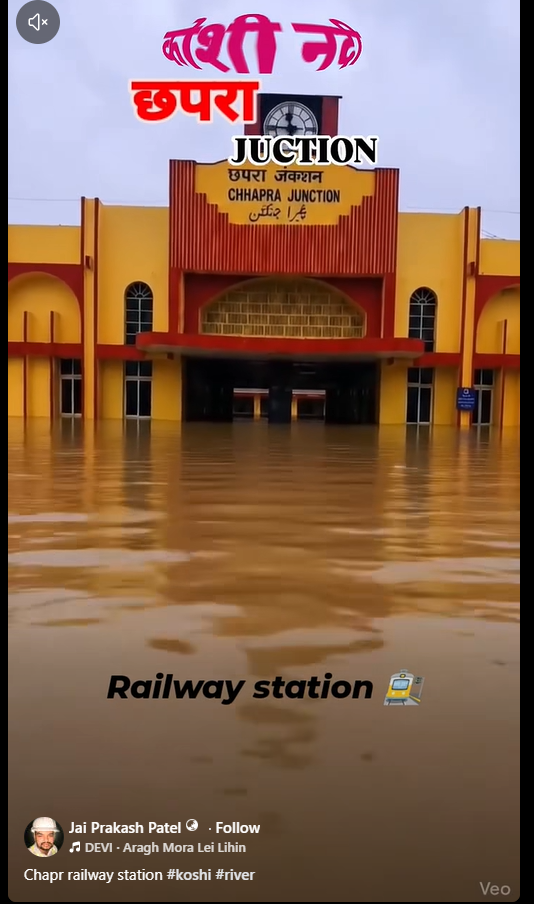
Fact Check
To debunk the viral claim, we searched Google using relevant keywords. However, we could not find any credible media reports confirming the claim. As the next step in our research, we also checked the status of trains arriving at and departing from Chapra Railway Station. We reasoned that if the station had actually been submerged to the extent shown in the video, rail operations would likely have been disrupted and some trains might have been cancelled. However, our research found no information about any train operating from Chapra being cancelled.

Upon closely examining the viral video, we suspected that it might be AI-generated. We subsequently scanned the video using the AI detection tool Hive Moderation. According to the tool’s results, the viral video was found to be 99 percent AI-generated.

As part of the next step of our research, we scanned the viral video using another AI detection tool, Wasitai AI. According to the tool’s results, the viral video is AI-generated.

Conclusion
Our research found that the viral video is AI-generated and is being shared on social media with a misleading claim.

Executive Summary:
A video is being shared on social media with the claim that a man cut off the electricity supply to his girlfriend’s village after getting angry with her. A research by CyberPeace’s research wing found that the video is actually from Baksa district in Assam, where a lineman named Anwar was repairing an electric line.
Claim:
The viral video is 10 seconds long and shows a man climbing an electricity pole and cutting an electric wire. The video is being shared on social media with the claim that the man cut off the electricity supply to his girlfriend’s entire village after her phone line was busy.
https://www.instagram.com/reels/Dcamn0aGBJ-/
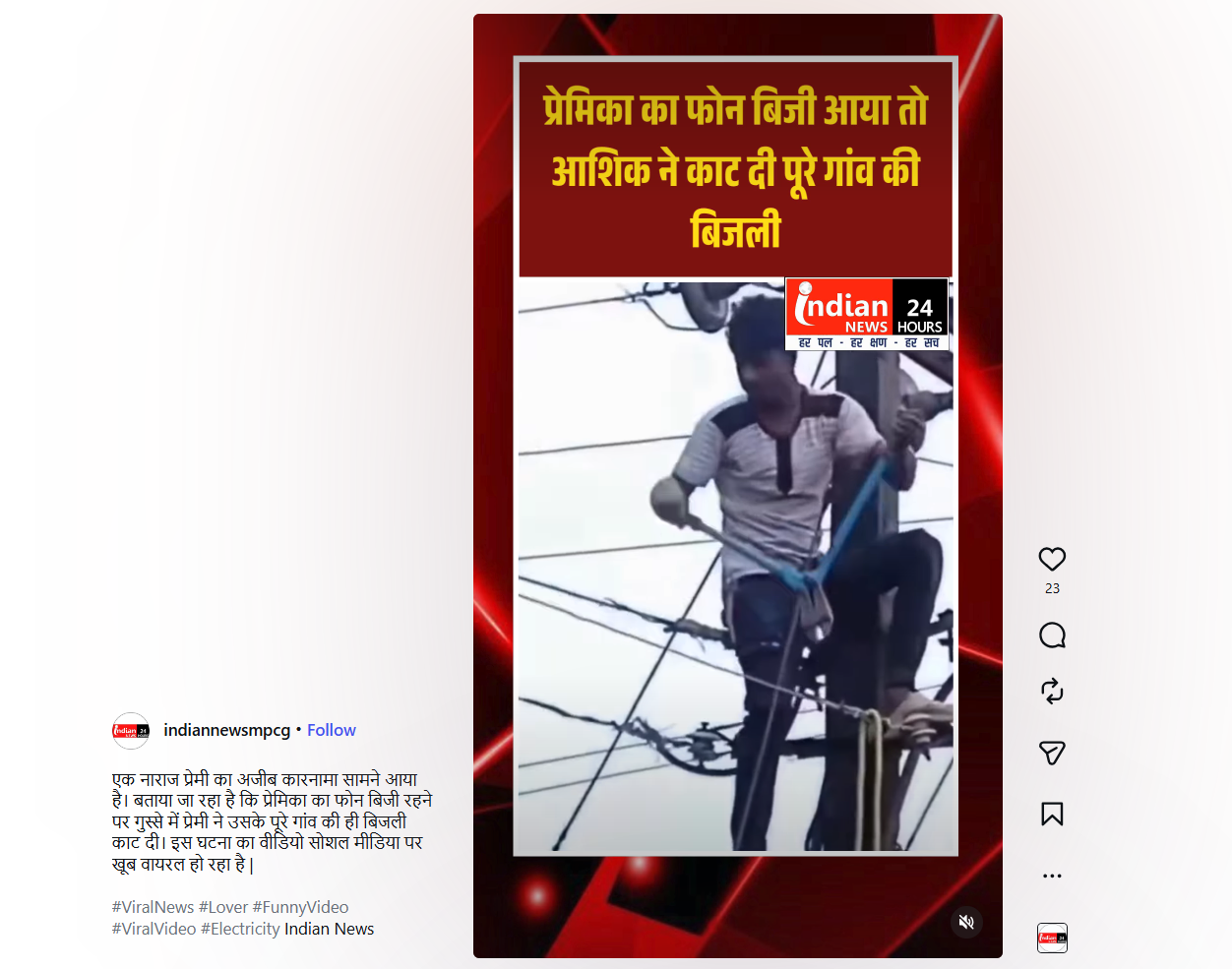
Fact Check:
To investigate the viral claim that a man cut off the electricity supply to his girlfriend’s village after getting angry with her, we conducted a reverse image search using keyframes from the video. During the search, we found the original video uploaded on the YouTube account named ‘Technical Work’ on July 17, 2025. According to the video description, the video is related to electrical work.
https://www.youtube.com/shorts/iHtG5xwHtKI
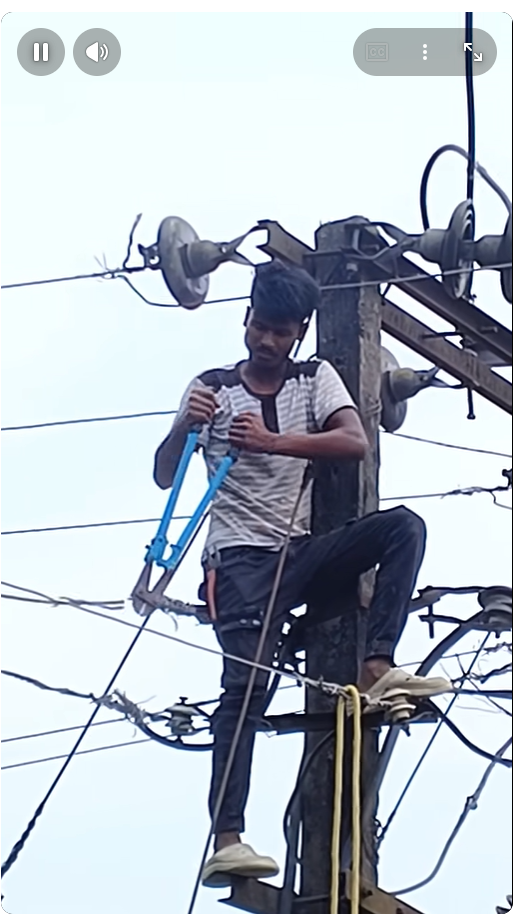
Additionally, we found several videos related to electrical work uploaded on the same YouTube account. We also found a Facebook page associated with this YouTube account.

Conclusion
The evidence gathered during our research makes it clear that the viral claim that a man cut off the electricity supply to his girlfriend’s village after getting angry with her is completely false. In reality, the video shows electricity workers repairing a power line in Assam.
