
#FactCheck- AI-Generated Video Falsely Shows Girl Being Rescued From Debris in Nepal
Executive Summary:
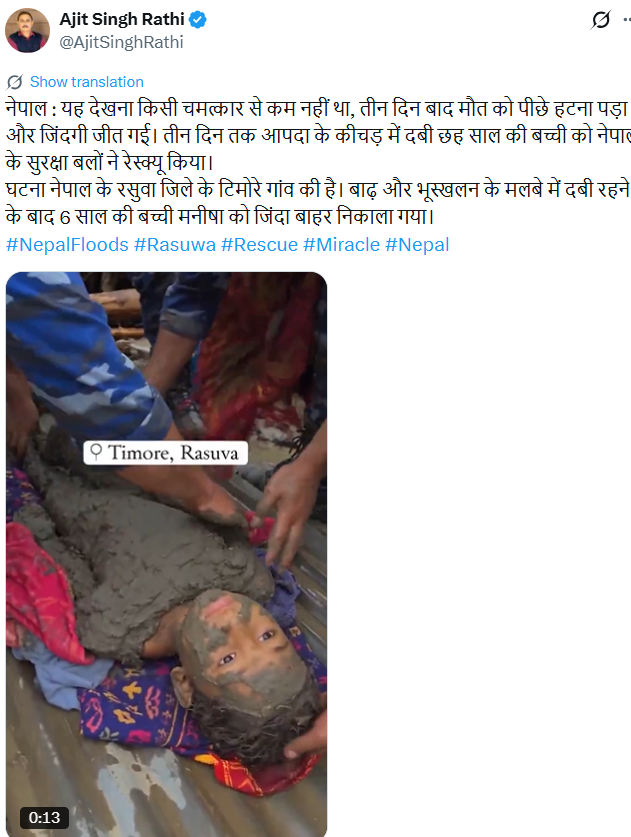
A video is being widely circulated on social media in connection with the relief and rescue operations following the devastating floods in Nepal. The video shows security personnel rescuing a girl trapped under debris and later giving her soup. The video is being shared with the claim that security personnel rescued a girl who had been buried under mud three days after the disaster in Timure village of Nepal’s Rasuwa district. A research by CyberPeace Research Wing found the viral claim to be false. Our research revealed that the viral video does not depict a real incident but is AI-generated.
Claim:
A user on social media platform X (formerly Twitter) shared the viral video with the caption: “Nepal: It was nothing short of a miracle to witness this. After three days, death had to retreat and life emerged victorious. A six-year-old girl, who had been buried under the disaster debris for three days, was rescued by Nepal’s security forces. The incident took place in Timure village of Nepal’s Rasuwa district. Six-year-old Manisha was pulled out alive after being buried under debris caused by floods and landslides.”
https://x.com/AjitSinghRathi/status/2094306889001742826?s=20
Fact Check:
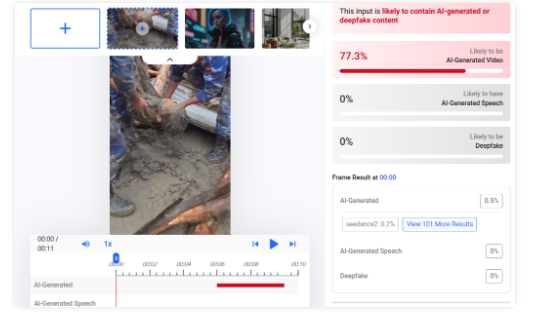
A close examination of the viral video revealed several inconsistencies, raising suspicions that the video was AI-generated. We then scanned the viral video using the AI detection tool Hive Moderation. According to the results, there is a 77 per cent likelihood that the viral video is AI-generated.
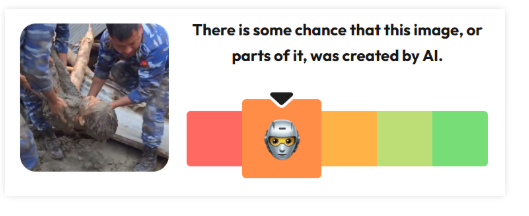
As part of our research, we scanned the video using the AI detection tool Wasitai. According to the results, the viral video is AI-generated.
Conclusion:
Our research found the viral claim to be false. Our findings revealed that the viral video does not depict a real incident but is AI-generated.

Related Blogs
Introduction
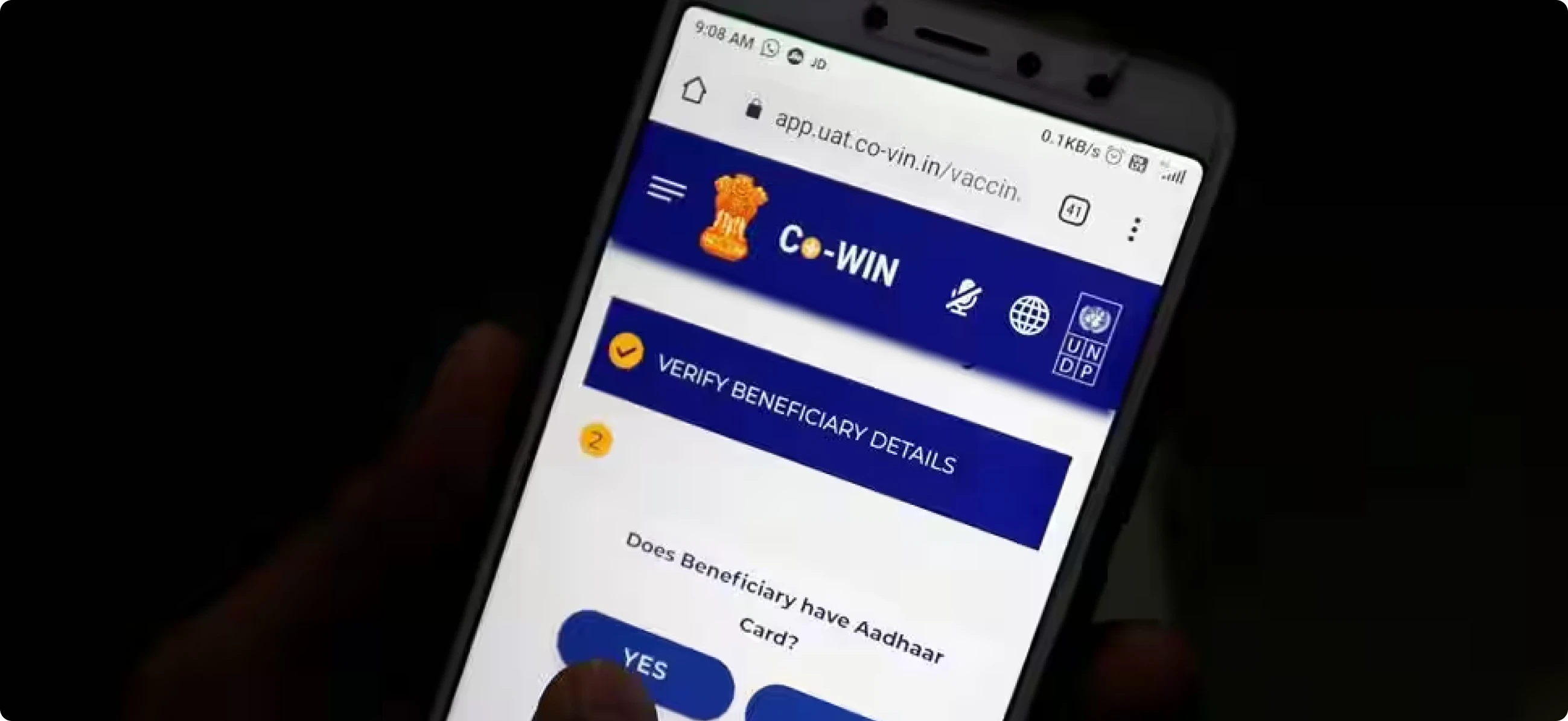
The information of hundreds of thousands of Indians who received the COVID vaccine was Leaked in a significant data breach and posted on a Telegram channel. Numerous reports claim that sensitive information, including a person’s phone number, gender, ID card details, and date of birth, leaked over Telegram. It could be obtained by typing a person’s name into a Telegram bot.
What really happened?
The records pertaining to the mobile number registered in the CoWin portal are accessible on the Malayalam news website channel. It is also feasible to determine which vaccination was given and where it was given.
According to The Report, the list of individuals whose data was exposed includes BJP Tamil Nadu president K Annamalai, Congress MP Karti Chidambaram, and former BJP union minister for health Harsh Vardhan. Telangana’s minister of information and communication technology, Kalvakuntla Taraka Rama Rao, is also on the list.
MEITY stated in response to the data leak, “It is old data, we are still confirming it. We have requested a report on the matter.
After the media Report, the bot was disabled, but experts said the incident raised severe issues because the information might be used for identity theft, phishing emails, con games, and extortion calls. The Indian Computer Emergency Response Team (CERT-In), the government’s nodal body, has opened an investigation into the situation
The central government declared the data breach reports regarding the repository of beneficiaries against Covid to be “mischievous in nature” on Monday and claimed the ‘bot’ that purportedly accessed the confidential data was not directly accessing the CoWIN database.
According to the first complaint by CERT-In, the government’s cybersecurity division, the government claimed the bot might be displaying information from “previously stolen data.” Reports.
The health ministry refuted the claim, asserting that no bots could access the information without first verifying with a one-time password.
“It is made clear that all of these rumours are false and malicious. The health ministry’s CoWIN interface is entirely secure and has sufficient data privacy protections. The security of the data on the CoWIN portal is being ensured in every way possible, according to a statement from the health ministry.
Meity said the CoWin program or database was not directly compromised, and the shared information appeared to be taken from a previous intrusion. But the hack again highlights the growing danger of cyber assaults, particularly on official websites.

Recent cases of data leak
Dominos India 2021– Dominos India, a division of Jubilant FoodWorks, faced a cyberattack on May 22, 2021, which led to the disclosure of information from 180 million orders. The breach exposed order information, email addresses, phone numbers, and credit card information. Although Jubilant FoodWorks acknowledged a security breach, it refuted any illegal access to financial data.
Air India – A cyberattack that affected Air India in May 2021 exposed the personal information of about 4.5 million customers globally. Personal information recorded between August 26, 2011, and February 3, 2021, including names, dates of birth, contact information, passport information, ticket details, frequent flyer information from Star Alliance and Air India, and credit card information, were exposed in the breach.
Bigbasket – BigBasket, an online supermarket, had a data breach in November 2020, compromising the personal information of approximately 20 million consumers. Email IDs, password hashes, PINs, phone numbers, addresses, dates of birth, localities, and IP addresses were among the information released from an insecure database containing over 15 GB of customer data. BigBasket admitted to the incident and reported it to the Bengaluru Cyber Crime Department.
Unacademy – Unacademy, an online learning platform, experienced a data breach in May 2020, compromising the email addresses of approximately 11 million subscribers. While no sensitive information, such as financial data or passwords, was compromised, user data, including IDs, passwords, date joined, last login date, email IDs, names, and user credentials, was. The breach was detected when user accounts were uncovered for sale on the dark web.
2022 Card Data- Cybersecurity researchers from AI-driven Singapore-based CloudSEK found a threat actor offering a database of 1.2 million cards for free on a Dark Web forum for crimes on October 12, 2022. This came after a second problem involving 7.9 million cardholder records that were reported on the BidenCash website. This comprised information pertaining to State Bank of India (SBI) clients. And other well-known companies were among those targeted in high-profile data breach cases that have surfaced in recent years.

Conclusion
Data breach cases are increasing daily, and attackers are mainly attacking the healthcare sectors and health details as they can easily find personal details. This recent CoWIN case has compromised thousands of people’s data. The All-India Institute of Medical Sciences’ systems were compromised by hackers a few months ago. Over 95% of adults have had their vaccinations, according to the most recent data, even if the precise number of persons impacted by the CoWin privacy breach could not be determined.

Executive Summary:
A video featuring Sara Netanyahu, wife of Israeli Prime Minister Benjamin Netanyahu, is being widely circulated on social media. In the clip, she is seen attending an online meeting and repeatedly closing her eyes. The video is being shared with claims that it is recent and shows her under the influence of drugs. Some posts also suggest that Prime Minister Netanyahu has died. However, research by the CyberPeace found that the claim is misleading. The video is not recent and has been online since 2020.
Claim:
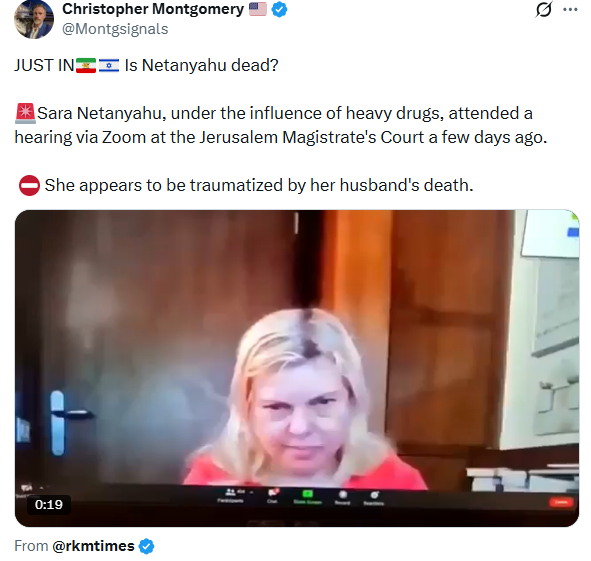
Social media users are sharing the video claiming that Sara Netanyahu appeared intoxicated following the alleged death of Prime Minister Benjamin Netanyahu. The clip is also being falsely presented as a recent development. An X user, Christopher Montgomery (@Montgsignals), shared the video with the caption suggesting that Netanyahu may have died and that his wife appeared in a drug-influenced state during a recent court hearing via Zoom.
Fact Check:
To verify the claim, we first examined reports regarding the alleged death of Benjamin Netanyahu. There is no credible evidence supporting this claim. In fact, on March 20, Netanyahu himself addressed the media and dismissed such rumours, confirming that he is alive.

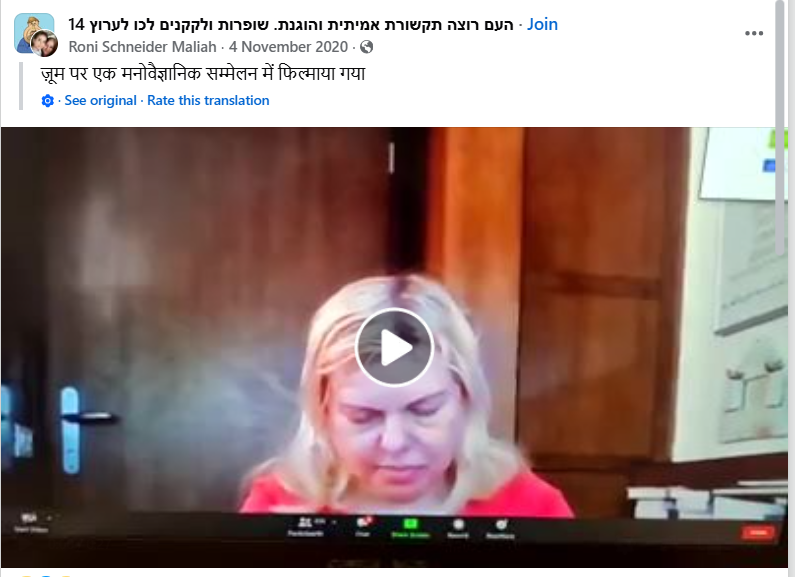
We then analyzed the viral video by extracting keyframes and conducting a reverse search. This led us to the same video posted on a Facebook account under the name Roni Schneider Malia on November 4, 2020. The Hebrew caption associated with the post translates to: “Filmed during a psychological conference on Zoom.”
This confirms that the video is old and unrelated to any recent developments.
Conclusion:
The viral claim is misleading. The video of Sara Netanyahu is not recent but has been available online since 2020. It is being falsely linked to baseless claims about Prime Minister Benjamin Netanyahu’s death

Executive Summary
A video of an elderly woman performing a pole vault is being widely shared on social media. The video is being shared with the claim that the woman, who can be seen performing the astonishing feat, is 95 years old. Several people can also be seen around her in the video. She runs at full speed while carrying a pole and then leaps over a bar placed at a height. People present at the venue can be seen applauding her remarkable performance. A research done by the Research Wing of CyberPeace found that the video is not real but AI-generated.
Claim
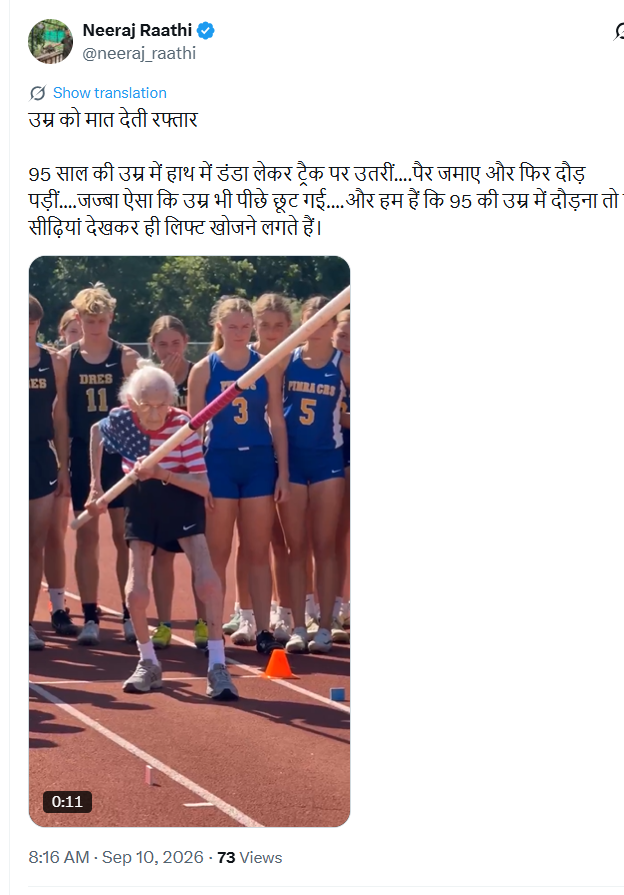
An X user shared the video with the caption: “Defying age with speed. At the age of 95, she stepped onto the track with a stick in her hand… planted her feet and started running… such determination that even age was left behind… and here we are, at 95, forget running, we start looking for a lift the moment we see the stairs.”
https://x.com/neeraj_raathi/status/2097879324573798613
https://archive.ph/8Invi
Fact Check
To verify the authenticity of the viral video showing the elderly woman performing a pole vault, we first conducted a Google search using relevant keywords. However, we did not find any credible media reports or other reliable sources identifying the video as footage of a real pole vault competition.
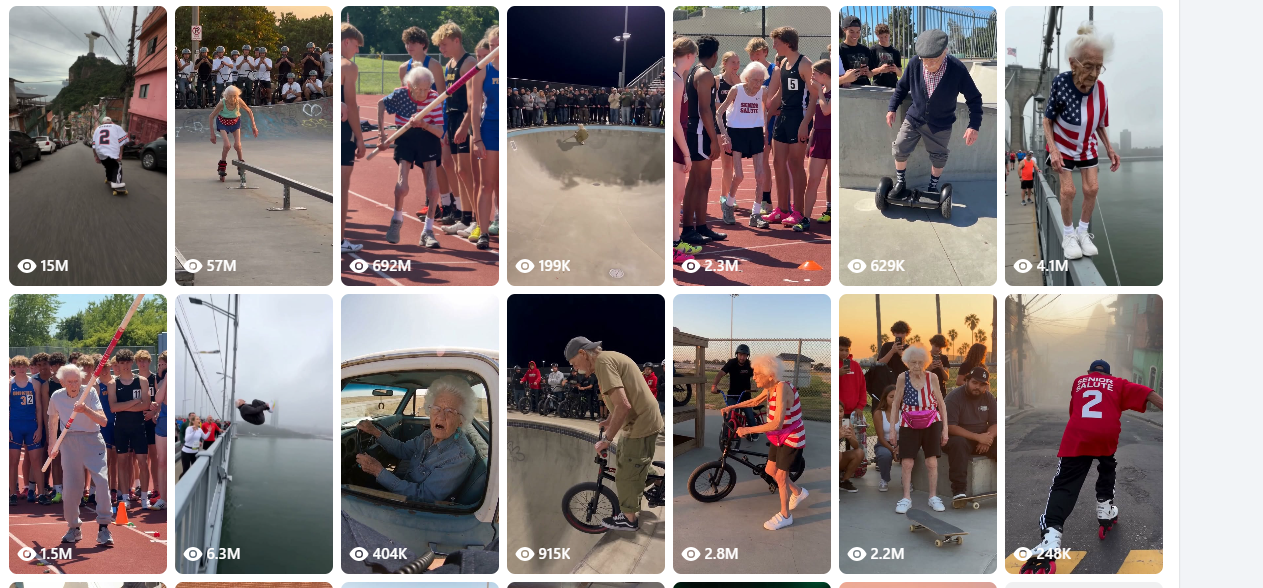
We then conducted a keyframe search and found the same video uploaded on September 8, 2026, on a Facebook page called ‘Senior Salute’, an AI content creator. The post also carries an AI-generated content label.

Upon reviewing the Facebook account, we found several similar videos showing elderly people performing various stunts. The account appears to exclusively create and share AI-generated videos.
We also checked the video using another AI detection tool, Truth Scan. In its analysis, the tool gave the viral video a 90 percent score, indicating that it was likely AI-generated.

In addition, we checked the visuals in the viral video using another AI detection platform, AIorNOT. In its analysis, the tool also indicated a high likelihood that the visuals in the video were AI-generated.

Conclusion
The evidence gathered during our research makes it clear that the viral video showing an elderly woman performing a pole vault is not genuine but AI-generated. The same video was found on a Facebook page that primarily shares AI-generated content and was posted with an AI-generated content label. Further, multiple AI detection tools also indicated a high likelihood that the video was created using AI. Therefore, the claim that the video shows a 95-year-old woman performing a real pole vault is false.
