
Navigating the Resource Costs of India’s AI Infrastructure
Introduction
India’s data centre sector is rapidly emerging as strategic national infrastructure at the centre of the country’s AI ambitions, fuelled by a combination of technological advancements and the global political economy. Estimates suggest that national data centre capacity is expected to rise from 1.2 GW in 2025 to almost 8 GW by 2030. With a funding of ₹10,372 crore, the IndiaAI Mission aims to establish domestic compute power and expand GPU infrastructure throughout the nation. Simultaneously, the Digital Personal Data Protection (DPDP) Act, 2023 has introduced a form of “soft localisation,” empowering the government to mandate domestic storage for sensitive categories of data.
Together, this push for infrastructure aims to transform India from a passive data market into an active shaper of global data flows. Yet India’s current policy model differs significantly from the approaches being adopted in other major digital economies. A comparison with Singapore and the European Union reveals that while India is focused on aggressive data centre expansion, other jurisdictions are increasingly prioritising sustainability, efficiency, and digital sovereignty.
This raises a critical policy question: can India scale its AI infrastructure ambitions while accounting for the governance and resource challenges that other markets are now attempting to correct?
India’s Incentive-Led AI Infrastructure Push
India’s current approach to data centre expansion is fundamentally facilitative. The state is acting as an enabler of rapid private investment through fiscal incentives and infrastructure prioritisation.
The Union Budget 2022 had classified data centres as “infrastructure,” which enables developers to access cheaper institutional financing and long-term capital. The Union Budget 2026 further introduced tax holidays for foreign cloud providers using Indian facilities for global operations. At the state level, governments such as Maharashtra and Uttar Pradesh are aggressively competing to attract hyperscale investments through electricity duty exemptions, expedited approvals, and “essential service” status designed to guarantee uninterrupted operations.
This approach reflects India’s broader strategic positioning. As global demand for AI compute accelerates, India seeks to establish itself not only as a major digital market, but as a sovereign compute hub for the Global South.
The IndiaAI Mission demonstrates this ambition clearly. By seeking to scale domestic GPU capacity to 100,000 units, the government is recognising that compute infrastructure is increasingly becoming geopolitically strategic. AI leadership will now depend on the ability to control and secure the physical infrastructure powering advanced AI systems.
However, while India’s policy framework strongly incentivises capacity creation, it remains relatively underdeveloped in areas such as sustainability benchmarks, resource management, and operational accountability.
Singapore and the European Union: Governance After Scale
Singapore and the European Union offer models of digital infrastructure governance as rapid infrastructure growth starts to raise resource and sovereignty issues.
With the limited energy resources and land at its disposal, Singapore has shifted from unrestricted data centre growth to a tightly managed sustainability-first model. Through the Data Centre Call for Application (DC-CFA) framework, only projects meeting strict efficiency and economic value criteria are approved. For instance, new facilities are expected to maintain Power Usage Effectiveness (PUE) levels of 1.3 or lower and submit detailed water efficiency plans to comply with advanced environmental standards. The country has also developed tropical cooling standards that allow facilities to run at higher ambient temperatures, reducing cooling energy consumption significantly. Rather than uninhibited growth, Singapore is now geared towards growth efficiency.
The European Union, on the other hand, is pursuing a sovereignty-oriented governance model in response to geopolitical pressures. However, it is still introducing energy reporting requirements and waste heat recovery rules into digital infrastructure rules through the revised Energy Efficiency Directive and proposed EU Cloud and AI Development Act. Simultaneously, the Digital Markets Act (DMA) is being used to investigate hyperscale cloud providers for potential “gatekeeper” behaviour, reflecting concerns about excessive concentration of digital infrastructure power in the hands of a few non-European firms. This approach shows that sovereignty and energy efficiency can go hand-in-hand.
These models illustrate an important trend: digital infrastructure governance is shifting from the promotion of investment to sustainability, competition regulation and strategic autonomy.
India’s Emerging Governance Challenge
India’s current trajectory and global geopolitical tensions suggest that pressures regarding sustainability and sovereignty are set to intensify over the next decade.
AI infrastructure is resource-intensive by design. For example, a single modern AI server rack can consume up to 250 kilowatts (kW) of power, compared to a traditional enterprise server rack which typically requires only 15 kW. Despite the use of water use effectiveness (WUE) technologies, the sheer volume of heat transfer means that AI data centres can still put immense pressure on local water resources, especially in warmer climates. These figures juxtaposed against hyperscale clusters mean the volumes of electricity, cooling systems, land, water, and high-density compute rise by significant orders of magnitude. Yet most Indian policies remain overwhelmingly focused on fiscal incentives rather than long-term resource governance.
This creates the risk of a reactive policy cycle in which sustainability standards are introduced only after resource pressures become acute. Urban concentration, grid stress, water scarcity, and energy reliability may eventually force abrupt regulatory interventions which can lead to higher compliance costs and uncertainty in operations.
At the same time, India’s push for sovereign AI infrastructure also raises broader questions around digital sovereignty and institutional capacity. Procuring GPUs alone does not create an AI ecosystem. Secure hosting environments, skilled infrastructure personnel, cybersecurity preparedness, and interoperable governance mechanisms are equally essential.
This makes workforce development a strategic human resource development issue rather than simply an industrial challenge. Without sufficient thermal engineers, cybersecurity professionals, and digital infrastructure specialists, India’s infrastructure ambitions may struggle to translate into long-term resilience.
Building Governance into the Expansion Phase
India’s current “pre-regulatory” moment also presents a significant opportunity. Because the sector is still evolving, both policymakers and infrastructure actors have the ability to shape governance standards before constraints become restrictive.
It is vital to establishing national sustainability benchmarks through public-private technical partnerships, possibly under the aegis of of NITI Aayog, the Bureau of Energy Efficiency (BEE) and MeitY, before the next resource pressures dictate reactive regulation. Pilot “sustainability sandboxes” focused on liquid immersion cooling, renewable integration, battery energy storage systems, and water-efficient operations could help create evidence-based policy frameworks tailored to Indian conditions. Similarly, Likewise, collaborations with skilling institutions like NSDC and NIELIT can contribute to the development of dedicated digital infrastructure academies for thermal engineering, cybersecurity, and AI infrastructure management.
This would support India to progress towards a sovereign AI infrastructure stack, bringing together compute capacity, sustainability, capacity building and governance resilience into a seamless ecosystem.
Conclusion
With AI systems become increasingly utilised in finance, healthcare, governance, and public services, the infrastructure ecosystem supporting them will become equally politically and strategically significant. The choices India makes today to operationalise sustainability, skilling, competition, and sovereign compute capacity will shape the foundations of its future AI economy.
The central challenge is no longer whether India can become a major AI infrastructure hub. It is whether the country can transition from an incentive-led expansion model toward a governance framework that balances scale with sustainability, sovereignty, democratic accountability, and long-term resilience.
That transition may ultimately define the success of India’s AI century.
References
https://indiaai.gov.in/news/cabinet-approves-india-ai-mission-at-an-outlay-of-rs-10-372-crore
https://www.midcindia.org/wp-content/uploads/2021/09/IT-ITES_Policy_2015.pdf
https://uplc.up.gov.in/en/page/uttar-pradesh-data-center-policy

Related Blogs

Executive Summary:
Internship scams have infiltrated the academic landscape, scamming students of many prestigious colleges. The students often prefer to carry out internships to gain knowledge and work experience. These scams use the name of popular multinational companies to exploit the students. This report studies the various case studies, their modus operandi, impact on the students and preventive strategies. This report emphasises the importance of awareness and proactive measures to protect students from falling victim to such frauds.
1. Introduction
Internships are the opportunity to overcome the gap between the practical knowledge acquired at the university and practical experience, to get practical skills and contacts in the field of activity, as well as improve employment prospects. Instead, because of high paying internships and interesting positions students have become targets of work scams. As we have seen with the advancement in digital technology, scammers take advantage of the disguise of the internet, making very neat, smart, and convincing scams.
Internship scams are very prevalent and they include fake job listings and phishing schemes as well as payment frauds which make students lose lots of money and also emotionally expose them. In this specific case, this paper examines how these scams work, the warning signs, and ways of protecting students from falling victim to them.
2. Detailed Modus Operandi of Internship Scams
Internship scams often employ a variety of tactics to attract and deceive unsuspecting students. Below is a detailed breakdown of the common methods used by scammers:
- Fake Job Listings and Offers:some text
- Scammers post attractive internship offers on popular job portals, social media platforms, and even send personalised messages via LinkedIn. These listings often mimic the branding and style of reputable companies, including well-designed logos, professional email addresses, and official-looking websites.
- Example: A fake internship offer from a reputed software firm circulates on a job portal, with a professional landing page. Students who apply are quickly “hired” without any interviews, and are asked to pay a security deposit to confirm their acceptance.
- Upfront Payment Requests:some text
- Scammers ask for payment such as registration fees, training materials, background checks, or security deposits. These payments comes under non-refundable payment and it act as the primary revenue stream for the fraudsters.
- Example: A group of students receive internship offers requiring a payment of INR 10,000 for "training materials" and "online assessments." After making the payment, the students never hear back from the company, and all attempts to contact them were futile.
- Phishing and Identity Theft:some text
- Beyond financial fraud, some scams aim to steal personal information. Fake internship applications often require detailed personal data, including identity proofs, bank account details. This data will be used as identity theft or sold on the dark web.
- Example: A student applies for an internship that asks for copies of identification documents and bank details. This information sharing led to unauthorised transactions in their bank account.
- Work-from-Home Frauds:some text
- With the rise of remote work, scammers also offer work-from-home internships that require students to purchase software or pay for specialised training. After payment, students are often given irrelevant tasks or no tasks at all, leaving them with no real work experience.
- Example: An internship advertised as a "remote data analysis role" required students to buy a proprietary software licence. After paying, students realised the software was freely available online, and the internship tasks were non-existent.
- Impersonation of Reputed Companies:some text
- Scammers use the name of well-known companies, they modify the email addresses or create fake websites that look original. They use these platforms to send offer letters, making it difficult for students to identify the scam.
- Example: A scammer creates a fake website mirroring a major consulting firm's internship page. The only difference is a minor change in the URL. Dozens of students are duped into paying registration fees.
3. Case Studies of Real-Life Incidents
- Case Study 1: The Certification Course and Internshipsome text
- A group of students received personalised emails from an official domain of a reputed tech industry providing an internship offer. Students were asked to pay Rs 10,000 to undergo a certification course to carry the internship. After paying the amount, the students did not receive any instructions, and the company was found to be nonexistent. The scammer had spoofed the company’s email domain, making it difficult to trace the source.
- Case Study 2: The Social Media Trapsome text
- A student from a university encountered an internship post on Instagram, advertising roles at a popular fashion brand. The application process involved a "screening fee" of INR 5,000. Despite appearing legitimate, the internship was fake, and the brand had no knowledge of the post. The student's personal data was also compromised, leading to unauthorised social media activity.
- Case Study 3: Internship Providing Social Platformssome text
- A popular internship providing platform, faced an incident where a scammer posted fraudulent internship offers under the guise of a major multinational. The scam involved asking students to purchase expensive software to start their work. The platform had to issue warnings and remove the listings after several complaints.
4. The Impact on Students
The consequences of internship scams extend beyond immediate financial loss, affecting students on multiple levels:
- Financial Impact:some text
- Students lose their money, ranging from minor fees to significant payments.
- Emotional and Psychological Distress:some text
- These kinds of scams can lead to anxiety, depression and loss of confidence in availing the opportunities in future.
- Exposure to Further Scams:some text
- Scammers often share details of their victims with other fraudsters, making students susceptible to repeated scams, including phishing attacks, financial frauds, and unsolicited offers.
5. Preventive Measures
- Verification of Internships:some text
- Always verify the authenticity of the internship by researching the company on official platforms such as LinkedIn, the company’s official website, and through trusted contacts or college placement cells.
- Avoid Upfront Payments:some text
- Employers do not ask for money in exchange for job or internship offers. If they demand for any kind of payment, then the employer is not original. Always question the necessity of such payments and consult trusted advisors before proceeding.
- Use Trusted Job Portals:some text
- Apply for internships through recognized platforms like LinkedIn, Internshala, or your college’s placement cell, which have verification processes to filter out fraudulent postings.
- Reporting Scams:some text
- Report suspicious offers to your college authorities, placement cells, and local cybercrime departments. Additionally, use platforms like Internshala’s “Report This Job” feature to flag fraudulent listings.
- Stay Educated and Updated:some text
- It is important to educate students by providing workshops, webinars, and awareness sessions on cybersecurity to stay informed and report about the latest scams.
6. Conclusion
Internship scams are a severe threat to the student society since they manipulate the student’s desire for an internship. The best ways to prevent such cons are by being cautious and receptive to whatever is being offered. Internship seekers, colleges and the placement cells have to work hand in hand to ensure that there is no fear among people seeking internships.
References
- Smith, J. (2024). Internship Scams on the Rise: How to Spot and Avoid Them. Retrieved from example1.com.
- Brown, A. (2023). Student Internship Scams in India: A Growing Concern. Retrieved from example2.com.
- Johnson, L. (2024). How to Protect Yourself from Fake Internship Offers. Retrieved from example3.com.
- Gupta, R. (2024). Social Media and the Rise of Job Scams. Retrieved from example4.com.
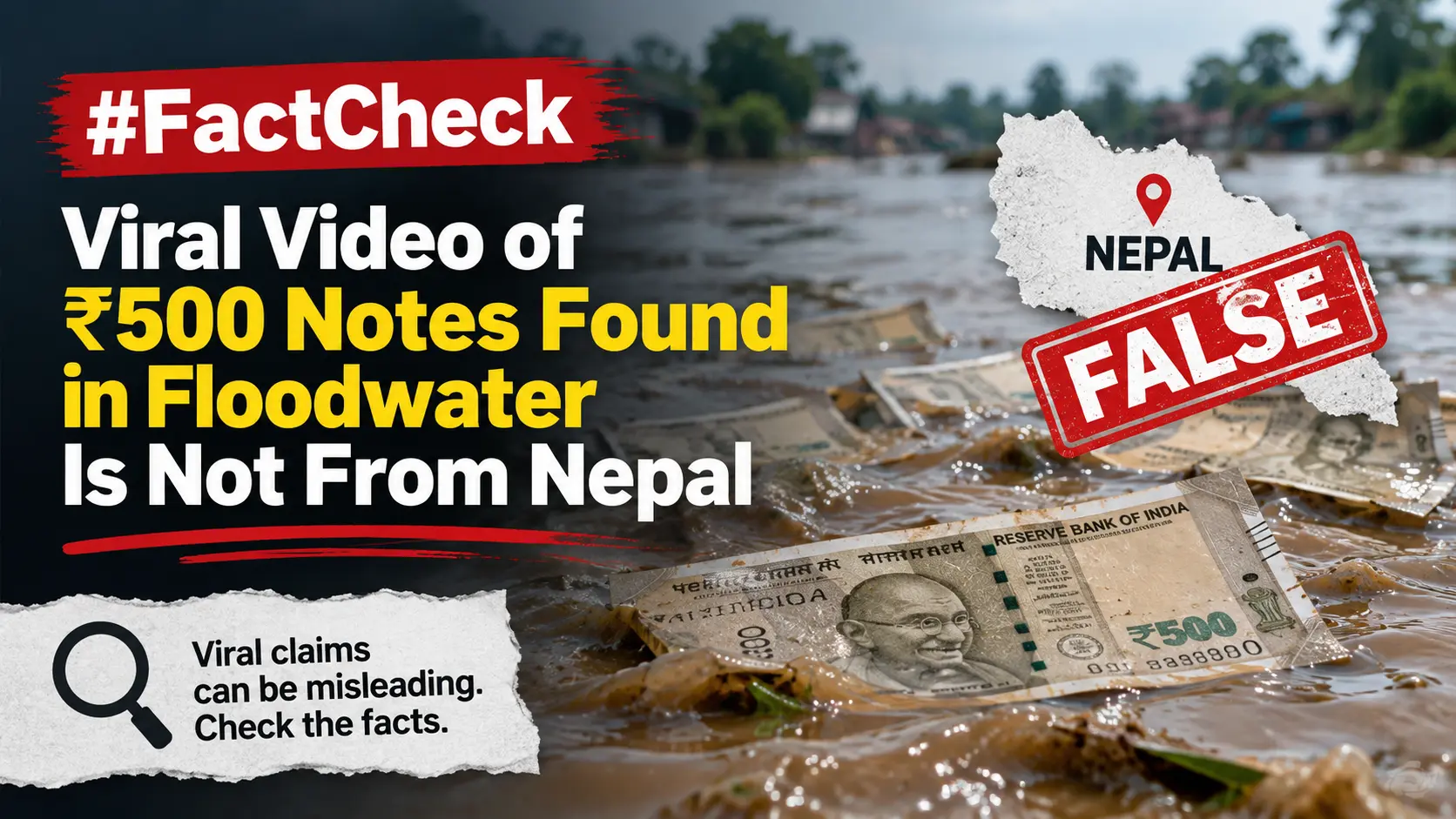
Executive Summary
A video is going viral on social media with the claim that ₹500 Indian currency notes were found inside a bag during the floods in Nepal. A research by CyberPeace’s research wing found that the video is not from the recent floods in Nepal, but from Vrindavan in Uttar Pradesh. The video was uploaded on July 14 by an Instagram creator on their account. The 30-second video shows people travelling in a boat finding a bag floating in the water, from which several ₹500 currency notes are pulled out.
Claim:
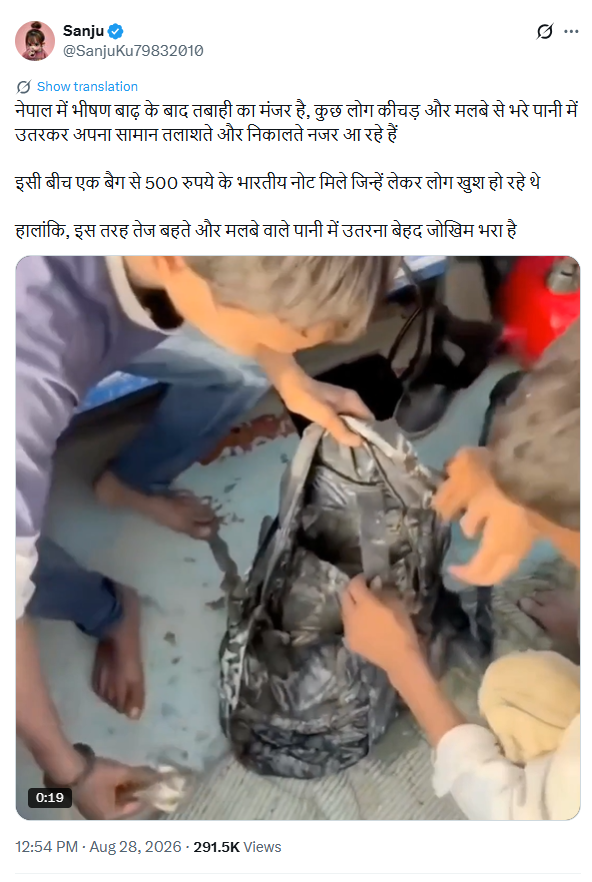
The video has been shared on X with a caption claiming that Nepal is witnessing widespread destruction following severe floods, with people seen wading through muddy, debris-filled water to search for and recover their belongings. The caption further claims that people found a bag containing ₹500 Indian currency notes and were seen rejoicing over the discovery. It also cautions that entering fast-flowing, debris-filled floodwater is extremely dangerous.
https://x.com/SanjuKu79832010/status/2093238274206887946
Fact Check:
To verify the viral video claiming that a bag containing ₹500 Indian currency notes was found during the floods in Nepal, we conducted a reverse image search using keyframes from the footage. The search led us to a video uploaded on the Instagram account ‘parshuram_676’ on July 14, 2024.
https://www.instagram.com/p/Daw7aYJAjoc/

Additionally, we found the same boat seen in the viral video in several other videos uploaded on the same Instagram account.
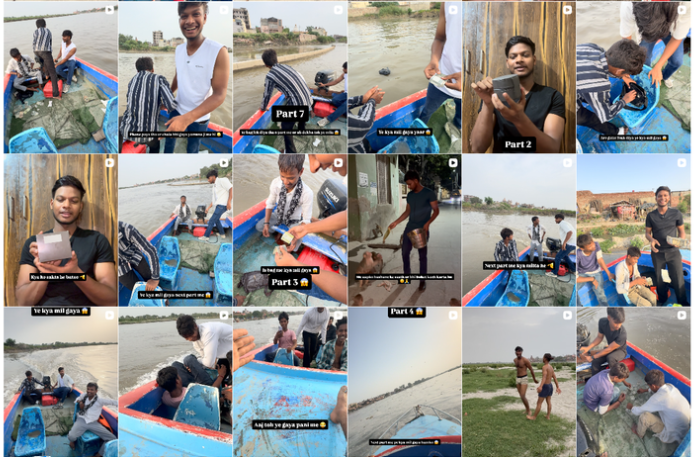
Not only that, we also found several videos with visuals similar to those in the viral video uploaded on the same video creator’s Facebook account. The information provided on the Facebook account also lists Vrindavan, Uttar Pradesh, as the location.
https://www.facebook.com/profile.php?id=61567184794045

Conclusion:
The evidence gathered during our research clearly establishes that the video being circulated with the claim that ₹500 Indian currency notes were found inside a bag during the floods in Nepal was actually filmed by a video creator in Vrindavan, Uttar Pradesh.
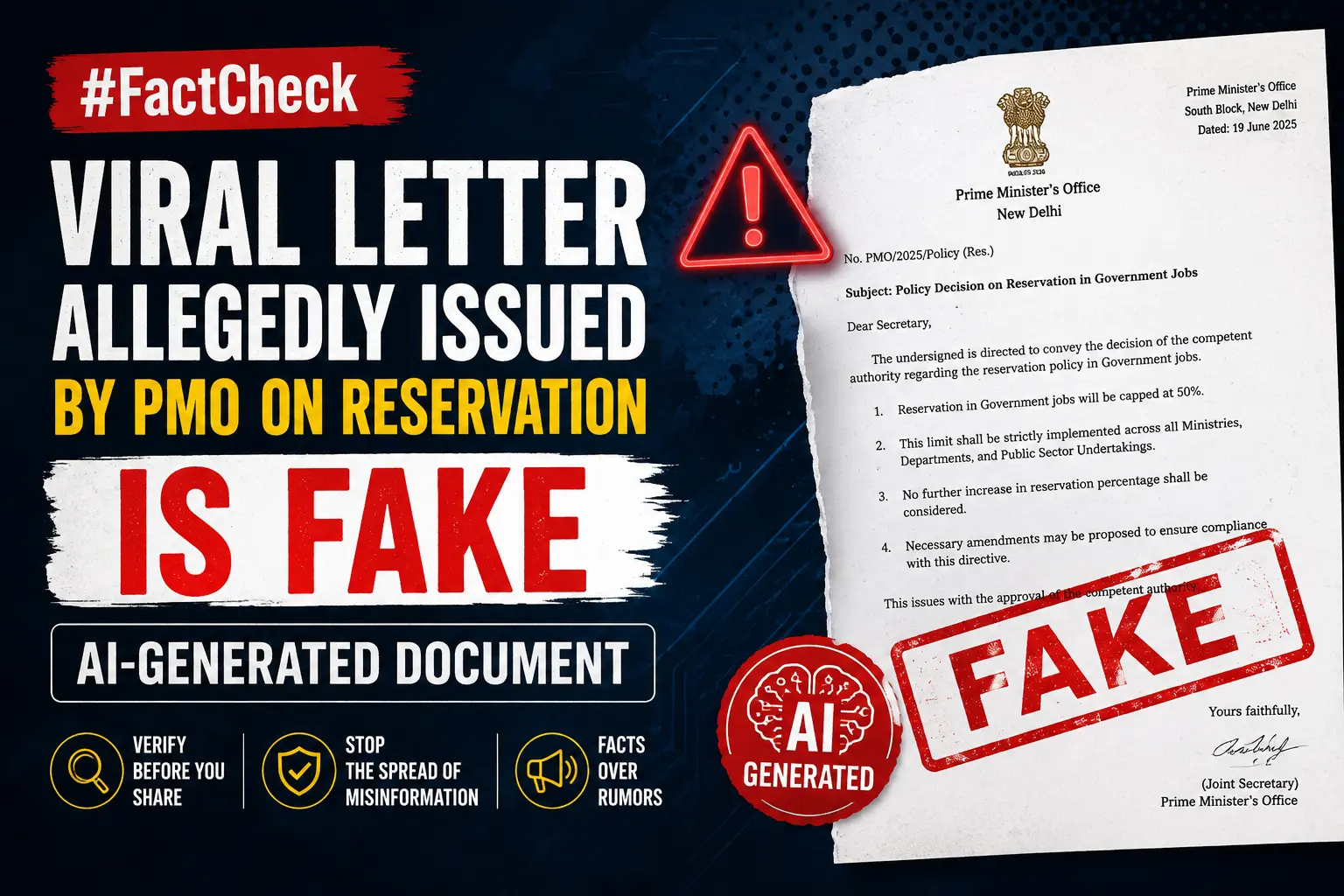
Executive Summary
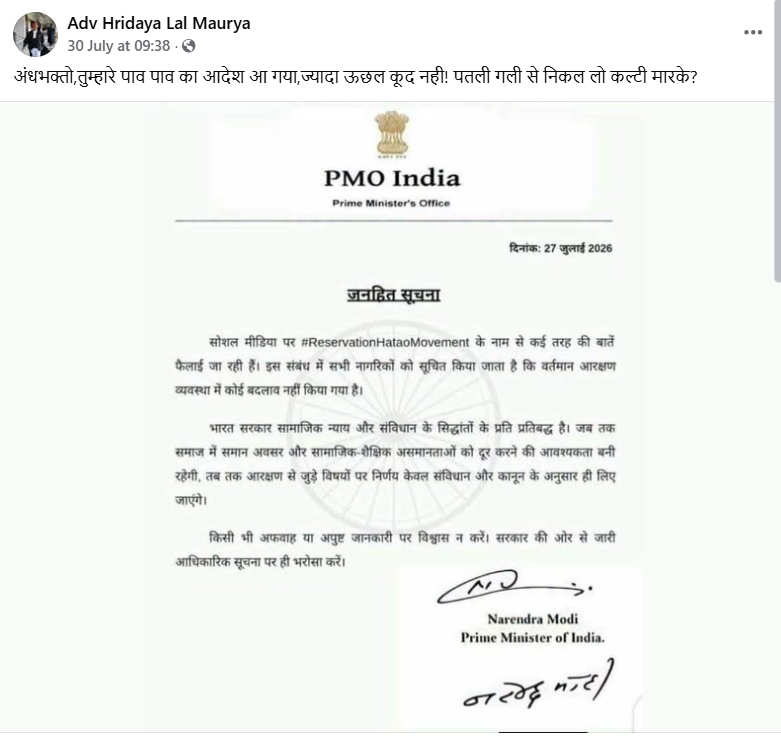
A purported letter issued in the name of the Prime Minister’s Office (PMO) is being widely shared on social media. The letter claims that the government has not made any changes to the reservation system regarding the “Remove Reservation Movement” and appeals to people not to pay attention to rumours. The viral letter is dated July 27, 2026, and also carries what appear to be Prime Minister Narendra Modi’s signatures in both Hindi and English.
CyberPeace Research Wing’s research found the viral claim to be false. The research revealed that the Prime Minister’s Office (PMO) has neither issued any official statement regarding reservation nor released any such letter. No credible media reports related to the alleged letter were found. The research further revealed that the purported reservation-related letter circulating on social media was a fake document created with the help of AI.
Claim:
A Facebook user shared the alleged letter issued in the name of the Prime Minister’s Office on July 30, 2026, claiming that the government has not made any changes to the reservation system in connection with the “Remove Reservation Movement” and appealed to citizens not to believe rumours. The viral letter bears the date July 27, 2026, and displays signatures of Prime Minister Narendra Modi in both Hindi and English. The archived link and screenshot of the post are provided below:
https://www.facebook.com/share/p/1b9nD5k3As/
Factcheck
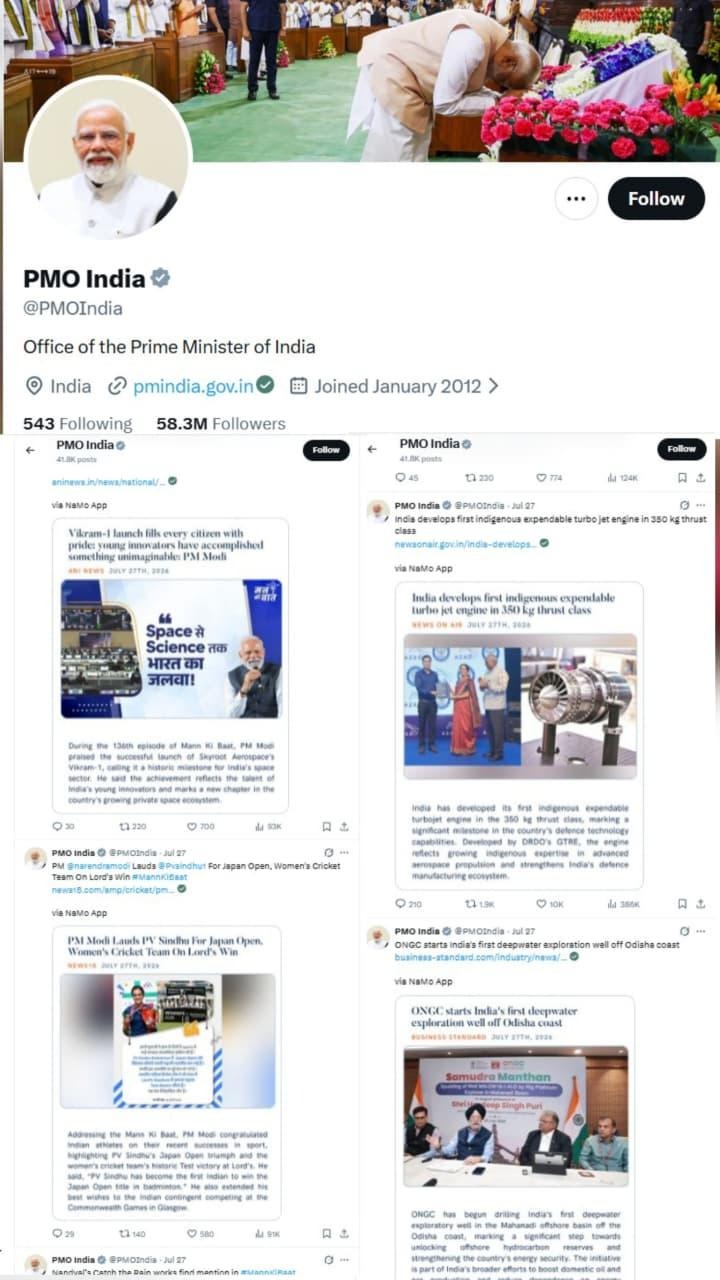
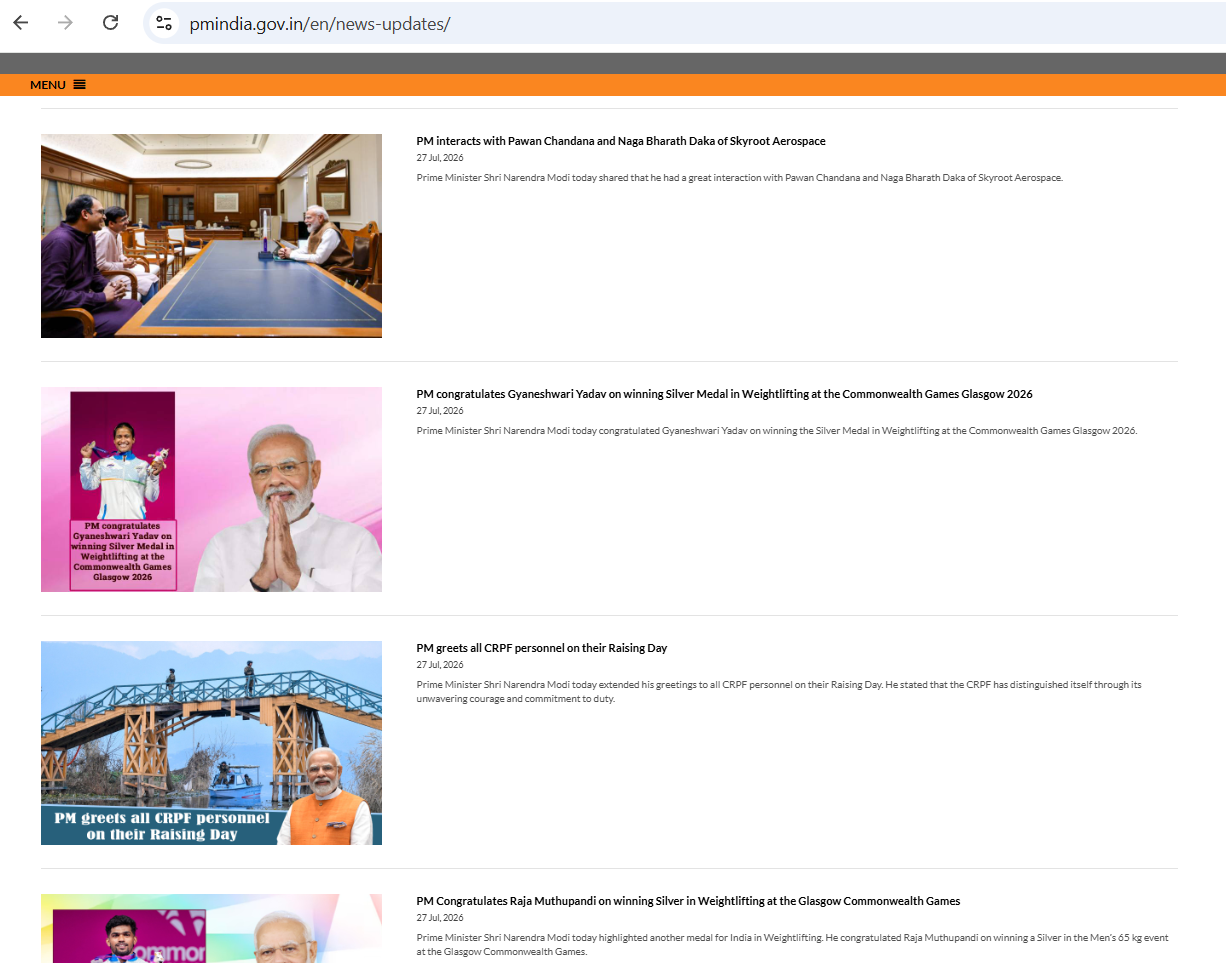
To verify the authenticity of the viral claim, we conducted a Google search using relevant keywords. However, no credible media reports related to the alleged letter were found. During the next stage of the research, we scanned the official X account (formerly Twitter) of PMO India. We did not find any such letter posted on July 27 or around that date. Continuing the research, we checked the official website of PMO India. No such letter was found in the news updates section or anywhere else on the website that could confirm the viral claim.
Further, we reviewed the press releases issued by the Prime Minister’s Office on July 27 available on the official website of the Press Information Bureau (PIB). We found no press release or official communication related to reservation or matching the viral letter.
https://www.pmindia.gov.in/en/
As part of the research, we scanned the viral letter using the AI detection tool Image Detector. The results indicated that the document was 93 percent likely to be AI-generated.

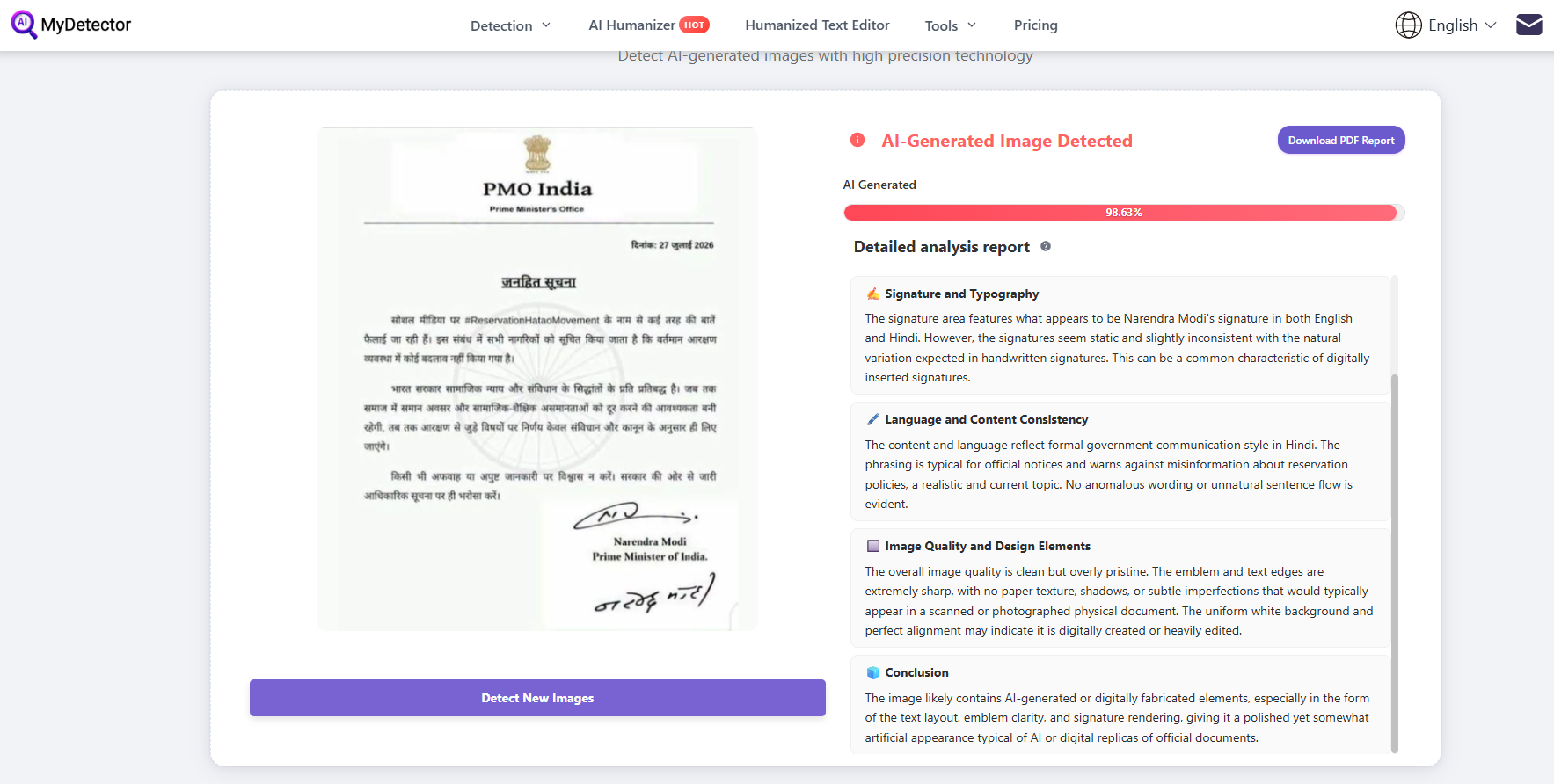
We also analysed the viral letter using another AI detection tool, My Detector. The results showed a 98 percent probability that the letter was created using AI.
Conclusion:
Our research found no official evidence confirming that the Prime Minister’s Office issued the viral letter. The purported PMO letter regarding reservation was found to be fake and AI-generated.
