
#FactCheck-Viral Clip of Delivery Boy Beating Woman Is Scripted, Not a Real Incident
Executive Summary
A video is being widely shared on social media claiming to show a delivery boy assaulting a woman. In the viral clip, a man approaches a woman to deliver some items. An argument soon breaks out between the two, followed by pushing and shoving that escalates into a physical fight. The purported delivery boy is then seen knocking the woman to the ground and allegedly beating her. Research by CyberPeace Research Wing found that the viral video is scripted.
Claim:
“A delivery boy brings a parcel, and the customer comes outside to collect it. As soon as the delivery boy hands the parcel to the woman, it falls from her hands, following which the female customer starts assaulting the delivery boy. In anger, the delivery boy also begins hitting the woman and knocks her to the ground, brutally beating her with kicks and slaps. Although the woman was at fault, the delivery boy should not have reacted so violently.”
https://www.facebook.com/reel/2826948067671726

Fact Check
To verify the viral video claiming to show a delivery boy assaulting a woman, we conducted a reverse image search using keyframes from the clip. During the search, we found the same video posted on the Facebook account of a user named Vipin Chauhan on August 21, 2026. The viral clip appears in the 2-minute-33-second-long video. The caption accompanying the video states that it is a pre-planned (scripted) video.
https://www.facebook.com/reel/1551896343642588

During the research, we also found the same video on the same user's Instagram account, where it was described as scripted.
https://www.instagram.com/reels/DcTAF_ZsUnv/
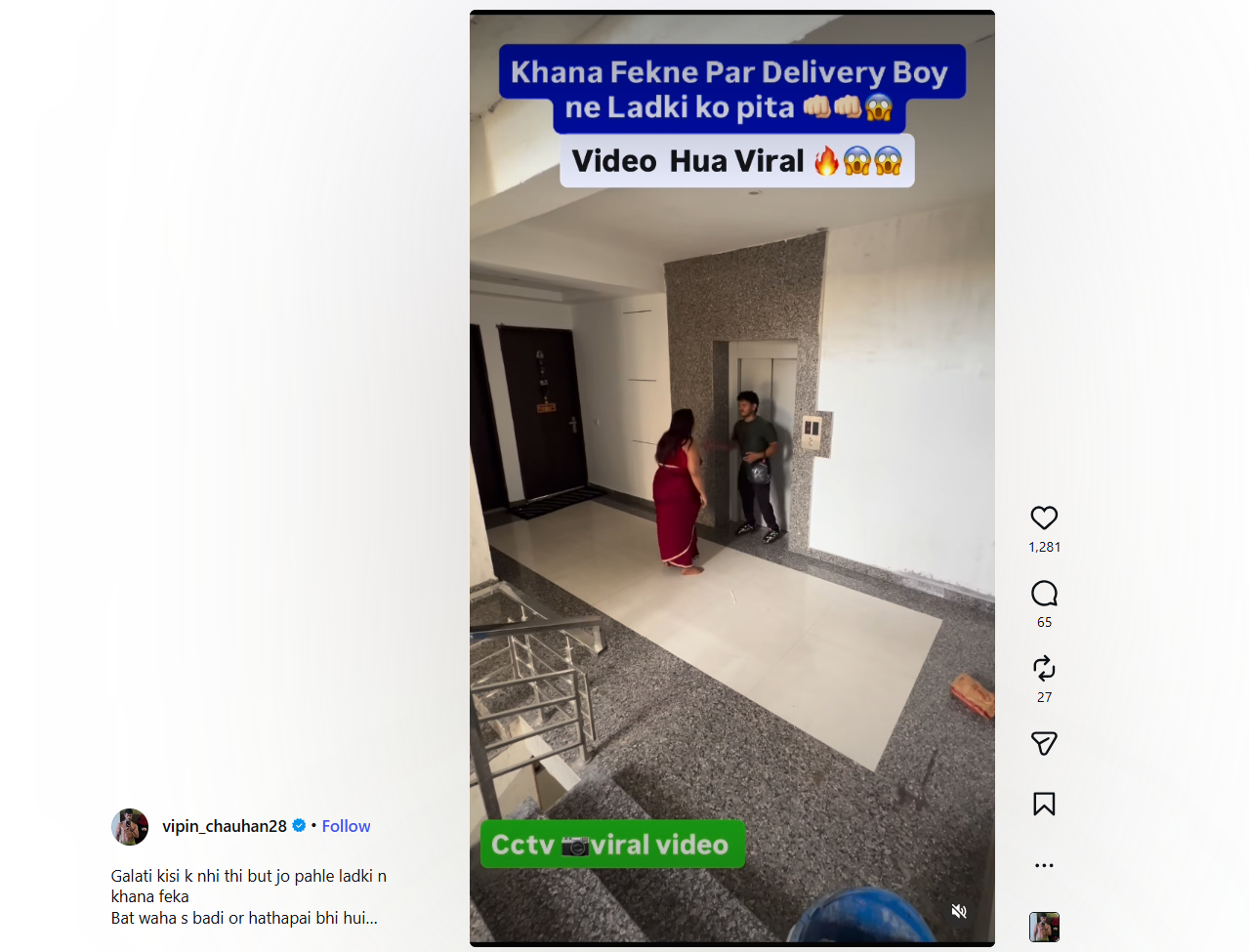
Upon reviewing the Instagram user's account, we found several other videos featuring men and women engaged in physical altercations. The captions of all these videos clearly state that they are scripted.

Conclusion
The evidence gathered during our research clearly establishes that the video being shared with the claim that a delivery boy assaulted a woman is scripted and does not depict a genuine incident. The same video was found on the social media accounts of the creator, where it was explicitly described as scripted. We also found several other similar videos on the user's account, all of which were identified as pre-planned or scripted content.

Related Blogs

Introduction
The unprecedented cyber espionage attempt on the Indian Air Force has shocked the military fraternity in the age of the internet where innovation is vital to national security. The attackers have shown a high degree of expertise in their techniques, using a variant of the infamous Go Stealer and current military acquisition pronouncements as a cover to obtain sensitive information belonging to the Indian Air Force. In this recent cyber espionage revelation, the Indian Air Force faces a sophisticated attack leveraging the infamous Go Stealer malware. The timing, coinciding with the Su-30 MKI fighter jets' procurement announcement, raises serious questions about possible national security espionage actions.
A sophisticated attack using the Go Stealer malware exploits defense procurement details, notably the approval of 12 Su-30 MKI fighter jets. Attackers employ a cunningly named ZIP file, "SU-30_Aircraft_Procurement," distributed through an anonymous platform, Oshi, taking advantage of heightened tension surrounding defense procurement.
Advanced Go Stealer Variant:
The malware, coded in Go language, introduces enhancements, including expanded browser targeting and a unique data exfiltration method using Slack, showcasing a higher level of sophistication.
Strategic Targeting of Indian Air Force Professionals:
The attack strategically focuses on extracting login credentials and cookies from specific browsers, revealing the threat actor's intent to gather precise and sensitive information.
Timing Raises Espionage Concerns:
The cyber attack coincides with the Indian Government's Su-30 MKI fighter jets procurement announcement, raising suspicions of targeted attacks or espionage activities.
The Deceitful ZIP ArchiveSU-30 Aircraft Acquisition
The cyberattack materialised as a sequence of painstakingly planned actions. Using the cleverly disguised ZIP file "SU-30_Aircraft_Procurement," the perpetrators took benefit of the authorisation of 12 Su-30 MKI fighter jets by the Indian Defense Ministry in September 2023. Distributed via the anonymous file storage network Oshi, the fraudulent file most certainly made its way around via spam emails or other forms of correspondence.
The Spread of Infection and Go Stealer Payload:
The infiltration procedure progressed through a ZIP file to an ISO file, then to a.lnk file, which finally resulted in the Go Stealer payload being released. This Go Stealer version, written in the programming language Go, adds sophisticated capabilities, such as a wider range of browsing focussed on and a cutting-edge technique for collecting information using the popular chat app Slack.
Superior Characteristics of the Go Stealer Version
Different from its GitHub equivalent, this Go Stealer version exhibits a higher degree of complexity. It creates a log file in the machine owned by the victim when it is executed and makes use of GoLang utilities like GoReSym for in-depth investigation. The malware focuses on cookies and usernames and passwords from web browsers, with a particular emphasis on Edge, Brave, and Google Chrome.
This kind is unique in that it is more sophisticated. Its deployment's cyber enemies have honed its strengths, increasing its potency and detection resistance. Using GoLang tools like GoReSym for comprehensive evaluation demonstrates the threat actors' careful planning and calculated technique.
Go Stealer: Evolution of Threat
The Go Stealer first appeared as a free software project on GitHub and quickly became well-known for its capacity to stealthily obtain private data from consumers who aren't paying attention. Its effectiveness and stealthy design rapidly attracted the attention of cyber attackers looking for a sophisticated tool for clandestine data exfiltration. It was written in the Go programming language.
Several cutting-edge characteristics distinguish the Go Stealer from other conventional data thieves. From the beginning, it showed a strong emphasis on browser focusing on, seeking to obtain passwords and login information from particular websites including Edge, Brave, and Google Chrome.The malware's initial iteration was nurtured on the GitHub database, which has the Go Stealer initial edition. Threat actors have improved and altered the code to serve their evil goals, even if the basic structure is freely accessible.
The Go Stealer version that has been discovered as the cause of the current internet spying by the Indian Air Force is not limited to its GitHub roots. It adds features that make it more dangerous, like a wider range of browsers that may be targeted and a brand-new way to exfiltrate data via Slack, a popular messaging app.
Secret Communications and Information Expulsion
This variation is distinguished by its deliberate usage of the Slack API for secret chats. Slack was chosen because it is widely used in company networks and allows harmful activity to blend in with normal business traffic. The purpose of the function "main_Vulpx" is specifically to upload compromised information to the attacker's Slack route, allowing for covert data theft and communication.
The Time and Strategic Objective
There are worries about targeted assaults or espionage activities due to the precise moment of the cyberattack, which coincides with the Indian government's declaration of its acquisition of Su-30 MKI fighter fighters. The deliberate emphasis on gathering cookies and login passwords from web browsers highlights the threat actor's goal of obtaining accurate and private data from Indian Air Force personnel.
Using Caution: Preventing Possible Cyber Espionage
- Alertness Against Misleading Techniques: Current events highlight the necessity of being on the lookout for files that appear harmless but actually have dangerous intent. The Su-30 Acquisition ZIP file is a stark illustration of how these kinds of data might be included in larger-scale cyberespionage campaigns.
- Potentially Wider Impact: Cybercriminals frequently plan coordinated operations to target not just individuals but potentially many users and government officials. Compromised files increase the likelihood of a serious cyber-attack by opening the door for larger attack vectors.
- Important Position in National Security: Recognize the crucial role people play in the backdrop of national security in the age of digitalisation. Organised assaults carry the risk of jeopardising vital systems and compromising private data.
- Establish Strict Download Guidelines: Implement a strict rule requiring file downloads to only come from reputable and confirmed providers. Be sceptical, particularly when you come across unusual files, and make sure the sender is legitimate before downloading any attachments.
- Literacy among Government Employees: Acknowledge that government employees are prime targets as they have possession of private data. Enable people by providing them with extensive cybersecurity training and awareness that will increase their cognition and fortitude.
Conclusion
Indian Air Force cyber surveillance attack highlights how sophisticated online dangers have become in the digital era. Threat actors' deliberate and focused approach is demonstrated by the deceptive usage of a ZIP archive that is camouflaged and paired with a sophisticated instance of the Go Stealer virus. An additional level of complication is introduced by integrating Slack for covert communication. Increased awareness, strict installation guidelines, and thorough cybersecurity education for government employees are necessary to reduce these threats. In the digital age, protecting national security necessitates ongoing adaptation as well as safeguards toward ever-more potent and cunning cyber threats.
References
- https://www.overtoperator.com/p/indianairforcemalwaretargetpotential
- https://cyberunfolded.in/blog/indian-air-force-targeted-in-sophisticated-cyber-attack-with-su-30-procurement-zip-file#go-stealer-a-closer-look-at-its-malicious-history
- https://thecyberexpress.com/cyberattack-on-the-indian-air-force/https://therecord.media/indian-air-force-infostealing-malware

Introduction
Beginning with the premise that the advent of the internet has woven a rich but daunting digital web, intertwining the very fabric of technology with the variegated hues of human interaction, the EU has stepped in as the custodian of this ever-evolving tableau. It is within this sprawling network—a veritable digital Minotaur's labyrinth—that the European Union has launched a vigilant quest, seeking not merely to chart its enigmatic corridors but to instil a sense of order in its inherent chaos.
The Digital Services Act (DSA) is the EU's latest testament to this determined pilgrimage, a voyage to assert dominion over the nebulous realms of cyberspace. In its latest sagacious move, the EU has levelled its regulatory lance at the behemoths of digital indulgence—Pornhub, XVideos, and Stripchat—monarchs in the realm of adult entertainment, each commanding millions of devoted followers.
Applicability of DSA
Graced with the moniker of Very Large Online Platforms (VLOPs), these titans of titillation are now facing the complex weave of duties delineated by the DSA, a legislative leviathan whose coils envelop the shadowy expanses of the internet with an aim to safeguard its citizens from the snares and pitfalls ensconced within. Like a vigilant Minotaur, the European Commission, the EU's executive arm, stands steadfast, enforcing compliance with an unwavering gaze.
The DSA is more than a mere compilation of edicts; it encapsulates a deeper, more profound ethos—a clarion call announcing that the wild frontiers of the digital domain shall be tamed, transforming into enclaves where the sanctity of individual dignity and rights is zealously championed. The three corporations, singled out as the pioneers to be ensnared by the DSA's intricate net, are now beckoned to embark on an odyssey of transformation, realigning their operations with the EU's noble envisioning of a safeguarded internet ecosystem.
The Paradigm Shift
In a resolute succession, following its first decree addressing 19 Very Large Online Platforms and Search Engines, the Commission has now ensconced the trinity of adult content purveyors within the DSA's embrace. The act demands that these platforms establish intuitive user mechanisms for reporting illicit content, prioritize communications from entities bestowed with the 'trusted flaggers' title, and elucidate to users the rationale behind actions taken to restrict or remove content. Paramount to the DSA's ethos, they are also tasked with constructing internal mechanisms to address complaints, forthwith apprising law enforcement of content hinting at criminal infractions, and revising their operational underpinnings to ensure the confidentiality, integrity, and security of minors.
But the aspirations of the DSA stretch farther, encompassing a realm where platforms are agents against deception and manipulation of users, categorically eschewing targeted advertisement that exploits sensitive profiling data or is aimed at impressionable minors. The platforms must operate with an air of diligence and equitable objectivity, deftly applying their terms of use, and are compelled to reveal their content moderation practices through annual declarations of transparency.
The DSA bestows upon the designated VLOPs an even more intensive catalogue of obligations. Within a scant four months of their designation, Pornhub, XVideos, and Stripchat are mandated to implement measures that both empower and shield their users—especially the most vulnerable, minors—from harms that traverse their digital portals. Augmented content moderation measures are requisite, with critical risk analyses and mitigation strategies directed at halting the spread of unlawful content, such as child exploitation material or the non-consensual circulation of intimate imagery, as well as curbing the proliferation and repercussions of deepfake-generated pornography.
The New Rules
The DSA enshrines the preeminence of protecting minors, with a staunch requirement for VLOPs to contrive their services so as to anticipate and enfeeble any potential threats to the welfare of young internet navigators. They must enact operational measures to deter access to pornographic content by minors, including the utilization of robust age verification systems. The themes of transparency and accountability are amplified under the DSA's auspices, with VLOPs subject to external audits of their risk assessments and adherence to stipulations, the obligation to maintain accessible advertising repositories, and the provision of data access to rigorously vetted researchers.
Coordinated by the Commission in concert with the Member States' Digital Services Coordinators, vigilant supervision will be maintained to ensure the scrupulous compliance of Pornhub, Stripchat, and XVideos with the DSA's stringent directives. The Commission's services are poised to engage with the newly designated platforms diligently, affirming that initiatives aimed at shielding minors from pernicious content, as well as curbing the distribution of illegal content, are effectively addressed.
The EU's monumental crusade, distilled into the DSA, symbolises a pledge—a testament to its steadfast resolve to shepherd cyberspace, ensuring the Minotaur of regulation keeps the bedlam at a manageable compass and the sacrosanctity of the digital realm inviolate for all who meander through its infinite expanses. As we cast our gazes toward February 17, 2024—the cusp of the DSA's comprehensive application—it is palpable that this legislative milestone is not simply a set of guidelines; it stands as a bold, unflinching manifesto. It beckons the advent of a novel digital age, where every online platform, barring small and micro-enterprises, will be enshrined in the lofty ideals imparted by the DSA.
Conclusion
As we teeter on the edge of this nascent digital horizon, it becomes unequivocally clear: the European Union's Digital Services Act is more than a mundane policy—it is a pledge, a resolute statement of purpose, asserting that amid the vast, interwoven tapestry of the internet, each user's safety, dignity, and freedoms are enshrined and hold the intrinsic significance meriting the force of the EU's legislative guard. Although the labyrinth of the digital domain may be convoluted with complexity, guided by the DSA's insightful thread, the march toward a more secure, conscientious online sphere forges on—resolute, unerring, one deliberate stride at a time.
References
https://ec.europa.eu/commission/presscorner/detail/en/ip_23_6763https://www.breakingnews.ie/world/three-of-the-biggest-porn-sites-must-verify-ages-under-eus-new-digital-law-1566874.html

On June 5th, the world comes together to reflect on how the way we live impacts the environment. We discuss conserving water, cutting back on plastic, and planting trees, but how often do we think about the environmental impact of our digital lives?
The internet is ubiquitous but invisible in a world that is becoming more interconnected by the day. It drives our communications, meetings, and recollections. However, there is a price for this digital convenience: carbon emissions.
A Digital Carbon Footprint: What Is It?
Electricity is necessary for every video we stream, email we send, and file we store on the cloud. But almost 60% of the electricity produced today is generated from burning fossil fuels. The digital world uses an incredible amount of energy, from the energy-hungry data centres that house our information to the networks that send it. Thus, the greenhouse gas emissions produced by our use of digital tools and services are referred to as our "digital carbon footprint."
To put it in perspective:
- Up to 150–200 grams of CO₂ can be produced by streaming an hour-long HD video on your phone.
- A typical email sent can release about 4 grams of CO₂, and more if it contains attachments.
- Comparable to the airline industry, the internet as a whole accounts for 1.5% to 4% of global greenhouse gas emissions.
Why It Matters
Ironically, despite the fact that digital life frequently feels "clean" and weightless, it is backed by enormous, power-hungry infrastructures. Additionally, our online activity is growing at a rapid pace as digital penetration increases. Plus, with the advent of AI and big data, the demand for energy is only going to rise. The harms of air, water, and soil degradation, and biodiversity loss are already upon us. It's high time we reconsider how we use technology on World Environment Day.
What Can You Do?
The good news is that even minor adjustments to our online conduct can have an impact.
🗑️ Clear out your digital clutter by getting rid of unnecessary emails, apps, and files.
📥 Unsubscribe from mailing lists that you no longer use.
📉 When HD is not required, stream videos with lower quality.
⚡ Make use of energy-saving gadgets and disconnect them when not in use.
🌐 Make the move to renewable energy-powered, environmentally friendly cloud providers.
🗳️ Support informed policy by engaging with your elected representatives and advocating for greener tech policies. Knowing your digital rights and responsibilities can help shape smarter policies and a healthier planet.
We at the CyberPeace Foundation think that cyberspace needs to be sustainable. An eco-friendly digital world is also a safer one, where all communities can thrive in harmony. We must promote digital responsibility, including its environmental component, as we work towards digital equity and resilience.
On this World Environment Day, let's go one step further and work towards a greener internet as well as a greener planet.
