
#FactCheck-Mock drill video falsely linked to death of Indian sailor in Gulf of Oman
Executive Summary
Amid reports of attacks on ships in the Gulf of Oman that led to the death of three Indian nationals, a video showing a person lying injured on a ship is being widely circulated on social media. The clip is being shared with the claim that the United States sent the body of a deceased Indian sailor to India in a “wrapped” condition. CyberPeace Research Wing research found the claim to be misleading. The viral video is unrelated to any recent incident involving Indian nationals and is, in fact, from a mock drill conducted on board a ship.
Claim:
An Instagram user ‘fakirchand.sharma’ shared the video on June 15, 2026, claiming that an Indian sailor, identified as Nishant Urthnathan, died due to health complications on a vessel anchored at Duqm port, Oman. The post further alleged that the United States returned the body in a “wrapped” condition, sparking outrage on social media. https://www.instagram.com/fakirchand.sharma/reel/DZlsxj9TIaS , https://perma.cc/C9SF-J8ZR
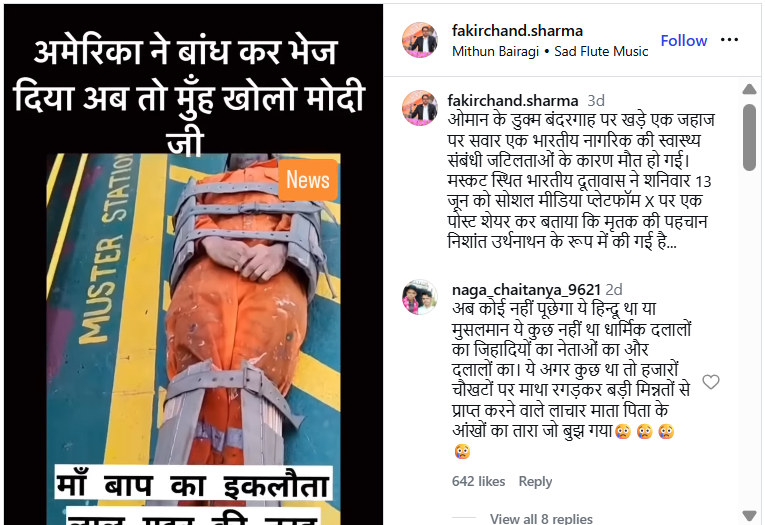
Fact Check:
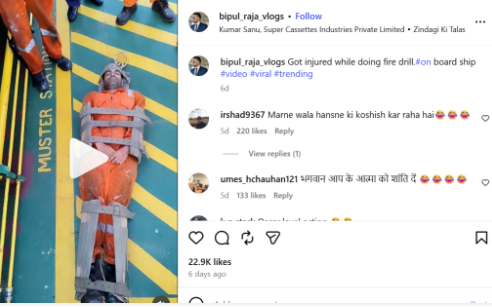
A reverse image search of keyframes from the viral video led to an Instagram account ‘bipul_raja_vlogs’, where the same video was posted on June 10, 2026. The original caption clearly stated that the visuals were from a fire drill conducted on board a ship. https://www.instagram.com/p/DZbnZlGPAlL
Further posts from the same account on June 15 and June 17, 2026, also show similar mock drill visuals and clarify that the content is being misused online. The account features multiple posts related to routine ship operations and training exercises. https://www.instagram.com/p/DZnEXOzCc2X
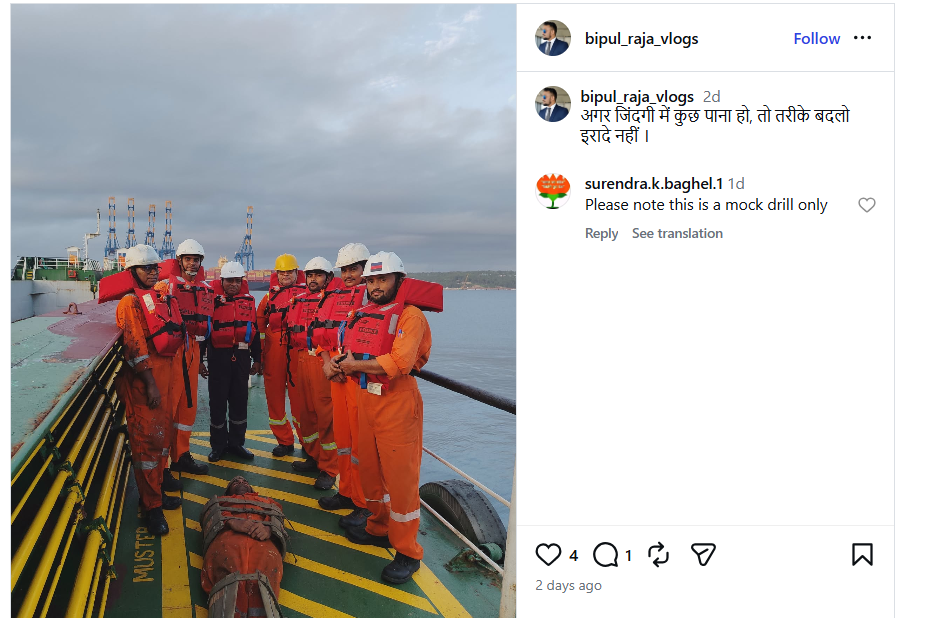
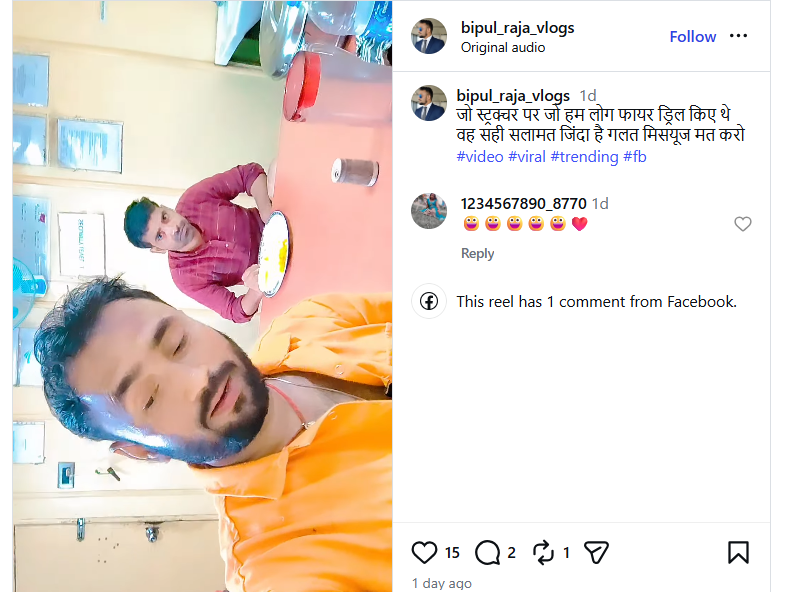
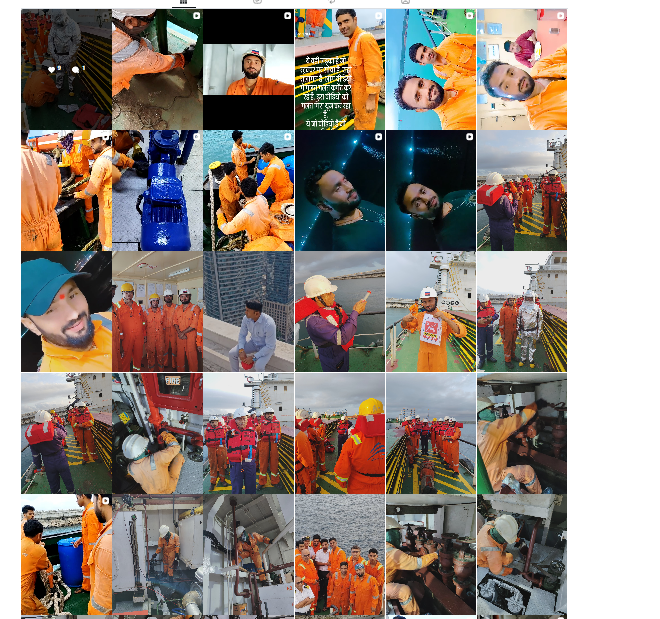
The profile also contains several other photos and videos of crew members working on the ship. We also checked the YouTube channel linked in this profile, “Sunnybabu,” where a mock drill video was uploaded on January 21, 2026. https://www.instagram.com/bipul_raja_vlogs
Conclusion:
The research confirms that the viral video is unrelated to the death of any Indian sailor in the Gulf of Oman. The clip actually shows a mock drill conducted on a ship and is being falsely shared with a misleading narrative.

Related Blogs

Introduction
We consume news from various sources such as news channels, social media platforms and the Internet etc. In the age of the Internet and social media, the concern of misinformation has become a common issue as there is widespread misinformation or fake news on the Internet and social media platforms.
Misinformation on social media platforms
The wide availability of user-provided content on online social media platforms facilitates the spread of misinformation. With the vast population on social media platforms, the information gets viral and spreads all over the internet. It has become a serious concern as such misinformation, including rumours, morphed images, unverified information, fake news, and planted stories, spread easily on the internet, leading to severe consequences such as public riots, lynching, communal tensions, misconception about facts, defamation etc.
Platform-centric measures to mitigate the spread of misinformation
- Google introduced the ‘About this result’ feature’. This allows the users to help with better understand the search results and websites at a glance.
- During the covid-19 pandemic, there were huge cases of misinformation being shared. Google, in April 2020, invested $6.5 million in funding to fact-checkers and non-profits fighting misinformation around the world, including a check on information related to coronavirus or on issues related to the treatment, prevention, and transmission of Covid-19.
- YouTube also have its Medical Misinformation Policy which prevents the spread of information or content which is in contravention of the World Health Organization (WHO) or local health authorities.
- At the time of the Covid-19 pandemic, major social media platforms such as Facebook and Instagram have started showing awareness pop-ups which connected people to information directly from the WHO and regional authorities.
- WhatsApp has a limit on the number of times a WhatsApp message can be forwarded to prevent the spread of fake news. And also shows on top of the message that it is forwarded many times. WhatsApp has also partnered with fact-checking organisations to make sure to have access to accurate information.
- On Instagram as well, when content has been rated as false or partly false, Instagram either removes it or reduces its distribution by reducing its visibility in Feeds.
Fight Against Misinformation
Misinformation is rampant all across the world, and the same needs to be addressed at the earliest. Multiple developed nations have synergised with tech bases companies to address this issue, and with the increasing penetration of social media and the internet, this remains a global issue. Big tech companies such as Meta and Google have undertaken various initiatives globally to address this issue. Google has taken up the initiative to address this issue in India and, in collaboration with Civil Society Organisations, multiple avenues for mass-scale awareness and upskilling campaigns have been piloted to make an impact on the ground.
How to prevent the spread of misinformation?
Conclusion
In the digital media space, there is a widespread of misinformative content and information. Platforms like Google and other social media platforms have taken proactive steps to prevent the spread of misinformation. Users should also act responsibly while sharing any information. Hence creating a safe digital environment for everyone.
Executive Summary
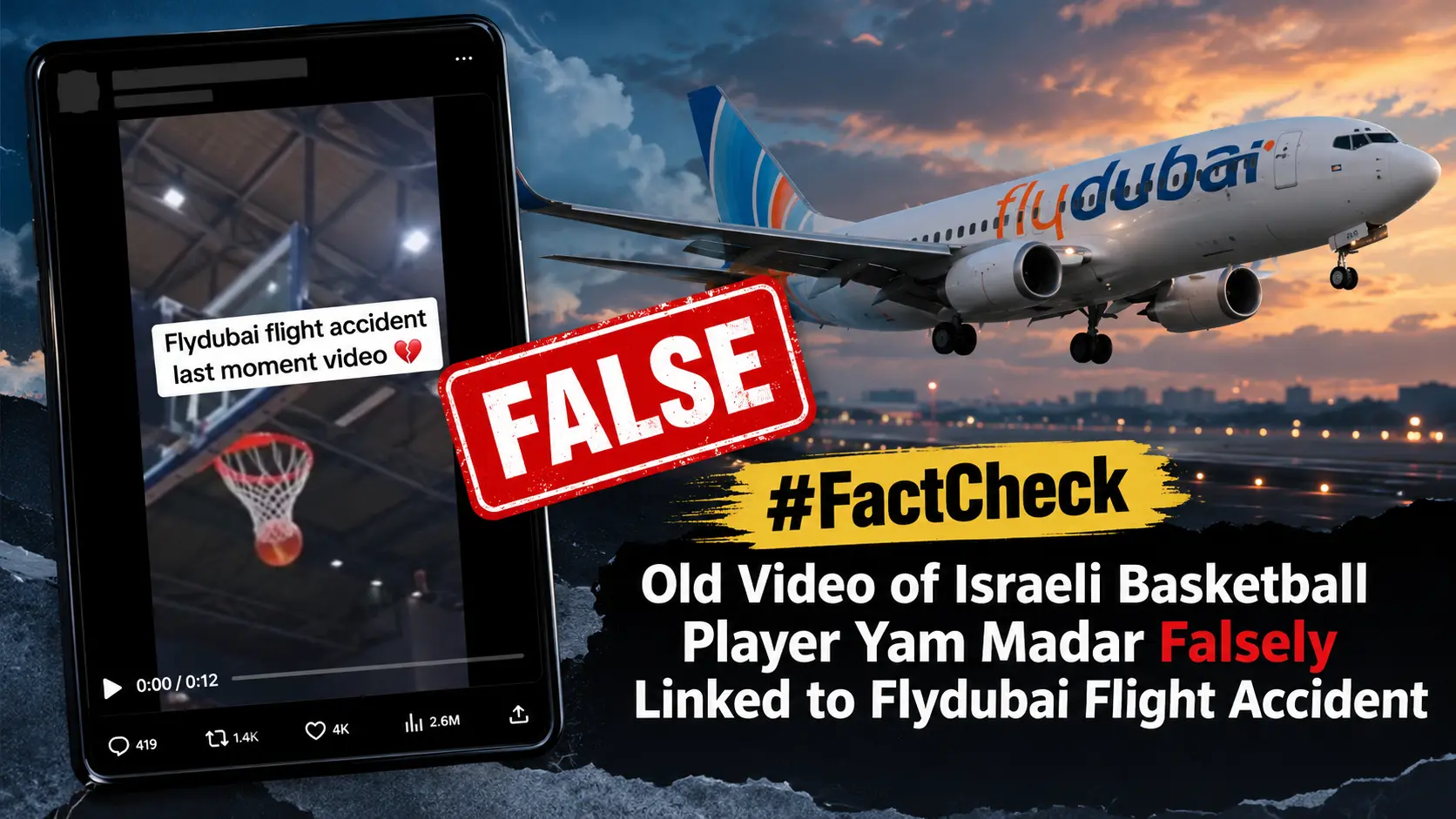
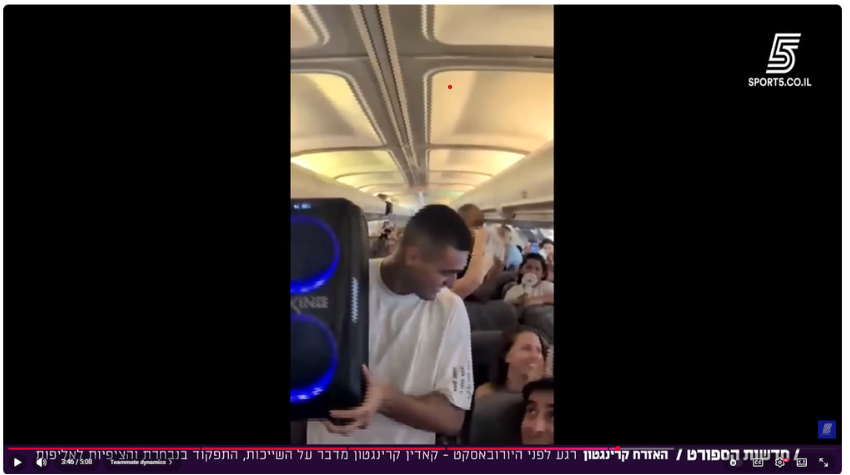
A video showing people dancing inside an aircraft with a speaker playing music is being shared on social media with the claim that they were celebrating after surviving an accident involving a flydubai flight travelling from Dubai to Tel Aviv. However, CyberPeace Research found that the video was actually shared by an Israeli sports media outlet in August 2025, and shows Israeli basketball player Yam Madar playing music through a speaker inside a flight.
Claim
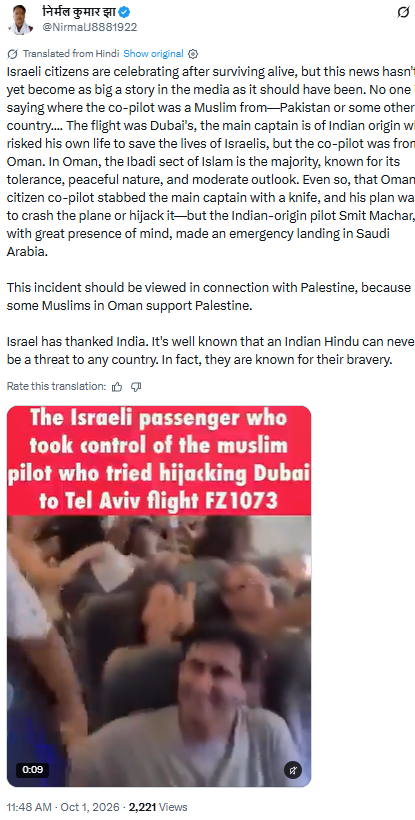
A video is going viral on social media showing a person playing music through a speaker inside an aircraft, while other passengers can be seen dancing to the song being played.
https://x.com/NirmalJ8881922/status/2105542863278973186
Fact Check:
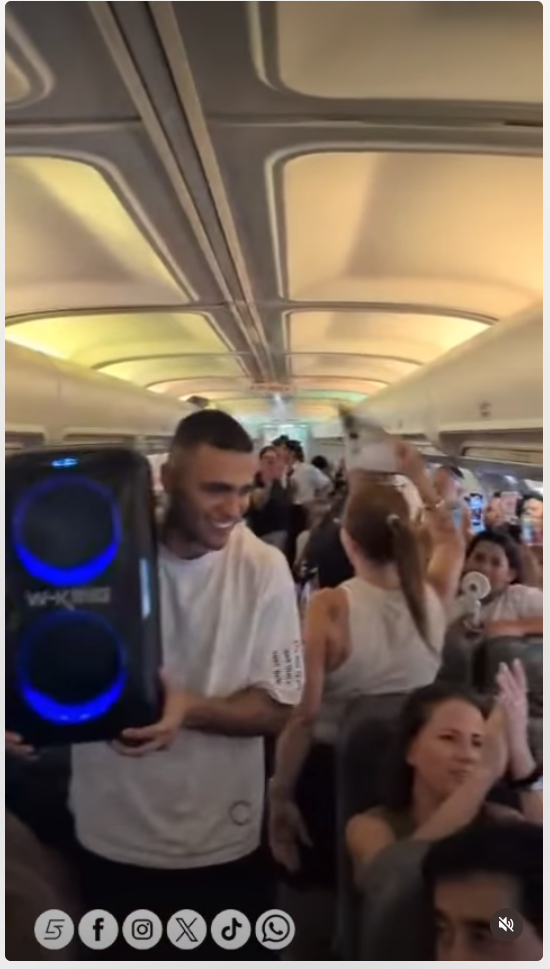
We began our research into the viral video using the InVID tool and extracted several keyframes from it. During this process, we found the same video on the Instagram account of Israeli sports media channel Sports 5, where it was uploaded on August 18, 2025. The video was accompanied by a caption in Hebrew, which translates into Hindi as: “Don’t take a sleeping pill: This is what it’s like to be on a flight with Yam Madar.”
https://www.instagram.com/reels/DNgQrgLsW11/
During our research, we also found an interview with another player from the Israeli basketball team, Khadeen Carrington, uploaded on Sports 5’s YouTube channel on August 26, 2025. During the interview, when Carrington was asked about his relationship with the other members of the team, he referred to the aforementioned video featuring Yam Madar.
https://www.youtube.com/watch?v=k_0AzSWlvJw
Conclusion
The evidence gathered during our research makes it clear that the video being linked to the flydubai flight accident is old. The person seen in the video is Yam Madar, a member of the Israeli basketball team.

Introduction
The 2025 Delhi Legislative Assembly election is just around the corner, scheduled for February 5, 2025, with all 70 constituencies heading to the polls. The eagerly awaited results will be announced on February 8, bringing excitement as the people of Delhi prepare to see their chosen leader take the helm as Chief Minister. As the election season unfolds, social media becomes a buzzing hub of activity, with information spreading rapidly across platforms. However, this period also sees a surge in online mis/disinformation, making elections a hotspot for misleading content. It is crucial for citizens to exercise caution and remain vigilant against false or deceptive online posts, videos, or content. Empowering voters to distinguish facts from fiction and recognize the warning signs of misinformation is essential to ensure informed decision-making. By staying alert and well-informed, we can collectively safeguard the integrity of the democratic process.
Risks of Mis/Disinformation
According to the 2024 survey report titled ‘Truth Be Told’ by ‘The 23 Watts’, 90% of Delhi’s youth (Gen Z) report witnessing a spike in fake news during elections, and 91% believe it influences voting patterns. Furthermore, the research highlights that 14% of Delhi’s youth tend to share sensational news without fact-checking, relying solely on conjecture.
Recent Measures by ECI
Recently the Election Commission of India (EC) has issued a fresh advisory to political parties to ensure responsible use of AI-generated content in their campaigns. The EC has issued guidelines to curb the potential use of "deepfakes" and AI-generated distorted content by political parties and their representatives to disturb the level playing field. EC has mandated the labelling of all AI-generated content used in election campaigns to enhance transparency, combat misinformation, ensuring a fair electoral process in the face of rapidly advancing AI technologies.
Best Practices to Avoid Electoral Mis/Disinformation
- Seek Information from Official Sources: Voters should rely on authenticated sources for information. These include reading official manifestos, following verified advisory notifications from the Election Commission, and avoiding unverified claims or rumours.
- Consume News Responsibly: Voters must familiarize themselves with dependable news channels and make use of reputable fact-checking organizations that uphold the integrity of news content. It is crucial to refrain from randomly sharing or forwarding any news post, video, or message without verifying its authenticity. Consume responsibly, fact-check thoroughly, and share cautiously.
- Role of Fact-Checking: Cross-checking and verifying information from credible sources are indispensable practices. Reliable and trustworthy fact-checking tools are vital for assessing the authenticity of information in the digital space. Voters are encouraged to use these tools to validate information from authenticated sources and adopt a habit of verification on their own. This approach fosters a culture of critical thinking, empowering citizens to counter deceptive deepfakes and malicious misinformation effectively. It also helps create a more informed and resilient electorate.
- Be Aware of Electoral Deepfakes: In the era of artificial intelligence, synthetic media presents significant challenges. Just as videos can be manipulated, voices can also be cloned. It is essential to remain vigilant against the misuse of deepfake audio and video content by malicious actors. Recognize the warning signs, such as inconsistencies or unnatural details, and stay alert to misleading multimedia content. Proactively question and verify such material to avoid falling prey to deception.
References
- https://www.financialexpress.com/business/brandwagon-90-ofnbsp-delhi-youth-witness-spike-in-fake-news-during-elections-91-believe-it-influences-voting-patterns-revealed-the-23-watts-report-3483166/
- https://timesofindia.indiatimes.com/india/election-commission-urges-parties-to-disclose-ai-generated-campaign-content-in-interest-of-transparency/articleshow/117306865.cms
- https://www.thehindu.com/news/national/election-commission-issues-advisory-on-use-of-ai-in-poll-campaigning/article69103888.ece
- https://indiaai.gov.in/article/election-commission-of-india-embraces-ai-ethics-in-campaigning-advisory-on-labelling-ai-generated-content
